
Our readers keep the lights on and the weekend projects moving. As an Amazon Associate, I earn from qualifying purchases.
The difference between a close call and a tragedy in the backcountry often comes down to a few seconds of digging speed. Your snowmobile or splitboard is stuck, a slope releases, or a partner is partially buried — the flimsy plastic or undersized blade you packed for weight savings just snapped on the first chunk of windboard. An avalanche shovel is not a car emergency tool or a gardening spade; it is a life-safety device engineered for rapid, repetitive snow movement under duress, and the spec sheet you ignore in the shop could define the outcome of a rescue.
I’m Rikta — the co-founder and writer behind FitlyFast. This guide comes from spending many hours cross-referencing design patents, testing collapse mechanisms, and analyzing blade geometry across the leading models to find the shovels that actually deliver on their rescue promise.
Whether you are building a rescue kit for backcountry touring or outfitting a truck for winter overlanding, choosing the right tool requires understanding blade material density, shaft locking security, and packed length relative to your pack’s avalanche pocket. This review breaks down the best avalanche shovel options from premium aluminum to budget-ready collapsible models so you can make an informed decision based on real-world performance data.
How To Choose The Best Avalanche Shovel
An avalanche shovel is a binary device: it works or it fails, and failure is not an option when someone’s breathing depends on clearing snow. The market is flooded with cheap folding shovels branded as “survival” tools, but very few meet the UIAA standard for avalanche rescue. Focus your buying decision on the materials, locking hardware, and pack integration that separates a real rescue tool from a snowmobile accessory.
Blade Material and Thickness
6061 T6 aluminum is the baseline for serious rescue shovels. It offers the best strength-to-weight ratio and will not crack in cold temperatures like polycarbonate or glass-filled nylon blades. Thicker blades (0.1-inch) resist bending when you stomp the flat edge into wind-loaded slabs, while thin-gauge blades can deform on the first hard impact. Avoid shovels that do not specify the alloy or gauge — they are usually stamped from unknown sheet metal that buckles under load.
Shaft Design and Deployment Speed
Telescoping shafts with auto-engaging spring pins deploy faster than twist-lock or threaded ferrule systems. In a real scenario, you want to pull the shaft, snap it onto the blade, and start digging without fiddling with collars or alignment. The shaft cross-section matters too — ovo-concave and D-shaped profiles resist rotation better than round tubes when you are prying or side-cutting. Check for protruding ferrules or stepped joins that create pressure points inside your pack.
Packed Dimensions and Pack Fit
The shovel must fit flat in your backpack’s avalanche pocket — a vertical slot that sits against your back for easy access without removing the pack. Measure the packed length against your pack’s spec. Shovels that require the handle to be fully detached and stored separately usually pack smaller but take longer to assemble. A shovel that does not fit in the dedicated pocket will end up strapped to the outside, where it can snag on branches or be inaccessible when needed.
Quick Comparison
On smaller screens, swipe sideways to see the full table.
| Model | Category | Best For | Key Spec | Amazon |
|---|---|---|---|---|
| Backcountry Access Dozer 1T | Rescue | Touring & splitboard rescue | 6061 T6 aluminum, ovo-concave shaft | Amazon |
| Voile Telepro | Rescue | Max blade size for deep snow | 39.5-inch extended length, 1 lb 14 oz | Amazon |
| DMOS Stealth Shovel | Premium | Overland & heavy-duty snow removal | 0.1-inch 6061 aluminum blade | Amazon |
| Yukon Charlie’s Collapsible | Budget | Car emergency kit & ice fishing | Packs to 13 inches, 1.12 lb | Amazon |
| AceCamp Lightweight | Budget | Backup shovel for truck storage | 1.16 lb, aluminum blade | Amazon |
| Rhino USA Survival Shovel | Multi-tool | Off-road recovery & gardening | Carbon steel, 7-in-1 tools | Amazon |
| CKG Metal Detecting Shovel | Specialty | Root cutting & treasure hunting | Tempered steel, serrated blade | Amazon |
In‑Depth Reviews
1. Backcountry Access Dozer 1T Shovel

The Dozer 1T is the Swiss Army knife of rescue shovels because Backcountry Access specifically engineered it for the snow science and rescue intersection. The blade features a flat “stomp edge” along the front third so you can drive it into wind-hardened slabs using body weight, while the rest of the scoop remains smooth for cutting clean pit walls during compression and extended column tests. The ovo-concave shaft reduces rotational flex under load, and the auto-engaging spring pins mean no fumbling when seconds count — pull the handle, snap the connection, and the tool is ready.
At just over half a pound, this shovel lives comfortably in the avalanche pocket of most touring packs without creating a bulge or requiring external strapping. The blade-to-shaft connection uses a low-profile ferrule that lies flat against the pack’s back panel, leaving the rest of your compartment space for a probe, saw, and first-aid kit. The UIAA rating is not just a marketing badge — it means the shovel was independently tested to survive repeated impacts and maintain structural integrity at sub-zero temperatures.
One caveat: the telescoping handle requires fully detaching the shaft from the blade for the most compact pack fit, which adds a step to deployment. If you practice the assembly drill a few times, the motion becomes reflexive, but first-time users may fumble when stressed. The blue color makes it easy to spot in a whiteout, and the overall feel strikes the right balance between weight and durability for serious backcountry travelers.
Why it’s great
- UIAA certified for avalanche rescue
- Flat stomp edge for penetrating hard snow
- Lies flat in pack without protruding neck
Good to know
- Handle must be fully removed for smallest pack size
- Price premium over entry-level models
2. Voile Telepro Avalanche Shovel
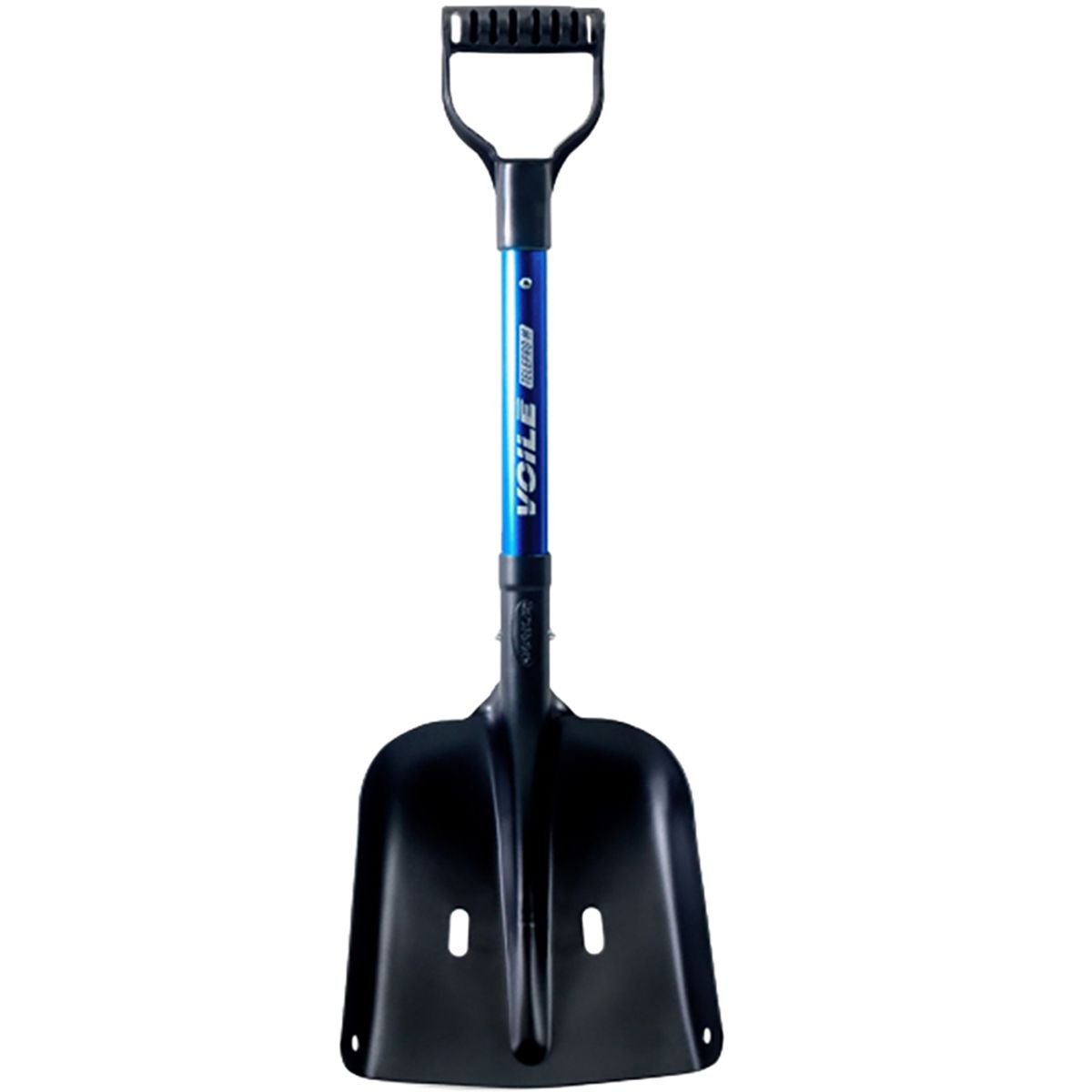
The Voile Telepro prioritizes raw blade capacity over everything else. At 39.5 inches fully extended with a 10-inch-wide scoop, this shovel moves more snow per stroke than almost any other packable avalanche shovel on the market. The aluminum blade is heat-treated and shaped with a slight curve that helps the snow roll off cleanly instead of sticking, reducing fatigue during extended digging. The ergonomic grip handle gives you good leverage for prying and lifting, and the two-piece breakdown stows reasonably small for its size.
Users consistently report that this shovel handles heavy, wet, icy snow without bending a millimeter — a common failure point for thinner budget blades. The blade-to-handle connection uses a threaded ferrule that, while secure, takes a few more seconds to assemble than the spring-pin systems on newer designs. This is a trade-off: you get a larger, stronger digger, but you sacrifice deployment speed. For guided groups and resort-adjacent touring where response time is less critical, the extra scoop volume is worth the slower setup.
The downsides are ergonomic and spatial. Tall users may still need to bend over because the handle length, while long for a pack shovel, is shorter than a standard snow shovel. The blade is also heavy enough that it can create a noticeable weight imbalance in a 20-liter pack. It fits in most dedicated avalanche pockets but may not lie perfectly flat if your pocket is narrow. For snowmobilers needing to clear large volumes around a stuck sled, the Telepro is hard to beat.
Why it’s great
- Largest blade volume in its class for fast snow removal
- Heat-treated aluminum resists bending in wet snow
- Good leverage for prying buried sleds
Good to know
- Threaded ferrule assembly is slower than spring-pin designs
- Heavier blade may create pack imbalance
3. DMOS Stealth Shovel X-Large
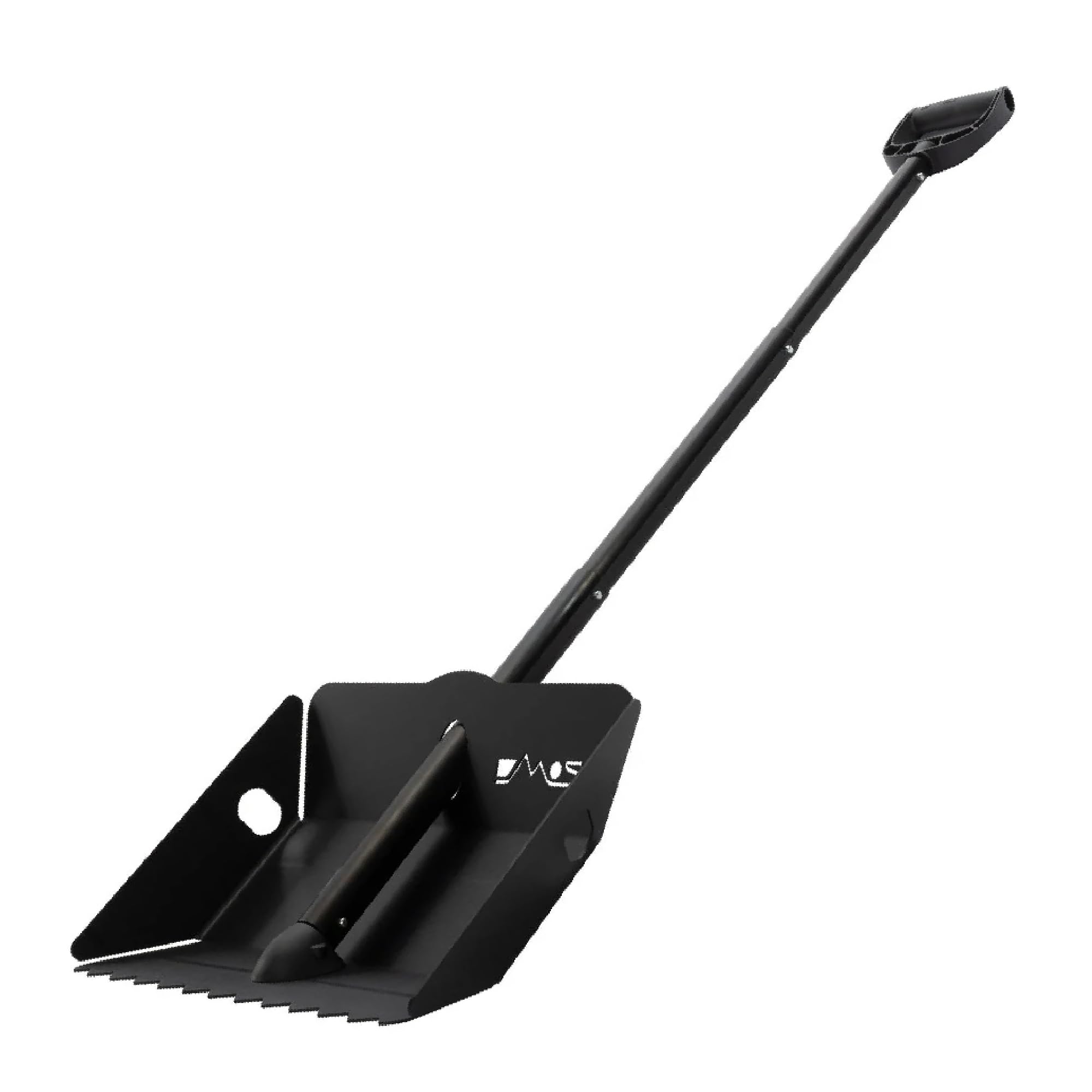
The DMOS Stealth Shovel is a completely different design philosophy — it uses aircraft-grade aluminum and a patented folding mechanism that collapses the blade into a compact footprint around the handle. The X-Large version features a 62-inch maximum extension, which is the longest of any shovel in this review, and a 0.1-inch thick 6061 aluminum blade with aggressive serrated teeth along the leading edge for cutting through ice and packed snow. The push-button length adjustment gives three positions so you can match the handle height to the task.
This shovel is built for overlanding and vehicle recovery where you might need to dig out heavy drifts, break ice chunks, or clear mud. The toothed edge bites into frozen ground and compacted snow better than a smooth blade, making it more versatile for off-road use than pure backcountry rescue. The nylon Zytel grip resists cold and provides a solid hold even with thick gloves. When collapsed, it stows relatively flat at 22 x 14 x 3 inches, which is designed to fit the optional DMOS carrying case or a vehicle mount.
The downsides center on mass and speed. At 4.5 pounds, this is a heavy shovel that you will not want in a touring pack for vertical gain. The folding mechanism is secure but requires multiple steps to deploy and break down, making it slower than a simple two-piece avalanche shovel in an emergency. Some users have reported the spring-lock mechanism being stiff when new, and one verified review noted handle bending on the first use. It is a premium tool for a specific use case — vehicle-based recovery — not a dedicated rescue shovel for skinning up a slope.
Why it’s great
- Extends to 62 inches for upright digging comfort
- Toothed blade cuts ice and hard-packed snow
- Aircraft-grade 6061 aluminum construction
Good to know
- Heavy at 4.5 lb for backpacking
- Folding deployment is slower than two-piece shovels
4. Yukon Charlie’s Collapsible Snow Shovel

The Yukon Charlie’s Collapsible Shovel is a budget-friendly entry point for motorists and winter campers who want a lightweight aluminum shovel that stows away in a trunk or under a seat. It weighs just over a pound and collapses to 13 inches, making it one of the most packable options in the budget tier. The blade angle adjusts via a simple wing-nut mechanism, which adds versatility for scraping and scooping different snow depths. The slip-proof ABS handle provides a decent grip even with winter gloves.
The telescoping shaft extends from 24 to 30 inches, which is adequate for short digging sessions but may require more bending for taller users. The aluminum blade is lighter gauge than the premium options and is not designed to withstand repeated stomping on wind-hardened snow. Verified buyers report it holds up well for clearing snow around an ice fishing hole, digging out a lightly stuck car, or serving as an emergency kit shovel. It has survived multiple uses in trunk-stored scenarios without issue.
Where this shovel falls short for avalanche rescue is blade stiffness and locking security. The wing-nut adjustment can loosen under heavy lateral loads, and the thin aluminum blade can deform if you try to pry against ice or use it as a cutting tool. This is a capable emergency shovel for roadside extraction, but it does not meet the UIAA standard and should not be your primary backcountry rescue tool. For the price, it is a sensible addition to a winter car kit.
Why it’s great
- Ultra-compact at 13 inches packed length
- Adjustable blade angle for scraping
- Very lightweight for trunk storage
Good to know
- Not built for repeated heavy-duty use
- Wing-nut lock can loosen under lateral stress
5. AceCamp Lightweight Collapsible Snow Shovel

The AceCamp Lightweight Collapsible Shovel streamlines the budget category with a push-button telescoping mechanism that deploys in under five seconds. The aluminum blade and shaft keep the weight at 1.16 pounds, and the extended length of 25.8 inches provides enough reach for clearing snow around a car or snowmobile without excessive stooping. The D-grip handle offers a secure hold and the flat blade surface works well for slicing through light snow and scraping ice from a driveway.
Verified owners consistently praise its compactness and ease of storage in a car trunk, snowmobile tunnel bag, or backpack. The gold anodized aluminum resists corrosion well, and the telescoping handle nests flat against the blade for a slim packed profile (17.1 x 9.1 inches). It is designed for light-duty snow removal — digging out a plowed-in truck, clearing a parking space, or handling fresh powder around a campsite. The push-button lock is positive and does not slip during normal digging.
The limitation is the blade thickness. This is a thin-gauge aluminum scoop that will bend if used to pry against ice or dig through heavy, wet spring snow. It is not suitable for cutting pit walls or performing avalanche rescue tasks. Users in warm climates have noted it is essentially useless for snow they rarely see. For its intended role as a trunk or snowmobile backup shovel, it performs well, but it should not be confused with a dedicated rescue tool for the backcountry.
Why it’s great
- Deploys in less than 5 seconds with push-button lock
- Corrosion-resistant anodized aluminum
- Packs flat for easy storage
Good to know
- Thin blade not suitable for ice chopping or prying
- Not designed as a primary rescue shovel
6. Rhino USA Survival Shovel with Pick

The Rhino USA Survival Shovel is an entrenching tool modeled on a military folding spade, optimized for off-road recovery and camping rather than pure snow rescue. The carbon steel blade is heavy-duty enough to break up frozen ground and rock, and the integrated pick on the back adds serious prying capability for freeing a high-centered vehicle. It collapses down to 7 inches and extends to 31 inches, storing in an included carry case that fits easily in a Jeep or truck storage compartment.
The 7-in-1 multitool features — fire starter, whistle, bottle opener, saw, hoe, fish scaler — add genuine utility for overlanding but also add complexity and weight (2.3 lb). The rubber grip is comfortable and the powder-coated finish resists corrosion better than bare steel. Verified buyers confirm it stands up to breaking ice, digging through sand, and cutting roots during off-road recovery. The lifetime replacement guarantee from a family-operated US company provides peace of mind that cheaper imports lack.
For avalanche-specific use, the carbon steel blade is overkill in weight and the folding design is slower to deploy than a telescoping aluminum rescue shovel. The pick is excellent for breaking ice chunks, but the flat spade blade moves less snow per stroke than a proper scoop-shaped avalanche shovel. This is a fantastic truck tool for winter off-roading, but backcountry skiers and snowboarders should look to dedicated rescue shovels for their pack.
Why it’s great
- Integrated pick breaks ice and frozen ground
- Collapses to just 7 inches for ultra-compact storage
- Lifetime replacement warranty
Good to know
- Heavy at 2.3 lb for backpacking
- Folding spade design slower than telescoping rescue shovels
7. CKG Metal Detecting Shovel Digging Tool

The CKG Metal Detecting Shovel is a heavy-duty, fixed-handle digging tool built for cutting through tough roots and packed soil, not for moving snow. The tempered steel blade features a double-serrated edge that chews through sod and root systems efficiently, making it a favorite among metal detectorists and serious gardeners. The T-handle provides excellent leverage for levering large clods of dirt, and the pointed tip penetrates hard ground with less effort than a flat spade.
At 3.8 pounds with a 39.5-inch overall length, this is a brute of a tool that excels in its intended role but has no place in an avalanche safety kit. The blade is not shaped for scooping snow, the serrations are wasted on powder, and the fixed handle cannot be broken down for pack storage. Verified owners praise its durability and root-cutting ability, and several mention using it for transplanting large potted plants alongside detecting work.
The biggest mismatch for snow rescue is the weight and lack of collapsibility. You cannot easily carry this in a backpack, and the steel blade will not glide through snow like a proper aluminum scoop. If your primary need is metal detecting or digging in soil, this is a robust, good-value option. For snow rescue, skip it and choose an aluminum avalanche shovel designed for the task.
Why it’s great
- Double-serrated blade cuts roots with ease
- Heavy-duty tempered steel withstands high-impact work
- Ergonomic T-handle for maximum leverage
Good to know
- Not collapsible — fixed 39.5-inch shaft
- Too heavy and wrong blade shape for snow rescue
FAQ
What does UIAA certification mean for an avalanche shovel?
Can I use a military entrenching tool for avalanche rescue?
How do I verify the shovel fits my backpack’s avalanche pocket?
Are plastic-blade shovels ever acceptable for avalanche rescue?
Final Thoughts: The Verdict
For most backcountry users, the best avalanche shovel winner is the Backcountry Access Dozer 1T because it combines UIAA certification, a stomp-ready blade, and an ovo-concave shaft that resists twisting while weighing under a pound. If you need maximum snow-moving capacity for sled recovery or deep drifts, grab the Voile Telepro. And for vehicle-based overlanders who need a heavy-duty ice breaker that stores in a truck, nothing beats the DMOS Stealth Shovel.