
Our readers keep the lights on and the weekend projects moving. As an Amazon Associate, I earn from qualifying purchases.
A dull, off-balance axe turns a productive afternoon of firewood processing into a test of endurance—wasted energy, stuck blades, and frustratingly slow progress. Choosing the right tool for the cord means matching head weight, handle length, and steel hardness to the wood you actually split, not the one you see in marketing photos.
I’m Rikta — the co-founder and writer behind FitlyFast. I’ve spent years analyzing the metallurgy, ergonomics, and real-world durability of cutting tools, focusing on how C50 carbon steel, HRC ratings, and handle geometry translate into fewer swings and cleaner splits.
Whether you need a lightweight kindling splitter or a heavy maul to crack frozen oak, this guide breaks down the seven best models on the market to help you find the right axe for chopping wood that matches your build and workload without wasting your budget on hype.
How To Choose The Best Axe For Chopping Wood
Selecting an axe is more than picking a brand with good reviews. The blade geometry, handle composition, and overall weight define whether a tool feels like an extension of your arm or a clumsy liability. Focus on these three factors to avoid buyer’s remorse.
Head Weight and Steel Hardness
The head weight dictates how much momentum each swing carries. A 3.5-pound felling axe is ideal for limbing and medium rounds, while a 5.5-pound splitting maul drives through knotty hardwood with less effort. Look for C50 or 1050 carbon steel hardened to 50–56 HRC—soft enough to sharpen in the field but hard enough to hold an edge through several cords.
Handle Length and Material
Handle length controls your swing radius. A 28-inch handle offers precision for camp tasks, a 31-inch handle balances reach and control for general splitting, and a 36-inch handle maximizes leverage for large rounds. Fiberglass composite handles are weatherproof and virtually unbreakable, while Grade A American hickory absorbs vibration better and can be replaced when worn. Taller users should lean toward 31- to 36-inch handles to avoid back strain.
Edge Profile and Coating
A convex edge rolls slightly on impact, reducing the chance of chipping when you hit a knot. Beveled wedges like those on splitting axes create a mechanical splitting action that pushes fibers apart rather than cutting through them. Low-friction coatings (non-stick or PTFE) help the blade slide out of the kerf faster, saving energy on every stroke.
Quick Comparison
On smaller screens, swipe sideways to see the full table.
| Model | Category | Best For | Key Spec | Amazon |
|---|---|---|---|---|
| Fiskars 36″ Super Splitting Axe | Splitting Axe | Medium to large logs | 36-inch FiberComp handle | Amazon |
| 1844 Helko Classic Nordic Splitting Axe | Splitting Maul | Heavy-duty rounds | 5.5 lb head, 31-inch hickory | Amazon |
| Estwing 8 lb Splitting Maul | Splitting Maul | Stubborn hardwoods | 8 lb head, 36-inch fiberglass | Amazon |
| 1844 Helko Classic Forester | Felling Axe | General cutting and felling | 3.5 lb head, 31-inch hickory | Amazon |
| Fiskars 28″ Chopping Axe | Chopping Axe | Kindling and small trees | 28-inch steel/handle, 3.5 lb | Amazon |
| Husqvarna Wood Splitting Axe S2800 | Splitting Axe | Medium firewood | 5 lb head, fiberglass handle | Amazon |
| COUNCIL TOOL Hookaroon | Logging Tool | Moving and lifting logs | 1.5 lb forged head, 36-inch hickory | Amazon |
In‑Depth Reviews
1. Fiskars 36″ Super Splitting Axe
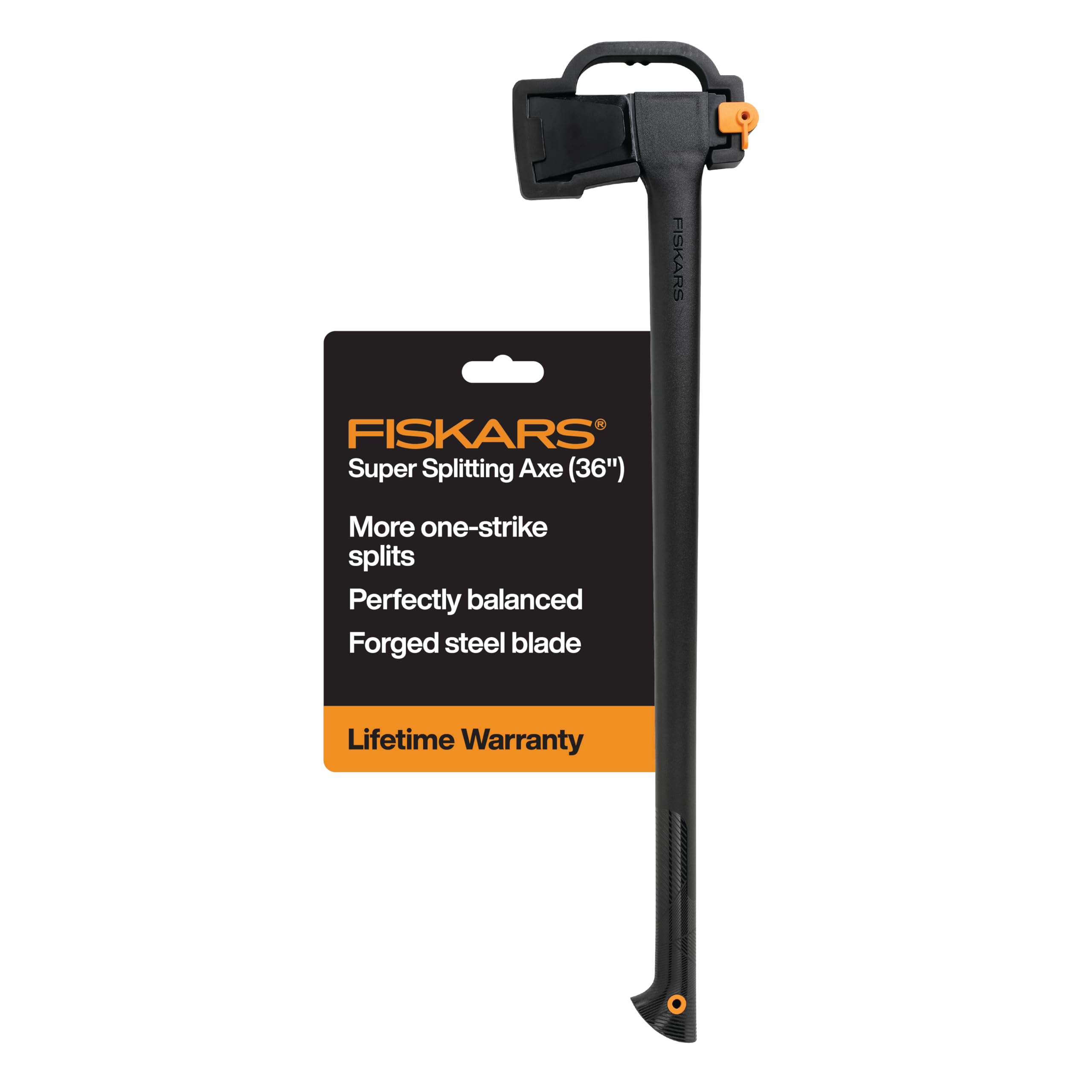
The Fiskars Super Splitting Axe uses a 36-inch FiberComp handle to generate serious leverage without adding unnecessary heft. The convex bevel blade geometry is designed to bite deep and self-release, reducing the number of swings needed to split medium to extra-large rounds. The head weight is balanced forward to create a fast, powerful arc that taller users will appreciate.
The virtually unbreakable composite handle eliminates the risk of warping or cracking that plagues wooden handles in wet storage conditions. Hardened forged steel holds its edge well, so you spend less time sharpening and more time splitting. The non-stick coating further reduces friction, preventing the blade from binding even in stringy or partially frozen wood.
Owners consistently report one-strike splits on seasoned oak and maple after years of use. The lifetime warranty backs the tool’s build confidence. If you process a few cords per season and want a mid-range tool that performs like a premium splitter, this is the benchmark.
Why it’s great
- 36-inch handle delivers exceptional leverage for taller users
- Convex bevel edge stays sharp and self-releases from cuts
- FiberComp handle is weatherproof and backed by a lifetime warranty
Good to know
- Not ideal for splitter beginners—the leverage can feel aggressive
- Some users prefer a heavier maul for oversized frozen rounds
2. Estwing 8 lb Wood Splitting Maul

When nothing else will crack a tough elm or ironwood round, the Estwing 8 lb maul is the nuclear option. Its forged head is hardened to 50–55 HRC, meaning it can withstand repeated impacts into the hardest hardwoods without deforming or chipping at the edge. The 36-inch dual-injection fiberglass handle dampens vibration noticeably better than raw wood.
The special high-force splitting head design concentrates mass behind a relatively narrow wedge, so the maul penetrates deeply without getting stuck. At 10.5 pounds total, this tool demands upper-body strength—it is not a beginner’s choice. But for those who process fibrous or wet wood, the extra weight saves time by converting kinetic energy into splits on the first swing.
Customer reviews confirm the handle remains tight after hundreds of rounds, and the edge stays serviceable with occasional filing. Estwing’s reputation for durability carries here. If your woodpile contains large-diameter stumps or dense logs, this maul is the brute-force solution.
Why it’s great
- 8 lb head crushes the toughest hardwoods in fewer swings
- Forged steel at 50–55 HRC resists edge deformation
- Fiberglass handle reduces shock transmission
Good to know
- Too heavy for smaller users or extended sessions
- Not suitable for kindling or precision chopping
3. 1844 Helko Classic Nordic Splitting Axe

Helko’s Classic Nordic Splitting Axe is a German-made, 5.5-pound straight-handled splitter built for users who demand heirloom-level craftsmanship. The head is drop-forged from C50 high-carbon steel (53–56 HRC) and polished to a Classic finish that resists rust and reduces cutting friction. The 31-inch Grade A American hickory handle is sustainably sourced, linseed-oil finished, and sanded to 150 grit for a smooth, confident grip.
This axe is uncompromising in its material quality—every piece is hand-selected for grain orientation. The wedge is a double conical design that prevents the head from loosening over time, a common failure in wooden-handled tools. It comes with a full-grain leather sheath and a bottle of Axe Guard protective oil, reinforcing its role as a tool meant to be maintained and passed down.
Experienced wood splitters praise its ability to handle large rounds with authority, especially on seasoned hardwoods. The head is heavier than most splitting axes but still manageable for a full day’s work. This is the choice for someone who values tradition, repairability, and German engineering over composite convenience.
Why it’s great
- Hand-forged C50 carbon steel head with optimal 53–56 HRC hardness
- Grade A hickory handle with perfect grain orientation
- Includes full-grain leather sheath and protective oil
Good to know
- Higher-tier budget; best for committed users
- Not for novices—requires some sharpening skill and maintenance
4. 1844 Helko Classic Forester

The Helko Forester is a full-size felling axe with a 3.5-pound head and a 31-inch handle, designed for the user who needs one tool capable of both felling medium trees and splitting firewood. The convex edge geometry provides a forgiving profile that resists chipping when striking at angles, and the C50 steel tempered to 53–56 HRC offers an excellent balance of edge retention and field sharpenability.
Like its Nordic sibling, the Forester is hand-forged in Germany and fitted to a Grade A hickory handle with a double conical wedge. The head is polished to a Classic finish that minimizes rust and reduces drag through the cut. It comes with the same premium leather sheath and Axe Guard oil, reinforcing the build philosophy that a tool should last generations.
Reviewers note the axe arrives very sharp out of the box and handles seasoned hardwood with authority for its weight class. The 31-inch length is comfortable for users between 5’8” and 6’2”. If you want a single, well-crafted axe for general property maintenance and occasional splitting, the Forester is a compelling premium option.
Why it’s great
- Versatile 3.5 lb head works for felling and splitting
- Hand-forged C50 steel with convex edge
- Heirloom-grade hickory handle and full-grain leather sheath
Good to know
- Not as fast for large-diameter splitting as a dedicated maul
- Requires routine oiling to maintain hickory handle
5. Fiskars 28″ Chopping Axe
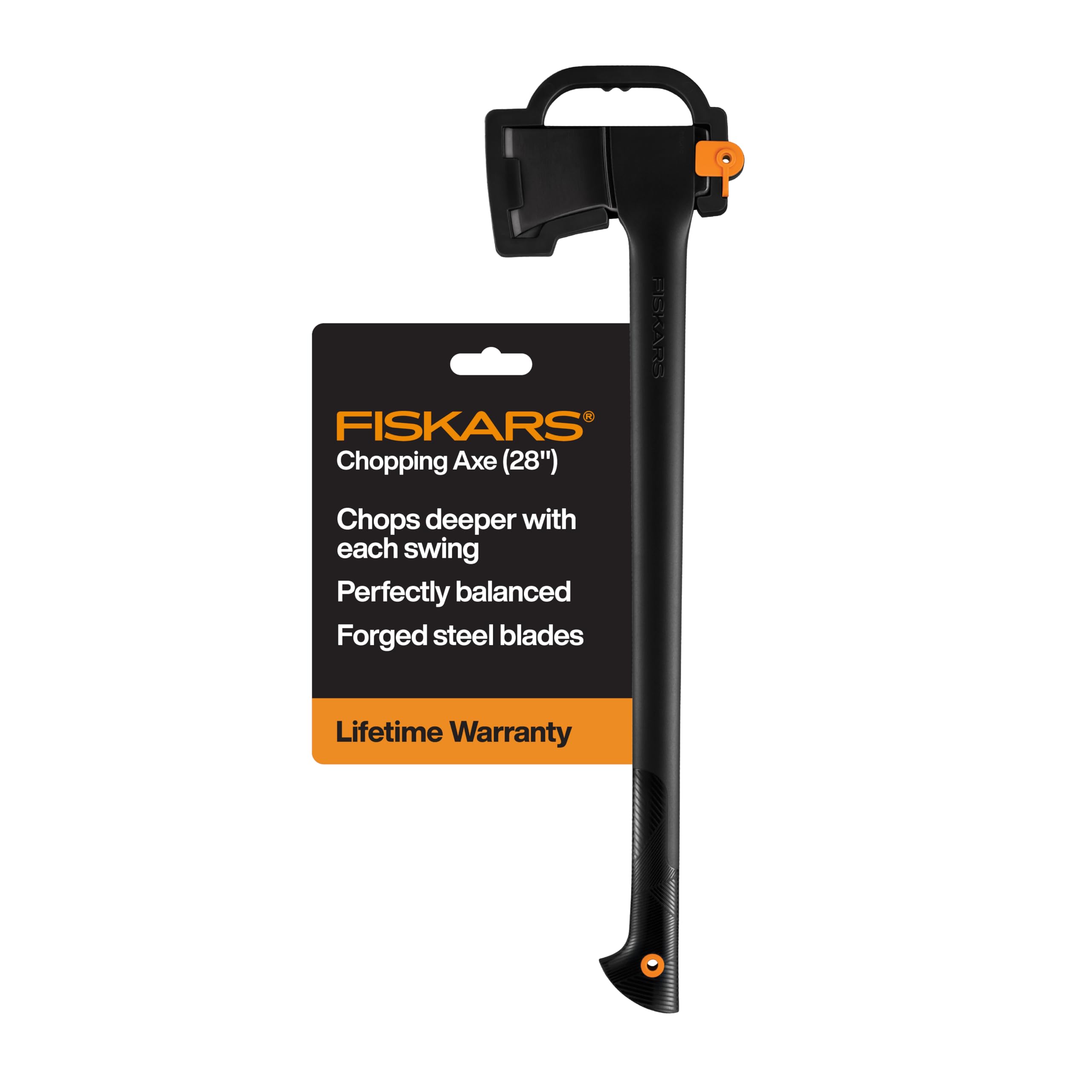
At 3.5 pounds with a 28-inch length, the Fiskars Chopping Axe is precision-balanced for speed and accuracy on small to medium tasks. The ultra-sharp blade uses advanced sharpening technology to deliver cleaner cuts on kindling, small trees, and campsite prep. The low-friction coating reduces drag and prevents the blade from wedging, so you spend less energy prying it free.
The handle is a composite design that combines steel and wood elements for a lightweight but durable feel. It absorbs shock better than a pure wood handle at this weight, which reduces fatigue during extended kindling sessions. The 28-inch length is ideal for users who prioritize control over raw power—it swings fast and lands precisely.
Reviewers consistently highlight its edge retention and ergonomic grip. Many use it as a travel axe because it stores compactly and requires no maintenance beyond occasional sharpening. If your primary use case is splitting campfire kindling or felling small diameter trees, this axe will outperform heavier tools that tire you out halfway through the job.
Why it’s great
- Lightweight and balanced for fast, accurate swings
- Low-friction coating prevents wedge sticking
- Great for kindling and small tree felling
Good to know
- 28-inch handle provides less leverage for large rounds
- Not designed for heavy splitting or seasoned hardwood logs
6. Husqvarna Wood Splitting Axe S2800

The Husqvarna S2800 packs a 5-pound splitting head into a 28-inch fiberglass composite handle, making it one of the more compact heavy splitters on the market. The head is coated to improve cutting performance and resist rust, and the balance is tuned to feel lively despite the weight. This axe is built for users who want maul-like stopping power in a shorter package for easier transport and controlled swings.
The fiberglass composite handle is weather-resistant and eliminates the warping issues that shorter wood handles can develop. The included sheath protects the edge during storage. Husqvarna backs the tool with a lifetime warranty, reflecting confidence in the composite construction.
Reviews praise its toughness in storm cleanup and felling scenarios, though some taller users find the 28-inch handle forces a deeper bend. For splitting seasoned softwood and medium hardwood rounds, it performs efficiently. The edge is not razor-sharp out of the box, but for splitting (as opposed to cutting), this is less critical. It is a solid mid-range option for the user who prefers a shorter, stout splitting tool.
Why it’s great
- 5 lb head in a compact 28-inch package
- Weather-resistant fiberglass handle with lifetime warranty
- Non-stick coating reduces binding
Good to know
- Handle may be too short for users over 6 feet tall
- Edge is not sharp enough for felling—best for splitting only
7. COUNCIL TOOL Hookaroon
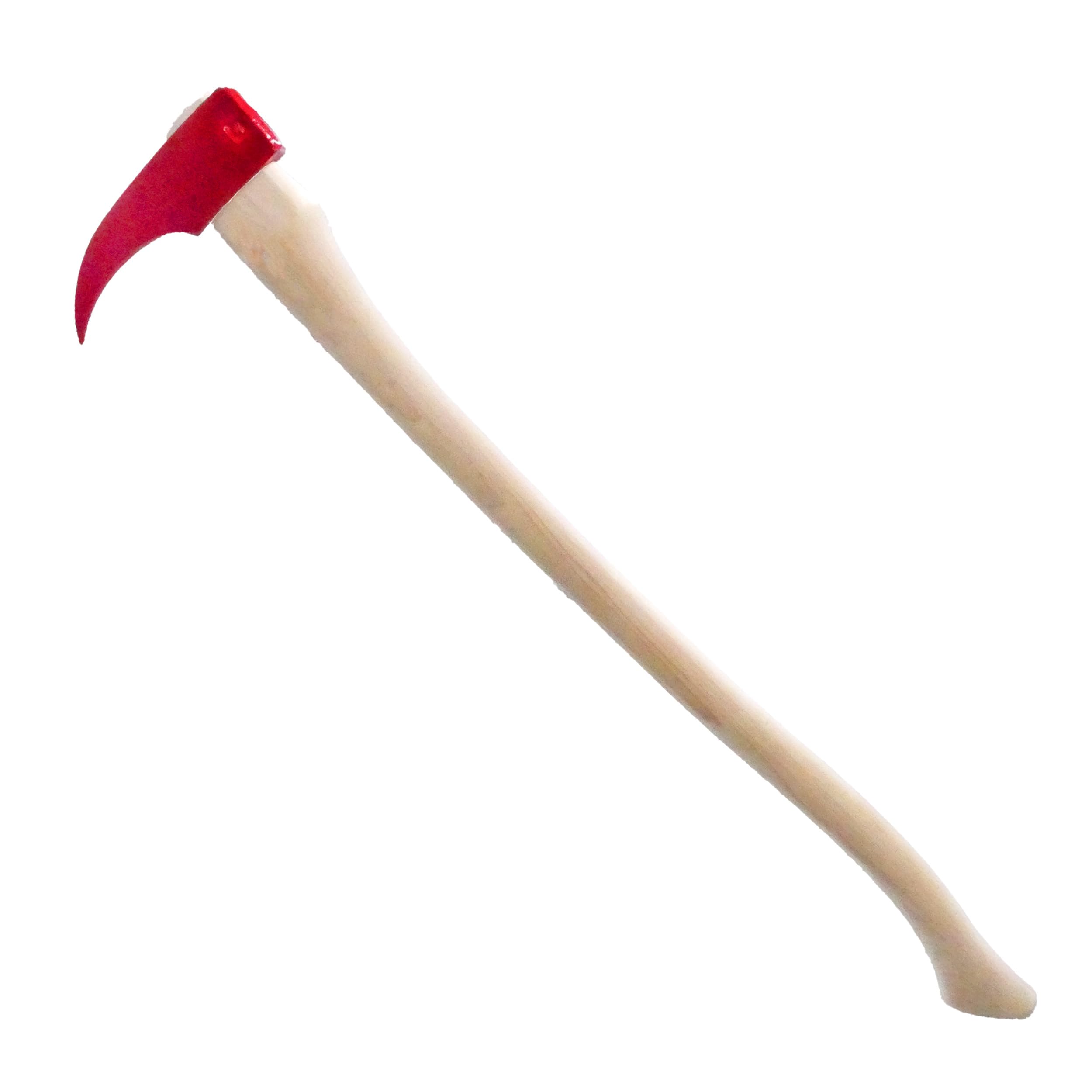
The Council Tool Hookaroon is not a traditional chopping axe, but it is an indispensable companion for anyone who processes firewood. Its 1.5-pound forged steel head features a sharp hook designed to grab, lift, drag, and reposition logs without bending over. The 36-inch American hickory handle provides the reach to move heavy rounds with one hand, saving your back during long processing sessions.
The steel head is heat-treated to Rc 45–55, giving the hook good edge retention for digging into bark and holding logs securely. The head is hydraulically seated and double-wedged (poplar and steel) for a tight fit that will not loosen under lateral stress. The flat rear face doubles as a striking surface for driving wedges or pounding stakes.
Made entirely in the USA from domestic materials, this tool is built for professional-grade durability. Users report it replaces the need for a sledge, pry bar, and axe in many log-moving scenarios. It is not a splitting tool, but if you process wood by the cord, the Hookaroon will reduce fatigue more than any maul upgrade.
Why it’s great
- Reduces back strain by allowing one-handed log movement
- Forged tool steel heat-treated for long life
- 36-inch hickory handle provides excellent reach
Good to know
- Not a chopping or splitting tool—specialized for moving logs
- Point is slightly wide for seasoned wood; may need grinding
FAQ
What handle length should I choose for splitting firewood?
Can I use a felling axe for splitting wood?
How often should I sharpen my chopping axe?
Final Thoughts: The Verdict
For most users, the axe for chopping wood winner is the Fiskars 36″ Super Splitting Axe because it combines the leverage of a 36-inch handle with a durable, low-maintenance FiberComp build that handles medium to large logs in one or two swings. If you need raw power for the toughest hardwoods, grab the Estwing 8 lb Maul. And for the user who values heirloom craftsmanship and repairability, nothing beats the 1844 Helko Classic Nordic Splitting Axe.