
Our readers keep the lights on and the weekend projects moving. As an Amazon Associate, I earn from qualifying purchases.
Dropping a dead oak or clearing a windfall from the back forty requires a tool that matches intent with metallurgy. A dull blade or a handle that twists in the swing turns a thirty-minute job into an afternoon of frustration, but the right geometry and head weight make each strike a decisive step toward a clean, safe cut.
I’m Rikta — the co-founder and writer behind FitlyFast. I’ve spent hundreds of hours analyzing blade steels, handle ergonomics, and head geometries across dozens of models to find the axes that deliver real cutting power without breaking your shoulder or your budget.
This guide zeroes in on the top contenders so you can confidently choose the best axe for cutting down trees that fits your specific needs, from lightweight limbing work to full-on felling sessions in heavy timber.
How To Choose The Best Axe For Cutting Down Trees
Choosing the right felling axe comes down to matching the tool’s weight, handle length, and steel quality to the size of the trees you work and your own physical build. A novice swinging a 5-pound maul on a 20-inch sapling will tire quickly, while a lightweight hatchet on a 24-inch oak trunk will bounce off without a real bite.
Head Weight And Handle Length
A 3.5-pound head paired with a 28- to 31-inch handle is the sweet spot for most general felling work. That weight provides enough inertia to drive the blade through medium hardwood without being overly exhausting over a full day. Taller users often prefer a 36-inch handle for extra leverage, while shorter handles give better control in tight brush conditions.
Blade Steel And Edge Profile
Look for high-carbon steel in the 53-58 HRC range. Softer steel dulls quickly, while excessively hard steel can chip on impact with knots or frozen wood. A convex (apple-seed) grind is ideal for felling because it wedges wood fibers apart cleanly and reduces binding. For splitting, a wider wedge profile works best.
Handle Material And Shock Absorption
Fiberglass composite handles offer low maintenance and excellent vibration dampening, making them ideal for users who want to avoid the periodic sanding and oiling required by wood. Hickory handles provide a traditional feel and excellent energy transfer, but require more care to prevent checking and splintering.
Quick Comparison
On smaller screens, swipe sideways to see the full table.
| Model | Category | Best For | Key Spec | Amazon |
|---|---|---|---|---|
| Fiskars 28″ Chopping Axe | Mid-Range | All-around felling & kindling | 3.5 lb / 28″ handle | Amazon |
| 1844 Helko Werk Forester | Premium | Serious felling in hardwood | 3.5 lb head / 31″ hickory | Amazon |
| Fiskars 36″ Super Splitting Axe | Mid-Range | Splitting medium to large logs | 6 lb / 36″ FiberComp | Amazon |
| Husqvarna Wood Splitting Axe S1600 | Premium | Lightweight splitting & camp work | 2.65 lb head / 24″ composite | Amazon |
| Husqvarna 20″ Curved Carpenter Axe | Premium | Limbing, carving & fine control | 2 lb head / 20″ hickory | Amazon |
| Truper Michigan Felling Axe | Mid-Range | Budget-friendly felling | 3.5 lb head / 33″ fiberglass | Amazon |
| INTERTOOL 24″ Chopping Axe | Budget | Entry-level camp & yard work | 3.5 lb / 24″ fiberglass | Amazon |
In‑Depth Reviews
1. Fiskars 28″ Chopping Axe
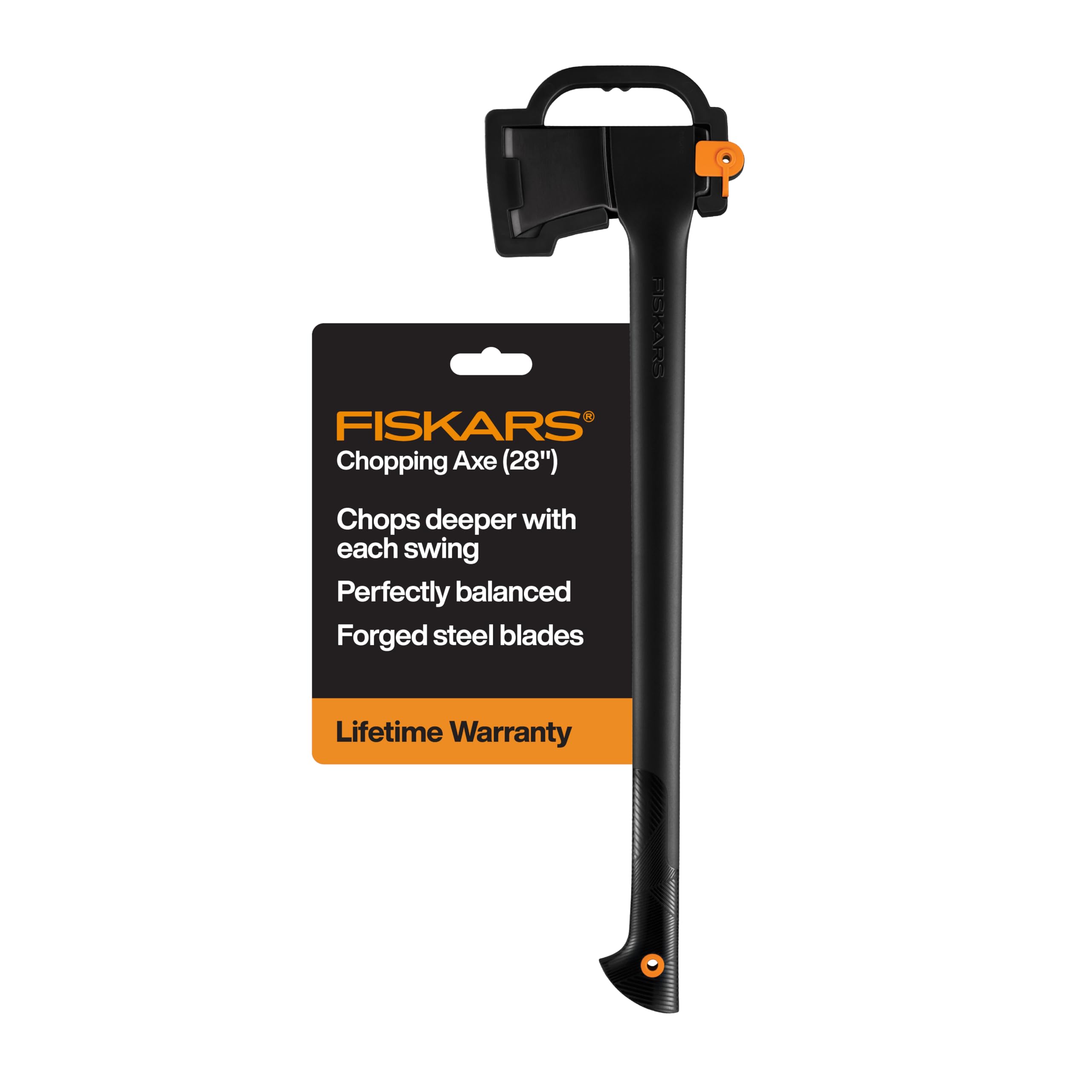
The Fiskars 28-inch Chopping Axe balances an ultra-sharp alloy steel blade with a 3.5-pound head that lands cleanly on both kindling splits and small-to-medium felling cuts. Its precision-balanced design means the weight drives forward naturally, reducing fatigue during extended sessions. The low-friction coating along the blade face prevents binding in green wood, allowing the edge to slide free after each strike.
Users consistently report the edge arrives razor sharp out of the box and holds its bite through dozens of sessions before any touch-up is needed. The bonded handle construction eliminates the risk of a loose head, a common failure point on traditional wood-handled axes. At 28 inches, the handle provides enough leverage for full swings while still being manageable for one-handed carry through brush.
The rubberized grip area stays secure even when hands are sweaty or gloved, and the overall weight distribution makes this axe feel lighter than its actual heft. For anyone stepping into a serious felling role without wanting to invest in a premium European maker, this axe delivers a performance-to-price ratio that is hard to beat.
Why it’s great
- Edge stays sharp far longer than standard carbon steel axes in this class
- Low-friction coating prevents the blade from sticking in the cut
- Virtually unbreakable handle with no head-loosening worries
Good to know
- Not ideal for heavy splitting of large-diameter rounds
- The bonded handle cannot be re-hung like a traditional wooden handle
2. 1844 Helko Werk Germany Classic Forester

The 1844 Helko Werk Forester represents the pinnacle of traditional German axe craftsmanship. Its 3.5-pound head is drop-forged individually by hand from C50 high-carbon steel hardened to 53-56 HRC, and it arrives with a polished classic finish that reduces both rust and cutting friction. The convex grind on the edge wedges wood fibers apart instead of gouging, making each swing more efficient on medium and large trees.
The 31-inch handle is sourced from Grade A American hickory, sanded to 150 grit and finished with boiled linseed oil for a smooth, warm grip. Helko Werk selects each handle for proper grain orientation, which prevents the shaft from twisting under heavy loads. The included full-grain leather sheath and Axe Guard protective oil keep the head in pristine condition between uses.
Users note the edge is exceptionally sharp right out of the box, though some find the factory bevel requires a slight profiling to match their preferred geometry. Once dialed in, the edge holds through prolonged sessions on hardwoods like oak and maple. This is an axe built to last a lifetime and be passed down, but it demands a user who understands correct striking technique and maintenance.
Why it’s great
- Hand-forged C50 steel with a durable 53-56 HRC hardness rating
- Grade A hickory handle selected for straight grain and density
- Premium leather sheath and protective oil included
Good to know
- Heavy for novice swingers at 5.5 pounds total weight
- Requires regular linseed oil care on the handle
3. Fiskars 36″ Super Splitting Axe
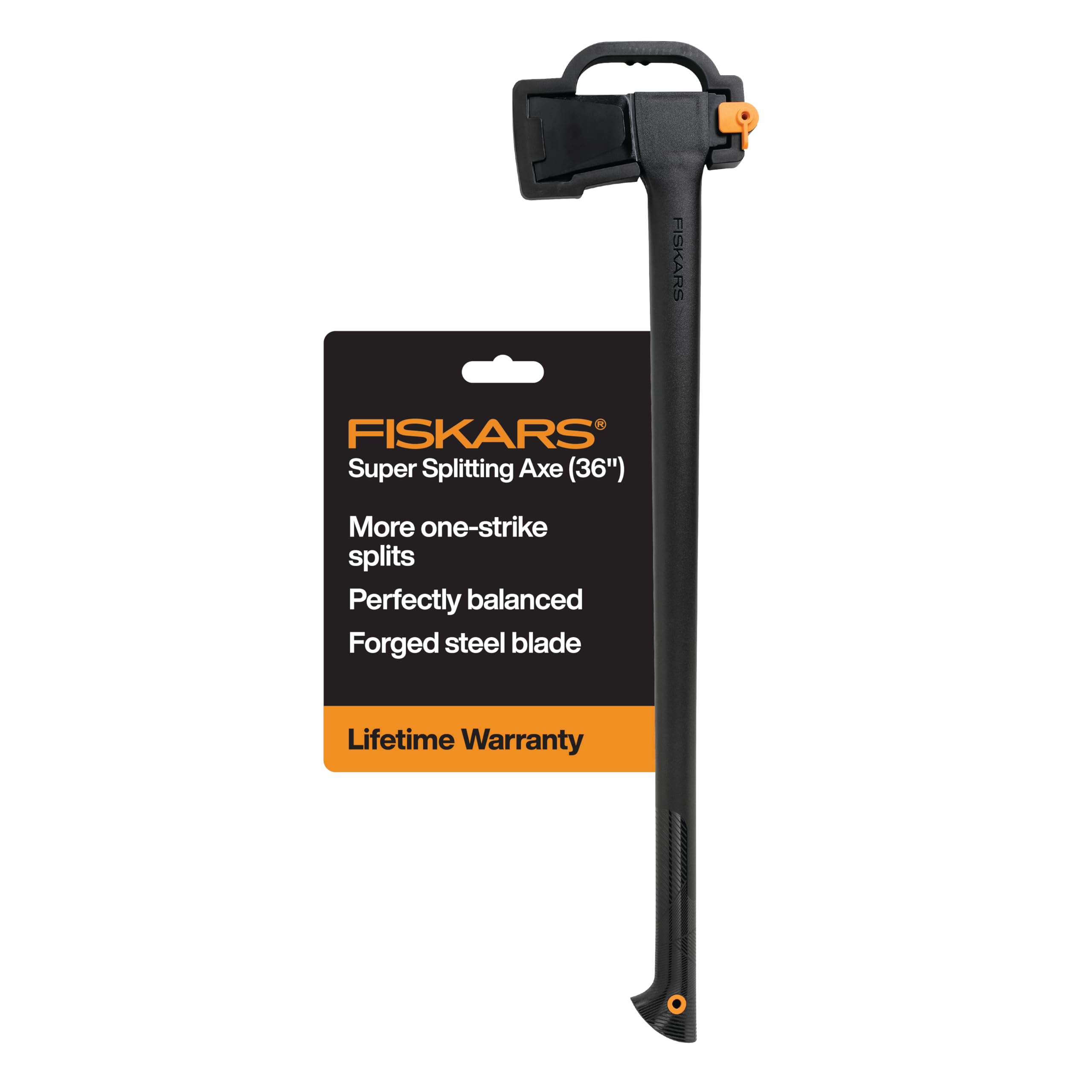
When the goal is turning medium to extra-large rounds into firewood in as few swings as possible, the Fiskars 36-inch Super Splitting Axe is the tool to reach for. Its 6-pound head and 36-inch FiberComp handle generate enormous momentum, and the convex wedge blade profile is optimized to split wood fibers apart rather than cut them. The blade’s beveled design also helps it release cleanly from the split, reducing wasted motion.
Taller users appreciate the extra handle length, which provides the leverage needed to split large-diameter hardwood without needing to bend or adjust stance awkwardly. The virtually unbreakable FiberComp handle absorbs shock effectively, and the hardened forged steel edge requires less frequent sharpening than traditional splitting mauls. Many users report achieving one-strike splits on seasoned oak and ash consistently.
While this axe excels at splitting, its weight and blade profile make it less suitable for felling or limbing where precision and a thinner edge are required. It is purpose-built for the splitting block, and within that role, it performs at a level that competes with tools costing significantly more.
Why it’s great
- Amplified force from 36-inch handle and 6-pound head for fast splits
- Low-friction blade sheds wood easily to maintain swing speed
- Lifetime warranty and durable composite construction
Good to know
- Too heavy and specialized for general felling tasks
- Handle length can be unwieldy in tight quarters
4. Husqvarna Wood Splitting Axe S1600

The Husqvarna S1600 is a compact splitting axe built around a 2.65-pound steel head and a 24-inch fiberglass composite handle, making it an excellent companion for camp tasks and smaller splitting jobs. Its shorter length reduces swing arc but allows for greater control in tight spaces, and the lighter head means it can be swung all day without the shoulder fatigue a 6-pound maul brings. The head is coated with a non-stick finish to ease removal from the wood.
Users note that while the axe is not particularly sharp from the factory, a keen edge is not always necessary for splitting seasoned softwood — the wedge profile and momentum of the head do the work. The balanced weight distribution makes the S1600 feel nimble in hand, and the rubberized grip area on the composite handle stays secure even in wet weather. A sheath is included for safe transport.
Taller users sometimes find the 24-inch handle too short for comfortable splitting without bending, but for average-height individuals or those working in brushy conditions, the reduced length is a genuine advantage. This axe is best viewed as a lightweight, portable option rather than a primary felling tool for heavy timber.
Why it’s great
- Lightweight design minimizes fatigue during extended splitting sessions
- Non-stick coating on the head reduces blade binding
- Low-maintenance composite handle with good shock absorption
Good to know
- Short handle requires bending for taller users
- Edge is not very sharp from factory — best for seasoned wood
5. Husqvarna 20″ Curved Carpenter Axe
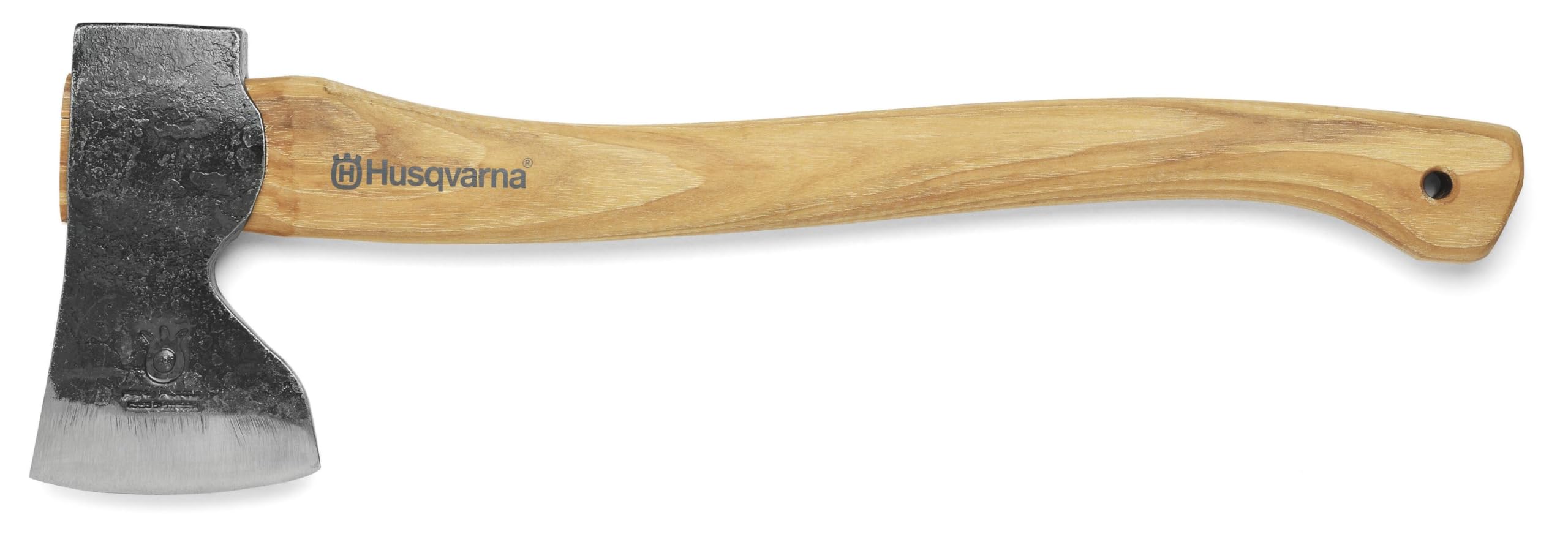
The Husqvarna 20-inch Curved Carpenter Axe is a precision-oriented tool designed for limbing, carving, and fine carpentry work rather than heavy felling. Its 2-pound hand-forged Swedish steel head is mounted on a hickory handle that provides excellent feedback and energy transfer, perfect for tasks that require controlled, accurate strikes. The straight blade edge is sharp enough out of the box for carving, but comes alive after a proper hand-honing session.
The 20-inch handle makes this axe extremely maneuverable in dense brush or when working on a ladder, and the included leather edge cover adds a touch of old-world quality that protects both the blade and the user during transport. Users who have kept this axe in service for years report that the steel holds a fine edge remarkably well, and the hickory handle, while requiring periodic oiling, develops a comfortable patina over time.
It is important to note that this axe is not designed for chopping logs or splitting large rounds. Its light head and short handle lack the mass and leverage needed for those tasks. Buyers looking for a dedicated felling or splitting axe should look elsewhere, but for those who need a precise, portable companion for limbing and bushcraft, this is a standout choice.
Why it’s great
- Hand-forged Swedish steel with excellent edge-holding ability
- Short handle is ideal for limbing, carving, and detailed work
- Comes with a premium leather edge cover
Good to know
- Not suitable for full-size felling or splitting tasks
- Hickory handle requires regular oiling to prevent drying
6. Truper 3 1/2 lb Michigan Felling Axe

The Truper 3.5-pound Michigan Felling Axe offers a traditional head shape on a modern 33-inch fiberglass handle, providing the leverage needed for felling while keeping the overall weight manageable. The high-carbon steel head arrives sharpened and ready for use, and the elongated fiberglass handle helps absorb some of the sting that typically travels up a wooden shaft. Users who have applied proper felling technique report clean cuts and reliable performance.
This axe is a strong entry-level choice for anyone who needs a dedicated felling tool without a premium investment. The fiberglass handle eliminates the need for seasoning or oiling, and the included sheath protects the edge during storage. Some users note that the steel is not as hard as premium European alternatives, meaning it may require more frequent sharpening, especially when used on hardwood.
For the price, the Truper delivers solid value, but buyers should temper expectations regarding edge retention and fit-and-finish. It is a functional tool that will handle moderate felling duties, but serious users may eventually want to upgrade to a higher-carbon steel option.
Why it’s great
- Classic Michigan head shape with a durable fiberglass handle
- 33-inch reach provides good leverage for felling
- Comes with a sheath and arrives sharp
Good to know
- Steel hardness is lower than premium options, requiring more frequent sharpening
- Some buyers report the handle lacks a secure grip in wet conditions
7. INTERTOOL 24-Inch Chopping Axe

The INTERTOOL 24-Inch Chopping Axe is a budget-oriented tool designed for campers, homeowners, and beginners who need a serviceable axe for light yard work and splitting kindling. Its 3.5-pound carbon steel head is coated to resist rust and arrives sharp enough for immediate use, while the 24-inch fiberglass handle with a rubber grip provides a secure hold even in wet conditions. The compact size makes it easy to stow in a truck or pack for weekend trips.
User feedback highlights that this axe fills the gap between a small hatchet and a full-size felling axe, offering more swing power than a hatchet without the weight and length of a professional tool. Several users note that the factory edge is inconsistent and may benefit from a quick pass with a stone, but once dialed in, the blade holds a functional edge for light tasks. The included plastic blade guard is functional but not durable long-term.
This axe is not intended for heavy felling of large trees. Its shorter handle limits leverage, and the steel is not designed for repeated impacts on dense hardwood. For its intended role as a camp and yard utility tool, however, the INTERTOOL provides a perfectly adequate entry point for the price-conscious buyer.
Why it’s great
- Affordable entry point for light yard and camp work
- Rubber grip stays secure in wet conditions
- Compact 24-inch length is easy to transport
Good to know
- Factory edge may require sharpening before heavy use
- Not suitable for serious felling of large trees
FAQ
What is the ideal head weight for felling medium-sized trees?
Should I choose a fiberglass handle or a hickory handle?
Can a splitting axe be used for felling trees?
How do I maintain the edge on a felling axe?
Final Thoughts: The Verdict
For most users, the best axe for cutting down trees is the Fiskars 28″ Chopping Axe because it pairs a razor-sharp edge, low-friction coating, and a virtually indestructible handle at a price that outperforms its class. If you want the heirloom craftsmanship of hand-forged German steel and a traditional hickory feel, grab the 1844 Helko Werk Forester. And for pure splitting power on large-diameter rounds, nothing beats the Fiskars 36″ Super Splitting Axe.