
Our readers keep the lights on and the weekend projects moving. As an Amazon Associate, I earn from qualifying purchases.
The helmet you pick has to stay put when your toddler looks down at their pedals, not slide sideways. A baby bike helmet protects a skull that is still growing, and the best ones do it without being so heavy your child fights wearing it. This guide covers five helmets that fit heads from about 1 year old up to 6 years old, comparing the real specs: how they adjust, how much they weigh, and how well they fit small heads.
I’m Rikta — the co-founder and writer behind FitlyFast. This guide is built by comparing the manufacturers’ published specifications and the patterns across verified customer reviews, so you get each pick’s real strengths and trade-offs instead of marketing spin.
Every helmet here meets the U.S. CPSC safety standard (the federal requirement for bicycle helmets), but that is just the starting point. The true difference between a helmet your child wears and one they toss aside comes down to fit, weight, adjustability, and ventilation. Those are the factors that define the best baby bike helmet for your family.
How To Choose The Best Baby Bike Helmet
You can’t judge a baby helmet by its cute dinosaur print. The three things that actually keep your child safe are the fit, the certification, and the adjustment mechanism. Here is what to check before you click buy.
1. Head Circumference Comes First (Not Age)
Age ranges on helmets are rough estimates at best. A “1-3 year” helmet can be too big for a 12-month-old or too snug for a 2-year-old. Always measure your child’s head circumference around the widest part (just above the eyebrows and ears) and compare that number (in centimeters or inches) to the helmet’s size chart. The helmet should sit level on the head, about one finger-width above the eyebrows, and not rock in any direction when you gently push it side to side.
2. The Two Safety Standards That Matter
The CPSC 1203 standard (U.S. Consumer Product Safety Commission for bicycle helmets) is the minimum. For the helmets in this guide, you also want a model that complies with ASTM 1447 (the standard for extended head coverage). Extended coverage means the helmet wraps slightly lower on the back of the skull — a simple but meaningful difference if your child takes a tumble backward.
3. The Adjustment System: Dial vs. Strap Only
A rear dial (a small turning knob on the back of the helmet) lets you fine-tune the fit in seconds as your child grows, without rethreading straps. Strap-only helmets rely entirely on the chin straps and side adjusters — they work but are less precise. For a baby or toddler who is still learning to balance, a dial-fit system is easier to use and tends to hold its setting ride after ride.
Quick Comparison
On smaller screens, swipe sideways to see the full table.
| Model | Category | Best For | Key Spec | Amazon |
|---|---|---|---|---|
| AUKA Toddler Kids | Premium | Best Overall — Most adjustability for 1-3 year olds | 14 vents, 0.3 kg weight, removable lining with insect net | Amazon |
| Bell Infant Sprout | Premium | Top Performer — Trusted brand, patented pinch-free buckle | 7 vents, 0.6 lbs, True Fit system, fits 47-52 cm | Amazon |
| newyoo Toddler Bike Helmet | Premium | Best for Hot Weather — Sun visor plus 14 vents | ABS shell vs PC, 14 vents, built-in bug net, visor | Amazon |
| Bimalsic Toddler Helmet | Mid-range | Best Value — Balanced price with two pad sets for custom fit | 12 vents, 0.29 kg, two thickness pads (4mm and 7mm) | Amazon |
| FIODAY Toddler Helmet | Budget | Best Budget-Friendly — Lightest at 0.25 kg for tiny heads | 11 vents, 0.25 kg, fits 17-19.7 in (toddler 1-3 years) | Amazon |
In‑Depth Reviews
1. AUKA Toddler Kids Bike Helmet
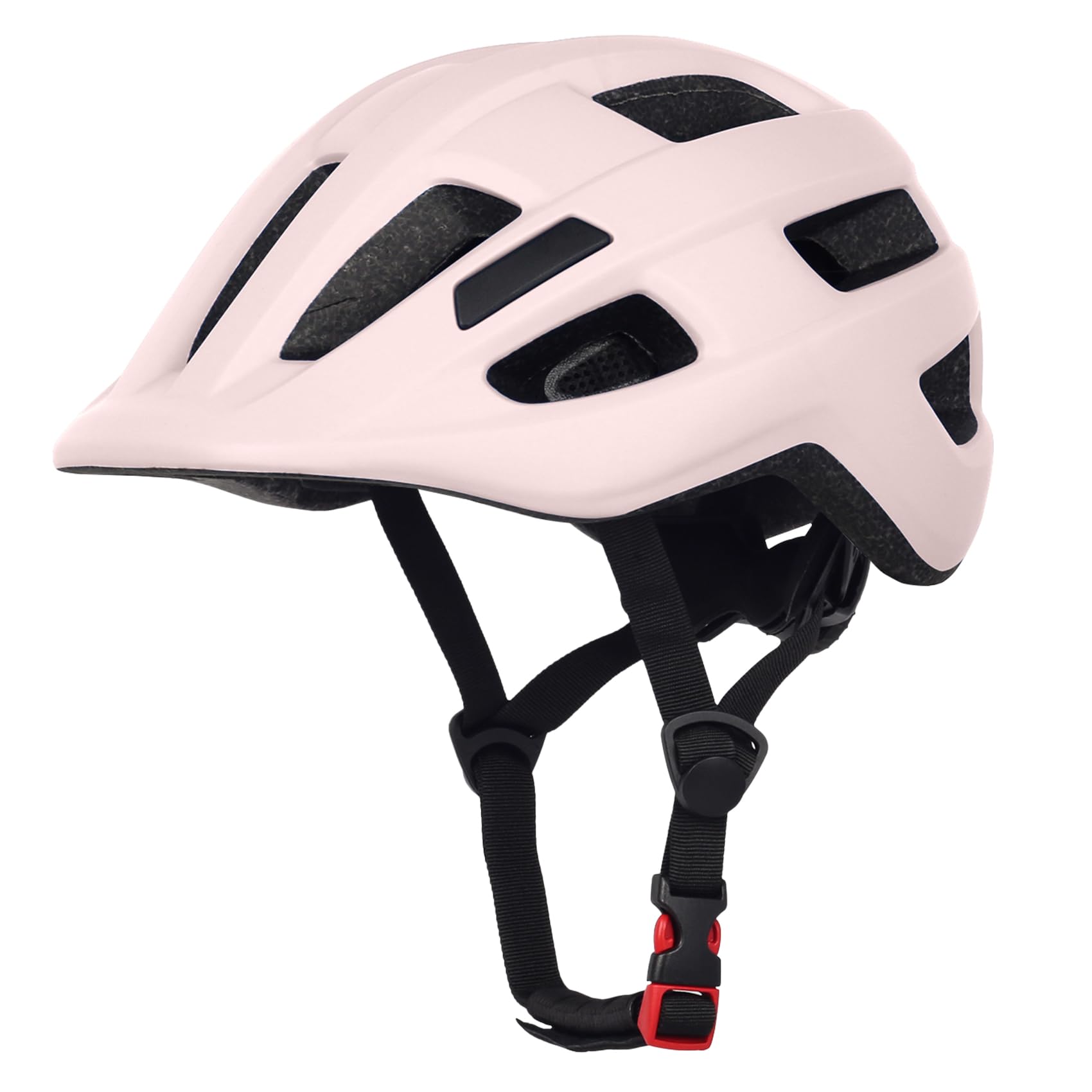
The AUKA helmet covers head circumferences from 48 to 50 cm in the XS size, making it the top pick for toddlers aged 1-3 years. It comes with two sets of removable inner pads and an insect net in the front vents — a detail the Bell Infant Sprout lacks. At 0.3 kilograms it is 0.05 kg heavier than the FIODAY, but buyers report “this fits my 18 month old perfectly,” which suggests the sizing hits the target age range well.
Safety is covered with CPSC and ASTM 1447 compliance, and the 14 air vents are the most of any helmet in this lineup. The spin dial on the back plus the adjustable chin strap let you dial in a secure fit without the helmet sliding around. It also includes a carry bag and a use guide, which is a nice extra for a helmet in this price tier.
The catch is size options — you only get XS (48-50 cm) or S (51-54 cm), so if your child’s head is between 50 and 51 cm you may need to choose the larger size and pad it. Still, for a focused 1-3 year old helmet, the adjustability, vent count, and included accessories make it the most complete package.
Why it’s great
- 14 air vents keep small heads cool on warm rides
- Removable padding and insect net in front vents for comfort and hygiene
- Carry bag included for storage and travel
Good to know
- Only two sizes available; the 50-51 cm gap might need padding adjustment
- Heavier than the lightest budget options by about 0.05 kg
2. Bell Infant Sprout Bike Helmet

Compared to the top pick AUKA, the Bell Infant Sprout is 0.6 pounds versus the AUKA’s lighter weight, but it offers two features the AUKA lacks: the patented Pinch Guard buckle and the True Fit single-step adjustment dial. At 0.25 kg it is heavier than the FIODAY’s 0.27 kg, yet it provides extended rear coverage and a low-profile shape many parents prefer for a classic helmet look.
Owners mention it “fits 2 year old well; may not fit next spring,” meaning the 47-52 cm range is honest but tight for kids at the upper age edge. It has only 7 vents compared to the AUKA’s 14, and buyers mention “causes heavy sweating” on hot days — a real trade-off for warm-weather riding.
Choose the Bell over the top pick if brand trust and a pinch-free buckle matter more to you than maximum ventilation.
Where it shines
- Patented Pinch Guard buckle prevents pinching the chin during fastening
- True Fit system is a single-dial adjustment for quick, secure fit
- Extended rear coverage for added protection on backward falls
Worth noting
- Only 7 vents can lead to sweating in warm weather
- Fits heads 47-52 cm; may not fit a growing 2-3 year old next season
- Heavier than some budget options at 0.6 pounds
3. newyoo Toddler Bike Helmet

If your child rides on sunny days or through buggy paths, the newyoo is the best choice. It features a built-in sun visor (a brim that extends slightly forward to shade the eyes from direct sunlight) and an integrated bug net in the front vents — a feature you will not find on the Bell or the Bimalsic. The helmet also uses an ABS outer shell (acrylonitrile butadiene styrene, a tough plastic) instead of the polycarbonate (PC) shell (a lighter, shatter-resistant plastic) found on most other options here; ABS is generally tougher against sharp impacts but slightly heavier.
With 14 ventilation openings and a 360° removable and washable inner padding, it matches the AUKA on airflow while adding the visor and bug net. The crank dial on the back adjusts from 46 to 52 cm, so it fits a wide range from 1-year-olds to small 5-year-olds. Customers note it is “very lightweight which is good for my one year olds little head,” confirming the weight is manageable despite the ABS shell.
The downside is price — it sits at the top of this list. You pay more for the visor, bug net, and ABS build, which may feel like extras you will not use daily. But if sun glare or summer bugs are a real problem on your rides, this helmet solves both with one purchase.
What stands out
- Built-in sun visor protects eyes from direct glare
- Integrated bug net keeps insects out of front vents
- 14 vents plus 360° washable padding for comfort
The trade-offs
- Priced higher than the AUKA despite similar vent count
- ABS shell may add slight weight over PC alternatives
4. Bimalsic Toddler Helmet for Toddlers Age 1-3/2-4/3-5-6
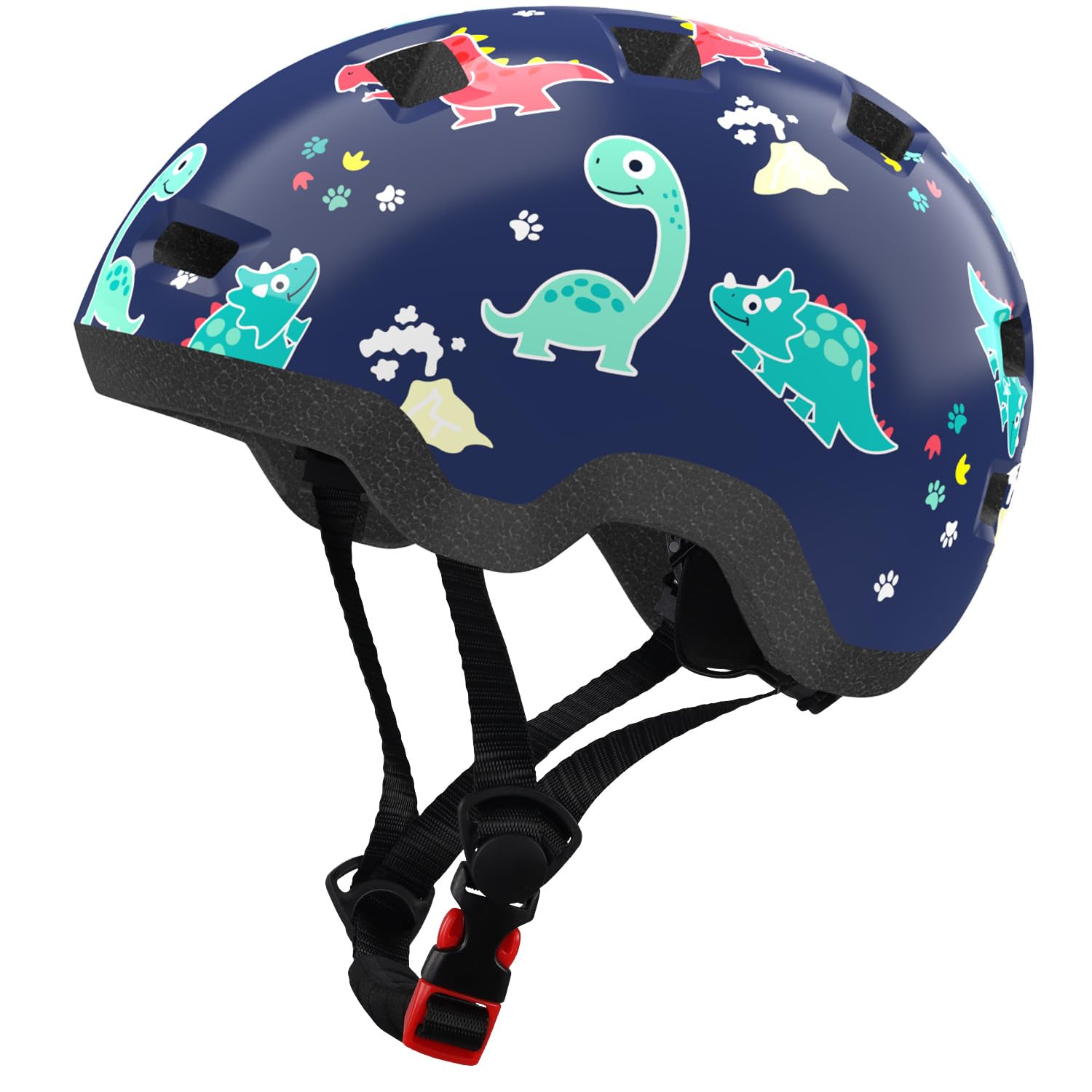
The single number that matters most in this category is fit customization, and the Bimalsic scores a 10/10 by including two sets of pads (one 4 mm thick, the other 7 mm thick). You can use one set, combine them for a snugger fit, or swap as your child grows. That is a level of fit customization the FIODAY and the Bell do not offer, and it directly addresses the sizing issue buyers of the FIODAY reported (“too small for my almost 3 year olds head”).
Size S covers 48 to 54 cm (18.9 to 21.3 inches), which means it spans the same general range as the newyoo (46-52 cm) but extends slightly larger, so a 5-6 year old with a smaller head can still wear it. The 12 vents sit between the Bell’s 7 and the AUKA’s 14, so airflow is decent without looking over-engineered.
The honest limit: multiple reviewers point out “this is a little small so I expect to size up again soon,” meaning the smaller XS size may only fit for a few months for some toddlers. The trade-off for the lower price is a slightly less premium finish compared to the Bell. But for the price-to-feature ratio — dial fit, two pad thicknesses, 12 vents, and a cute dinosaur print — this is the best value in the group.
The upsides
- Two sets of pads (4 mm and 7 mm) let you fine-tune the fit
- 12 vents provide good airflow for sweaty heads
- Rear dial adjustment makes sizing quick and easy
Keep in mind
- Some buyers find the XS size fits smaller than expected
- Finish feels less premium than the Bell Sprout
5. FIODAY Toddler Bike Helmet
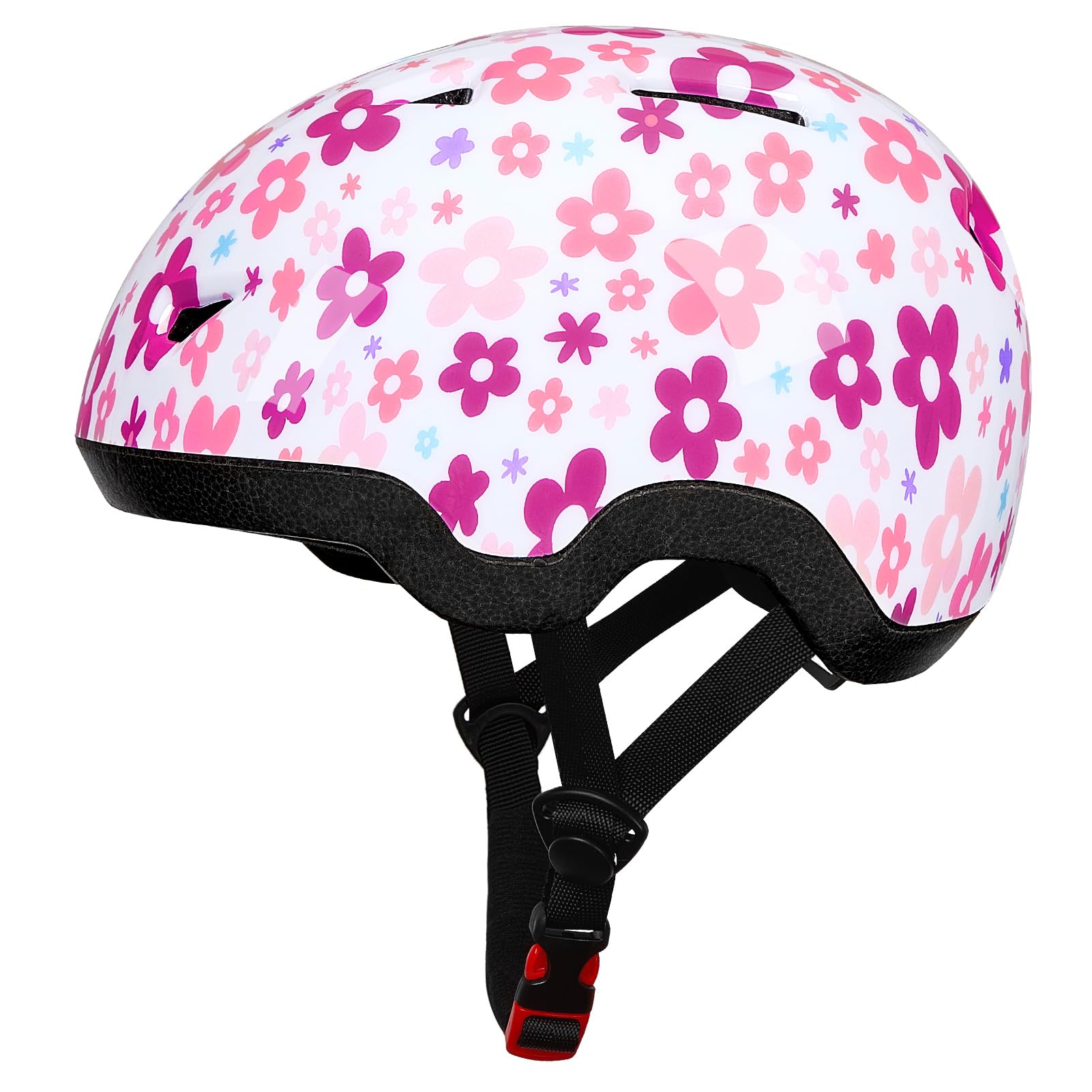
At 0.25 kilograms, the FIODAY is the lightest helmet in this lineup — 0.04 kg lighter than the Bimalsic and 0.05 kg lighter than the AUKA. For a one-year-old who is just learning to balance, that tiny weight difference matters. The helmet also packs 11 vents and a removable, washable inner padding, so breathability is solid. It meets the same CPSC 1203 and ASTM 1447 standards as the premium picks.
The price is the lowest here, but you do give up some adjustability. The size S covers only 17-19.7 inches (43-50 cm) — a smaller range than the Bimalsic’s 18.9-21.3 inches — and multiple shoppers say it is “too small for my almost 3 year olds head” and recommend it “for under 2.” The rear dial works fine, but the padding is a single fixed thickness, so you cannot customize the fit as deeply as with the Bimalsic’s two-pad system.
Grab the FIODAY if you have a 1-2 year old beginner who needs the lightest possible helmet for short rides around the block. If your child’s head is under 19.7 inches and you do not need multiple seasons of use from one purchase, the FIODAY gives you solid safety at a budget-friendly price.
Why we’d pick it
- Lightest weight at 0.25 kg — ideal for very young toddlers
- 11 vents plus removable washable padding keep heads cool and clean
- Meets CPSC and ASTM safety standards
A few caveats
- Size range is narrow (17-19.7 in); best for ages 1-2
- Single fixed padding thickness limits fit customization
Understanding the Specs
Weight (Kilograms or Pounds)
A helmet’s weight is critical for a baby or toddler because their neck muscles (the muscles that hold up the head) are still developing. A difference of 0.05 kg (about 1.8 ounces) may not sound like much, but on a 10-pound head it is immediately noticeable — the child will be more comfortable and less likely to fight wearing it. Look for helmets under 0.35 kg for babies under 2 years old.
Number of Vents
Vents are the holes in the helmet that let airflow through and cool the head. More vents generally mean a cooler head during active riding, but each vent also reduces the structural foam area. For a toddler helmet, 11 to 14 vents is a good balance. The Bell Infant Sprout has only 7 vents, which some parents report leads to heavy sweating on warm days.
Head Circumference Range
This is the single most important number on the box. Measure your child’s head circumference (in inches or centimeters) with a soft measuring tape wrapped around the widest part of the head — about 1 cm above the eyebrows and ears. The helmet’s range should sit at least 2 cm larger than your child’s current measurement to allow for a bit of growth, but no more than 5 cm, or the fit will be sloppy.
Rear Dial vs. Strap-Only Adjustment
A rear dial (a small knob at the back of the helmet that lets you tighten or loosen the fit with one turn) is faster and more precise than strap-only systems, which rely on the chin strap to pull the helmet tight. For a baby who is still wobbling on a tricycle, a dial system is easier to adjust quickly as they grow.
FAQ
How tight should a baby bike helmet fit?
Can I buy a used baby bike helmet?
How do I measure my child’s head for a helmet?
What is the difference between CPSC and ASTM certification?
Final Thoughts: The Verdict
If you want one dependable pick, the baby bike helmet winner is the AUKA Toddler Kids Bike Helmet because it combines the most vents (14) with two pad thicknesses, a carry bag, and an insect net — all in a size range that actually fits 1-3 year olds. If you want a trusted brand with a pinch-free buckle, grab the Bell Infant Sprout. And for hot sunny rides with a toddler, the newyoo Toddler Bike Helmet with its sun visor and bug net is the right call.