
Our readers keep the lights on and the weekend projects moving. As an Amazon Associate, I earn from qualifying purchases.
Every newborn comes with a tiny mouth, a powerful suck reflex, and a digestive system that turns trapped air into screaming, sleepless nights. The right bottle either mimics the breast’s flow and prevents air ingestion, or it floods the baby with milk and introduces bubbles that cause gas, reflux, and frustration. This decision directly affects the first months of feeding and bonding.
I’m Rikta — the co-founder and writer behind FitlyFast. I’ve spent hundreds of hours analyzing feeding hardware, cross-referencing parent-reported outcomes with nipple flow rates, venting mechanisms, and material safety data to build this guide.
After researching dozens of newborn-specific bottles and filtering by how each design handles air management, latch support, and material safety, I have assembled the definitive list of the best baby bottles for newborns.
How To Choose The Best Baby Bottles For Newborns
Choosing a newborn bottle means evaluating three primary areas: how the bottle manages air, how the nipple controls flow, and what materials contact the baby’s mouth and milk. Every other feature is secondary.
Air Management: The Venting System
Newborns cannot coordinate sucking, swallowing, and breathing well. A bottle without an effective vent forces the baby to swallow air with milk, which causes gas, reflux, and spit-up. Look for bottles with internal vent tubes (like Dr. Brown’s), base vents (Thyseed), or disposable liners that collapse as the baby drinks (Playtex). Avoid bottles that lack any dedicated venting mechanism.
Nipple Flow Rate: Preemie/Extra Slow Is the Baseline
Full-term newborns should start with the slowest flow nipple available — usually labeled “SS” (extra slow), “Level 1,” or “Newborn.” If milk flows too fast, the baby will gag, choke, or reject the bottle entirely. The best bottles offer multi-stage flow options so you can adjust as the baby’s suck strengthens.
Material Safety: Glass vs. PPSU vs. Plastic
Newborns are uniquely vulnerable to chemical leachates. Borosilicate glass is the safest choice — it’s non-porous, heat-resistant, and won’t degrade. PPSU is the next best option: a high-temperature-resistant plastic that is BPA-free and lighter than glass. Standard polypropylene plastic is acceptable but degrades faster with repeated sterilization. Avoid polycarbonate and any bottles not explicitly labeled BPA-free and phthalate-free.
Quick Comparison
On smaller screens, swipe sideways to see the full table.
| Model | Category | Best For | Key Spec | Amazon |
|---|---|---|---|---|
| Thyseed Anti-Colic Glass (5 oz) | Premium Glass | Calm, low-gasp feeding | Base vent + 5 micro-hole nipple | Amazon |
| Philips Avent Natural Response (4 oz) | Premium Plastic | Breast-bottle switching | No-drip nipple, baby-led flow | Amazon |
| Dr. Brown’s Options+ Glass (4 oz) | Mid-Range Glass | Reducing colic and spit-up | Internal vent tube system | Amazon |
| Pigeon PPSU Wide Neck (5 oz) | Premium PPSU | Clean latch, less burping | SS nipple, 3-natural-movement design | Amazon |
| Gulicola Glass Bottle (3 oz) | Mid-Range Glass | Preemies and small newborns | 3 oz capacity, extra slow SS nipple | Amazon |
| Thyseed PPSU Anti-Colic (5 oz) | Mid-Range PPSU | Combo feeding, leak resistance | Base vent, sealed neck, 4 pieces | Amazon |
| Playtex Drop-Ins Liners (4 oz) | Budget Plastic | Minimal air and dishwashing | Pre-sterilized liners, angled neck | Amazon |
In‑Depth Reviews
1. Thyseed Anti-Colic Glass Baby Bottle (5 oz)
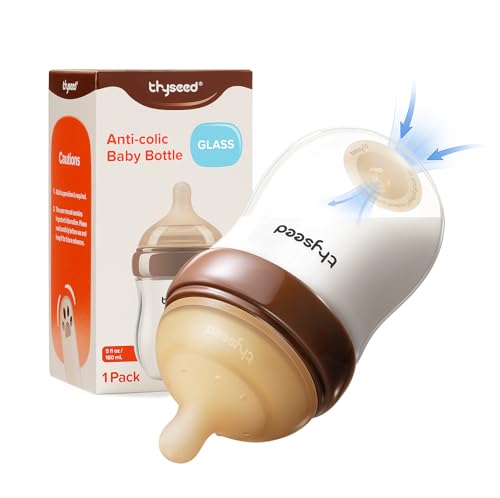
The Thyseed glass bottle uses a base-vent design that has been clinically studied and published in JAMA — a level of scientific backing uncommon in baby feeding hardware. The vent sits at the bottom of the bottle and separates air from milk so the baby swallows far fewer bubbles. Parents consistently report that this bottle resolved reflux and colic after other brands failed.
The 5 oz borosilicate glass body is thick, heat-shock resistant, and free of BPA and BPS. The nipple uses five micro-openings that release milk only when the baby actively sucks, naturally pacing the flow. The silicone is sourced from WACKER in Germany, and the polypropylene parts come from TotalEnergies in France — premium materials throughout.
Assembly is simple with only three parts: the bottle, the vent disc, and the nipple ring. The wide neck makes cleaning easy, and the glass can go through a microwave sterilizer or boiling water without issue. A few users note the bottle is heavier than plastic, but the trade-off is superior durability and zero taste or odor retention.
Why it’s great
- Published clinical data backing the anti-colic base vent
- 5 micro-hole nipple for natural, paced suckling
- Premium borosilicate glass with German and French sourced materials
Good to know
- Heavier than plastic or PPSU alternatives
- Higher sticker price than entry-level glass bottles
2. Philips Avent Natural Response (4 oz)

The Avent Natural Response is the only bottle on this list where the nipple truly stays dry when the bottle is inverted — it releases milk only when the baby actively sucks and swallows. This mimics the natural breastfeeding rhythm and prevents the baby from being flooded with milk. For parents who are combining breastfeeding and bottle feeding, this design reduces the risk of the baby developing a flow preference and rejecting the breast.
The 4 oz polypropylene body is BPA-free and ergonomically shaped for small hands to grip later on. The wide, breast-shaped nipple helps encourage a proper latch with a shallow-to-deep tongue position. The integrated anti-colic valve sits inside the nipple skirt, reducing the number of separate parts to clean. Flow rates range from 1 to 5, so the bottle grows with the baby.
Real-world feedback emphasizes how easy these bottles are to disassemble and clean — the wide neck lets you reach inside with a brush. The no-drip design also means less milk wasted when the baby pauses or falls asleep mid-feed. A small number of international users have requested glass versions, but the plastic construction is durable and lightweight.
Why it’s great
- Nipple releases milk only during active sucking, no passive dripping
- Easy to clean with few parts and wide neck
- Integrated anti-colic valve reduces gas without extra vent pieces
Good to know
- Polypropylene plastic, not glass or PPSU
- Some users report the nipple flow is too fast for newborns on setting 1
3. Dr. Brown’s Options+ Narrow Glass (4 oz)
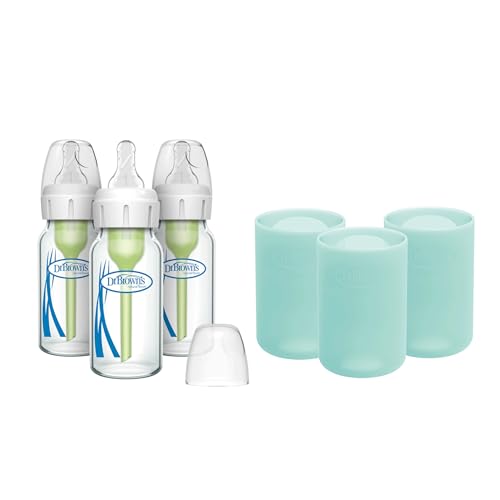
Dr. Brown’s has been the standard for colic relief for decades, and the Options+ narrow glass bottle refines that formula. The internal vent tube creates a vacuum-free feeding environment, meaning the baby does not need to break suction to regulate flow. This is clinically shown to reduce colic, spit-up, burping, and gas. The borosilicate glass body resists thermal shock, so you can go from refrigerator to bottle warmer without worrying about cracks.
The 4 oz capacity is ideal for newborns who take small, frequent feeds. The included Level 1 slow flow nipple is consistent and does not collapse during feeding. The bottle comes with a mint-colored silicone sleeve for grip and drop protection. The narrow shape fits easily in a newborn’s hands later and is compatible with most standard bottle warmers and sterilizers.
The one trade-off is the number of parts — the vent system includes a tube, a collar, and a nipple, totaling five pieces. Parents who prioritize minimal cleaning may find this tedious, but the vent’s effectiveness in reducing colic symptoms is well worth the extra minute of assembly. Users also confirm that heating milk in glass is faster and more even than plastic.
Why it’s great
- Proven internal vent system for vacuum-free, low-gas feeding
- Borosilicate glass with silicone sleeve for drop protection
- Consistent flow rate supports paced newborn feeding
Good to know
- Five separate parts to wash and assemble
- Narrow neck makes cleaning slightly more difficult than wide-neck designs
4. Pigeon PPSU Wide Neck (5 oz)
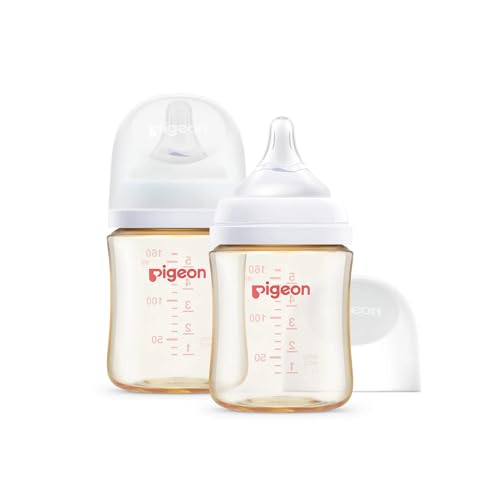
Pigeon’s wide-neck bottle is built on research into the three natural movements of a baby’s tongue during feeding — suction, swallowing, and breathing. The SS (Super Slow) nipple is designed for newborns and features a latching curve that guides the tongue into the correct position. This reduces milk leakage from the sides of the mouth and encourages a deeper, more efficient latch.
The PPSU material is a major advantage for parents who want the safety of glass without the weight. PPSU is heat-resistant up to 180°C, does not degrade with repeated sterilization, and is free of BPA, BPS, and phthalates. The streamlined, wide-neck body is easy to clean by hand and fits most dishwasher baskets. The 5 oz size is perfect for the first few months of feeding.
Parent feedback consistently highlights that the Pigeon bottle reduces the need for burping — many report that baby only burps once at the end of a feed rather than multiple times during. The anti-colic design works through the nipple itself, not through extra vent pieces, so there are fewer parts to manage. The main drawback is that the included nipple sometimes flows too fast for a newborn; swapping to the SS size resolves this.
Why it’s great
- Tongue-positioning nipple design improves latch and reduces leakage
- Durable, high-temperature-resistant PPSU — safer than standard plastic
- Fewer parts, minimal burping needed after feeds
Good to know
- Nipple flow may be too fast for some newborns — order SS size separately
- Premium pricing compared to other PPSU options
5. Gulicola Small Glass Baby Bottle (3 oz)

The Gulicola bottle is one of the few newborn-specific bottles built around a 3 oz capacity, which is the ideal size for preterm infants and very young newborns who take 1–2 oz per feed. The borosilicate glass body is thick and has survived multiple drops onto tile without cracking, according to parent reports. It is completely free of BPA, BPS, and phthalates.
The nipple features an extra slow flow (SS) rated for 0+ months, with a design that includes guiding points to help the baby achieve an appropriate latch. The ultra-soft silicone mimics the feel and movement of breastfeeding. The anti-colic vents are integrated into the nipple collar, allowing air to escape without entering the milk flow.
Cleaning is straightforward with only four pieces — bottle, collar, nipple, and cap. The wide neck allows easy access for a brush. Parents of twins have reported that these bottles helped improve shallow latch issues in both babies. The 3 oz size is less useful beyond the first 2–3 months, but the price point makes it a low-risk trial for parents dealing with bottle refusal or latch difficulties.
Why it’s great
- Small 3 oz capacity perfect for preemies and early newborn feeds
- Durable borosilicate glass that withstands drops
- Guidance points on nipple support correct tongue positioning
Good to know
- Babies will outgrow the 3 oz size within a few months
- Not available in larger capacity in the same nipple design
6. Thyseed PPSU Anti-Colic Baby Bottle (5 oz)

The Thyseed PPSU shares the same patented base-vent technology as its glass sibling but in a lightweight, drop-resistant PPSU body. The base vent is clinically tested to keep air out of the milk, and the sealed neck eliminates traditional air valves that create leak points. Assembly is fast with only four parts, and the bottle is dishwasher and sterilizer safe.
The nipple is designed specifically for breastfed babies — it releases milk only when the baby actively sucks, supporting paced, baby-led feeding. The extra slow flow (0m+) is appropriate for newborns and helps reduce gulping and choking risk. Multiple flow stages are available as the baby grows, so one bottle system can span the entire first year.
Real-world feedback from parents of exclusively breastfed babies is remarkable — many report that this was the only bottle their baby accepted after refusing multiple other brands. The downside reported by some users is that when held upside down, the bottle can leak slightly if the base vent isn’t fully seated. A quick check during assembly resolves this issue.
Why it’s great
- Lightweight, unbreakable PPSU with same anti-colic base vent as glass version
- Sealed neck reduces leak points and simplifies assembly
- Working well for breastfed babies who refuse other bottles
Good to know
- Base vent may leak if not fully seated before use
- Higher cost than many PPSU competitors
7. Playtex BPA Free Premium Nurser with Drop-Ins Liners (4 oz)
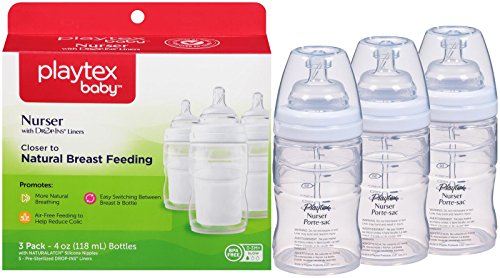
The Playtex Drop-Ins system takes a fundamentally different approach to air management: pre-sterilized disposable liners collapse as the baby drinks, preventing air from ever entering the milk. This design is clinically shown to reduce gas, colic, and spit-up. The angled bottle also helps keep the nipple full of milk, which reduces gulping and choking common in upright feeding positions.
The 4 oz size is appropriate for newborns, and the liners can be warmed quickly in hot water. The nipple mimics breastfeeding and supports a natural feeding rhythm. Because the liner collapses, there is no need for complex venting tubes or valves, which means fewer parts to wash and assemble. Many parents note that this system drastically reduced their dishwashing load.
Customer feedback is overwhelmingly positive for colic relief — several parents report that this system solved gas issues when Dr. Brown’s, Tommee Tippee, and NUK failed. The main drawback is that some units can leak around the ring and nipple if the liner is not properly threaded. Additionally, the disposable liners represent an ongoing cost and create more waste than reusable bottles.
Why it’s great
- Collapsing liners prevent air from entering milk, reducing gas
- Angled design minimizes gulping and supports upright feeding
- Minimal parts to wash compared to vent-tube systems
Good to know
- Ongoing cost of disposable liners creates recurring expense and waste
- Occasional leaking at the ring if liner is not threaded correctly
FAQ
Should I use glass or PPSU baby bottles for my newborn?
Why does my newborn choke on bottles that work fine for older babies?
How often should I replace baby bottle nipples?
Can I sterilize all newborn baby bottles in the same way?
Final Thoughts: The Verdict
For most users, the baby bottles for newborns winner is the Thyseed Anti-Colic Glass 5 oz because it combines clinically published anti-colic technology, premium borosilicate glass, and a 5 micro-hole nipple that mimics natural breastfeeding flow. If you want a lightweight, shatterproof option for travel, grab the Pigeon PPSU Wide Neck. And for parents dealing with severe colic or reflux who want minimal dishwashing, nothing beats the Playtex Drop-Ins System.