
Our readers keep the lights on and the weekend projects moving. As an Amazon Associate, I earn from qualifying purchases.
The difference between a standard video monitor and a real-time vitals tracker is the difference between watching your baby sleep and knowing they are safe. True respiratory tracking—breathing motion, oxygen saturation, or pulse rate—is the core feature that defines this category. Without it, you’re just watching a silent screen.
I’m Rikta — the co-founder and writer behind FitlyFast. My research focuses on infant safety hardware, specifically analyzing sensor accuracy, false-alarm rates, and the real-world reliability of non-contact versus wearable monitoring systems for new parents.
This guide breaks down the top options available today, comparing wearable socks, clip-on movement detectors, and non-contact camera systems so you can choose the best baby monitor for real-time vitals tracking for your family’s sleep routine.
How To Choose The Best Baby Monitor For Real-Time Vitals Tracking
The market offers three distinct approaches to vitals monitoring: non-contact camera systems, wearable socks that measure pulse rate and oxygen, and clip-on abdominal movement sensors. Each has a different strength in detecting breathing irregularities or positional issues. The right choice depends on your baby’s age, sleep environment, and your tolerance for false alerts.
Sensor Type: Wearable vs. Non-Contact
Wearable sensors like the Owlet Dream Sock provide direct pulse rate and SpO2 readings by wrapping around the foot. Clip-on designs such as the Snuza Hero detect abdominal movement through direct skin contact. Non-contact camera systems like the Miku Pro and Philips Avent use pixel-based motion analysis to track breathing through blankets and clothing. Wearable units offer more granular data but risk false alarms from movement or dislodgement. Camera systems require zero contact but may miss subtle breathing motion in certain sleep positions.
Alert Speed and Alarm Types
Some monitors use a staged alert system—a gentle vibration followed by an audible alarm—which reduces unnecessary panic from temporary sensor misplacement. Others rely solely on app notifications or base-station alarms. The time window before an alert triggers ranges from 15 to 20 seconds in most models. A shorter window catches issues faster but increases false alarms from normal transitions during sleep.
Quick Comparison
On smaller screens, swipe sideways to see the full table.
| Model | Category | Best For | Key Spec | Amazon |
|---|---|---|---|---|
| Nanit Pro + Flex Stand | Camera | Breathing tracking via band | 1080p / Breathing Band | Amazon |
| Owlet Dream Sock | Wearable | Pulse & oxygen tracking | SpO2 / Heart Rate | Amazon |
| Miku Pro | Camera | No-wearable breathing | SensorFusion Tech | Amazon |
| Philips Avent Connected | Camera | Sleep & breathing analytics | SenseIQ / 1300ft range | Amazon |
| Nanit + Display & Stand | Camera | Full system + screen | 8″ Display / Floor Stand | Amazon |
| Sense-U Pro (B0D77D2R92) | Clip-On | Movement & position alerts | 15s Vibration / 7+ days | Amazon |
| Sense-U Pro (B089NQKWP6) | Clip-On | Long-battery movement tracking | 30-Day Battery / Rollover | Amazon |
| Snuza Hero | Clip-On | Portable breathing detection | Direct-Touch / 6mo battery | Amazon |
| Babysense 7 | Under-Mattress | No-contact crib coverage | 2 Sensors / 20s Alarm | Amazon |
In‑Depth Reviews
1. Nanit Pro Smart Baby Monitor & Flex Stand

The Nanit Pro pairs a crisp 1080p camera with its sensor-free Breathing Band, which wraps around your baby’s torso to detect respiratory motion. This setup combines the visual reassurance of a video monitor with dedicated vitals tracking, all without a clip or sock touching the skin. The companion app provides real-time breathing rate data and sleep insights.
Users highlight the clear night vision and reliable motion notifications, though some report occasional connectivity drops. The 256-bit AES encryption ensures data security, and the system works with both iOS and Android devices. The included Flex Stand makes it easy to position the camera for an overhead crib view.
This monitor’s ability to offer both video surveillance and contact-free breathing monitoring makes it one of the most complete options on the market. The subscription for advanced insights is optional, but the core vitals tracking works without additional fees.
Why it’s great
- Sensor-free breathing band tracks without skin irritation
- Excellent 1080p video with strong night vision
- Two-way audio allows remote soothing
Good to know
- Some users experience intermittent WiFi disconnections
- Breathing Band may shift on active sleepers
2. Owlet Dream Sock

The Owlet Dream Sock is the most recognized wearable vitals monitor, providing real-time pulse rate and oxygen saturation readings through a fabric sock that wraps around the infant’s foot. The base station displays live data and sounds an alert if readings fall outside preset zones. This level of direct biometric data is unmatched by camera-only systems.
Parent reviews consistently cite the peace of mind from knowing pulse and oxygen levels in real time, though some note initial false alarms during early use while learning proper sock placement. The 16-hour battery life supports overnight use, and the Predictive Sleep Technology offers wake-window suggestions based on sleep patterns.
It is important to note that the Dream Sock is designed for healthy infants aged 1–18 months and is not a medical device. Parents concerned about sensor accuracy should ensure the sock is snug but not tight, and the sensor is aligned with the top of the foot.
Why it’s great
- Tracks both heart rate and oxygen saturation directly
- Base station provides instant glanceable data
- Predictive Sleep Technology helps suggest optimal nap times
Good to know
- False alarms common with improper sock placement
- Requires 2.4 GHz WiFi for reliable setup
3. Miku Pro Smart Baby Monitor
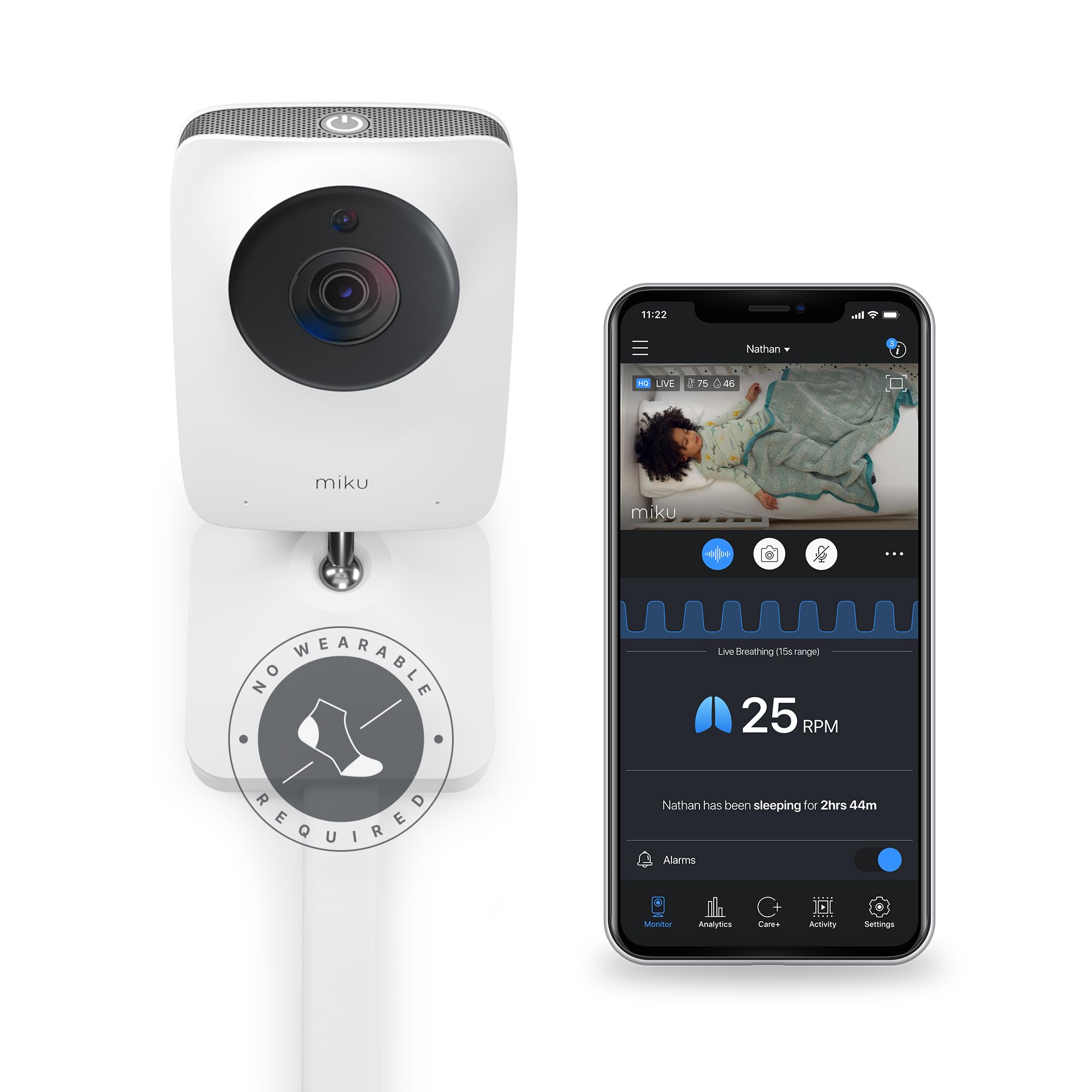
The Miku Pro uses proprietary SensorFusion technology to track breathing through blankets, stuffed animals, and across all sleep positions—without any wearable device. This contact-free approach appeals to parents who want respiratory monitoring without attaching anything to their baby. The 1080p camera, two-way audio, and night vision round out a premium video experience.
Users praise the easy wall-mount installation and the clear, real-time breathing data shown in the app. The system also provides sleep duration and quality insights, though full analytics require a monthly subscription. The tamper-resistant Crypto Chip and dual-layer encryption ensure data privacy.
Some families report that the unit works well beyond the infant stage, tracking toddlers without needing adjustments. The lack of a wearable means zero risk of sensor burn or skin irritation, a consideration for parents who prefer non-contact monitoring.
Why it’s great
- Completely contact-free breathing detection
- Works through blankets and stuffed toys
- Easy wall mount with included hardware
Good to know
- Advanced sleep insights require /month membership
- Rare connectivity issues reported by some users
4. Philips Avent Premium Connected Baby Monitor

Philips Avent’s SenseIQ technology uses pixel-level motion analysis to track breathing rate and sleep patterns through the camera, eliminating the need for wearables. The included 5-inch parent screen offers a dedicated display with up to 1300 feet of range, plus an optional smartphone app for remote viewing. Cry detection and translation add a unique layer of comfort analysis.
Users consistently rate the video quality and breathing tracking accuracy as excellent, though some note that the cry translation feature can be inconsistent. The 2-in-1 wall and crib mount makes installation flexible, and the Secure Connect System provides a private encrypted connection without broadcasting over public WiFi.
This monitor is ideal for parents who want a dedicated parent unit plus app access, and who prefer not to rely on subscription services for core vitals tracking. The breathing monitoring works through blankets and in total darkness, maintaining accuracy as the baby grows.
Why it’s great
- Wearable-free breathing and sleep tracking via SenseIQ
- Includes both parent screen and app access
- Long 1300-foot range for large homes
Good to know
- Cry translation feature may produce inaccurate interpretations
- Premium pricing reflects the dual-display system
5. Nanit Smart Baby Monitor System with Floor Stand & 8″ Display
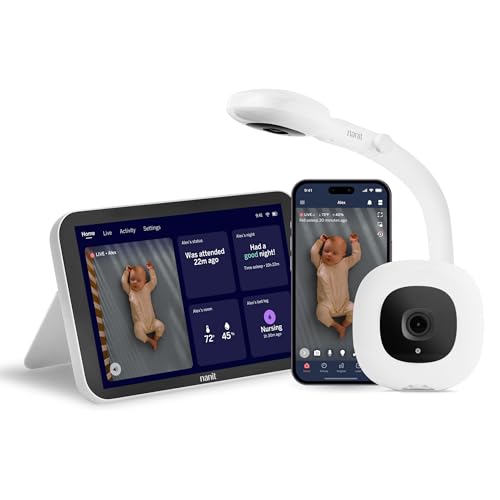
This Nanit bundle includes the camera plus a dedicated 8-inch touchscreen display and floor stand, creating a full monitoring hub that doesn’t rely on your phone. The camera automatically tracks sleep duration, efficiency, and cough/cry detection, while the AI-powered sleep coach offers next-nap predictions. The system works both locally and via WiFi, continuing to function during internet outages.
Parent reviews highlight the crystal-clear video quality and the convenience of the standalone screen, which eliminates the need to keep a phone unlocked at all times. The floor stand is sturdy and space-saving, and the two-way audio is crisp. Some users wish the display notifications lasted longer on screen.
This is the best choice for families who want a complete, self-contained monitoring station with advanced sleep analytics. The Breathing Band is included separately, but the camera alone provides motion and sound notifications without requiring a wearable for basic alerts.
Why it’s great
- Dedicated 8-inch display avoids phone dependency
- Auto-captures sleep sessions and milestones
- Local monitoring works during internet outages
Good to know
- Initial setup requires subscription and internet access
- Additional Breathing Band is sold separately
6. Sense-U Pro Baby Breathing & Sleep Position Monitor (Blue)
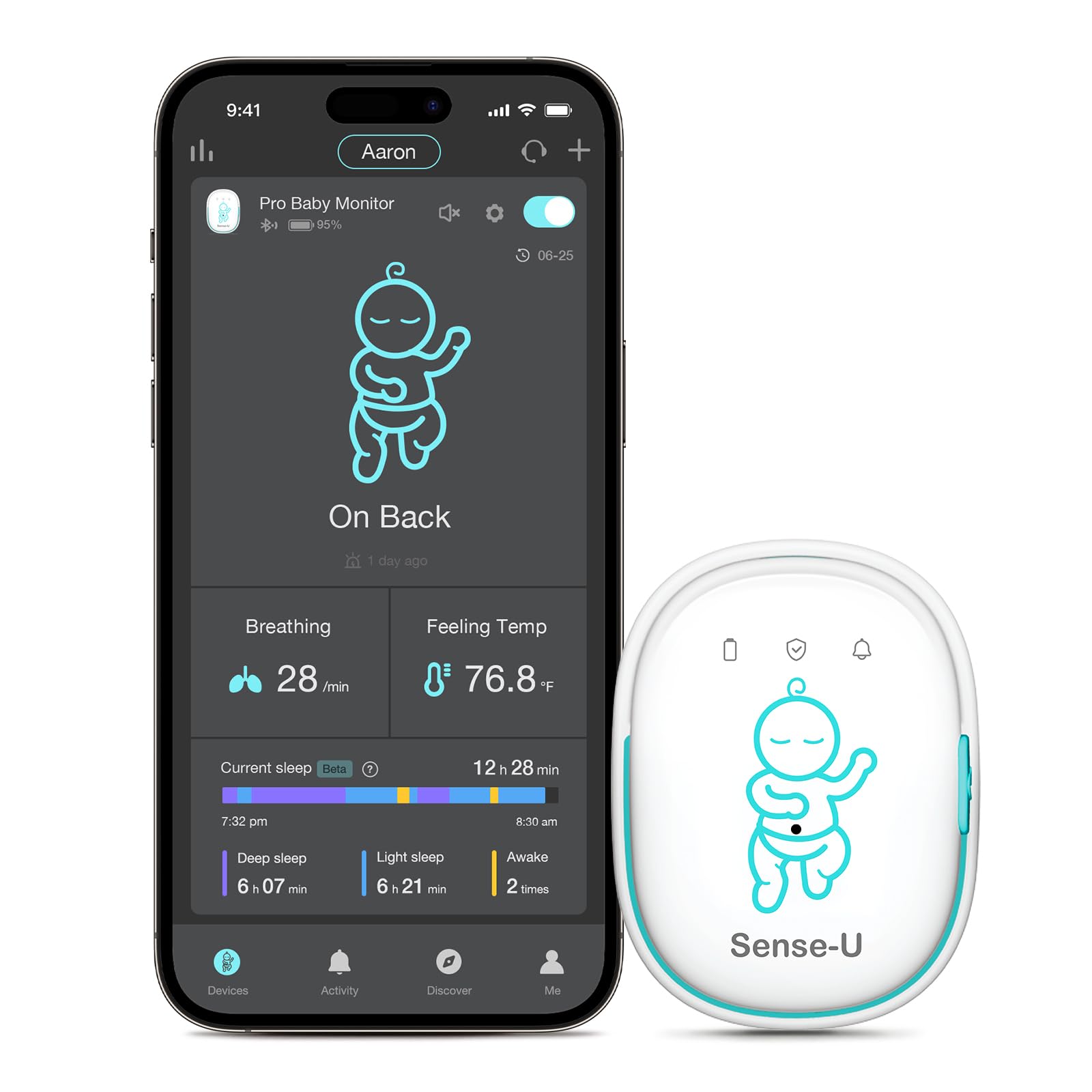
The Sense-U Pro clips directly onto the diaper and monitors abdominal movement, sleep position, and temperature trends. If movement stops for 15 seconds, the device vibrates gently to stimulate the baby; if no movement follows, an audible alert sounds. This staged alarm system reduces false alarms from temporary stillness.
Users appreciate the simple one-hand clip-on design and the 7+ day battery life on a single charge. The app provides sleep cycle reports showing light and deep sleep stages. Bluetooth Low Energy keeps radiation levels minimal, and the device is FSA/HSA eligible.
This model is ideal for parents who want movement and rollover alerts without a full camera setup. The vibration feature is unique among clip-on monitors and provides an extra layer of reassurance for anxious sleepers.
Why it’s great
- Gentle vibration attempts to rouse baby before sounding alarm
- Compact and portable for travel
- Tracks sleep position and room temperature
Good to know
- Bluetooth range requires staying in the same room
- Sensor may feel slightly large for newborns
7. Sense-U Pro Baby Monitor (Green)
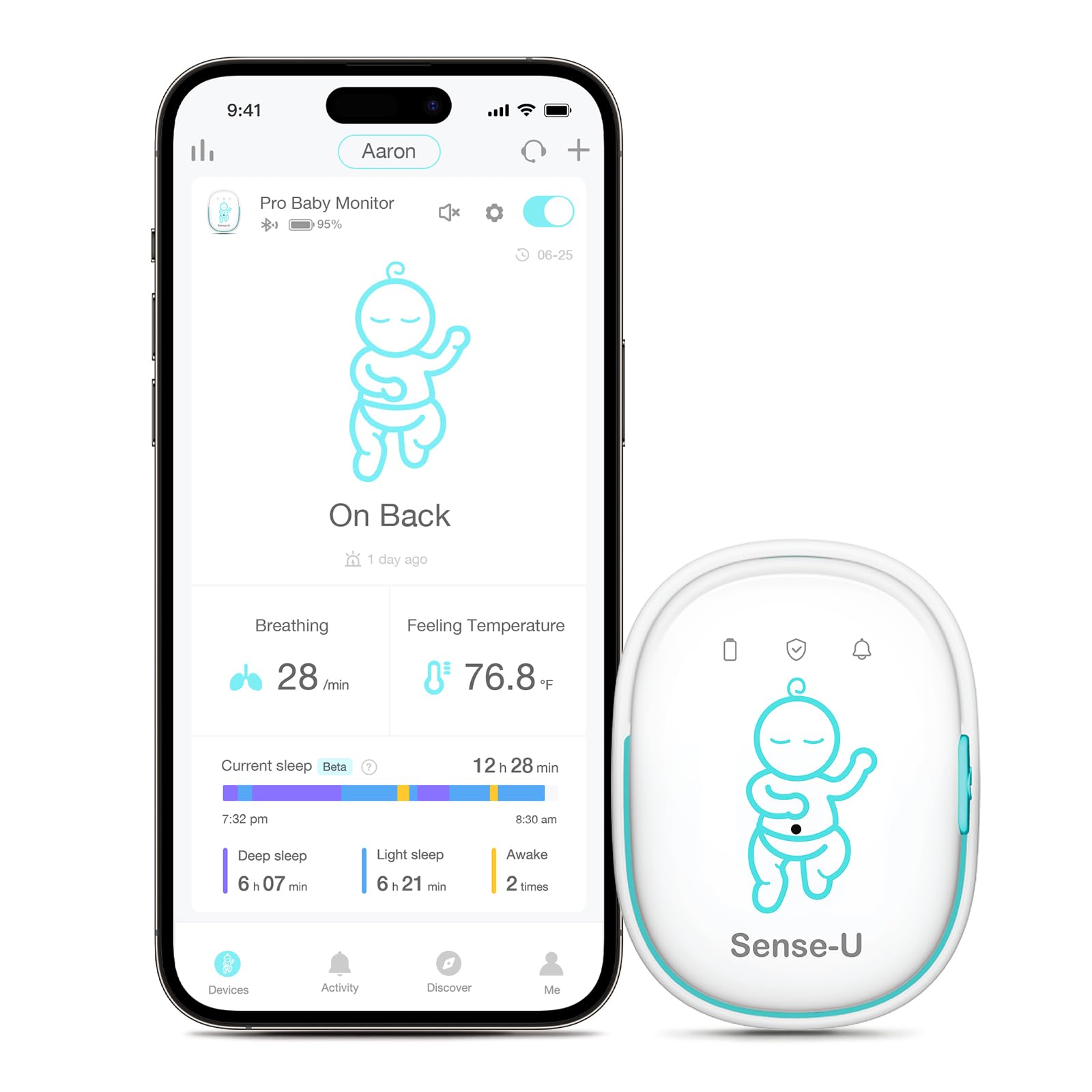
This Sense-U Pro variant offers the same core abdominal movement, rollover, and temperature tracking as the blue model but with a significantly longer battery life—up to 30 days on a single charge. The device clips onto the diaper and communicates via Bluetooth to the Sense-U app, providing on-device audible alerts and smartphone notifications.
Users with NICU babies or those managing apnea concerns report this monitor as critical, praising its ability to vibrate and stimulate at the navel area when breathing pauses. The battery life allows weeks of continuous use without frequent recharging, making it ideal for families who want a set-and-forget clip-on solution.
The longer battery life comes at a slightly higher price than the blue version, but the reduced charging frequency is a practical advantage for parents already managing a newborn’s demanding schedule.
Why it’s great
- Up to 30 days of battery per charge
- Available without subscription or WiFi setup
- NICU parents rate it higher than competitor wearables
Good to know
- Bluetooth only—no remote viewing from other rooms
- Requires proper clip position to avoid false alerts
8. Snuza Hero Baby Movement Monitor

The Snuza Hero uses patented direct-touch sensors that attach to the diaper for direct skin contact, providing ultra-sensitive abdominal movement detection. When no movement is sensed for 15 seconds, the device vibrates gently; after 20 total seconds, an audible alarm sounds. A green LED blinks with each detected breath, offering visual reassurance even in a dark room.
Parents highlight the portability and simplicity of the Snuza Hero—no WiFi, no apps, no cords. The replaceable battery lasts up to six months, making it one of the lowest-maintenance options. The compact size fits easily in a diaper bag for travel, and the protective carry case is included.
The main limitation is that it detects movement only, not pulse rate or oxygen levels. For parents focused strictly on respiratory motion detection, especially for travel or when away from a camera setup, the Snuza Hero is a reliable, straightforward tool.
Why it’s great
- Extremely portable with six-month battery life
- Two-stage alert system reduces false alarms
- No WiFi, Bluetooth, or subscriptions required
Good to know
- Does not track heart rate or oxygen levels
- Sensor may shift if baby kicks off diaper
9. Babysense 7 Baby Sleep Breathing Movement Monitor
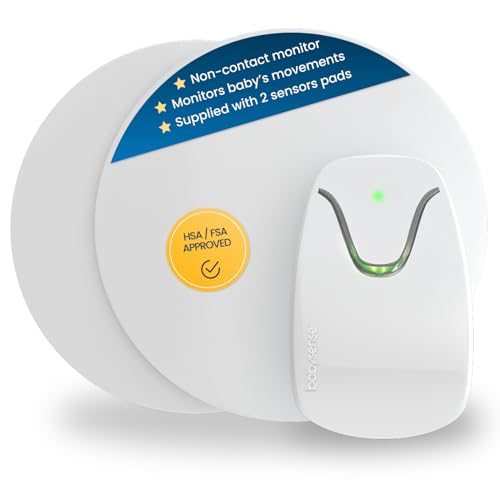
The Babysense 7 uses two under-mattress sensor pads that detect micro-movements through the mattress material, requiring no contact with the baby. If no movement is detected within 20 seconds—or if the movement rate drops below 10 micro-movements per minute—an alarm sounds. This passive system is inherently safe, with no clip, sock, or wearable involved.
Reviews consistently mention the peace of mind this monitor provides, especially for parents with SIDS anxiety. The dual-sensor design covers the full crib area, and the system is HSA/FSA approved. Some users note that the sensors must be placed on a firm surface—soft mattresses like pack n plays may cause false alerts.
This is a solid budget-friendly entry point into vitals monitoring. It lacks the video and data tracking of premium systems but delivers the core function of movement detection with zero friction during the nightly routine.
Why it’s great
- No wearable or clip needed—sits under the mattress
- FSA/HSA eligible for flexible spending accounts
- Dual sensors provide full crib coverage
Good to know
- Requires firm mattress surface to function correctly
- No video, audio, or app connectivity
FAQ
Can a baby monitor with vitals tracking replace a medical pulse oximeter?
How do under-mattress sensors like Babysense detect breathing?
What causes false alarms in clip-on movement monitors?
Final Thoughts: The Verdict
For most users, the baby monitor for real-time vitals tracking winner is the Nanit Pro + Flex Stand because it combines a high-quality 1080p video monitor with sensor-free breathing tracking via the included Breathing Band, offering both visual and respiratory data in one reliable system. If you want direct pulse rate and oxygen saturation readings with detailed sleep analytics, grab the Owlet Dream Sock. And for a completely contact-free experience that works through blankets and without any wearable device, nothing beats the Miku Pro.