
Our readers keep the lights on and the weekend projects moving. As an Amazon Associate, I earn from qualifying purchases.
A baby’s digestive system is a delicate ecosystem still learning how to process food, absorb nutrients, and defend against irritants. When that fragile balance tips—from antibiotic exposure, a C-section birth, or simply immaturity—the result is often colic, gas, constipation, and endless fussy evenings that leave parents desperate for a reliable solution. The right probiotic doesn’t just mask symptoms; it delivers specific, clinically-studied bacterial strains that colonize the gut and restore harmony from the inside out.
I’m Rikta — the co-founder and writer behind FitlyFast. I spend my days digging into the latest pediatric microbiology research and cross-referencing strain-specific efficacy data so parents don’t have to guess which bottle actually works.
After analyzing CFU counts, strain types, delivery formats, and real-world parent reports across seven top contenders, this guide cuts through the marketing to help you confidently choose the best baby probiotic for your infant’s unique needs—whether that means soothing colic, regulating bowel movements, or supporting immunity post-antibiotics.
How To Choose The Best Baby Probiotic
Selecting a probiotic for your infant means thinking like a microbiologist, not a marketer. The highest CFU count doesn’t automatically win—strain identity, delivery vehicle, and purity determine whether those living organisms actually survive the stomach and colonize the gut. Here are the three factors that separate an effective supplement from an expensive disappointment.
Strain Specificity — One Size Does Not Fit All
Lactobacillus rhamnosus GG (LGG) is the most researched strain for general digestive health in infants and has solid evidence for supporting immune function and reducing the duration of diarrhea. Bifidobacterium animalis BB-12 is frequently studied for easing colic and reducing crying time. Saccharomyces boulardii is a beneficial yeast, not a bacterium, and it’s uniquely resistant to antibiotics—ideal for post-antibiotic gut restoration. A blend of complementary strains can cover more ground, but only if each strain in the blend has its own clinical data at the correct dosage.
Delivery Format — Drops, Powders, and Stick Packs
Liquid drops are the most parent-friendly format for newborns—easy to dose directly into the mouth or mix into a bottle of breast milk or formula at room temperature. Powders and stick packs require mixing but are often tasteless, making them suitable for toddlers who eat solids or drink from a sippy cup. The crucial rule across all formats: never add probiotics to hot food or liquid, because heat above body temperature kills live cultures instantly. Shelf-stable formulas (no refrigeration needed) are convenient for travel but must use protective packaging—typically dark glass or individual foil packets—to shield the bacteria from moisture and light.
Purity and Additives — What Else Is in the Bottle
Infant probiotic formulas should be free from artificial sweeteners, flavors, colors, and common top allergens like dairy, soy, gluten, eggs, fish, shellfish, peanuts, tree nuts, and sesame. Many products use a carrier oil base (organic sunflower oil or MCT oil) to suspend the bacteria. Check for organic certification and third-party purity testing if you want assurance beyond the label. For newborns, the shorter the ingredient list the better—your baby’s microbiome doesn’t need flavor masking or unnecessary fillers.
Quick Comparison
On smaller screens, swipe sideways to see the full table.
| Model | Category | Best For | Key Spec | Amazon |
|---|---|---|---|---|
| Mommy’s Bliss Baby Probiotic Drops | Drops | Newborn colic & constipation | Lactobacillus rhamnosus GG strain | Amazon |
| BioGaia Baby Probiotic Drops | Drops | Colic & gas relief in newborns | L. reuteri DSM 17938, 5 drops/day | Amazon |
| Bobbie Organic Baby Probiotic Drops | Drops | USDA organic colic relief | P. pentosaceus + B. longum, 1B CFU | Amazon |
| Enfamil Dual Probiotics Drops | Drops | Colic & immune + vitamin D | BB-12 + LGG dual strains | Amazon |
| Nordic Naturals Baby’s Nordic Flora | Powder Packets | Odorless powder for toddlers | LGG + BB-12, 4B CFU per packet | Amazon |
| Florastor Baby Probiotic | Stick Packs | Post-antibiotic gut restoration | Saccharomyces boulardii CNCM I-745 | Amazon |
| Healthy Genetics Liquid Probiotics | Liquid Drops | Older toddlers, multi-strain blend | 12 strains + prebiotic + ginger root | Amazon |
In‑Depth Reviews
1. Mommy’s Bliss Baby Probiotic Drops Everyday

Mommy’s Bliss earns the top spot because it uses the world’s most researched probiotic strain—Lactobacillus rhamnosus GG—in a simple, flavorless liquid drop format safe for newborns. The dosing is straightforward: five drops once daily directly into the mouth or mixed into a bottle at room temperature. Parents consistently report relief from colic symptoms and constipation within hours, not days, which is unusually fast for a probiotic and suggests the strain is highly effective at colonizing the immature gut.
The formula contains no artificial colors, flavors, or common allergens, and the glass dropper lets you control the exact dose. One practical drawback is the small bottle size—at 0.34 fl oz, it runs out in about 20 days at the standard dose, so you’ll need to reorder frequently. The product is shelf-stable, but the manufacturer clearly warns that heat exposure will kill the live cultures, so store it in a cool, dark place away from the kitchen or bathroom.
Multiple verified reviews note that it resolved thrush and normalized foul-smelling diapers in breastfed infants within two days. The cloudiness mentioned in the product description is normal and doesn’t affect efficacy. For parents wanting a single, trusted strain backed by decades of pediatric research, this is the most reliable entry point into infant probiotics.
Why it’s great
- LGG is the most clinically studied probiotic strain for infants
- Fast colic and constipation relief reported within hours
- Flavorless and easily mixes into bottles or direct dose
Good to know
- Small bottle (0.34 oz) requires frequent repurchase
- Heat-sensitive; must be stored away from sunlight and heat
- Nursing parents may struggle to deliver full dose without a bottle
2. BioGaia Baby Probiotic Drops

BioGaia is the most extensively studied probiotic specifically for infant colic—over two decades of clinical trials back the Lactobacillus reuteri DSM 17938 strain it uses. This isn’t a general-purpose gut health strain; it was isolated and researched specifically for its ability to reduce crying time, fussing, and spit-ups in colicky babies under three months old. The dose is five drops per day, and the liquid is free from dairy, soy, gluten, sugar, and artificial additives.
The dropper system is designed for easy administration directly into the baby’s mouth or onto a pacifier, which helps breastfeeding parents who don’t use bottles. Some negative reviews exist—a small subset of parents report no improvement, which is consistent with the reality that probiotic efficacy is individual and influenced by the baby’s existing microbiome composition. The product is shelf-stable before opening and should be refrigerated after opening to maintain potency.
Verified reviews highlight its effectiveness for reflux and gas, with several parents noting their babies went from inconsolable evenings to calm nights within three to five days. The L. reuteri strain is naturally found in breast milk, which adds a layer of biological plausibility to its mechanism. If your infant’s primary symptom is colic-related crying rather than constipation or diarrhea, this is the most targeted option available.
Why it’s great
- Decades of colic-specific clinical research on the strain
- Free from all major allergens and artificial additives
- Can be given directly or via pacifier for nursing babies
Good to know
- Not all babies respond; efficacy varies by individual
- Requires refrigeration after opening
- Some parents report no improvement after several weeks
3. Bobbie Organic Baby Probiotic Drops
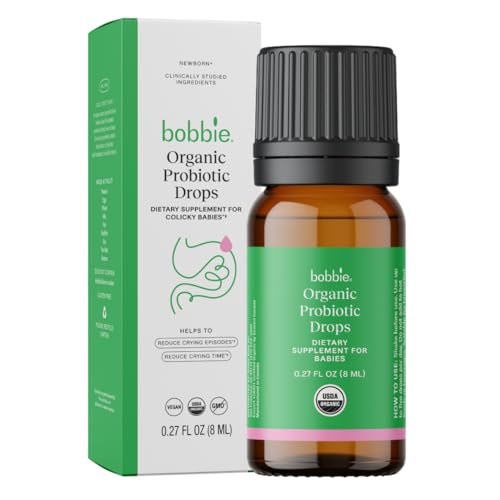
Bobbie’s entry into the probiotic space comes from the same team behind their popular organic infant formula, and the quality standards are immediately apparent. The blend contains Pediococcus pentosaceus CECT 8330 and Bifidobacterium longum CECT 7894—two clinically-studied strains shown to reduce crying time and support gut health in infants. The carrier is organic sunflower oil with DL-alpha-tocopherol as an antioxidant, meaning no synthetic carriers or preservatives.
The formula holds USDA Organic and Clean Label Project certifications, which means it has been third-party tested for over 400 contaminants, including heavy metals and pesticides. This is a meaningful differentiator for parents who prioritize purity above all else. The dose is five drops daily, and the bottle is designed with a slow-dropper tip to prevent accidental overdosing. The CFU count is 1 billion per serving—lower than some competitors—but the clinical data was generated at exactly this dosage, so the efficacy is validated rather than speculative.
User reviews are overwhelmingly positive, with many parents reporting noticeable improvement in their baby’s digestion and fussiness within two days. The formula is free from all top allergens and uses no artificial flavors or colors. The smaller bottle size (0.27 fl oz) lasts about 16 days at the standard dose, making it one of the shorter-supply options. For parents who want the cleanest possible product with third-party verification, this is the clear frontrunner.
Why it’s great
- USDA Organic and Clean Label Certified for purity
- Clinically-studied strain blend at validated dosage
- Free from all top allergens and synthetic additives
Good to know
- Lower CFU count (1B) may seem less potent than alternatives
- Small bottle lasts only about 16 days
- Premium positioning; more expensive per daily dose
4. Enfamil Dual Probiotics Drops + Vitamin D

Enfamil takes a combination approach by pairing Bifidobacterium animalis BB-12 with Lactobacillus rhamnosus LGG—two strains with complementary research. BB-12 has been specifically studied for easing colic and reducing crying episodes, while LGG supports broader digestive and immune health. Enfamil adds vitamin D to the same drop, which is a practical convenience since the American Academy of Pediatrics recommends daily vitamin D supplementation for all breastfed infants.
The formula uses a shaker-top dispenser rather than a dropper, which some parents find less precise—you shake the bottle and pour the dose rather than counting individual drops. This isn’t inherently problematic, but it makes it harder to give a partial dose or to deliver it directly into a baby’s mouth without a bottle or spoon. The product is free from artificial sweeteners, flavors, and silicone dioxide, and it’s SNAP-eligible, which broadens accessibility.
Verified reviews are strong, with many parents switching from competitor brands and noting improved gut health, less gas, and more regular digestion within two weeks. The dual-strain approach covers more ground than a single-strain product, making this a good choice if your baby’s issues aren’t clearly one type (colic vs. constipation vs. immune support). The vitamin D addition means you can simplify your supplement routine into one daily step.
Why it’s great
- Combines two clinically-studied strains for broader coverage
- Includes vitamin D supplement in the same dose
- SNAP-eligible and widely available
Good to know
- Shaker-top dispenser less precise than a dropper
- Harder to administer directly without a bottle
- Some parents prefer separate probiotic and vitamin D supplements
5. Nordic Naturals Baby’s Nordic Flora Probiotic Powder
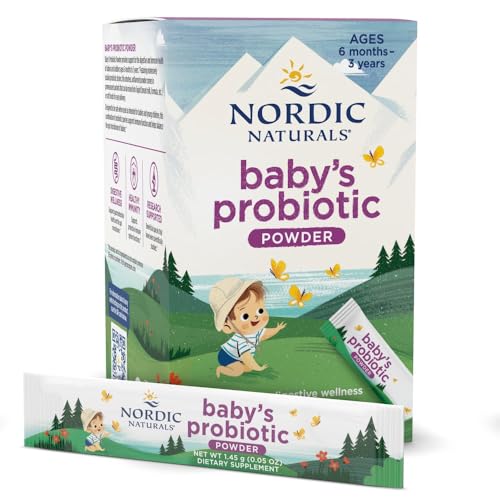
Nordic Naturals brings its reputation for rigorous third-party testing to the infant probiotic category with individually sealed powder packets. Each packet delivers 4 billion CFU of Lactobacillus rhamnosus GG and Bifidobacterium animalis BB-12—a higher dose than most liquid drops, which matters for toddlers who have larger body mass and more developed gut ecosystems. The powder is odorless and tasteless, making it virtually undetectable when mixed into yogurt, applesauce, or a sippy cup of milk.
The age range is specified as 6 months to 3 years, which sets it apart from products designed for newborns. The packet format is ideal for travel and ensures each dose is fresh without the risk of contamination that comes with reopening a dropper bottle. Every batch is third-party tested for purity and freshness, surpassing the strictest international standards—a hallmark of Nordic Naturals’ quality control.
User reviews consistently praise its effectiveness for toddler constipation, with several parents noting that daily use eliminated the need for laxatives within weeks. The only common complaint is the powder format itself—some parents find it less convenient than drops for young babies who aren’t yet eating solids. If your child is over 6 months and you want a high-potency, travel-friendly probiotic that disappears into food, this is the strongest option.
Why it’s great
- Higher CFU count (4B) suitable for toddlers
- Odorless and tasteless powder mixes seamlessly into food
- Third-party tested for purity and freshness
Good to know
- Powder format less convenient for infants under 6 months
- Must be mixed with cold or room-temperature food only
- Single-use packets create more packaging waste
6. Florastor Baby Daily Probiotic Supplement

Florastor is functionally unique in the infant probiotic category because its active ingredient is Saccharomyces boulardii CNCM I-745—a beneficial yeast, not a bacterium. This is a critical distinction: bacteria-based probiotics are killed by oral antibiotics, but S. boulardii is a yeast that resists 16 of the most common oral antibiotics, surviving to restore gut flora even during active treatment. This makes it the go-to choice for babies who have recently been on antibiotics or whose mothers received antibiotics during labor.
The product comes in individually sealed stick packs of powder that mix with milk, formula, or soft foods. It’s vegetarian, gluten-free, titanium dioxide–free, and appropriate for lactose intolerance. The strain has over 65 years of research and is the number one probiotic in its class globally. Each packet delivers a clinically-studied dose, and the format ensures freshness without refrigeration.
User reviews highlight its effectiveness for antibiotic-associated diarrhea and for restoring normal stool consistency after C-section births. One common note is that the powder can develop an unusual smell if left sitting in liquid before consumption, so it should be given immediately after mixing. For any parent whose baby has been on antibiotics or is dealing with persistent diarrhea, this is the most scientifically justified choice in the lineup.
Why it’s great
- Yeast-based probiotic survives antibiotic treatment
- Over 65 years of clinical research on the specific strain
- Individually sealed packs protect freshness
Good to know
- Powder must be consumed immediately after mixing
- Not a general-purpose strain for non-antibiotic situations
- Some toddlers dislike the subtle taste if not fully masked
7. Healthy Genetics Liquid Probiotics for Kids

Healthy Genetics takes a broad-spectrum approach with 12 different probiotic strains plus an organic prebiotic and ginger root. This is the most complex formula in the lineup, designed for toddlers rather than newborns, and intended to support digestive health, intestinal tract function, and immune system development simultaneously. The ginger root adds traditional anti-inflammatory and anti-bloating support that no other product in this list offers.
The liquid is packaged in a dark amber glass bottle, which provides superior protection against light degradation compared to the clear plastic bottles used by most competitors. It’s shelf-stable and requires no refrigeration, and the dropper allows for adjustable dosing between 30 and 60 servings per bottle. The formula is dairy-free, vegan, non-GMO, and gluten-free. The flavor is a mild berry that most kids accept without complaint, though some parents report their picky eaters notice it in water.
User reviews are particularly strong from parents of children with autism who have chronic bowel movement issues—multiple verified accounts describe this as the only product that normalized their child’s stool pattern after trying many others. The sheer number of strains makes this a shotgun approach rather than a targeted one, which can be an advantage or a disadvantage depending on your philosophy. For parents who want maximum strain diversity in a single product, this delivers the widest coverage.
Why it’s great
- 12 probiotic strains offer the broadest bacterial diversity
- Dark amber glass bottle protects against light damage
- Ginger root adds anti-bloating support not found elsewhere
Good to know
- Not targeted to any single condition; broad-spectrum approach
- Mild berry flavor may be detected by picky eaters in water
- Formulated for toddlers, not newborns
FAQ
Can I give a baby probiotic to a newborn?
How long does a baby probiotic take to work?
Should I refrigerate baby probiotics?
What is the difference between LGG and BB-12 for babies?
Can a baby probiotic cause side effects?
Final Thoughts: The Verdict
For most parents seeking the best baby probiotic, the winner is the Mommy’s Bliss Baby Probiotic Drops because it combines the most clinically-studied infant strain (LGG) with a newborn-safe liquid format and fast, reliable results. If your baby’s primary struggle is colic and inconsolable crying, grab the BioGaia Baby Probiotic Drops—the only product with decades of colic-specific clinical evidence. And for parents who demand absolute purity and organic certification, nothing beats the Bobbie Organic Baby Probiotic Drops, a clean-label product from a trusted infant nutrition brand.