
Our readers keep the lights on and the weekend projects moving. As an Amazon Associate, I earn from qualifying purchases.
Every parent knows the moment: your baby wants to be held, but your arms and lower back are already screaming. A structured baby wearing carrier solves this by transferring your child’s weight from your shoulders and spine to your hips, but choosing the wrong one can make the pain worse instead of better.
I’m Rikta — the founder and writer behind FitlyFast. I’ve spent years analyzing the ergonomic design, material quality, and safety certifications of over 50 baby carriers to help parents find the right fit for their body and their baby’s development.
This guide breaks down the seven best performers on the market today, ranked by real-world support, breathability, and ease of use so you can confidently choose your ideal baby wearing carrier without wasting money on a model that hurts to wear.
How To Choose The Best Baby Wearing Carrier
The best carrier for your family depends on your body type, your baby’s age and size, and how long you’ll wear it each day. Focus on these three factors to narrow the field without getting lost in marketing claims.
Ergonomic Hip Seat vs. Soft Structured Wrap
Carriers with a built-in hip seat, like the Besrey or BabbleRoo, distribute weight directly across your pelvis and reduce shoulder strain significantly. This design is ideal for longer walks, airport marathons, and parents prone to back pain. Soft structured wraps without a rigid seat, like the Boppy ComfyFit or Mabē Monarch, offer a more snuggled, close feel for newborns but transfer more weight to your upper back and shoulders. Choose a hip seat model for daily heavy use; choose a soft structured wrap for quick errands and early infancy.
Weight Capacity and Growth Range
Carriers must support your baby safely from the newborn stage through toddlerhood. Look for a minimum weight range starting at 7–8 pounds and maxing out above 35 pounds. The BabbleRoo and Besrey both support up to 45–50 pounds, making them long-term investments. Meanwhile, the Boppy ComfyFit and Mabē Monarch top out around 35 pounds, which suits most toddlers but may require a secondary carrier for extended use with a heavier child. Always check the lower limit too — carriers without a dedicated newborn insert may not be safe for infants under 7 pounds.
Fabric Breathability and Maintenance
If you live in a warm climate or plan to wear your baby during summer months, prioritize a carrier with a 3D mesh panel (like the BabyBjörn Free or the Besrey mesh edition). These fabrics allow airflow between your chest and the baby, preventing overheating for both of you. Cotton and cotton-linen blends, such as the Mabē Monarch, feel soft against the skin and breathe well but absorb sweat and take longer to dry. Polyester-based carriers tend to be more durable and stain-resistant, and many are machine washable — a critical feature for parents dealing with drool, spit-up, and diaper blowouts.
Quick Comparison
On smaller screens, swipe sideways to see the full table.
| Model | Category | Best For | Key Spec | Amazon |
|---|---|---|---|---|
| Momcozy 2-in-1 Hip Seat | Premium Mid-Range | Active parents needing a detachable hip seat | 10mm shock-absorbing cushion; 6 positions | Amazon |
| BabyBjörn Free | Premium | Quick on/off with minimal straps | 3D mesh; built-in back support brace | Amazon |
| Mabē Monarch | Premium Cotton | Style-conscious parents; tall babies | 90% cotton/10% linen; 7-35 lbs | Amazon |
| BabbleRoo 6-in-1 | Mid-Range | Feature-rich all-in-one with storage | 6 carry modes; detachable hip seat up to 50 lbs | Amazon |
| Boppy ComfyFit | Mid-Range Hybrid | Parents who want a wrap feel with structure | Spandex/polyester blend; 8-35 lbs | Amazon |
| GROWNSY Ergonomic | Budget-Mid | Newborns under 6 months; first-time buyers | Foldable head support; X-shaped back | Amazon |
| Besrey Hip Seat Carrier | Budget | Budget-conscious families needing a hip seat | Collapsible mesh panel; 7-45 lbs | Amazon |
In‑Depth Reviews
1. Momcozy Baby Carrier with Hip Seat

The Momcozy Hip Seat carrier earns the top spot because it delivers premium ergonomics at a mid-range price. Its 10mm shock-absorbing cushion on the hip seat dramatically reduces pelvic pressure, and the zipper mechanism lets you detach the upper harness to use the seat alone for quick household tasks. The X-shaped back strap distributes weight away from the abdomen, which parents who have had C-sections or diastasis recti will appreciate immediately.
Breathability is strong here: the main body uses a lightweight, airy fabric that works in all seasons, and the edges are wrapped in soft material to prevent scratching a baby’s sensitive skin. The waist belt accommodates sizes up to 45 inches and uses a quick-adjust Velcro system plus secure buckles, so you can put the carrier on solo in under 30 seconds. The six carry positions — cradle, hip, forward-facing, inward-facing, and back carry — cover the full newborn-to-toddler range without any newborn insert required.
Customer feedback consistently praises how much easier this carrier is on the back compared to bulkier competitors like Ergobaby or Lillebaby. Some users note that the snaps on the shoulder straps can come undone during heavy use, causing the zipper to loosen slightly. This is a minor frustration on an otherwise excellent, thoughtfully engineered carrier that rivals models costing twice as much.
Why it’s great
- 10mm thick hip seat cushion absorbs shock and redistributes weight to hips
- Detachable upper harness converts carrier into a standalone hip seat
- X-shaped back support minimizes shoulder and abdominal strain
Good to know
- Shoulder strap snaps may loosen over time with heavy use
- Upper harness stored in hip seat pocket on arrival — check before first use
2. BabyBjörn Baby Carrier Free
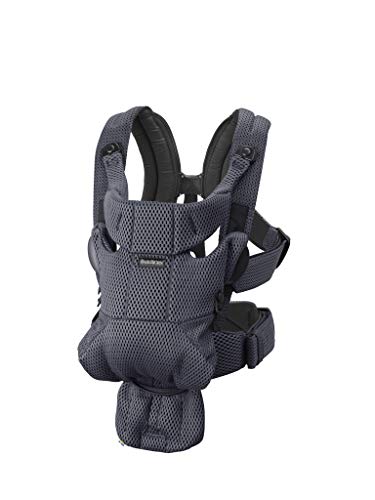
The BabyBjörn Free is the gold standard for quick, intuitive babywearing. Its sliding seat panel adjusts to four height positions based on your baby’s length — no complicated straps or separate inserts to fiddle with. The built-in back support brace and padded waist belt work together to lock the carrier in place, preventing the sagging that causes lower back pain during longer wear sessions. The 3D mesh fabric is exceptionally breathable and dries almost instantly after washing, making it a top choice for hot climates or active parents.
Getting your baby in and out is remarkably easy: the carrier has no hard back clips, and the head and neck support folds down with a simple motion so you can lift a sleeping baby without waking them. It accommodates front-facing-in and front-facing-out positions for babies between 7 and 26.5 pounds, and the design fits wearers from 5’3″ to 6’3″ without any awkward gap. Every buckle and strap feels robust, and the stitching shows no signs of wear even after months of daily use.
Reviewers consistently say this carrier is worth the price premium because it eliminates the learning curve that frustrates many new parents. The primary limitation is the lower maximum weight of 26.5 pounds — most toddlers will outgrow it before age two. If you need a carrier that supports a heavier child, you will need a secondary option for the toddler years.
Why it’s great
- Sliding seat adjusts in seconds without separate inserts
- 3D mesh fabric is extremely breathable and fast-drying
- Minimal clips and straps make solo wear/removal effortless
Good to know
- Maximum weight of 26.5 lbs — not suitable for larger toddlers
- No hip seat or back carry position available
3. Mabē Monarch Ergonomic Baby Carrier
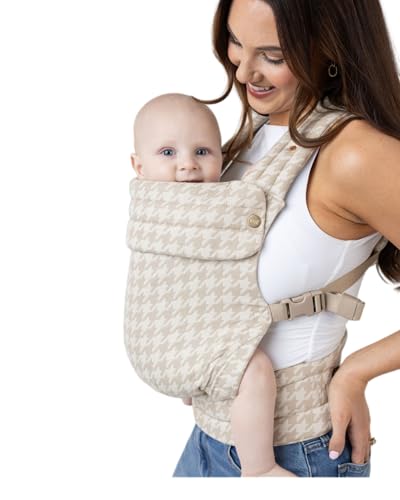
The Mabē Monarch stands out for parents who refuse to compromise on aesthetics or natural fabric. Its shell is 90% cotton blended with 10% linen, giving it a structured but soft hand feel that softens further with each wash. The deep seat naturally guides your baby into the hip-healthy “M” position without forcing their legs into an unnatural angle. Thick, padded shoulder straps are wide enough to prevent digging even during hour-long carries, and the adjustable sizing accommodates petite and plus-size wearers alike.
This carrier supports three ergonomic positions: front-facing-in (from 3 months), front-facing-out (from 6 months), and back carry (from 6 months). The weight range of 7 to 35 pounds covers most of the baby and toddler years in one carrier. The fabric is breathable for a cotton blend but does trap more heat than a mesh carrier — it is best suited for cooler months or air-conditioned environments. Machine washing on cold gentle cycle in a garment bag is straightforward, though spot cleaning helps preserve the linen texture longer.
Parents who have tried five or more carriers report that the Monarch’s balance of support, style, and comfort is unmatched in its class. Tall babies in particular fit well because the seat depth is generous. The primary downside is that the all-cotton construction shows spit-up and drool stains more readily than synthetic blends, and the 35-pound limit means heavier toddlers will eventually outgrow it.
Why it’s great
- Premium cotton-linen fabric is soft, durable, and gets better with use
- Deep seat promotes proper “M” position for hip development
- Thick, wide shoulder straps prevent digging and distribute weight evenly
Good to know
- Fabric stains more easily than polyester or mesh options
- Less breathable than 3D mesh carriers in hot weather
4. BabbleRoo 6-in-1 Baby Carrier with Hip Seat
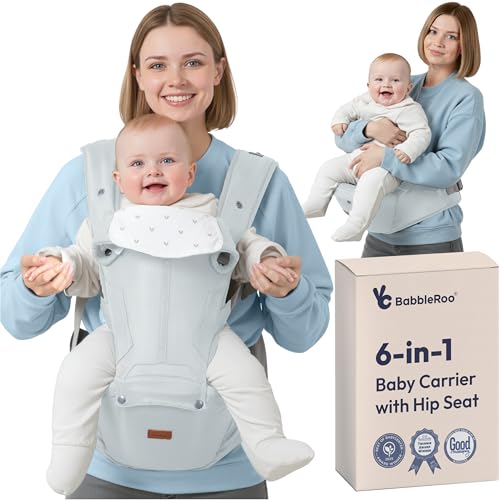
The BabbleRoo 6-in-1 is the feature-packed workhorse of this list. It functions as a standalone hip seat, a front carrier, a back carrier, and a hip carrier — all with a detachable upper body harness that stores away when you only need the seat. The hip seat itself is dense and wide, providing a stable platform that keeps a baby’s back straight and prevents slouching. A hidden sun hood extends from the shoulder area for weather protection, and the carrier includes multiple pockets plus a bottle holder, eliminating the need for a separate diaper bag on short outings.
The waist cushion and padded leg openings add comfort for both wearer and baby, and the adjustable shoulder straps and waist belt fit a wide range of body types without needing an extender. Customers with larger babies (over 25 pounds) report that this carrier handles the weight better than many competing models because the load transfers efficiently to the hips via the dense foam seat. The 180-day warranty and responsive customer service provide peace of mind for first-time buyers who are unsure about their fit.
Some users note that the Velcro on the hip section can be difficult to tighten while also holding a squirming baby, and the sheer number of straps and buckles can feel intimidating at first. Once you learn the setup — which takes about two or three attempts — the versatility becomes a major asset rather than a source of confusion.
Why it’s great
- 6 different carry configurations including standalone hip seat mode
- Built-in sun hood, multiple pockets, and bottle holder
- Supports babies up to 50 lbs without needing extenders
Good to know
- Multiple straps and buckles have a moderate learning curve
- Hip Velcro is tricky to fasten while holding the baby
5. Boppy ComfyFit Adjustable Baby Carrier

The Boppy ComfyFit bridges the gap between a stretchy wrap and a structured carrier. The fabric is 88% polyester blended with 12% spandex, giving it a soft, forgiving stretch that hugs your baby close without the complicated wrapping process of a traditional Moby or Solly. The padded waist belt and wide shoulder straps distribute weight effectively, and the cross-and-tie strap system lets you adjust the tension on the fly. This is one of the easiest carriers for a first-time parent to set up correctly on the first try.
It supports three positions — newborn front face-in (frog position), baby front face-in with legs out, and front face-out — for babies between 8 and 35 pounds. No infant insert is required, and the carrier folds into its own pouch for compact storage in a diaper bag. The Boppy is JPMA certified, meaning it meets the highest safety and performance standards for a product in its category. Machine washing on delicate and tumble drying on low keeps it fresh through daily use.
Parents who own both a wrap and a structured carrier often describe the ComfyFit as the “best of both worlds.” The stretchy fabric does mean that heavier babies (over 25 pounds) cause more sag over time compared to a rigid hip seat carrier. For newborns and lighter infants, however, this hybrid delivers unbeatable snugness and convenience.
Why it’s great
- Stretchy spandex blend offers wrap-like comfort without complex wrapping
- JPMA certified for safety and durability
- Packs into its own pouch for easy diaper bag storage
Good to know
- Fabric can sag with babies over 25 lbs over extended wear
- No hip seat or back carry positions available
6. GROWNSY Baby Carrier Newborn to Toddler

The GROWNSY carrier is designed specifically with newborns in mind. Its foldable head and neck support cradle a young baby’s cervical spine, and the ergonomic “M” shaped seat ensures healthy hip joint development from day one. The three-point support system — combining widened shoulder straps, an EVA waist support, and an X-shaped back panel — minimizes pressure on the wearer’s shoulders and spine, allowing you to carry a growing baby comfortably for longer stretches.
The fabric is soft and skin-friendly, described by users as feeling “like a mother’s embrace.” It supports both facing-inward for newborns (0–6 months) and front-facing for older babies, with a weight range of 7 to 44 pounds covering the full baby and early toddler phase. The carrier goes on in four simple steps and can be adjusted in roughly 30 seconds, which parents with impatient infants will value. Hidden pockets on the bottom are a thoughtful touch for stashing keys, a phone, or a pacifier.
A few customers report that the back straps can twist inside the buckle, requiring you to thread them the wrong way to get them straight again. The waist strap also develops a slight rippling after repeated use, which can cause discomfort when wearing thin shirts. Despite these fit quirks, the GROWNSY offers impressive newborn-specific features at a price that undercuts most competitors.
Why it’s great
- Foldable head/neck support protects newborn cervical spine
- EVA waist support plus X-shaped back reduces parent fatigue
- Soft fabric and hidden pockets add daily convenience
Good to know
- Back straps can twist inside the buckle during setup
- Waist strap may ripple after extended use, causing minor irritation
7. Besrey Baby Carrier with Hip Seat
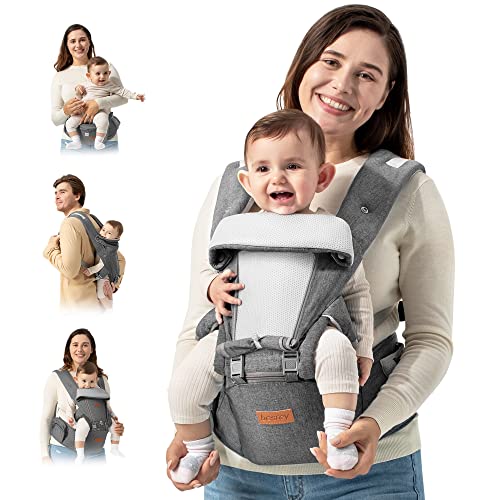
The Besrey Hip Seat Carrier proves that you do not need to spend a premium to get a functional, comfortable carrier. Its collapsible mesh panel opens for summer airflow and folds closed for winter warmth, giving you two-season versatility from a single product. The hip seat is made from expanded polypropylene and distributes weight effectively, and the extra lumbar support pad combined with a wide waist belt and padded straps helps prevent the backache that plagues many budget carriers. The 360-degree ergonomic positions — front-in, front-out, hip, and back carry — cover the full range of use cases for babies 4 to 36 months (7–45 lbs).
The fabric is a tear-resistant cationic Oxford polyester that holds up to playground scrapes and toddler messes without showing wear. Quick-release buckles and tool-free adjustments make it easy to put on and take off solo, and the two-year no-hassle assurance means the manufacturer will replace the carrier if it fails. Customers consistently mention that the hip seat makes a dramatic difference in comfort compared to carriers without one, especially during long walks or theme park days.
The main trade-off at this price point is the material quality: the padding is thinner than premium competitors, and the buckles, while functional, do not feel as substantial as those on the Momcozy or BabyBjörn. Some users with wrist pain find the detachable waist band fiddly to assemble. For budget-conscious families who need hip seat support without breaking the bank, the Besrey delivers remarkable value.
Why it’s great
- Collapsible mesh panel adapts to summer and winter use
- Extra lumbar support pad reduces lower back fatigue
- Two-year replacement guarantee provides risk-free ownership
Good to know
- Padding and buckle quality feel less robust than premium options
- Detachable waist band can be fussy for those with limited hand strength
FAQ
What is the M-position and why does it matter for baby carriers?
Can I use a baby carrier immediately after a C-section?
How do I clean a baby carrier without damaging the fabric or structure?
At what weight should I switch from a wrap-style carrier to a structured hip seat carrier?
Final Thoughts: The Verdict
For most users, the baby wearing carrier winner is the Momcozy Baby Carrier with Hip Seat because it combines a thick, shock-absorbing cushion, a detachable hip seat, and an X-shaped back brace at a mid-range price that outperforms many premium competitors. If you want the fastest on/off experience with no learning curve, grab the BabyBjörn Free. And for style-focused parents who value natural fabric and tall-baby ergonomics, nothing beats the Mabē Monarch.