
Our readers keep the lights on and the weekend projects moving. As an Amazon Associate, I earn from qualifying purchases.
Degenerative disc disease (DDD) slowly erodes the cushioning between your vertebrae, turning simple activities like bending for a grocery bag or sitting through a meeting into a painful gamble. The right back brace doesn’t just compress your abdomen — it provides targeted spinal traction, immobilizes the damaged segment, and creates the hydrostatic lift needed to take pressure off desiccated discs.
I’m Rikta — the co-founder and writer behind FitlyFast. I’ve analyzed the mechanics of over a hundred lumbar supports, studying how pulley ratios, stay configurations, and decompression plates interact with the L1–S1 vertebrae to either stabilize or stress a degenerating spine.
This guide breaks down the best options for managing DDD symptoms, comparing semi-rigid corsets, pulley-driven braces, and adjustable decompression systems. Finding an effective back brace for degenerative disc disease requires understanding which support level your specific spine segment needs.
How To Choose The Best Back Brace For Degenerative Disc Disease
Not every lumbar brace is built for the progressive structural decline of DDD. A generic elastic belt might mask discomfort, but it won’t stabilize the spine segment that’s losing height. You need to match the brace’s mechanical design to your specific disc level — L4–L5, L5–S1, or multi-level involvement.
Pulley vs. Velcro: The Compression Decider
For DDD, a pulley system provides even, measurable compression without the uneven pull of traditional Velcro straps. The 5-to-1 or dual-pulley designs allow you to fine-tune hydrostatic pressure against the abdominal cavity, which counteracts the compressive load on degenerated discs. Avoid braces that only rely on elastic tension — they lack the sustained force needed for true lumbar decompression.
Rigidity Levels: Semi-Rigid LSO vs. Flexible Belts
An LSO (Lumbosacral Orthosis) brace with removable rigid panels offers the motion restriction necessary when a disc has collapsed or bulged. Flexible belts are fine for minor strain but won’t prevent the micro-movements that aggravate DDD. Look for braces that include reinforced stays — at least three to five — that contour to your lordotic curve without digging into bone.
Your Waist Measurement Matters More Than Your Pants Size
DDD patients often have altered posture or abdominal distension from pain avoidance. Measure the circumference at your navel line while standing naturally — not while sucking in. An ill-fitting brace can migrate upward, compress your ribs, or fail to offload the sacroiliac joint. Most medical-grade braces accommodate a 23–50 inch range, with plus extensions for larger frames.
Quick Comparison
On smaller screens, swipe sideways to see the full table.
| Model | Category | Best For | Key Spec | Amazon |
|---|---|---|---|---|
| VertebrAlign LSO Brace | Medical-Grade | Post-op & multi-level DDD | PDAC-approved L0631; 1-handed pulley | Amazon |
| BaxMAX 5-to-1 Pulley | Chiropractor-Recommended | Active lifestyle & acute flares | 5-to-1 compression ratio; 5 oz weight | Amazon |
| Cybertech LSO Decompression Plate | Semi-Rigid | Lumbar correction & alignment | 26° adjustable arch plate | Amazon |
| BraceAbility Lumbar Decompressor | Pre/Post-Op | Surgical recovery & herniated discs | Dual-pulley triple compression | Amazon |
| Ottobock The S.P.I.N.E. | 1-Step Pulley | Warehouse & lifting tasks | 1-handed pulley; nylon mesh side panels | Amazon |
| FEATOL 5 Stay Brace | 360° Support | Seniors & daily chores | 3 memory-aluminum + 2 support plates | Amazon |
| NEENCA Lower Back Brace | Entry-Level | Mild pain & sciatica | Multi-point support; 2 Velcro straps | Amazon |
In‑Depth Reviews
1. VertebrAlign LSO Lumbar Back Brace
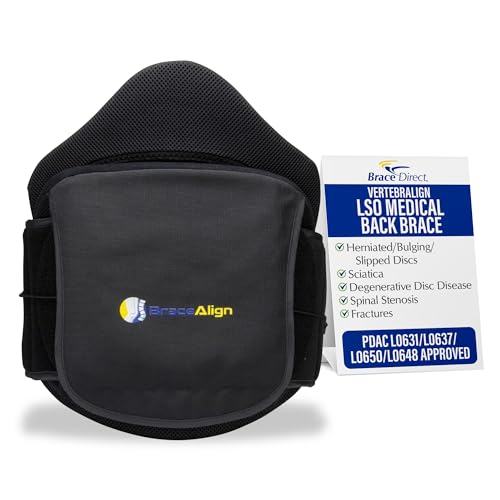
The VertebrAlign is the only brace here with PDAC approval codes L0631, L0637, L0648, and L0650 — making it the choice most likely to match what a spine surgeon prescribes for DDD post-surgery or severe multi-level degeneration. Its single-handed pulley system distributes compression evenly across the lumbar and sacral regions, which is critical when discs have lost hydration and need consistent offloading.
The removable rigid panels let you adjust from firm immobilization to flexible support depending on your flare-up status. The lightweight mesh build prevents the overheating common with neoprene braces, and the included hygiene bag makes storage practical. Users with waists up to 50 inches can wear it without an extension; a Plus model extends to 66 inches.
Patients recovering from discectomy or managing chronic DDD report that this brace restores the ability to stand for cooking or drive without hobbling afterward. It’s not discreet — one reviewer described looking like a turtle — but for those with severe pain, the trade-off for functioning normally is worth the visual bulk.
Why it’s great
- PDAC-approved codes match insurance-grade medical braces
- One-handed pulley ideal for post-op and elderly users
- Removable panels allow flexible-to-firm adjustment
Good to know
- Bulky design makes sitting in cars uncomfortable
- May feel too rigid for users needing only light support
2. BaxMAX Adjustable Back Brace
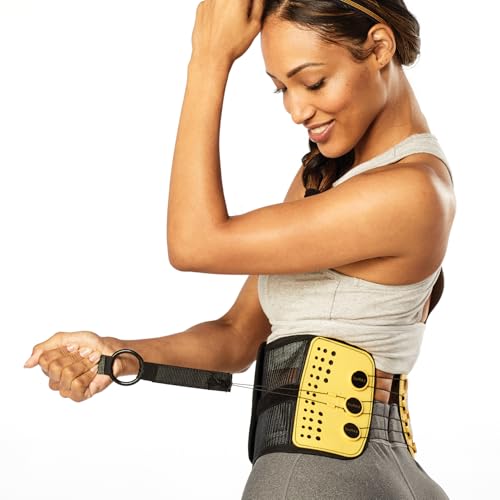
The BaxMAX delivers five times the compression of standard Velcro braces with its patented 5-to-1 pulley mechanism, a massive advantage for DDD patients who need aggressive offloading of the lumbar discs without excessive bulk. At just 5 ounces, the nylon and Kevlar-blend mesh is the lightest option here, reducing fatigue from wearing it during long workdays or gym sessions.
It’s been used in over 3,000 chiropractic clinics for 15 years, which speaks to its reliability for conditions like spondylolisthesis, herniated discs, and lumbar stenosis. The three-way wear adjustment lets you shift compression levels depending on whether you’re sitting, standing, or moving — crucial for DDD patients whose pain fluctuates with position.
Users with L4/L5 issues report instant relief when standing or walking, though the material tends to roll up when seated for long periods. The pulley cable is Kevlar-reinforced, so it withstands repeated tightening without fraying. Measure over your clothes rather than relying on pant size to avoid a too-tight fit that restricts breathing.
Why it’s great
- 5-to-1 pulley delivers targeted, powerful lumbar compression
- Extremely lightweight at 5 oz for all-day wear
- Trusted by chiropractors for active DDD patients
Good to know
- Material rolls up when sitting for extended periods
- Can cut into skin if user has excess abdominal weight
3. Cybertech LSO Back Brace with Decompression Plate

What sets this Cybertech brace apart for DDD is the bionic decompression plate that can be adjusted to a 26-degree arch — effectively acting as a lumbar stretcher that restores lordotic curve and takes pressure off collapsed discs. It stabilizes the L1–S1 vertebrae, making it a strong option for patients with multi-level degenerative changes who need both correction and protection.
The dual-pulley system uses finger-tab pulls for easy tightening, which is especially helpful for seniors or those with grip arthritis who struggle with traditional straps. The removable abdominal plate and adjustable extension pocket accommodate post-pregnancy or obese users who need additional core support to supplement spinal offloading.
A patient with CRMO (a chronic inflammatory bone condition) found this brace allowed pain-free movement and independent wear, while another user replaced a post-surgery brace priced much higher. However, sizing can be inconsistent — one reviewer noted the L/XL was extremely tight despite following the navel-level measurement. Consider sizing up if you’re between measurements.
Why it’s great
- Adjustable 26° arch plate provides active lumbar extension
- Finger-tab pulley system ideal for users with weak grip
- Immobilizes about 80% of lower back movement during flares
Good to know
- Sizing can run small; double-check waist measurement
- Plastic components may cause blisters if not padded properly
4. BraceAbility Lumbar Decompression Back Brace
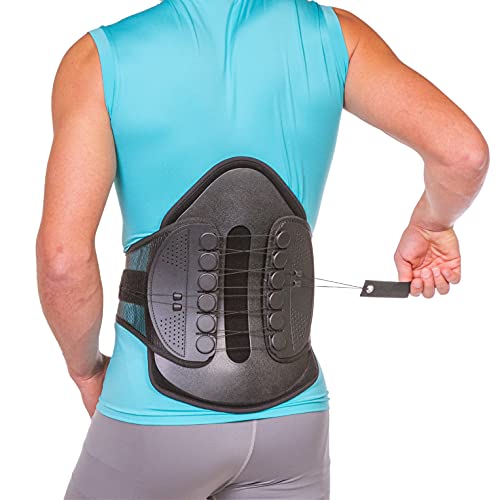
The BraceAbility decompressor is engineered for the full surgical arc — from pre-op stabilization to post-op protection after discectomy or laminectomy. Its dual-pulley system triples the compression you’d get from a standard elastic brace, allowing you to adjust support as swelling subsides and your spine regains stability. The semi-rigid plastic frame provides the motion restriction that DDD patients need to prevent re-injury.
Application requires no twisting or bending — the wraparound design lets you secure it while standing upright, which is a practical relief for those whose pain flares with any flexion. Users managing herniated discs, spinal stenosis, and facet syndrome report that it reduces pain enough to increase daily activity levels and walking endurance.
Long-term users say it’s equivalent to the brace issued at physical therapy, though the back panel can feel too flimsy for heavy-duty lifting. One reviewer on their third unit noted that lying on hard surfaces can crack the plastic, so storage in the original box is recommended. Despite these quirks, it’s a superior alternative to the generic brace many surgeons provide.
Why it’s great
- Triple compression via dual-pulley system for precise adjustment
- No bending or twisting required for application
- Effective for pre-op through post-op recovery stages
Good to know
- Back panel flimsy for some users; better without it
- Plastic can crack if pressed against hard surfaces
5. Ottobock The S.P.I.N.E. Adjustable Back Brace
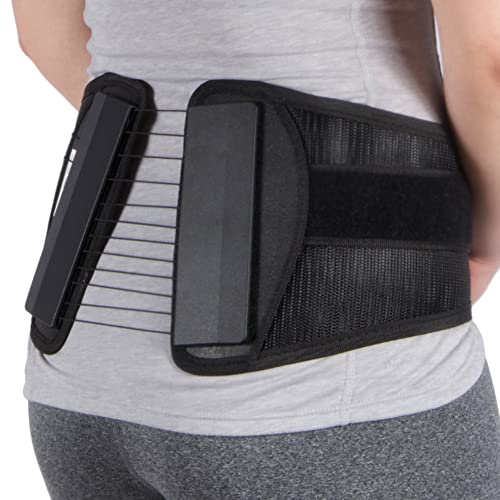
The Ottobock S.P.I.N.E. has been a staple since the 1980s, and its 1-step pulley system remains one of the most intuitive designs for DDD patients who need quick adjustment before any lifting task. The Spectra cord allows two-finger tightening, creating hydrostatic lift in the lower spine that relieves pressure on degenerated discs without requiring a complex fitting process.
The nylon mesh side panels provide vertical support while keeping the brace breathable, making it comfortable for 10-hour workdays in warehouses or construction environments. Users with bulging discs and spinal instability report that it effectively prevents injury during lifting and aids healing during recovery — one chiropractor explicitly recommends it over stretchy or wide competitors.
Where this brace falls short is in conditions requiring rigid immobilization. It’s designed for active prevention and mild-to-moderate DDD support, not post-surgical fixation. The stiffness loosens up after breaking in, so don’t judge the fit immediately. Some users are confused by the dual branding with Cybertech, but the construction quality is identical regardless of the label.
Why it’s great
- Ultra-smooth pulley cord for one-handed tightening
- Breathable nylon mesh prevents overheating during long shifts
- Decades of proven use for lifting and labor environments
Good to know
- Not rigid enough for post-surgical immobilization
- Stiff when new; requires break-in period
6. FEATOL Lower Back Brace with 5 Reinforced Stays
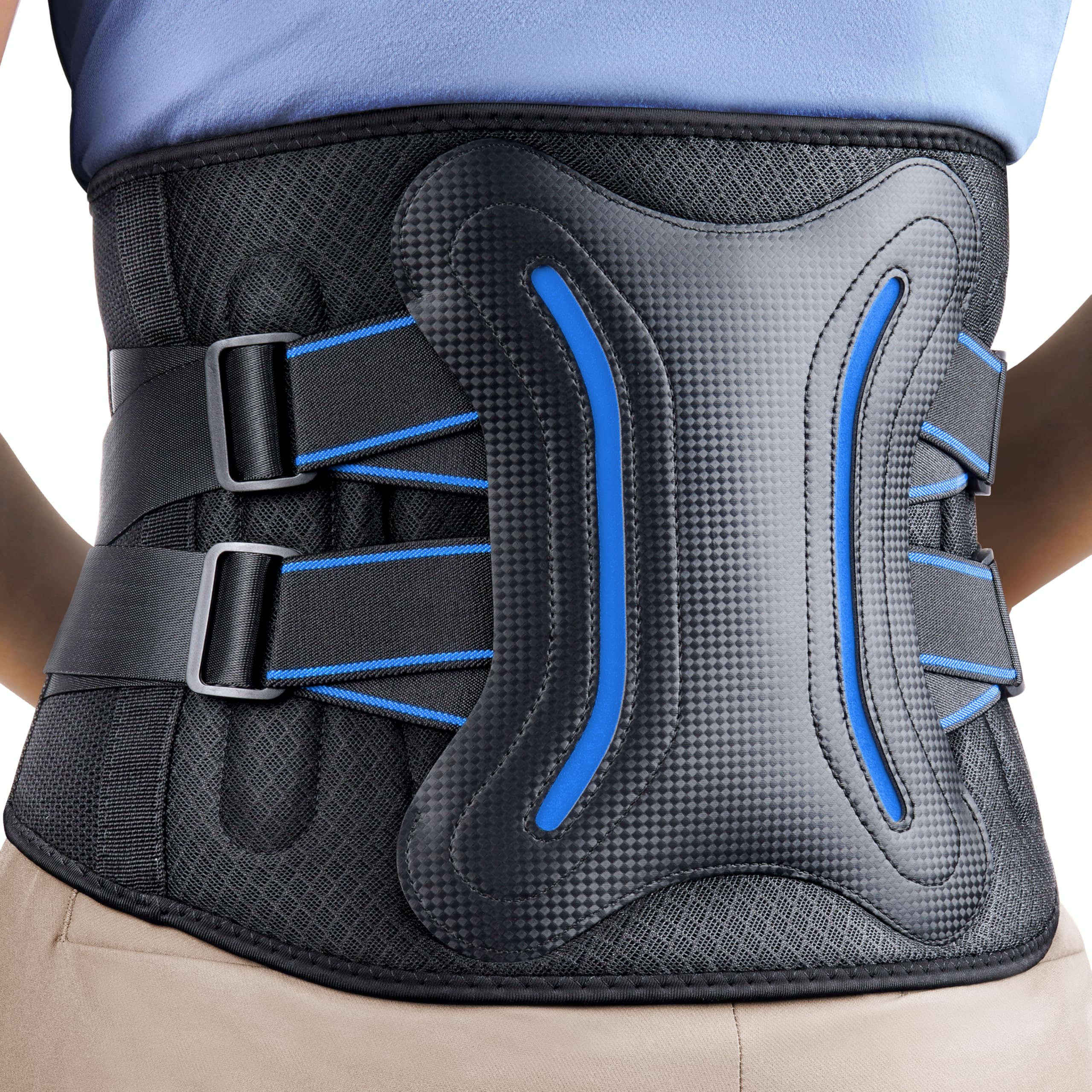
The FEATOL brace uses three memory-aluminum stays and two support plates to create a 360-degree stabilization ring that’s particularly effective for older DDD patients who need gentle but consistent support. The elastic materials and adjustable straps conform like a second skin, and the low-profile design fits under clothing without the bulk of larger LSO braces.
Users in their mid-70s with spinal stenosis report that it restores confidence for walking and prevents the nerve pinching that occurs when the spine compresses during standing or bending. The finger loops on the tensioning straps make application manageable even for arthritic hands, and the fit stays in place during yard work, driving, and household chores.
One buyer had to remove a protective Velcro covering from the tensioning straps before use — a step that’s not mentioned in the included instructions. The brace dampens pain effectively but doesn’t provide the aggressive decompression that severe multi-level DDD requires. It’s a strong mid-range option for daily maintenance rather than acute flare management.
Why it’s great
- Five-stay system delivers 360° stabilization for the lumbar spine
- Low-profile fit works under everyday clothing
- Finger-loop straps accommodate arthritic hands
Good to know
- Protective Velcro cover must be removed before first use
- Not sufficient for severe acute DDD flares
7. NEENCA Lower Back Brace

The NEENCA brace offers an entry point for DDD patients who are new to bracing and want to test whether lumbar support helps before committing to a higher-tier pulley system. Its multi-point design provides basic spine stabilization using medical-grade polyester and spandex, with two elastic Velcro straps for a custom fit across waist sizes from 26 to 65 inches.
The slim profile fits under clothes without noticeable bulk, making it a practical choice for office workers who need discreet support during desk hours. Users with sciatica and suspected bulging discs report that it effectively relieves back pain when tightened correctly, though the support level falls short of what semi-rigid braces provide for advanced DDD.
An 77-year-old user who compared this to multiple braces found it was the most comfortable and well-made option, though her spine surgeon recommended limiting wear to two hours per day to avoid abdominal muscle weakening. The metal rod in the back provides stability that cheaper foam braces lack, but repeated machine washing may degrade the elastic over time.
Why it’s great
- Low-profile design fits discreetly under clothes
- Medical-grade materials for long-term durability
- Wide size range accommodates most body types
Good to know
- Velcro-only tightening lacks the precision of pulley systems
- Prolonged wear over 2 hours may weaken abdominal muscles
FAQ
Can a back brace stop my DDD from progressing?
How many hours per day should I wear a brace for DDD?
Is a rigid LSO or flexible belt better for a herniated disc from DDD?
Will a back brace work for L5-S1 degeneration?
Why does my brace cause more nerve pain in my legs?
Final Thoughts: The Verdict
For most users, the back brace for degenerative disc disease winner is the VertebrAlign LSO Brace because it offers PDAC-approved medical-grade construction with a one-handed pulley system that provides even, adjustable compression across the lumbar and sacral spine. If you want a ultra-lightweight option for active days and acute flares, grab the BaxMAX 5-to-1 Pulley Brace. And for correction-focused support with an adjustable arch plate to restore lordotic curve, nothing beats the Cybertech LSO Decompression Plate Brace.