
Our readers keep the lights on and the weekend projects moving. As an Amazon Associate, I earn from qualifying purchases.
A stiff lower back doesn’t just limit your movement — it rewrites your daily plans, turning simple tasks like tying shoes or lifting a grocery bag into moments of hesitation. The right external support provides the mechanical leverage and spinal alignment needed to break that cycle.
I’m Rikta — the co-founder and writer behind FitlyFast. My product analysis focuses on construction materials, tensioning mechanisms, and real-user outcomes across the lumbar support market.
This guide breaks down seven models sorted by support philosophy and build quality, helping you find the right back brace for lower back relief without wasting time on flimsy options that roll up or lose tension.
How To Choose The Best Back Brace For Lower Back
Not all braces handle the same load. Some are designed for heavy lifting and structural support; others focus on mild compression for posture correction during desk work. Identifying which category matches your pain pattern and activity level narrows the field quickly.
Support Density — Springs vs. Stays vs. Pulley
The internal frame determines how much load the brace offloads from your spine. Steel springs and aluminum stays provide rigid, non-stretch support that prevents forward bending — critical for disc issues and heavy lifting. Foam-based inserts compress over time and suit mild sciatica or muscle fatigue. The Aspen pulley system creates localized tension without requiring brute manual force to tighten, making it ideal for users with weak grip strength.
Fit Strategy — Measure at the Navel
Waist circumference measured at the belly button is the only reliable sizing anchor. Pant size is irrelevant because most braces sit over the hip bones and lower ribs. A brace that rides up or rolls at the top signals the wrong size — which kills compression and creates pressure points. Most customer complaints about bunching trace back to choosing by guess rather than a cloth tape.
Breathability and Wear Duration
Neoprene traps heat and sweat, which limits wear to short sessions or cold environments. Mesh nylon and polyester panels wick moisture and allow extended 8-hour wear without skin irritation. If your workday involves constant movement and bending, prioritize breathable fabric over pure stiffness — you will actually keep it on.
Quick Comparison
On smaller screens, swipe sideways to see the full table.
| Model | Category | Best For | Key Spec | Amazon |
|---|---|---|---|---|
| Mueller Sports Medicine Lumbar Back Brace | Mid-Range | Heavy lifting & driving | 4 steel springs + removable lumbar pad | Amazon |
| Sparthos Back Brace | Mid-Range | Spinal stenosis & daily wear | Adjustable lumbar pad + vertical stays | Amazon |
| FEATOL Back Brace Support Belt | Mid-Range | Gym lifting & disc herniation | 4 support strips + extra lumbar pad | Amazon |
| Aspen Lumbar Support Brace | Premium | Medical-grade targeted compression | Patented 4:1 pulley system | Amazon |
| Aspen Quikdraw PRO Back Brace | Premium | Clinical stability & L1-L5 support | Pull-tab system + inelastic nylon | Amazon |
| NEENCA Lower Back Brace | Mid-Range | All-day wear under clothing | Low-profile mesh + elastic Velcro straps | Amazon |
| FEATOL 5 Reinforced Stays Brace | Premium | 360° support & no-roll fit | 3 memory-aluminum stays + 2 support plates | Amazon |
In‑Depth Reviews
1. MUELLER Sports Medicine Lumbar Back Brace
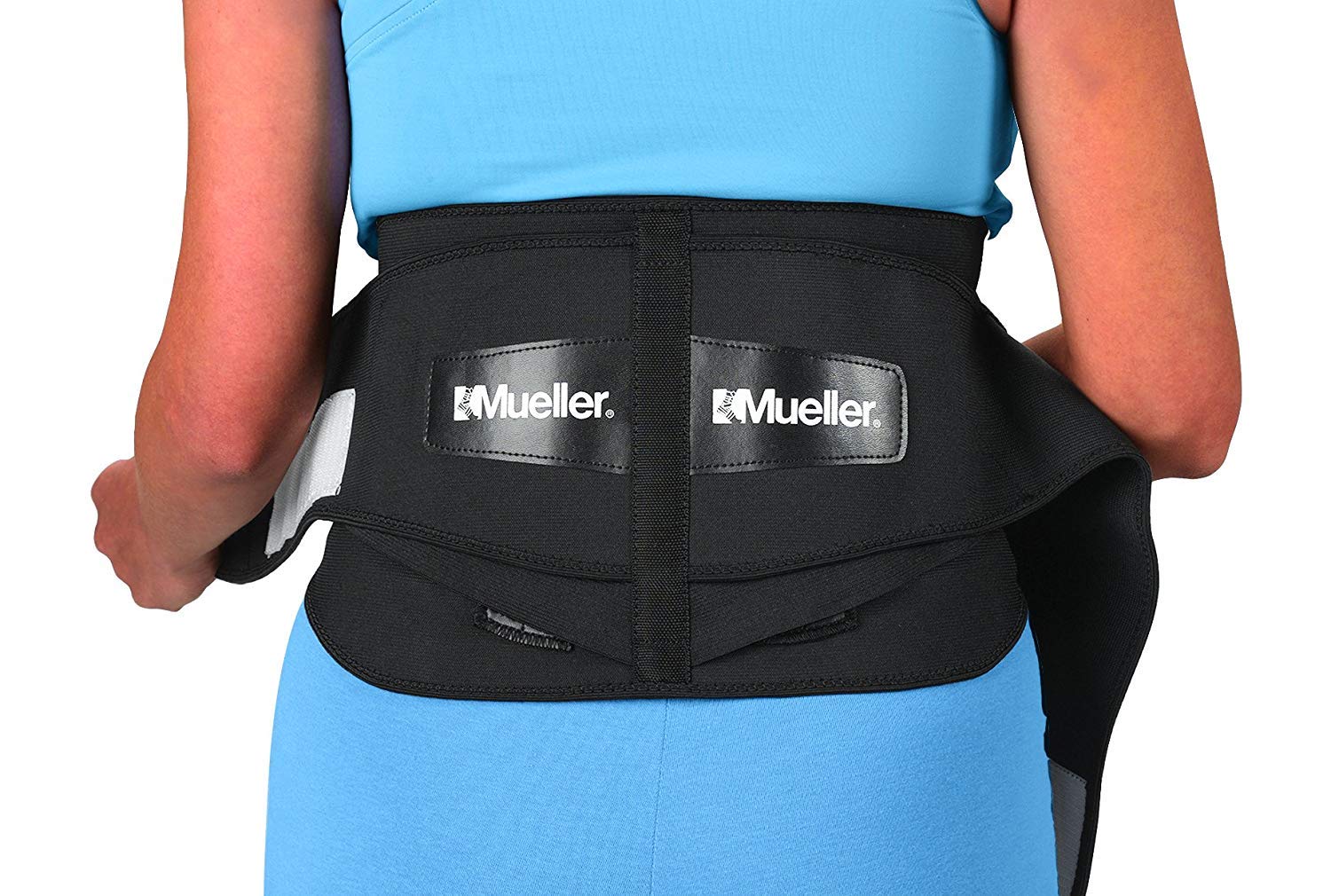
The MUELLER brace uses four integrated steel springs to deliver firm, non-yielding compression that resists forward bending — exactly what you want when lifting boxes or driving for long hours. The breathable mesh back panel is treated to prevent odor, and the removable lumbar pad lets you dial the pressure point location depending on whether the pain sits high near the rib cage or low near the sacrum.
Customer feedback consistently highlights that the brace stays put during active movement — golf swings, restaurant shifts, and heavy gardening — without rolling up at the front or sliding down. The hook-and-loop closure system provides enough travel to accommodate waist sizes from 28 to 50 inches, and the internal molded plastic component eliminates the bunching that plagues cheaper all-foam designs.
One minor trade-off: the neoprene blend can feel warm during summer use, and the brace is thick enough to show under tight clothing. But for users who prioritize structural support over stealth, this is the most proven mid-range option on the market with a 60-year brand history behind it.
Why it’s great
- Four steel springs provide rigid mechanical support for heavy lifting
- Removable lumbar pad allows fine-tuned compression position
- Odor-treated mesh fabric reduces smell during long shifts
Good to know
- Can feel warm under direct sun due to neoprene blend
- Bulky profile visible under fitted tops
2. NEENCA Lower Back Brace

The NEENCA brace is engineered for discretion — a slim, low-profile fit made from medical-grade polyester and spandex that slips under dress shirts and office wear without creating a telltale bump. The multi-point support design uses contoured plastic stays to stabilize the spine, and the breathable mesh fabric prevents sweating during sedentary desk sessions or light activity.
Users managing sciatica and disc herniation report immediate relief from the targeted lumbar compression, with the ability to adjust tension via two elastic Velcro straps that accommodate waist sizes from 25 to 65 inches. The brace stays positioned around the navel and does not roll or dig into the stomach when bending, a common complaint with less rigid alternatives.
The main consideration is that the support is less aggressive than the steel-spring Mueller or pulley-driven Aspen models — better suited for pain prevention during daily routines rather than heavy occupational lifting. If your priority is wearing support for eight hours without anyone noticing, this is the best-balanced option.
Why it’s great
- Slim, low-profile design fits discreetly under clothing
- Breathable mesh prevents overheating during extended wear
- Wide size range with secure two-strap adjustment
Good to know
- Not as rigid as steel-spring braces for heavy lifting
- Plastic stays may lose shape over very long-term daily use
3. ASPEN Lumbar Support Back Brace (Pulley)

The Aspen Lumbar Support uses a patented 4:1 pulley system that multiplies your pulling force, making it possible to generate high compression without exhausting your hands. The dual-tab design lets you independently tension the top and bottom of the brace, so you can lock down the area around the L4-L5 vertebrae while leaving the upper section looser for seated comfort.
Physical therapists and trauma centers recommend this brace because the inelastic nylon material acts like an external skeleton — there is zero stretch, which means the brace holds your spine in neutral alignment even during deep bending or twisting. Sizing runs small, so most users size up one step, and the 36-42 inch large fits most adults who measure accurately.
The biggest drawback is that the same inelastic property that makes it so supportive also means it has no give for sudden movements — not ideal for athletic activity. And because the pulley system requires unthreading the straps to remove it entirely, bathroom breaks become a full doff-and-don process.
Why it’s great
- 4:1 pulley multiplies user force for maximum compression
- Independent top/bottom tension adjusts support per vertebra level
- Zero-stretch nylon acts as rigid external support
Good to know
- Sizes run small — order one size larger than your navel measurement
- Must be fully removed for bathroom visits
4. ASPEN Quikdraw PRO Back Brace

The Quikdraw PRO builds on the same platform as the standard Aspen Lumbar Support but upgrades the tensioning mechanism with dual pull tabs that are easier to grasp for users with arthritis or limited hand mobility. The inelastic fabric keeps L1 through L5 stabilized during prolonged standing, and the medical-grade material does not induce sweating even in warm environments.
Users recovering from spinal fusion surgery or managing chronic degenerative conditions find this brace provides enough rigidity to prevent painful micro-movements without requiring Herculean effort to tighten. The brace weighs only 0.09 kilograms, making it one of the lightest premium options, and the hook-and-loop fastenings hold firm after years of daily cycling.
The trade-off is versatility — this is a brace built for static stability, not dynamic activity. It does not accommodate the range of motion required for weightlifting or manual labor, and the stiff rear plate can feel restrictive during tasks that require deep forward bending.
Why it’s great
- Dual pull-tab design very easy to grip for users with arthritis
- Lightweight inelastic nylon stabilizes L1-L5 without bulk
- Latex-safe construction reduces allergic reaction risk
Good to know
- Better for stationary standing than dynamic movement
- Rear plate limits forward bending capacity
5. Sparthos Back Brace for Lower Back Pain
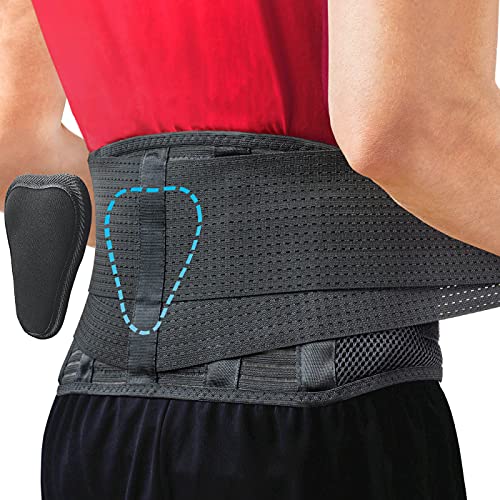
The Sparthos brace hits the sweet spot between cost and capability, offering an adjustable lumbar pad and vertical support stays that prevent the brace from rolling or bunching during extended wear. The fabric is a stretch nylon that feels more forgiving than inelastic alternatives, which makes it easier to wear for 8-10 hour shifts without pressure points.
Customer reviews from users with spinal stenosis and osteoarthritis report that the brace significantly reduces morning pain and allows them to maintain a physical job without relying on medication. The hook-and-loop closure is extremely strong — almost too strong, as several users note the Velcro can be difficult to peel apart when removing the brace.
The main limitation is the front panel width: at about 11 inches, it creates a wasp-waist taper that may not provide enough coverage for users who need flank support. Additionally, the brace is slightly bulkier than the low-profile NEENCA, so it can be visible under thin fabrics.
Why it’s great
- Adjustable lumbar pad targets herniated disc and sciatica pain
- Breathable stretch nylon allows comfortable all-day wear
- Hook-and-loop closure provides maximum adjustability
Good to know
- Velcro is very strong and can be tough to release
- Narrow front panel may not cover flank area fully
6. FEATOL Back Brace Support Belt

The standard FEATOL brace uses four strong support strips combined with an extra lumbar pad to create 360-degree compression around the lower trunk. The inner belt is elastic neoprene that provides firm support without restricting the full range of motion needed for squats, deadlifts, and overhead presses, while the outer hook-and-loop layer allows micro-adjustments between sets.
Weightlifters and warehouse workers report that this brace eliminates the sharp lower back pain that usually sets in after moving heavy loads, with one user noting they moved sandbags and pavers with nearly zero pain. The sizing range stretches from a 24-inch waist to 74 inches, making it one of the most inclusive options on the list.
The neoprene construction traps more heat than mesh alternatives, which can cause sweating during intense gym sessions. And while the brace is comfortable for short-to-medium duration wear, users who need 10-hour support for nursing or retail shifts may prefer the breathability of the Sparthos or NEENCA.
Why it’s great
- Four support strips plus extra lumbar pad for 360-degree stability
- Elastic neoprene allows full squat and deadlift range of motion
- Very wide sizing range up to 74 inches
Good to know
- Neoprene can feel hot during extended wear or intense exercise
- Bulkier than low-profile all-mesh designs
7. FEATOL Lower Back Brace with 5 Reinforced Stays
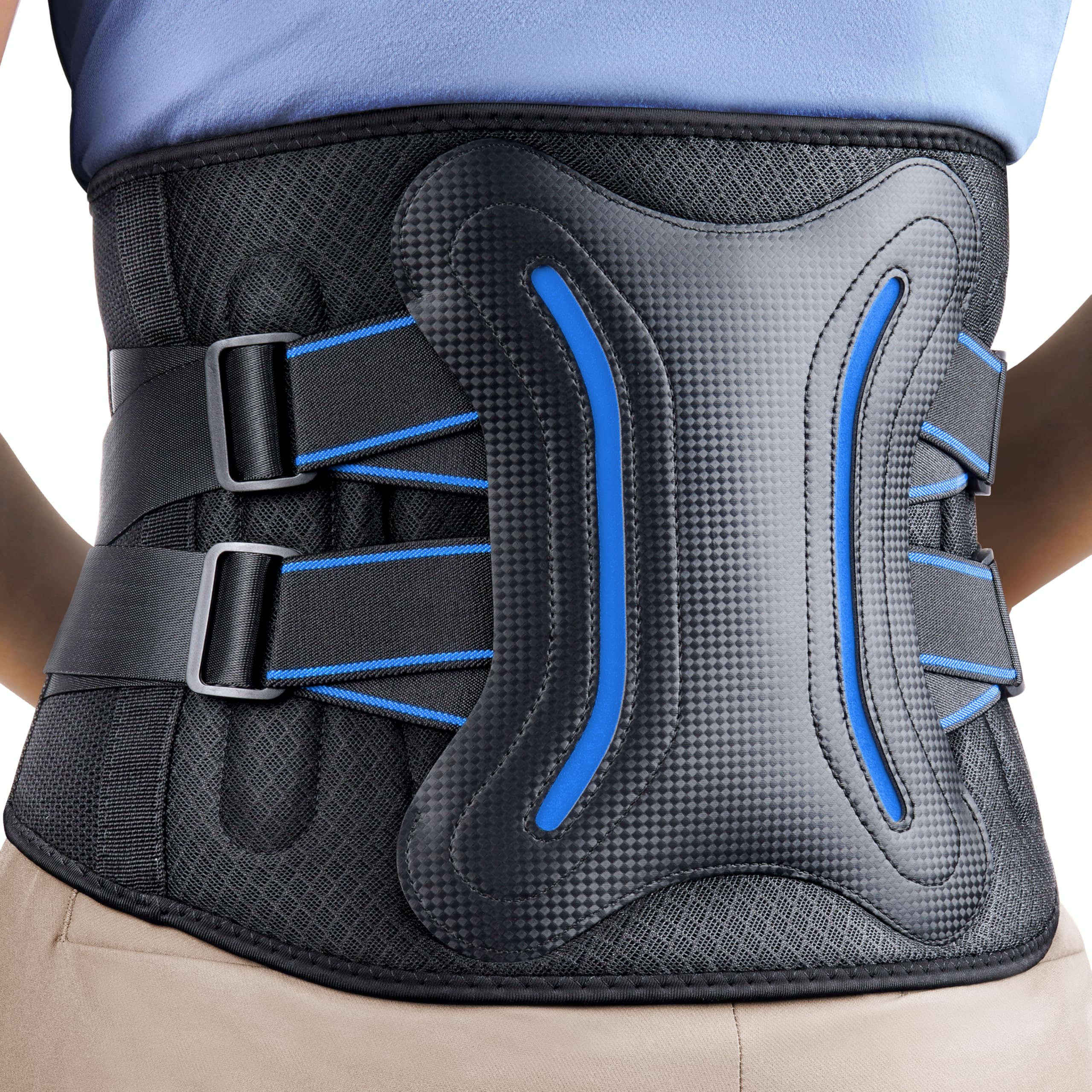
The 5-stay FEATOL brace is the most rigid model in this lineup, packing three memory-aluminum stays and two additional support plates into a slim profile that resists rolling or shifting even during deep bending and twisting. The dual-tension straps allow you to tighten the upper and lower sections independently, which is useful when you need more compression around the lumbar curve but less around the stomach.
Users recovering from severe spinal stenosis or awaiting surgery report that this brace provides enough stability to walk confidently and even hold ice or heat packs against the back while keeping the spine aligned. The breathable mesh outer layer prevents overheating, and the finger loops on the adjustment straps make it easy to put on without assistance.
The primary downside is that the rigid stays make this brace less suitable for seated desk work — the aluminum plates press into the chair back and can feel uncomfortable after thirty minutes of sitting. And while the low-profile design works under loose clothing, it is still visible under fitted shirts.
Why it’s great
- Five reinforced stays provide maximum no-roll lumbar rigidity
- Dual-tension straps allow independent top and bottom compression
- Breathable mesh prevents sweating despite high support density
Good to know
- Rigid stays can press into chair backs during seated work
- More visible under fitted clothing than all-fabric braces
FAQ
Can I sleep in a lower back brace every night?
Why does my back brace roll up at the front when I sit?
How long should I wear a back brace per day?
Final Thoughts: The Verdict
For most users, the back brace for lower back winner is the MUELLER Sports Medicine Lumbar Back Brace because its four steel springs and removable lumbar pad provide genuine mechanical support for lifting, driving, and daily activity at a reasonable investment. If you want discreet all-day relief that fits under office clothes, grab the NEENCA Lower Back Brace. And for clinical-grade stability with independent tension control, nothing beats the Aspen Lumbar Support Brace with 4:1 pulley system.