
Our readers keep the lights on and the weekend projects moving. As an Amazon Associate, I earn from qualifying purchases.
A weak lower back turns every bend, lift, and sit into a gamble. You need a brace that locks in stability without becoming a prison for your torso. The wrong one slips, digs in, or provides zero real resistance against a herniated disc or sciatica flare-up.
I’m Rikta — the co-founder and writer behind FitlyFast. I analyze the structural engineering of back braces across dozens of models, focusing on stay rigidity, pulley mechanics, and the balance between compression and breathability that defines a truly medical-grade support belt.
This guide compares seven purpose-built lumbar supports to help you find the best back brace for daily activity, heavy lifting, or post-surgery recovery.
How To Choose The Best Back Brace
Not every brace provides the right level of immobilization for your specific condition. Picking one requires matching your injury type, activity level, and desired comfort to the brace’s internal structure. Skip this, and you end up with a strap that does nothing.
Rigid Support vs. Elastic Compression
A rigid brace with multiple stays limits flexion and rotation, making it ideal for post-surgery recovery, spinal stenosis, or acute flare-ups. An elastic wrap provides compression and proprioceptive feedback for minor muscle fatigue. The wrong choice here determines whether you stabilize the spine or just apply pressure.
Stay Material and Count
The number and material of stays define the brace’s backbone. Memory-aluminum stays bend to your body’s shape without losing rigidity, while standard plastic strips collapse under load. More stays offer lateral and posterior support. A brace with six metal springs provides far more controlled resistance than one with two thin plastic rods.
Pulley and Adjustment Mechanics
A pulley system lets you tighten the top and bottom of the brace independently. This matters because your lumbar curve changes when you go from standing to sitting. Braces with a 4:1 mechanical leverage system generate high compression with minimal hand strength, a critical feature for seniors or anyone with arthritis.
Quick Comparison
On smaller screens, swipe sideways to see the full table.
| Model | Category | Best For | Key Spec | Amazon |
|---|---|---|---|---|
| Comfyorthopedic LSO | Rigid LSO | Post-surgery/spinal fractures | Detachable back and side pads | Amazon |
| Timtakbo LSO | Arch LSO | Adjustable lumbar extension | 26-degree decompression plate | Amazon |
| FEATOL 5-Stay | Reinforced | Heavy work/long shifts | 5 reinforced stays | Amazon |
| NEENCA Bionic | Bionic Support | Full-day wear/sciatica | 6 memory-metal springs | Amazon |
| Aspen Lumbar | Medical Pulley | Targeted compression | 4:1 pulley system | Amazon |
| Bracepost Bionic | Hot/Cold Therapy | Pain relief with ice/heat | Memory-aluminum stays | Amazon |
| Sparthos Wrap | Compression Wrap | Everyday comfort/light duty | Adjustable lumbar pad | Amazon |
In‑Depth Reviews
1. Comfyorthopedic LSO Back Brace

This LSO (lumbo-sacral orthosis) brace delivers the highest level of rigid support on this list. It features a detachable hard foam back cushion that contours to the lumbar spine, plus two removable side support pads to stabilize the L1 to S5 vertebrae. The one-size design adjusts from a 25-inch to 48-inch abdominal circumference, eliminating the need for multiple braces.
The dual medical-grade drawstrings provide smooth, targeted compression that can be independently adjusted. Patients recovering from discectomy or spinal fractures report significant improvement in posture and reduced strain when bending. Several users note that this brace saved them hundreds of dollars compared to hospital-supplied versions.
At this premium tier, the build quality is clear: the Velcro holds firmly, the foam retains its shape under pressure, and the side supports prevent excessive lateral movement. It is dry-clean only, but the durability justifies the maintenance. This is the right choice when your doctor recommends an L0648-code brace.
Why it’s great
- PDAC approved, FSA/HSA eligible
- Adjustable to fit nearly any waist size
- Detachable back and side supports for custom rigidity
Good to know
- Dry clean only increases maintenance
- Black-on-black fabric hard to see in low light
- Premium price point reflects medical-grade certification
2. Timtakbo LSO Back Brace with Decompression Plate

This brace’s standout feature is the adjustable bionic decompression plate that can be set to three positions, including a maximum 26-degree arch for lumbar correction and extension. It also includes a separate removable plastic abdominal support plate for postpartum or obesity-related lumbar pain. The pulley system uses finger tabs that allow targeted compression without requiring strong grip strength.
The LSO design stabilizes the L1 to S1 vertebrae effectively. Users managing herniated discs or spasms report that the brace immobilizes up to 80% of lower back movement, allowing them to function during acute episodes. The fit is true to size for most builds, though some users find the sizing runs small.
At the mid-to-premium range, this brace offers options that cheaper braces simply lack: adjustable arch angle, abdominal plate, and a dual-pulley tension system. The combination provides both corrective extension and flexible compression, making it a strong choice for anyone whose back condition changes throughout the day.
Why it’s great
- Adjustable arch allows active lumbar correction
- Dual pulley system reduces hand strain
- Includes abdominal support plate for extra stability
Good to know
- Sizing can run tight for the stated range
- Setup requires attention to instructions
- Bulkier than standard wrap braces
3. FEATOL Lower Back Brace with 5 Reinforced Stays
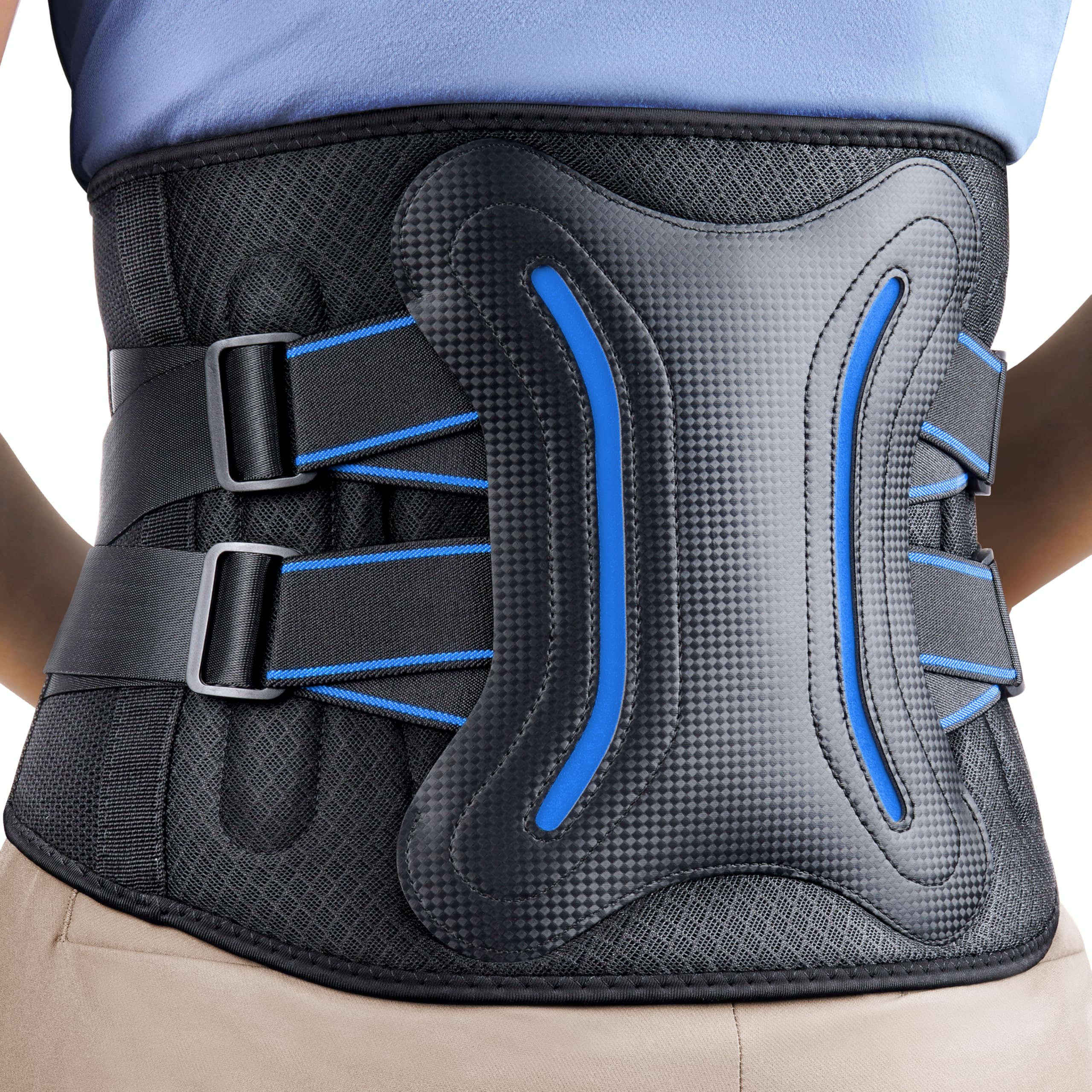
With three memory-aluminum stays and two additional support plates, this brace provides 360-degree reinforcement. The stays adapt to your body curve while maintaining their rigidity, preventing the brace from collapsing under load. The elastic material and adjustable straps create a snug fit that stays in place during lifting, standing, and walking.
Users recovering from spinal stenosis or preparing for surgery report that this brace holds heat or cold packs effectively in addition to providing structural support. The finger loops on the straps make application straightforward even for users with arthritis. The design is low-profile enough to wear under most clothing without creating obvious bulk.
This is a solid mid-range option for anyone who needs more than basic compression but does not require full LSO immobilization. The stay count exceeds many competitors at a similar price point, and the material holds up well to daily wear. The only catch is that new users should check for protective Velcro coverings on the tensioning straps before first use.
Why it’s great
- Five reinforced stays provide extensive lateral support
- Memory-aluminum resists deformation
- Fits comfortably under everyday clothing
Good to know
- Protective film on Velcro must be removed first
- Fixed waist size per unit, not adjustable
4. NEENCA Back Brace with Bionic Support System
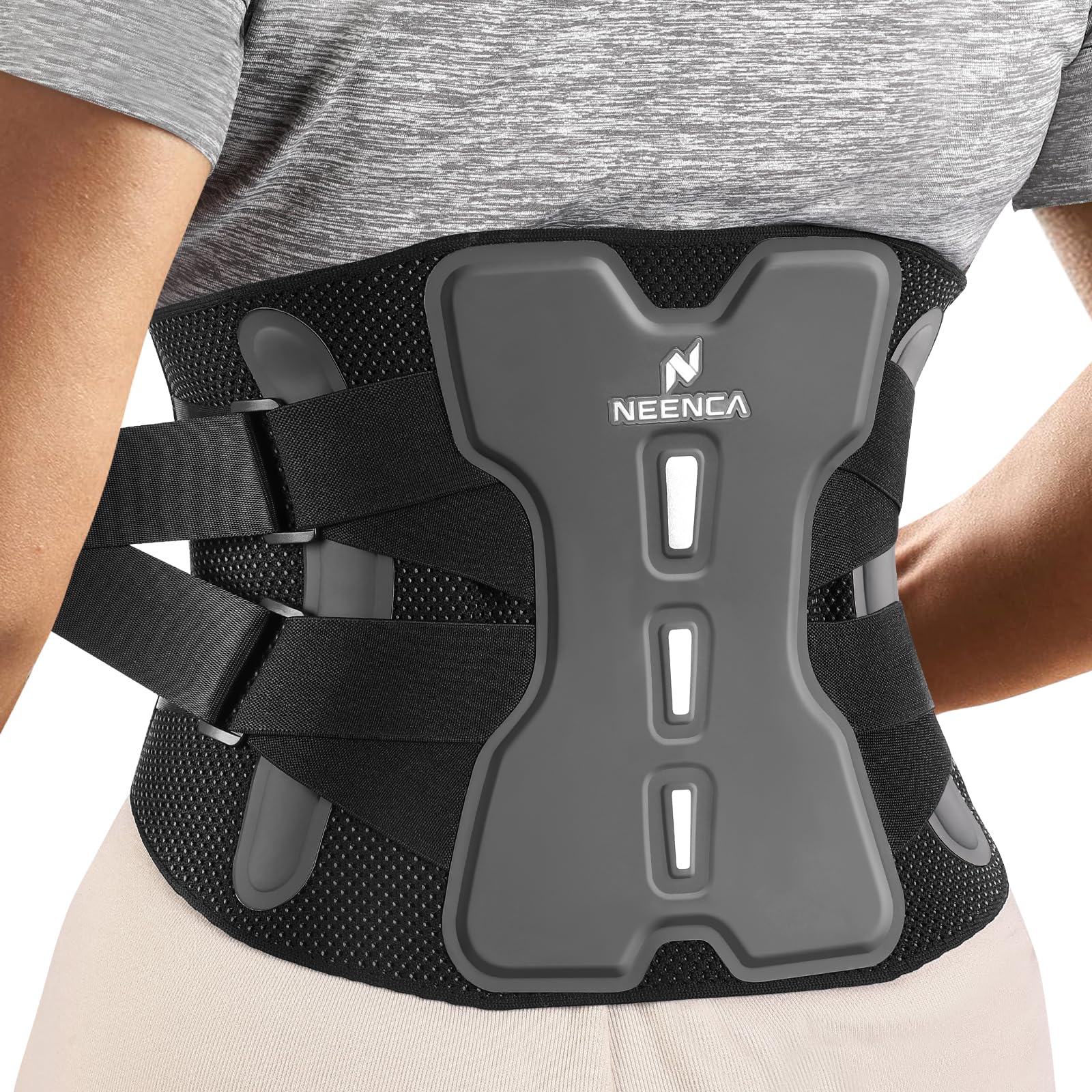
This brace features a patented bionic support system with two lumbar panels, two memory-aluminum stays, and two flexible springs for a total of six supportive elements. The internal layer uses velvet fabric for a soft, non-irritating feel against the skin, and the 3D hollow knit material provides breathability that reduces sweating during extended wear.
Users with severe back conditions, including multiple spinal surgeries, report that this brace provides better support than insurance-provided alternatives. The dual-layer design with adjustable straps allows fine-tuned compression. The brace accommodates a wide waist range per size, with options extending to a 65-inch waist circumference.
As a Class 2 medical device, this brace combines high rigidity with high comfort. The main difference between this and the standard wrap brace is the structured lumbar panel that does not roll or shift under pressure. It is an excellent daily-wear option for sciatica and herniated disc patients who need support for hours at a time.
Why it’s great
- Six springs spread support across the full lumbar area
- Soft inner lining prevents skin irritation
- Machine washable for easy care
Good to know
- Velcro may catch on delicate fabrics
- Light color may show dirt quickly
5. Aspen Lumbar Support Back Brace

Aspen’s patented 4:1 tightening system is the defining feature here. It allows the user to independently tighten the top and bottom sections of the brace, providing localized compression exactly where the pain sits. The inelastic nylon material offers rigid support that acts as an external skeleton for heavy lifting, without stretch or give.
Medical professionals trust this brace in trauma centers, clinical practices, and rehab facilities. The low-profile design is breathable enough for extended wear and fits under most clothing. The sizing runs small, so sizing up is recommended for anyone between sizes. Users recovering from acute flare-ups or muscle spasms report significant pain reduction when walking.
This is a no-stretch, no-compromise brace for people who need mechanical leverage rather than elastic pressure. The trade-off is zero give, which makes it unsuitable for athletic movements or backbends. But for pure, targeted compression that requires little hand strength to apply, this is a top-tier medical tool.
Why it’s great
- 4:1 pulley delivers high compression with less force
- Independent top/bottom adjustment for precision
- Trusted by clinical facilities and trauma centers
Good to know
- Inelastic material prohibits flexibility
- Sizing runs small — size up if between sizes
6. Bracepost Back Brace with Bionic Spine Design

This brace builds in a pocket for a reusable hot/cold pack, making it a dual-function device for both structural support and temperature therapy. The internal memory-aluminum stays are quadruple harder than standard PP strips, and metal spring strips on the side add flexibility without sacrificing stability. The front portion is narrowed to prevent thigh contact and unwanted rolling.
Patients with severe chronic pain from old fractures report that this brace helps prevent acute flare-ups that would otherwise leave them bedridden. The crossover Velcro design is gentler than full rigid braces while still providing substantial support.
At a mid-range price, this brace offers the rare combination of rigid structural stays, a versatile therapy pack, and anti-slip silicone strips that keep the brace in place during activity. The trade-off is that the Velcro may weaken over months of use, which is a common issue for high-tension closures.
Why it’s great
- Integrated hot/cold therapy pack for combined treatment
- Memory-aluminum stays harder than standard plastic
- Anti-slip silicone prevents upward migration
Good to know
- Front Velcro may degrade after extended use
- Hand wash only to protect materials
7. Sparthos Back Brace for Lower Back Pain
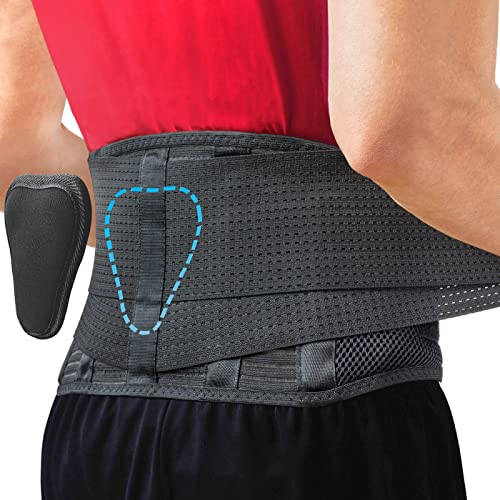
This is a straightforward compression wrap with an adjustable lumbar pad and vertical support stays that prevent rolling. The breathable nylon and polyester fabric reduces heat buildup, making it one of the least sweaty options for daily wear. The design is minimalist and low-profile, fitting easily under loose clothing without creating visible bulk.
Users with spinal stenosis find it effective for posture improvement and slouching reduction when worn for 8 to 10 hours daily. The double straps provide adjustable compression, and the lumbar pad can be positioned to target specific areas. However, the 11-inch front width creates a wasp-waist effect that some users find restrictive.
At the budget-friendly end of the spectrum, this brace does the basics well. It is best for mild to moderate lower back fatigue, minor sciatica, or daily posture support. It is not designed for heavy lifting recovery or post-surgical immobilization. For someone looking for an entry-level support belt with solid construction, this delivers.
Why it’s great
- Breathable fabric reduces sweat during extended wear
- Adjustable lumbar pad targets pain points
- Low-profile design fits under clothing
Good to know
- Narrow coverage area limits spinal support
- Not suitable for heavy-duty or post-op use
FAQ
How tight should my back brace be?
Can I sleep with a back brace on?
How long can I wear a back brace each day?
Final Thoughts: The Verdict
For most users, the best back brace winner is the NEENCA Back Brace because it balances six memory-metal springs, breathable 3D knit fabric, and a Class 2 medical device rating at a mid-range price. If you need post-surgery rigid immobilization, grab the Comfyorthopedic LSO Brace. And if your priority is precision compression with minimal hand strength, nothing beats the Aspen Lumbar Support with its 4:1 pulley system.