
Our readers keep the lights on and the weekend projects moving. As an Amazon Associate, I earn from qualifying purchases.
Lower back pain creeps in quietly, then settles into your daily life until every bend, lift, and twist is a negotiation with your own spine. The right back exercise machine doesn’t just fill a corner of your home gym—it actively rebuilds the posterior chain, decompresses the lumbar discs, and delivers the kind of targeted resistance that floor exercises can’t match. Whether you’re recovering from an injury, strengthening your core for heavy lifts, or simply fighting the stiffness of a desk-bound routine, the choice of equipment determines whether your back gets stronger or just another set of compromised reps.
I’m Rikta — the co-founder and writer behind FitlyFast. After spending dozens of hours comparing build materials, weight capacities, adjustability ranges, and user reports across the hyperextension bench, roman chair, and inversion categories, I’ve assembled a clear roadmap for matching a machine to your exact spinal needs.
The market offers everything from foldable roman chairs under to commercial-grade inversion-hybrid units over , but the real differentiators lie in pad density, frame gauge, adjustability points, and whether the machine isolates the lower back or integrates the full posterior chain. This guide breaks down the best back exercise machine options across eight models so you can buy with confidence, not guesswork.
How To Choose The Best Back Exercise Machine
Choosing a back exercise machine starts with understanding your primary goal: are you rehabilitating a sensitive lower back, building raw posterior chain strength, or decompressing the spine after long hours of sitting? Each design—whether roman chair, hyperextension bench, or inversion-based unit—offers a different angle of resistance and different spinal loading. Here’s what to look for.
Frame Stability and Weight Capacity
A back exercise machine is only as safe as its base. Look for heavy-gauge steel construction (2×3-inch commercial tubing is ideal) and a weight capacity that exceeds your body weight by at least 30 pounds. Machines that wobble during a 45-degree extension transfer that instability to your spine, increasing injury risk. The top-tier units in this category weigh 40 to 60 pounds themselves, which grounds the frame during explosive or slow-controlled movements alike.
Pad Density and Adjustability
Thin or overly firm pads create pressure points on the hips and pelvis, forcing you to cut reps short. The best machines use high-density foam at least two inches thick, with a separate hip pad and ankle pad that adjust vertically and horizontally. Users between 5’0″ and 6’6″ need a machine with at least three inches of ankle pad travel and hip pad rotation to maintain proper posture through the full range of motion.
Movement Isolation vs. Full-Body Integration
A standard hyperextension bench isolates the erector spinae, glutes, and hamstrings through a fixed 45-degree arc. Inversion-based machines add spinal decompression and allow rotational core work, while decline benches shift the load to the rectus abdominis and hip flexors. Decide whether you need pure lower-back isolation or a multi-plane platform that can also serve as an ab trainer and stretch station.
Quick Comparison
On smaller screens, swipe sideways to see the full table.
| Model | Category | Best For | Key Spec | Amazon |
|---|---|---|---|---|
| Teeter DEX II | Inversion/Hyperextension | Spinal decompression & core | 350 lb capacity, 60 lb frame | Amazon |
| Body-Solid PCH24X | Roman Chair | Durable home/commercial use | 3.75″ thick DuraFirm pads | Amazon |
| Sunny Health & Fitness SF-BH621002 | Stretch Machine | Full-body flexibility & decompression | 24+ inch pivoting seat travel | Amazon |
| Finer Form 1390-V2 | Decline/Flat Bench | Decline abs & dumbbell press | 1100 lb capacity, 44 lb bench | Amazon |
| GMWD LE02 | Leg Extension/Curl | Lower body isolation & rehab | 28+5 leg positions, 95 lb unit | Amazon |
| SUCXDZQ SRM-001 | Hyperextension Bench | Compact, adjustable back work | Dual angle & height adjust, 20 lb | Amazon |
| CAP Barbell FM-CS707 | Hyperextension Bench | Entry-level posterior chain | 300 lb max, 41 lb steel build | Amazon |
| FITKS360 HC-015 | Roman Chair | Foldable home gym storage | Foldable, 330 lb capacity | Amazon |
In‑Depth Reviews
1. Teeter DEX II
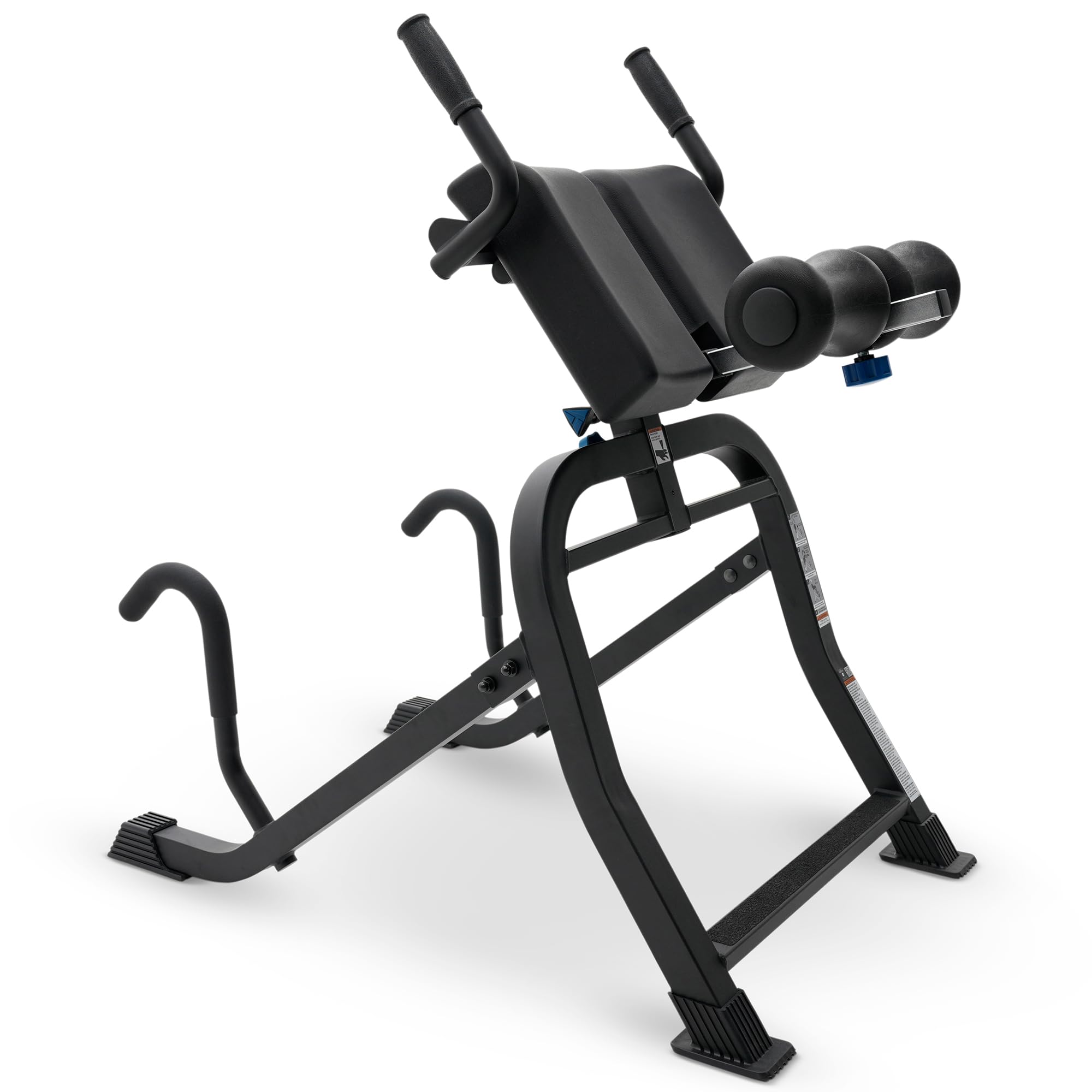
The Teeter DEX II redefines what a back exercise machine can do by merging the decompression benefits of inversion with the targeted resistance of a roman chair. Instead of hanging from ankle cuffs, you rotate into a 90/90 hip-supported position that unloads the lumbar spine without stressing the knees or ankles. This is a genuine solution for chronic lower back pain sufferers who have tried traditional hyperextension benches but still felt compression in the hips.
The frame uses commercial-grade heavy-duty steel with a powder-coated finish and large stability feet. At 60 pounds and a 350-pound user capacity, it supports users from 4’8″ to 6’6″. The contoured foam lap cushion features spring-loaded adjustability for quick multi-user swaps, and the traction-grip platform includes lower handles for rotation, stretching, and even pullup/dip anchoring when paired with resistance bands.
FDA-registered for conditions including herniated discs, sciatica, and spinal stenosis, the DEX II comes with a 5-year full warranty and access to the Teeter Move app for guided recovery classes. The only drawback for heavier-set users: the stomach cushion can pinch when transitioning back to standing, though this is a minor trade-off for the spinal relief it delivers.
Why it’s great
- FDA-registered for targeted back pain conditions
- Decompresses spine without ankle stress
- Commercial-grade build with 5-year warranty
Good to know
- Premium-tier investment compared to basic roman chairs
- Stomach pad may pinch for larger users returning to upright
2. Body-Solid PCH24X

Body-Solid has been a commercial gym staple for three decades, and the PCH24X roman chair reflects that heritage. The defining feature is the 3.75-inch thick DuraFirm pads—significantly thicker than the one-inch foam found on most budget chairs—which distribute pressure across the hips and lower abdomen during extensions. The double-stitched upholstery and oversized 8-inch foam rollers add durability that home users rarely outgrow.
The frame is built from commercial 2×3-inch heavy-gauge steel, weighing 40 pounds and measuring 46x25x36 inches. Vertical and horizontal pop-pin adjustments allow the footrest to move closer or farther from the hip pad, accommodating users of varying torso lengths. The no-slip step-up surface adds safety when mounting, and the 300-pound capacity is realistic for steady-state extensions and ab crunches.
Assembly takes two to three hours and requires standard wrenches—no included tools, so plan ahead. Some users note the rear ankle bar feels short for wider stances, but the overall stability during movement is excellent. The 10-year frame warranty means this is likely the last roman chair you will buy.
Why it’s great
- Thickest hip pads in this category reduce pressure points
- Commercial 2×3 steel frame eliminates rocking
- 10-year frame warranty for long-term ownership
Good to know
- Assembly requires separate tools and takes 2-3 hours
- Rear ankle bar may feel short for wider users
3. Sunny Health & Fitness SF-BH621002
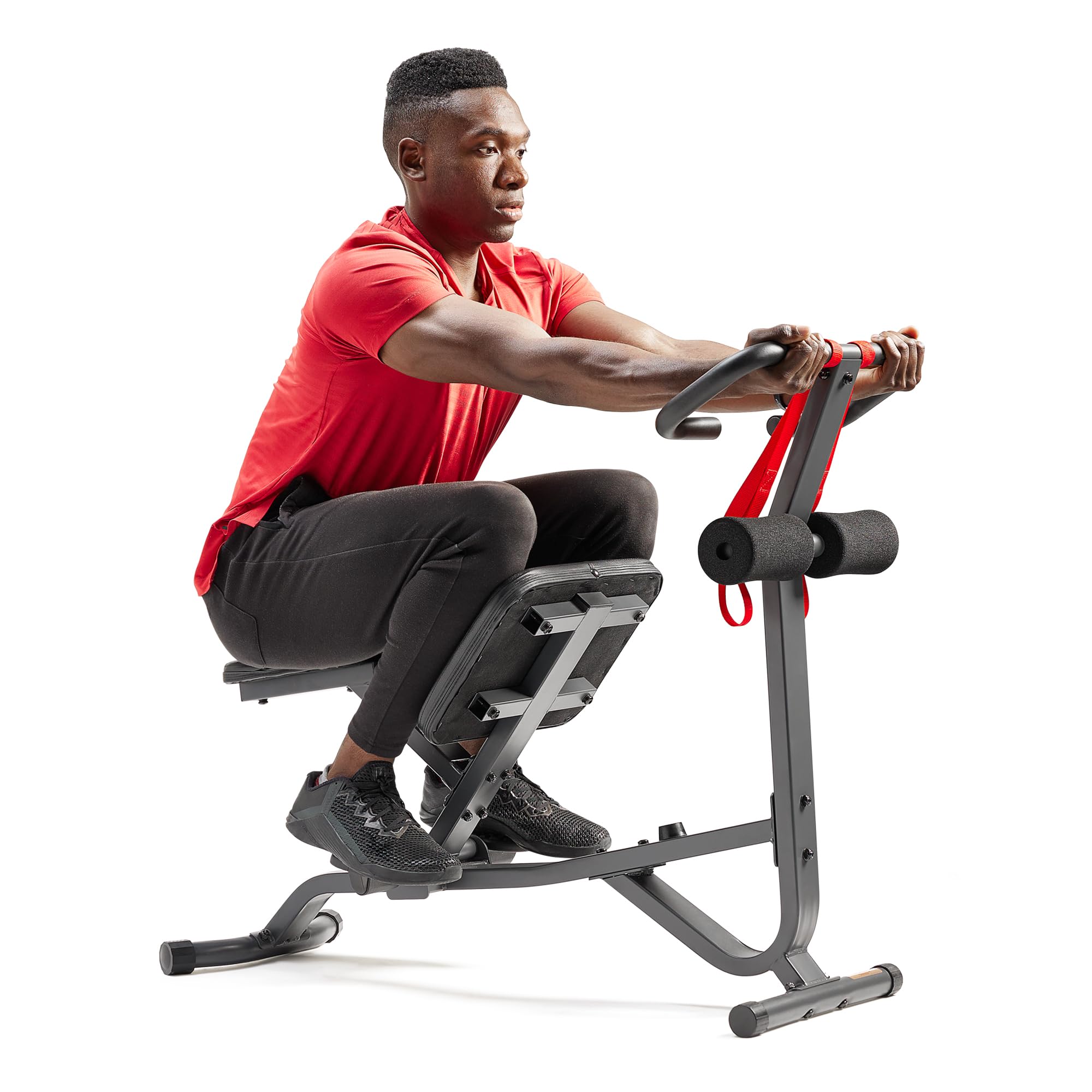
The Sunny Health & Fitness SF-BH621002 breaks from the hyperextension mold by focusing on decompression and flexibility rather than resistance. It uses a pivoting seat with 24-plus inches of travel, padded foam rollers for leg stretching, and multi-grip handlebars that let you target the lower back, hamstrings, and shoulders through nine printed stretch routines. This machine is ideal for users whose primary need is relief from tightness rather than strength building.
Dual safety straps secure your position during deeper stretches, and the self-leveling pedals automatically adjust to foot angle for consistent calf and hamstring engagement. The alloy steel frame weighs just 29.7 pounds and measures 42.1×18.9×34.9 inches, making it the most space-friendly option in this list. The SunnyFit app provides guided routines, which helps beginners avoid improper positioning that could aggravate existing back issues.
Users with sciatica or chronic lower back tightness report noticeable relief after daily use. The 1-year structural frame warranty and 180-day parts coverage are standard for this price tier. This is not a replacement for a hyperextension bench if your goal is pure strength, but as a decompression and mobility tool it offers unique value.
Why it’s great
- Effective spinal decompression without ankle or knee stress
- Ultra-compact footprint for small spaces
- Nine built-in stretch routines printed on the machine
Good to know
- Lacks the resistance loading of a traditional roman chair
- Not ideal for users seeking pure strength hypertrophy
4. Finer Form 1390-V2
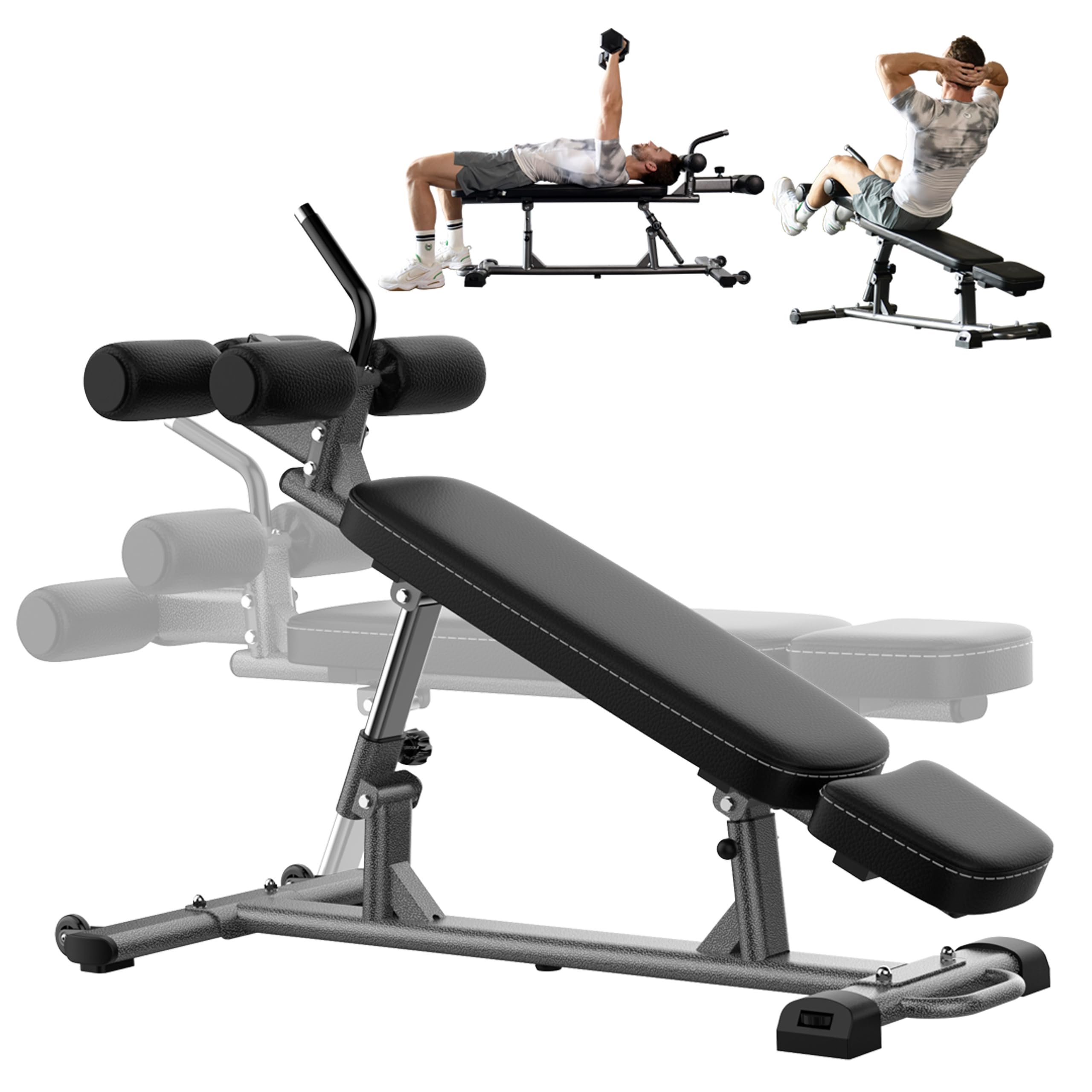
The Finer Form 1390-V2 is a decline and flat weight bench that doubles as an ab machine, but its extended backboard and 1100-pound capacity make it relevant for back training when used for reverse hyperextensions, decline back extensions, or dumbbell rows. The wide-base frame and heavy-duty alloy steel construction eliminate wobble even during explosive movements, and the 44-pound weight anchors the bench firmly.
The foot roller adjusts vertically to accommodate different torso lengths, and the reverse crunch handle at the top of the backboard provides a grip point for leg lifts that engage the lower erector spinae. Users up to 6 feet tall and 265 pounds report a solid fit. The wheels on the bottom make repositioning easy, and the adjustable backrest switches from flat to steep decline in seconds.
Assembly instructions are minimal, but the parts fit cleanly and the bench comes together in about an hour. Some users note slight wobble at the highest decline setting, but for general ab and back work it remains stable. This is a smart mid-range choice if you want one piece of equipment that handles decline sit-ups, bench press, and bodyweight back extensions.
Why it’s great
- Massive 1100-pound capacity for heavy dumbbell work
- Extra-long backboard supports taller users
- Wheels and compact footprint for easy storage
Good to know
- Slight wobble at steepest decline angle
- Not a dedicated hyperextension bench
5. GMWD LE02
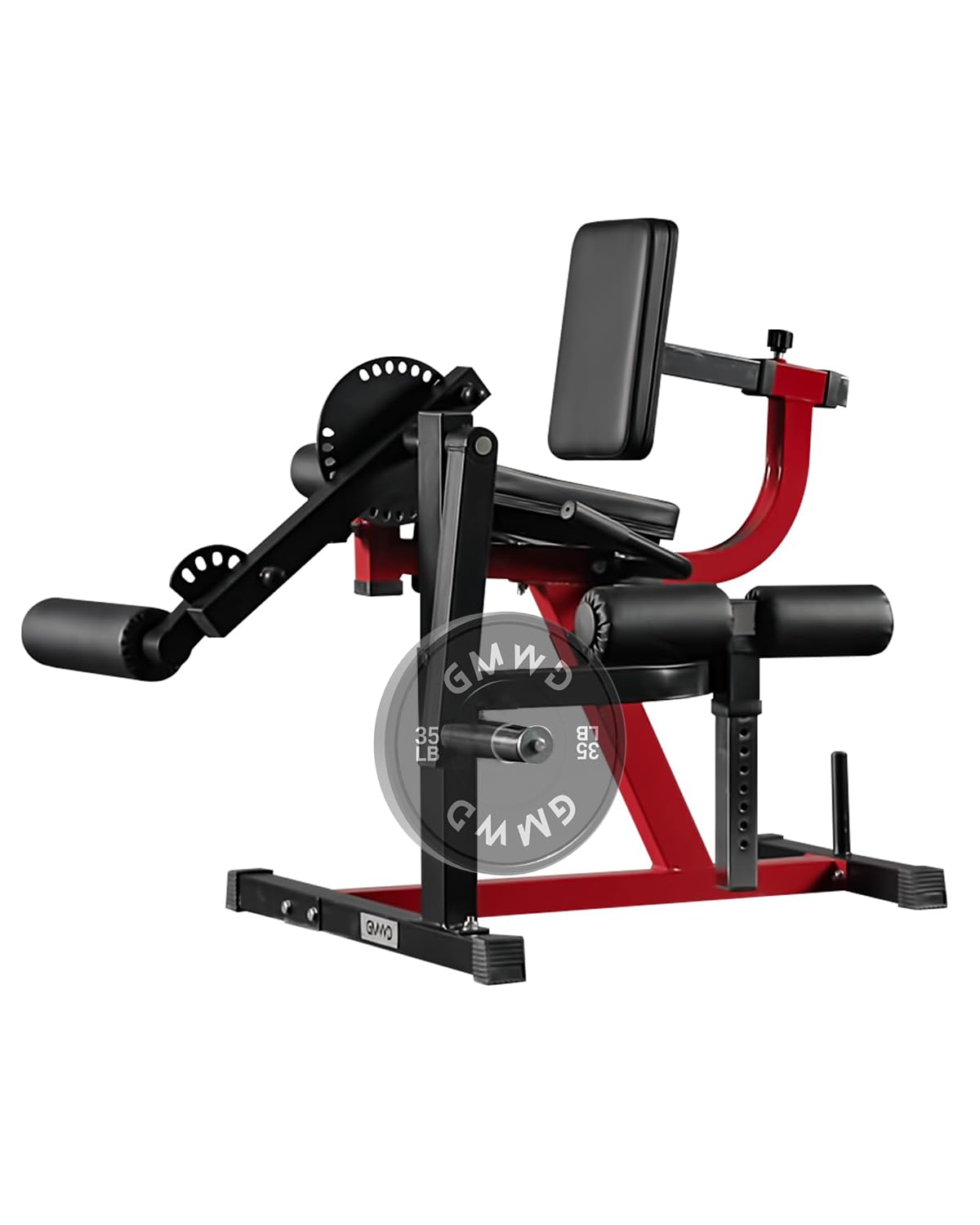
The GMWD LE02 is a lower-body specialist that targets the patellar ligaments, quadriceps, and hamstrings through plate-loaded resistance, but its adjustable seat and backrest also support lumbar stabilization exercises. The 28-plus-5 leg position settings, 8 backrest positions, 4 seat positions, and 8 leg hold-down positions allow precise alignment for rehab protocols. The removable pin mechanism switches between leg extension and leg curl modes instantly while acting as a safety limiter against overswing.
Premium padding with thicker edges on the seat and breathable sweat-resistant fabric reduce sore spots during high-rep work. The stainless steel guide rods and alloy steel frame weigh 95 pounds, providing a stable platform that feels commercial. At 34x36x37 inches, the footprint is manageable for a dedicated lower-body station.
The machine works best for users between 5’2″ and 6’1″. Taller users may find the weight arm travel short, and switching weights between curls and extensions requires sequential adjustment. Despite these quirks, the LE02 is a capable rehabilitation tool for those rebuilding leg and lower back strength after injury.
Why it’s great
- Extensive adjustability for tailored rehab positioning
- Commercial-grade feel with 95-pound frame stability
- Smooth, natural motion path for joint safety
Good to know
- Poor fit for users under 5’2″ or over 6’1″
- Weight changing is sequential between curl and extension
6. SUCXDZQ SRM-001

The SUCXDZQ SRM-001 offers both angle and height dual adjustability in a compact 20-pound package, making it one of the most portable hyperextension benches on the market. The carbon steel frame supports up to 245 pounds, and the 45-degree ergonomic design keeps the lower back engaged without strain. Its white, minimalist aesthetic integrates into home gyms that prioritize clean lines over bulky black steel.
Assembly is straightforward and takes roughly 30 minutes with the included hardware. The padded hip supports and foot pads are adequately cushioned for moderate-duration sessions, and the adjustable footrest accommodates users up to 6 feet 3 inches. The bench measures 43.4×23.5×26.7 inches—small enough to store under a bed or lean against a wall.
The main concern is packaging: some units arrive with paint chips or damaged hardware due to insufficient padding during shipping. The machine screws used in assembly can be frustrating if the supplied tools strip them. That said, when the unit arrives intact, it delivers stable performance for back extensions, side bends, and core work at a price that fits budget-conscious setups.
Why it’s great
- Dual-axis adjustability (angle + height) for custom fit
- Ultra-lightweight at 20 pounds for easy relocation
- Compact footprint ideal for apartment gyms
Good to know
- Marginal shipping protection can lead to cosmetic damage
- Machine screws may strip with included tools
7. CAP Barbell FM-CS707

The CAP Barbell FM-CS707 is a no-frills hyperextension bench that prioritizes steel density over soft-touch features. The 41-pound alloy steel frame and 300-pound capacity provide a stable platform for back extensions, and the pop-pin adjustment lets you tweak the footrest height in seconds. The split hip pad design offers the option to target obliques by rotating the torso during extensions.
Assembly is straightforward with pliers and a wrench, though the instructions are minimal. Some units arrive missing the foam ankle pads, but CAP Barbell’s customer service typically replaces missing parts quickly. The padding is serviceable but firm—users accustomed to thick gym-grade cushions may want to add a towel for longer sets.
The ankle pad position is fixed and may feel too far for users with shorter legs, and the footplate lacks the non-slip texture found on premium models. Despite these compromises, this unit has been a consistent best-seller for its price tier because the steel frame genuinely delivers stability. It is a solid entry-level purchase for anyone building posterior chain strength on a tight budget.
Why it’s great
- Solid 41-pound steel frame for stability at this price
- Split hip pad enables oblique training
- Pop-pin adjustment for quick height changes
Good to know
- Padding is firm; may need extra cushion for comfort
- Some units arrive missing foam ankle pieces
8. FITKS360 HC-015
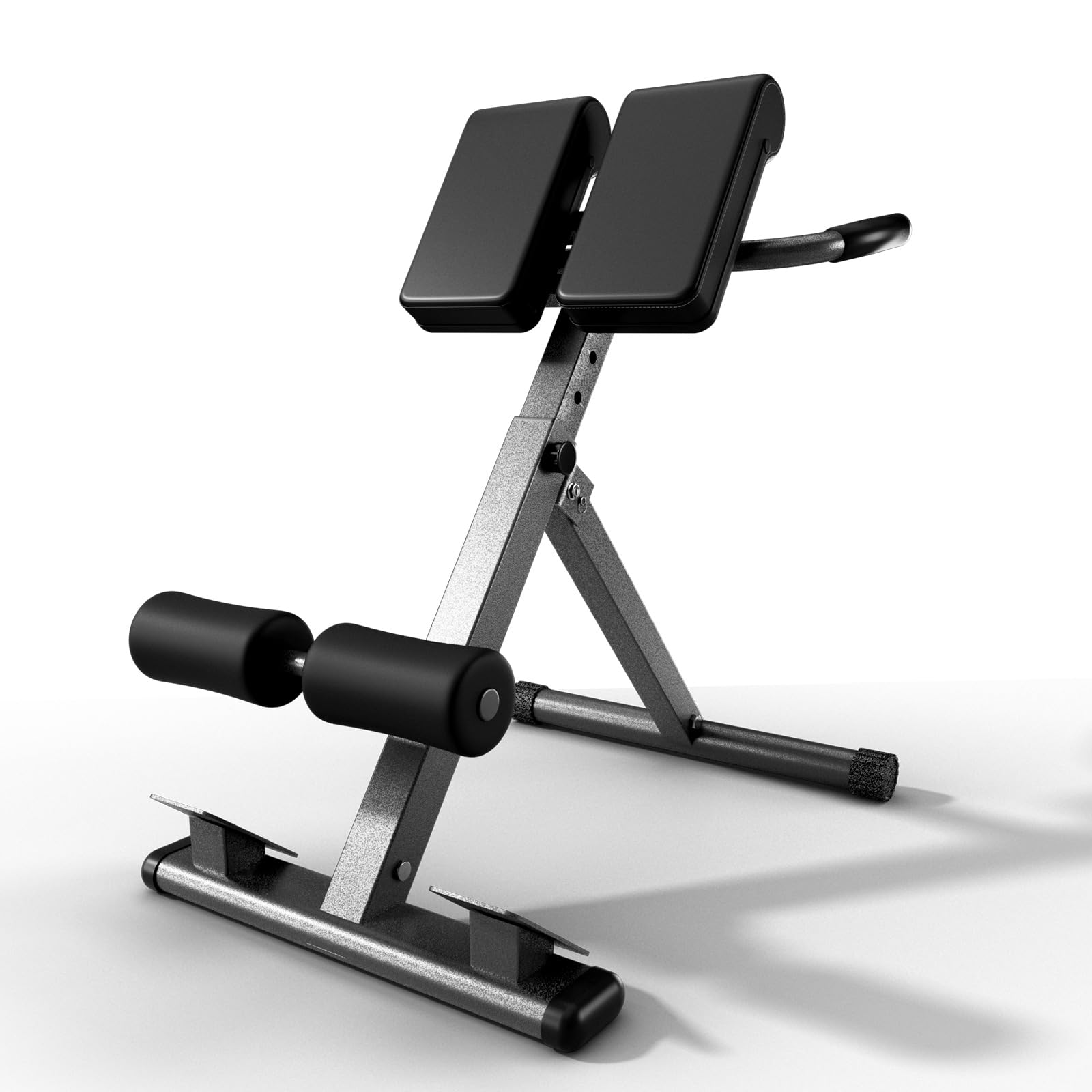
The FITKS360 HC-015 is the most budget-friendly full-size roman chair in this list, but it earns its place through a genuinely thoughtful foldable design. The frame collapses for storage in tight spaces, and at just under 37 inches tall when erected, it fits under standard bed clearance. The 330-pound weight capacity is the highest among the entry-level options, and the foam rollers are notably softer than competitors at similar pricing.
Assembly is simple and takes about 20 minutes, with clear labeling on the hardware packs. The adjustable hip pad accommodates users from 5 to 6 feet tall, and the alloy steel frame feels lighter than it looks without sacrificing structural integrity during extensions or spider curls. The non-slip floor caps grip well even on smooth flooring.
The base could be wider—some rocking occurs if you move aggressively through the range of motion, so controlled reps are necessary. There are isolated reports of bent frames or missing bolts on arrival, though customer support handles replacements without much friction. For users who need a machine that can disappear into a closet between workouts, this is the strongest option at the low end of the market.
Why it’s great
- Foldable design saves floor space in small homes
- Soft foam rollers reduce hip pressure
- Highest weight capacity in the entry-level tier
Good to know
- Base could be wider to prevent rocking
- Occasional quality control issues with bent frames
FAQ
Can a hyperextension bench worsen existing lower back pain?
What is the difference between a roman chair and a hyperextension bench?
How much space do I need for a back exercise machine at home?
Final Thoughts: The Verdict
For most users, the best back exercise machine winner is the Teeter DEX II because it combines spinal decompression with targeted core and back strengthening in one FDA-registered package. If you want commercial-grade durability with the thickest padding in the category, grab the Body-Solid PCH24X. And for budget-friendly foldable storage that still handles 330 pounds, nothing beats the FITKS360 HC-015.