
Our readers keep the lights on and the weekend projects moving. As an Amazon Associate, I earn from qualifying purchases.
Lower back strain during heavy lifting isn’t just uncomfortable — it’s the fastest way to derail your training or wreck a workday. The right lumbar support belt increases intra-abdominal pressure, stabilizes the spine, and lets you lift with confidence instead of fear. But with so many designs — leather powerlifting belts, fabric braces with stays, and hybrid suspender models — picking the wrong one can leave you unsupported or sweating through your shirt.
I’m Rikta — the founder and writer behind FitlyFast. I’ve spent years analyzing the biomechanics of back support, cross-referencing tensile specs, closure durability, and real-world feedback from warehouse workers to powerlifters.
This guide cuts through the noise to help you find the strongest, most reliable back support for lifting for your specific routine, whether you’re deadlifting a barbell or unloading a truck.
How To Choose The Best Back Support For Lifting
Picking the wrong type of back support is a common mistake. A powerlifting belt and a fabric work brace serve different purposes. Here’s what to look for before you buy.
Material and Construction Thickness
Leather belts (5mm to 6mm thick) provide rigid, unyielding support for barbell lifts like squats and deadlifts. They force you to brace your core against a solid wall. Fabric braces with flexible stays, on the other hand, offer moderate compression and are better suited for repetitive lifting tasks, warehouse work, or recovery from minor strains. Thicker isn’t always better — a 6mm leather belt will outlast a nylon brace but offers zero flexibility for all-day wear.
Closure System and Durability
Double-prong metal buckles on leather belts are the gold standard for gym use — they don’t slip and survive years of heavy loading. Hook-and-loop (Velcro) closures on fabric braces allow fast adjustment and a custom fit, but the hook material can wear down over time. If you’re lifting daily, check that the Velcro is heavy-duty and wide. For work belts, a ratchet-style pull system paired with side straps gives you precise tension control without the Velcro fatigue.
Support Features for Your Specific Routine
Look for the number of stays (support bars) in fabric braces. Four to five flexible stays provide targeted lumbar support and prevent the brace from rolling or bunching. Belts with removable suspenders are useful for long shifts where the brace might slide down. For gym use, a simple belt without straps is more practical — suspenders can get in the way during a squat setup.
Quick Comparison
On smaller screens, swipe sideways to see the full table.
| Model | Category | Best For | Key Spec | Amazon |
|---|---|---|---|---|
| FEATOL Lower Back Brace | Premium Brace | All-day work & recovery | 5 reinforced stays (3 memory-aluminum, 2 plates) | Amazon |
| Fitgriff Classic Lifting Belt | Leather Belt | Barbell squats & deadlifts | 100% cowhide, 5mm thick, double-prong buckle | Amazon |
| Jupiter Weight Lifting Belt | Leather Belt | Gym & powerlifting | Genuine leather, 6mm thick, stainless steel buckle | Amazon |
| Sparthos Back Brace | Fabric Brace | Light duty & daily wear | Adjustable lumbar pad, vertical support stays | Amazon |
| PAZAPO Back Brace | Work Brace | Large frames & heavy labor | 5 flexible support bars, removable suspenders | Amazon |
| TEKOMVO Work Back Brace | Industrial Brace | Construction & warehouse | 5 flexible support bars, double pull straps | Amazon |
| KLEUET Back Brace | Industrial Brace | Heavy lifting & recovery | 4 orthopedic stays, 9” contour design | Amazon |
In‑Depth Reviews
1. FEATOL Lower Back Brace
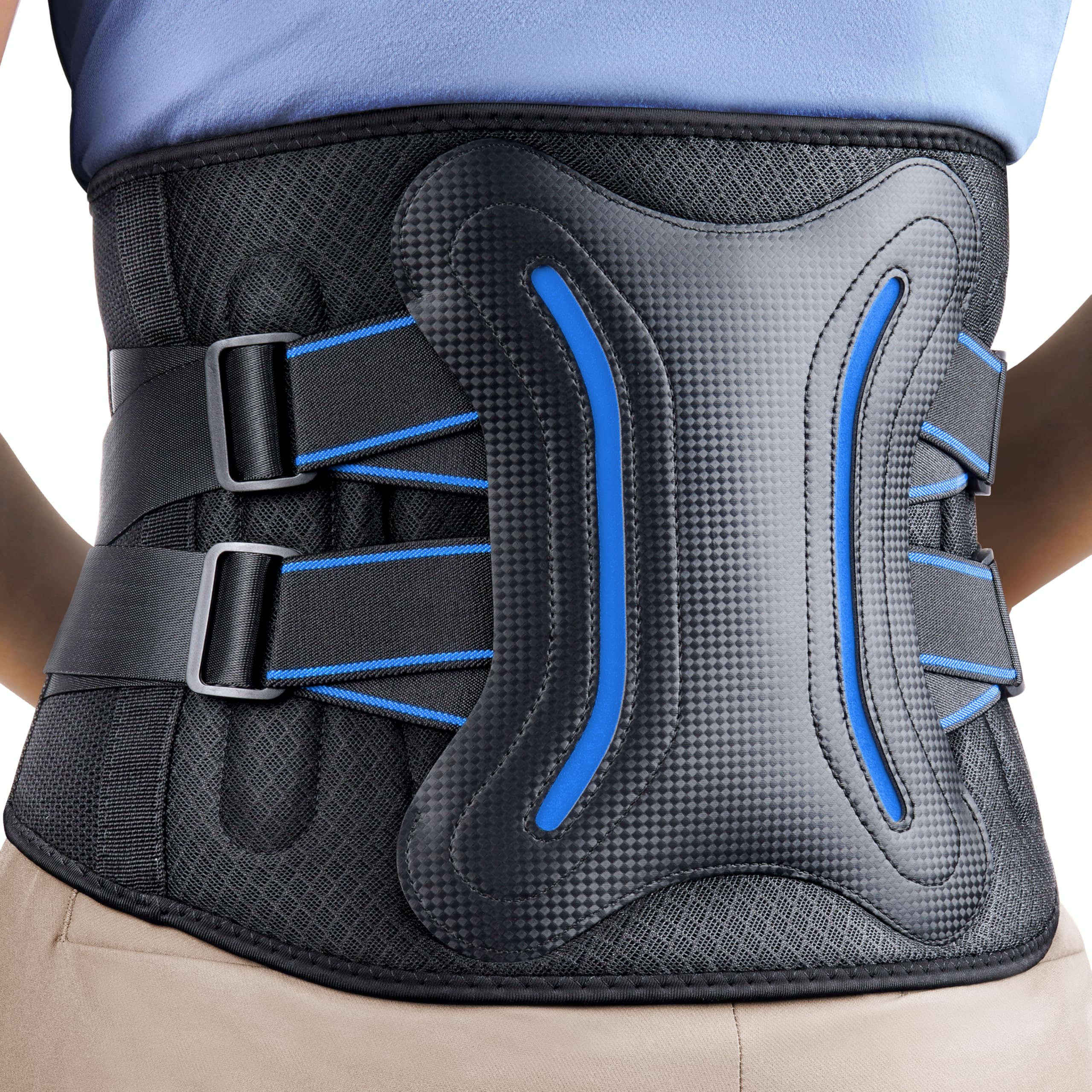
The FEATOL brace sets itself apart with five reinforced stays — three memory-aluminum rods flanked by two rigid support plates — delivering 360-degree lumbar stability that few fabric braces match. This combination prevents the brace from rolling or buckling during bending and lifting, a common failure point in cheaper belts. The dual-tension straps let you dial in compression separately for the upper and lower sections, which is especially useful if you need more pressure on the sacrum during deadlifts or less tension for prolonged standing.
Users recovering from spinal stenosis or preparing for surgery found the elastic adjustments allowed them to secure ice or heat packs directly against the back, adding therapeutic value beyond pure mechanical support. The breathable mesh paneling reduces heat buildup compared to neoprene alternatives, though it still runs warm during extended wear. The low-profile design fits under loose work shirts without obvious bulging, making it practical for job sites where appearance matters.
The finger loops on the tensioning straps speed up donning and doffing, which is a thoughtful touch for older users or those with limited hand strength. Some customers noted that a protective cloth covering the Velcro hook patches must be removed before first use — a step not clearly highlighted in the packaging. Overall, this is the most versatile option for anyone needing serious lumbar support across work shifts, heavy chores, and gym sessions without switching gear.
Why it’s great
- Five reinforced stays provide genuine rigidity without full leather stiffness
- Dual-tension straps allow independent upper/lower compression adjustment
- Breathable mesh construction reduces sweat buildup during long wear
Good to know
- Bulky enough to show under tight-fitting clothing
- Initial setup requires removing protective Velcro covers — not clearly documented
2. Fitgriff Classic Weight Lifting Belt

Fitgriff’s Classic belt is a return to old-school powerlifting simplicity — a single layer of premium cowhide cut to 4 inches wide and 5mm thick, secured by a double-prong buckle. There are no gimmicks, no foam padding, no breathable mesh. The stiffness is deliberate: it provides a solid wall for your abs to push against during compound lifts. The break-in period is real, requiring about a week of use before the leather conforms to your hip and rib contours.
The included instructions walk you through proper bracing technique, which is a rare and welcome addition for beginners who might otherwise wear the belt too high or too loose. During squats and bent-over rows, the belt stays put without shifting, and the buckle holds tight even under 400+ pounds of load. The leather grain shows some character marks after heavy sweat sessions, but the stitching and rivets show no signs of loosening after consistent use.
A few users switching from Velcro belts reported that the initial stiffness felt restrictive, but nearly all preferred the leather version after the break-in. The 2-year warranty adds confidence for the price. If your primary lifts are deadlifts, squats, and overhead presses, this belt provides the no-nonsense rigidity that foam or fabric belts simply cannot match.
Why it’s great
- Stiff 5mm leather creates a reliable bracing surface for heavy compounds
- Double-prong buckle never slips during intense sets
- Comes with detailed bracing instructions for proper form
Good to know
- Requires a break-in period of about a week to soften
- Not suitable for all-day wear or non-gym tasks
3. Jupiter Weight Lifting Belt
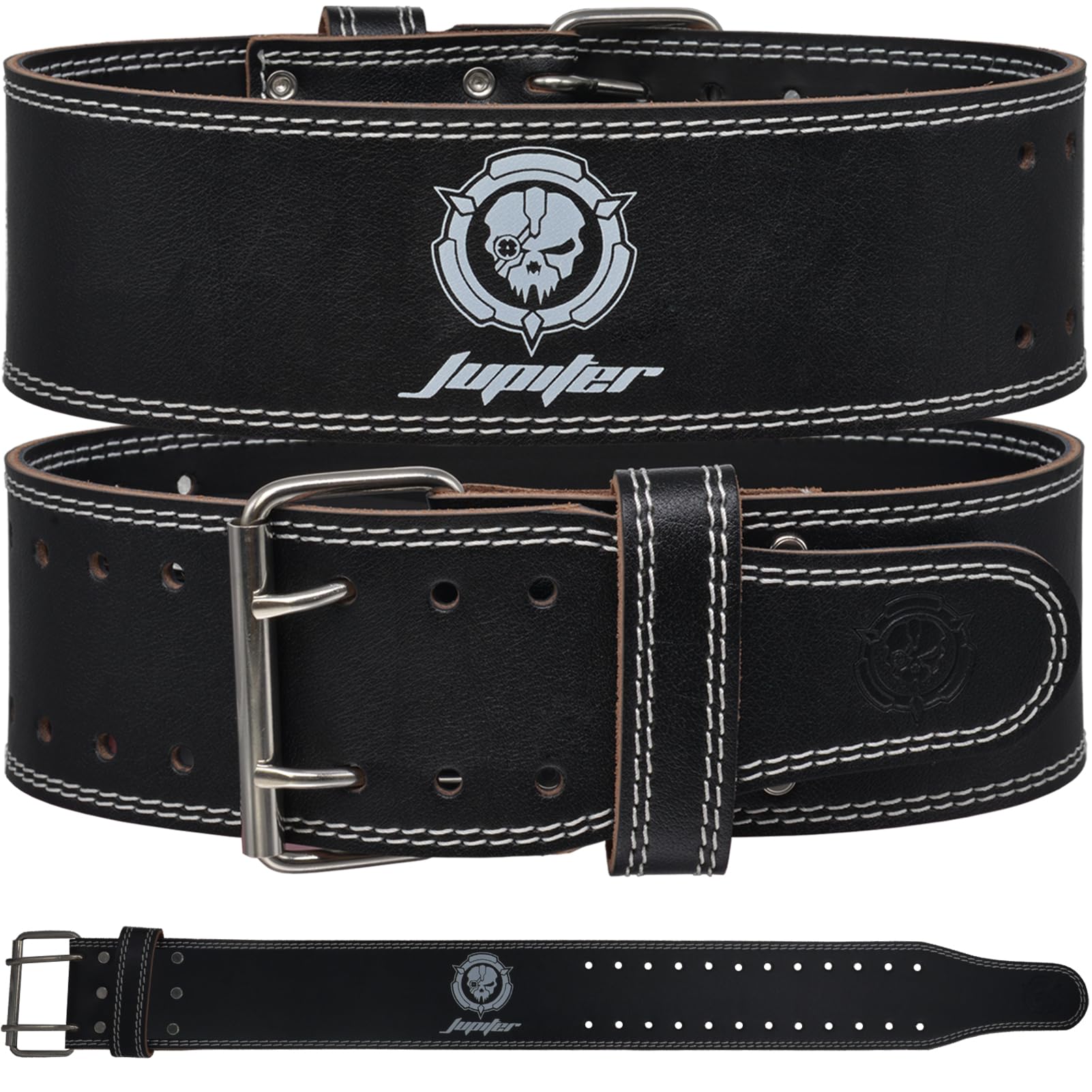
Jupiter’s 6mm leather belt is the thicker cousin of the Fitgriff, offering an extra millimeter of material for lifters who want maximum rigidity without stepping up to a 10mm powerlifting belt. The full-grain leather is soft enough to break in faster than the Fitgriff, and the stainless steel accessories — including the double-prong buckle and rivets — resist corrosion from sweat better than chrome-plated alternatives. The 4-inch uniform width provides consistent pressure across the lower back and abdomen.
Users over 50 reported that the belt performed excellently for deadlifts, providing the same support they expected from gym equipment costing twice as much. The belt rolls up compactly for transport in a gym bag, and the included metal tin storage case protects the leather from crushing. A few buyers noted a strong chemical odor from the leather that took about two weeks to dissipate, likely from the tanning process used on thicker hides.
After 50+ uses, the stitching remains intact and the buckle shows no elongation at the prong holes. The sizing is accurate to the chart, though those between sizes should size up to avoid a too-tight fit over a t-shirt. For lifters who want a thicker, more rigid belt than the Fitgriff but aren’t ready for a 10mm competition model, the Jupiter belt hits a sweet spot in both thickness and cost.
Why it’s great
- 6mm thickness provides maximum rigidity for heavy deadlifts and squats
- Stainless steel buckle and rivets resist sweat corrosion
- Comes with a storage tin for protecting the leather
Good to know
- Strong chemical odor from leather may linger for up to two weeks
- Thick profile makes it less comfortable for warm-up sets
4. Sparthos Back Brace

The Sparthos brace is designed for discretion and moderate support — the 0.15-inch thickness and breathable polyester fabric make it one of the thinnest options on this list, easily worn under a dress shirt or hoodie without obvious bulging. The adjustable lumbar pad adds targeted compression to the lower back, while the vertical support stays prevent the brace from rolling up during bending or twisting. Users with spinal stenosis reported immediate improvement in walking comfort and a reduction in slouching throughout the day.
The hook-and-loop closure is strong (almost too strong — some users found it difficult to undo), and the double-strap system allows fine-tuning of tension on the fly. At an 11-inch front width, users with wider torsos may find the brace creates a “wasp waist” effect where the sides dig in. The brace stays in place during 8-10 hour work shifts, though extended wear leads to noticeable sweating due to the polyester outer layer.
Where this brace falls short is heavy lifting — the thin construction and flexible stays provide medium compression at best. It’s better suited for daily posture support, light warehouse tasks, or recovery periods than for barbell training. If you need to conceal your support under office attire or want a backup brace for low-strain days, the Sparthos delivers a clean, low-profile fit.
Why it’s great
- Thin 0.15-inch profile fits easily under clothes without bulging
- Adjustable lumbar pad targets specific pain points
- Vertical stays prevent rolling during bending or twisting
Good to know
- Not rigid enough for heavy barbell lifts or powerlifting
- Polyester outer layer can get sweaty during all-day wear
5. PAZAPO Back Brace
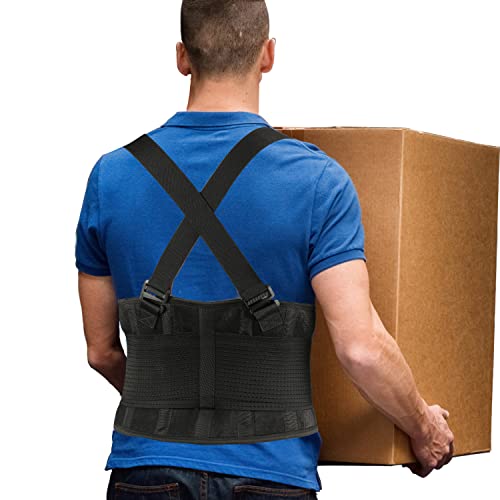
PAZAPO’s brace targets the big-and-tall demographic with sizes extending up to 65-76 inches, a range most competitors ignore. The five flexible steel bars follow the natural curve of the lumbar spine, and the oblique arc design disperses pressure evenly across the lower back rather than concentrating it at the belt line. The double-layer construction uses a soft inner compression belt against the skin and a second adjustable outer layer for tightening — a system that prevents pinching while allowing incremental tension changes.
The removable suspenders are a double-edged sword. For users with 60-inch waists and tall frames, the suspenders prevent the brace from sliding down during 9-10 hour shifts. However, shorter users reported that the suspenders pulled the brace upward, causing bunching at the lower back. Many simply removed the suspenders and found the brace performed better without them. The breathable fabric reduces sweat compared to full neoprene braces, though in hot environments it still traps some heat.
The pull-on closure system is fast but lacks the micro-adjustability of a ratchet. It works best for generalized lumbar support during repetitive lifting rather than precise bracing for maximal loads. For very large individuals who struggle to find braces that fit or stay in place, this is a reliable industrial-grade option with a wide sizing range.
Why it’s great
- Extended sizing up to 76-inch waist for larger frames
- Five flexible bars with oblique arc design disperse pressure evenly
- Double-layer system prevents pinching during adjustment
Good to know
- Suspenders may cause bunching on shorter torsos
- Pull-on closure limits fine tension control
6. TEKOMVO Work Back Brace

TEKOMVO’s brace shares the same five-bar support system as the PAZAPO but refines the fit with a more aggressive contour that hugs the sacrum more tightly. The double pull straps on each side allow independent tensioning — you can lock the lower section firmly while leaving the upper band looser for breathing. This makes it a strong choice for warehouse workers who need to bend, twist, and lift repeatedly without the brace shifting out of position.
The removable suspenders are better integrated here, with wider shoulder straps that distribute weight more evenly. Users who kept the suspenders on noted that they prevented the brace from sliding better than the PAZAPO model. The nylon material is machine-washable, a practical advantage for dirty job sites. After months of daily use in construction and landscaping, the stitching and Velcro have held up without fraying.
The brace provides moderate support — enough to reduce fatigue during heavy lifting but not rigid enough for maximal barbell loads. A few users with previous back injuries felt the support bars could be stiffer for their needs. For general industrial use where you need consistent lumbar support across an 8-hour shift, the TEKOMVO stands up to the abuse better than most fabric braces in its class.
Why it’s great
- Double pull straps allow independent upper/lower tension adjustment
- Machine-washable nylon construction holds up to dirty environments
- Wider suspender straps prevent sliding better than similar braces
Good to know
- Moderate support — not stiff enough for heavy powerlifting
- Support bars could be firmer for those with acute back injuries
7. KLEUET Back Brace
The KLEUET brace features four orthopedic stays inside a 9-inch contour that provides broader coverage than the 5- to 6-inch belts on this list. The extra width wraps around the entire lumbar region, making it particularly effective for users with chronic lower back pain from conditions like arthritis or herniated discs. The double-pull side straps are easy to grab and adjust mid-shift, and the front hook-and-loop closure allows quick removal during breaks.
Users recovering from improper rowing form or acute back strain reported immediate pain reduction on the first wear — the broad coverage stabilized the area and limited painful twisting motions. The shoulder straps are adjustable but must be fastened at the back, which some found inconvenient when trying to put the brace on alone. The neoprene-blend fabric provides strong compression but leads to heavy sweating in hot environments, a common complaint among users working outdoors.
The brace runs true to size for large frames (users around 5’9” and 300 pounds reported a good fit in 3XL/4XL), and the material holds up well to machine washing when placed in a laundry bag. For those focused on recovery from injury or needing broad lumbar support during daily tasks, this brace offers one of the widest coverage areas available. It’s less suitable for intense gym work due to the flexible stays and thicker fabric.
Why it’s great
- 9-inch contour provides the widest lumbar coverage on this list
- Effective for immediate pain relief during recovery from back injuries
- Double-pull straps are easy to adjust even with limited mobility
Good to know
- Neoprene fabric causes significant sweating in warm conditions
- Shoulder strap adjustments are located at the back, hard to reach solo
FAQ
Should I wear a leather lifting belt or a fabric brace for deadlifts?
How tight should my back support be during lifting?
Can I wear a back brace all day without weakening my core?
What does the term “no-roll” mean in a back brace?
Final Thoughts: The Verdict
For most users, the back support for lifting winner is the FEATOL Lower Back Brace because its five reinforced stays provide near-rigid lumbar support while maintaining flexibility for all-day wear and recovery. If you want uncompromising rigidity for barbell training, grab the Fitgriff Classic Lifting Belt. And for large-frame users needing industrial-grade support during long work shifts, nothing beats the PAZAPO Back Brace with its extended sizing and removable suspenders.