
Our readers keep the lights on and the weekend projects moving. As an Amazon Associate, I earn from qualifying purchases.
That nagging lower back ache two miles from the launch point is the fastest way to ruin a day on the water. A factory-installed kayak seat is often a thin slab of plastic covered by a sliver of foam, offering zero lumbar support and causing your core to tighten up after just an hour of paddling. Upgrading to a dedicated seat with real structural support changes the physics of your stroke, keeps your hips aligned, and lets you fish or cruise for hours without that familiar stiffness.
I’m Rikta — the co-founder and writer behind FitlyFast. I spend my weeks dissecting outdoor gear specifications, comparing foam densities, strap configurations, and frame materials so you can make a purchase that actually fits your body and your boat.
After analyzing dozens of models, these reviews break down which back support kayak seat delivers the right balance of lumbar reinforcement, adjustability, and durability for your paddling style.
How To Choose The Best Back Support Kayak Seat
Not all aftermarket kayak seats provide genuine lumbar support. Many simply add a thicker cushion to the backrest, which does little to stabilize the pelvis during a forward paddling stroke. The key is understanding the structure behind the padding and how it interacts with your boat’s existing attachment points.
Frame vs. Padded Design
Rigid-frame seats with an aluminum or high-density plastic shell lock your lower back into a fixed position, preventing the slouching that causes lower back fatigue. Padded fabric seats rely on foam thickness and tension from straps to create support; they are lighter and pack smaller but can sag over long sessions. For chronic back issues, a framed seat is the safer bet.
Foam Type and Density
EVA foam is the industry standard for kayak seats because it resists water absorption and maintains shape after repeated compression. Cross-linked polyethylene (PE) foam is firmer and used in budget seats to cut costs, but it compresses faster and offers less contouring. High-density EVA in the 3-6 PCF range provides the best balance of comfort and long-term support.
Strap Configuration and Hardware
Four-point strap systems (two front, two rear) give you independent control over seat tilt and backrest angle. Look for straps with side-release buckles or brass clips that resist corrosion in saltwater. Nylon webbing with a minimum 1.5-inch width spreads load without digging into the hull sides. Avoid seats that rely on thin shock cord for primary attachment — it stretches and shifts under load.
Drainage and Breathability
A seat that traps water against your skin leads to chafing and discomfort. Designs with open drainage channels on the bottom cushion allow splash water to escape instead of pooling. Mesh back panels improve airflow across your lower back, which is critical in hot climates. Seats with solid foam backs and non-perforated fabric dry slowly and can mildew.
Quick Comparison
On smaller screens, swipe sideways to see the full table.
| Model | Category | Best For | Key Spec | Amazon |
|---|---|---|---|---|
| DIYAREA Aluminum Frame Kayak Seat | Framed Mesh | All-day lumbar support | Aluminum alloy frame | Amazon |
| Pelican Ergoboost Folding Seat | Premium Frame | Multi-position comfort | Aluminum/polyester folding | Amazon |
| Montekin Thickened Kayak Seat | Padded High-Back | Budget-conscious comfort | Drainage channel foam | Amazon |
| Solomone Cavalli Deluxe Kayak Seat | Padded Universal | SUP and sit-on-top kayaks | EVA foam high-back | Amazon |
| Pactrade Marine Padded Seat | Padded w/ Backpack | Budget gear storage | Neoprene/PE foam back | Amazon |
| Pelican Sit-on-Top Seat PS0480-3 | Padded Replacement | Simple added cushion | Nylon webbing straps | Amazon |
| MORXPLOR Kayak Cooler Seat | Cooler Combo | Day-trip drink storage | 500D PVC/PEEVA insulation | Amazon |
In-Depth Reviews
1. DIYAREA Aluminum Frame Kayak Seat

The DIYAREA seat uses an aluminum alloy frame that provides a rigid foundation for your lower back, eliminating the slouch that causes pain after two hours on the water. The backrest and seat are made from breathable textile mesh fabric that dries rapidly and resists mold. The foldable design collapses for transport, though it does not lie completely flat.
Multiple adjustable webbing straps on the sides and bottom let you dial in the seat angle and height relative to your cockpit rim. Users report that the straps need to be cinched tightly on initial install to prevent loosening during a long paddle. The mesh itself is weather-resistant and hoses off easily when you beach the kayak.
Weighing in at a light build for a framed seat, this model supports paddlers up to roughly 260 pounds without frame flex. The trade-off is that the backrest height, while generous, may not suit very tall paddlers who need support at the shoulder blades. For all-day fishing trips or multi-hour touring, this is the strongest lumbar solution in the group.
Why it’s great
- Rigid aluminum frame locks in lumbar posture
- Breathable mesh dries fast, resists mildew
- Easy strap installation on most kayaks and SUPs
Good to know
- Straps can loosen mid-trip without careful cinching
- Does not fold completely flat for storage
2. Pelican Ergoboost Multifunctional Folding Seat

Pelican’s Ergoboost is a multifunctional folding seat that combines a rigid frame with the ability to sit low for stability or fold the back down for a higher perch. The construction uses aluminum supports wrapped in polyester fabric, making it noticeably sturdier than any padded-only option. It is a vehicle-specific fit designed primarily for sit-on-top Pelican hulls, though many users adapt it to other brands with minor hardware modifications.
Mounting hardware is included, but the installation requires you to attach U-mounts or bracket plates to your kayak’s existing track system. The seat weighs just under seven pounds, so it adds a bit of weight to your vessel but rewards you with a stable, quiet platform. The back support is tall and contoured, extending well above the lumbar region to support the mid-back during extended paddling.
Anglers appreciate that the folding mechanism allows transitioning from a paddling position to a lower fishing stance without unstrapping. The polyester fabric holds up well to sun exposure and rinses clean quickly. This is the most expensive option on the list, but for paddlers who log full-day trips several times a week, the structural support justifies the investment.
Why it’s great
- Folding design offers two riding positions
- Contoured back support extends to mid-back
- Rigid aluminum frame eliminates all flex
Good to know
- Vehicle-specific fit may require hull modifications
- Heavier than padded-only seats at nearly 7 lb
3. Montekin Thickened Kayak Seat

The Montekin seat features a thickened high-density EVA foam backrest that contours to the natural curve of your spine. The foam is firmer than budget alternatives, providing consistent lumbar pressure even after six hours on the water. The seat bottom includes deep drainage channels that prevent water from pooling against you, a detail that matters when you’re paddling through chop or sitting in a splashy sit-on-top.
Four adjustable straps with marine-grade hooks attach to D-rings on both sit-on-top kayaks and SUPs. The included detachable storage bag is water-resistant and large enough for tackle boxes or a dry bag. Several users noted that the straps require a bit of trial and error to route correctly the first time, but once set, the seat stays put without sliding.
The nylon outer fabric resists snagging on sand or gravel beaches and does not stick to wet skin like some polyester blends. At a mid-range investment, this seat delivers a significant upgrade in back support without moving to a full rigid frame. It is an excellent choice for recreational paddlers who want real lumbar relief without the weight of a framed seat.
Why it’s great
- High-density EVA foam holds shape all day
- Drainage channels prevent water pooling
- Marine-grade hardware resists corrosion
Good to know
- Strap routing can be confusing on first install
- Not as supportive as a full framed seat
4. Solomone Cavalli Deluxe Padded Kayak Seat

Solomone Cavalli’s deluxe seat uses a high-back design sculpted from dense EVA foam that follows the thoracic and lumbar curve more closely than typical rectangle-shaped backrests. The foam is enclosed in a polyester shell that sheds water quickly and dries faster than neoprene alternatives. The seat cushion is 12.5 inches deep, offering generous thigh support for paddlers with longer femurs.
Two detachable zippered storage bags attach to the back of the seat, giving you organized access to sunblock, tools, and snacks without rummaging through a dry bag. The four-way adjustable straps are reinforced at the stress points and fit both kayak D-rings and SUP attachment loops. Users report that the seat stays planted even during aggressive turns and does not shift when you lean to one side.
One limitation is that the EVA foam, while comfortable, is not as stiff as a PE plate or aluminum frame, so paddlers with pre-existing back conditions may want a more rigid option. The seat is best suited for sit-on-top kayaks and SUPs where the user wants a noticeable upgrade in comfort without the bulk of a framed design. It also packs down fairly flat for travel.
Why it’s great
- Sculpted EVA backrest matches spinal curve
- Two detachable bags provide ample storage
- Dries quickly, does not absorb water
Good to know
- Foam lacks firmness for severe back conditions
- Seat cushion width may be narrow for larger paddlers
5. Pactrade Marine Padded Deluxe Kayak Seat

The Pactrade Marine seat combines a UV-resistant neoprene backrest with a 600-denier polyester shell filled with EVA foam and a PE plate for structure. The backrest offers good lumbar support for a padded design, and the PE plate prevents the foam from collapsing into a hammock shape. The seat cushion is on the thinner side, so paddlers used to plush seating may want to add a separate bottom pad.
Four adjustable webbing straps with brass clips attach securely to kayak D-rings and stand up to saltwater exposure without corroding. A free detachable storage backpack clips to the back of the seat and holds up to 4.5 inches of gear — perfect for a lunch box and a few tools. Some units ship with the straps pre-routed incorrectly, requiring you to re-thread them upon arrival.
At a budget-friendly price point, this seat works well as a direct replacement for worn-out factory seats in sit-in and sit-on-top kayaks. The neoprene material conforms to your body shape over the first few outings but stretches slightly with extended use. It is a solid entry-level upgrade for paddlers who want to stop grinding their tailbone against hard plastic.
Why it’s great
- PE plate prevents backrest collapse
- Brass clips resist saltwater corrosion
- Includes detachable storage backpack
Good to know
- Seat cushion padding is minimal
- Straps may arrive incorrectly routed
6. Pelican Sit-on-Top Kayak or SUP Seat PS0480-3

This Pelican seat is a no-frills replacement cushion built from water-repellent nylon with an articulated web-strap system. The backrest measures 15 inches wide by 8 inches tall, which is shorter than most aftermarket options, so it targets lumbar support rather than full back containment. The bottom cushion is 17.5 inches wide by 14 inches deep, offering a stable platform for sit-on-top kayaks.
The multi-adjustment strap system includes forward straps that extend to 28 inches and rear straps to 21 inches, providing enough range for most hull widths. Installation requires D-rings on your kayak; Pelican recommends an accessory mounting kit if your boat lacks them. Users with non-Pelican hulls frequently report that the seat fits after minor modifications but is not truly universal.
For its modest price, this seat delivers a noticeable reduction in lower back fatigue compared to a bare plastic shell. The trade-off is that the backrest height is insufficient for taller paddlers who need support higher up the spine. It is best suited as a direct replacement for a worn factory seat in a sit-on-top kayak, not as a major ergonomic overhaul.
Why it’s great
- Water-repellent nylon resists mildew
- Long strap range fits various hull widths
- Improves comfort over bare factory seat
Good to know
- Backrest height is short at only 8 inches
- Fit is not truly universal despite claims
7. MORXPLOR Kayak Cooler Seat Back
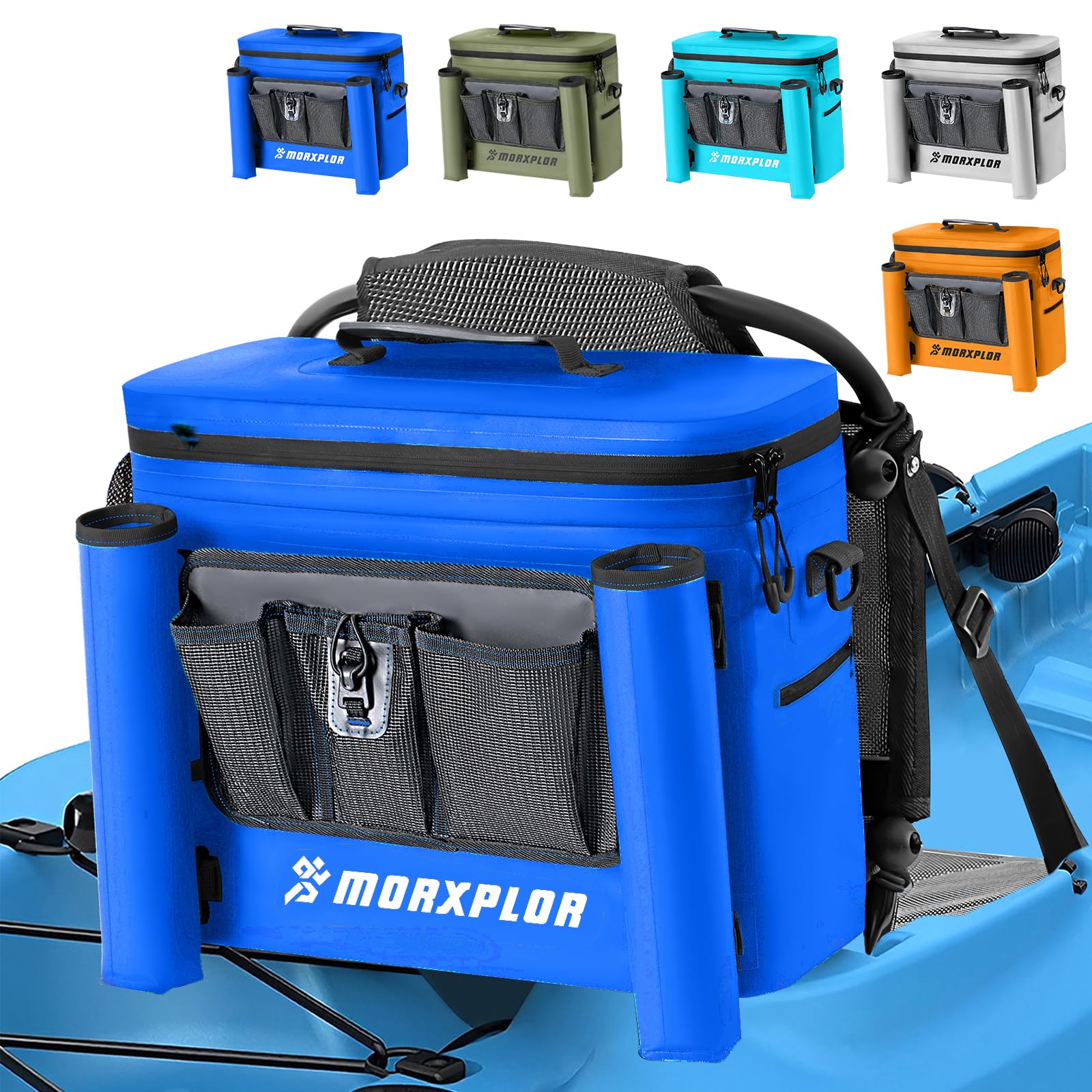
The MORXPLOR is not a traditional kayak seat but a seat-back cooler that straps behind your existing seat to provide both cold storage and a padded backrest. It is constructed from high-density 500-denier PVC with a 10-millimeter PEVA insulation layer and a leak-proof TPU liner. The internal capacity holds up to 20 cans, and the integrated non-slip mat feet protect the bottom from abrasion against gear tracks.
Two fishing rod holders with drain holes are built into the top of the cooler, keeping rods at an accessible angle behind your seat. The bungee-cord attachment system is designed for universal fit across most kayak seat frames, but it relies on the existing seat structure for back support rather than providing its own. The waterproof zipper and TPU liner keep contents dry even if you roll your kayak.
For paddlers who prioritize cold drink access over pure lumbar support, this unit solves the dual problem of hydration storage and back padding in one product. However, the back support is limited to the thickness of the cooler’s padding, so it will not correct poor posture the way a framed or thick EVA seat will. It is a niche solution for day-trippers and inshore anglers.
Why it’s great
- Keeps drinks cold for hours with ice pack
- Integrated rod holders with drain holes
- Leak-proof TPU liner survives capsizes
Good to know
- Provides minimal structural back support
- Bungee attachment can shift during paddling
FAQ
How do I measure my kayak to ensure a seat will fit?
Can I use a sit-on-top kayak seat on a paddle board?
Why does my kayak seat shift during paddling and how do I stop it?
Is a folding frame seat better than a padded seat for chronic back pain?
Final Thoughts: The Verdict
For most users, the best back support kayak seat winner is the DIYAREA Aluminum Frame Kayak Seat because its rigid frame locks your lumbar area into proper alignment better than any padded fabric design at this price tier. If you want a folding multi-position seat that handles both paddling and fishing stances, grab the Pelican Ergoboost. And for paddlers on a tighter budget who still need thick EVA foam and drainage channels, nothing beats the Montekin Thickened Kayak Seat.