
Our readers keep the lights on and the weekend projects moving. As an Amazon Associate, I earn from qualifying purchases.
A single backflow event can turn your garden hose or sprinkler system into a direct line connecting contaminated water—fertilizer runoff, sewage, or chemical residue—straight into your household drinking supply. That is the real risk a backflow preventer is designed to eliminate, and choosing the wrong type or an uncertified valve leaves that protection incomplete.
I’m Rikta — the co-founder and writer behind FitlyFast. I’ve spent hundreds of hours analyzing plumbing hardware specifications, cross-referencing ASSE, IAPMO, and USC FCCCHR standards, and comparing brass alloys, pressure ratings, and internal seal designs to determine which backflow preventers actually deliver reliable, long-term isolation.
This guide breaks down the seven most reliable models on the market right now, from compact dual-check valves for boiler and lab lines to full pressure vacuum breakers for commercial irrigation. Whether you need a code-compliant assembly for a new sprinkler system or a simple hose-bib vacuum breaker for your backyard spigot, you’ll find a backflow preventer matched to your specific water pressure, temperature, and hazard level.
How To Choose The Best Backflow Preventer
Selecting the right backflow preventer is not about brand loyalty—it is about matching the valve type to your specific hazard level, pipe size, and local plumbing code. A hose-bib vacuum breaker works for a garden spigot, but a boiler feed line or an irrigation system with chemical injectors requires a certified pressure vacuum breaker or double-check assembly. Start by identifying the backflow risk: high-hazard (toxic chemicals, sewage) demands a PVB or reduced-pressure zone assembly, while low-hazard (non-toxic pollutants) can use a dual-check. Then verify the assembly carries an ASSE, IAPMO, or USC listing—without that mark, your installation may fail inspection and, more importantly, may not actually protect your water supply.
Dual-Check vs. Pressure Vacuum Breaker (PVB)
A dual-check valve uses two spring-loaded rubber check discs stacked in series, plus an intermediate atmospheric vent that opens to drain any trapped water between the checks. It is designed for continuous pressure applications like boiler feed lines, laboratory equipment, and processing tanks—typically 175 PSI max and temperatures up to 210°F. A pressure vacuum breaker, by contrast, incorporates a spring-loaded check valve plus an air-relief valve that opens when downstream pressure drops to 1 PSI or less, breaking the siphon. PVBs are the standard for irrigation systems and high-hazard commercial applications; they operate at lower temperatures (usually up to 140°F) but can handle higher static pressures and provide positive protection against backsiphonage.
Material and Corrosion Resistance
The body material directly determines the valve’s lifespan and its suitability for your water chemistry. Forged brass is the most common choice for residential dual-checks and hose-bib units—it resists corrosion well and machines cleanly for leak-free NPT threads. Bronze offers superior corrosion resistance in aggressive water conditions (high chloride, low pH) and is the standard for commercial pressure vacuum breakers from brands like Zurn and Febco. Stainless-steel internal components (springs, retainers) are essential for longevity in any assembly; rubber or plastic internal parts degrade faster under continuous pressure and thermal cycling. Avoid pot-metal or zinc-alloy bodies—they corrode and crack within a few seasons, especially if exposed to freezing temperatures.
Certification and Code Compliance
Never assume a backflow preventer is code-compliant just because it looks like a known brand. Legitimate certification marks come from IAPMO (UPC), ASSE (standard-specific listing), or the USC Foundation for Cross-Connection Control. These listings confirm the assembly has passed standardized tests for check-valve seating, air-inlet opening, and backpressure resistance. Some valves sold as “pressure vacuum breakers” lack any third-party certification and may not function as required under real backflow conditions. If your local water authority requires a specific listing (many mandate ASSE 1020 for PVBs or ASSE 1015 for double-checks), confirm that certification is printed on the product page or the valve body itself—not just paraphrased in the description.
Quick Comparison
On smaller screens, swipe sideways to see the full table.
| Model | Category | Best For | Key Spec | Amazon |
|---|---|---|---|---|
| Febco 765 Series 1″ | PVB Assembly | Irrigation with freeze sensor | 150 PSI, SentryPlus Alert | Amazon |
| Zurn Wilkins 1-350 1″ | Double Check | High-hazard commercial lines | EZSwap repair, 1″ NPT | Amazon |
| Watts 9D 3/4″ | Dual Check | Boiler feed & lab lines | 175 PSI, 250°F limit | Amazon |
| Zurn Wilkins 34-710 3/4″ | PVB Assembly | Residential sprinklers | Compact, USC listed | Amazon |
| ONDAQUA 3/4″ PVB | PVB Assembly | Non-potable irrigation | 400 PSI, UPC certified | Amazon |
| Pontuss 1/2″ 9D-M3 | Dual Check | Small supply lines, boilers | 175 PSI, 210°F limit | Amazon |
| WHK 6-Pack Hose Bib | Vacuum Breaker | Garden spigots & hoses | 125 PSI, ASSE 1011 | Amazon |
In‑Depth Reviews
1. Febco 765 Series 1″ Bronze Pressure Vacuum Breaker
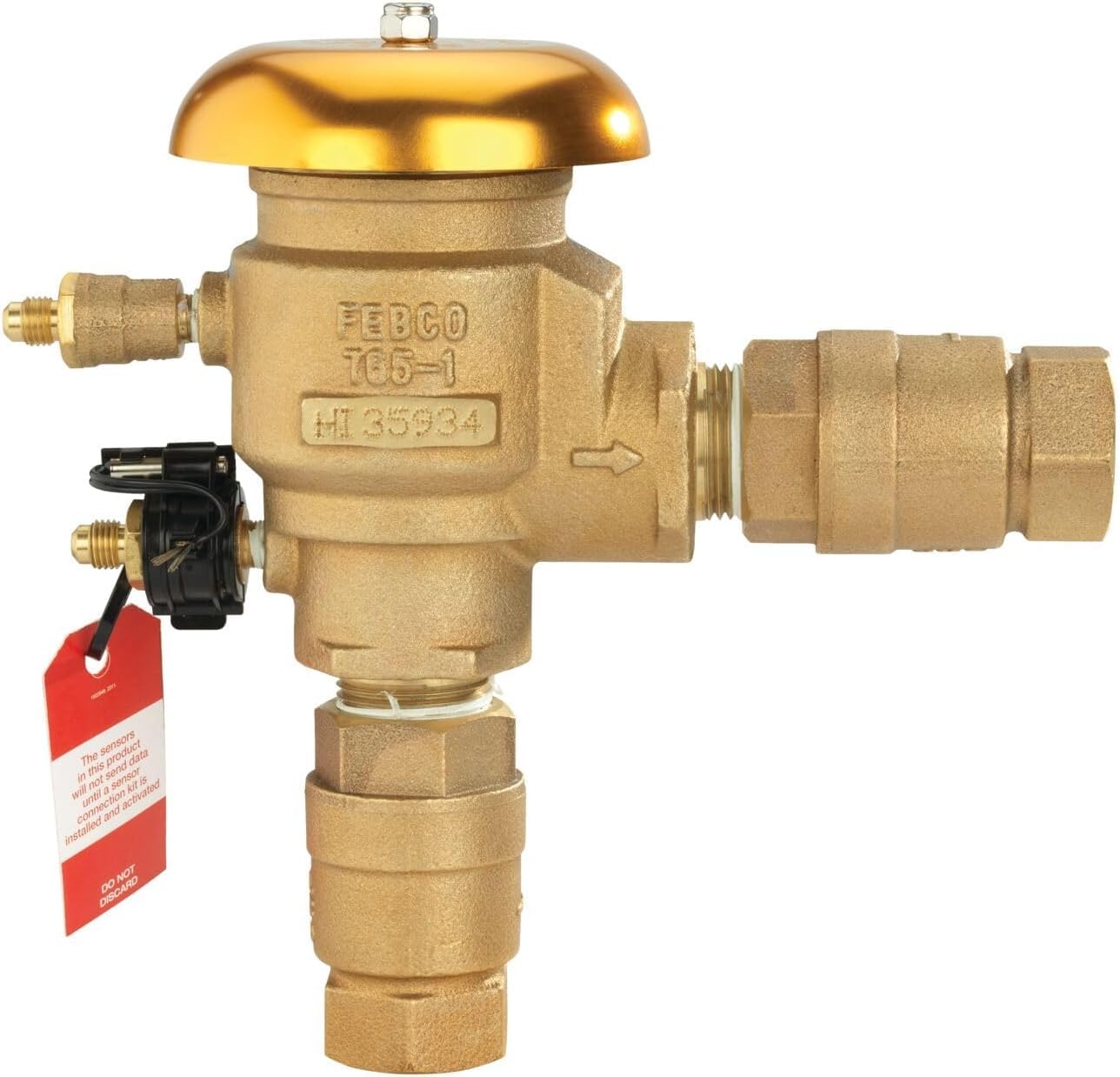
The Febco 765 is the most technologically advanced assembly in this guide, featuring a built-in freeze sensor that communicates with the SentryPlus Alert system. If temperatures near 32°F, the sensor signals facility personnel before ice cracks the bronze body—a genuine game-changer for anyone who has winterized a failed PVB. The quarter-turn shutoff valves and test cocks are integrated, reducing the number of threaded joints that can leak over time.
Rated for 150 PSI maximum working pressure and a temperature range of 32°F to 140°F, this assembly is built for non-potable irrigation systems, cooling towers, and industrial plants. The spring-loaded check valve and air-relief port open positively when downstream pressure drops, providing mechanical protection against backsiphonage of toxic or non-toxic liquids. It meets USC FCCCHR specifications, which is the gold standard for commercial cross-connection control.
Installation reports consistently note that the Febco 765 is a direct replacement for older Febco and Watts models, though you may need a brass union if your existing inlet shutoff is a different brand. The plastic bonnet is designed to reduce freeze damage risk, but the SentryPlus sensor is the standout feature for northern climates where a single cold snap can destroy unprotected valves.
Why it’s great
- Integrated freeze sensor with SentryPlus Alert prevents catastrophic ice damage
- Quarter-turn shutoff and test cocks reduce leak points
- Bronze body with plastic bonnet for corrosion resistance and freeze protection
Good to know
- Rated only to 140°F—not suitable for hot water boiler feed lines
- Requires a compatible monitoring system for full SentryPlus functionality
2. Zurn Wilkins 1-350 1″ Double Check Backflow Preventer
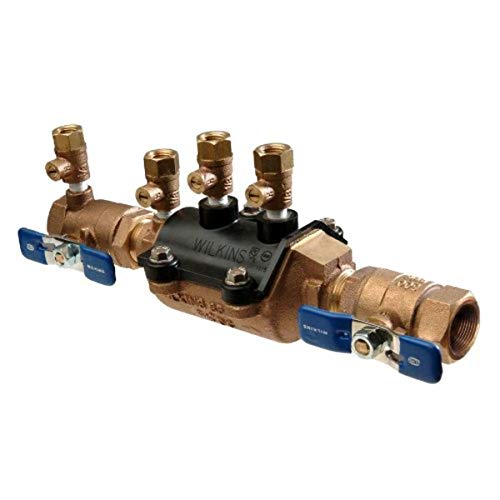
The Zurn Wilkins 1-350 is the professional-grade choice for high-hazard commercial applications where double redundancy is non-negotiable. It carries ASSE 1015, IAPMO, and CSA B64.5 listings, plus AWWA C510 compliance, meaning it meets every major North American standard for double-check backflow prevention. The EZSwap removable pressure vessel allows you to service the internal check modules off-line—cutting repair labor by an estimated 75% compared to traditional designs that require whole-assembly removal.
Unlike typical bronze dual-checks, the 1-350 uses a stainless steel and UV-resistant reinforced nylon construction for the pressure vessel, which eliminates corrosion and enables quick winterization. The integrated flush tool simplifies line flushing during installation, reportedly saving up to 15 minutes per setup. The 1-inch NPT female inlet and outlet connections handle high-flow commercial irrigation and industrial process lines without significant head loss.
Customer feedback highlights the valve’s durability under continuous pressure and its acceptance by local water authorities. Some users note that the price is high compared to basic dual-checks, but the EZSwap design means you will replace only the internal cartridge, not the whole assembly, over a 15-20 year service life. One reviewer reported that the manufacturer’s warranty covers defects well, though long-term parts availability from Zurn is historically excellent.
Why it’s great
- EZSwap removable pressure vessel allows off-line servicing, cutting repair costs
- Stainless steel and nylon construction resists corrosion and UV damage
- Full ASSE, IAPMO, CSA, and AWWA compliance for code approval
Good to know
- Higher upfront cost compared to basic bronze dual-checks
- Not rated for continuous hot water above 140°F
3. Watts 9D Series 3/4″ Brass Dual Check Valve

The Watts 9D is the reference-standard dual-check valve for hot water applications. Its operating temperature range of 33°F to 250°F—60°F higher than typical dual-checks—makes it the only valve in this roundup suitable for boiler feed lines, sterilizers, and dairy processing equipment where steam or near-boiling water is present. The forged brass body houses two rubber disc check valves: the primary check seats disc-to-rubber for bubble-tight sealing, while the secondary seats disc-to-metal as backup.
This assembly includes an integral stainless steel strainer upstream of the first check, which traps pipe debris that could lodge against the rubber seat and cause a silent leak. The intermediate atmospheric vent opens between the two checks, draining any water that bypasses the first check, preventing stagnant contaminated water from reaching the second check. The female NPT union inlet and outlet simplify alignment during installation, especially in tight mechanical rooms.
Several long-term users report the valve lasting 7-10 years in hard-water environments before the rubber discs need replacement. One reviewer noted that a unit installed on a community well system still functioned as a check valve even after the soft seat had partially deformed—testament to the robust stainless steel internal components. Replacement repair kits are widely available, and the 9D has been a standard spec for engineers for decades.
Why it’s great
- 250°F temperature rating—the highest in this guide, ideal for boiler feed lines
- Integral stainless steel strainer protects rubber check seats from debris
- Robust forged brass body with stainless internals for long service life
Good to know
- Premium pricing reflects professional-grade engineering and brand reputation
- Requires a drain pipe installed below the vent per manufacturer instructions
4. Zurn Wilkins 34-710 3/4″ Pressure Vacuum Breaker

The Zurn Wilkins 34-710 is the most compact pressure vacuum breaker assembly in this lineup, measuring just 6.5 inches tall and 2.9 inches wide. That small footprint makes it the go-to choice for retrofit installations where valve boxes are shallow or mechanical clearances are tight. It carries ASSE and IAPMO listings, plus approval from the USC Foundation for Cross-Connection Control—the full trifecta required by most municipal water authorities.
Despite its size, the 34-710 uses the same low-cost universal repair kit as the 1-inch version, reducing long-term maintenance expense. The bronze body and plastic bonnet provide corrosion resistance while keeping the assembly lightweight enough for one-person installation. The spring-loaded check valve and air-relief port open reliably under siphon conditions, making it suitable for high-hazard irrigation and commercial applications.
User feedback consistently mentions successful DIY installation with basic PVC or copper piping skills. One reviewer purchased this valve after an ice failure on a cheaper unit and reported zero issues through the following winter. A small number of units have arrived with internal debris or float misalignment that required minor adjustment—check the air-relief port before final assembly to confirm the float moves freely.
Why it’s great
- Compact footprint ideal for tight valve boxes and retrofits
- ASSE, IAPMO, and USC listing—full code compliance
- Universal repair kit works across 3/4″ and 1″ sizes
Good to know
- Some units shipped with internal float debris requiring cleaning
- Bronze body is durable but heavier than all-plastic alternatives
5. ONDAQUA 3/4″ Brass Pressure Vacuum Breaker
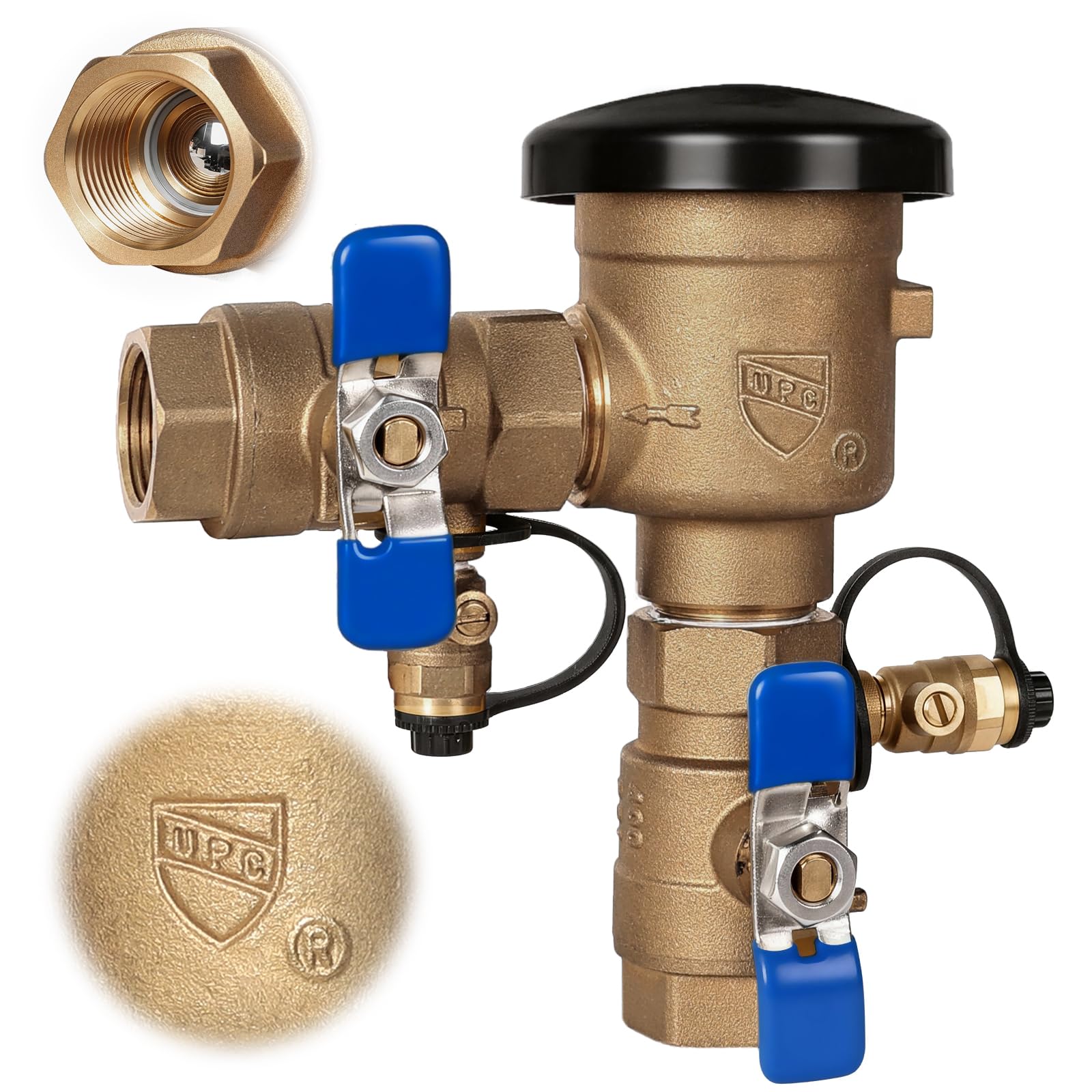
The ONDAQUA 3/4″ PVB is the only pressure vacuum breaker in this guide rated to 400 PSI—more than double the rating of every other assembly here. That extreme pressure capacity makes it suitable for high-flow irrigation zones, fire-suppression pre-action lines, and industrial waste-treatment pipelines where standard 150 PSI assemblies would fail. It holds UPC certification from IAPMO and complies with ASSE 1020-2020, meaning it has passed independent testing for check-valve seating and air-inlet functionality.
The body is constructed from thickened brass with arrow-marked flow direction cast into the housing, reducing the chance of reverse installation. The manufacturer claims over 1,000 test cycles and a service life exceeding 15 years. Included in the box is plumber-grade PTFE tape rather than the thin homeowner tape that often fails under pressure. The internal design appears to be a close clone of the Zurn Wilkins 710 series, which means repair parts may be compatible but are not guaranteed by ONDAQUA.
Early adopters report leak-free performance and easy PVC installation. One reviewer noted that the valve replaced a failed competitor unit exactly. The main caveat is brand recognition—your local water authority may require a specifically listed valve type (e.g., “Zurn” or “Watts” on the approved list), so check with your inspector before purchasing. The 5-year warranty is stronger than the standard 1-year coverage from legacy brands.
Why it’s great
- 400 PSI rating—more than double the capacity of standard PVBs
- UPC and ASSE 1020 certified for code compliance
- Thickened brass body with arrow-marked flow direction
Good to know
- Not yet a listed brand on IAPMO’s direct directory—verify local acceptance
- Repair part compatibility with Zurn/Watts is unconfirmed
6. Pontuss 1/2″ 9D-M3 Brass Dual Check Valve

The Pontuss 1/2″ 9D-M3 is a direct functional substitute for the Watts 9D at roughly a quarter of the price, targeting boiler feed lines, laboratory equipment, and processing tanks where 1/2-inch connections are standard. It uses the same dual-check principle with an intermediate atmospheric vent, a brass body, and stainless steel working parts. The temperature range of 33°F to 210°F covers most hot-water applications, though it falls 40°F short of the Watts 9D’s 250°F limit.
Maximum working pressure is 175 PSI with a minimum required pressure of 25 PSI to properly seat the rubber discs. The female NPT union inlet and outlet make alignment straightforward, and the integral filter catches debris that could cause check-valve weep. The valve ships with a clear warning that a drain pipe must be installed terminating 12 inches above a floor drain—failure to do so risks water damage from the vent opening during operation.
Customer feedback is uniformly positive, with multiple verified purchasers reporting that the valve passed plumbing inspection and was installed without leaks by professionals. One reviewer noted that the valve functioned exactly as expected after weeks of continuous pressure on a gas boiler feed line. The Pontuss brand is relatively new, and long-term durability data is limited, but the material specs and user reports suggest it is a capable budget alternative for low-to-moderate use applications.
Why it’s great
- Affordable dual-check design with brass body and stainless internals
- 210°F temperature rating covers most boiler and hot-water applications
- Integral filter protects rubber check seats from debris
Good to know
- Limited long-term reliability data—newer brand compared to Watts
- Installation requires a properly terminated drain pipe per warning instructions
7. WHK 6-Pack Hose Bib Backflow Preventer

The WHK 6-pack is the most cost-effective solution for homeowners who need backflow prevention at multiple hose bibs, RV water inlets, or sillcocks. Each unit is a simple vacuum breaker that screws onto a standard 3/4-inch female hose thread and provides a male hose thread outlet. The solid brass body meets ASSE 1011 and CSA B64.2 standards, plus ANSI/NSF 61-9 for drinking water system components—critical for any valve connected to a potable water supply.
Maximum operating pressure is 125 PSI and maximum temperature is 180°F, which covers typical garden hose and sprinkler use but not hot water boiler applications. The internal design uses a spring-loaded poppet that seals when pressure drops, preventing back-siphonage of dirty water or fertilizer into the house plumbing. Each unit includes a break-off screw for permanent attachment to prevent theft, plus an extra washer and a roll of PTFE tape.
Most users report easy installation and leak-free performance on standard spigots. However, one reviewer noted that the small orifice size creates an audible whine under low-flow conditions in drip irrigation systems—the vibration resonated through the entire house plumbing. This is a common issue with compact brass vacuum breakers; if your irrigation system runs at low pressure, a larger plastic model (like Rain Bird) may be quieter. For standard garden hoses and anti-siphon protection on multiple spigots, this six-pack delivers reliable compliance at a fraction of per-unit cost.
Why it’s great
- Six brass vacuum breakers in one pack—low per-spigot cost
- ASSE 1011 and NSF 61-9 certified for potable water safety
- Solid brass construction resists corrosion and UV damage
Good to know
- Can create loud whining noise in low-flow drip irrigation systems
- 125 PSI maximum—not suitable for high-pressure commercial lines
FAQ
Can I install a backflow preventer upside down?
Why does my brass vacuum breaker make a loud whining noise?
Do I need a backflow preventer on every outdoor spigot?
Final Thoughts: The Verdict
For most users, the backflow preventer winner is the Febco 765 Series 1″ because it combines genuine code-compliant PVB protection with an integrated freeze sensor that prevents catastrophic winter damage—saving far more than its purchase price in avoided repairs. If you need a dual-check valve for a boiler feed line or lab equipment that sees near-boiling water, grab the Watts 9D 3/4″ for its 250°F rating and forged brass build. And for outfitting multiple garden spigots with minimal risk, the WHK 6-Pack delivers certified ASSE 1011 protection at the lowest per-spigot cost in this guide.