
Our readers keep the lights on and the weekend projects moving. As an Amazon Associate, I earn from qualifying purchases.
The wrong pack can turn a summit bid into a misery march. A backpack that doesn’t transfer weight to your hips or that chafes after mile three will ruin a weekend. Choosing the right one means understanding your trip length, your load weight, and which suspension system actually fits your torso.
I’m Rikta — the co-founder and writer behind FitlyFast. I’ve spent hundreds of hours analyzing internal frame designs, fabric denier ratings, and suspension geometry across budget to premium tiers to identify the packs that perform when the trail gets real.
Whether you’re a weekend warrior or a thru-hiker, this guide breaks down the seven strongest contenders to help you find the best backpack for hiking and camping that matches your specific needs and budget.
How To Choose The Best Backpack For Hiking And Camping
Buying a hiking backpack isn’t about grabbing the biggest bag you can find. A poorly fitted pack will hurt, and the wrong volume will either leave you with dangling straps or force you to leave gear behind. Focus on these three pillars to narrow your search.
Suspension and Torso Fit
The suspension system — typically an internal frame with a lightweight aluminum stay and a padded hip belt — is what transfers the pack’s weight from your shoulders to your hips. A pack that fits your torso length will carry 80 percent of the load on your hips, leaving your shoulders free. Measure your torso (C7 vertebra to iliac crest) and look for packs with adjustable torso ranges. A budget pack with a fixed frame may not adjust, while premium options offer multi-position settings.
Volume and Trip Duration
Backpack volume is measured in liters. A 40-liter pack works for overnight trips or minimalist travel. A 50 to 65-liter pack handles 2 to 4 days of gear, tent, and food. A 70-liter pack or larger suits week-long expeditions or winter camping where bulkier insulation and extra fuel are needed. Overpacking an oversized bag adds unnecessary weight; underpacking a small bag forces lash-on gear that shifts the center of gravity.
Material and Durability
Fabric denier tells you the toughness. Budget packs often use 600D polyester — adequate for moderate use but prone to abrasion over rocky terrain. Premium packs use 1000D nylon or ripstop nylon, which resist punctures and wear. Check the zippers too; YKK zippers are the industry standard for reliability. Built-in rain covers add convenience, but a pack with a durable water repellent (DWR) coating provides core protection without the extra layer.
Quick Comparison
On smaller screens, swipe sideways to see the full table.
| Model | Category | Best For | Key Spec | Amazon |
|---|---|---|---|---|
| Teton Explorer 65L | Mid-Range | Multi-day comfort | 65L, 4.5 lbs, Adjustable torso | Amazon |
| Osprey Rook 50L | Premium | Lightweight multi-day | 50L, 3.6 lbs, AirSpeed back | Amazon |
| Mardingtop 70L Tactical | Mid-Range | Heavy loads & MOLLE | 70L, 5.4 lbs, 600D polyester | Amazon |
| MOUNTAINTOP 70L | Mid-Range | Value & volume | 70L, 4.4 lbs, Aluminum frame | Amazon |
| Mardingtop 60L Military | Budget | Beginner & customization | 60L, 4.49 lbs, YKK zippers | Amazon |
| MT Alice Pack 50L | Premium | Rugged tactical use | 50L, 5 lbs, 1000D Oxford | Amazon |
| Thule Landmark 40L | Premium | Travel & urban hiking | 40L, 3.3 lbs, Anti-theft | Amazon |
In‑Depth Reviews
1. Teton Explorer 65L
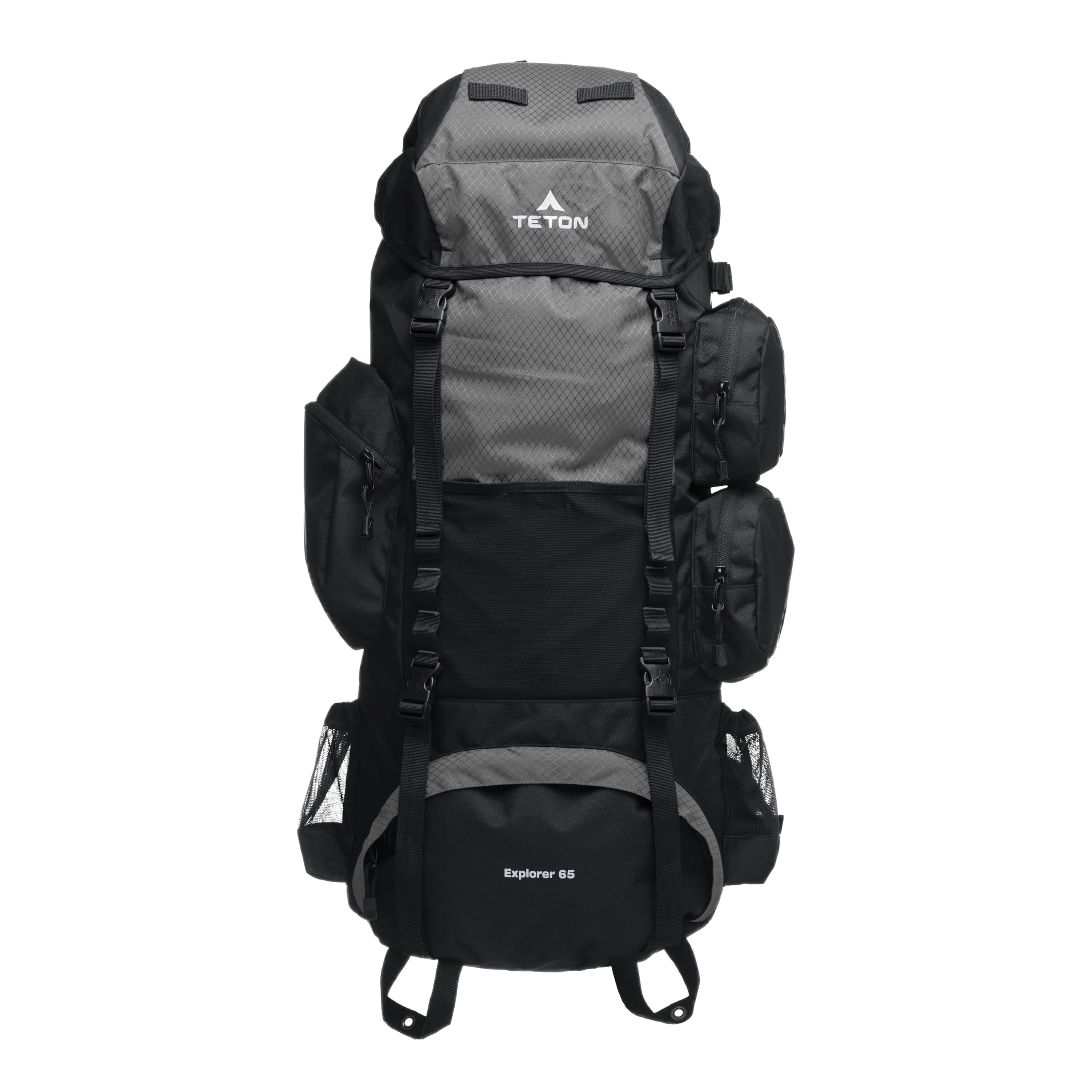
The Teton Explorer 65L strikes a near-perfect balance between comfort, capacity, and cost. Its multi-position torso adjustment allows hikers from 5’5″ to 6’2″ to dial in a precise fit, and the open-cell foam lumbar pad with molded channels keeps your back ventilated under a 45-pound load. The internal frame with an aluminum stay transfers weight directly to the padded hip belt, reducing shoulder strain on multi-day treks.
At 4.5 pounds, it’s not the lightest pack in this lineup, but the trade-off is a durable 600D polyurethane-lined body and a built-in rain cover stashed in a bottom pocket. The main compartment swallows a tent, sleeping bag, and clothes for a 5-day trip, while the removable sleeping bag divider gives you the option to consolidate space. Side mesh pockets fit 32-ounce water bottles securely, though they’re too snug for oversized Nalgene bottles.
Customer feedback consistently highlights the pack’s ability to carry 45 to 50 pounds without discomfort on training hikes and section hikes of the Appalachian Trail. The rain cover held up in sustained downpours, keeping gear completely dry. Some users wish for waist belt pockets and report that the zippers can be stiff initially, but the overall durability and warranty support from Teton Sports make this a trustworthy choice for intermediate backpackers.
Why it’s great
- Adjustable torso fits a wide range of body types
- Comfortable lumbar pad with airflow channels
- Built-in rain cover protects gear in heavy rain
Good to know
- Side pockets too small for large water bottles
- No waist belt pockets for snacks or phone
2. Osprey Rook 50L

The Osprey Rook 50L is built for the hiker who wants premium load-carrying engineering without the flagship price. Its AirSpeed suspension uses a tensioned mesh back panel that keeps the pack frame off your spine, creating a ventilated gap that reduces sweating on hot climbs. The LightWire frame transfers loads to a sculpted hip belt, and the adjustable torso ensures a custom fit for most body sizes.
Weighing just 3.6 pounds, this pack is significantly lighter than budget competitors, making it ideal for 2-to-3-day trips where every ounce matters. It comes with an integrated, stowable rain cover, a zippered sleeping bag compartment with a floating divider, and angled water bottle pockets that are easy to reach while walking. The pack handles up to 35 pounds comfortably, though some users with narrow hips find the waist belt digs in after long miles.
Owner reviews often mention the Rook’s premium feel relative to its price point, with sturdy zippers and fabric that inspire confidence. The pack lacks a large front mesh pocket for drying wet gear and doesn’t offer back access to the main compartment, but these are minor trade-offs for the weight savings and ventilation. For hikers who prioritize a cool back and a light carry on moderate multi-day routes, the Rook is a standout mid-range option.
Why it’s great
- AirSpeed mesh backpanel keeps your back cool
- Lightweight at 3.6 lbs for its capacity
- Integrated rain cover is ready when clouds roll in
Good to know
- No large outer mesh pocket for wet gear
- Hip belt may feel tight on narrow frames
3. Mardingtop 70L Tactical Backpack
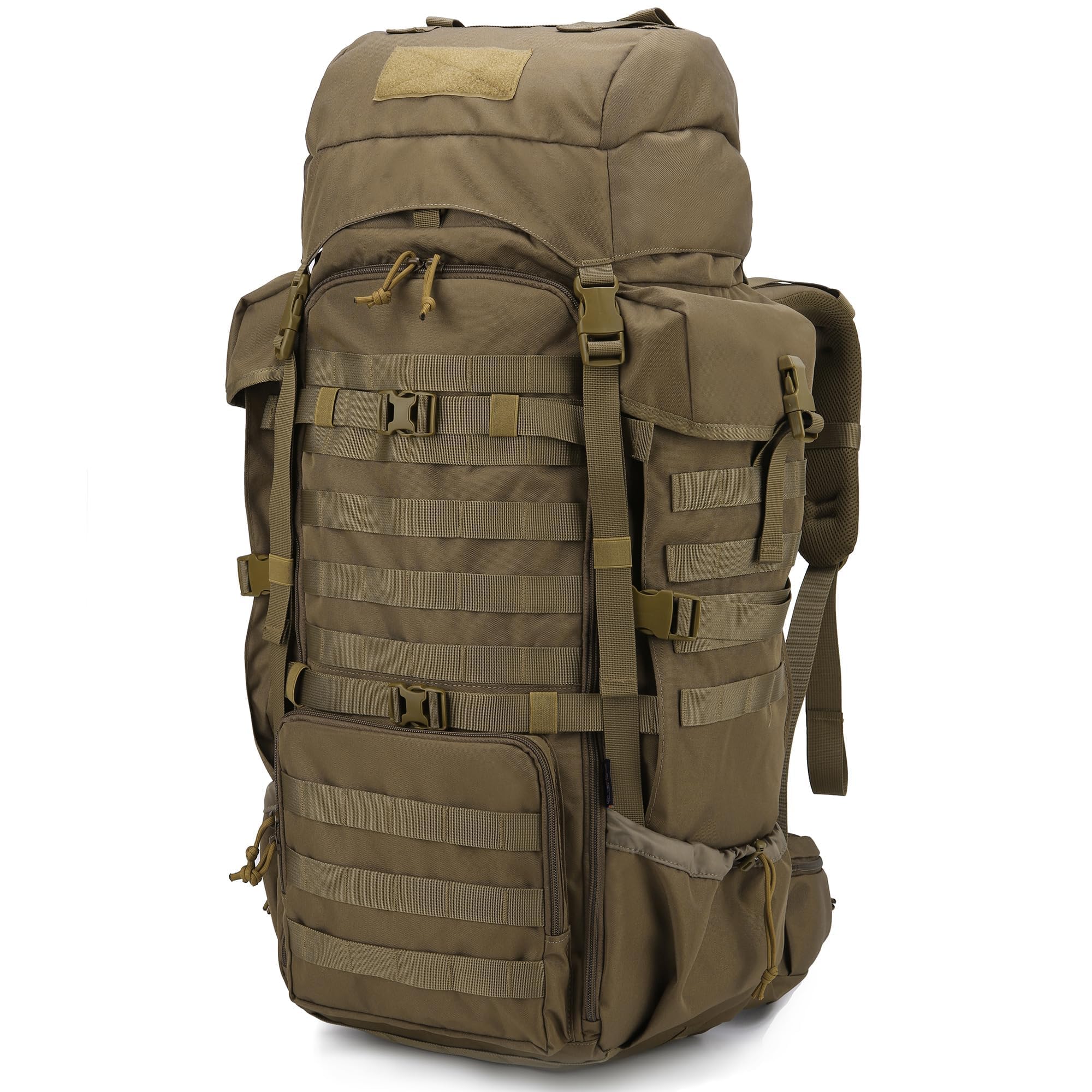
Designed with a military tactical aesthetic, the Mardingtop 70L Internal Frame Backpack brings a full MOLLE webbing system, allowing you to attach pouches, gear, and sleeping pads directly to the exterior. The 600D polyester body and YKK zippers provide solid durability for the price, and the included rain cover protects your kit during wet weather. The multi-position torso adjustment pairs with a breathable mesh back and padded hip belt to handle loads over 65 pounds.
The main compartment opens like a clamshell for easy packing, and the front zippered access lets you grab items from the middle of the pack without unloading everything. Internal pockets include a dedicated hydration sleeve and two large mesh pockets ideal for a stove and pots. Side pockets are generously sized, fitting two 36-ounce Yeti bottles and a 2-liter water bladder simultaneously.
Buyers praise the structure and weight distribution, noting it outperforms some premium brands in preventing sag and lower back pain. A common critique is that the material can be noisy, with squeaking and crinkling sounds that may spook wildlife during backcountry hunts. The buckles also feel less robust than the rest of the bag. For hunters and overnight hikers needing modular capacity and rugged build, this Mardingtop delivers serious value.
Why it’s great
- Full MOLLE system for attaching extra gear
- Clamshell opening makes packing easy
- Large side pockets hold big water bottles
Good to know
- Fabric is noisy and crinkles during movement
- Buckles feel a bit cheap compared to rest of pack
4. MOUNTAINTOP 70L

The MOUNTAINTOP 70L is a crowd-favorite entry-level pack that punches above its weight class. A lightweight aluminum alloy frame plate provides excellent load-bearing capacity, and the nylon fabric body with YKK zippers feels surprisingly tough for the cost. The torso is adjustable across multiple positions, making it a solid fit for both men and women of varying heights.
One of the smartest features is the zippered side entry, which lets you reach the main compartment without digging through the top. A bottom compartment with a divider is perfect for isolating a sleeping bag or dirty shoes. The hydration sleeve fits bladders up to 3 liters, though the port is on the smaller side. At 4.4 pounds, it’s not ultralight, but the aluminum frame distributes weight well enough for weekend trips.
Hikers report carrying loads of around 30 pounds for 2-night trips with no comfort issues. The included rain cover kept gear bone-dry during a storm. Some users note the top seam stitching can begin to fray after extended use, and the hydration port is a bit cramped for larger tubes. For beginners and budget-conscious backpackers, the MOUNTAINTOP 70L offers a reliable entry into multi-day hiking without breaking the bank.
Why it’s great
- Aluminum frame provides solid load transfer
- Side zippered access to main compartment
- Good value for entry-level multi-day trips
Good to know
- Hydration port is small for large tubes
- Top seam stitching may fray over time
5. Mardingtop 60L Military Backpack
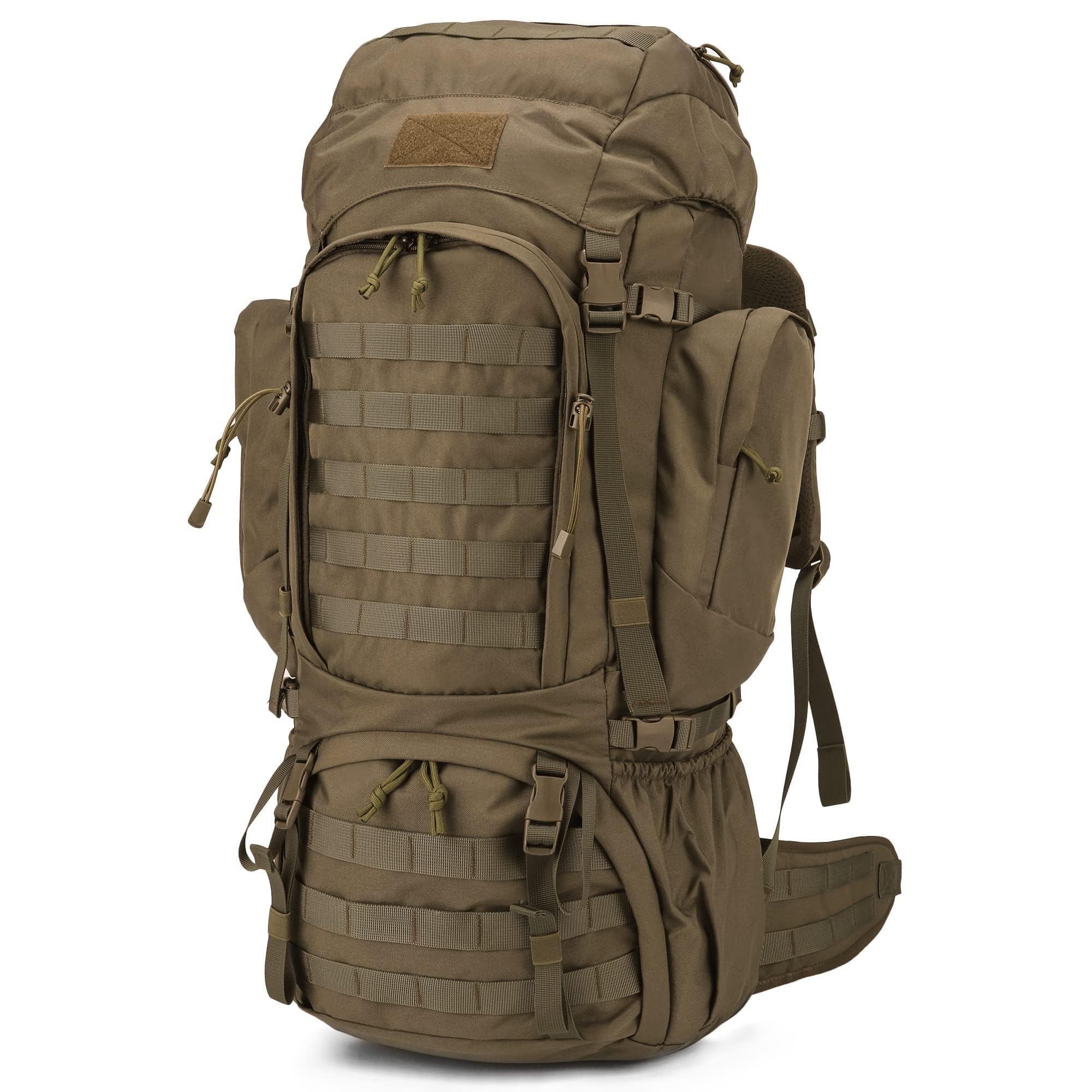
The Mardingtop 60L Military Backpack is a tactical-style pack built for hikers who want modularity on a tight budget. The entire exterior is covered in MOLLE webbing, allowing you to lash on sleeping bags, tents, hammocks, and extra pouches. The 600D polyester fabric and YKK zippers are the same materials found in packs costing twice as much, and the internal hydration sleeve fits a 2.5-liter bladder or a 15.6-inch laptop.
At 4.49 pounds, it’s comparable in weight to the Teton 65L, but the shoulder straps are narrower and the hip belt lacks substantial padding. This limits the comfortable load to around 30 to 40 pounds for moderate distances. The included rain cover is functional but feels flimsy. A top zippered pocket provides quick access to small items like a map or headlamp.
Users who own multiple packs say this Mardingtop works well as a survival or ruck pack for short, heavy carries (up to 90 pounds for 1 to 3 mile runs). The waist belt cinches can loosen under extreme loads, so it’s best for moderate hiking rather than expedition-level use. For beginners or customizers who enjoy adding pouches and patches, this is a capable and affordable platform.
Why it’s great
- Full MOLLE webbing for gear customization
- YKK zippers for reliable durability
- Top pocket offers quick access to small items
Good to know
- Hip belt padding is thin for heavy loads
- Shoulder straps are narrow and may dig in
6. MT Alice Pack 50L

The MT Alice Pack is a modern reproduction of the classic U.S. military ALICE rucksack, built from tough 1000D waterproof Oxford fabric with a two-layer PU coating. The external frame is a mixed aluminum and iron design that provides a stable platform for carrying awkward loads like game meat or heavy gear. At 5 pounds, it’s heavier than most internal frame packs, but the frame separates the load from your back, offering excellent ventilation and a rigid carry.
The main compartment closes with a drawstring and a plastic cord clamp, and three external utility pockets provide organized storage for tools, food, and clothing. The kidney pad and padded shoulder straps help manage the weight, and the quick-release buckle allows an emergency drop. Drainage eyelets at the bottom of each pocket shed water if you cross a stream or get caught in a downpour.
Reviews from survivalists and hunters consistently praise the pack’s buy-once quality and sturdier materials compared to knockoff ALICE replicas. The top flap’s shape is criticized for not shedding rain well, and the frame is lighter than the original GI version, meaning slightly less durability under extreme abuse. For anyone who wants a no-nonsense, load-hauling platform with military provenance, the MT Alice Pack is a reliable workhorse.
Why it’s great
- 1000D fabric is extremely abrasion-resistant
- External frame provides great ventilation
- Quick-release buckle for emergency drop
Good to know
- Top flap doesn’t shed rain effectively
- External frame is less stable for running
7. Thule Landmark 40L
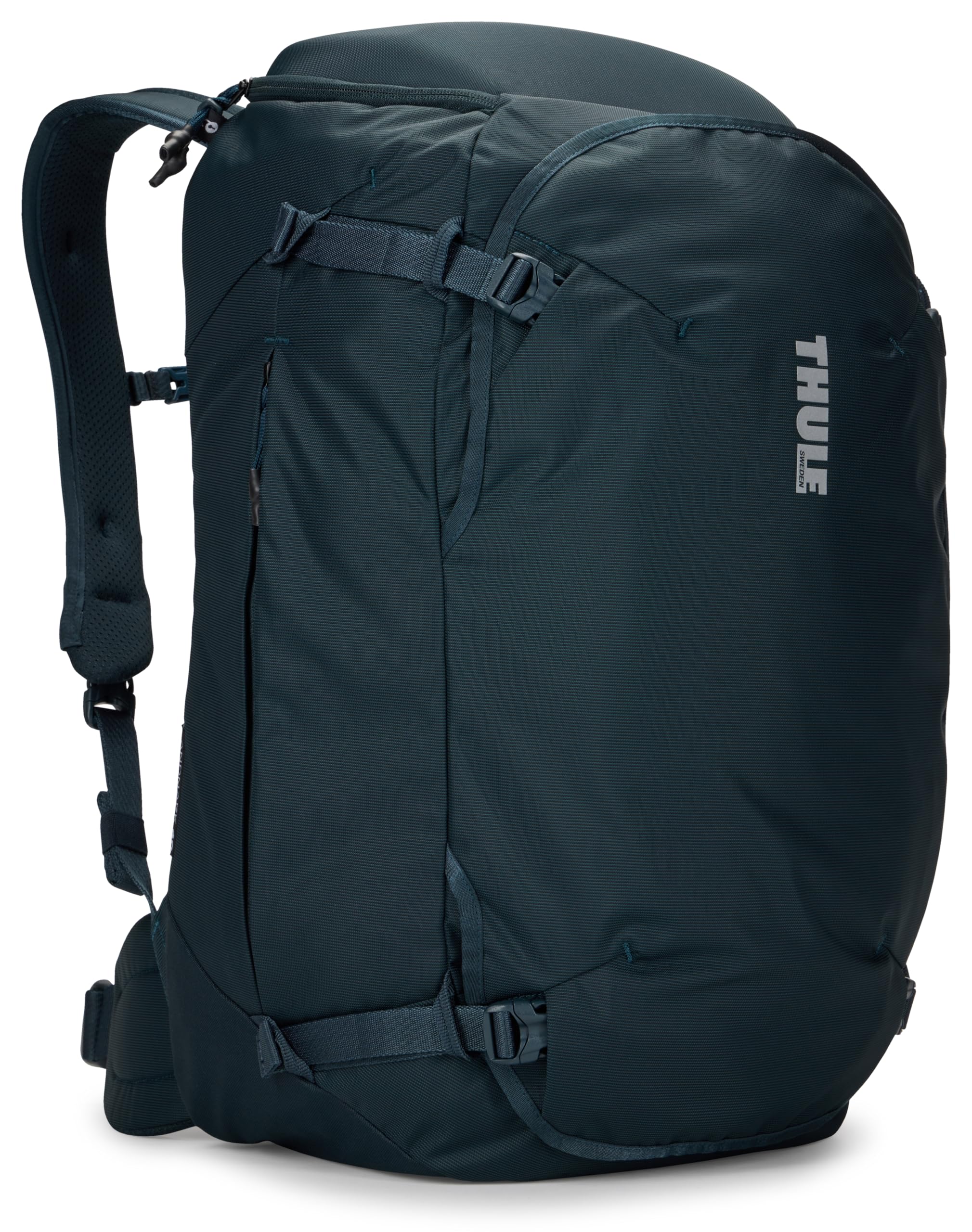
The Thule Landmark 40L is a travel-focused adventure pack that splits the difference between a hiking backpack and a carry-on bag. Its defining feature is the anti-theft system: hidden CashStash compartments for passports and cash, LoopLocks that secure zipper pulls to the bag, and a SafeZone pocket that conceals valuables. The pack weighs around 3.3 pounds and fits within most airline carry-on size restrictions, making it ideal for international travel with day hikes spliced in.
The interior features a padded 15-inch laptop sleeve, a 12.9-inch tablet pocket, and enough main compartment space for a week’s worth of clothing. The hip belt is detachable for flight use and can be stored behind the back panel. The daypack can be separated from the main bag, giving you a lightweight 20-liter personal item for exploring cities or short trail runs.
Long-term users report the Landmark has held up through 27 countries over several years with minimal wear. The main complaint involves the lack of weatherproofing — the fabric is not fully waterproof and only handles light rain without the cover. The side water bottle pockets are also less robust than dedicated hiking packs. For the digital nomad who wants urban security and trail versatility in one bag, the Thule Landmark is a sophisticated hybrid.
Why it’s great
- Hidden CashStash pockets deter pickpockets
- Separable daypack adds carry-on versatility
- Lightweight for a 40L travel pack
Good to know
- Fabric is not fully waterproof
- Side pockets are less durable than hiking packs
FAQ
How do I measure my torso length for a hiking backpack?
What volume do I need for a 3-day hiking trip?
Is a 600D polyester backpack durable enough for backpacking?
Should I buy a pack with an external frame?
Can I use a 40L pack for multi-day hiking?
Final Thoughts: The Verdict
For most users, the best backpack for hiking and camping winner is the Teton Explorer 65L because it delivers a proven adjustable torso fit, comfortable load handling up to 50 pounds, and a built-in rain cover at a price that outperforms its competition. If you want a lightweight pack with superior ventilation for warm-weather trips, grab the Osprey Rook 50L. And for rugged, modular capacity that can handle heavy hunting or bushcraft loads, nothing beats the Mardingtop 70L Tactical Backpack.