
Our readers keep the lights on and the weekend projects moving. As an Amazon Associate, I earn from qualifying purchases.
Every ounce matters when your next campfire depends on a tool that won’t fold after a half-hour of batoning wet fir. The difference between a frustrating, dull edge and a reliable splitting stroke comes down to steel hardness, head geometry, and handle balance—three factors that separate backpacking-specific axes from overbuilt hardware-store hatchets you’d regret carrying past the first mile.
I’m Rikta — the co-founder and writer behind FitlyFast. I’ve spent years analyzing trail-ready tool specs, comparing carbon steel heat-treat ratings, handle grain orientation, and sheath durability to find the few models that justify a spot in your pack.
Whether you’re processing kindling for a solo overnighter or limbing branches for a basecamp shelter, choosing the right backpacking axe means prioritizing edge retention, weight distribution, and compact carry over raw splitting power alone.
How To Choose The Best Backpacking Axe
Not every hatchet is built for the trail. A camp axe that lives at a cabin can afford to be heavy and dull—your backpacking axe cannot. Every gram of steel and every inch of handle must earn its keep through real chopping efficiency. Below are the three non-negotiable factors I evaluate before recommending any model.
Steel composition and edge geometry
The blade is the soul of the axe. Boron steel (like Morakniv’s offering) delivers exceptional edge retention at a low weight, while high-carbon steel (like Helko Werk’s C50) allows for finer edge angles and easier field sharpening. Avoid stainless steel unless it’s a pure survival backup—it’s harder to sharpen with a puck and won’t hold a working edge as long against abrasive wood fibers. A Scandi or convex grind reduces friction during the cut, meaning the blade bites deeper with less arm fatigue.
Head weight and handle length trade-offs
A backpacking axe needs to balance between one-handed limbing and two-handed splitting. Heads in the 1.0–1.5 pound range pair best with handles between 14 and 20 inches. Shorter handles (under 14 inches) force you into choked grips that reduce swing power; longer handles (over 20 inches) add carry weight and bulk. The sweet spot for most backpackers is a 1.3–1.5 pound head on a 17-inch handle—this allows controlled one-handed work on saplings and enough mass to drive through 4-inch dry hardwood.
Sheath quality and pack integration
A flimsy nylon sheath that slips off mid-hike is a safety hazard and a gear killer. Premium leather sheaths (like the vegetable-tanned Swedish leather on the Morakniv or the full-grain option from Helko Werk) offer secure retention, moisture wicking, and edge protection that lasts years. Check that the sheath has a belt loop or a secure attachment point—losing an axe inside your pack means shredded fabric, damaged gear, and a potentially dangerous loose blade.
Quick Comparison
On smaller screens, swipe sideways to see the full table.
| Model | Category | Best For | Key Spec | Amazon |
|---|---|---|---|---|
| Husqvarna Hatchet | Traditional | One-handed camp work | 1.32 lb hand-forged head, 14.97″ hickory handle | Amazon |
| 1844 Helko Werk Journeyman | Premium | All-purpose trail splitting | 1.5 lb C50 carbon steel head, 20″ hickory handle | Amazon |
| Gerber Freescape Hatchet | Modern | Lightweight chopping | 17.5″ forged steel head, PTFE-coated blade | Amazon |
| Morakniv Boron Steel Camp Axe | Bushcraft | Edge retention & weight saving | 0.24″ boron steel blade, 12.7″ total length | Amazon |
| Schrade Delta Bedrock Axe | Survival | Compact multi-tool (ferro rod) | 11.8″ overall, 3Cr13 stainless, hammer pommel | Amazon |
| Fiskars 375501-1001 Hatchet | Value | Budget-friendly kindling | 0.68 kg head weight, 14″ shock-absorbing handle | Amazon |
| Gerber Freescape Camp Saw | Saw | Cross-cutting larger wood | 12″ folding blade, 4-pivot design | Amazon |
In‑Depth Reviews
1. Husqvarna Hatchet
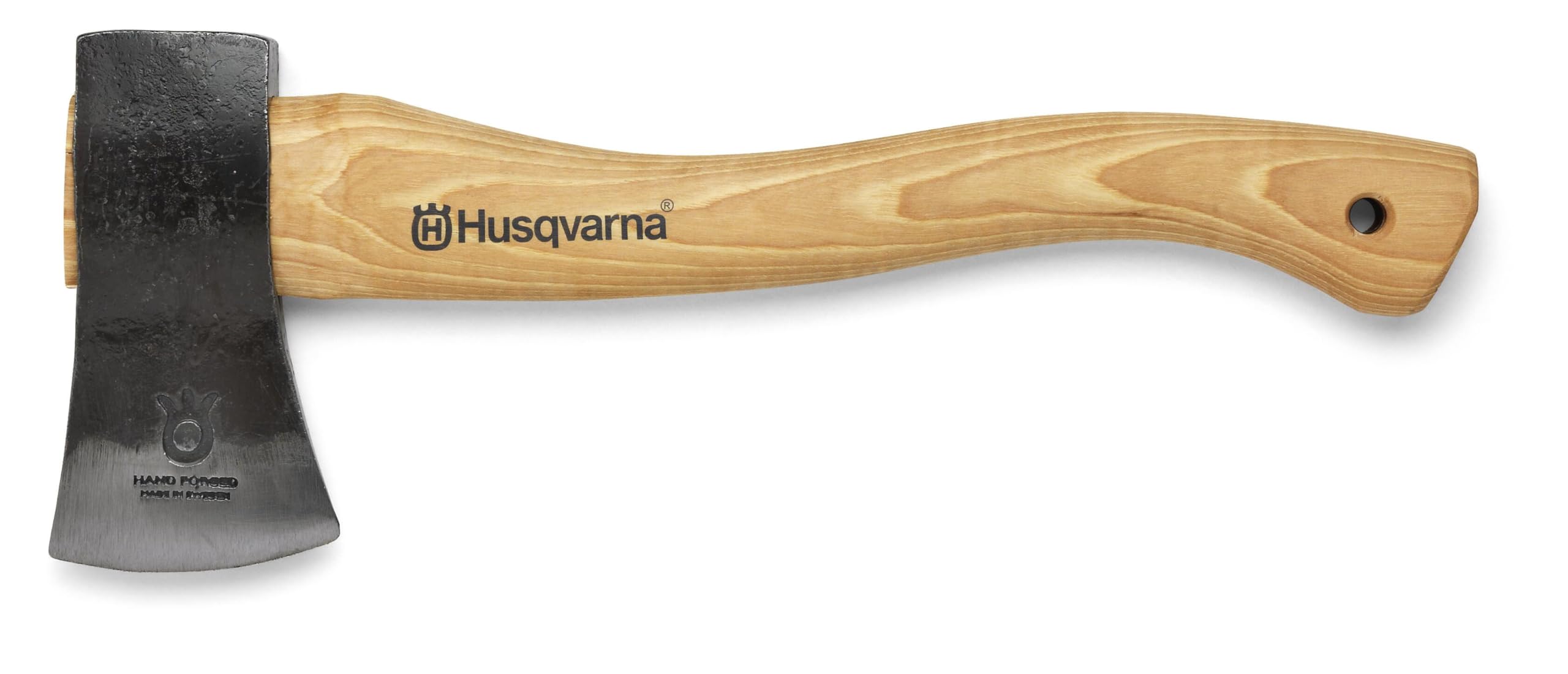
The Husqvarna Hatchet is a masterclass in traditional Swedish forging. The hand-forged 1.32-pound head is made from premium alloy steel, and the tight-grained hickory handle is finished with linseed oil for a secure grip even in wet conditions. This is the tool I reach for when I need a true one-handed hatchet that can handle limbing, splitting small diameter wood, and even light shelter building without feeling unbalanced.
Out of the box, the edge is ground thin enough for efficient cuts but will benefit from a quick pass with a fine sharpening puck to reach paper-shaving sharp. The included leather sheath is stitched with brass rivets and holds the blade securely. The head-to-handle fitment is excellent, with no wobble after extended use. It’s not a toy—this axe demands respect and basic sharpening skill.
For backpackers who want a traditional tool that performs like a much larger axe in a compact package, the Husqvarna delivers. The 14.97-inch handle allows choked or full grip, and the weight distribution makes it feel like an extension of your arm rather than a dead weight. One caveat: the handle may need a light sanding and oiling out of the box for the smoothest finish.
Why it’s great
- Hand-forged Swedish steel holds a razor edge after light sharpening
- Hickory handle grain is perfectly oriented for maximum strength
- Leather sheath with brass rivets ensures safe pack carry
Good to know
- Edge arrives dull for many units—plan on sharpening before first use
- Sheath snap can come loose; some users add a cord tie
2. 1844 Helko Werk Germany Classic Journeyman Pack Axe

The Helko Werk Journeyman is an heirloom-quality pack axe that bridges the gap between a hatchet and a full-size forest axe. The 1.5-pound head is open-face drop forged from German C50 high-carbon steel, hardened to 53–56 HRC, which provides excellent edge retention and allows for a thin, efficient grind. The 20-inch Grade A American hickory handle is sanded to 150 grit and finished with boiled linseed oil, offering a smooth, comfortable grip for both one- and two-handed use.
Out of the box, this axe is sharper than nearly any competitor, capable of shaving arm hair without extra work. The full-grain leather sheath is vegetable-tanned and fits snugly, and the included Axe Guard oil helps prevent rust during storage. The swing weight is noticeably more authoritative than shorter hatchets—it splits 4-inch dry hardwood in two to three strikes where a 14-inch hatchet might take five.
This is not a tool for beginners. The long handle requires proper technique to avoid overstrike, and the thin edge demands regular honing. It’s also the heaviest option here at 2.25 pounds total, so it’s best for basecamp treks where the weight penalty offsets the splitting efficiency. For the serious bushcrafter who values craftsmanship, the Journeyman is a lifetime investment.
Why it’s great
- C50 high-carbon steel holds a thin edge and sharpens easily in the field
- Heirloom build quality with hand-forged character and premium materials
- Thick leather sheath and protective oil included for long-term care
Good to know
- 2.25 lb total weight is heavier than most backpacking axes
- Thick handle is best suited for users with larger hands
3. Gerber Gear Freescape Hatchet

The Gerber Freescape Hatchet is the modern answer to the question of a lightweight yet effective camp axe. Its forged steel head is coated with PTFE to reduce friction during chopping, which means the blade slides through wood fibers rather than binding. The 17.5-inch composite handle features a soft-touch overmold that absorbs shock and reduces hand fatigue during extended sessions—a real advantage if you’re processing a pile of kindling after a long hike.
The head geometry is designed for deep, controlled cuts. Reviewers consistently note that the extra weight in the head makes it far more effective than a standard 14-inch hatchet, cutting chopping time in half on branches up to 4 inches in diameter. The blade arrives sharp, and the PTFE coating helps prevent the head from getting stuck during batoning. The slim sheath includes belt hangers and protects the edge during transport.
One area where the Freescape falls slightly short is the handle texture—it can feel a bit slick when wet, especially compared to wood handles. The blade cover is also bulkier than leather alternatives. Still, for a lightweight, durable, and low-maintenance tool that balances like a much more expensive axe, the Freescape is a top contender for modern backpackers who prioritize efficiency over tradition.
Why it’s great
- PTFE coating reduces friction and prevents head sticking
- Soft-touch handle absorbs shock for comfortable all-day use
- Extra head weight delivers chopping power of a larger axe
Good to know
- Handle can feel slick in wet conditions
- Blade cover is somewhat bulky for pack carry
4. Morakniv Boron Steel Camping Axe

Morakniv’s Boron Steel Camping Axe is proof that good things come in small, light packages. The blade is a full 0.24 inches (6 millimeters) thick—thicker than many hatchets twice its weight—and the boron alloy delivers exceptional edge retention that resists chipping even when used on hard knotted wood. The Scandi grind makes field sharpening using a simple puck remarkably easy; you can restore a working edge in under a minute.
At just 17.6 ounces and 12.7 inches total length, this axe packs smaller and lighter than almost any competitor. The plastic handle is ergonomically shaped for both choked and full grips, and a lanyard hole allows for wrist security. The back of the head can be used for hammering tent stakes, though it’s narrow and best reserved for plastic pegs. The included vegetable-tanned Swedish leather sheath is beautifully made and holds the edge securely.
This axe is ideal for ultralight backpackers who need a real wood-processing tool but refuse to carry unnecessary weight. It won’t split 6-inch logs like a full-size axe, but for limbing branches, making kindling, and light splitting, it’s remarkably capable. The one criticism is the sheath: while high-quality leather, some users find the snap a bit weak after extended use. Overall, a near-perfect balance of weight, edge performance, and packability.
Why it’s great
- Boron steel holds a razor edge and resists chipping
- Weighs just 17.6 oz—ideal for ultralight backpacking
- Scandi grind simplifies field sharpening
Good to know
- Back of head is too narrow for heavy hammering
- Leather sheath snap may loosen over time
5. Schrade Delta Class Bedrock Axe

The Schrade Bedrock Axe is the Swiss Army approach to a backpacking hatchet—it combines a functional axe head with a hammer pommel and a large ferro rod stored inside the handle. The 3Cr13 titanium-coated stainless steel blade is serviceable for light chopping and limbing, and the glass fiber-filled PA handle with TPR rubber grip provides excellent ergonomics and slip resistance. At only 11.8 inches overall length and 1.4 pounds, it fits easily into the side pocket of a backpack.
Real-world users report the blade arrives functional but not razor-sharp; a quick pass with a Lansky puck improves cutting performance significantly. The ferro rod throws large sparks and is easy to strike with the back of a knife blade. The hammer pommel is a nice bonus for driving stakes or cracking nuts. The included thermoplastic sheath is lightweight and protects the edge, though it’s not as durable as leather.
This is not the axe for heavy wood processing—the stainless steel won’t hold an edge as long as carbon or boron steel, and the short handle limits swing power. However, for a compact survival kit where weight and multi-functionality are priorities, the Bedrock delivers genuine value. It’s a capable backup tool that won’t let you down in a pinch, and the integrated fire-starting capability is a thoughtful addition for emergency preparedness.
Why it’s great
- Integrated ferro rod provides reliable fire-starting backup
- Ergonomic rubber grip prevents hand fatigue during use
- Highly compact design fits in pack side pockets
Good to know
- Stainless steel edge dulls faster than carbon steel options
- Sheath is lightweight but not as durable as leather
6. Fiskars 375501-1001 Hatchet with Sheath

The Fiskars X7 Hatchet is a legend in the budget outdoor tool space, and for good reason. Its proprietary blade-grinding technique produces an edge that’s sharper than most hatchets in its class, and the low-friction blade coating prevents the head from binding in wet or green wood. The molded head won’t loosen over time, and the shock-absorbing DuraFrame handle is lighter than steel yet strong enough to withstand overstrike damage—a common failure point in cheaper axes.
At 1.5 pounds total weight and a 14-inch handle, this hatchet is a practical choice for backpackers on a budget. A quick edge guard (custom or homemade) allows it to be packed safely inside a backpack. Users consistently praise its ability to split small to medium logs effectively, especially when used on its side to leverage the blade geometry. The included sheath is basic but functional, protecting the edge during storage.
The main trade-off is the handle length: 14 inches is short enough to limit two-handed swing power, and some users wish for an extra 1.5 inches for better leverage on larger wood. The handle is also made from composite material rather than wood, which some traditionalists dislike. But for sheer reliability and value, the Fiskars X7 is hard to beat—it’s a tool that will outlast many pricier competitors without breaking the bank.
Why it’s great
- Proprietary blade grind delivers exceptional sharpness out of box
- Shock-absorbing handle prevents wrist fatigue and overstrike damage
- Proven durability over years of heavy use
Good to know
- 14-inch handle limits two-handed swing power on larger wood
- Basic sheath may need upgrading for secure pack carry
7. Gerber Freescape Camp Saw
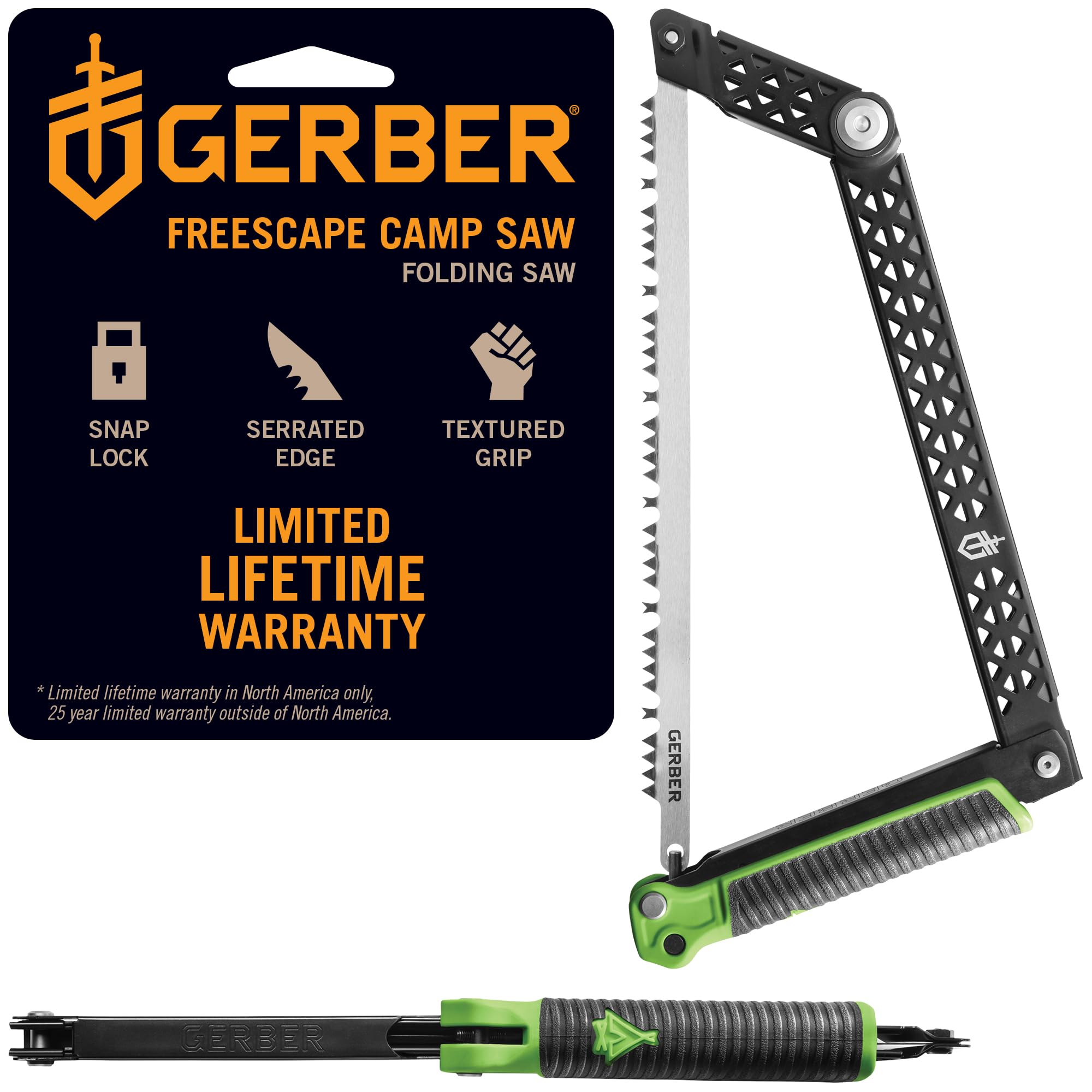
The Gerber Freescape Camp Saw offers a different approach to wood processing: a folding saw that packs flat and cuts cleanly without the fatigue of swinging an axe. The 12-inch blade uses a 4-pivot folding mechanism that maximizes the effective cutting length, allowing you to cross-cut wood up to 7 inches in diameter in minutes. The textured rubber handle provides a secure grip even when wet, and the bright green accents make it easy to spot in a dark gear pile.
This saw is not a straight replacement for an axe—it can’t split logs or make kindling—but for backpackers who primarily need to cut fallen branches to length for a fire, it’s far more efficient than chopping. Users report cutting an 8-inch tree in about 7 minutes with moderate effort. The blade uses standard replacements, which is a plus for long-term durability. The folding design keeps the blade protected when packed, eliminating the need for a separate sheath.
The main downsides are the blade’s tooth count—some users find it too low, requiring more effort per stroke—and the fact that folding mechanisms can wear over time. It’s also not ideal for heavy-duty pruning; consider this a specialist tool for backpackers who prioritize fast, clean cross-cuts over the splitting capability of an axe. If you pair it with a lightweight hatchet like the Fiskars, you have a complete wood-processing system.
Why it’s great
- Folding design packs flat and protects the blade during transport
- 4-pivot mechanism allows efficient cutting of large-diameter wood
- Comfortable rubber handle reduces hand fatigue in extended use
Good to know
- Blade teeth per inch is lower than some users prefer
- Folding mechanism may wear over extended heavy use
FAQ
What is the ideal handle length for a backpacking axe?
Can I sharpen a backpacking axe with a common pocket stone?
Should I choose a wooden handle or a composite handle for a backpacking axe?
Final Thoughts: The Verdict
For most users, the backpacking axe winner is the Husqvarna Hatchet because its hand-forged Swedish steel head and ergonomic hickory handle deliver an unbeatable balance of traditional craftsmanship, edge performance, and pack-friendly weight. If you want a lightweight, modern tool with shock-absorbing comfort, grab the Gerber Freescape Hatchet. And for ultralight backpackers who refuse to compromise on edge retention, nothing beats the Morakniv Boron Steel Camping Axe.