
Our readers keep the lights on and the weekend projects moving. As an Amazon Associate, I earn from qualifying purchases.
Shoulder pain, hip chafing, and a pack that wobbles on the trail are the telltale signs of a backpacking backpack that simply does not fit your frame. Getting the right suspension, volume, and torso length determines not just comfort but whether you finish your trip at all.
I’m Rikta — the co-founder and writer behind FitlyFast. I’ve spent the past decade cross-referencing backpack load-transfer data, suspension architecture, and real-world user feedback to match hikers with the right pack for their spine.
After poring over hundreds of reviews and field reports on internal-frame designs, adjustable torso systems, and weight-distribution mechanics, I built this guide to the best backpacking backpack with the features that make the difference between a slog and a joy on the trail.
How To Choose The Best Backpacking Backpack
Every backpacking pack is a trade-off between weight, suspension stiffness, and volume. The right choice hinges on your gear’s total weight, the length of your trips, and your unique body dimensions. Ignoring any of these variables leads to a pack that fights you on the trail.
Match the Torso Length, Not the Pack Height
A pack’s frame must align with your C7 vertebra to your iliac crest. A frame too short shifts load to your shoulders; a frame too long digs into your hips during a bend. Most premium packs like the Osprey Atmos AG and the Deuter Aircontact Lite offer adjustable torso heights, which is a non-negotiable feature for multi-day comfort.
Suspension Type Dictates Your Carry Ceiling
Mesh trampoline systems (AirSpeed-style) provide superior back ventilation but can feel springy under loads over 40 pounds. Foam backpanels (AirScape, AG) transfer weight more efficiently for heavier carries and keep the load closer to your center of gravity. Choose a ventilated trampoline panel for warm-weather day trips and a foam or tensioned mesh system for multi-day trips with gear over 30 pounds.
Volume Should Match Your Gear’s Density
Compressed down sleeping bags and ultralight tents allow you to use a 40-50 liter pack for three-night trips. Bulkier synthetic insulation or a larger tent footprint pushes you toward 60-75 liters. Always pack your gear into a cardboard box to estimate volume before buying — the right size prevents lashing extra gear on the outside.
Quick Comparison
On smaller screens, swipe sideways to see the full table.
| Model | Category | Best For | Key Spec | Amazon |
|---|---|---|---|---|
| Osprey Atmos AG 65L | Premium | Heavy-load comfort | AG suspension, 65L | Amazon |
| Osprey Aether 65L | Premium | Custom fit for heavier carry | Fit-on-the-Fly hipbelt, 65L | Amazon |
| Thule Landmark 60L | Premium | Travel with security features | Detachable 20L daypack | Amazon |
| Osprey Stratos 44L | Mid-Range | Ventilated day hikes & overnights | AirSpeed suspension, 44L | Amazon |
| Osprey Kestrel 48L | Mid-Range | Rugged multi-day trips | AirScape backpanel, 48L | Amazon |
| Osprey Rook 50L | Mid-Range | Lightweight weekend trips | AirSpeed suspension, 50L | Amazon |
| Deuter Aircontact Lite 45+10 SL | Mid-Range | Women’s-specific long-distance | SL narrow fit, 45+10L | Amazon |
| MOUNTAINTOP 75L | Budget | First-time backpackers | J-zipper access, 75L | Amazon |
| Mardingtop 60L | Budget | Entry-level with MOLLE | MOLLE expandable, 60L | Amazon |
In‑Depth Reviews
1. Osprey Atmos AG 65L Men’s Backpacking Backpack
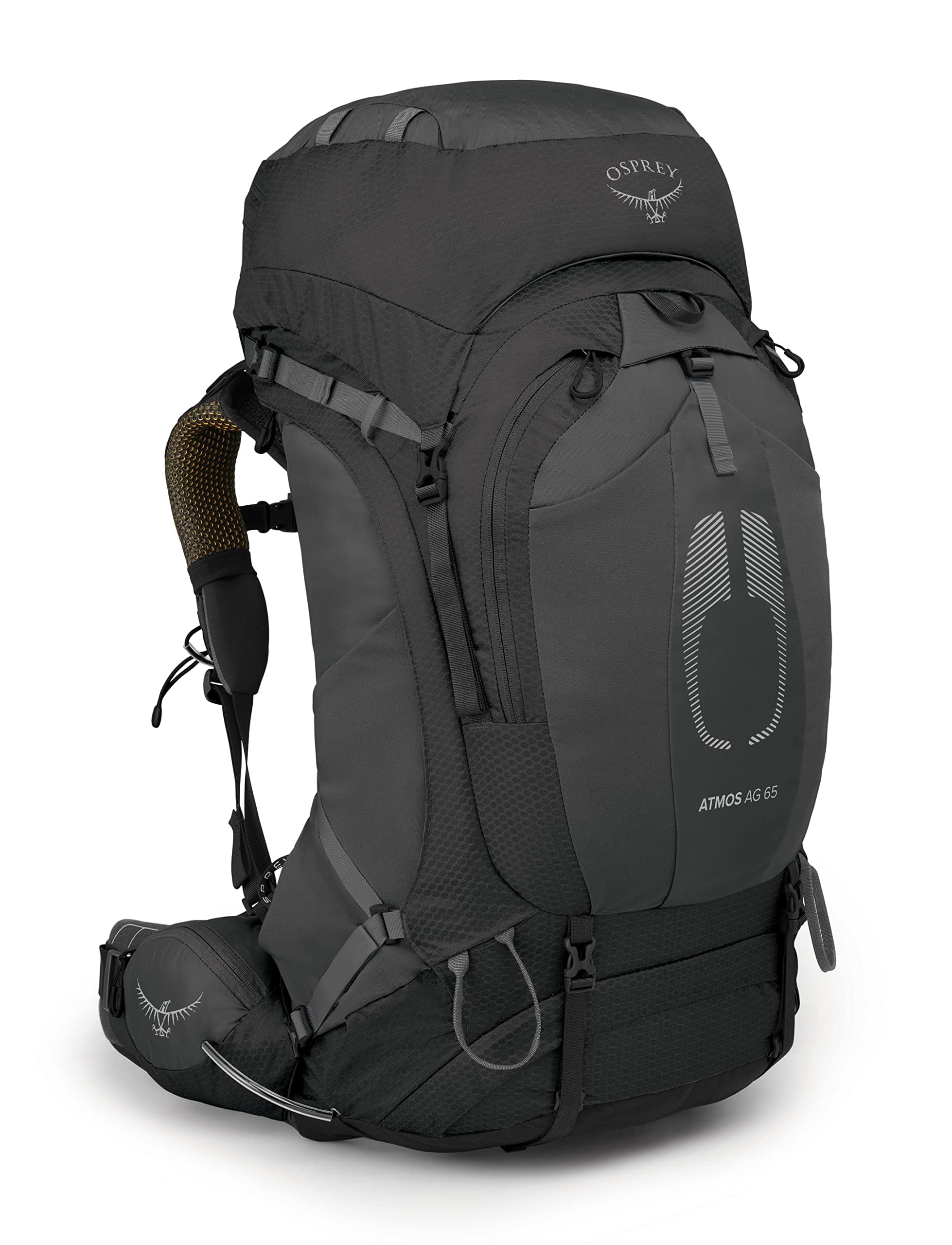
The Osprey Atmos AG 65L is the benchmark for heavy-load backpacking packs, built around the AG (Anti-Gravity) suspension that creates a seamless wrap from the lumbar pad through the hipbelt. Veteran hikers report carrying loads between 35 and 41 pounds with no chafing or hot spots, and the tensioned mesh backpanel provides enough airflow to keep your back dry while maintaining a close-to-body carry. The dual-side zipper access to the main compartment lets you grab gear from the middle of the pack without pulling everything out.
At 65 liters, this pack handles three-season gear for four-plus nights with room for a bear canister. The floating top lid with lash points, zippered sleeping bag compartment with removable divider, and integral rain cover made with PFAS-free DWR are thoughtful touches. The curved zip on one side panel and side compression straps keep the load stable on technical terrain.
The waistband zippers require two hands to operate, and the pack will not stand upright on its own when fully loaded. At 4.6 pounds, it is heavier than ultralight alternatives, but the load transfer comfort justifies the weight for anyone carrying 35 pounds or more. The S/M torso fits a 5’10” frame well, while the L/XL suits taller hikers.
Why it’s great
- AG suspension provides unparalleled load transfer up to 45 lbs
- Dual-access main compartment for mid-hike gear retrieval
- Integrated PFAS-free rain cover and sleeping bag divider
Good to know
- Waistband zippers are difficult to operate one-handed
- Pack will not stand upright when loaded
2. Osprey Aether 65L Men’s Backpacking Backpack

The Osprey Aether 65L prioritizes fit customization above all else. Its Fit-on-the-Fly hipbelt and shoulder straps mold to your body shape, and the adjustable torso length allows a precise match for hikers with longer torsos. The AirScape injection-molded foam backpanel creates a stable, close-to-body carry that excels under moderate to heavy loads, and the included rain cover adds weather security without adding bulk.
Users report that the pack handles 40-pound loads comfortably, with good weight distribution when heavier items are packed mid-body. The zippered sleeping bag compartment with a removable divider keeps your sleep system accessible, and the full-access front zipper on some versions allows packing like a suitcase. The tall, sleek profile sits close to the back, minimizing sway during technical moves.
The drawstring toggle system is more complex than necessary, and the lack of bottom daisy chains limits external storage options for extra gear like foam pads. At 4.96 pounds, it is one of the heavier packs in this category, making it better suited for hikers who prioritize fit and durability over minimal pack weight.
Why it’s great
- Fit-on-the-Fly hipbelt and straps for a custom body match
- Full front zip access on some versions eases packing
- Excellent ventilation from the AirScape backpanel
Good to know
- Drawstring toggle can feel overcomplicated
- Weighs nearly 5 pounds empty
3. Thule Landmark Backpack 60L
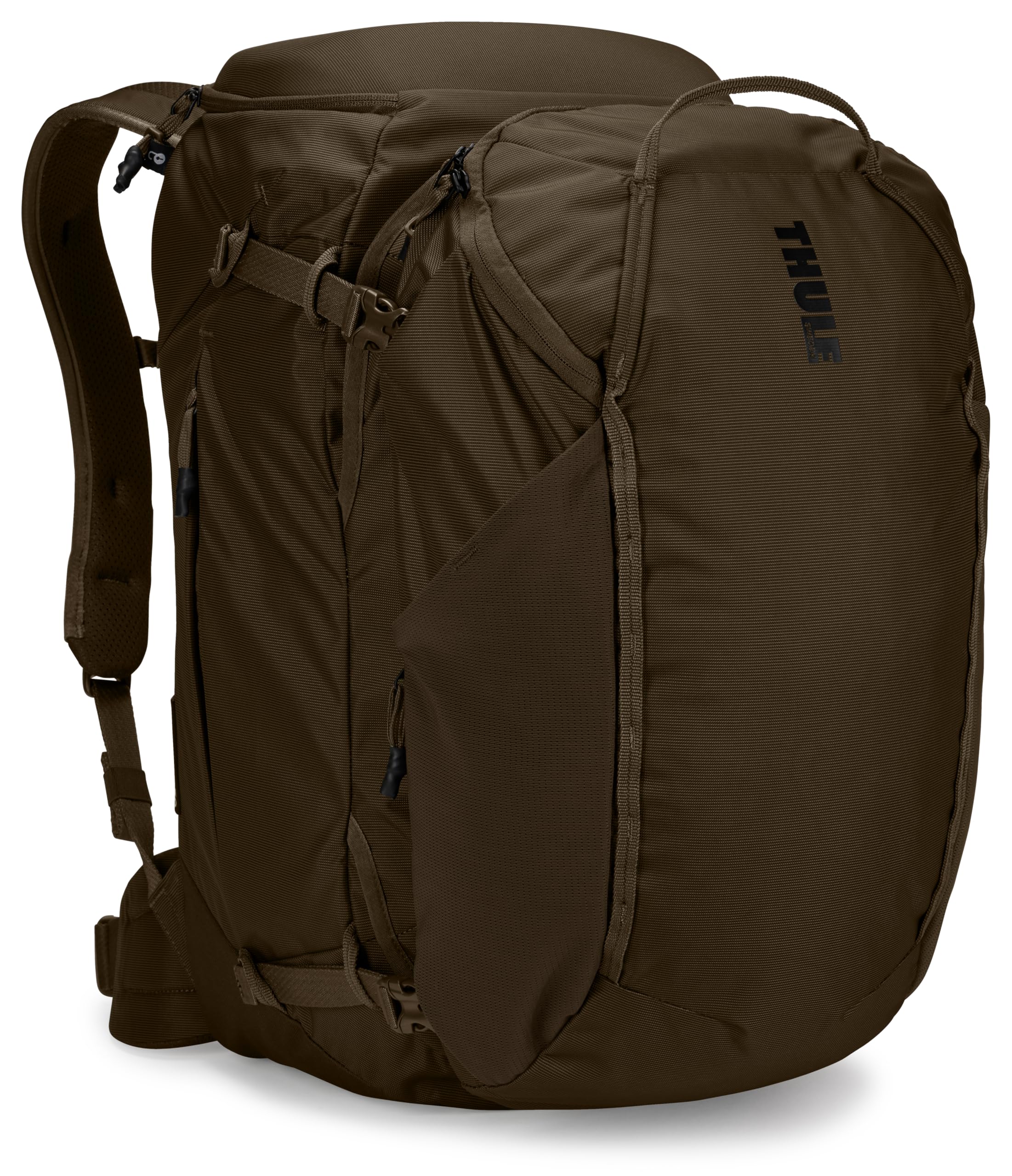
The Thule Landmark 60L is a modular adventure travel pack designed for the hiker who also needs to navigate airports and hostels. The main 40L unit detaches from a 20L daypack that fits under an airline seat, making it a single system for both the trail and urban travel. The covert CashStash compartment hides a passport and cash inside the harness, and LoopLocks secure the zipper pulls against opportunistic theft.
The 420D dobby polyester fabric is bluesign-approved, and the frame carries weight reasonably well, though it is not as stiff as dedicated backpacking packs. Users report using the combined 60L for month-long trips across Europe, with the daypack holding a 15-inch laptop and daily essentials. The stowable shoulder straps on the main pack simplify checking or storing the bag.
The torso length is too short for hikers with a 19.5-inch torso, causing the waist belt to sit at the belly rather than the hips. The water resistance is adequate for light rain but not extended downpours, and the main compartment lacks an outer mesh pocket for quick-access items. The detachable daypack fabric wears faster than the main unit.
Why it’s great
- Detachable 20L daypack works as a personal item on flights
- Covert CashStash pocket for documents and valuables
- LoopLocks deter zipper theft in transit
Good to know
- Short torso length does not fit long-backed hikers
- Fabric is not fully waterproof in heavy rain
4. Osprey Stratos 44L Men’s Hiking Backpack
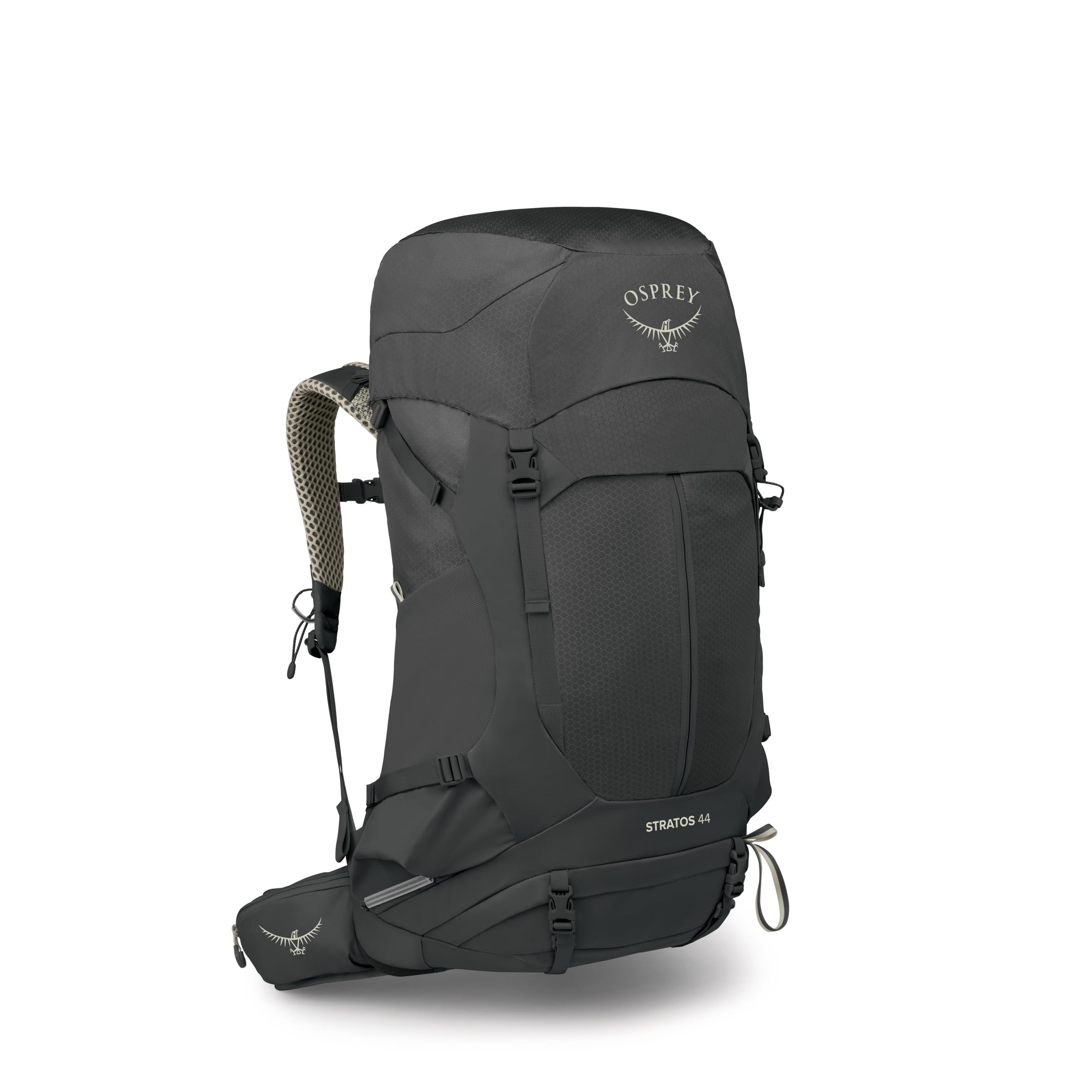
The Osprey Stratos 44L focuses on back ventilation without sacrificing stability. The AirSpeed trampoline suspension creates a gap between your back and the pack, allowing continuous airflow that keeps sweat to a minimum during strenuous climbs. The LightWire peripheral frame stabilizes loads effectively, and the adjustable torso length lets you dial in the fit from day hikes to overnight trips.
At 3.7 pounds, the Stratos is relatively light for a framed pack this size. The Stow-on-the-Go trekking pole attachment, hipbelt pockets, and stretch front stash pocket provide organization without adding complexity. The included rain cover stows in its own bottom compartment, and the bottom-zip compartment is large enough for a toiletries bag or a down jacket.
The fixed top lid limits expansion, and the rigid frame makes it difficult to cram the bag into an overhead bin if you are flying. The hipbelt padding is firm, which some users with narrow hips find inadequate for loads over 30 pounds. Best suited for fast-and-light trips or day hikes where back sweat is a problem.
Why it’s great
- AirSpeed suspension keeps your back cool on hot days
- Trekking pole attachment is quick to use mid-hike
- Stretch front pocket and hip pockets for organized access
Good to know
- Fixed top lid limits expandability for bulky items
- Hipbelt may feel thin for heavier carry loads
5. Osprey Kestrel 48L Men’s Backpacking Backpack
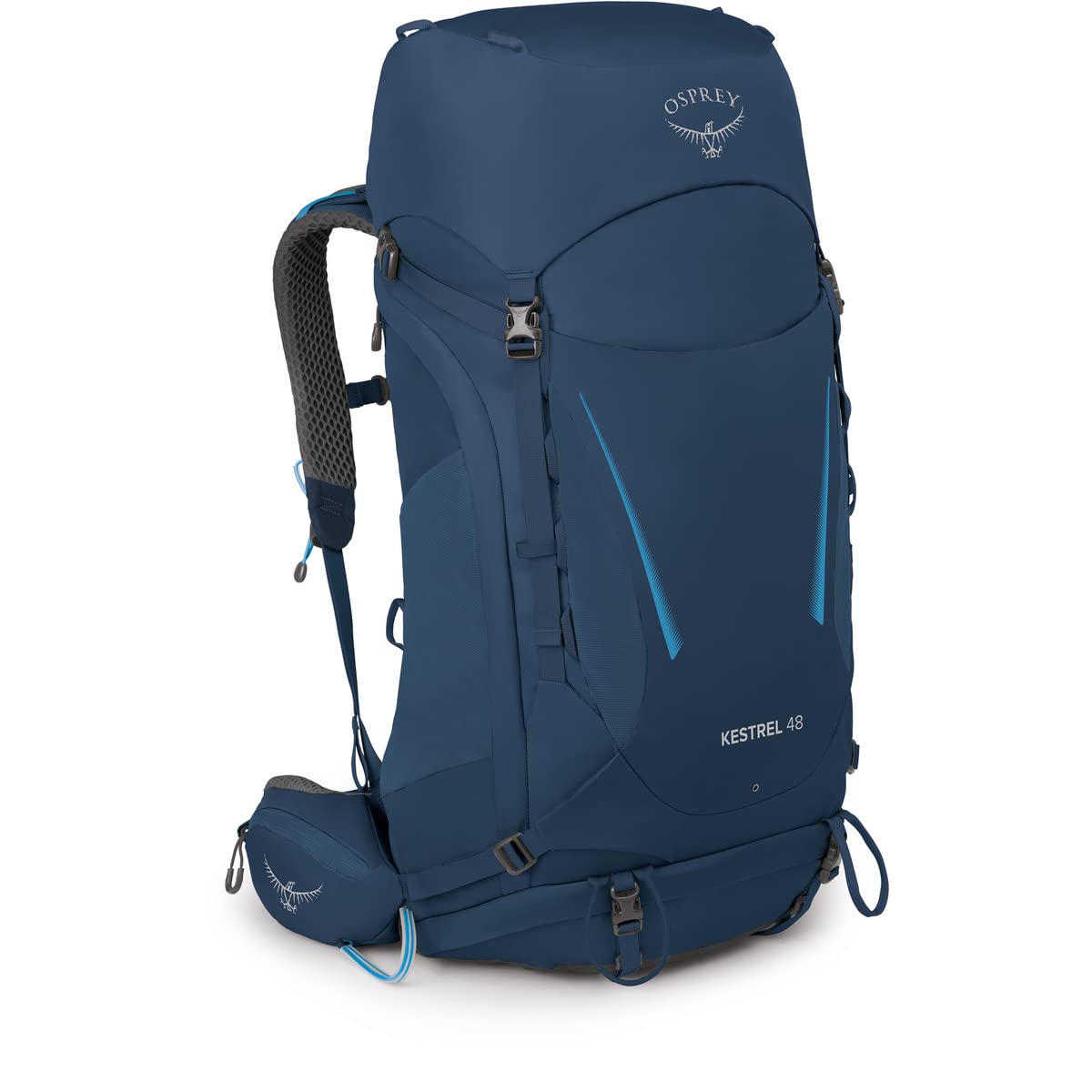
The Osprey Kestrel 48L is built with thicker shoulder straps, a more padded hipbelt, and tougher outer fabric than the similarly sized Talon series. The adjustable AirScape backpanel creates a stable, close-to-body carry that handles up to 35 pounds without sag, and the included rain cover is bright green for visibility in low-light conditions.
The daisy chain attachments on the front panel give you plenty of lash points for bulky items like a foam pad or tent, and the side elastic pockets are deep enough to hold tall Nalgene bottles securely. The fixed top lid includes a zippered pocket with a key clip, while the under-lid mesh pocket stores smaller items. The dual-zipper main compartment and side access make organization straightforward.
The pack is coated with a formaldehyde-based finish during manufacturing, which some users find unsettling despite the company stating it washes off. The fabric is not the most breathable for hot-weather hikes, and the 4.62-pound weight is significant for a 48-liter pack. Works best as a multi-day pack for scouts or hikers who prioritize durability.
Why it’s great
- Thicker strap and hipbelt padding for rougher terrain
- Daisy chain attachments for versatile external carry
- Included bright green rain cover for visibility
Good to know
- Outer fabric treated with a formaldehyde finish
- Heavier than comparable 48L packs
6. Osprey Rook 50L Men’s Backpacking Backpack

The Osprey Rook 50L is a streamlined, lightweight pack for up to three-night trips where every pound saved matters. The AirSpeed tensioned backpanel is adjustable for multiple torso lengths and provides good ventilation, while the LightWire frame transfers weight to the hipbelt effectively. At 3.6 pounds, it is one of the lighter framed packs in this volume class, and the integrated rain cover is removable for trips where you want to shave weight.
The zippered sleeping bag compartment with a floating divider keeps your quilt or bag separate from the rest of your gear. Angled water bottle pockets allow you to grab a bottle without taking the pack off. Users report carrying up to 35 pounds comfortably on 20-mile days, and the mesh backpanel helps keep sweat under control.
There is no outer mesh pocket for wet gear or quick-access items, and the lack of back-panel access means you must pack from the top or through the sleeping bag divider. The waist strap is not padded enough for hikers with narrow hips, and the pack is not compatible with a hydration bladder larger than 3 liters without some squeezing.
Why it’s great
- Lightweight 3.6 lb build for fast-and-light trips
- Integrated removable rain cover saves extra ounces
- Angled water bottle pockets for easy reach
Good to know
- No external mesh pocket for wet gear storage
- Waist strap padding is thin for narrow hips
7. Deuter Women’s Aircontact Lite 45 + 10 SL
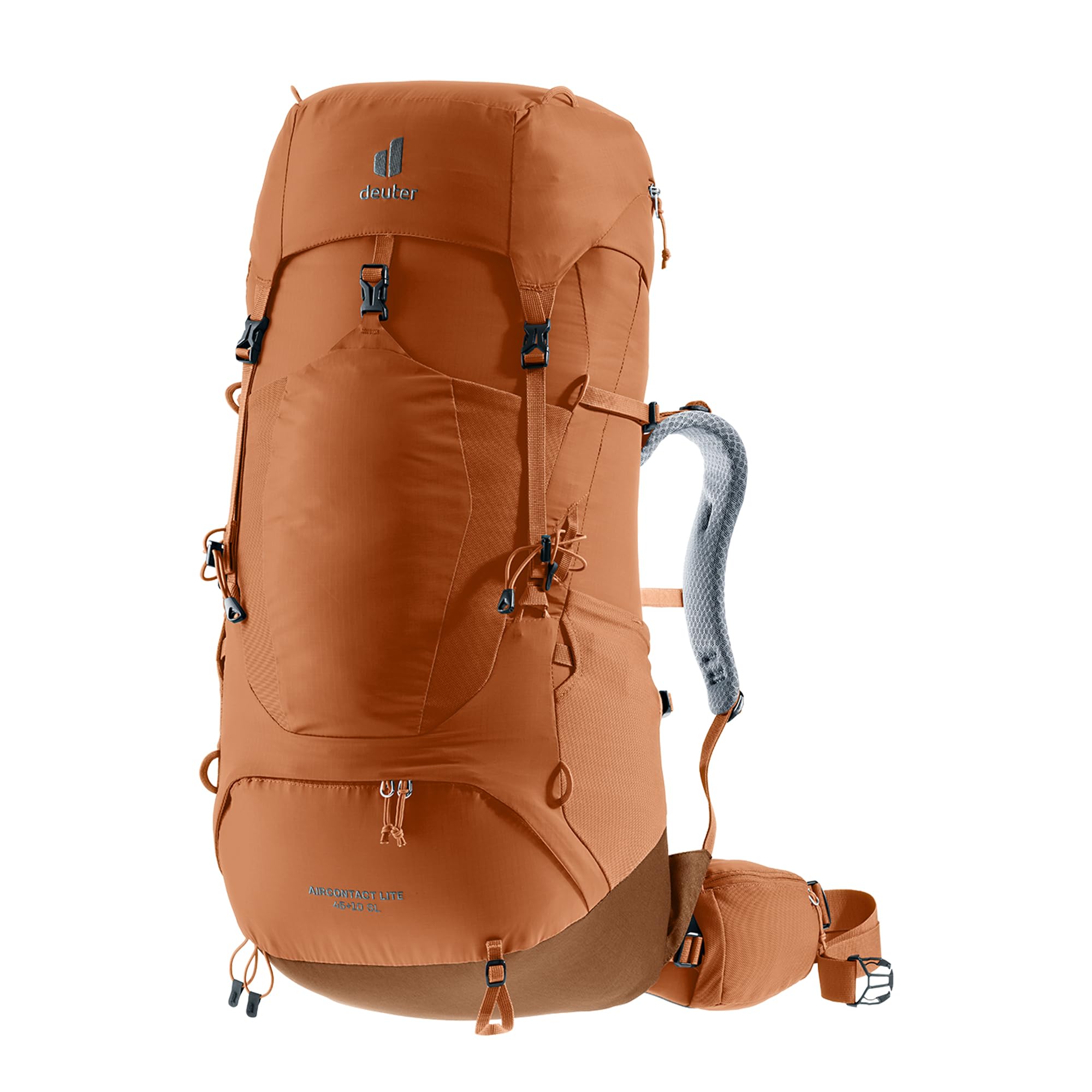
The Deuter Aircontact Lite 45 + 10 SL is a women’s-specific pack with a shorter cut, S-shaped shoulder straps, and conically shaped hip fins that accommodate a narrower frame. The Vari Quick adjustable back length lets you fine-tune the torso height, while the lightweight X-frame provides good load transfer for carries up to 35 pounds. The Aircontact cushions are made from hollow chamber foam that creates a pump-effect ventilation system, reducing perspiration on long ascents.
The 45+10 liter capacity expands via the height-adjustable lid, giving you flexibility for trips that vary in gear volume. The detachable lid can be used as a summit pack or left behind to save weight. The hip fins include two zippered pockets for snacks or a phone, and the stretch mesh side pockets fit 1-liter water bottles or a tent stuff sack.
The shoulder straps have slightly less padding than some users expect, and the hip belt adjustments require a bit of fiddling to get the tension right. At 3.4 pounds, it is light for a framed pack of this size, but the overall feel is best for moderate-weight multi-day journeys rather than ultralight weekend trips. The fabric is sturdy nylon that stands up to brush and rock abrasion.
Why it’s great
- Women’s-specific SL fit with narrow hip fins and S-shaped straps
- Expandable volume via height-adjustable lid
- Hollow chamber foam backpanel improves ventilation
Good to know
- Shoulder straps are less padded than some competitors
- Hip belt adjustment requires careful fine-tuning
8. MOUNTAINTOP 75L Internal Frame Backpack
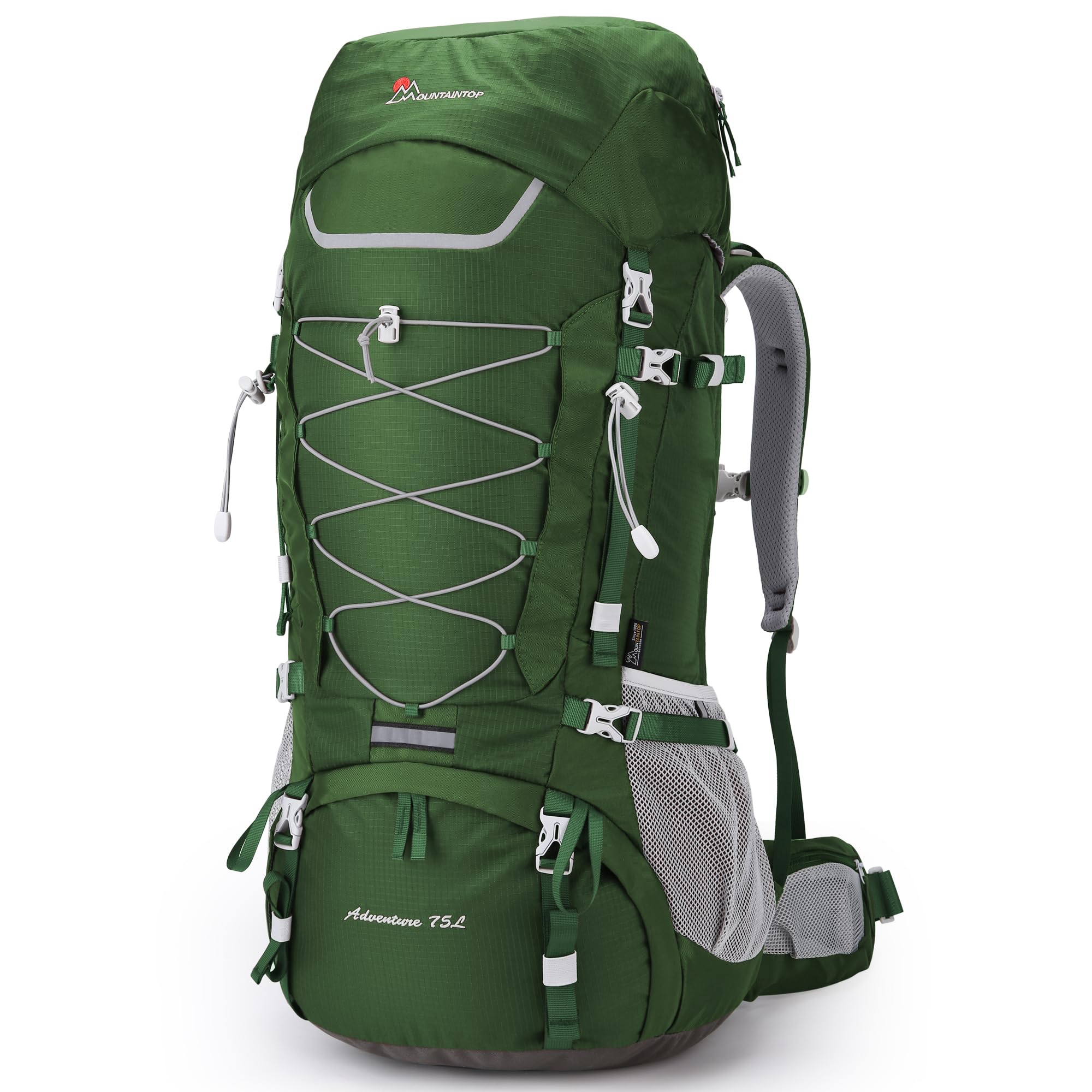
The MOUNTAINTOP 75L is a budget-friendly entry point for new backpackers who need generous volume without the premium price tag. The J-zipper opening on the front provides wide access to the main compartment, making packing and unpacking straightforward. The internal frame and adjustable torso height offer basic load transfer, and the included rain cover adds weather protection for surprise downpours.
Users report the pack fits larger frames well — one 5’9″, 350-pound hiker found the waist belt adjustable enough for a 44-inch waist. The construction uses YKK zippers and solid stitching, though the buckles feel less robust than premium packs. The sleeping bag compartment, side pockets, and hip pockets provide enough organization for a 3-5 day trip.
The hip straps lack sufficient padding for heavy loads and tend to loosen under weight, requiring periodic tightening. The fabric is thick but not as breathable as mesh-backed alternatives, and the pack weight of 4.8 pounds is on the heavy side for a budget option. Best suited for beginners on short trips with moderate gear weight.
Why it’s great
- Generous 75L volume for bulky gear
- J-zipper front access makes packing easy
- Adjustable torso and YKK zippers for durability
Good to know
- Hip belt padding is thin and loosens during use
- Heavy 4.8 lb pack weight
9. Mardingtop 60L Military Internal Frame Backpack
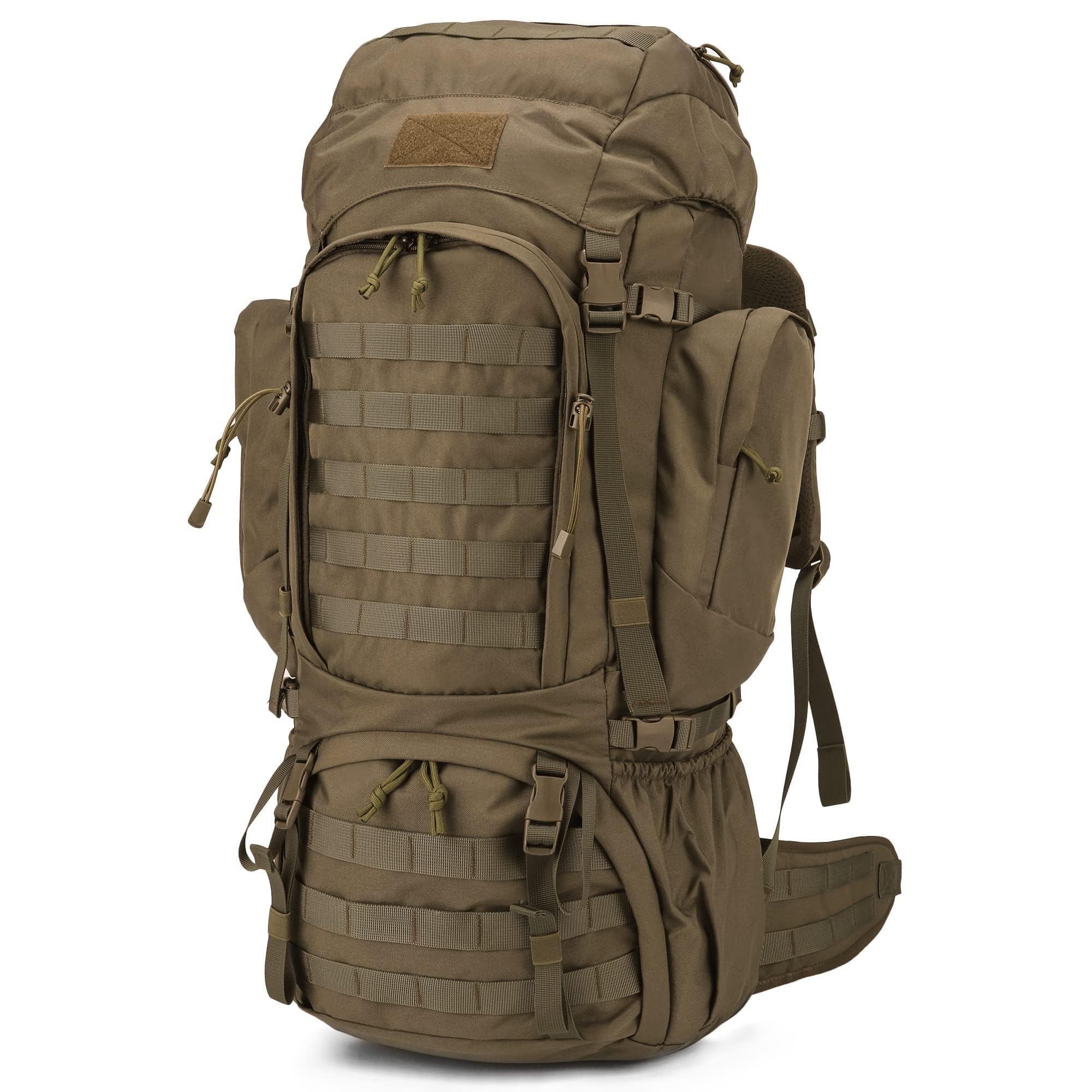
The Mardingtop 60L offers a modular approach with MOLLE webbing on the front and sides, allowing you to attach extra pouches and gear for customized storage. The internal frame provides structure for loads up to 50 pounds, and the expandable design reaches up to 75 liters when you need the extra space. YKK zippers and a rain cover are included, making the pack trail-ready out of the box.
Users note that the shoulder straps are narrow and can become painful for beginners on longer hikes. The hip belt padding is thin and has caused chafing on trips over 10 miles, and the cinch straps tend to loosen under heavy load. The materials are durable but not lightweight — the pack weighs 4.49 pounds unloaded.
The sleeping bag compartment, side pouches, and lid pocket offer solid organization for the price, and the MOLLE system works well with aftermarket pouches. Best suited for budget-conscious hikers who plan to carry moderate loads (under 50 pounds) on shorter trips (10-20 miles) and want the flexibility of the MOLLE platform for future upgrades.
Why it’s great
- MOLLE webbing allows custom pouch attachments
- Expandable from 60L to 75L for flexible volume
- YKK zippers add durability at the price point
Good to know
- Narrow shoulder straps are uncomfortable on long hikes
- Hip belt is thin and prone to chafing
FAQ
How do I determine my torso length for a backpacking backpack?
What liter volume do I need for a three-night backpacking trip?
Is a more expensive backpacking backpack always better?
Should I get a backpacking backpack with a built-in rain cover?
How much should my empty backpacking backpack weigh?
Final Thoughts: The Verdict
For most users, the best backpacking backpack winner is the Osprey Atmos AG 65L because the AG suspension provides unmatched load transfer comfort for multi-day carries over 30 pounds, and the adjustable torso and dual-access main compartment make organization effortless. If you want a lighter, more ventilated pack for fast-and-light trips, grab the Osprey Stratos 44L with its AirSpeed trampoline panel. And for a travel-friendly modular system that handles both the trail and the airport security line, nothing beats the Thule Landmark 60L.