
Our readers keep the lights on and the weekend projects moving. As an Amazon Associate, I earn from qualifying purchases.
A backpacking belt is the unsung hero of any hike — it’s the difference between constantly hitching up your pants and moving freely on the trail. The right belt supports your gear, stays comfortable under a pack, and won’t dig into your hips after miles of walking.
I’m Rikta — the founder and writer behind FitlyFast. I’ve spent years analyzing gear specs and material science to find the belts that actually perform under a heavy load.
For this guide, I focused on stretch webbing, secure buckles, and slim profiles that work under a hip belt. After comparing dozens of options, I found the best backpacking belt for every type of hiker and budget.
How To Choose The Best Backpacking Belt
Choosing the right belt for the trail comes down to three core factors: the material’s stretch, the buckle’s adjustability, and the overall width. Each factor affects how the belt feels under a hip belt and during long days on the move.
Stretch Webbing vs. Non-Stretch Nylon
Elastic webbing gives you flexibility — it moves with your body as you hike and breathes better under a hip belt. Non-stretch nylon is more rigid and better for carrying heavy gear or for concealed carry, but it can create pressure points when you wear a pack. For pure backpacking, aim for a belt with some give.
Buckle Type and Adjustability
Micro-adjustable slide buckles let you dial in the fit to the quarter-inch. This matters because your waist can swell slightly after hours of hiking. Traditional hole-based belts lock you into fixed positions, which can be too tight or too loose. A cinch buckle that secures without loose ends is ideal.
Width and Thickness
A slim belt (around 1.25 to 1.5 inches) slides through most belt loops and sits flat under a hip belt without adding bulk. Thicker tactical belts (1.5 inches plus) are more supportive for gear but can feel bulky under a pack’s waist strap.
Quick Comparison
On smaller screens, swipe sideways to see the full table.
| Model | Category | Best For | Key Spec | Amazon |
|---|---|---|---|---|
| Arcade Original Slim | Premium | All-day backpacking comfort | 1.25″ stretch webbing | Amazon |
| Hybrid Tactical Belt | Premium | Concealed carry + hiking | 1.5″ semi-rigid front | Amazon |
| Fjällräven Keb Trekking | Premium | Durable wet-weather trekking | 1.5″ nylon webbing | Amazon |
| 5.11 Tactical TDU | Mid-Range | Rigid gear support | 1.5″ nylon, non-stretch | Amazon |
| JUKMO Stretch Tactical 2-Pack | Mid-Range | Budget-friendly 2-pack | 1.5″ elastic nylon | Amazon |
| Thomas Bates Southwestern | Mid-Range | Lightweight everyday carry | 1″ nylon webbing | Amazon |
| TECEUM Tactical Belt | Budget | Entry-level stretch option | Elastic vinyl construction | Amazon |
In‑Depth Reviews
1. Arcade The Original Slim Adventure Belt

The Arcade Original Slim is the gold standard for backpacking belts because of its 1.25-inch stretch webbing that sits perfectly flat under a hip belt. Users report it lasts over a decade with daily use, and the flat plastic buckle stays out of the way whether you’re hiking or wearing dress pants. The lack of metal makes it TSA-friendly and safe for airport travel.
This belt’s micro-adjust buckle lets you dial in the fit in small increments, avoiding the too-loose or too-tight problem of hole-based belts. The slim profile means it fits through all belt loops without bunching, and the elastic material gives you about 10-15 percent stretch for breathing room after a big meal or on long descents. It’s the most versatile option for hikers who want one belt for both trail and town.
The only real criticism is that the buckle can be slightly too wide for some narrow belt loops on certain pants, like Columbia hiking trousers, but a quick pass with sandpaper solves it. For pure backpacking comfort under a load, this belt is unmatched.
Why it’s great
- Slim 1.25” webbing slides under hip belt without bulk
- Flat, non-metallic buckle prevents pressure points
- Micro-adjustable fit eliminates sagging
- Users report 10+ year lifespan
Good to know
- Buckle may need slight sanding for very narrow belt loops
- Price is higher than basic nylon options
2. Hybrid Tactical Belt 1.5″ Everyday Carry Belt
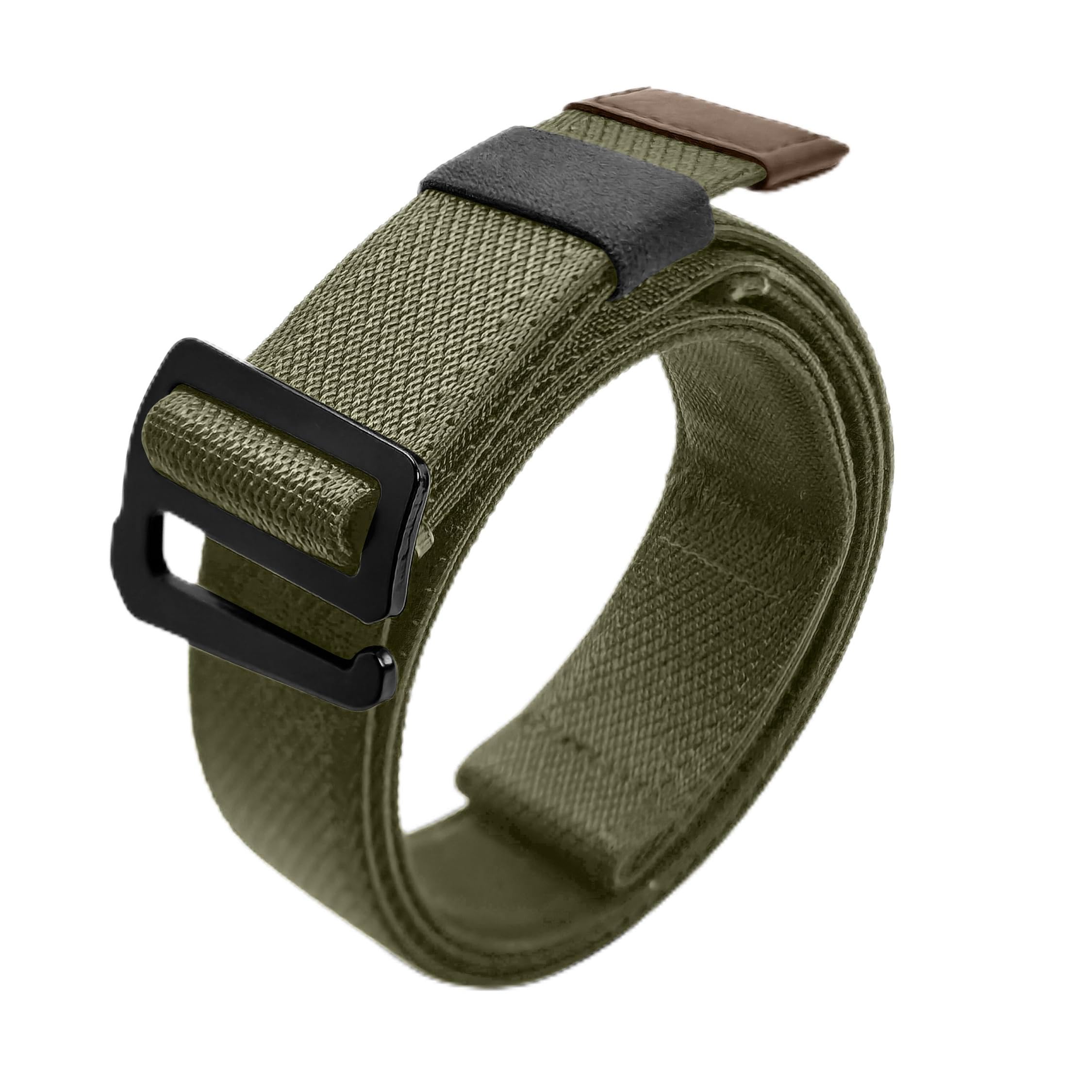
The Hybrid Tactical Belt solves the dual problem of carrying a firearm while hiking comfortably. Its stiff front section prevents holster sag, while the elastic back panel provides all-day stretch for sitting, bending, and walking. Users carrying a Glock 19 or Springfield Echelon report zero sagging and no hip pain — something rare in this category.
The slim buckle is a highlight: it’s low-profile enough to avoid digging into your hip bone, and the entire belt rotates for appendix or strong-side carry. For bigger hikers, the built-in stretch accommodates changes in waist size after meals or long sits without requiring readjustment. The rigid front also prevents the belt from rolling over, a common issue with fully elastic belts when carrying weight.
At this price, it competes directly with belts costing double. The only trade-off is that the rigid section makes it slightly less ideal for pure hiking without a firearm, but for anyone who carries, it’s the best balance of support and stretch on the list.
Why it’s great
- Rigid front prevents holster sag
- Stretch back panel for all-day comfort
- Slim buckle avoids hip pain
- Big-guy-friendly stretch adjustment
Good to know
- Not ideal for pure hiking without CCW need
- Bulky for thin-belt-loop pants
3. Fjällräven Keb Trekking Belt
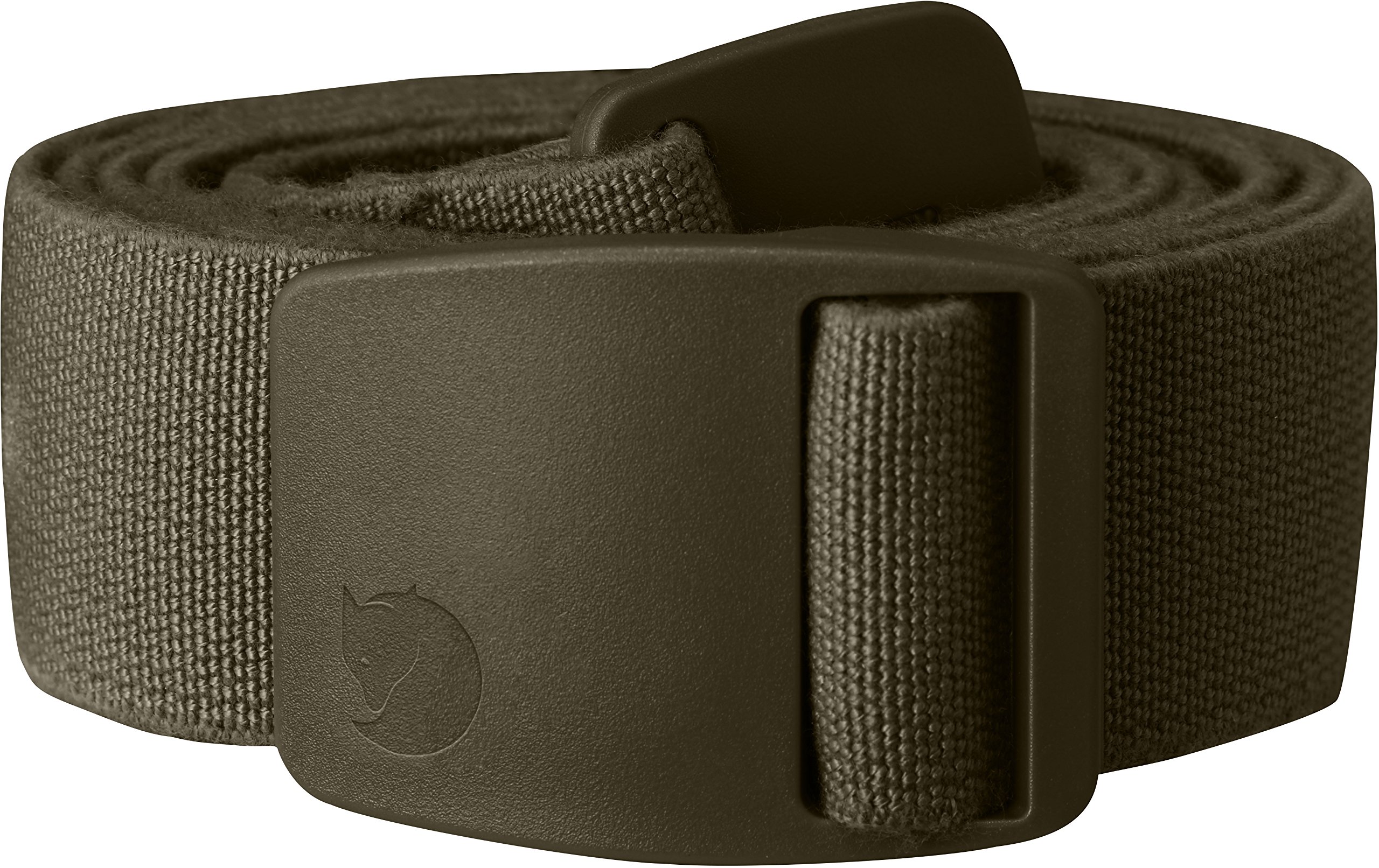
Fjällräven’s Keb Trekking Belt is built for wet and rugged conditions where nylon webbing outperforms elastic. The 1.5-inch wide strap is rigid enough to hold your pants up without stretch, yet thin enough to slide through most belt loops. Users love it for its durability in rain and mud — no stretch means no sagging even when soaked.
The adjustable buckle is simple and secure, but one common complaint is the absence of a built-in belt loop to hold the tail end of the webbing. Some users have added their own loop to keep the extra material from flopping. Despite that, owners consistently say they don’t wear any other belt after switching to this one.
If you hike in consistently wet environments or prefer the no-stretch feel of classic webbing, this belt delivers. It’s lighter and more breathable than leather, and the nylon material dries quickly. Just be prepared to manage the loose tail if you don’t add your own keeper.
Why it’s great
- Durable nylon webbing dries fast in wet conditions
- Simple, secure adjustable buckle
- Thin enough for all belt loops
- Trusted outdoor brand quality
Good to know
- No factory loop to secure the tail end
- Non-stretch webbing can feel tight under a hip belt
4. 5.11 Tactical Belts – 1.5″ TDU Belt

The 5.11 Tactical TDU Belt is the go-to for hikers who need rigid support for concealed carry or heavy gear. Its non-stretch nylon webbing doesn’t sag under a loaded pack or holster, and the plastic buckle is metal-detector-friendly — useful for travel to security-heavy areas. Users report it holds up well after years of daily wear without fraying or fading.
The micro-adjustable buckle lets you dial in the fit without being locked into fixed holes, and the belt can be converted into a tie-down or carry strap in an emergency. One notable thing: the belt runs small, so you’ll want to size up. Once broken in, the initial bulkiness fades and it becomes a comfortable all-day option for jeans and hiking pants.
For pure backpacking without carrying a firearm, the non-stretch material can create pressure points under a hip belt. But for anyone who wants gear-ready support and 5.11’s proven durability, this is a top-tier pick.
Why it’s great
- Rigid nylon holds heavy gear without sagging
- Micro-adjustable buckle for fine-tuned fit
- Converts to tie-down/carry strap
- Machine washable for easy trail care
Good to know
- Runs small — size up for a comfortable fit
- Non-stretch design can feel stiff under a hip belt
5. JUKMO Stretch Tactical Belt for Men, 2-Pack
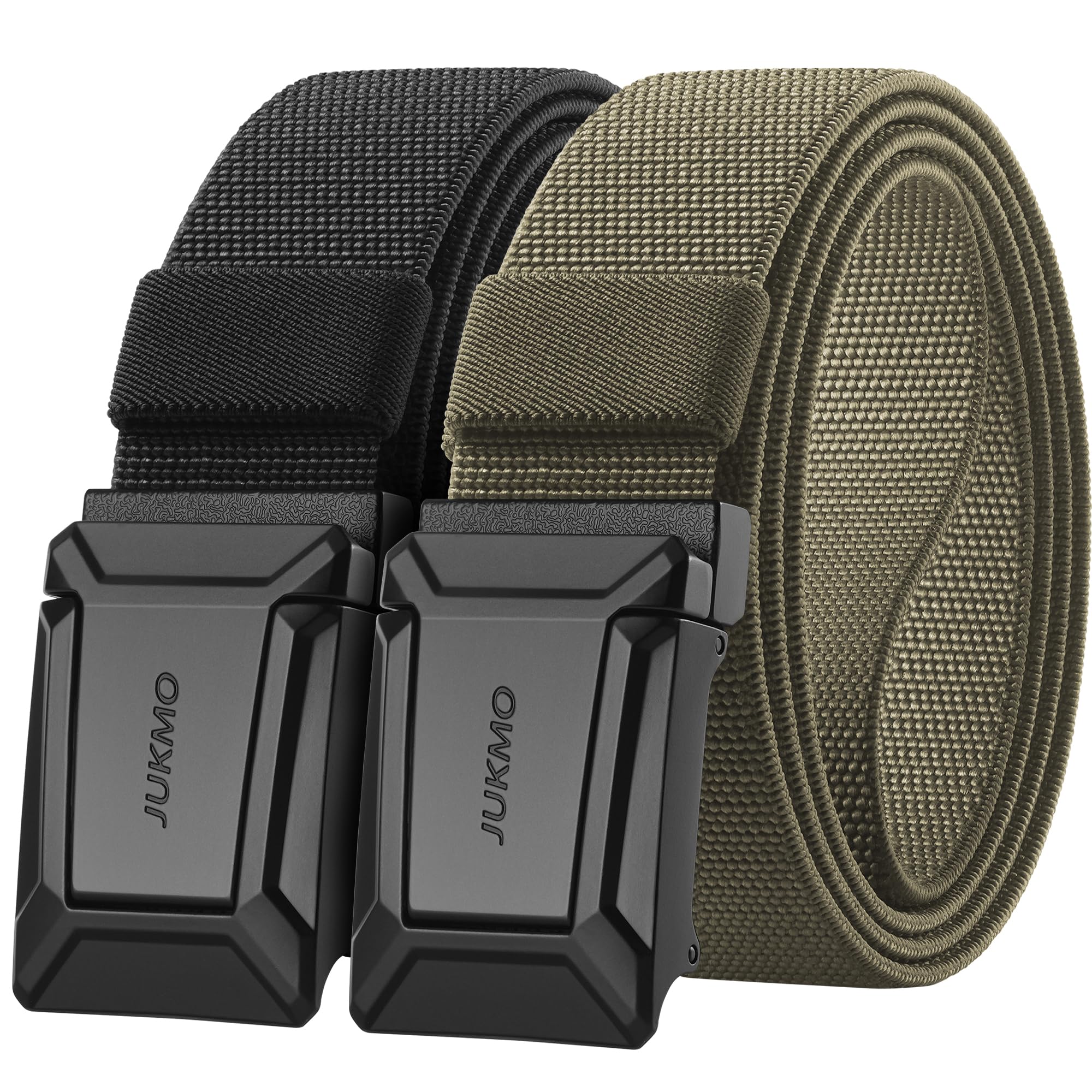
The JUKMO 2-pack delivers tremendous value for hikers who want the stretch of elastic webbing without the premium price tag. The 1.5-inch elastic nylon webbing provides enough give for comfortable all-day wear, and the chinch buckle is easy to operate even with cold fingers. Users describe it as a “game changer” for those with a flat backside, as the stretch keeps pants up without cutting off circulation.
Construction feels solid: the webbing is durable and the buckle holds firmly when closed. The belts run slightly long, so you may need to trim the tail. The stretchability is adequate — not as generous as the Arcade, but enough for the average hiker. The pack includes two belts, making it easy to keep one in your hiking pack and one for daily wear.
The main trade-off is that the buckle is all plastic, which some users question for long-term durability under heavy loads. For typical day hikes and light backpacking, though, it holds up well.
Why it’s great
- Two belts for a single unit price
- Elastic webbing provides good stretch
- Chinch buckle is easy to use
- Works great for flat-backside hikers
Good to know
- Plastic buckle may not hold up to heavy gear
- Runs slightly long — may need trimming
6. Thomas Bates Southwestern Patterns Hiker Belt Nylon
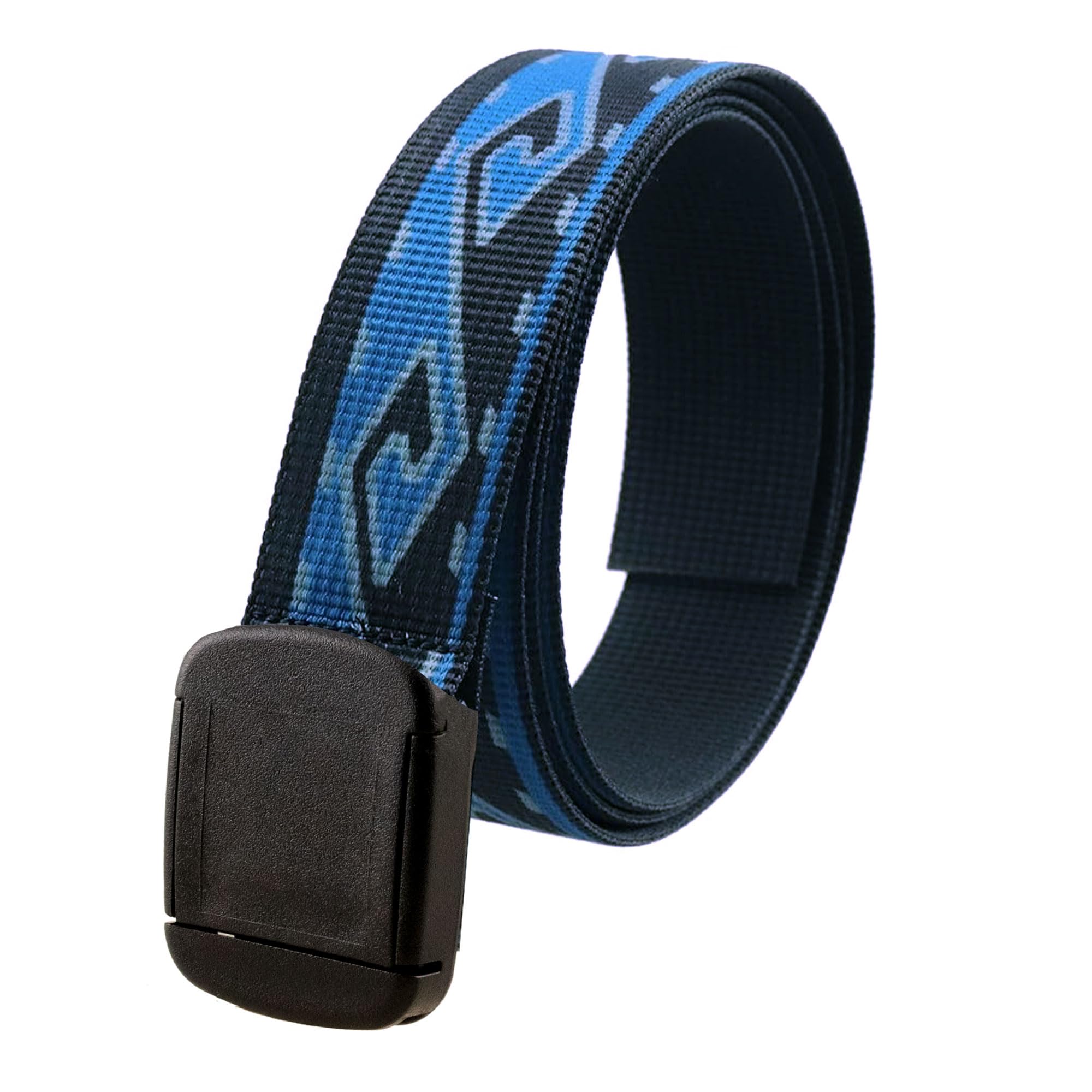
Thomas Bates offers a unique blend of style and function with its Southwestern pattern nylon belt. At a narrow 1-inch width, it’s thinner than most hiking belts, which makes it ideal for trail shorts or pants with small belt loops. The plastic buckle is adjustable without holes, giving you micro-fit without the metal.
Users who have worn it for multiple years report the buckle holds up perfectly, though it does feel somewhat lightweight. The fabric is strong and the colors resist fading even in direct sun. It’s not designed for heavy load-bearing — no one is carrying a .44 with this belt — but for light day hikes, airport travel, and casual wear, it’s a solid choice.
The main drawback is the plastic-free feeling of the buckle. Some users call it “flimsy” in hand, though it’s proven to last. If you want a belt that turns heads on the trail without adding bulk, this is it.
Why it’s great
- Unique Southwestern pattern stands out
- Narrow 1” width fits small belt loops
- Micro-adjust buckle without holes
- Proven durability over 2-3 years of daily use
Good to know
- Buckle feels lightweight and cheap in hand
- Not suitable for supporting heavy gear
7. TECEUM Tactical Belt – Heavy-Duty & Quick Release
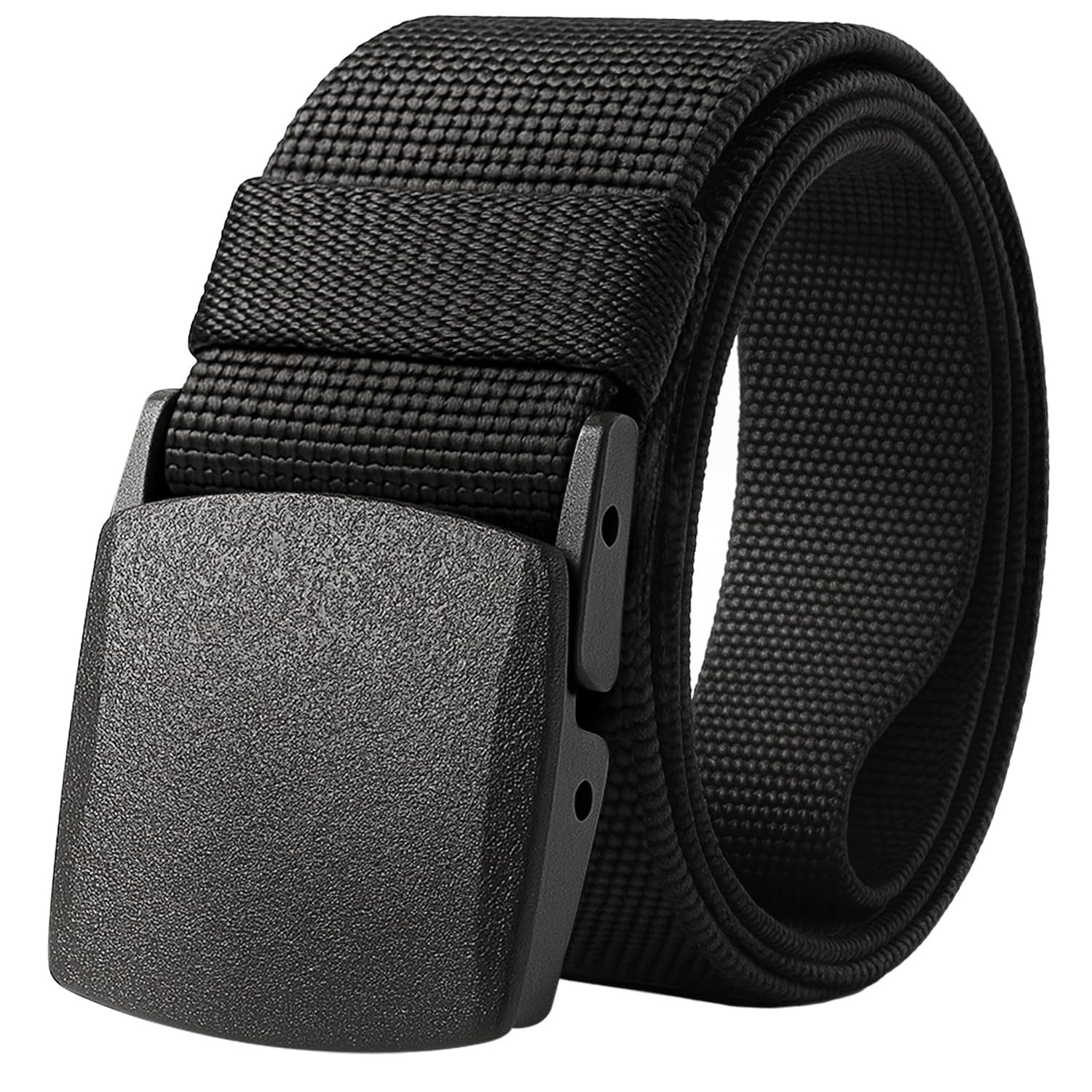
TECEUM’s belt is the most affordable option here, and it’s a surprising performer for the price. The elastic vinyl construction provides a snug, stretchy fit that keeps pants up better than a typical leather belt, according to users. The plastic buckle is lightweight and quick-release, making it easy to take off at security or after a long hike.
Users note the belt has a slight stretch that works well for daily wear, though it’s not built to carry heavy gear — don’t expect to holster a heavy revolver without sagging. For a leatherman or a lightweight multitool, it’s fine. One user questioned the long-term durability of the plastic buckle with heavy use, but for the entry price, it’s a solid value.
If you’re on a budget and need a belt that can handle light day hikes, airport security, and daily office wear, this belt works. It’s not a premium hiking belt, but it’s a capable, stretchy belt at a very friendly entry point.
Why it’s great
- Very friendly entry price point
- Elastic vinyl provides stretchy, snug fit
- Lightweight plastic buckle works well for daily use
- Holds pants up better than leather alternatives
Good to know
- Not suitable for carrying heavy gear
- Plastic buckle durability questioned for heavy use
FAQ
Can I wear a backpacking belt with a hip belt on my pack?
What is the best width for a backpacking belt to work with backpack loops?
Should I get a belt with stretch or no stretch for backpacking?
Are plastic buckles durable enough for backpacking?
Final Thoughts: The Verdict
For most users, the best backpacking belt winner is the Arcade Original Slim Adventure Belt because its 1.25-inch stretch webbing, low-profile buckle, and proven durability make it the most comfortable option under a hip belt. If you need to carry a firearm while hiking, grab the Hybrid Tactical Belt. And for wet-weather trekkers who prefer rigid support, nothing beats the Fjällräven Keb Trekking Belt.