
Our readers keep the lights on and the weekend projects moving. As an Amazon Associate, I earn from qualifying purchases.
A backpacking blanket lives in a different performance zone than a picnic throw or a stadium fleece. Every ounce and cubic inch of your pack is already claimed by shelter, sleep system, and food, so the blanket you bring must earn its place with a tight warmth-to-weight ratio, serious compressibility, and reliable performance when temps drop. The wrong choice means a heavy lump in your pack or a shiver-inducing night.
I’m Rikta — the co-founder and writer behind FitlyFast. I’ve spent over a decade analyzing outdoor gear specs, comparing insulation types, and breaking down the metrics that separate a true backcountry blanket from car-camp fluff.
This guide identifies the best lightweight, packable options that actually perform when you need them, whether you’re thru-hiking or base camping. Here you will find a focused breakdown of the best backpacking blanket for your specific needs and adventure style.
How To Choose The Best Backpacking Blanket
Selecting a blanket for the trail is not about finding the coziest throw. The three variables that matter most are weight, packed size, and the insulation’s ability to retain heat when compressed or damp. A blanket that fails on any of these three becomes dead weight in your pack.
Insulation Type: Down vs. Synthetic
Down offers an unbeatable warmth-to-weight ratio and packs smaller than any synthetic alternative. For a backpacking blanket, look for a minimum of 650 fill power to ensure you are getting legitimate loft without the bulk. The tradeoff is that down loses almost all insulating value when wet. Synthetic insulation like polyester fills or proprietary blends like PW700 or RenewaLoft performs better in damp conditions and dries faster, but it is heavier and less compressible for the same warmth level. If you hike in consistently dry climates, go down. If you expect rain, fog, or stream crossings, synthetic is the safer call.
Weight and Packed Volume
A dedicated backpacking blanket should weigh under 1.5 pounds, with ultralight options dipping below 1 pound. Packed size is just as critical. A blanket that compresses to the size of a 1-liter water bottle is easy to stash inside your pack, while a bulky 2-pound blanket will eat space meant for your food bag or puffy jacket. Check the manufacturer’s stated packed dimensions, not just the weight, because a blanket that is light but doesn’t compress well is still a poor candidate for a small pack.
Draft Prevention and Fit
A flat rectangle of fabric will leak heat on a breezy night. Look for features like a footbox (sewn or snapped-in enclosure for your feet), a drawcord at the neck, or side straps that attach the blanket to your sleeping pad. These features eliminate dead air space and prevent the blanket from sliding off during the night. A blanket with no draft control is fine for car camping or a picnic but will leave you cold in a backcountry setting where wind and movement are factors.
Quick Comparison
On smaller screens, swipe sideways to see the full table.
| Model | Category | Best For | Key Spec | Amazon |
|---|---|---|---|---|
| SENSORY4U Ultralight Top Quilt 850 | Premium Down | Deep backcountry / cold nights | 850 fill power down | Amazon |
| Rumpl Travel Puffy | Ultra-Compact | Air travel / minimalist packing | Packed size 4×10 inches | Amazon |
| Rumpl Original Puffy 1-Person | Versatile Synthetic | Campground / festivals / car camping | 240 gsm RenewaLoft fill | Amazon |
| 4Monster Down Camping Blanket | Value Down | Budget-conscious backpackers | 650 fill power down | Amazon |
| Noora North Ultralight Down Quilt | Lightweight Down | Hikers wanting real down | 1.04 lbs / 650 fill power | Amazon |
| Puffer Wolf PW700 | Puffy Synthetic | Wet-weather / hammock camping | 20D ripstop nylon shell | Amazon |
| Matador Pocket Blanket 4.0 | Ultra-Compact Tarp | Picnics / beach / day trips | 0.26 lbs / 4.5×2.7×1.1 in | Amazon |
In-Depth Reviews
1. SENSORY4U Ultralight Sleeping Bag Top Quilt 850 Down

This is not a casual blanket; this is a purpose-built top quilt designed to replace a sleeping bag. The 850 fill power down delivers the highest warmth-to-weight ratio in this lineup, while the sewn footbox prevents drafty feet and the included pad straps keep the quilt in place during restless nights. Weighing under 2 pounds with a comfort rating near 30°F, it offers serious insulation for three-season backpacking without the confinement of a mummy bag.
The 20D nylon shell is weather-resistant rather than waterproof, so a stuff sack with a dry bag liner is wise in wet conditions. Some users noted minor down leakage through the fabric on early wears, but the overall build quality is high for the price point. The quilt also packs smaller than most 30°F sleeping bags, freeing up significant space in a 40-liter pack.
Reviewers consistently praise the freedom of movement and the ability to vent heat by kicking a foot out. The included mesh storage sack and pad straps add real utility. For a thru-hiker or cold sleeper who wants bag-like warmth with quilt-like flexibility, this is the top-tier choice.
Why it’s great
- Exceptional 850 fill down for maximum loft
- Sewn footbox eliminates cold feet
- Pad straps prevent sliding on inflatable mats
Good to know
- Not fully waterproof; requires dry bag in rain
- Some reports of minor down migration
2. Rumpl Travel Puffy Blanket
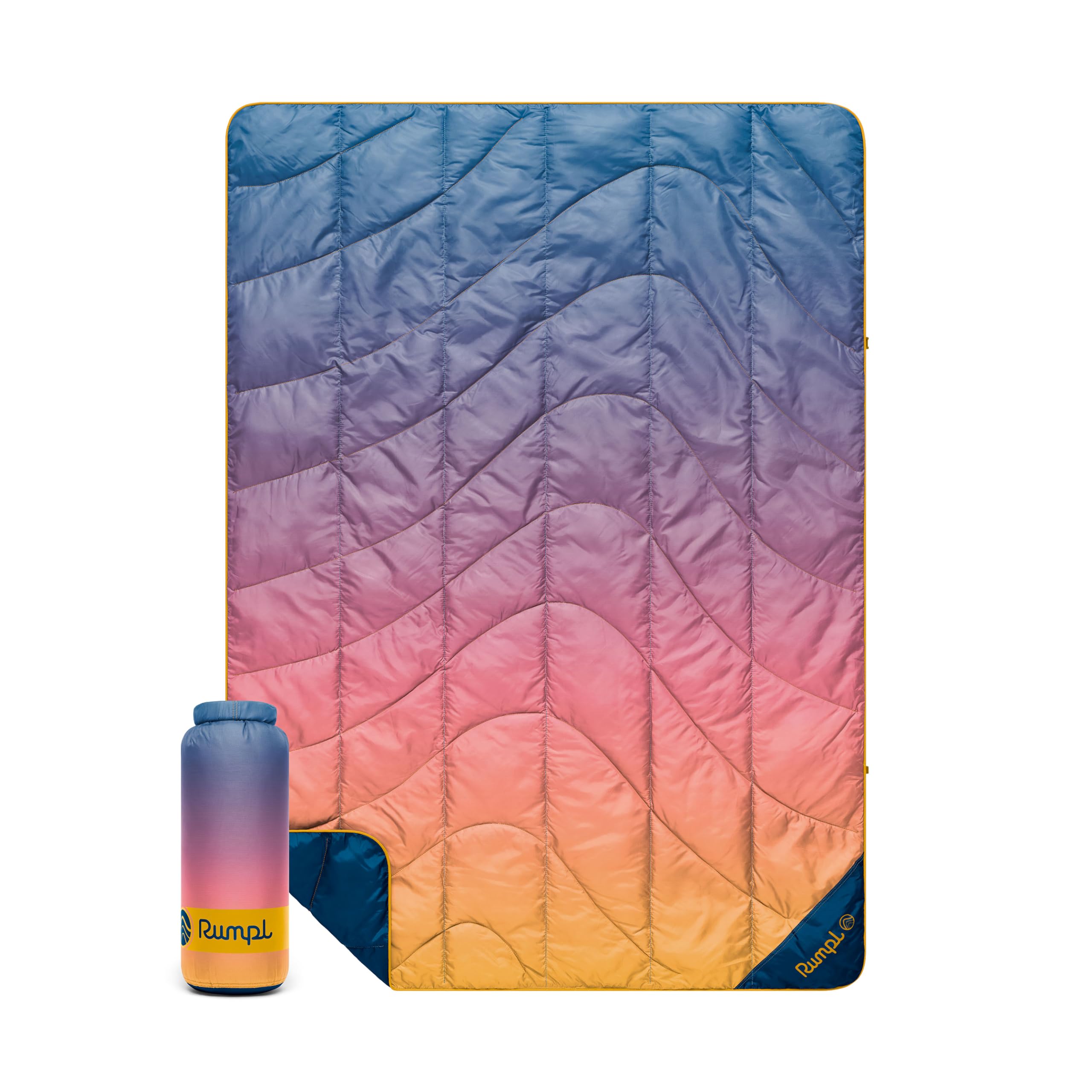
The Rumpl Travel Puffy shrinks down to 4 by 10 inches, making it the most cabin-friendly option for backpackers who also fly or commute by bus. Its Nanoloft synthetic insulation mimics the compressibility of down but retains warmth when damp, a clear advantage for travel through variable climates. The shell is made from 100% post-consumer recycled polyester with a PFAS-free DWR finish that shrugs off light drizzle and spilled coffee.
The 38-by-52-inch size is generous for a single person but too small to share. The included Cape Clip transforms the blanket into a wearable poncho for hands-free use around a campfire or on a chilly plane. The roll-top stuff sack clips to a backpack or carry-on strap for easy access.
Frequent travelers and ultralight backpackers love this blanket for its packability and ease of cleaning. It washes well without losing loft. For anyone who needs one blanket for airports, car camping, and trailside lounging, the Travel Puffy is the most versatile choice here.
Why it’s great
- Packs smaller than a Nalgene bottle
- Nanoloft stays warm when damp
- Cape Clip for wearable warmth
Good to know
- Smaller size limits two-person use
- Synthetic insulation is heavier per warmth than down
3. Rumpl Original Puffy 1-Person Blanket
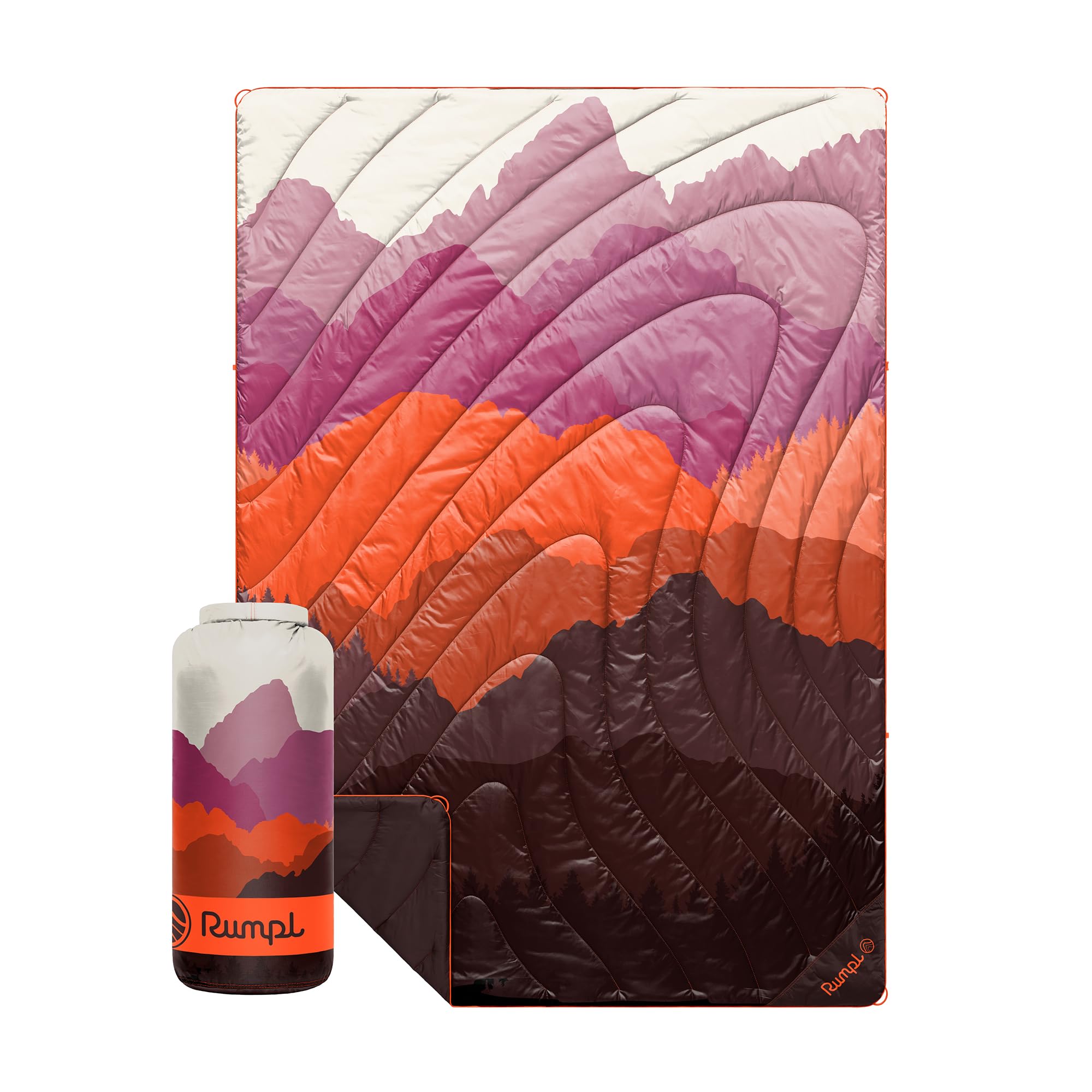
The Rumpl Original Puffy has become a cult classic for good reason. It uses 100% post-consumer recycled RenewaLoft synthetic insulation at a 240 gsm density, which provides consistent warmth across the entire surface without cold spots. The 75-by-52-inch size is roomy for one person but corners stake loops let you secure it to the ground or integrate with the Rumpl Everywhere Mat for a fully insulated lounging setup.
The ripstop polyester shell with PFAS-free DWR resists water, stains, sand, and pet hair, so it doubles as a camp blanket and a car blanket with no degradation. The built-in Cape Clip makes it wearable, and the roll-top stuff sack compresses it to 7 by 16 inches. At 2.2 pounds, it is not the lightest option for a thru-hiker, but it is tough enough for years of abuse.
Families and groups love that it machine washes well and retains its puffiness over dozens of cycles. The three-year warranty also speaks to the build quality. If you need a single blanket that works at a rainy campsite, a crowded stadium, or on your couch, the Original Puffy is the most durable, do-everything choice.
Why it’s great
- Durable ripstop shell resists stains and moisture
- RenewaLoft insulation holds loft after repeated washes
- Stake loops and Cape Clip add versatility
Good to know
- Heavier than down alternatives at 2.2 lbs
- Not as compressible as premium down quilts
4. 4Monster Down Camping Blanket

The 4Monster Down Camping Blanket is the entry point for hikers who want real down insulation without spending premium money. It is filled with 650 fill power down (80/20 down-to-feather ratio), which provides good loft and warmth for three-season use. The blanket measures 88 by 84 inches, making it the largest option in this guide by a wide margin — big enough to wrap around two people or to use as a full ground cover.
The nylon shell is water-resistant and windproof, but the down fill is not treated with a hydrophobic coating, so moisture management is critical. The included stuff sack compresses the blanket well, though the sack itself has drawn complaints about durability. At 1.25 pounds, it is impressively light for its enormous footprint.
Customer feedback consistently highlights the warmth-to-weight value and the large size. The 12-month warranty adds peace of mind. If you want a down blanket for fair-weather backpacking, car camping, or as a sleeping bag liner for extra warmth, this is the most affordable entry into real down performance.
Why it’s great
- Massive 88×84-inch size for full coverage
- Lightweight for its dimensions at 1.25 lbs
- Water-resistant and windproof shell
Good to know
- Stuff sack is not very durable
- Down is not hydrophobic; avoid wet conditions
5. Noora North Ultralight Down Camping Quilt
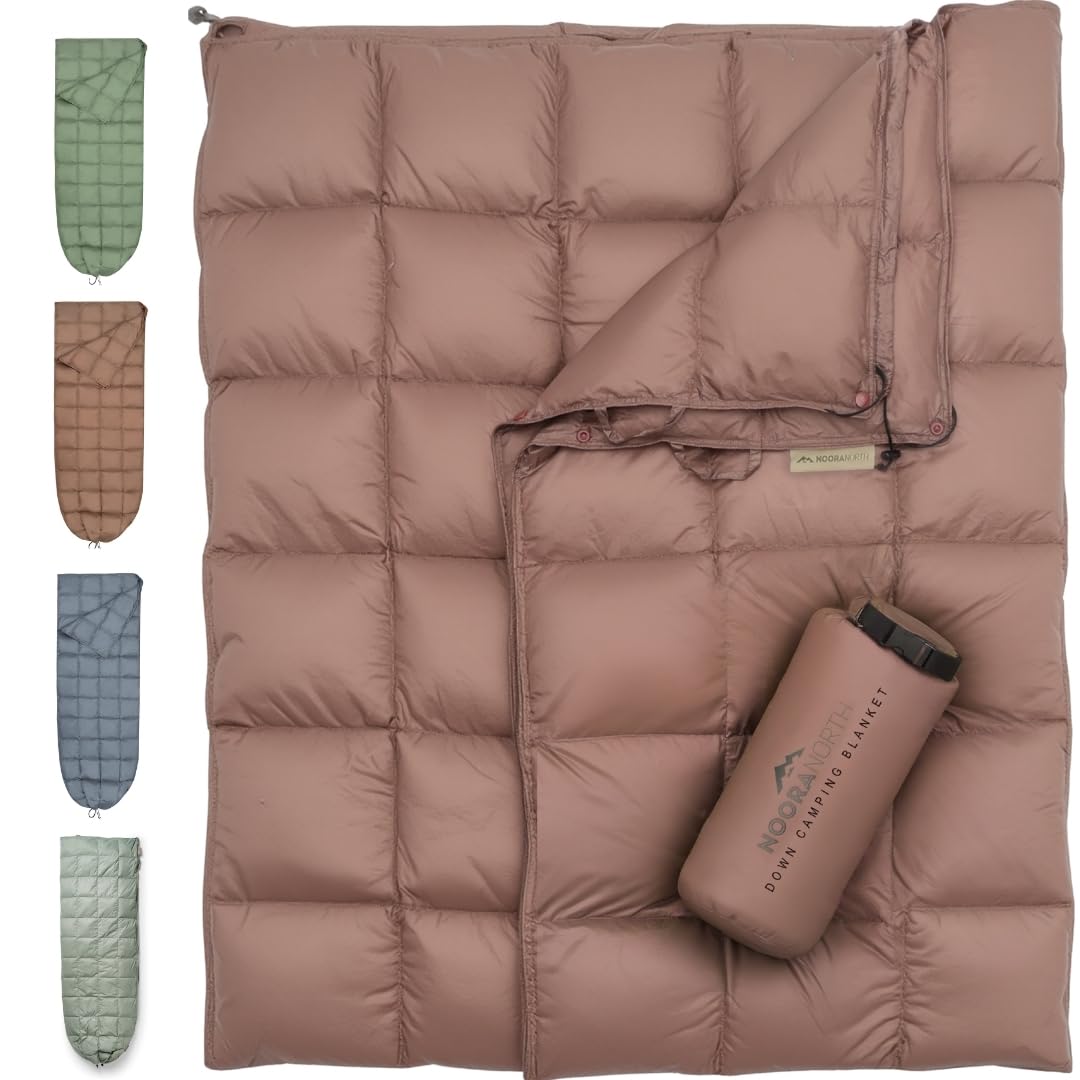
The Noora North Ultralight quilt hits a sweet spot for weight-conscious backpackers who refuse to compromise on insulation quality. It weighs just over 1 pound, yet its 650 fill power down provides sufficient warmth for mild to cool nights down to around 45°F. The 20D ripstop nylon shell is tear-resistant and water-repellent, and the quilt includes 14 snap buttons and a drawstring that let you convert the footbox into different configurations — including a poncho mode.
The real appeal is the packability. Users report it compresses to roughly the size of a 1-liter water bottle, making it one of the most space-efficient down blankets available. The rose taupe and sage color options blend into natural settings and look neutral at home. The slippery nylon fabric can cause the quilt to slide off a smooth sleeping pad, so pairing it with pad straps or a rougher-surface mat is recommended.
Some owners experienced down migration after washing, with feathers clumping in the baffle corners, so a gentle wash cycle and low-heat tumble with dryer balls are essential. For a hiker who wants a genuine down blanket that weighs almost nothing and packs tiny, the Noora North delivers outstanding value.
Why it’s great
- Ultralight at just over 1 lb
- Snap buttons and drawstring for footbox and poncho conversion
- Packs smaller than a typical camp pillow
Good to know
- Nylon shell is slippery on smooth pads
- Feather migration possible after washing
6. Puffer Wolf PW700 Extra Large Insulated Camping Blanket
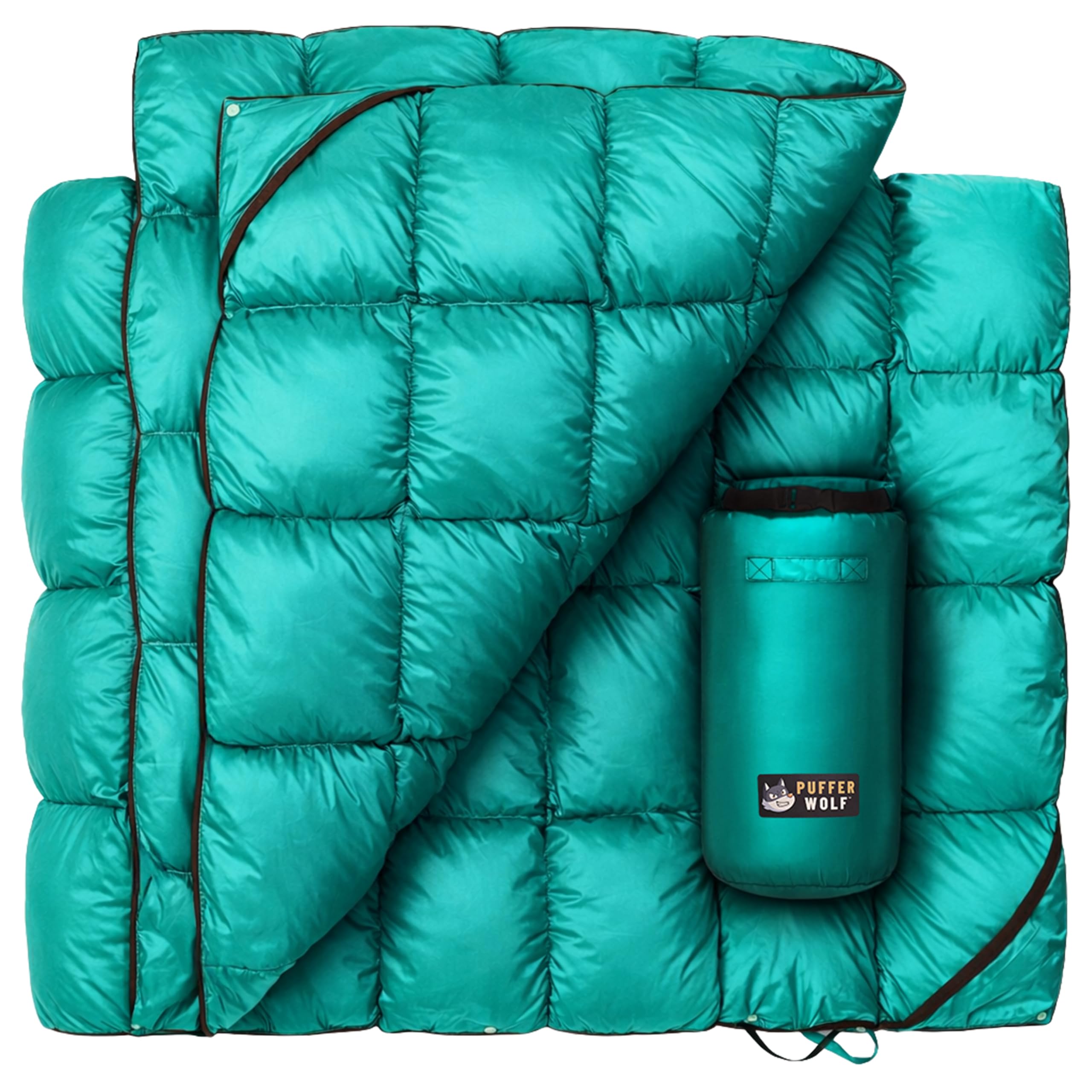
The Puffer Wolf PW700 is the synthetic insulation specialist for backpackers who camp in damp environments. Its proprietary PW700 Featherlight insulation is overstuffed with more than 14 ounces of fiber, creating a noticeable 2X puff factor compared to similar-weight synthetic blankets. The 20D ripstop nylon shell with DWR coating is windproof, water-resistant, sand-resistant, and machine washable without losing loft.
The blanket measures 80 by 54 inches and weighs about 1.3 pounds, making it a solid mid-range option for hammock camping or ground sleeping. It compresses into a 5-by-12-inch stuff sack, though synthetic insulation will never pack as dense as down. The surface texture is soft, and the blanket has proven durable over many seasons of use. Some owners noted that the fill can shift slightly, creating thin spots, but the overstuffing mitigates this better than most synthetics.
Users who have owned this blanket for five years report it still maintains its shape and warmth. It works best as a standalone blanket for temperatures above 50°F or as a supplemental layer under a sleeping bag. For reliable performance in misty coastal climates or high-humidity trails, the PW700 is the synthetic blanket to beat.
Why it’s great
- Overstuffed with 14+ oz of synthetic insulation for even warmth
- DWR-coated 20D ripstop resists wind and moisture
- Proven durability over five years of use
Good to know
- Synthetic fill is less compressible than down
- Some users report uneven fill distribution
7. Matador Pocket Blanket 4.0

The Matador Pocket Blanket 4.0 is not a thermal blanket — it is a groundsheet and windbreak that prioritizes portability above all else. Weighing just 0.26 pounds and packing down to 4.5 by 2.7 by 1.1 inches, it vanishes into a pants pocket and works as a sit pad, picnic surface, or temporary shelter tarp. The recycled ripstop nylon fabric has a waterproof coating that keeps damp grass and sand from soaking through.
Integrated corner stakes and sand pockets keep the blanket secure on breezy beaches and uneven grass. The Easy Pack Pattern printed on the fabric guides you through folding, eliminating frustration. While it provides no insulation, its primary use case is keeping you dry and clean during breaks or lunch stops on the trail.
Reviewers love the ridiculously small packed size and the durability of the ripstop material against rocks and sticks. For a day hiker or trail runner who wants a dry place to sit without carrying extra weight, the Pocket Blanket is the ultimate minimalists’ choice. Just do not expect it to keep you warm.
Why it’s great
- Incredibly lightweight and packable at 0.26 lbs
- Waterproof ripstop nylon blocks ground moisture
- Integrated stakes and sand pockets for windy conditions
Good to know
- No insulation; not for warmth
- Single layer only; not a full ground cloth
FAQ
Can I use a backpacking blanket instead of a sleeping bag in cold weather?
How do I clean a down backpacking blanket without damaging the loft?
What is the difference between a camping blanket and a backpacking blanket?
Final Thoughts: The Verdict
For most users, the best backpacking blanket winner is the SENSORY4U Ultralight Top Quilt 850 because it combines premium 850 fill power down with a sewn footbox and pad straps at a price that undercuts cottage-brand competitors. If you want maximum packability for travel and ultralight treks, grab the Rumpl Travel Puffy. And for wet-weather camping where synthetic insulation is a must, nothing beats the durability and puff of the Puffer Wolf PW700.