
Our readers keep the lights on and the weekend projects moving. As an Amazon Associate, I earn from qualifying purchases.
Every ounce in your pack carries a price, and a poorly chosen down jacket punishes you twice — it takes up too much space and leaves you shivering when the sun drops behind the ridge. The right one compresses into a stuff sack the size of a water bottle, yet expands into a cocoon of warmth that lets you stand still at camp without tensing every muscle.
I’m Rikta — the co-founder and writer behind FitlyFast. I’ve spent hundreds of hours analyzing fill power ratings, shell fabrics, and packability specs across the outdoor market to separate the jackets that earn their place in a backpack from the ones that don’t.
The journey from freezing on a summit to sleeping warm in a tent starts with the right insulation. This guide breaks down the technical specs and real-world performance of the best current options to help you find the backpacking down jacket that matches your trips and your budget.
How To Choose The Best Backpacking Down Jacket
A backpacking down jacket is a specialized tool, not a casual winter coat. The wrong choice adds unnecessary weight or leaves you cold at the worst moment. Focus on these three factors before making a purchase.
Fill Power and Fill Weight
Fill power — measured in cubic inches per ounce — tells you how much loft each ounce of down provides. A 700-fill jacket keeps you warm at a moderate weight, while 850-fill or higher delivers the best warmth-to-weight ratio for serious backpacking. But fill power alone isn’t enough. Pay attention to fill weight (the total ounces of down stuffed into the jacket) because a high-fill jacket with very little down may feel thin. A 900-fill jacket with two ounces of down won’t match a 700-fill jacket with five ounces in cold weather.
Shell Fabric and Durability
Backpacking throws abrasion from pack straps, brush scraping against trees, and the occasional campfire ember at your jacket. Thin 10-denier fabrics pack smaller but tear more easily. A 20-denier or 30-denier ripstop nylon shell adds negligible weight while resisting punctures. Also look for a durable water repellent (DWR) coating — down loses almost all insulating value when wet, and a DWR finish gives you time to get under shelter before the jacket absorbs moisture.
Packability and Pocket Layout
If a jacket doesn’t stuff into its own pocket or a dedicated stuff sack, it wastes space in your pack. The best backpacking down jackets compress to the size of a one-liter bottle. Pocket placement matters too — hand pockets placed above the hip belt stay accessible while hiking, and an internal zip pocket secures your phone or map. Avoid jackets with too many external pockets that add bulk and snag points.
Quick Comparison
On smaller screens, swipe sideways to see the full table.
| Model | Category | Best For | Key Spec | Amazon |
|---|---|---|---|---|
| Mountain Hardwear Ghost Whisperer Hoody | Premium Ultralight | Fastpacking and summit pushes | 800-fill goose down, 10D shell | Amazon |
| Fjällräven Expedition Pack Down Hoodie | Premium All-Weather | Cold-weather treks and layering | Ethical down, recycled polyamide shell | Amazon |
| Fjällräven Greenland No. 1 Down Jacket | Premium Rugged | Bushcraft and campfire use | Reinforced leather and G-1000 shell | Amazon |
| Obermeyer Sojourner Down Jacket | Premium Women’s | Cold weather and resort-to-trail | Mid-thigh length, faux fur hood | Amazon |
| Rab Women’s Microlight Alpine Hooded | Mid-Range Hooded | Three-season backpacking | 700-fill down, Pertex shell | Amazon |
| Rab Women’s Microlight Down Jacket | Mid-Range Standard | Day hikes and travel | 700-fill down, stuff sack included | Amazon |
| MARMOT Men’s Zeus Jacket | Mid-Range Versatile | Layering and mild backpacking | 700-fill power, water resistant | Amazon |
| Pioneer Camp 850 Fill Goose Down Jacket | Budget High-Fill | Budget-friendly cold weather | 850-fill goose down, hood included | Amazon |
| Columbia Delta Ridge II Down Jacket | Budget Entry-Level | Casual camping and daily use | 650-700 fill down, budget-friendly | Amazon |
In‑Depth Reviews
1. Mountain Hardwear Ghost Whisperer Hoody
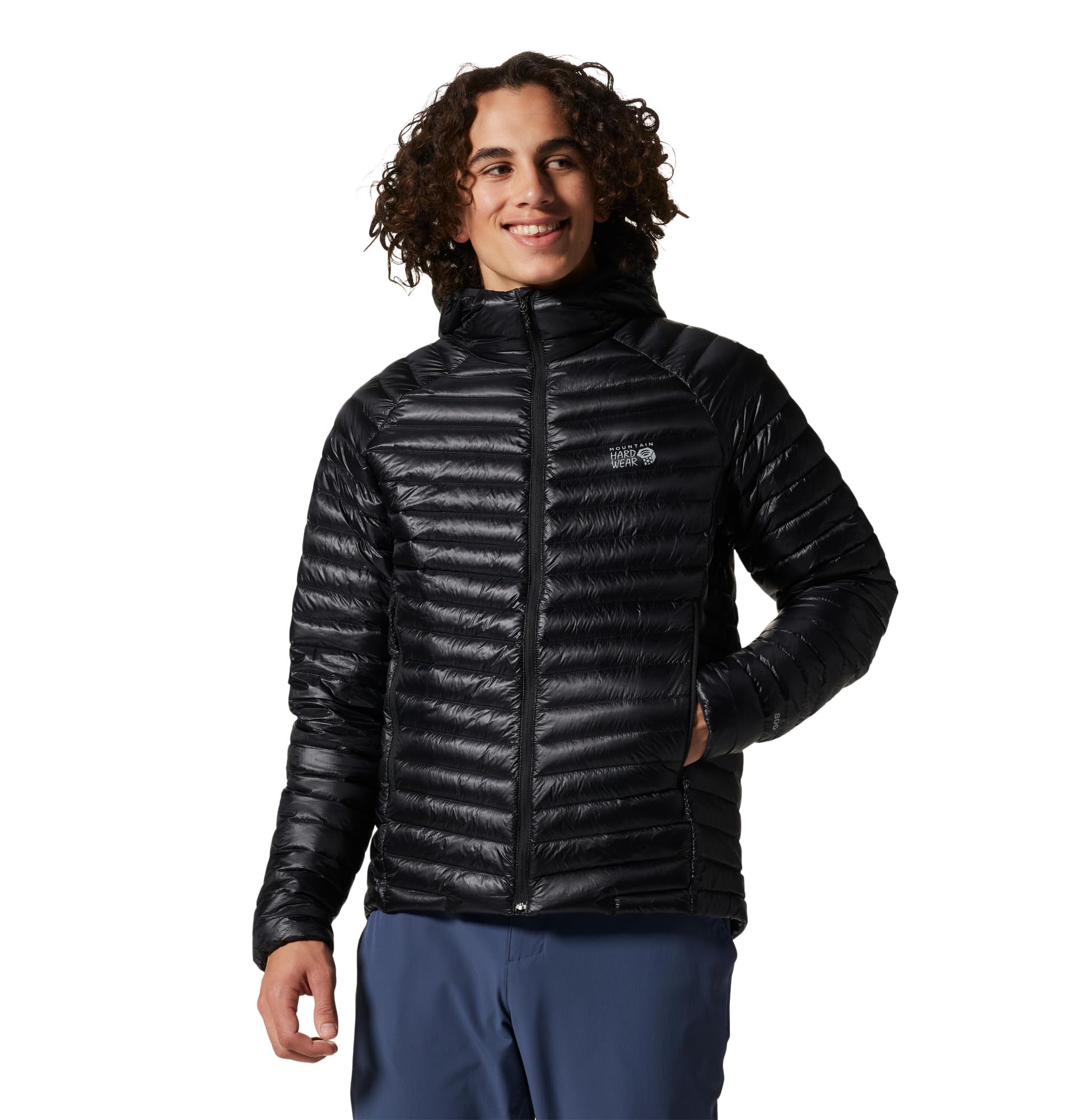
The Ghost Whisperer Hoody is the benchmark for ultralight backpacking insulati on. Its 800-fill goose down provides a warmth-to-weight ratio that few competitors match, and the 10-denier ripstop shell compresses to a palm-sized bundle. At just over eight ounces, this jacket vanishes into a pack until the evening chill sets in.
The hood fits snugly under a helmet and moves with your head during active use. The zippered hand pockets sit high enough to avoid interference with your hip belt, and the internal chest pocket doubles as a stuff sack. The elastic cuffs seal out drafts without restricting circulation.
Durability is the trade-off for that featherlight feel. The 10-denier fabric demands careful use — brushing past sharp rocks or standing too close to a campfire can puncture it. Some users also report a tight fit under the arms, so consider sizing up if you plan to layer a thick fleece underneath.
Why it’s great
- Incredible warmth for its weight — under 9 ounces total
- Packs down smaller than a one-liter water bottle
Good to know
- Thin shell fabric can tear if snagged on branches or sharp rock
- Run slightly trim; order up if you plan to layer
2. Fjällräven Expedition Pack Down Hoodie

Fjällräven builds this hoodie for the kind of cold that stops most hikers in their tracks. The outer fabric uses 100% recycled polyamide with a DWR coating that sheds light precipitation, and the high-quality ethical down provides consistent loft in subfreezing temperatures. Synthetic padding over the shoulders prevents the down from compressing under pack straps.
The adjustable hood seals out wind with a tall collar that protects the neck during exposed ridge walks. Two zippered hand pockets are placed just above the hip belt line, and the inner zip pocket secures essentials. The classic fit leaves room for a mid-layer without looking baggy.
Some users note that the sizing runs small, especially through the chest. If your measurements fall at the upper end of a size range, moving up one step ensures comfortable layering. The jacket is also hip-length, so it doesn’t provide as much coverage for the lower back as longer cuts do.
Why it’s great
- Reinforced shoulders resist wear from pack straps
- High collar and adjustable hood block wind effectively
Good to know
- Sizing tends toward the smaller side — consider going up
- Less coverage for the lower back compared to longer jackets
3. Fjällräven Greenland No. 1 Down Jacket
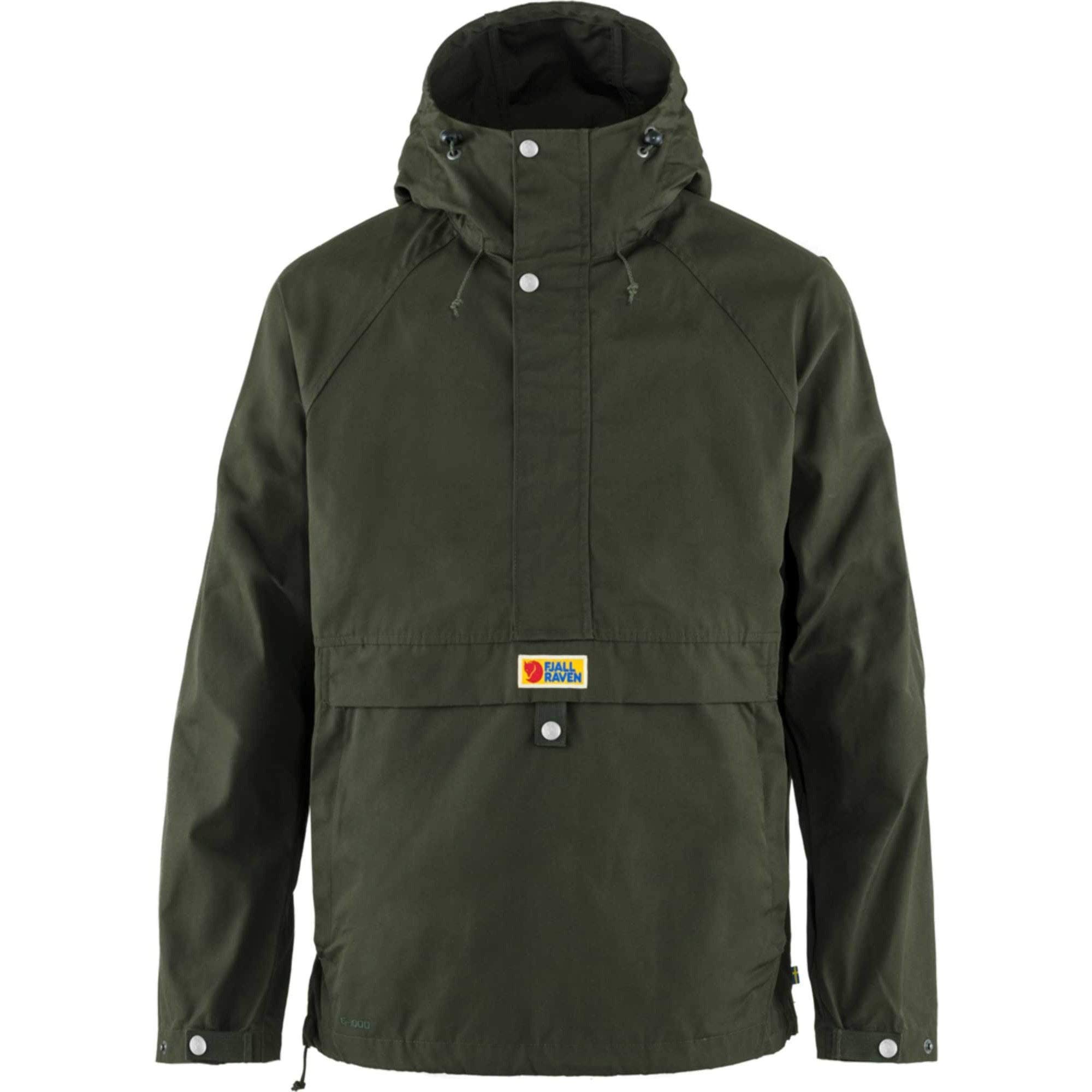
This jacket abandons the fragile ultralight playbook in favor of legendary durability. The waxable G-1000 shell shrugs off brush, sparks, and abrasion that would shred a 10-denier fabric. Leather reinforcements on the sleeves and hood add extra protection where wear is most common. The down padding is ethically sourced and designed for sustained warmth.
The Greenland No. 1 feels substantial without being heavy. The fit is intentionally dense through the body, which traps heat efficiently. The hood is large enough to fit over a beanie and features a leather brim that holds its shape. Two large hand pockets and a single interior zip pocket keep your gear secure.
Down padding is thinner than typical expedition jackets, so you’ll need layers when temperatures drop below freezing. The sleeves lack adjustable cuffs, which can let cold air seep in during windy conditions. It also fits trim — sizing up is necessary if you want to wear a thick mid-layer underneath.
Why it’s great
- Extremely durable shell resists sparks, snags, and wear
- Classic appearance works at camp and in town
Good to know
- Down fill is light — requires layering below freezing
- Sizing is trim; plan to order one size larger
4. Obermeyer Sojourner Down Jacket
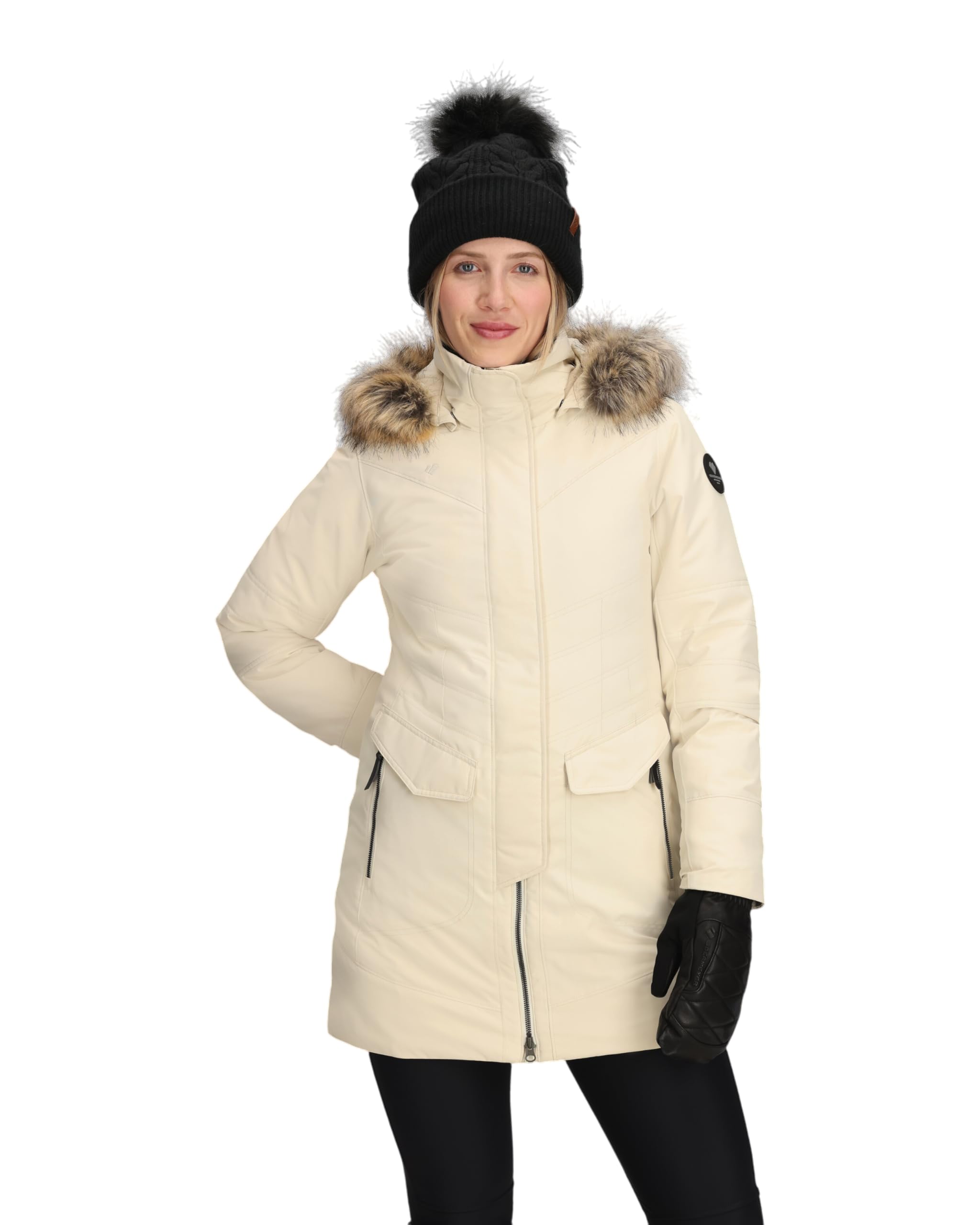
The Sojourner takes a different approach by prioritizing coverage and comfort without sacrificing warmth. The mid-thigh length protects your lower back and upper thighs — areas where traditional hip-length jackets leave you exposed. The removable faux fur hood adds style while the insulated hood underneath provides functional warmth.
The fit is tailored through the waist with a cinch that prevents heat from escaping. The sleeve lining is soft against the skin, and internal wind cinches at the wrists seal out drafts. Multiple zippered pockets include a dedicated glasses cloth and a media pocket with a headphone port.
This jacket is heavier than pure ultralight options, making it better suited for base camp use, snowshoeing, and resort days than fast-paced backpacking. The 10-denier fabric feels delicate given the weight, though most users report that it holds up well with normal care.
Why it’s great
- Extended length covers hips and lower back
- Tailored waist fit traps heat efficiently
Good to know
- Heavier than dedicated backpacking jackets
- Fabric feels less durable than other premium options
5. Rab Women’s Microlight Alpine Hooded Jacket
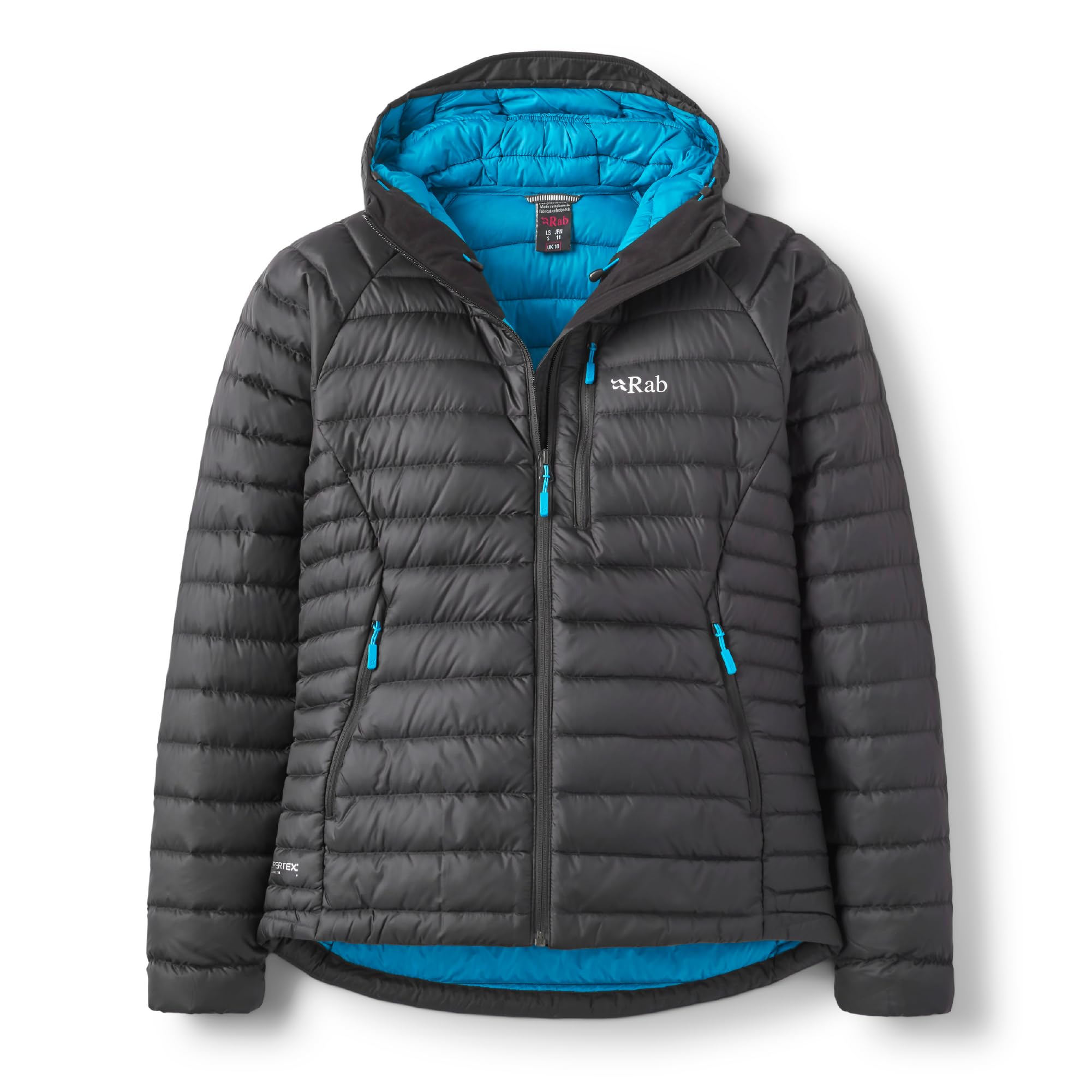
The Microlight Alpine hits the sweet spot between weight and resilience. Rab uses a 700-fill down with a Pertex shell that balances packability against everyday durability. The hood is helmet-compatible, making this jacket viable for climbing approaches as well as trail hiking. The adjustable hem and cuffs seal warmth inside.
The fit is tailored for an active silhouette without restricting movement. The hand pockets are deep enough to hold a phone and sized to stay useful even with a harness on. The jacket stuffs into a built-in pocket for storage, and the water-resistant treatment handles light rain before the down gets wet.
Some users report that the sizing runs slightly small, particularly through the shoulders. The down content is adequate for temperatures down to freezing, but you’ll need a mid-layer when the mercury drops into the 20s. A few reviewers also mention occasional feather poking through the shell, though this is typical for new down jackets.
Why it’s great
- Versatile hood fits under a climbing helmet
- Pertex shell is more durable than ultralight fabrics
Good to know
- Runs small in the shoulders and chest
- Not warm enough for deep winter without layering
6. Rab Women’s Microlight Down Jacket

The hoodless version of the Microlight series offers a cleaner profile for travelers who prefer to pair their insulation with a shell or beanie. The 700-fill down provides consistent warmth for three-season conditions, and the jacket compresses into a small stuff sack that disappears into a daypack. The Pertex fabric is water-resistant enough for short drizzles.
The cut is regular without being boxy, giving you room for a baselayer and a light fleece. The hem drops slightly lower in the back, covering your rear when you bend over to tie boots. The zippered hand pockets are fleece-lined and positioned to stay accessible even with a pack hip belt tightened.
Without a hood, you lose the option to seal heat around your neck on windy summits. The jacket is also not designed for subfreezing temperatures — it shines in the 30s to 50s range. The elastic cuffs can feel snug if you wear a thick watch or gloves underneath.
Why it’s great
- Packs down small for a mid-weight down jacket
- Flattering cut with rear hem coverage
Good to know
- No hood reduces cold-weather versatility
- Not sufficient for freezing temperatures alone
7. MARMOT Men’s Zeus Jacket
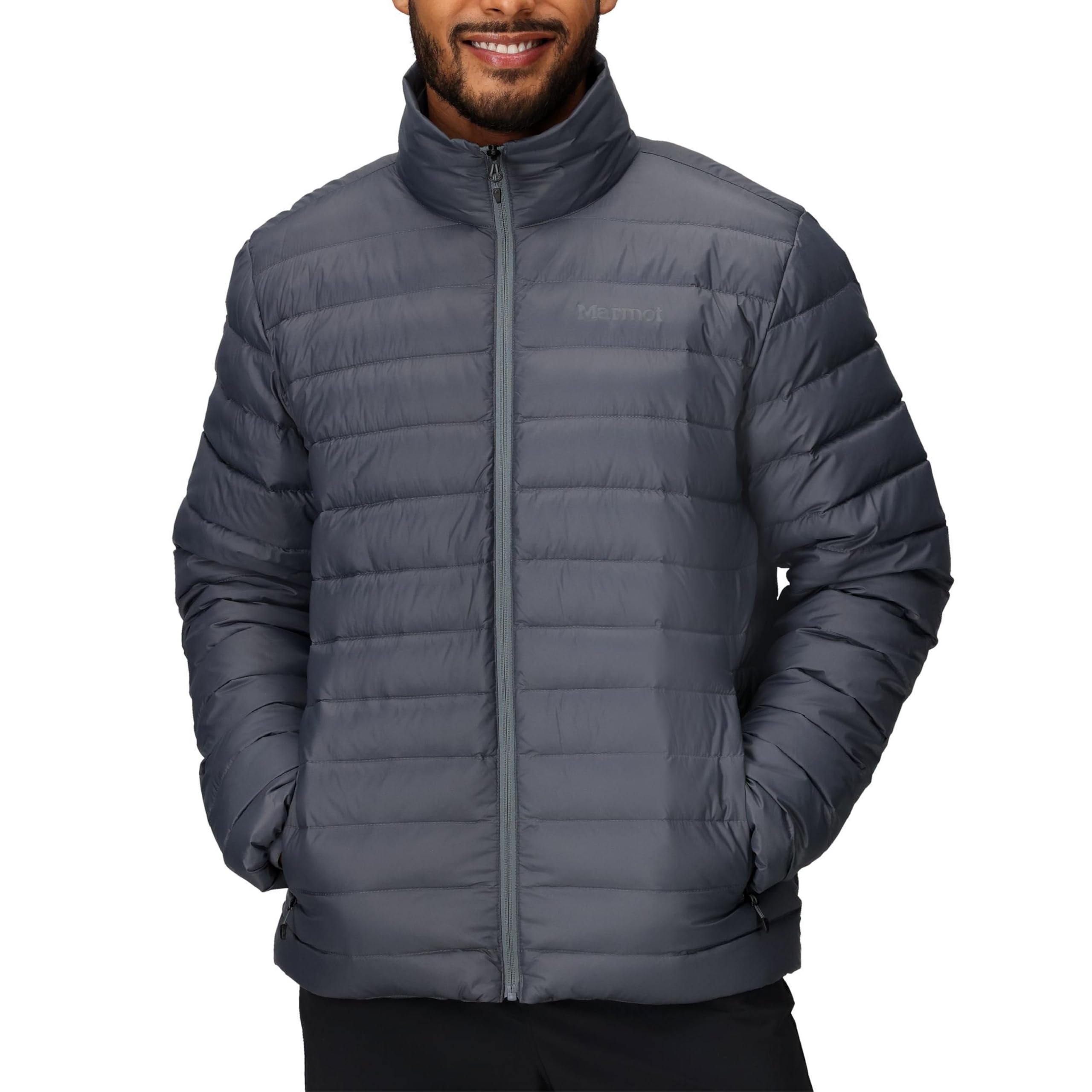
The Zeus Jacket from Marmot proves you don’t need a four-figure budget to get reliable down insulation. The 700-fill power down provides enough loft for mild backpacking and camp evenings, and the water-resistant shell helps the down stay dry during light rain or snow. The nylon fabric resists abrasion better than ultralight options.
The fit is classic Marmot — regular through the chest with enough room for a mid-layer. The two zippered hand pockets are large enough to hold a map or gloves. The jacket is packable and works well as a stop-layer when your activity level drops during rest breaks or at camp.
The Zeus lacks a chest pocket, which some hikers consider essential for securing a phone or wallet. Reviewers also note that the jacket requires a fleece or shell underneath for temperatures below 40°F because the fill weight is relatively moderate. The color options are limited to basic tones.
Why it’s great
- Solid build quality at a competitive mid-range price
- Water-resistant shell extends usability in damp conditions
Good to know
- Lacks an interior chest pocket for valuables
- Requires layering in colder conditions
8. Pioneer Camp 850 Fill Goose Down Jacket
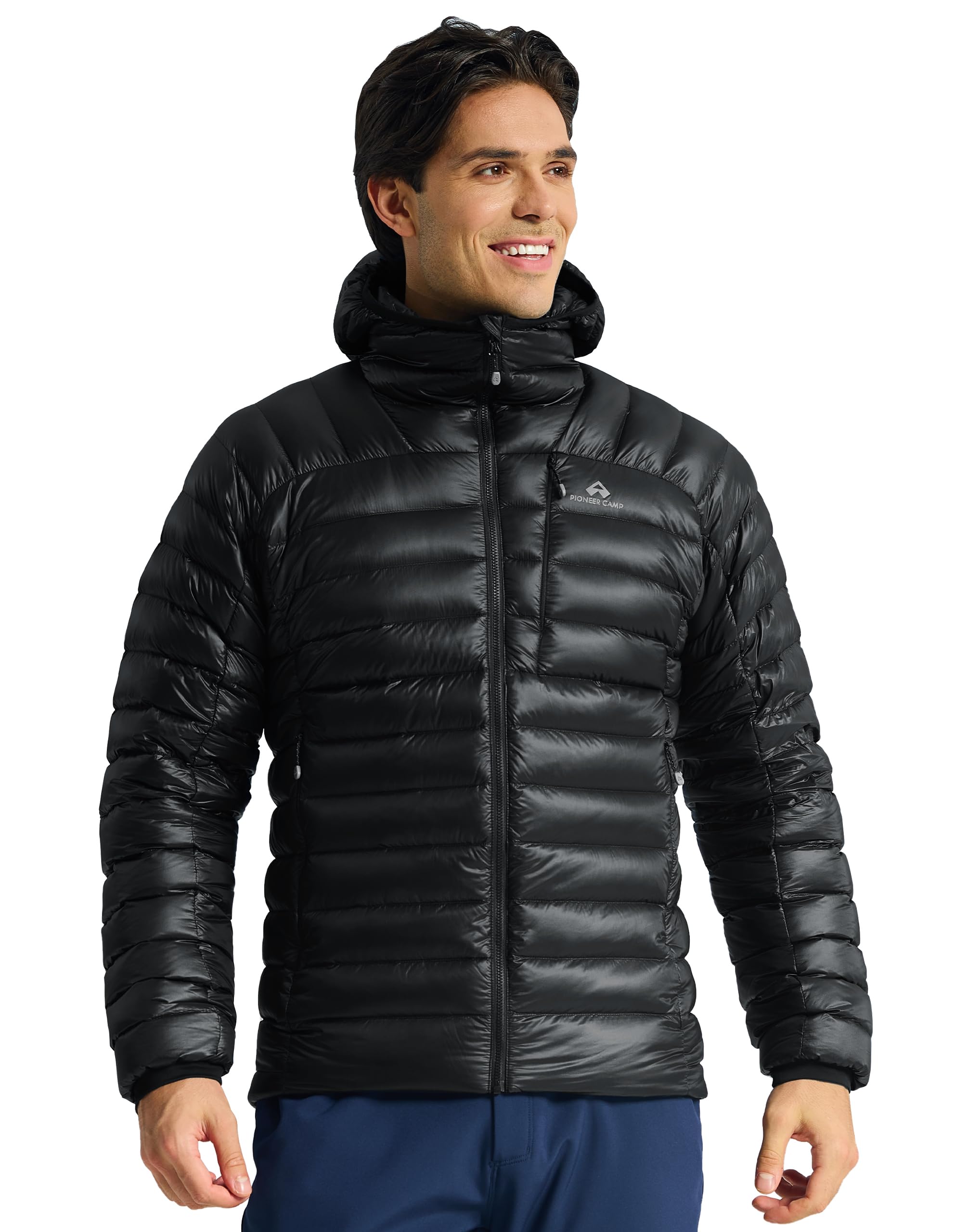
Pioneer Camp delivers impressive specs for the price bracket. The 850-fill goose down is the highest fill power in this roundup, meaning you get maximum loft per ounce. The jacket includes a hood, and multiple pockets give you options for stashing gear. The shell has a DWR coating that sheds light moisture.
Users consistently report that this jacket keeps them warm in temperatures down to 30°F with just a t-shirt underneath. The fit is close without being restrictive, and the shoulder area provides good freedom of movement. At its weight, it packs down reasonably small for a budget jacket.
Quality control is uneven. Some units arrive with thin fill in the pockets or sleeves, and a few reviewers noted a strong odor from the goose down when damp from sweat. The hood doesn’t pack away cleanly, and the durability over repeated backpacking trips remains unproven compared to established brands.
Why it’s great
- 850-fill goose down rivals premium jacket specs
- Effective warmth in sub-40°F conditions
Good to know
- Quality control varies — inspect your unit
- Goose down may produce a smell when wet
9. Columbia Delta Ridge II Down Jacket

The Delta Ridge II is the backpacking down jacket for budget-conscious campers who need warmth without emptying their wallet. Columbia uses a 650-to-700 fill down that keeps you comfortable in cool conditions. The shell is durable enough for casual use and includes Columbia’s water-resistant treatment. The jacket has a stylish appearance that works from trail to town.
Fit runs true to size, and the cut is comfortable through the chest without being overly baggy. The lightweight construction makes it easy to carry as an emergency layer or use for day hikes. Users who typically buy bargain jackets report being impressed by the quality.
The Delta Ridge II is not designed for serious cold weather — its warmth tops out around 40°F with a baselayer. Several users report tightness in the armpits that restricts arm movement, especially during hiking. The fill power is lower than dedicated backpacking models, meaning it’s bulkier when packed.
Why it’s great
- Excellent value for the warmth and build quality
- Stylish enough for everyday wear
Good to know
- Limited range of motion in the armpits
- Less packable and less warm than high-fill alternatives
FAQ
How do I wash a backpacking down jacket without ruining the loft?
Can I use a down jacket for wet weather hiking?
What fill power do I need for winter backpacking?
Final Thoughts: The Verdict
For most users, the backpacking down jacket winner is the Mountain Hardwear Ghost Whisperer Hoody because it delivers the best warmth-to-weight ratio for actual trail use. If you need a durable jacket that withstands bushcraft conditions and campfires, grab the Fjällräven Greenland No. 1 Down Jacket. And for a mid-range choice that balances performance and price, nothing beats the Rab Women’s Microlight Alpine Hooded Jacket.