
Our readers keep the lights on and the weekend projects moving. As an Amazon Associate, I earn from qualifying purchases.
Forgetting the stove or dreading a soggy rehydrated mess at mile ten is a very real risk. The difference between a wasted lunch break and a true trailside reset comes down to calories, prep time, and packaging that doesn’t explode in your pack. Choosing the right backpacking lunch means knowing exactly how much protein fuels the afternoon push and whether you are willing to boil water for it.
I’m Rikta — the co-founder and writer behind FitlyFast. My research focuses on macro density, rehydration ratios, and the real-world unpacking experience of freeze-dried, no-cook, and air-dried meal systems so you know what actually works after the first mile.
After digging into dozens of meal pouches and bars, I built this guide to help you match a lunch to your specific pack weight and calorie burn, giving you a clear verdict on the best backpacking lunches available today without guessing which pouch actually tastes good when you are tired and hungry.
How To Choose The Best Backpacking Lunches
Lunch on the trail sits in a weird spot — it must refuel your body without putting you in a food coma. You need enough protein and calories to power the next five miles, but the meal needs to be quick to prepare and easy on the stomach. Understanding cook time, caloric density, and ingredient sourcing will save you from a slow, disappointing mid-hike break.
Caloric Density and Macros
A lunch pouch that weighs four ounces but only delivers 300 calories will leave you hungry before dinner. Look for meals that pack at least 110 calories per ounce, with a protein count of 15-25 grams to help repair muscle and sustain energy. Bar-style meals often win here because they can deliver 650 calories without any added water weight, while freeze-dried meals usually need eight to ten ounces of water to reach full volume.
Prep Method and Water Needs
Not every trip allows for a stove or a pot full of boiling water. If you are pushing ultra-light miles or hiking in dry conditions where water is scarce, no-cook bars or meals that rehydrate in cold water become essential. Freeze-dried pouches that require ten minutes of steep time and a specific water temperature can be a hassle on a windy ridge, whereas a bar you can eat while walking removes all friction.
Ingredient Integrity and Hidden Fillers
Some mass-market meal pouches rely on textured vegetable protein (TVP) or soy isolate to pad the protein numbers. Premium brands use real meat or whole-food ingredients like lentils, beans, and freeze-dried vegetables. Non-GMO, gluten-free, and dairy-free labels are common, but you have to check whether the protein source is whole or processed, because that affects both digestion and aftertaste on a long day.
Quick Comparison
On smaller screens, swipe sideways to see the full table.
| Model | Category | Best For | Key Spec | Amazon |
|---|---|---|---|---|
| Greenbelly Backpacking Meals | No-Cook Bar | Stoveless ultralight trips | 650 calories per pouch | Amazon |
| Peak Refuel Basecamp Bucket 3.0 | Freeze-Dried Kit | Multi-day high-protein needs | 100% real meat, 2x protein | Amazon |
| Peak Refuel Butternut Dal Bhat | Freeze-Dried Pouch | Flavorful vegetarian lunch | 23g protein per pouch | Amazon |
| Nomad Nutrition Caribbean Curry | Freeze-Dried Pouch | Plant-based spice variety | Vegan, gluten-free | Amazon |
| Nomad Nutrition Irish Shepherd’s Pie | Freeze-Dried Pouch | Hearty vegan comfort food | Lentil-mushroom base | Amazon |
| Harmony House Backpacking Kit | Air-Dried Bulk | Customizable bulk lunches | 70+ servings per kit | Amazon |
| Mountain House Emergency Kit | Freeze-Dried Kit | Weekend variety pack | 30-year shelf life | Amazon |
In‑Depth Reviews
1. Greenbelly Backpacking Meals

Greenbelly flips the script on backpacking lunch by removing the stove entirely. Each pouch holds two meal bars that deliver a massive 650 calories with a macro split of roughly 30 percent carbs, 30 percent fat, and 30 percent protein. That density makes it one of the most efficient calorie-per-ounce options available — you get a full lunch in a package that weighs less than most single-serve freeze-dried pouches. The bars are handmade, gluten-free, and formulated by a chef, so they avoid the dense, chalky texture that plagues many protein bars.
The no-cook design is a game-changer for desert hikes, alpine traverses, or any trip where carrying a stove feels like dead weight. Real-world reports from ultramarathon runners and jungle trekkers confirm the bars survive high humidity without melting and provide steady energy during sustained exertion. The resealable pouch keeps the second bar crisp for a later snack or the next day’s breakfast. The texture is flaky, closer to a Rice Krispie Treat than a brick, which makes it easier to chew on the move but also means you need water nearby to swallow comfortably.
Flavors are intentionally subtle rather than bold, which works in its favor because you never get tired of the taste over multiple days. The biggest trade-off is that this is a dry meal — there is no broth, no sauce, no hot comfort factor. If you crave a warm bowl of stew after a cold climb, this won’t scratch that itch. For every other scenario where speed and weight matter more than ambiance, Greenbelly is the clear winner.
Why it’s great
- Zero cook time — eat straight from the pouch
- 650 calories in a lightweight, resealable package
- Balanced macros keep energy steady for hours
Good to know
- Dry texture requires water to swallow comfortably
- Flavors are mild, not exciting
2. Peak Refuel Basecamp Bucket 3.0
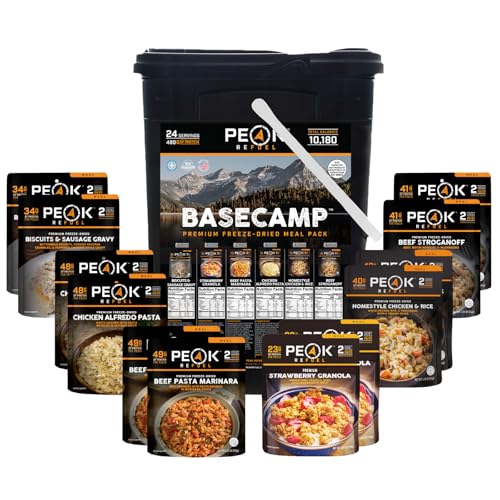
Peak Refuel earned its reputation by refusing to use TVP or soy fillers in its meat-based meals. The Basecamp Bucket 3.0 bundles twelve pouches that each contain 100 percent real USDA-inspected meat, delivering nearly double the protein of most outdoor meal competitors. A single serving of the Butternut Dal Bhat from their standalone line hits 23 grams of protein, and the bucket’s variety ensures you get that same protein density in flavors like Chicken Alfredo and Beef Pasta Marinara. The bucket itself is rodent-proof, which matters for week-long basecamp setups where critters are a threat.
Prep is straightforward — add about one cup of boiling water, stir, and wait roughly ten minutes. The freeze-drying process locks in texture so the rice and pasta rehydrate soft instead of crunchy, and the meat maintains a recognizable chew. Users frequently report that Peak Refuel meals taste closer to homemade food than anything else in the freeze-dried aisle, with no artificial aftertaste. The 5-year shelf life is shorter than Mountain House’s 30-year guarantee, but that is because the real meat ingredients degrade faster.
One important caveat: almost every pouch in the bucket contains dairy in the form of milk powder or cheese, which makes it a poor choice for anyone who is lactose intolerant. The weight of the bucket is also substantial at over four pounds, so this is designed for car camping, basecamp treks, or short backpacking trips where you can split the load. If you prioritize protein quality above all else, Peak Refuel sets the standard.
Why it’s great
- Real meat with no TVP or soy fillers
- Protein density far exceeds typical freeze-dried meals
- Rodent-proof bucket protects against scavengers
Good to know
- All pouches contain dairy — not lactose-friendly
- Bucket is heavy for solo backpacking
3. Peak Refuel Butternut Dal Bhat
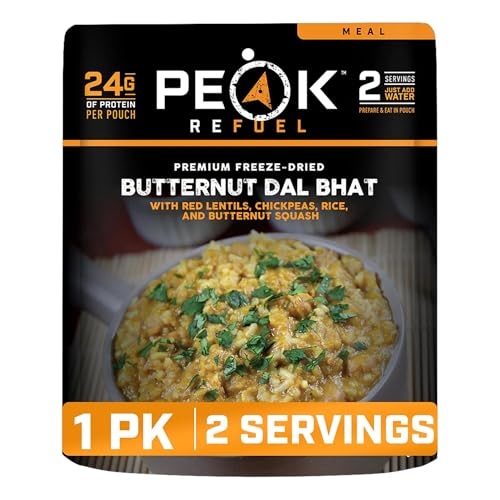
Peak Refuel’s Butternut Dal Bhat proves that a vegetarian freeze-dried meal can compete with meat-heavy options on both protein and taste. Each 5.85-ounce pouch delivers 23 grams of protein from a blend of lentils, rice, and butternut squash, seasoned with warm spices that create a buttery, savory profile without being overpowering. The texture is a standout — the rice and lentils rehydrate fully in about seven minutes, producing a consistency that is neither soupy nor dense, just soft and cohesive.
Taste reviews consistently rank this as Peak Refuel’s best flavor, and many customers report buying multiple pouches in a single order. The high calorie-to-weight ratio means you get a satisfying lunch that keeps you full through the afternoon push. Unlike some vegetarian meals that rely on TVP or soy chunks, this one uses whole ingredients, so the texture feels natural rather than processed. The 10-minute prep window using 10.5 ounces of boiling water is standard for the category.
The only real downside is that single pouches are priced higher per serving than buying a bucket, and the vegetarian nature means the fat content is lower than meat-based meals, which can leave some high-mileage hikers feeling hungry earlier. If you want a fast, flavorful, meatless lunch that actually feels like a real meal, this is the pouch to grab.
Why it’s great
- 23 grams of protein from whole, non-GMO ingredients
- Rehydrates to a perfect, non-gluggy texture
- Balanced spice level that doesn’t overwhelm
Good to know
- Lower fat content may not satisfy extreme calorie burn
- Single pouch pricing adds up for longer trips
4. Nomad Nutrition Caribbean Curry

Nomad Nutrition’s Caribbean Curry brings something rare to the backpacking lunch aisle — genuine spice personality. The blend of yams, potatoes, carrots, beans, ginger, and cayenne creates a sweet-heat balance that feels more like a restaurant dish than a dehydrated pouch. The REVdry technology locks in flavor without preservatives, and the 3.8-ounce pack weight makes it one of the lightest full-meal options on this list. It is vegan, gluten-free, dairy-free, and palm oil-free, which covers almost every common dietary restriction.
Rehydration time is fast — most users report a good texture after about eight minutes with boiling water. The ingredients stay distinct rather than blending into a uniform mush, so you get identifiable chunks of yam and bean throughout. The cayenne heat is noticeable but not punishing, making it a welcome change from the standard salty-savory freeze-dried flavor profile. Multiple repeat buyers mention it as a go-to lunch for climbing and backpacking trips because it is light and satisfying without the heavy feeling that some meat-based meals produce.
Portion size is the primary limitation. At under four ounces, this is a light lunch, and high-mileage hikers often want a larger serving to fill the calorie gap. The pouch works best as part of a two-meal system — eat this for lunch and supplement with a bar or nuts if you are burning 3,000-plus calories per day. For a flavorful, plant-based lunch that packs tiny and tastes big, this curry is a top pick.
Why it’s great
- Unique spice profile that stands out on the trail
- Extremely lightweight for the volume of food
- Free of gluten, dairy, soy, and palm oil
Good to know
- Portion is small for high-calorie-burn days
- Rehydration time can vary if water temperature drops
5. Nomad Nutrition Irish Shepherd’s Pie

Nomad Nutrition’s Irish Shepherd’s Pie is a vegan reinterpretation of a classic comfort dish, swapping ground meat for a base of lentils, mushrooms, and potatoes. The flavor leans heavily on rosemary and thyme, giving it an herbal depth that sets it apart from the standard tomato-and-spice freeze-dried repertoire. The REVdry process keeps the ingredients from turning into a paste, so you get distinct mushroom slices and potato chunks even after rehydration. It is gluten-free, dairy-free, soy-free, and non-GMO, which makes it one of the cleanest ingredient lists in the category.
Prep requires about one cup of boiling water, and the meal is ready in roughly eight to ten minutes. User reviews consistently praise the seasoning level — it is well-seasoned without becoming salty or overpowering. The lentil base provides a solid fiber and protein backbone, though the total protein count is lower than meat-based meals, so pairing it with a protein bar or nuts is smart for high-exertion days. The 36-month shelf life gives you plenty of time to work it into your rotation.
The biggest point of contention is the spice intensity. Some users find the rosemary and thyme blend too strong, describing it as reminiscent of Mexican spice blends rather than traditional Irish flavors. A few also report that the peas do not fully soften within the standard steep time. If you love herb-forward dishes and want a vegan lunch that feels hearty, this pouch hits the mark. If you prefer mild, simple flavors, steer toward the Nomad Caribbean Curry instead.
Why it’s great
- Clean, whole-food ingredients with no dairy or gluten
- Herb-forward flavor that breaks the monotony of standard freeze-dried meals
- Hearty lentil base provides fiber and satiety
Good to know
- Herb blend can be overpowering for sensitive palates
- Peas may stay slightly firm if water isn’t hot enough
6. Harmony House Backpacking Kit
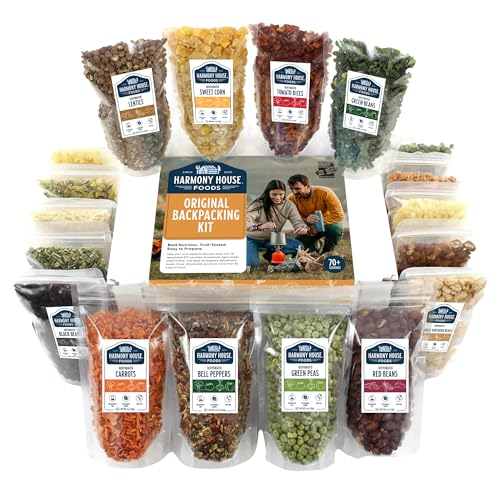
Harmony House takes a completely different approach — instead of selling pre-mixed pouches, they provide bulk air-dried vegetables, beans, and lentils that you combine, season, and cook yourself. The 4.5-pound kit yields over 70 servings, giving you the freedom to build custom meals every day. The ingredients are non-GMO, gluten-free, Kosher, and free of pesticides, with no additives or preservatives. This is the most cost-efficient route for long-distance trekkers who can handle a bit of meal assembly on the trail.
Air-drying preserves nutrient density better than some freeze-drying processes, and the individual ingredients (cabbage, carrots, peppers, celery, onions, beans, lentils) rehydrate beautifully when simmered. The kit won Backpacker Magazine’s Editor’s Choice award, which speaks to its value for serious backpackers. You will need to supplement with noodles, rice, or instant potatoes for a full calorie load, because the kit is mostly vegetable and legume material. The weight and volume of the whole kit make it better suited for basecamp or resupply points rather than as a single lunch you grab from your pack.
The biggest challenge is the rehydration curve — some vegetables like peas and green beans take longer to soften than others, so you have to adjust cook times depending on which ingredients you select. The cabbage flavor is notably excellent, and many users recommend mixing it with chicken broth powder for a quick soup base. If you are willing to spend a little time before your trip portioning the ingredients into daily bags, this kit delivers unmatched variety and value.
Why it’s great
- Over 70 servings from one purchase — great cost efficiency
- Customizable flavor profiles for every meal
- Clean, single-ingredient foods with no additives
Good to know
- Requires portioning and seasoning before or during the trip
- Some vegetables need longer cook times than advertised
7. Mountain House Emergency Meal Assortment Kit
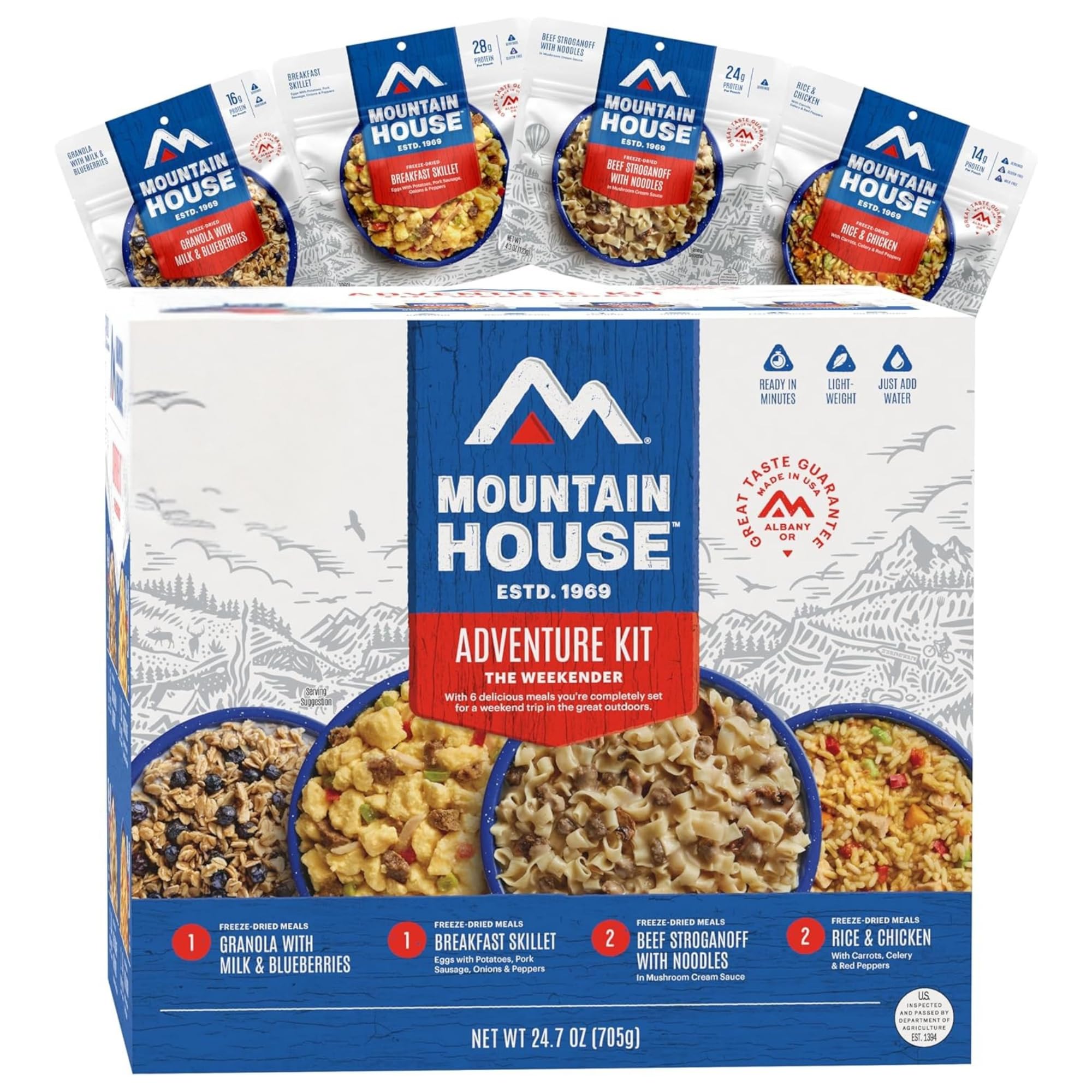
Mountain House is the gold standard for freeze-dried reliability, and the Adventure Weekender Kit distills that into a compact six-pouch assortment built for a weekend trip. The kit includes two breakfast packets (Granola with Milk & Blueberries and Breakfast Skillet), two Rice & Chicken lunches, and two Beef Stroganoff with Noodle dinners, covering a full day of eating at about 1,645 calories. The 30-year taste guarantee is unmatched in the industry, meaning you can stash this in an emergency kit and trust it years later.
Prep is the same easy ritual — add boiling water to the pouch, stir, and wait eight to ten minutes. The Granola with Blueberries is a standout, best prepared with cold water for a refreshing breakfast that doesn’t require a stove. The Beef Stroganoff delivers tender meat and creamy noodles that feel genuinely luxurious on the trail. The Breakfast Skillet is the weakest link — the eggs have a slightly Styrofoam texture that some users find unappealing. Still, the overall taste consistency across the kit is high, and the portion sizes are generous enough for a hungry hiker.
The 2.4-pound kit weight makes it a practical grab for a car camping weekend or a short backpacking trip where weight isn’t critical. The pouch resealability is average — if you are solo and splitting a two-serving pouch, you need to be careful about the ziplock seal to avoid spills in your pack. This kit is a solid entry point for someone who wants to try Mountain House without committing to a full case, but it leans heavily on classic American flavors that may feel boring after multiple days.
Why it’s great
- 30-year shelf life for long-term storage confidence
- Balanced variety of breakfast, lunch, and dinner
- Reliable, consistent taste trusted for decades
Good to know
- Breakfast Skillet eggs have a subpar texture
- Kit is better suited for 2-3 days, not longer trips
FAQ
Can I eat freeze-dried backpacking meals without boiling water?
How much protein should a backpacking lunch contain for a full day of hiking?
Why do some backpacking meals have a 30-year shelf life while others only last 5 years?
Final Thoughts: The Verdict
For most users, the best backpacking lunches winner is the Greenbelly Backpacking Meals because it eliminates cook time entirely while delivering 650 calories and balanced macros in a lightweight, resealable pouch. If you want real meat and high protein density, grab the Peak Refuel Basecamp Bucket 3.0. And for a flavorful, plant-based lunch that packs tiny and tastes bold, nothing beats the Nomad Nutrition Caribbean Curry.