
Our readers keep the lights on and the weekend projects moving. As an Amazon Associate, I earn from qualifying purchases.
You’re twenty miles in, your pack is a chaotic tangle of shirts and socks, and every time you need a fresh layer you have to unpack half your gear. That shuffle is the exact pain point that a set of purpose-built packing cubes eliminates — turning a jumbled rucksack into a clean, grab-and-go system. But not all cubes are built for the trail. Backpacking demands ultralight fabrics, smart proportions for tapered packs, and reliable zippers that won’t fail mid-journey. A general travel cube adds bulk you don’t need; a true backpacking cube vanishes into your bag while keeping every item accessible.
I’m Rikta — the co-founder and writer behind FitlyFast. I’ve spent hundreds of hours analyzing load-bearing fabrics, compression mechanisms, and weight-to-volume ratios across dozens of models to understand what actually holds up on multi-day treks.
Whether you’re dialing in a 35-liter pack for a week-long traverse or streamlining your gear for a weekend hut-to-hut loop, choosing a top-tier set of backpacking packing cubes comes down to fabric toughness, usable compression, and a shape that fits the interior curves of a technical backpack.
How To Choose The Best Backpacking Packing Cubes
Not every cube belongs on a trail. A packing cube built for a rolling suitcase typically has rigid walls and a fixed rectangular shape that fights the tapered interior of a backpack. For backpacking, the priority shifts entirely to weight, compressibility, and shape adaptability. Understanding the three core specs below will save you from buying a set that looks great at home but flops on day two of a hike.
Fabric Weight and Denier
Backpacking cubes should feel almost flimsy in the hand — that lightness is a feature. Look for nylon or polyester fabrics in the 30D to 70D range. A 30D (denier) fabric is whisper-thin and saves grams per cube. A 70D fabric offers more abrasion resistance for rough gear loads. Avoid cube sets with thick, stiff liners; they add unnecessary heft and resist conforming around irregular items like a puffy jacket or a water filter.
Compression Mechanism
The best cubes for backpacking use a dual-zipper system: one zipper for the main compartment and a second compression zipper that cinches the fabric tighter after you fill it. True compression reduces the air volume inside the cube, squishing down soft layers like fleeces and down jackets. A cube with only a single zipper is just a stuff sack — it organizes but doesn’t save pack volume. For a week-long carry, that volume savings translates into fitting a bear canister or an extra liter of water.
Shape and Pack Compatibility
Most generic cubes are perfect rectangles sized for a 22-inch rolling carry-on. Backpacking packs have curved sides and a tapered top. The most useful cubes are slightly narrower and longer, or they feature a flexible structure that lets them slide into the weird gap between your sleeping bag and the pack wall. A cube set should include at least one very large cube (around 16x11x4 inches compressed) for bulky items and one slim cube (around 10x7x2 inches) for socks and base layers.
Quick Comparison
On smaller screens, swipe sideways to see the full table.
| Model | Category | Best For | Key Spec | Amazon |
|---|---|---|---|---|
| Peak Design Packing Cube | Premium | Dual-compartment organization with expansion | 12.6 x 12.6 x 6.7 in (expanded) | Amazon |
| SuitedNomad Adventure Packing Cubes | Premium | Wet-climate and river expedition protection | IP65 waterproof/dustproof rating | Amazon |
| TRIPPED Large Packing Cube Set | Mid-Range | Mesh visibility and size variety for week-long trips | Nylon construction with see-through mesh top | Amazon |
| TRIPPED Extra Large 6-Piece Set | Mid-Range | Budget-friendly compression with large capacity | 6-piece set with compression envelope | Amazon |
| Gonex Compression Packing Cubes | Mid-Range | Complete set including shoe and laundry bags | Water-repellent polyester fabric, 6-piece | Amazon |
| Amazon Essentials 6-Pack Compression Cubes | Budget | Maximum value and lightweight compression | rPET recycled polyester structure | Amazon |
| Osprey Ultralight Travel Packing Cube | Budget | Minimalist single-cube for small technical packs | Bluesign nylon, 0.02 kg weight | Amazon |
In‑Depth Reviews
1. Peak Design Packing Cube
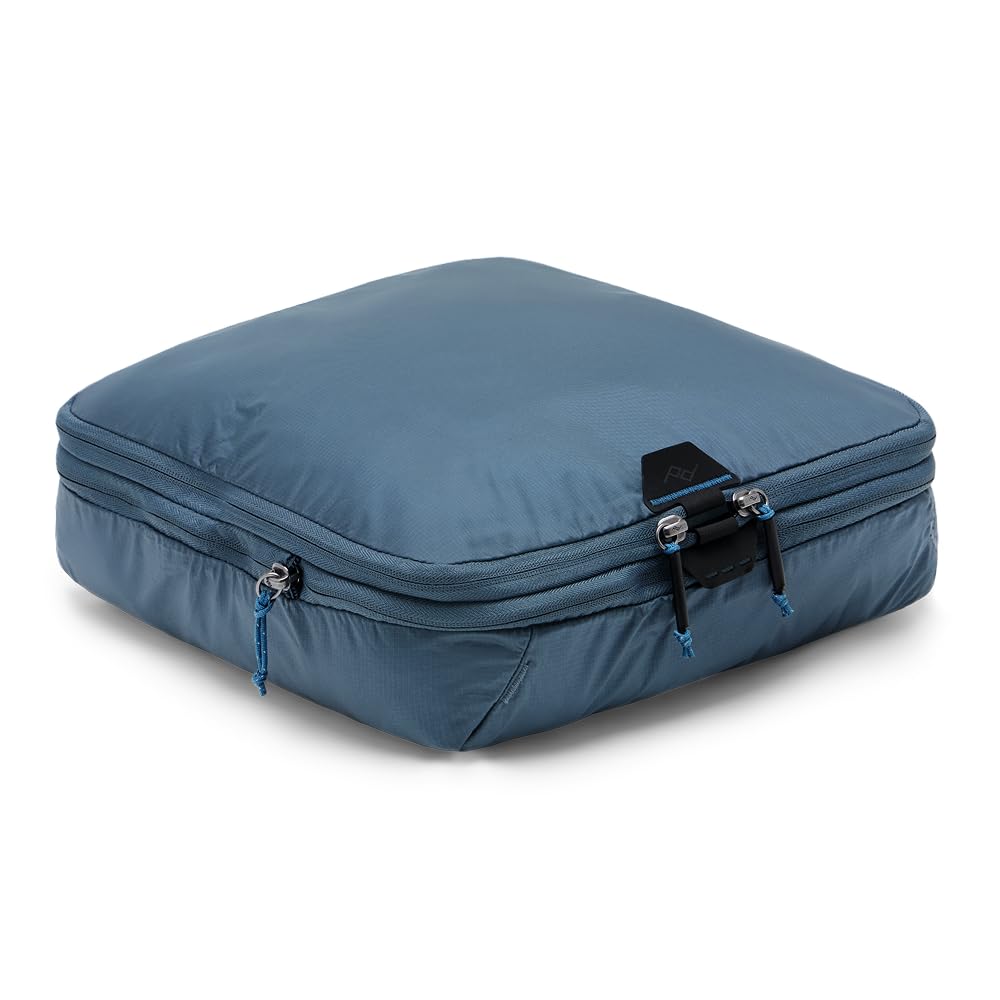
Peak Design’s Ocean cube is engineered for hikers who treat organization as a system. The stretch nylon fabric expands to double its volume when you need to cram in a wet rain shell, yet the dual-compartment layout keeps dry clothes separate from damp ones. The external carry-strap pass-throughs let you lash the cube to the outside of a pack for quick-access layers — a rare feature for backpacking. The cord hook carry loops convert the cube into a makeshift sling bag at camp, which reduces the need for a separate daypack on short side hikes.
The build quality is evident in every seam: the zippers glide smoothly even under full compression, and the breathable mesh allows moisture to escape when storing sweaty gear. The compression function uses a second zipper that tightens the fabric around the load, reducing total volume by about 30 percent compared to leaving the cube fully expanded. The separate compartment for dirty clothes is genuinely useful on a multi-day trip, isolating used socks and base layers from your fresh kit.
One quibble: the zippers don’t quite close fully at the ends, leaving a small gap that requires a tiny carabiner to seal completely. The price reflects the premium materials and lifetime warranty, but for a dedicated backpacker who wants one cube that does everything — organize, compress, expand, and double as a camp bag — this is the cube to beat.
Why it’s great
- Dual-compartment design separates dirty/dry clothes
- Expandable fabric handles overstuffed loads
- Can be used as a sling bag or lashed to pack exterior
Good to know
- Zippers leave a small gap at the ends
- Premium price tier for a single cube
2. SuitedNomad Adventure Travel Packing Cubes

For backpackers who regularly hike in rain forests, coastal trails, or river environments, the SuitedNomad Adventure set brings genuine waterproofing that most packing cubes lack. The IP65 rating means the fabric and zippers resist sustained rain and splashes — not just a light drizzle but the kind of downpour that soaks a pack cover within an hour. The ripstop nylon construction is both ultralight and tough enough to withstand being stuffed into a kayak locker or tossed onto a rocky shoreline without puncturing.
The set includes multiple sizes, with the largest cube measuring 16 by 11 inches when flat — big enough to hold a puffy jacket, a dry bag of food, and a change of base layers. The reinforced seams use a marine-grade zipper that feels more solid than typical travel-cube hardware. Reviewers consistently note that the cubes kept their contents bone-dry during extended rain exposure, and the material shows no signs of wear after dozens of international trips and boat crossings.
The trade-off is weight and bulk. The IP65 sealing adds heft compared to a non-waterproof cube of the same size. These cubes are better suited for an overnight canoe trip or a base-camp setup than for a hardcore 10-mile-per-day thru-hike where every gram matters. If your backpacking kit routinely gets wet, this is the insurance you want. For dry-trail ultralight hikers, the extra mass feels unnecessary.
Why it’s great
- Genuine IP65 waterproof construction
- Ripstop nylon stands up to rough terrain
- Marine-grade zippers resist corrosion and sand
Good to know
- Heavier than standard non-waterproof cubes
- Overkill for fair-weather backpacking trips
3. TRIPPED Large Packing Cube Set

TRIPPED’s Large set solves one of the biggest headaches in backpacking organization: finding a specific item without unpacking everything. The see-through mesh top lets you visually scan the contents of each cube at a glance, which is a massive time-saver when you’re digging for a clean shirt at the bottom of a 40-liter pack at dusk. The nylon fabric is lightweight but not flimsy — it slides easily against the pack fabric without snagging.
The compression works via a dual-zipper system: an inner zipper for filling the cube, and an outer compression zipper that cinches the load down. When compressed, the Extra Large cube holds about three men’s T-shirts, one puffy jacket, two long-sleeve shirts, a pair of jeans, and a pair of pants — enough for a week of clothes in a single cube. The material is water-resistant, so a splash from a stream crossing won’t immediately soak your clothes. The included laundry bag doubles as a beach bag at your campsite.
A few reviewers noted that the set skews toward larger cubes, with the Small size being the only truly packable option for a hip-belt pocket. The mesh, while great for visibility, is less durable than solid nylon and may show wear over extended use. For the mid-range price point, the combination of compression, visibility, and size variance offers strong value for backpackers who prioritize organization over absolute weight savings.
Why it’s great
- Clear mesh top allows instant content identification
- Dual-zipper compression reduces pack volume
- Water-resistant nylon handles light moisture
Good to know
- Mesh is less abrasion-resistant than solid fabric
- Set lacks a very small cube for pocket storage
4. TRIPPED Extra Large Compression Packing Cube 6-Piece Set
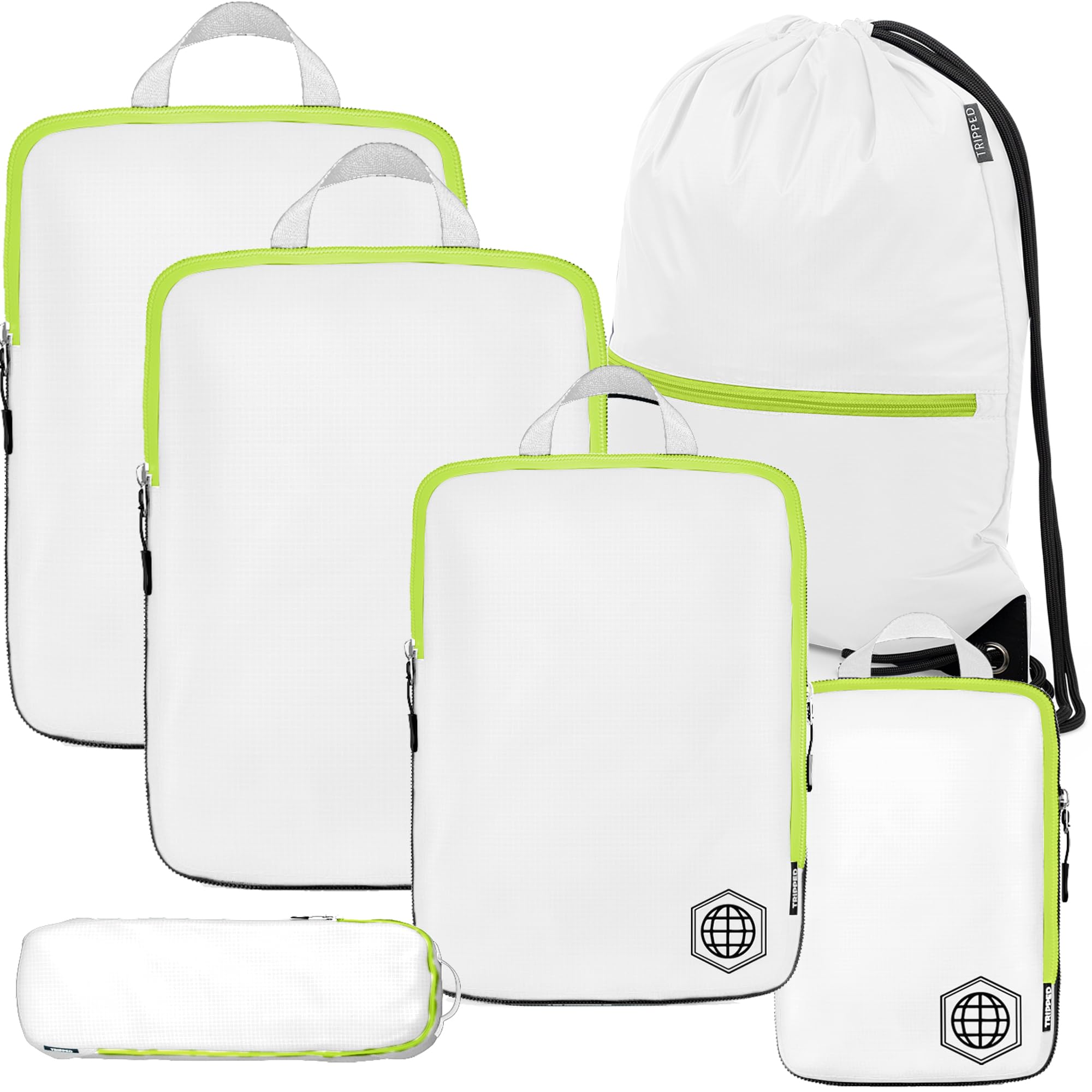
This TRIPPED set offers a six-piece collection that covers every size you need for a week-long backpacking trip: extra-large cubes for bulky layers, large cubes for shirts and pants, small cubes for socks and underwear, and a shoe bag plus laundry bag. The compression envelope uses a single zipper that pulls the bag tight around its contents, effectively squeezing air out of soft items like fleeces and down vests. The weight difference between a fully uncompressed cube and a compressed one is noticeable — you can pack about 30 percent more volume into the same pack space.
The material feels light and durable, with smooth zippers that glide without catching on fabric edges. Multiple reviews highlight that this is among the best compression value sets for travelers who don’t want to spend premium money but still need reliable performance. The sizes are well-thought-out for a 45-to-60-liter pack, with the largest cube fitting neatly against the back panel and the smaller ones sliding into the gaps around a sleeping bag stuff sack.
There are some zipper durability concerns. One reviewer reported a zipper failure after ten days of use, and another received a cube with a defective zipper out of the box. The warranty process is straightforward, but the risk of a zipper failing mid-trip is worth considering if you’re heading into remote backcountry. For casual backpacking and base-camp trips, this set delivers impressive value.
Why it’s great
- Six-piece set covers all packing needs for a week
- Compression envelope saves significant pack volume
- Lightweight material with smooth zipper action
Good to know
- Occasional zipper failures reported
- Not as abrasion-resistant as premium cubes
5. Gonex Compression Packing Cubes
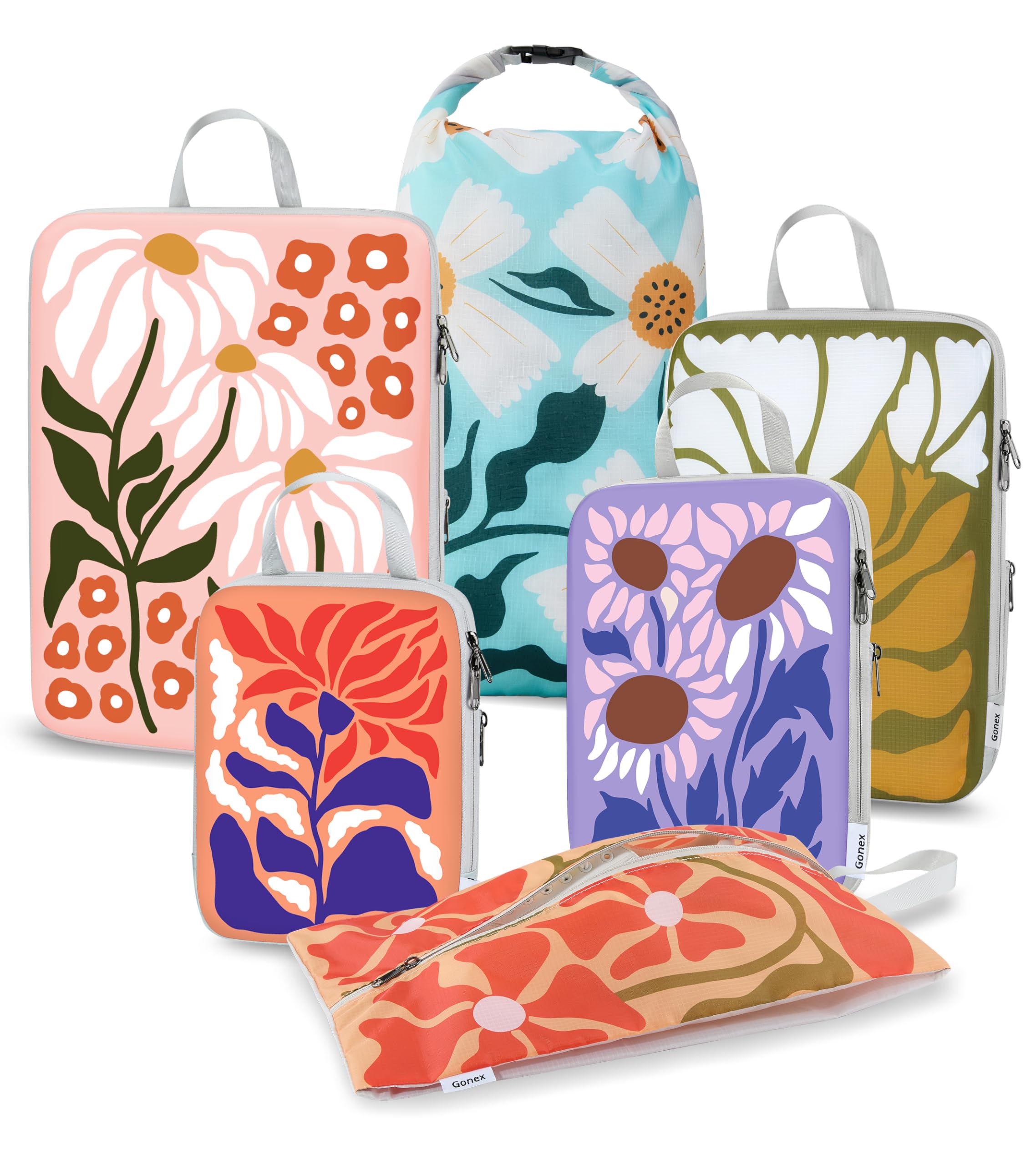
Gonex takes a slightly different approach by leaning into bright, distinctive patterns — the “Flowers” design makes each cube instantly identifiable in a dark tent or a crowded pack. The compression zipper design is straightforward: pack your clothes, then zip the outer compression layer to squeeze out air. The company claims up to 30 percent more space savings, which aligns with user experiences packing for multi-week trips. The included shoe bag and laundry bag add versatility, letting you isolate dirty footwear or damp gear without contaminating clean clothes.
The fabric has a high-density polyester weave with a water-repellent coating that beads off light rain. It’s not waterproof, but it provides enough splash resistance for a brief shower or a wet tent floor. The zippers use thick, sturdy teeth that reviewers consistently describe as smooth and reliable. The size range — from an Extra Large cube measuring 17.3 by 13 inches down to a Medium cube — fits a wide range of pack sizes from a 25-liter daypack up to a 70-liter expedition pack.
Some users note that the material is thinner than competing brands, which raises questions about long-term durability under heavy use. For the price, the sheer number of pieces and the functional compression make this a solid mid-range choice.
Why it’s great
- Bright patterns make cubes easy to identify quickly
- Water-repellent finish handles light rain
- Includes shoe bag and laundry bag for complete organization
Good to know
- Thinner fabric may wear faster than premium options
- Patterns may not suit all styles of gear
6. Amazon Essentials 6-Pack Ultralight Compression Packing Cubes

Amazon Essentials proves that you don’t need to spend heavily to get functional compression cubes for backpacking. The six-pack covers all common sizes: small for socks and undergarments, medium for shirts, and large for sweaters and pants. The dual-zipper system includes a compression zipper that cinches the fabric down, turning bulky clothes into dense bricks that slot neatly into a pack without wasted air pockets. The entire set weighs just 1.4 pounds, which is competitive for the number of cubes included.
The fabric is made from rPET recycled polyester — a green choice that uses post-consumer plastic bottles — and feels lightweight but not fragile. The double zippers are reinforced and operate smoothly, with users praising them for not catching or snagging on the fabric. The compression is genuine: reviewers report fitting a week’s worth of clothes into a single carry-on-sized backpack by using these cubes. The nestable design means the empties collapse flat during storage, a nice touch for keeping your gear closet tidy.
Durability over dozens of trips is still unproven. The rPET material, while environmentally friendly, may not match the puncture resistance of premium nylon. The size of the cubes also skews toward standard suitcase dimensions rather than the tapered shape of a technical backpack. This set is best for budget-conscious backpackers who need a reliable organizational system without the premium price tag. For the price, the value-to-performance ratio is hard to beat.
Why it’s great
- Excellent value for a six-pack compression set
- rPET recycled fabric reduces environmental impact
- Dual-zipper compression works effectively
Good to know
- rPET material may be less durable than nylon long-term
- Sizes optimized for suitcases, not tapered backpack shapes
7. Osprey Ultralight Travel Packing Cube

Osprey’s Ultralight cube is the minimalists’s dream: a single cube that weighs just 0.02 kilograms and takes up essentially no space in your pack when empty. The nylon fabric is bluesign approved and GRS-certified 100 percent recycled, matching the environmental ethos of many serious backpackers. The J-zip opening gives you full access to the contents without having to dig through a narrow opening — you unzip around the perimeter and lay the cube flat, which makes packing and unpacking extremely efficient in tight tent vestibules or on a narrow sleeping pad.
The cube is designed to work as part of Osprey’s coordinated pack system, so it fits perfectly inside their bags, but it also adapts to generic backpacks thanks to its flexible structure. The low profile means it doesn’t create hard edges that dig into your back when the cube is placed against the pack’s back panel. Users consistently rate the build quality as excellent, with zippers that are reliable and fabric that shows no signs of wear after years of use. The small size is ideal for a 25-to-35-liter pack where every cubic inch matters.
The main limitation is that you only get one cube. For a multi-day trip, you’ll need multiple cubes to separate clean and dirty clothes or to organize layers by weight. The single cube also lacks a compression zipper — it organizes but doesn’t reduce volume. The price is competitive for a premium-brand cube, but for the same cost you can buy a multi-piece set from other brands. This cube is best for the ultra-minimalist backpacker who wants one high-quality organizer for a single compartment.
Why it’s great
- Extremely lightweight at 0.02 kg per cube
- Bluesign approved recycled nylon fabric
- J-zip opening gives full access to contents
Good to know
- Single cube only — no set for multi-day trips
- No compression zipper to reduce pack volume
FAQ
Can I use ultralight packing cubes for checked luggage or carry-on backpacks?
Are waterproof packing cubes worth carrying for dry-trail backpacking?
How many packing cubes do I need for a week-long backpacking trip?
Do compression cubes actually save space in a backpack?
Final Thoughts: The Verdict
For most users, the backpacking packing cubes winner is the Peak Design Packing Cube because its dual-compartment design, expandable nylon build, and camp-bag versatility make it the single most capable cube for multi-day hikes. If you want genuine wet-climate protection for river expeditions, grab the SuitedNomad Adventure Travel Packing Cubes. And for budget-conscious backpackers who need a complete set of compression cubes without breaking the bank, nothing beats the Amazon Essentials 6-Pack Ultralight Compression Packing Cubes.