
Our readers keep the lights on and the weekend projects moving. As an Amazon Associate, I earn from qualifying purchases.
Choosing a power bank for backpacking is less about raw milliamp hours and more about the weight-to-watt-hour ratio that fits inside a hip belt pocket. A 50,000mAh brick that weighs two pounds will stay at the bottom of your pack, untouched, while a smart 20,000mAh unit with solar input becomes your most-used piece of gear on a multi-day traverse.
I’m Rikta — the co-founder and writer behind FitlyFast. I’ve spent years analyzing battery chemistry, real-world discharge rates under cold conditions, and the charging efficiency of solar panels to separate trail-tested hardware from desktop-only marketing specs.
Whether you need enough juice to keep your GPS, headlamp, and phone alive for a week or a lightweight top-off for weekend trips, this guide breaks down the seven best candidates for a backpacking power bank based on capacity, weight, and recharge versatility.
How To Choose The Best Backpacking Power Bank
The ideal power bank for backpacking balances three competing demands: enough capacity to keep your essential electronics alive between resupply points, a weight low enough that you don’t resent carrying it, and a recharge method (USB-C fast input or solar) that matches your hiking rhythm. Most hikers overestimate their capacity needs and underestimate the weight penalty of cheap battery cells.
Watt-Hour Density Per Gram
Advertised milliamp hour numbers are misleading because they are calculated at the internal cell voltage (3.7V), not the 5V or 20V your devices actually receive. The real metric is watt-hours (Wh) divided by total weight in grams. A high-quality unit delivers around 0.15 Wh/g or better. Anything below 0.10 Wh/g means you are carrying too much plastic casing and not enough energy.
Solar Input: MPPT vs. PWM
If you plan to recharge while hiking, the power bank must support MPPT (Maximum Power Point Tracking) for solar input. Basic PWM controllers lose 20-30% of your panel’s output in overcast or partial-shade conditions, which is exactly what you encounter on a forested trail. Look for units that explicitly list MPPT or “smart solar charge controller” in their specs.
Cycle Life and Cold-Weather Performance
Standard lithium-ion cells degrade after 300-500 full cycles and lose significant capacity below freezing. LiFePO4 (lithium iron phosphate) cells last 3,500+ cycles and hold voltage better in cold temperatures. For a power bank that will see regular backcountry use across multiple seasons, LiFePO4 chemistry justifies the higher upfront cost.
Quick Comparison
On smaller screens, swipe sideways to see the full table.
| Model | Category | Best For | Key Spec | Amazon |
|---|---|---|---|---|
| Anker Prime 20K | Power Bank | High-speed laptop + phone charging | 20,100mAh / 72.36Wh / 510g | Amazon |
| UGREEN Nexode 25K | Power Bank | Business travel & daily laptop top-up | 25,000mAh / 90Wh / 550g | Amazon |
| AsperX 27,600mAh | Power Bank | Aluminum build & dual-laptop charging | 27,600mAh / 99.36Wh / 790g | Amazon |
| AOHI Future Starship | Power Bank | 240W total output & 140W PD3.1 | 27,600mAh / 99.36Wh / 1,340g | Amazon |
| DaranEner NEO Z | Power Station | AC outlet & LiFePO4 durability | 192Wh / LiFePO4 / 2,599g | Amazon |
| Anker SOLIX C200 | Solar Gen. | Off-grid solar recharging + 60W panel | 192Wh / LiFePO4 / 5,260g | Amazon |
| YBYP 50,000mAh | Power Bank | Budget-friendly high capacity | 50,000mAh / built-in cables / 317g | Amazon |
In‑Depth Reviews
1. Anker Prime Power Bank 20K
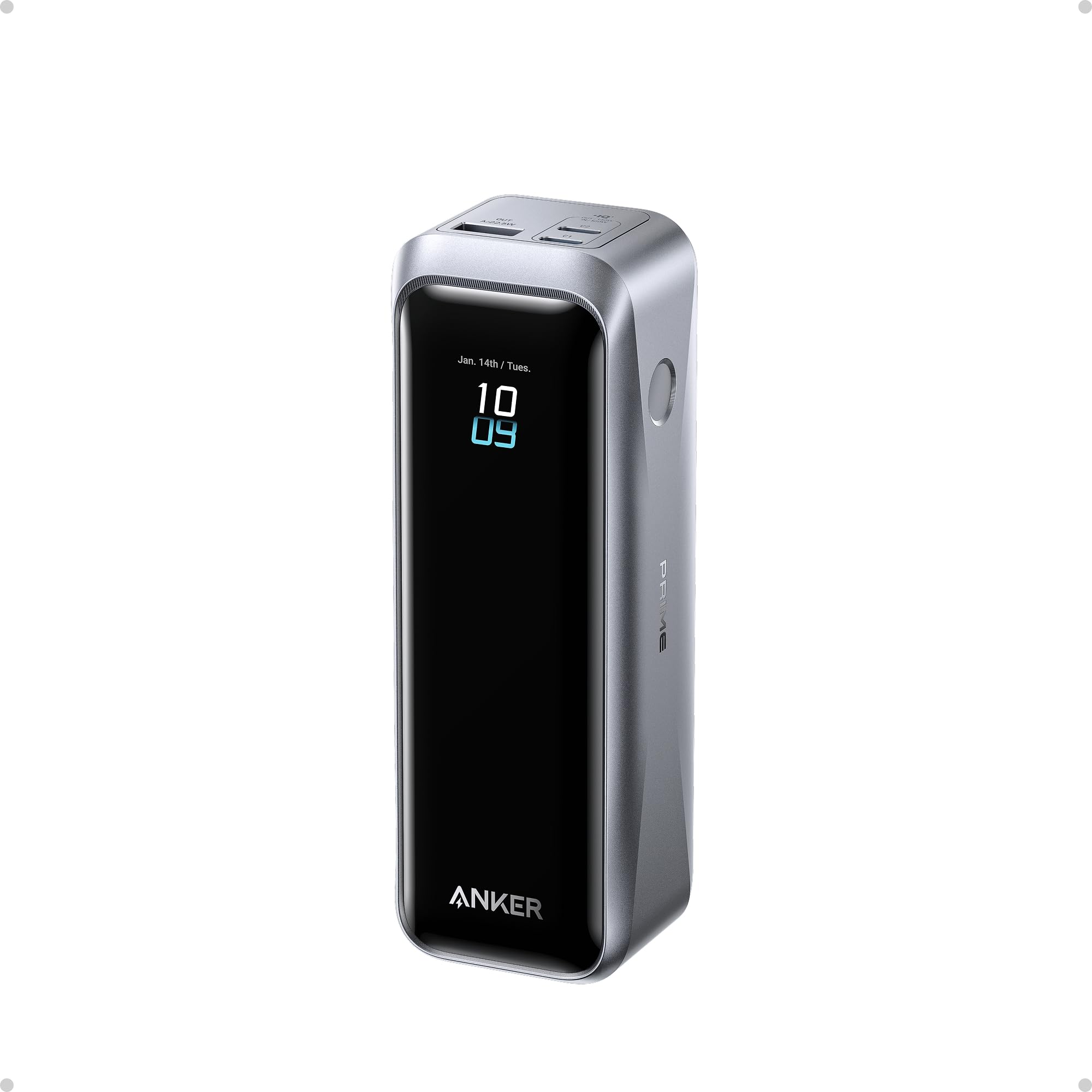
The Anker Prime 20K delivers the highest power density in this roundup at 20,100mAh (72.36Wh) packed into 510g. That works out to about 0.14 Wh/g — excellent for a premium lithium polymer unit. The 220W total output lets you charge a 16-inch MacBook Pro to 50% in 28 minutes while still topping off your phone via the USB-A port. The built-in digital display and Bluetooth app give you per-port telemetry, so you know exactly how much power your headlamp and GPS are pulling.
TSA approval is baked in at 72.36Wh, well under the 100Wh carry-on limit. The 100W max input recharges the bank to 50% in 25 minutes, which means a lunch break at a trailhead cafe can get you back to full. Smart PD negotiation handles picky laptops that other power banks fail to detect, making this a reliable partner for gear-intensive hikes where your phone doubles as your navigation device.
The trade-off is that this is a power bank, not a power station — there are no AC outlets or solar input. For pure weight-to-watt-hour efficiency and the fastest device charging possible, the Anker Prime is the unit you reach for when every gram in your pack matters and you need guaranteed compatibility with high-draw electronics.
Why it’s great
- Exceptional 0.14 Wh/g power density
- App-controlled per-port telemetry
- 100W fast input recharges in 25 min to 50%
Good to know
- No solar or AC input for off-grid recharging
- Premium price reflects top-tier components
2. UGREEN Nexode 25,000mAh
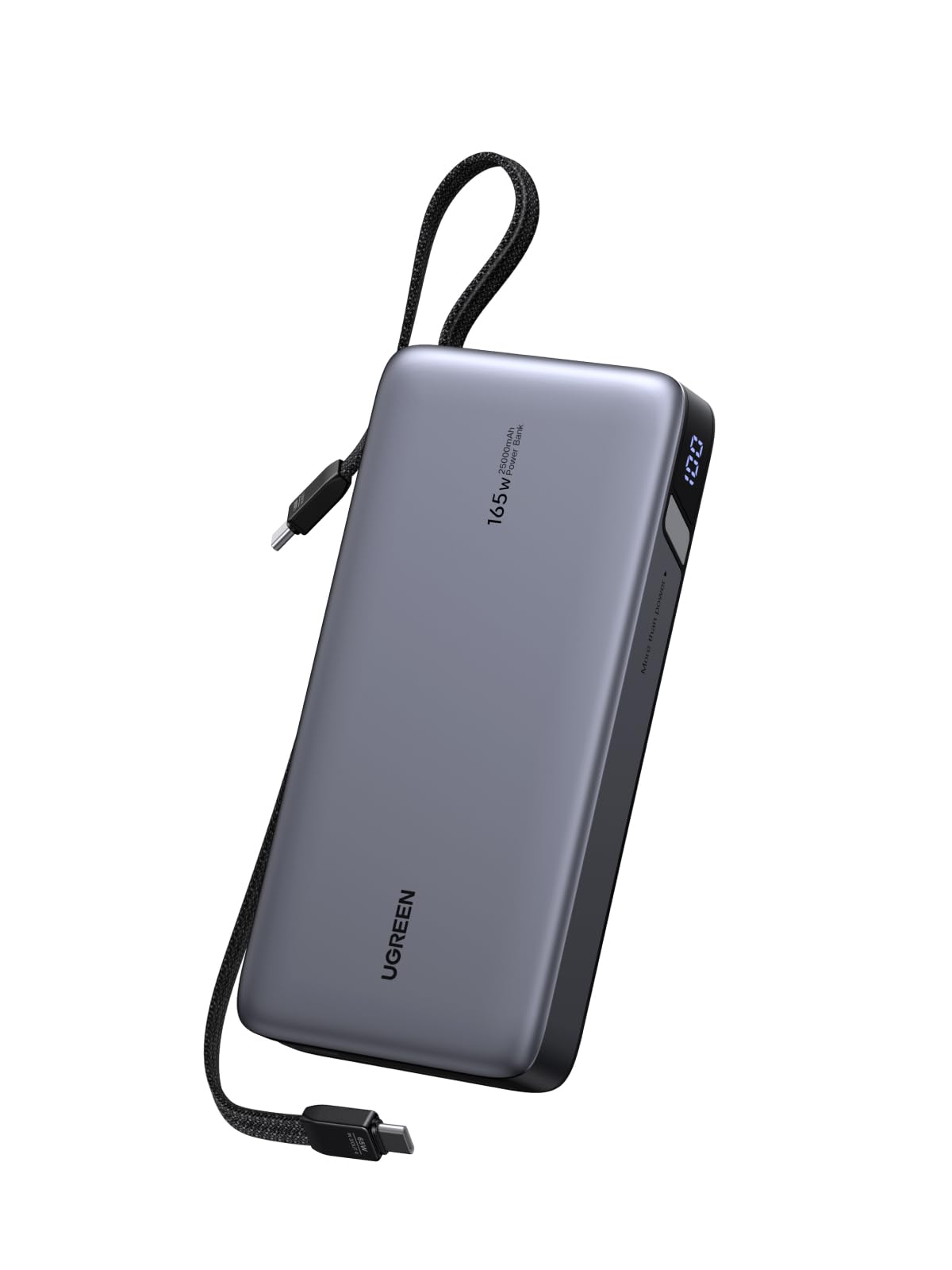
The UGREEN Nexode 25K sits in a sweet spot for backpackers who also work remotely on the trail. Its 25,000mAh capacity translates to 90Wh, just under the 100Wh flight limit, and the 165W total output can simultaneously charge a Dell laptop at 140W and a phone at 25W through the two built-in USB-C cables. The retractable cables eliminate the need to dig through your pack for a cord when you stop at a shelter.
Recharging the bank itself takes about two hours via the 90W input — convenient for a dinner break in town. The slim profile (6.65 x 1.05 x 3.18 inches) slides into the side pocket of most hiking packs without bulging. Customer feedback confirms consistent PD negotiation with picky devices like the Surface Pro and older ThinkPads, which is rare in this capacity tier.
The main downside for ultralight hikers is the weight: 550g is heavier than the Anker Prime despite offering similar usable watt-hours. The lack of solar input also means you must rely on wall charging. For hut-to-hut treks or hybrid work-and-hike trips, the UGREEN’s built-in cables and fast laptop charging make it a practical choice.
Why it’s great
- Two built-in retractable USB-C cables eliminate cord clutter
- 90Wh capacity is TSA-legal and charges most laptops fully
- 165W total output powers two devices simultaneously
Good to know
- Heavier than the Anker Prime at similar capacity
- No solar input for off-grid recharging
3. AsperX 27,600mAh
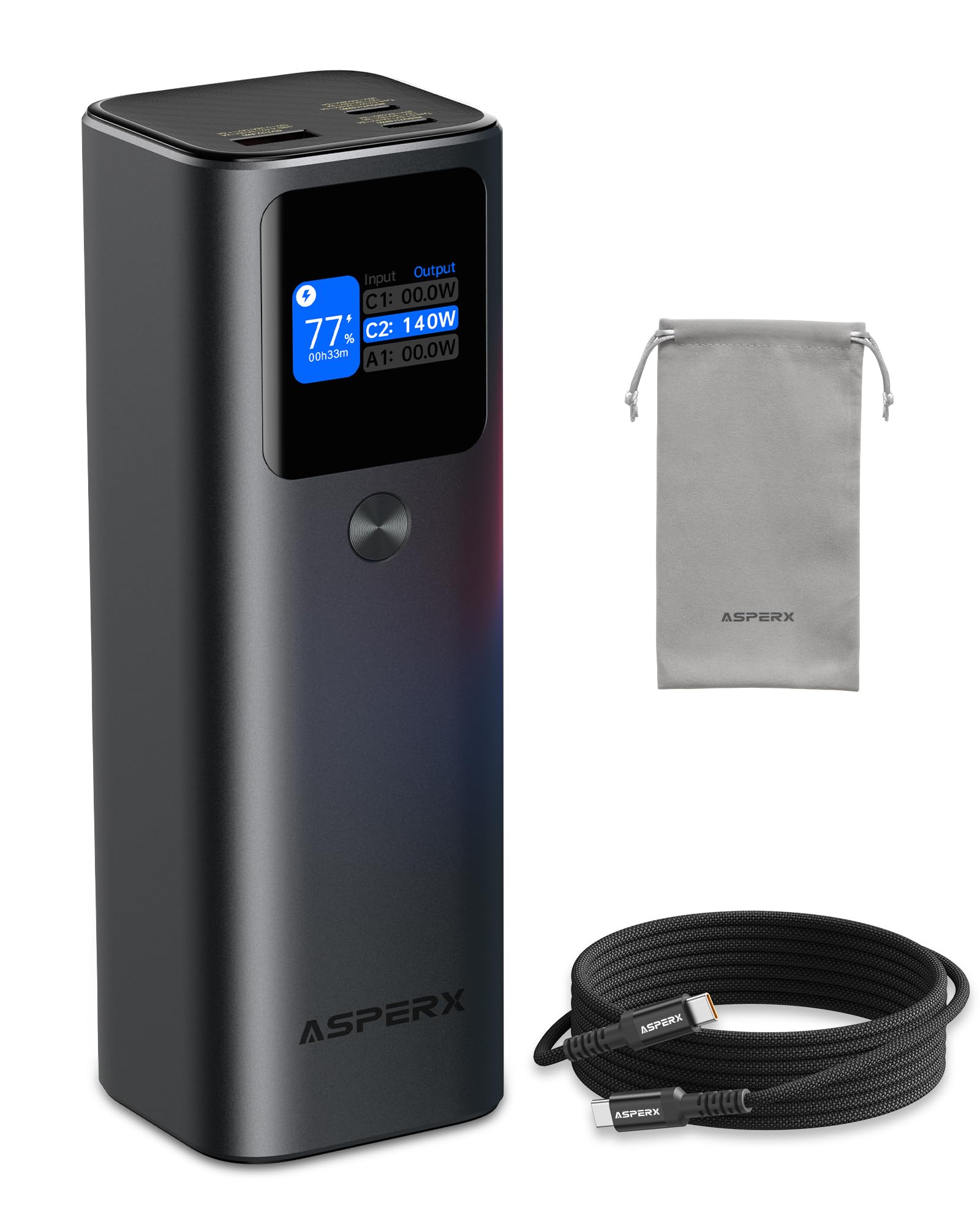
The AsperX stands out for its aluminum unibody construction, which dissipates heat 40% better than plastic-shelled competitors. That matters when you’re charging a laptop at 140W inside a warm tent — sustained high wattage without thermal throttling means faster top-ups. The 27,600mAh (99.36Wh) capacity is the legal maximum for carry-on, and the unit fits into a cargo pocket thanks to its compact 6.1 x 2.09 x 1.97-inch footprint.
The large TFT color display shows real-time output and input wattage per port, remaining time charge, and battery health data — useful for diagnosing if your solar panel is delivering its rated 60W. A built-in retractable USB-C cable covers 90% of charging needs, and the included carrying bag protects the aluminum shell from trail scratches. Reviewers consistently note that the AsperX charges Chromebooks and older Dell laptops that other power banks reject.
At 790g, this is the heaviest pure power bank in the mid-range tier. The aluminum shell adds durability but also grams. For backpackers who prioritize premium build quality, heat management for sustained high-wattage charging, and the ability to push two laptops simultaneously, the weight penalty is justified.
Why it’s great
- Aluminum unibody improves heat dissipation by 40%
- 99.36Wh hits the TSA maximum carry-on capacity
- Large TFT display shows per-port power telemetry
Good to know
- 790g is heavy for ultralight backpacking
- Retractable cable is USB-C only
4. AOHI Future Starship

The AOHI Future Starship delivers the highest total output in this comparison at 240W, with dual USB-C ports capable of 140W each and a USB-A port at 22.5W. That means you can charge a 16-inch MacBook Pro and a gaming laptop simultaneously while topping off a phone. The 27,600mAh (99.36Wh) battery is built with automotive-grade lithium-ion cells rated for over 1,000 cycles — three times the lifespan of standard power banks.
Recharging the Starship is equally impressive: the 140W PD 3.1 input restores 50% capacity in about 30 minutes. The 3-stage smart LED indicator changes color based on charging mode (amber for fast charge, blue for standard, green for trickle), which is useful for verifying you’re getting maximum solar or wall input. The digital display shows remaining capacity and real-time power draw per port.
The obvious trade-off for backpackers is weight. At 1,340g (nearly 3 pounds), the AOHI is more suited for basecamp or vehicle-supported trips than for ultralight thru-hikes. The lack of an AC outlet also limits its utility for powering small appliances. For hikers who need to charge multiple high-draw laptops in remote lodges or trailers, this is the most powerful carry-on-legal option available.
Why it’s great
- 240W total output charges two 140W laptops simultaneously
- Automotive-grade cells rated for 1,000+ cycles
- 140W PD 3.1 input recharges to 50% in 30 minutes
Good to know
- 1,340g is too heavy for most backpacking trips
- No AC outlet or solar input
5. DaranEner NEO Z 192Wh
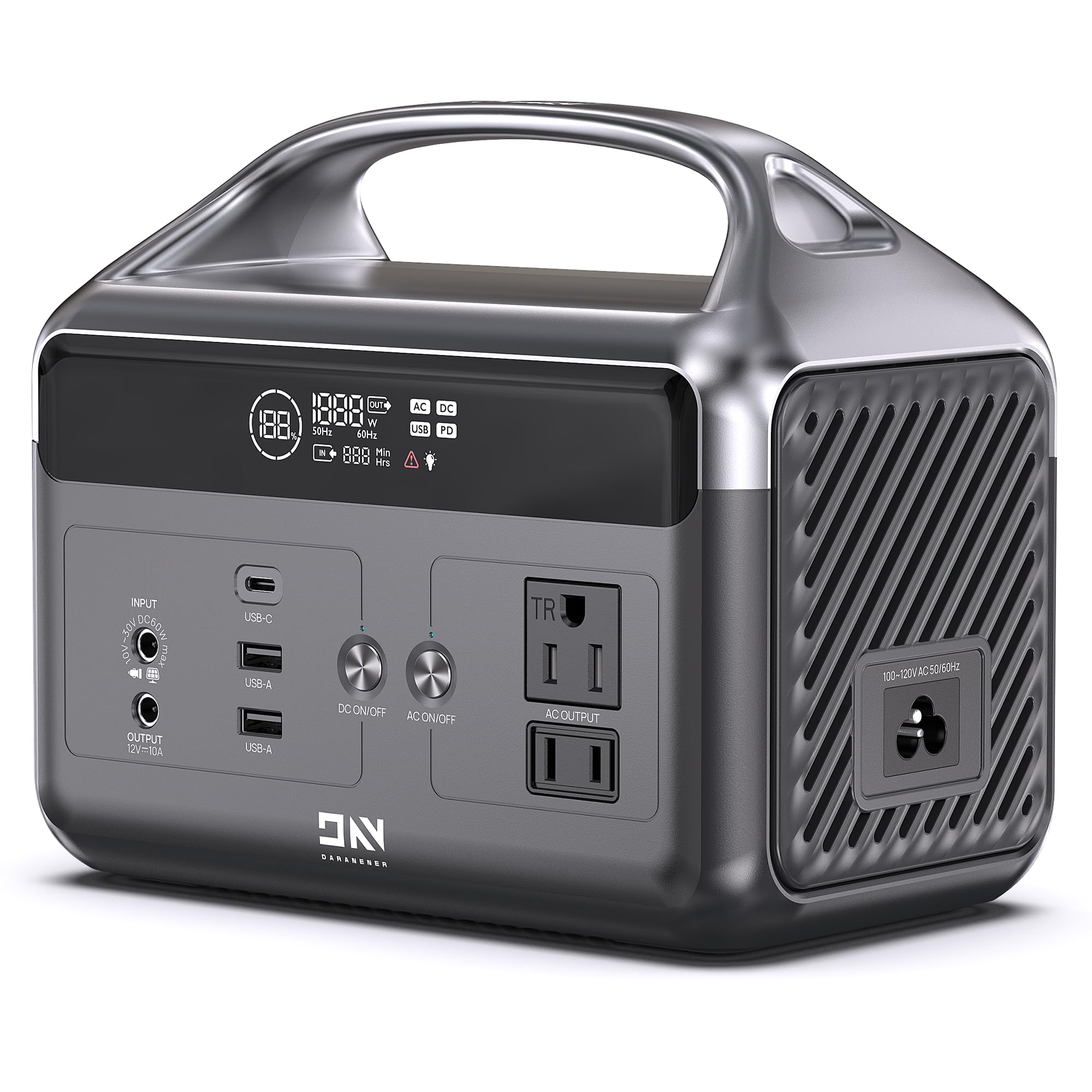
The DaranEner NEO Z is a compact power station, not a traditional power bank, and its 192Wh LiFePO4 battery is the standout feature for backpackers who prioritize cycle life. LiFePO4 chemistry lasts 3,500+ cycles versus 500 for lithium-ion, meaning this unit will outlast your hiking boots. The 300W pure sine wave AC outlet can run a CPAP machine for most of the night, charge a camera battery, or power a small fan in a hot tent.
Recharging options include AC wall (100W), car, and solar (60W via MPPT controller). The MPPT controller is critical — it extracts maximum power from your solar panel even under partial cloud cover, which is the norm on forested trails. The built-in LED flashlight with SOS mode adds emergency utility. Customer reports confirm the unit reliably runs Starlink Mini for about five hours on a full charge.
At 5.7 pounds (2,599g), this is not an ultralight item. It belongs in a basecamp, canoe pack, or vehicle. The 192Wh capacity is also smaller than most dedicated power stations, so you must prioritize which devices to power. For hikers who need a reliable AC outlet for medical devices or who camp in one spot for days, the LiFePO4 longevity makes this a smart investment.
Why it’s great
- LiFePO4 cells rated for 3,500+ cycles
- 300W pure sine wave AC outlet for sensitive electronics
- MPPT solar controller maximizes panel output in shade
Good to know
- 5.7 pounds is heavy for backpacking
- 192Wh capacity may not run high-power appliances
6. Anker SOLIX C200 + 60W Panel

The Anker SOLIX C200 DC is a complete solar generator bundle that pairs a 192Wh LiFePO4 power station with a 60W foldable solar panel. The 140W two-way USB-C port can both charge the station and power your laptop simultaneously, while the three additional USB-C ports (100W, 15W) and two USB-A ports (12W each) handle phones, headlamps, and cameras. The total output is 200W, enough to top off multiple devices at once.
The 60W solar panel folds into its own case and weighs about 4 pounds, adding to the total system weight of 11.62 pounds. That is a significant load, but for extended off-grid trips where you cannot access wall power, the panel can fully recharge the battery in about 3 hours of direct sun. Customer reviews highlight that the system runs a Starlink Mini for five hours and charges a phone five times without the panel. The LiFePO4 chemistry ensures the battery will still hold a good charge after years of weekend use.
The bulk and weight make this a basecamp or vehicle-supported setup only. The 60W panel is also not compatible with Anker’s larger PS200/PS400 panels, limiting future expansion. For backpackers who camp in sunny, open areas and need a self-sufficient recharging ecosystem, the SOLIX C200 bundle removes the need for town stops.
Why it’s great
- Complete off-grid solar recharging solution with panel included
- LiFePO4 battery lasts 3,500+ cycles
- 140W two-way USB-C charges station and laptop simultaneously
Good to know
- System weight of 11.62 lbs limits use to basecamps
- 60W panel is not compatible with larger Anker solar panels
7. YBYP 50,000mAh
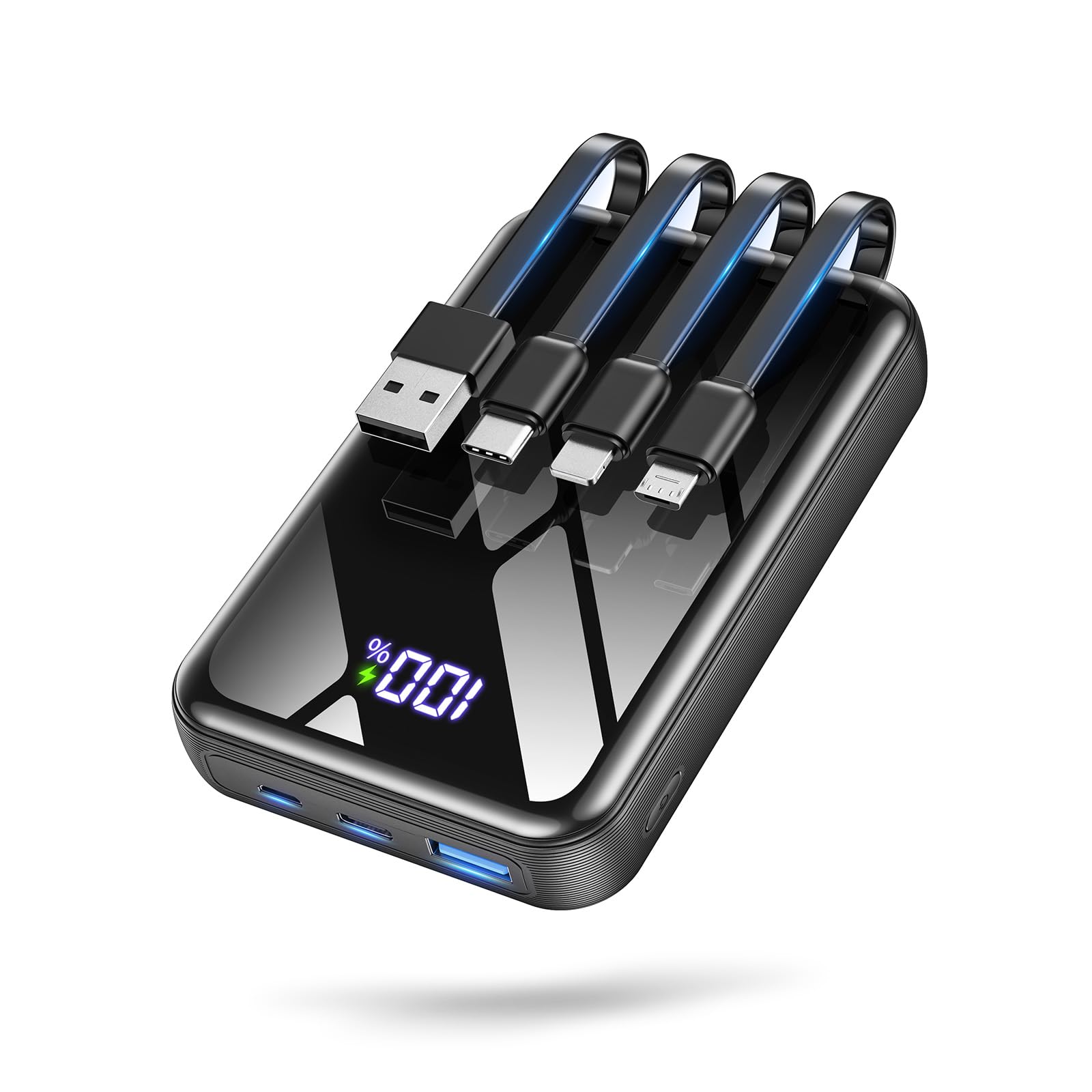
The YBYP 50,000mAh power bank offers the highest raw capacity in this lineup at an entry-level price point. It can charge an iPhone 17 up to 9.1 times or an iPad Pro six times, making it suitable for long trips without any recharging infrastructure. The built-in cables (Micro-B, USB-A, USB-C, Lightning) eliminate the need to pack separate cords, and the 22.5W fast charging delivers 55% to an iPhone in 30 minutes.
The 8-layer safety protection and flame-retardant materials are reassuring for a budget unit, and the LED digital display shows exact remaining percentage. At 0.7 pounds (317g), the advertised weight is surprisingly low for a 50,000mAh battery, which suggests the actual usable capacity may be less than advertised — a common issue with budget-tier cells that use the 3.7V calculation rather than real-world 5V output. Customer reviews confirm the unit is compact but note that the built-in cables are short and the Micro-B input feels dated.
For backpackers on a tight budget who need maximum capacity for group trips where everyone charges from one brick, the YBYP works. The lack of fast input (only Micro-B for charging the bank itself) means it takes hours to recharge the power bank. This is a trade-off for the price — you get volume, but you sacrifice charging speed and long-term cell reliability.
Why it’s great
- 50,000mAh capacity charges phones 9+ times
- Built-in cables for four connector types
- Budget-friendly price for high capacity
Good to know
- Advertised capacity may be inflated due to 3.7V calculation
- Slow Micro-B input for recharging the bank itself
FAQ
Can I bring a 50,000mAh power bank on a plane?
How many times will a 20,000mAh power bank charge my phone on the trail?
Is LiFePO4 worth the extra weight for backpacking?
Final Thoughts: The Verdict
For most backpackers, the backpacking power bank winner is the Anker Prime 20K because it delivers the best weight-to-watt-hour ratio at 0.14 Wh/g while offering 220W total output and app-controlled telemetry. If you need built-in cables and laptop charging for hybrid work-and-hike trips, grab the UGREEN Nexode 25K. And for off-grid solar recharging with LiFePO4 durability, nothing beats the Anker SOLIX C200 bundle.