
Our readers keep the lights on and the weekend projects moving. As an Amazon Associate, I earn from qualifying purchases.
Specs are compiled from manufacturer listings and verified buyer reviews and can change over time — please confirm the key details on the product page before buying.
Backpacking sunglasses need to do three jobs at once: block glare on exposed ridges, stay planted on your face while you sweat uphill, and survive being shoved into a pack pocket at the end of the day. The best pairs disappear on your face until glare hits, then they are the only shield between you and a squint-filled descent.
I’m Rikta — the founder and writer behind FitlyFast. This guide is built by comparing the manufacturers’ published specifications and the patterns across verified customer reviews, so you get each pick’s real strengths and trade-offs instead of marketing spin.
Weighing comfort against durability against price, these backpacking sunglasses earn a spot in your pack because they hold up where miles and sweat take their toll.
Our Picks at a Glance


How To Choose The Best Backpacking Sunglasses
Choosing trail sunglasses is different from choosing a fashion pair. You need optics that cut glare, a frame that grips through sweat, and a lens that survives the inside of a pack. Here is what separates a good day-hike pair from one that earns a permanent spot in your gear.
Grip and Fit Come First
On a climb, your face heats up and sweat starts to flow. A frame that slides down your nose forces you to push it back every few minutes, which gets old fast. Look for rubber or silicone nose pads and temple tips, or frames with a grippy coating that holds even when wet.
Lens Protection Goes Beyond Polarization
Polarization kills glare bouncing off water, snow, and wet rock, but it does not equal UV protection. Check for a UV400 rating, which blocks nearly all UVA and UVB rays, and consider how dark the lens is for the conditions you hike in.
Weight and Durability Are a Trade-off
Ultralight frames feel great on your face but can feel flimsy in your hand. Sturdier materials like Grilamid TR-90 or bio-based frames add a little weight but shrug off the knocks of trail life. Match the build to how rough you are on your gear.
Quick Comparison
| Model | Best For | Weight | Lens | UV Protection | Amazon |
|---|---|---|---|---|---|
| goodr OG Polarized★ Best Overall | All-day comfort at trailhead prices | Not specified | Polarized | UV400 | Amazon |
| Tifosi SwickTop Performer | Cycling and helmet-friendly wear | 26G | Polycarbonate | 100% UVA/UVB | Amazon |
| KastKing HuzzahBest Value | Fishing and water-side glare | Not specified | Polarized | UV Protection | Amazon |
| ZENOTTIC Polarized | Wide heads and big coverage | Not specified | TAC | UV400 | Amazon |
| Knockaround Square | Everyday style with sport grip | Not specified | Polarized | UV400 | Amazon |
| Shady Rays Talon | Runner-focused no-slip wear | Not specified | Polarized | Not specified | Amazon |
| Suncloud Zephyr | Wrap coverage for light sensitivity | Not specified | Polarized polycarbonate | 100% UV | Amazon |
| Julbo Camino | High-altitude and glacier hikes | 1.6 oz | Spectron 3 polycarbonate | 100% UVA, B and C | Amazon |
| Classic Folding | Pocket-size packability | Not specified | Polarized | UV400, UVA, UVB | Amazon |
In‑Depth Reviews
1. goodr OG Polarized Sunglasses
Our pick — over 4.5★ from 9,500+ verified ratings; the strongest balance of quality and price.
The crowd favorite that treats your face to a no-slip grip and your wallet to a break.
The goodr OG’s no-slip, no-bounce grip holds firm through sweaty climbs, earning its 4.6-star rating from over 9,700 owners. The no-slip, no-bounce design holds firm through sweaty climbs, earning its reputation among the 9700-plus owners who have rated it 4.6 stars. Its lightweight frame and lenses sit so unobtrusively you forget they are on, which is exactly what you want on a long day of moving.
UV400 protection blocks nearly all UVA and UVB rays, and the polarized lenses cut glare off water and wet rock with ease. The design shades you on exposed ridges, and the color range lets you match your mood or your shell. The non-reflective lenses avoid the distracting mirror flash that some trail pairs throw back at you.
The frame survives real abuse—buyers report concrete drops where the lens popped out and clicked back in, and one 800+ foot drop from the New River Gorge Bridge walk left the pair intact with no scratches. Owners praise quality above fit and comfort, with hundreds citing it as the standout feature. The trade-off: reflective versions scratch more easily than non-reflective ones, so choose carefully if you are rough on gear.
What wins people over
- No-slip grip holds through sweat and runs
- UV400 polarized lenses kill glare on the trail
- Survives real abuse, including an 800+ ft drop
- Colors and fun names for every taste
Worth knowing
- Reflective lenses scratch more easily than matte ones
- Medium fit may not suit very large heads
Reach for these if: you want a proven, affordable pair that stays put from trailhead to summit.
Look elsewhere if: you need extra-wide coverage or insist on mirror lenses built to ignore scratches.
2. Tifosi Swick Lifestyle Sport Sunglasses
A featherweight 26G frame that disappears under a helmet and shrugs off the brightest sun.
At just 26 grams, this Tifosi Swick is the lightest pair in the lineup, and that weight pays off on a full day of movement. The Grilamid TR-90 frame is built to flex and bounce back, while shatter-resistant polycarbonate lenses carry full UVA/UVB protection. Owners with larger heads specifically praise the fit as roomy without pinching.
Unlike its polarized rivals, this one is deliberately non-polarized, which is a feature if you drive or use a helmet visor. As owners put it: “suitable travel substitute” for the premium brands, with flat bows that tuck cleanly under a helmet without pushing into your temples. The moisture-absorbing nose pads and Tifosi Glide tech keep it planted even when you are sweating.
This is the pair for hikers who also cycle, climb, or wear any kind of helmet on the move. One gripe to note: the lenses run lightly tinted, so on cloudless alpine days you might find yourself wishing for a darker option. Compared with the goodr above, the Swick trades polarized glare-cutting for a lighter frame and helmet-friendly design.
Why it earns its place
- 26G frame is barely there on your face
- Full UVA/UVB protection in a shatterproof lens
- Flat bows fit under helmets without pinching
- Grippy nose pads hold through sweaty effort
Keep in mind
- Non-polarized lenses, so water glare is not fully cut
- Light tint may feel too subtle in harsh alpine light
Best for: multi-sport hikers who want one pair for the trail, the bike, and under a lid.
Not ideal if: you fish or hike beside water all day and need hard glare reduction.
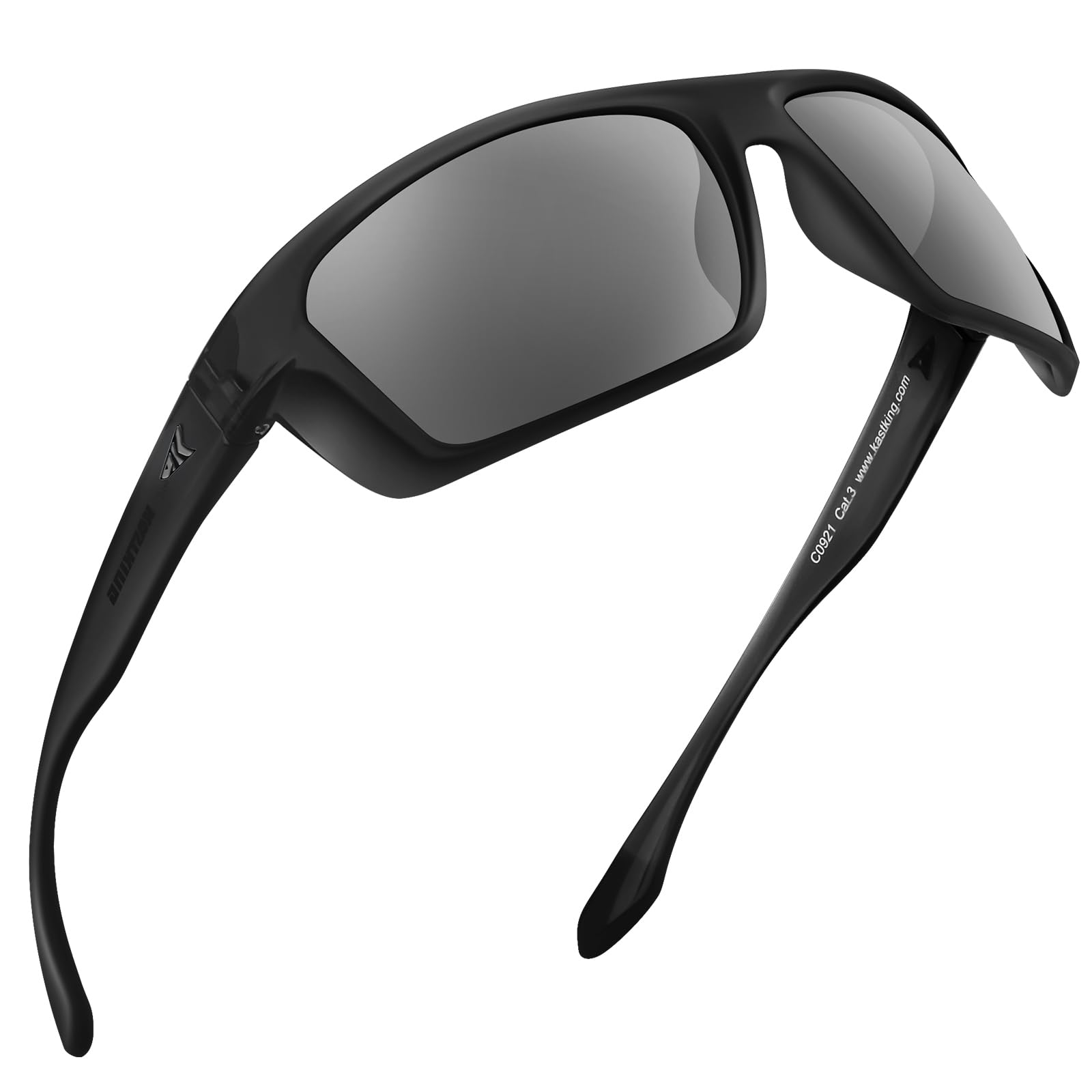
3. KastKing Huzzah Polarized Sport Sunglasses
Wrap-around glare killer that brings fishing-grade polarization to your hike.
Built for fishing and equally at home on the trail, the Huzzah wraps around your eyes to block glare from every angle. The PuriVex water and salt repellent coating sheds moisture, and the polarized lenses cut reflection off lakes and streams with clarity that owners compare to lenses at many times the price. Fit is generous enough for large heads without squeezing.
Quality and value for money are the two things owners mention most, with the polarized lenses delivering “MJ quality without the MJ price tag.” The wrap design offers excellent coverage, and the frames flex rather than snap when you sit on them mid-break. Both a hard case and a microfiber cloth come in the box, so storage in a pack is sorted.
Durability earns mixed feedback here. Most find the lenses impressively scratch-resistant, but a few report the outer lens layer peeling after months of daily wear, so treat them as a solid value pick for occasional-to-moderate trips rather than an ironclad daily driver. That positions them below the goodr in pure toughness, but above most at this price for glare control.
Why it stands out: the polarization genuinely rivals far pricier brands, and the wrap coverage shields your eyes from side glare.
The honest catch: the lens coating has shown peeling on a few pairs after heavy daily use, so keep expectations in check for year-round abuse.
4. ZENOTTIC Polarized Sunglasses

A 21,000-owner favorite that looks like a luxury flex while staying light on your face.
Of everything in this list, ZENOTTIC has the deepest fan base by far — a 4.4-star rating backed by more than 20,000 owners. The TR90 frame is lightweight and flexible enough to fit larger heads without squeezing, and the 60mm lens width gives real coverage for broad faces. UV400 protection and polarized TAC lenses handle the glare of an exposed trail.
Owners describe these as looking like a far more expensive pair, with the low-key blue lens reading as “a luxury flex” and the brown lenses earning praise for protecting eyes on bright days. The snap-in-place hinges have held up for many, and the value-for-money sentiment runs strong throughout the reviews. This is the pair you wear to the trailhead cafe and the summit alike.
Scratch resistance is the mixed variable here. The all-plastic construction keeps weight down but means the lenses need a case rather than loose pocket storage. If you want a sharp-looking pair for town-and-trail duty rather than a rugged expedition beater, this one fits the bill better than most.
What owners love
- Lightweight TR90 frame with flexible fit
- 60mm lenses give wide coverage
- Style that reads as far pricier than it is
- Proven across tens of thousands of owners
Be careful with
- Plastic lenses can scratch without a case
- Anti-glare performance is a mixed bag for some
Choose this when: you want one affordable pair that looks sharp on the trail and in town.
Think twice if: you are hard on gear and rarely use a case, since the plastic lenses show wear.
5. Knockaround Square Polarized Sunglasses
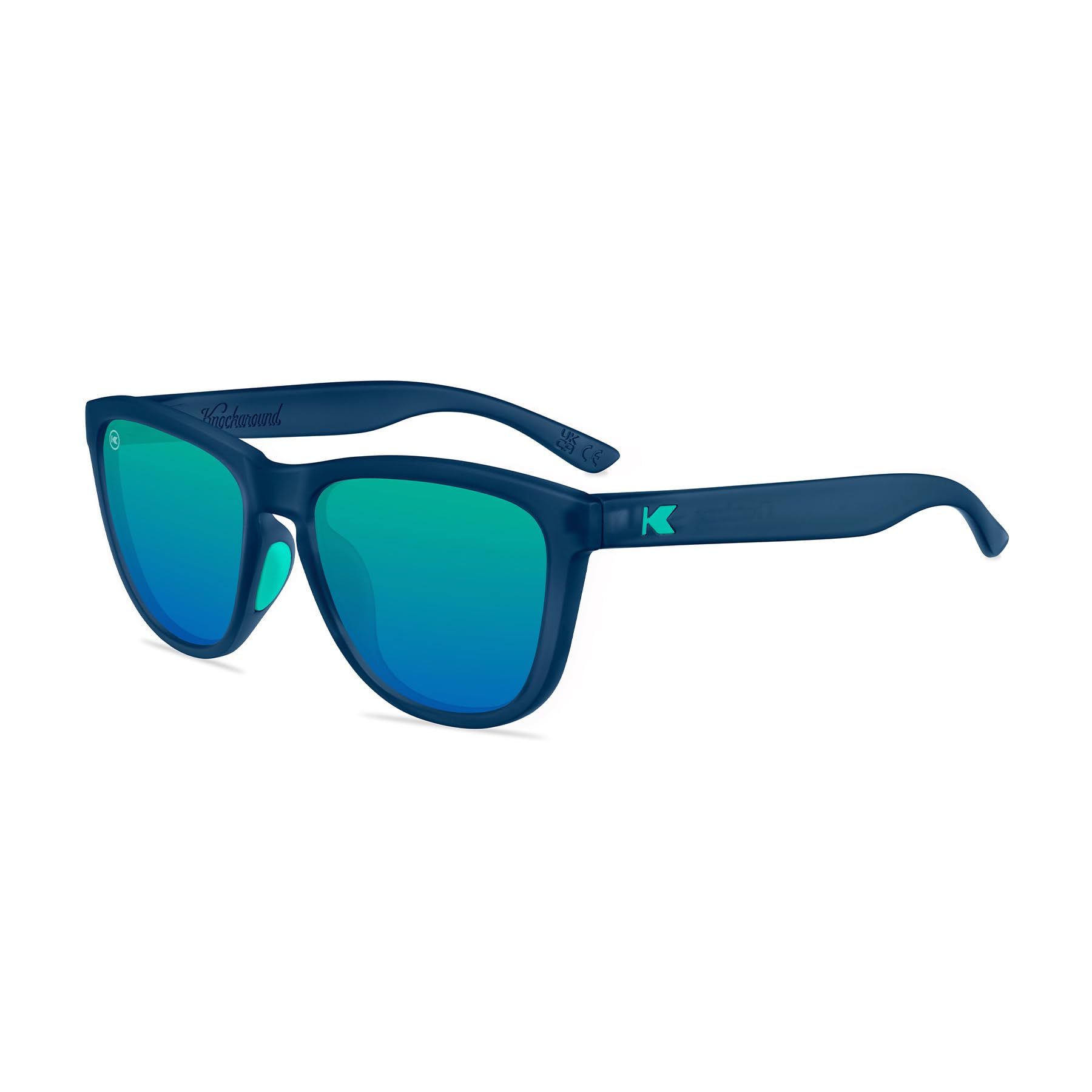
Sport-ready grip wrapped in a funky frame that out-wears your designer pairs.
Knockaround built its name on affordable style, and this square polarized pair brings the sport cred. The silicone nose pads stop slipping so well that owners mention using them for pickleball and running without a thought, holding firm through the kind of sweat that sends other frames sliding. UV400 protection covers the sun worry completely.
The style is the second-most-praised feature, with owners loving the funky color options and a fit that flatters smaller faces in particular. These are the sunglasses you reach for when you want to look good on the approach and still trust them during a trail run. Weight is low and the frame sits comfortably through long wear without pressure behind the ears.
Glare reduction splits opinion, with a few owners finding the lenses less crisp than expected for a polarized pair. The frame also leans toward everyday use rather than brutal expedition duty. For a hiker who wants one versatile pair that does not scream technical gear, this is a smart pick, though the goodr above holds the edge for pure no-nonsense trail performance.
The appeal: a style-first frame that still grips through sweat, with the silicone pads doing the heavy lifting.
The trade-off: lens crispness and glare cutting are good, not class-leading, and the frame prefers town to true expedition abuse.
6. Shady Rays Talon Semi-Rimless Sport Sunglasses
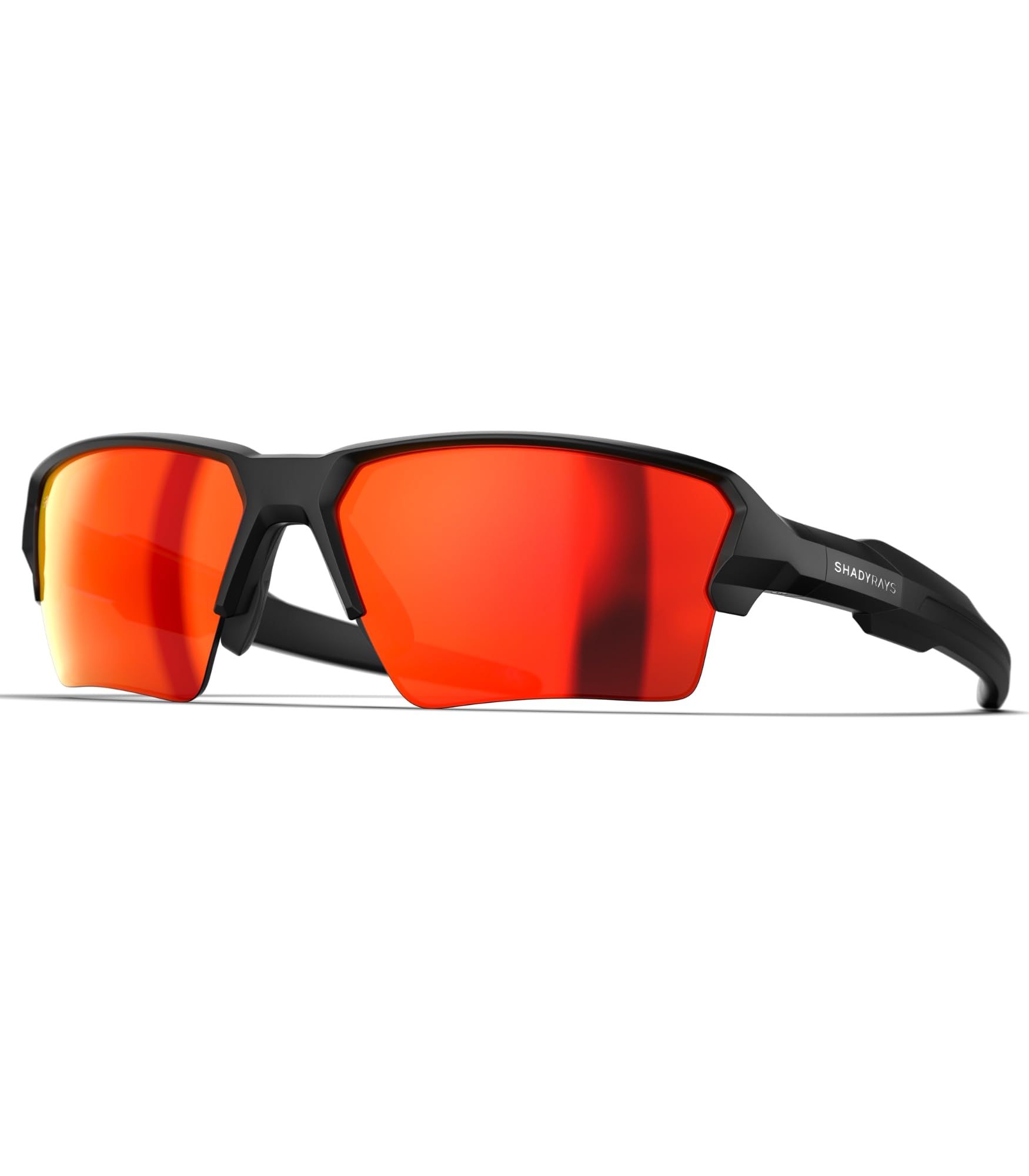
A rimless sport frame so light you forget it, with rubber accents that lock it in place.
Built for movement, the Talon drops the bottom rim to cut weight and open your downward view — a real advantage when watching your footing on rocky descents. Dual injected rubber accents on the arms and bridge deliver the no-slip fit, and owners say they are “lighter than a feather” and comfortable enough to forget they are wearing anything at all.
Everything looks sharper through the polarized lenses, with owners noting a clear line of sight that handles bright sun comfortably. The frame reads as premium in the hand, and the quality feedback is uniformly strong. For runners and hikers who hate the pinch most glasses put on the head above the ears, this one sidesteps that entirely.
The catch is the lens clarity — compared directly against Smith, Costa Del Mar, and Revo pairs, the Talon is a step behind in pure optical crispness. You also get a cloth pouch rather than a hard case, so pack it thoughtfully. This is the pick for movement-first hikers who prioritize a locked-in fit over maximum optical precision.
Built for motion
- No-slip rubber accents hold through effort
- Rimless design opens your downward field of view
- Comfortable enough to forget you are wearing them
- Quality build that feels premium
Know before you buy
- Lenses trail premium brands like Smith and Costa in clarity
- Soft pouch only, no hard case included
Pick this for: runners and technical hikers who prize grip and a clear downward view.
skip it if: optical purity matters more to you than fit, since pricier lenses stay sharper.
7. Suncloud Zephyr Polarized Sunglasses
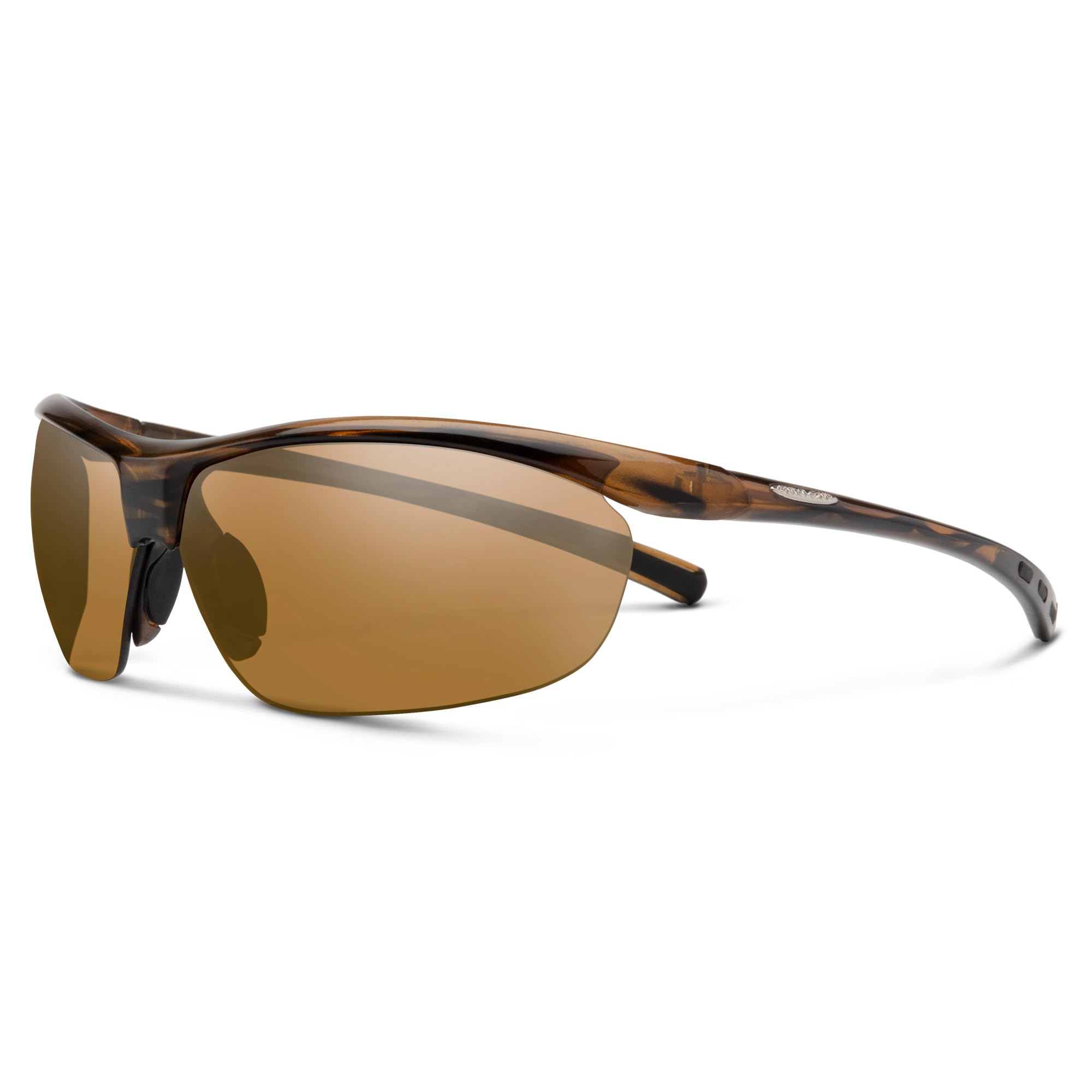
A wrap-around shield that seals out glare and wind without leaving a nose indent.
The Zephyr is the pair Suncloud designed for “Olympic National Park backpackers,” and it shows in the coverage. The 9-base lens curvature wraps deep around your eyes, blocking sun glare and wind from the sides while the megol rubber nose and temple pads keep it anchored comfortably. Owners with light sensitivity call the wrap design ideal.
The Evolve bio-based frame keeps things lightweight and flexible, and the polarized polycarbonate lenses deliver 100% UV protection with a tint dark enough for bright alpine days. Customers note a first pair going scratch-free through a full year of frequent falls, which speaks to real durability despite the light feel. The microfiber storage bag doubles as a cleaning cloth.
Durability earns mixed notes here, with a few owners reporting stems that break under stress, so treat the arms with care. Some also feel the frame is lighter and less “country-club grade” than the price suggests. For a hiker who wants full wrap coverage and secure comfort, this is a dependable go-to that has proven itself across a decade of trail use.
The strength: wrap coverage that blocks side glare and wind, with a frame light enough for all-day wear.
The watch-out: treat the stems gently, as a minority of owners have snapped them under strain.
8. Julbo Camino Glacier Sunglasses

Glacier-grade protection with removable side shields for the brightest, highest trails.
For high-altitude and glacier hiking, this Julbo is the specialist in the lineup. The removable side shields block intense sunlight from the edges at elevation, and the Spectron 3 polycarbonate lens delivers 13% visible light transmission — meaning it blocks 87% of incoming light for serious sun. That full 100% UVA, B and C protection covers every angle your eyes face.
At just 1.6 ounces, the Camino is remarkably light for the coverage it provides. Owners say it fits wide heads comfortably, that the side shields block light effectively “without being noticeable,” and that the quality justifies a price that would feel high elsewhere. The Color Flash mirrored finish adds extra filtration, and the lenses work well from partly cloudy to full sun.
The recurring debate is tint darkness, with some finding the lenses perfectly dark and others wanting more shade on glaring snow. The square shape and standard fit suit most faces, and a lifetime warranty backs the build. This is the pair you take when the sun is the most dangerous thing on the mountain.
Alpine strengths
- Removable side shields block glare at high elevation
- Blocks 87% of light for bright-day protection
- Featherlight 1.6 oz with full coverage
- 100% UVA, B and C protection
Consider this
- Tint darkness splits opinion, so test in bright snow
- Premium price reflects the specialist build
Choose this when: your hikes live above the treeline where sun and snow glare are relentless.
Pass if: you mostly hike forested lowlands where this level of coverage is overkill.
9. Classic Folding Polarized Sunglasses
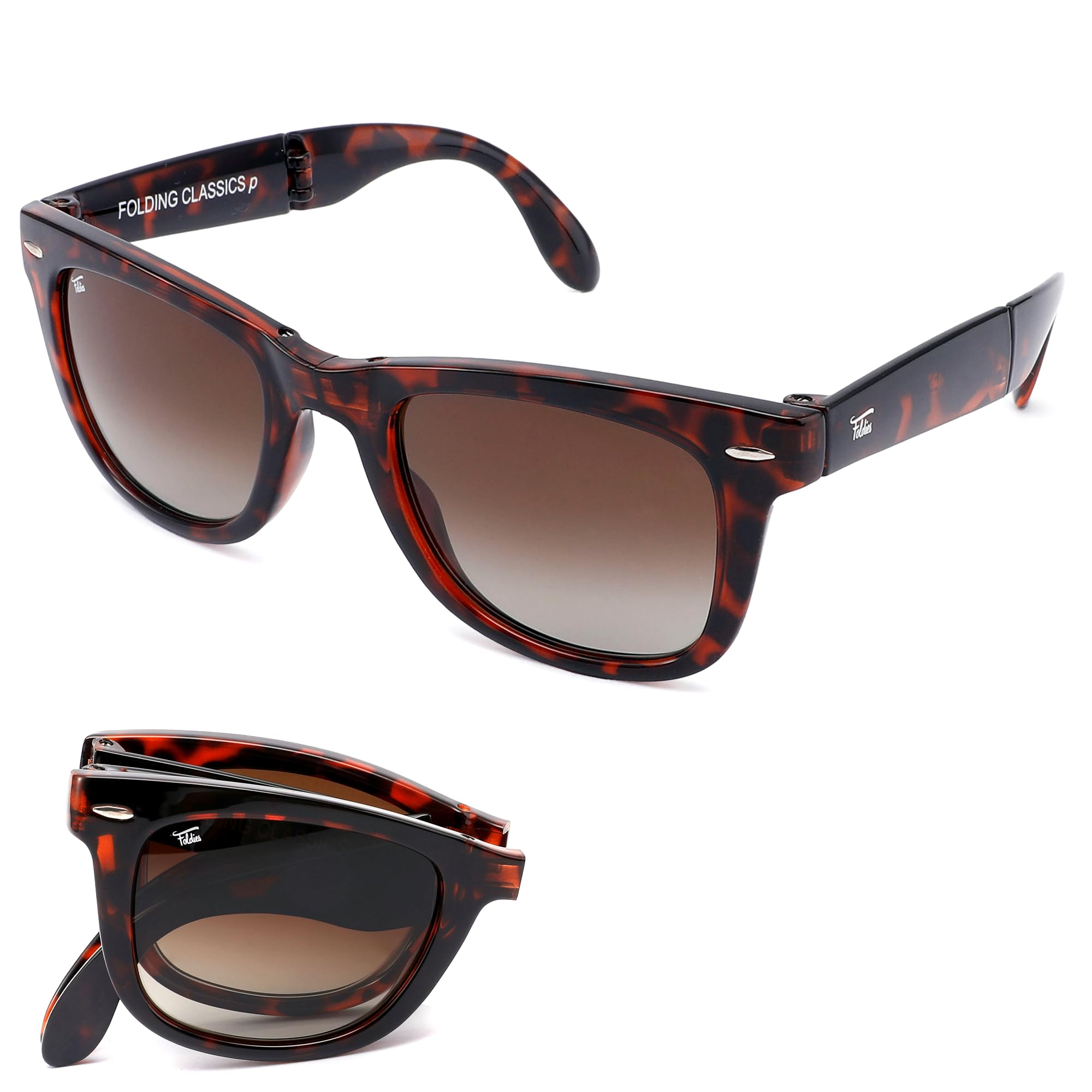
A pocket-sized folding frame that vanishes into your pack until the sun demands it.
Space is precious in a backpack, and this folding pair solves that problem outright. The frame collapses into a compact size that drops into a pocket or the included leather case, making it the most packable option in this list. Owners specifically bought it to “take something small while traveling” and praise how easily it stores.
The polarized lenses carry UV400, UVA, and UVB protection, and the TR90 and metal frame feels sturdy rather than flimsy — a pair that does not feel like it will fall apart after repeated open-and-close cycles. The universal style suits everything from fly fishing to business wear, and reviewers point out a snug fit that resists slipping even when sweating.
Fit is the mixed note here. Some find the folded width perfect for smaller faces, while others say it runs too wide for narrow heads, so measure your face before committing. The lenses also show scratches with heavy pocket use, so the case earns its keep. For a hiker who refuses to dedicate pack space to eyewear, this is the answer.
Why it wins: no other pair here folds this small, and the build feels solid enough for daily open-and-close use.
Before buying: check the width against your face, since narrow heads may find the fold too wide.
Understanding the Specs
UV400 Protection
UV400 means the lenses block nearly all UVA and UVB rays, which is the single most important safety spec in a trail pair. At altitude, UV exposure rises sharply, so a UV400 or “100% UV” rating is non-negotiable for backpacking. Look for this number on any pair you consider.
Polarized Lenses
Polarization cuts glare bouncing off water, snow, and wet rock by filtering out horizontal light waves. This makes trail and water features easier to read. The trade-off is that polarized lenses can dim LCD screens, and some drivers avoid them. Many hikers consider polarization essential; others prefer non-polarized for helmet visor clarity.
Visible Light Transmission
VLT tells you what percentage of light reaches your eyes. A lower number means a darker lens — the Julbo’s 13% VLT blocks 87% of light for bright alpine days. For general hiking, a medium tint around 20-40% works well across changing conditions. Match the darkness to the terrain you hike most.
Frame Weight and Grip
Weight matters on a long hike, but grip matters more. Rubber or silicone nose pads and temple tips keep glasses planted through sweat, while light frames like the 26G Tifosi or 1.6 oz Julbo disappear on your face. A frame that slides is a frame you will take off—and then lose.
FAQ
Are polarized lenses worth it for backpacking?
What does UV400 actually mean for my eyes?
How dark should backpacking sunglasses lenses be?
Will these sunglasses fit under a hiking helmet or cap?
How do I stop sunglasses from slipping when I sweat?
Are folding sunglasses durable enough for backpacking?
What is the difference between glass and plastic lenses for hiking?
Can I use fishing sunglasses for backpacking?
How important is frame weight in a backpacking pair?
What is a side shield and do I need one?
Final Thoughts: The Verdict
For most backpackers, the winner is the goodr OG because it delivers a no-slip grip, UV400 polarized protection, and proven toughness that has earned the trust of thousands of trail users. If you want a featherlight frame built for helmets and multi-sport use, grab the Tifosi Swick. And for alpine days above the treeline, the Julbo Camino with its side shields is the pair to reach for.
How We Picked
We do not accept paid placement. Every pick is matched to a real buyer and a real use-case; we do not hands-on test units.
Sources & Methodology
Specifications: manufacturer listings and product documentation. Review insights: verified customer reviews, as of August 2026. Pricing: not shown on this page (it changes often); check the current price via the retailer link.
As an Amazon Associate, FitlyFast earns from qualifying purchases. This does not affect which products we feature.