
Our readers keep the lights on and the weekend projects moving. As an Amazon Associate, I earn from qualifying purchases.
A backpacking tent is your home away from home, a fragile shell that separates you from wind, rain, and cold ground. But the wrong choice — too heavy, too cramped, too fragile — can turn a dream trip into a miserable trudge. Every ounce you carry on your back has to earn its place, and the tent is the single heaviest item in your pack.
I’m Rikta — the co-founder and writer behind FitlyFast. I’ve spent hundreds of hours analyzing shelter designs, comparing fabric deniers, pole architectures, and real-world weather resistance data to separate the true backpacking shelters from car-camping gear dressed up in marketing.
This guide breaks down the best options across every weight and price tier so you can confidently choose the backpacking tent that matches your style, your trails, and your budget.
How To Choose The Best Backpacking Tent
Choosing a backpacking tent means balancing three forces that pull in opposite directions: weight, livable space, and weather protection. A tent that scores perfectly on all three at a reasonable price does not exist — every model makes trade-offs. Your job is to pick the trade-offs that favor your specific style of travel.
Weight: The Real Cost of Every Ounce
Backpacking tent weights range from just under 2 pounds for a minimalist solo shelter to over 6 pounds for a spacious 3-person model. The “trail weight” specification (tent body, poles, rainfly, and footprint — but not stakes or stuff sack) is the number that matters for your pack. Every extra pound you carry on your shoulders is a pound you feel on every uphill mile. Serious backpackers aim for a trail weight under 4 pounds for a 2-person tent. Ultralight hikers push below 3 pounds.
Floor Area and Peak Height: The Person-Count Trap
Tent manufacturers label their tents “2-person” and “3-person” based on the tightest possible fit with two or three sleeping pads squeezed side-by-side. In reality, a 2-person tent that is 30 square feet or less will feel cramped for two adults with gear. Look at the actual floor dimensions and peak height: a 50-inch floor width fits two 25-inch sleeping pads with no wasted space. A 40-inch peak height lets you sit up to change clothes without scraping the ceiling mesh.
Weather Resistance: Seam Sealing and Pole Architecture
A tent is only as good as its rainfly and its pole structure. Fully seam-taped rainflies rated at 1500mm or higher hydrostatic head keep water out during sustained rain. Freestanding dome designs with aluminum poles handle wind better than non-freestanding tents that rely on stakes for structure. A good rainfly extends close to the ground and includes vestibules that keep your gear dry while you sleep.
Quick Comparison
On smaller screens, swipe sideways to see the full table.
| Model | Category | Best For | Key Spec | Amazon |
|---|---|---|---|---|
| MSR Hubba Hubba Bikepack | Premium | Bikepacking / Ultralight backpacking | 3 lb 1 oz trail weight, 84×50 inch floor | Amazon |
| Big Agnes Copper Spur HV UL2 | Premium | Ultralight trekkers needing space | 3 lbs packed weight, steep wall design | Amazon |
| NEMO Dagger OSMO 2P | Premium | Comfort-focused backpackers | 30.6 sq ft floor, 43 inch peak height | Amazon |
| Marmot Limelight 3P | Mid-Range | Two people with gear / dog | 45.2 sq ft floor, gear alcove design | Amazon |
| OneTigris COSMITTO 2P | Mid-Range | Budget-conscious weekend backpackers | 30.96 sq ft, 1500mm HH rainfly | Amazon |
| Kelty Grand Mesa 2P | Mid-Range | Reliable 3-season shelter | 4 lb 1 oz trail weight, 30 sq ft floor | Amazon |
| Naturehike Mongar 2P (20D) | Budget-Friendly | First-time backpackers on a budget | 4.73 lbs packed, 4000mm HH floor | Amazon |
| Naturehike Mongar 2P (210T) | Budget-Friendly | Value seekers wanting features | 4.7 lbs packed, 30 sq ft floor | Amazon |
| Kelty Discovery Trail 2P | Entry-Level | Budget introduction to backpacking | 4 lb 5 oz trail weight, PFC-free fabric | Amazon |
In‑Depth Reviews
1. MSR Hubba Hubba Bikepack 2 Person Tent

The MSR Hubba Hubba Bikepack is the gold standard for tent design that balances ultralight weight with genuine livable space. At a trail weight of 3 pounds 1 ounce, it shaves ounces without sacrificing the 84-by-50-inch rectangular floor that fits two adults and their gear comfortably. The DAC poles fold short enough to fit on handlebars, and the included handlebar bag with removable spacers clears brake cables on any bike.
The 20D ripstop nylon rainfly carries a DuraShield polyurethane coating with fully taped seams, which means it handles shoulder-season storms without wetting out. Two large vestibules provide protected gear storage that keeps wet panniers and muddy boots outside the sleeping area. Internal and external clotheslines let you dry damp layers overnight — a small detail that makes a big difference on multi-day trips.
Setup takes under 10 minutes solo, thanks to color-coded clip-and-pole attachments that remove the guesswork. The true rectangular floor plan delivers exceptional living space for its weight class, and reflective guylines add safety at night. For backpackers who also bike or simply refuse to compromise on weight-to-space ratio, this tent defines the category.
Why it’s great
- Category-leading 3 lb 1 oz trail weight with full features
- DAC pole architecture folds short for bikepacking or tight packs
- Large dual vestibules for wet gear storage
Good to know
- Premium price reflects the engineering and materials
- Handlebar carry bag needs extra velcro strap security on rough terrain
2. Big Agnes Copper Spur HV UL2

Big Agnes built the Copper Spur HV UL2 around a simple insight: most ultralight tents feel like coffins because the walls slope inward. The high-volume pole architecture creates steeper sidewalls that transform the 29-square-foot floor into usable living space — you can sit up at the edges without your head brushing wet nylon. At a packed weight just over 3 pounds, it competes with the lightest shelters while offering dual doors and dual vestibules that make two-person living feasible.
The two-tone mesh body provides privacy during the day and transforms into a star-gazing panel at night. The quick-stash system on the tent body door lets you stow the unzipped door in seconds — a small ergonomic win that matters at midnight when rain starts. The included footprint and the fully freestanding design mean you can pitch it on a tent pad, on sand, or on a wooden platform without stakes.
Real-world reports confirm it survives 60+ mph wind gusts when fully staked with all 12 guylines, and the orange color option improves visibility at dusk in treeline camps. The price is steep, but the weight savings per dollar are among the best in the ultralight segment. For hikers counting every gram who refuse to sleep cramped, this tent remains a benchmark.
Why it’s great
- Steep wall architecture maximizes interior space for the weight
- Fully freestanding — pitches on any surface without stakes
- Quick-stash door and reflective guylines improve usability
Good to know
- Requires 12 stakes for full severe-weather guying out
- Vestibule-to-awning conversion is not stable in wind
3. NEMO Dagger OSMO 2P
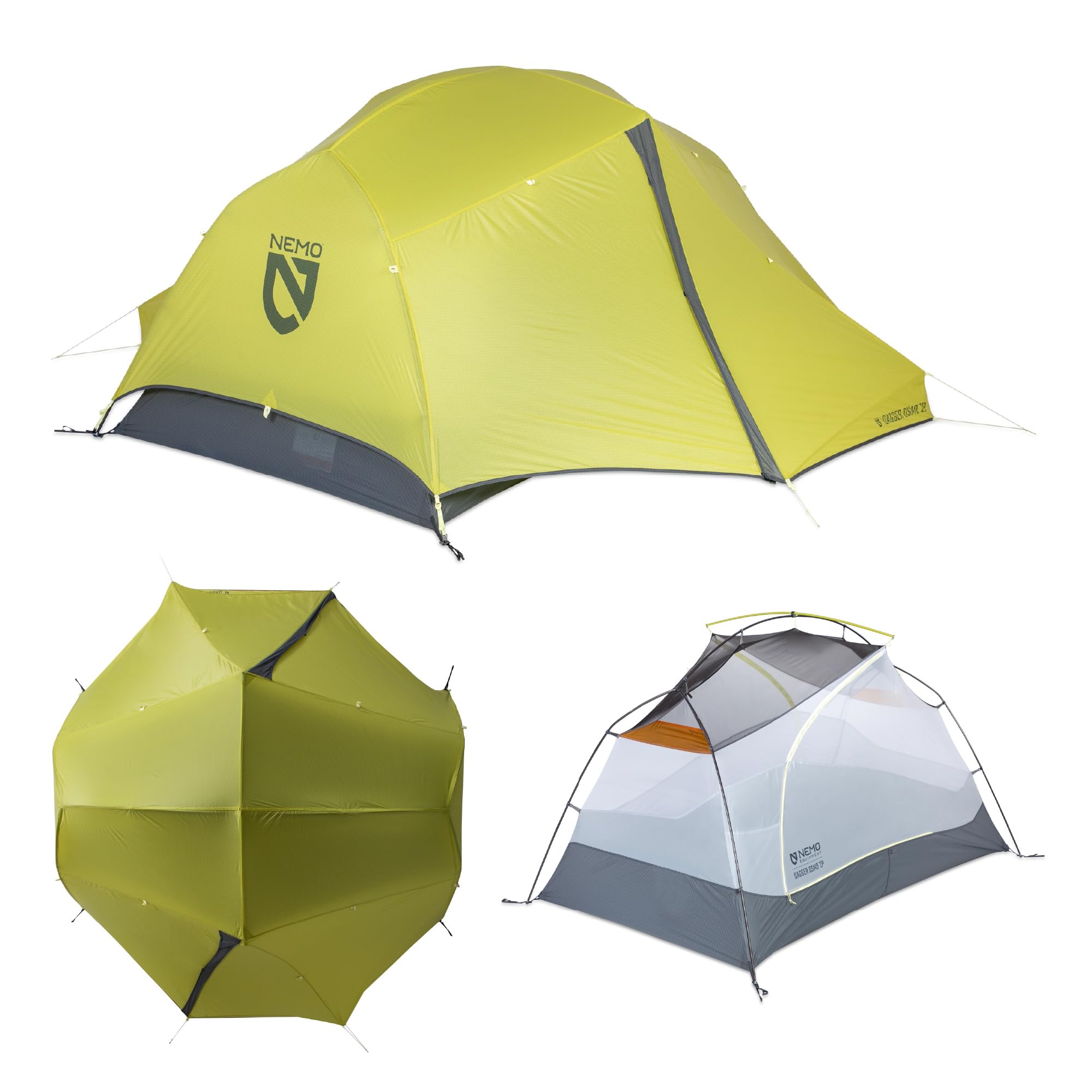
The NEMO Dagger OSMO redefines what “roomy” means in the sub-4-pound backpacking tent category. With 30.6 square feet of floor area and a 43-inch peak height, it offers the highest usable volume per square foot of any 2-person tent at this weight. The OSMO poly-nylon ripstop fabric is the headline feature — it is made from 100% recycled yarns, is PFAS-free, and resists water repellency degradation four times longer than standard coatings.
The Volumizing Stash strut increases vestibule space by 22% compared to the previous generation, which translates to enough room for two large backpacks plus boots under cover. The hybrid freestanding design uses the Axial corner anchor system that lets you tension the tent one-handed — particularly useful when setting up alone in wind. The included three-blade stakes are heavy but grip loose soil better than standard Y-stakes.
As a bluesign-certified product, the Dagger OSMO meets strict ecological and chemical standards without using added flame retardants. The solution-dyed fabric saves water and energy during production. For hikers who prioritize environmental footprint alongside their own, this tent delivers premium performance without greenwashing. It is expensive, and the thin fabric requires careful site selection, but the comfort-per-ounce ratio is unmatched.
Why it’s great
- OSMO fabric offers 4x longer water repellency and 3x less wet stretch
- Best-in-class headroom with 43-inch peak height
- bluesign certified with 100% recycled, PFAS-free materials
Good to know
- Thin fabric and plastic hooks require careful handling
- Footprint not included and recommended for floor protection
4. Marmot Limelight 3P
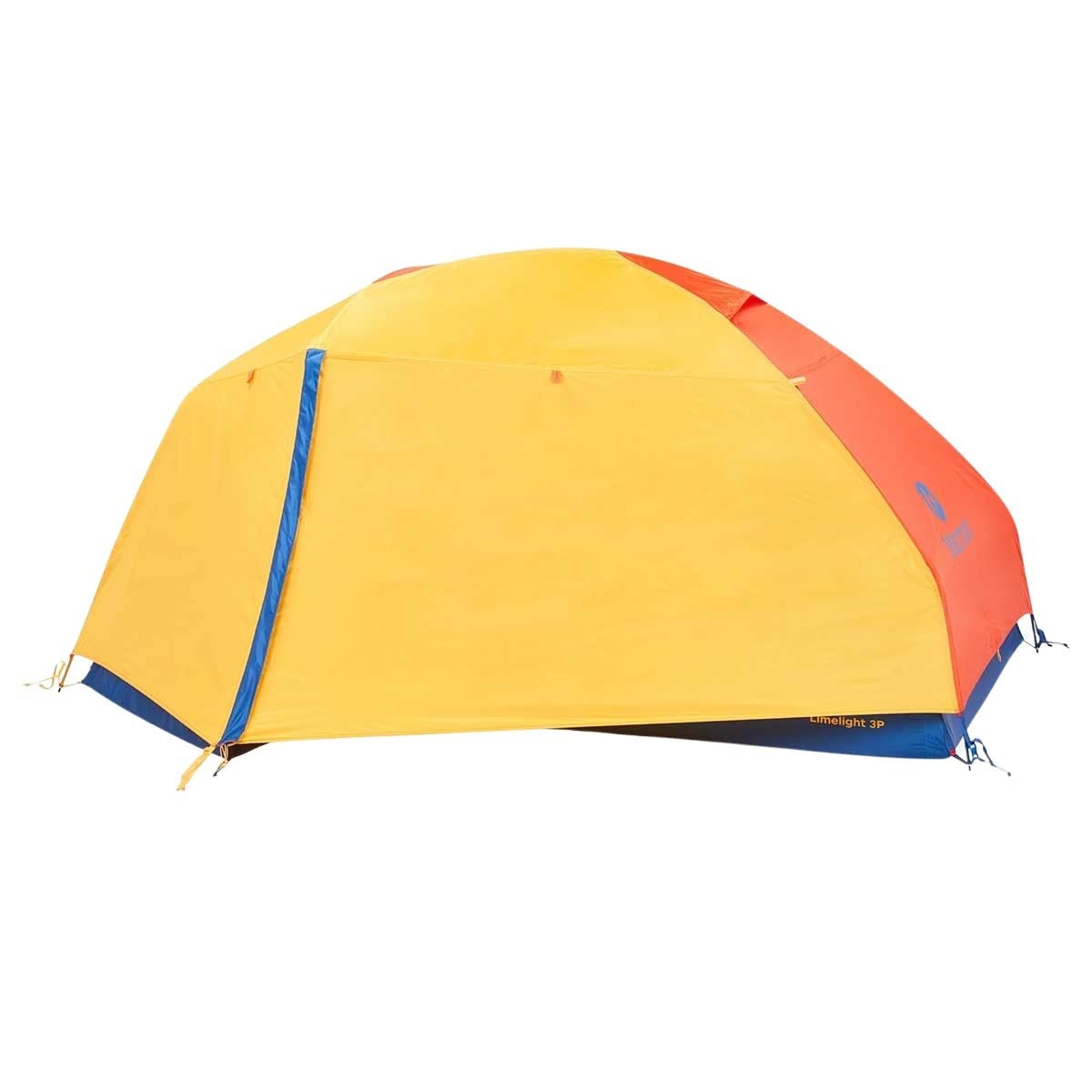
The Marmot Limelight 3P is the tent you choose when you want backpacking-appropriate weight but refuse to sleep in a tight tube. With 45.2 square feet of floor space and a unique “bow-out” sidewall design, it creates dedicated gear alcoves that keep sleeping pads from sliding into each other. Two D-shaped doors and two substantial vestibules mean both occupants can enter, exit, and store gear without maneuvering around each other.
The included footprint adds weight but eliminates the need to buy a separate ground sheet, and the color-coded Easy Pitch clips make setup fast even in fading light. The polyester rainfly with fully taped seams has kept users dry through intense mountain storms. Interior pockets and gear lofts keep headlamps, phones, and maps organized and off the floor.
For two people plus a dog, or for solo hikers who want palatial space, the Limelight 3P hits a sweet spot between a true ultralight 2-person shelter and a heavy car-camping tent. The fly door design can catch inside the tent door during entry, and the plastic pole snaps are a less durable alternative to metal clips. But for the space-to-weight ratio at this price point, it is a strong contender.
Why it’s great
- Bow-out sidewalls create storage alcoves and maximize livable width
- Footprint included in the package — no extra purchase needed
- Color-coded setup clips simplify pitching
Good to know
- Rainfly door design can snag on the tent door zipper
- Plastic pole snaps not as durable as metal clip systems
5. OneTigris COSMITTO 2P

The OneTigris COSMITTO 2P delivers premium tent features — dual vestibules, full-noseeum mesh inner, and a 1500mm hydrostatic head rainfly — at a price that undercuts established brands by a wide margin. The 20D plaid ripstop polyester fly and 75D nylon bathtub floor provide rugged durability at a packed weight that is reasonable for weekend backpacking trips. Setup takes under 5 minutes solo, with color-coded clips and one-hand fly attachment points.
The interior measures 30.96 square feet with a 3.6-foot peak height, which fits two adults in a snug but functional arrangement. The hexagon-shaped outer tent improves wind resistance by shedding gusts rather than catching them like a flat-sided dome. The included Line Loc 3 tensioners let you fine-guy the fly without retying knots, and dual vents with rain flaps reduce condensation buildup during humid nights.
Stakes are strong enough to handle a hammer, and the stuff sack compresses the tent into a manageable 23.6-by-6.3-inch package. The main trade-off is that the fly color on the “Upgrade Version” runs darker than product photos suggest, and the zippers can snag on the rainfly material. For budget-conscious backpackers who still want a fully featured 2-person shelter, this tent represents the best value in the category.
Why it’s great
- Feature-rich design with dual vestibules and full mesh inner at a budget price
- Hexagonal shape sheds wind better than standard dome geometries
- Setup under 5 minutes with color-coded clip system
Good to know
- Fly color can be significantly darker than advertised images
- Zippers require careful routing to avoid snagging on rainfly
6. Kelty Grand Mesa 2P

The Kelty Grand Mesa 2P is a straightforward, no-nonsense 3-season tent that focuses on durability and ease of use rather than chasing ultralight specs. The 68D polyester floor and rainfly fabric is thicker than the 20D nylon used in ultralight tents, which means it resists abrasion and punctures better on rocky or root-covered campsites. At 4 pounds 1 ounce trail weight, it sits in the middle ground — not ultralight, but light enough for trips where durability matters more than grams.
Kelty’s Quick Corners keep the two aluminum pressfit poles locked in place during setup, and the color-coded clips and fly attachments make the process intuitive even for first-time backpackers. The Shark Mouth stuff sack is designed for easier packing — you load from the top and cinch rather than fighting a narrow opening. The single-door, single-vestibule layout is simple and functional, with fully taped seams that have kept users bone-dry in sideways rain.
The 30-square-foot floor with a 44-inch peak height is comfortable for one person with gear or two people who don’t mind close quarters. The zippers start stiff but loosen with use, and the ground cover is not included. For backpackers who want a tent that seasons well and handles rough treatment without breaking the bank, the Grand Mesa is a proven, straightforward choice.
Why it’s great
- Thick 68D polyester fabric provides excellent long-term durability
- Quick Corners and color-coded clips make setup fast and foolproof
- Fully seam-taped rainfly delivers reliable weather protection
Good to know
- Bulky packed size compared to modern ultralight options
- Footprint/ground cover must be purchased separately
7. Naturehike Mongar 2P (20D Nylon)

The Naturehike Mongar 2P in 20D nylon is a direct competitor to premium dome tents at a fraction of the cost. The 4000mm hydrostatic head rating on both the fly and floor is exceptionally high for the price point — most budget tents offer 1200-2000mm. The free-standing Y-frame design uses 7001 aluminum alloy poles that provide good stiffness-to-weight ratio, and the 4.73-pound packed weight includes a footprint groundsheet at no extra charge.
The interior measures 82.7 by 53.2 inches with a 41.3-inch peak height, which fits two 25-inch sleeping pads with a sliver of space between them. Dual doors and dual vestibules allow each occupant to exit without climbing over the other, and the high-density B3 mesh provides excellent ventilation while keeping even no-see-ums out. The installation instructions are sewn inside the stuff sack — a small but practical detail that prevents lost manuals.
The main trade-offs are the included stakes, which snap easily on hard ground, and the packing size of 19.7 by 5.9 inches, which is slightly bulky for ultralight standards. Some users note that the rainfly attachment can be fiddly on the first few pitches. For backpackers who want a fully featured 2-person shelter with premium waterproofing without the premium price, this tent is an impressive value proposition.
Why it’s great
- Exceptional 4000mm hydrostatic head waterproofing on fly and floor
- Includes footprint groundsheet — a rare bonus at this price tier
- Dual doors and vestibules for easy two-person access
Good to know
- Stakes are weak and should be replaced for rocky or hard-packed ground
- Pack size is larger than premium ultralight alternatives
8. Naturehike Mongar 2P (210T Polyester)

The 210T polyester version of the Naturehike Mongar 2P trades some waterproofing for a more compact packed size compared to its 20D nylon sibling. At 15.7 inches long by 5.1 inches in diameter, it packs down smaller than many tents in its price range, making it easier to fit inside a backpack rather than lashing to the outside. The 4.7-pound packed weight remains competitive for a 2-person shelter.
The 210T polyester fabric is less prone to sagging when wet than nylon, which means the fly stays taut through rain-soaked nights without needing to retension guylines. The 30-square-foot floor with a 3.28-foot peak height is identical to the 20D version in usable space, and the dual side vents on the fly provide good airflow management. The Y-frame structure sets up intuitively even for first-time users, and the instructions are printed on the stuff sack seam.
Real-world testing shows the tent surviving 50+ mph gusts in tropical storm conditions when properly staked, although the included stakes remain the weak point and benefit from an upgrade. The full-mesh inner tent provides excellent breathability and condensation control at temperatures down to 40°F. For backpackers on a tight budget who prioritize a small pack size and reliable 3-season protection, this is a solid, well-reviewed option.
Why it’s great
- Compact 15.7-inch packed length fits easily inside most backpacks
- Polyester fabric resists sagging when wet, maintaining rainfly tension
- Side vents provide excellent airflow and condensation management
Good to know
- Waterproof rating is lower than the 20D nylon version
- Included stakes are not durable enough for rocky terrain
9. Kelty Discovery Trail 2P

The Kelty Discovery Trail 2P is built for one specific audience: first-time backpackers who want a functional, lightweight shelter without needing to learn complicated pitch techniques. The pressfit aluminum poles and Kelty Quick Corners mean you can set this tent up correctly on your first try — no threading poles through sleeves, just clip and stake. The 4-pound 5-ounce trail weight is not ultralight, but it is entirely manageable for weekend trips and beginner-friendly loads.
The tent’s environmental credentials are worth noting for the entry-level price: Kelty uses PFC-free DWR coatings and environmentally friendly fabric finishes across the Discovery Trail line. The taped-seam rainfly with a single door and single vestibule keeps the design simple and reduces potential failure points. The fly vent helps manage condensation, and the pre-attached guylines eliminate the need to tie knots in the dark.
The 33-square-foot floor with a 42-inch peak height is slightly roomier than the standard 2-person average, accommodating a 6-foot-1 user comfortably. The included stakes are lightweight aluminum and benefit from an upgrade to heavier skewers for hard ground. For the price, the Discovery Trail delivers a complete, functional backpacking kit that gets beginners on the trail without frustration or buyer’s remorse.
Why it’s great
- Quick Corners and pre-attached guylines make first-time setup foolproof
- PFC-free fabrics reduce environmental impact at an entry-level price
- Generous 33 sq ft floor comfortably fits taller users
Good to know
- Stakes are lightweight aluminum and should be replaced for hard ground
- Single-door layout means less convenient access for two occupants
FAQ
Can I use a 3-season backpacking tent in light snow?
How do I prevent condensation inside my tent?
What does a “footprint” do and do I need one?
How many stakes do I actually need to carry?
Final Thoughts: The Verdict
For most users, the backpacking tent winner is the MSR Hubba Hubba Bikepack because it delivers an exceptional ultralight weight of 3 pounds 1 ounce while maintaining a true rectangular floor, dual vestibules, and genuine weather resistance. If you want the most livable interior space for the weight, grab the Big Agnes Copper Spur HV UL2. And for budget-conscious backpackers who refuse to sacrifice features, the Naturehike Mongar 2P provides 4000mm waterproofing and dual doors at a fraction of the price.