
Our readers keep the lights on and the weekend projects moving. As an Amazon Associate, I earn from qualifying purchases.
A backpacking wood stove lets you cook hot meals without hauling heavy fuel canisters. You feed it twigs, pinecones, and bark you find on the trail, which means zero weight in your pack for fuel and no reliance on resupply points for isobutane. The trade-off is learning to manage a small, hot fire and accepting a bit more soot on your cookware.
I’m Rikta — the co-founder and writer behind FitlyFast. I’ve spent years analyzing ultralight gear specs, burn chamber efficiency, and material durability in outdoor cooking systems to help hikers make smarter, lighter choices.
Whether you are a gram-counting thru-hiker or a weekend car camper wanting to cook with found fuel, this guide cuts through the noise to find the right backpacking wood stove for your specific needs.
How To Choose The Best Backpacking Wood Stove
Picking the right wood stove for the trail means balancing material weight, burn efficiency, and how flat it packs in your bag. A cast iron model is nearly indestructible but can weigh over ten pounds — great for basecamp, brutal for a thru-hike. Titanium and stainless steel options drop that weight to under half a pound but require more careful feeding. Understanding your trip duration, group size, and cooking style will guide you to the right choice.
Material Matters: Titanium vs. Stainless vs. Cast Iron
Titanium is the ultralight champion — a stove like the TOAKS weighs only 225 grams and resists corrosion from repeated burns. Stainless steel, used in the Picogrill, offers a middle path: durable, lightweight, and much cheaper than titanium. Cast iron, found in the Lineslife and IronClad models, provides unmatched heat retention and stability but adds serious pounds (6 to 10+ kg). If you are hiking more than a mile to camp, titanium or stainless keeps your back happy.
Burn Chamber Size and Ventilation
A larger burn chamber lets you load more fuel at once, extending burn time between refueling sessions — the Lineslife stove runs 40-60 minutes on a full load. But a larger chamber also means a heavier, bulkier stove. Vent placement is equally critical: cross-flow vents, like those on the TOAKS, promote secondary combustion of wood gases for a cleaner, hotter burn. The Firebox Nano uses a proprietary cross-feed system that channels air directly into the flame core for high heat output in a compact package.
Packability and Setup Speed
Collapsible stoves like the TOAKS break into three pieces and nest inside a pot. Folding flat designs like the Picogrill slide into a side pocket of your pack. Hinged models like the Firebox Nano require zero assembly — just flex, click, and use. Cast iron stoves, in contrast, fold or disassemble into a block that still takes significant pack volume. Your choice here depends on how fast you want to be cooking after a long day on the trail.
Quick Comparison
On smaller screens, swipe sideways to see the full table.
| Model | Category | Best For | Key Spec | Amazon |
|---|---|---|---|---|
| TOAKS Titanium Large Collapsible | Titanium | Ultralight Solo Hiking | 225 g total weight | Amazon |
| Firebox Ultralight Titanium Nano G2 | Titanium | Multi-Fuel Versatility | 4 oz / hinged design | Amazon |
| Picogrill 85 | Stainless | Ultra-Compact Flat Pack | 82 g stove weight | Amazon |
| IronClad Supply Rocket Stove | Cast Iron | Basecamp / Emergency Prep | 23,000 BTU output | Amazon |
| Lineslife Wood Burning Camp Stove | Cast Iron | Group Camping / Durability | 13.2 lbs / foldable | Amazon |
| GVUHR Portable Wood Burning Stove | Cast Iron | Budget / Off-Grid Cooking | 8.7 x 8.7 x 13.8 in | Amazon |
| MSR PocketRocket 2 Kit | Canister | Solo Boil Efficiency | 9.9 oz kit weight | Amazon |
In‑Depth Reviews
1. TOAKS Titanium Large Collapsible Wood Burning Stove

The TOAKS strikes the best balance between weight, durability, and burn performance for solo backpackers. At just 225 grams, it is light enough to carry on any trail, yet the titanium walls are thicker than many competing stoves, giving it a sturdy feel that resists denting. The three-piece collapsible design nests neatly inside a 1-liter pot, keeping your packing system clean and compact.
The smart vent system creates secondary combustion that burns wood gases along with the solid fuel, producing a hotter, cleaner flame than simple open-bottom designs. Users report boiling 32 ounces of water in about 10 minutes using a handful of dry twigs, though the stove is fuel-hungry and needs frequent feeding to maintain a rolling boil. The spacious burn chamber, measuring 95 mm in diameter by 100 mm in height, accepts larger sticks without constant splitting.
The trade-off is that the pot support crossbars leave gaps that can fail to hold small-diameter cookware securely. Many owners solve this by adding a separate crossbar support or placing a metal grill over the top. The stove also produces sticky soot and resin residue on the titanium, but it cleans easily with a quick scrub. For the weight-conscious hiker who wants a reliable, packable wood burner, this is the gold standard.
Why it’s great
- Ultralight at 225 g with robust titanium walls
- Secondary combustion vent system for hotter, cleaner fires
- Collapses into three pieces that fit inside a standard cook pot
Good to know
- Pot support crossbars struggle with small-diameter containers
- Burns through fuel quickly; requires frequent feeding
- Produces soot residue on the titanium surface
2. Firebox Ultralight Titanium Nano Stove G2 + X-Case Kit

The Firebox Nano G2 is the most versatile stove in this lineup, accepting wood, alcohol, gas, and gel fuels with the appropriate accessories. Its hinged one-piece design requires zero assembly — just flex open and it locks into a rigid, stable platform. At only 4 ounces, it is lighter than a typical smartphone and packs flat into a tin that fits unnoticed in a backpack side pocket.
The proprietary cross-feed wood delivery system channels fuel directly into the flame core, producing high heat output from a very small package. In testing, users have boiled 12 ounces of water in about 7.5 minutes using a Swedish torch fire method. The stove also doubles as an excellent pot stand and windscreen for an alcohol burner, making it a true hybrid system for hikers who want backup fuel options on long trips.
The main limitation is that this is a personal-sized stove — it is perfect for solo boil-and-serve meals but tight for feeding two or more people on the trail. The included carbon felt windshield is clever but requires patience to insert the L-supports correctly. For the solo ultralight hiker who wants maximum fuel flexibility in the smallest possible package, this stove is hard to beat.
Why it’s great
- Multi-fuel compatibility (wood, alcohol, gas, gel)
- Zero-assembly hinged design opens in seconds
- Weighs only 4 oz and folds flat for storage
Good to know
- Designed for solo use; small burn chamber for groups
- Carbon felt windshield can be fiddly to install
- Premium price reflects the titanium build and versatility
3. Picogrill 85 – The Ultra-Light Wood Stove

The Picogrill 85 is a Swiss-engineered flat-folding marvel that weighs just 82 grams for the stove body itself. It unfolds from a slim 250 x 160 x 4 mm sheet into a sturdy cylindrical burner in seconds, with all parts staying connected so nothing gets lost on the trail. This design is the most packable in the roundup — it slides into a side pocket or map sleeve without creating any lump in your load.
The combustion chamber is spacious enough for efficient heating, and the open-wire grate design ensures excellent airflow for consistent burning. Users report boiling 1 liter of water in 6 to 8 minutes using dry, small-diameter wood. The grate also includes recesses designed to hold a Trangia or Vargo Triad alcohol stove, giving you a backup fuel option when dry wood is scarce.
The thin stainless steel construction is lightweight but less durable than titanium or cast iron — bending the grate out of shape is possible if you drop a heavy pot on it. The stove is best suited for 1-2 people using pots up to about 1.5 liters. For the gram-conscious hiker who wants the absolute smallest packed size and does not mind trading some durability for that privilege, the Picogrill delivers.
Why it’s great
- Unmatched packability — folds completely flat to 4 mm thick
- Stove body weighs only 82 grams
- Recesses allow use of an alcohol stove as backup fuel source
Good to know
- Thin stainless steel can bend under heavy cookware
- Best suited for solo or duo trips with small pots
- Requires small, dry twigs for best performance
4. IronClad Supply Rocket Stove

The IronClad Rocket Stove is a high-performance wood burner that punches far above its weight in heat output. Generating up to 23,000 BTUs from twigs, branches, or charcoal, it uses a rocket-burn design that channels flame directly under your cookware for blistering efficiency. The cast-iron top provides a stable, six-prong surface that accepts full-size pots, Dutch ovens, and even woks without wobbling.
This stove is built for emergencies and basecamp use — owners report using it to boil water rapidly during power outages and to cook full meals during extended off-grid stays. The ceramic-lined combustion chamber retains heat and reduces smoke, while the heat-resistant silicone handles make it safe to move even when roaring. At about 10 pounds, it is not a backpacking stove for a thru-hiker, but it excels for car camping, RV trips, and bug-out kits.
The included canvas carrying bag doubles as a firewood tote, which is a thoughtful touch. The stove body is heavy-duty enough to survive years of abuse. The main downside is bulk and weight — this stove takes up significant trunk space and is not practical for multi-mile carries. For anyone who needs a reliable, off-grid cooking solution that can handle a full kitchen workload, the IronClad is a powerhouse.
Why it’s great
- Extremely high heat output at 23,000 BTUs
- Stable cast-iron top fits large cookware and Dutch ovens
- Ceramic liners improve burn efficiency and reduce smoke
Good to know
- Weighs 10+ pounds — not for backpacking
- Large packed size requires significant space
- Premium price reflects heavy-duty build quality
5. Lineslife Wood Burning Camp Stove

The Lineslife cast iron stove is a rugged workhorse designed for heavy use at basecamp, car camping, and emergency scenarios. At 13.2 pounds, it is the heaviest stove in this roundup, but that weight translates into exceptional durability and heat retention. The cast iron body is rust-resistant with a corrosion-proof coating, and the large 11.8 x 11.8 x 18.5-inch unfolded size provides a spacious cooking platform with adjustable pot holders to fit various cookware sizes.
The 16 air vents deliver excellent airflow, allowing the large combustion chamber to burn for 40 to 60 minutes on a single load of wood. Users praise its ability to start a fire even in windy conditions, and the included poker, heat-proof gloves, and carrying bag make setup and teardown straightforward. The stove accepts wood, straw, charcoal, and other biomass fuels, making it versatile for any available tinder.
The door on the front is not hinged, which some users find slightly inconvenient for adding fuel mid-burn. The pot supports can also stick when exposed to high heat, though a quick coat of oil solves that.
Why it’s great
- Massive burn chamber runs 40-60 minutes per load
- Cast iron construction is nearly indestructible
- Adjustable pot holders fit a wide range of cookware
Good to know
- Weighs 13.2 lbs — impractical for backpacking
- Front door is not hinged; can be awkward to use
- Pot supports may stick under high heat without lubrication
6. GVUHR Portable Wood Burning Stove
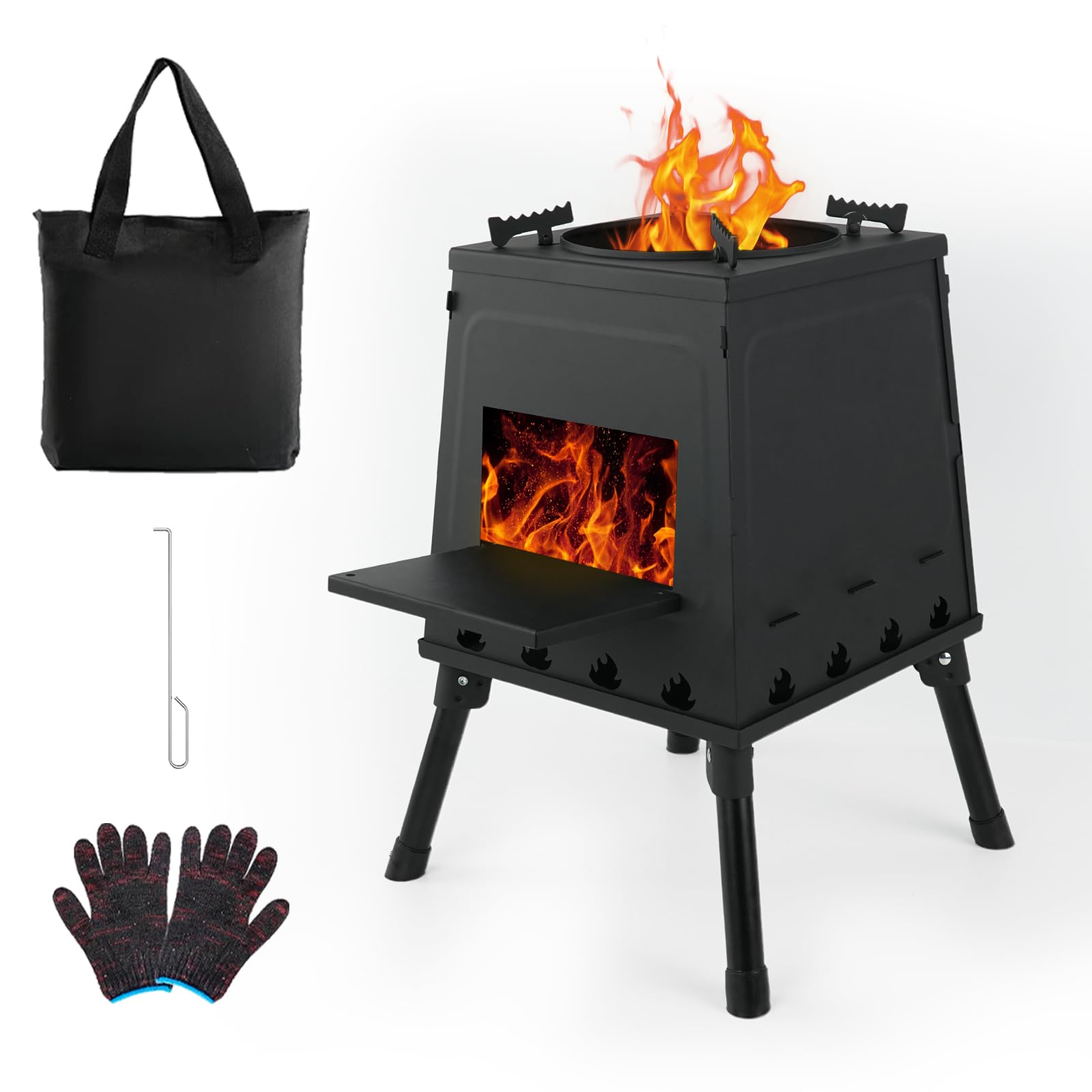
The GVUHR wood stove is a compact, cast iron option that offers a solid entry point into wood burning without a large investment. It is smaller than the Lineslife stove, measuring 8.7 x 8.7 x 13.8 inches, making it a better fit for solo or duo campers who want the durability of cast iron without the bulk of the largest models. The stove includes a heat-proof glove and disassembles for stowing in a pack, though at its weight, it is still best suited for car camping or short carries.
Users consistently report that it works well for small cooking tasks — boiling water, making coffee, or cooking simple meals for one person. The cast iron distributes heat evenly and retains it well, so food cooks consistently even in breezy conditions. Several reviewers mention using it as a reliable cooking solution in areas where propane and electricity are scarce, such as during blackouts or in remote regions.
The stove lacks a closing door on the front, which means airflow is always open and you cannot dampen the fire to extend burn time. Some owners have improvised sheet metal doors to solve this. The included glove is a nice touch, but the overall build quality is basic compared to premium offerings. For the budget-conscious camper who wants a simple, functional wood stove for occasional use, the GVUHR delivers value.
Why it’s great
- Affordable cast iron option for entry-level wood burning
- Compact size fits small pots for solo/duo cooking
- Even heat distribution from cast iron construction
Good to know
- No door to control airflow and extend burn time
- Basic build quality compared to premium stoves
- Heavier than titanium/stainless alternatives for its size
7. MSR PocketRocket 2 Ultralight Camping and Backpacking Mini Stove Kit
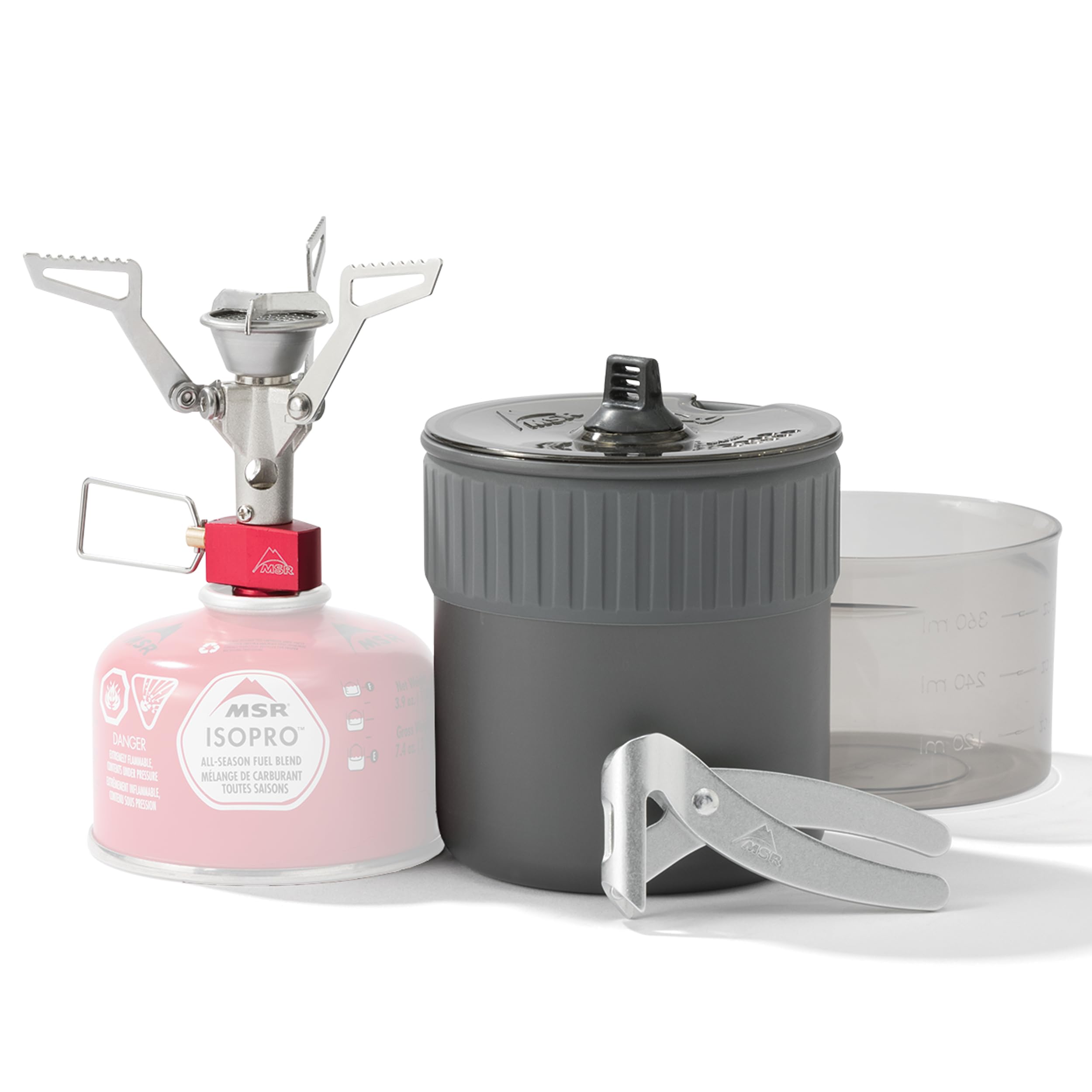
The MSR PocketRocket 2 is included here as a benchmark for the wood-free alternative — a compact isobutane stove that boils 1 liter of water in just 3.5 minutes. The full kit includes the stove, a 0.75-liter hard-anodized aluminum pot with an insulated silicone grip, a 16-ounce bowl, a clear lid with straining ports, a mini pot lifter, and a stuff sack. The entire system weighs 9.9 ounces and packs down to 4 x 4 x 5 inches.
This stove excels in situations where dry wood is scarce or you want the fastest possible boil time with zero fire management. The valve provides excellent simmer control, which is rare among ultralight canister stoves, and it works reliably with most standard isobutane canisters. For solo hikers on tight itineraries, the convenience of a 3.5-minute boil versus 10 minutes with a wood stove can save significant time each day.
The downsides are that you must carry fuel canisters, which add weight and create waste, and the pot sits somewhat precariously on the burner — vigorous boiling can nearly dislodge it. The plastic bowl nesting inside the pot must be removed before use, as it can melt. For hikers who prioritize speed and consistency over self-sufficiency, the PocketRocket 2 remains the standard, but it lacks the wood-burning independence that the other stoves on this list provide.
Why it’s great
- Extremely fast 3.5-minute boil time on isobutane
- Complete kit with pot, bowl, lid, and stuff sack
- Excellent simmer control for a canister stove
Good to know
- Requires carrying disposable isobutane canisters
- Pot sits unstably on the burner; can be knocked over
- Not a wood stove — does not burn natural fuels
FAQ
How long does it take to boil water on a backpacking wood stove?
Can I use a backpacking wood stove in a fire ban zone?
Final Thoughts: The Verdict
For most users, the backpacking wood stove winner is the TOAKS Titanium Large Collapsible because it blends ultralight weight, durable titanium construction, and efficient secondary combustion into a package that disappears inside your cook pot. If you want maximum fuel flexibility in a tiny, zero-assembly design, grab the Firebox Ultralight Titanium Nano G2. And for basecamp or emergency preparedness where weight is not the primary concern, nothing beats the IronClad Supply Rocket Stove for sheer heat output and stability.