
Our readers keep the lights on and the weekend projects moving. As an Amazon Associate, I earn from qualifying purchases.
Every backpacking trip begins with a single, critical decision: the frame and suspension system that will carry your entire world on your back. The difference between a day that feels like an exploration and one that feels like a punishment is often just a few inches of torso adjustment and a hip belt that actually transfers weight to your legs. This guide breaks down the exact frame types, volume capacities, and ventilation systems that separate a well-chosen pack from a backache waiting to happen.
I’m Rikta — the co-founder and writer behind FitlyFast. I have spent countless hours analyzing the suspension geometry, fabric denier, and load-transfer mechanics of internal frame packs to deliver a buying guide that focuses on measurable performance, not marketing hype.
Whether you are planning a weekend in the Smokies or a month-long thru-hike, finding the right backpacks for backpacking means understanding torso length adjustment, hip belt load transfer, and pack volume for your specific gear list.
How To Choose The Best Backpacks For Backpacking
Selecting the right backpacking pack is not about brand loyalty — it is about matching your torso length, trip duration, and expected load weight to a specific suspension design. A 65-liter pack with a poorly adjusted frame will cause shoulder and hip pain on day one, while a correctly fitted 40-liter pack can feel invisible on a week-long trek.
Frame Type and Load Transfer
Internal frame packs use a combination of aluminum stays, a framesheet, or a wire perimeter to transfer pack weight from your shoulders to your hips. The efficiency of this transfer is defined by how rigid the frame is and how deeply the hip belt contours around your iliac crest. Packs with a light wire frame, like those in the Osprey AirSpeed system, prioritize ventilation but may feel less stable above 40 pounds compared to a full perimeter frame.
Volume in Liters and Trip Duration
For overnight trips, 30 to 50 liters is sufficient. For trips lasting three to five days, 50 to 70 liters is the standard range. For expeditions exceeding seven days, 70 to 100 liters is common but requires careful packing to keep total weight under control. The liter rating is a volumetric measure of the main compartment and does not account for external attachment capacity.
Torso Adjustment and Fit
A pack’s torso length must match your measured spine distance from the C7 vertebra to the iliac crest. Adjustable torso systems, such as Kelty’s Fit Pro and Deuter’s VariQuick, allow you to fine-tune this fit on the trail. Packs without these adjustments rely on fixed sizing — if you are between sizes, the pack will not transfer load properly.
Back Ventilation
Ventilated back panels use tensioned mesh or channeled foam to create an air gap between your back and the pack. This reduces sweat accumulation during long climbs. The trade-off is that mesh-based systems often place the pack weight slightly farther from your center of gravity, which can impact balance on technical terrain.
Quick Comparison
On smaller screens, swipe sideways to see the full table.
| Model | Category | Best For | Key Spec | Amazon |
|---|---|---|---|---|
| Osprey Aether Plus 70L | Premium | Expedition load hauling | 70L, 5.7 lbs, DayLid top | Amazon |
| Osprey Rook 65L | Premium | Ventilated multi-day carry | 65L, 3.9 lbs, AirSpeed mesh | Amazon |
| Thule Landmark 70L | Premium | Travel security & modularity | 70L, removable 20L daypack | Amazon |
| Deuter Aircontact Lite 40+10L | Mid-Range | Lightweight long-distance hiking | 40+10L, 3.5 lbs, VariQuick torso | Amazon |
| Kelty Asher 65L | Mid-Range | Entry-level spec pack | 65L, 3.3 lbs, Fit Pro torso | Amazon |
| The North Face Terra 55 (Unisex) | Mid-Range | Versatile multi-day hiking | 55L, 4 lbs, full-length U-zip | Amazon |
| The North Face Terra 55 (Women’s) | Mid-Range | Women-specific multi-day fit | 55L, 3.9 lbs, women’s back panel | Amazon |
| Night Cat 100L | Budget | Extended expedition volume | 100L, 4.4 lbs, adjustable torso | Amazon |
| XMILPAX Tactical 70L | Budget | Rugged bushcraft missions | 70L, 1000D polyester, MOLLE | Amazon |
In‑Depth Reviews
1. Osprey Aether Plus 70L

The Aether Plus 70L is Osprey’s workhorse for serious load carriage, designed around a robust perimeter frame that keeps heavy loads stable even on uneven terrain. The top lid converts into a fully functional DayLid daypack, which is a rare feature that eliminates the need for a separate summit pack. Dual front panel zippered pockets provide quick access to rain gear or a map without opening the main compartment.
Testers consistently report that the pack remains comfortable up to 45 pounds, thanks to the custom-fit hip belt and highly adjustable torso. The included rain cover is made with PFC-free DWR and is bluesign-approved, aligning with sustainability priorities. The hip belt pockets are functional but some users find the zipper pulls a bit stiff with cold fingers.
At 5.7 pounds, this is not a lightweight pack — it is designed for expedition-style trips where durability and load management are more critical than shaving ounces. The dual front pockets are large enough for a DSLR or fishing gear, making it a favorite among photographers and anglers who need to carry bulky items.
Why it’s great
- Removable DayLid top converts to a daypack
- Stable perimeter frame carries 40+ lbs efficiently
- Large front pockets for quick gear access
Good to know
- Heavier than many 70L competitors at 5.7 lbs
- Rain cover lacks a back retention strap
2. Osprey Rook 65L

The Rook 65L brings Osprey’s proven AirSpeed ventilated back panel to a more accessible price point, offering tensioned mesh that creates a significant air gap between your back and the load. The LightWire frame transfers weight effectively up to about 35 pounds, making it ideal for three- to five-day trips where ventilation is a priority over raw carrying capacity. The extended fit version adds extra hip belt and shoulder strap length for larger torsos.
Users consistently praise the angled water bottle pockets that allow one-handed retrieval while walking, a small detail that makes a big difference on long ascents. The integrated rain cover stows in its own pocket and deploys quickly when the weather turns. The sleeping bag divider is removable, allowing you to convert the entire 65-liter volume into a single open compartment.
The main critique is the absence of a large external mesh pocket for stuffing a wet tarp or jacket — the front panel is smooth. Additionally, there is no back access zipper, so you must pack from the top or through the sleeping bag compartment. At 3.9 pounds, it strikes a solid balance between weight and feature density.
Why it’s great
- AirSpeed mesh back reduces sweat buildup
- Angled water bottle pockets for easy access
- Built-in rain cover with dedicated stow pocket
Good to know
- No large front mesh pocket
- No back access zipper for gear retrieval
3. Thule Landmark 70L
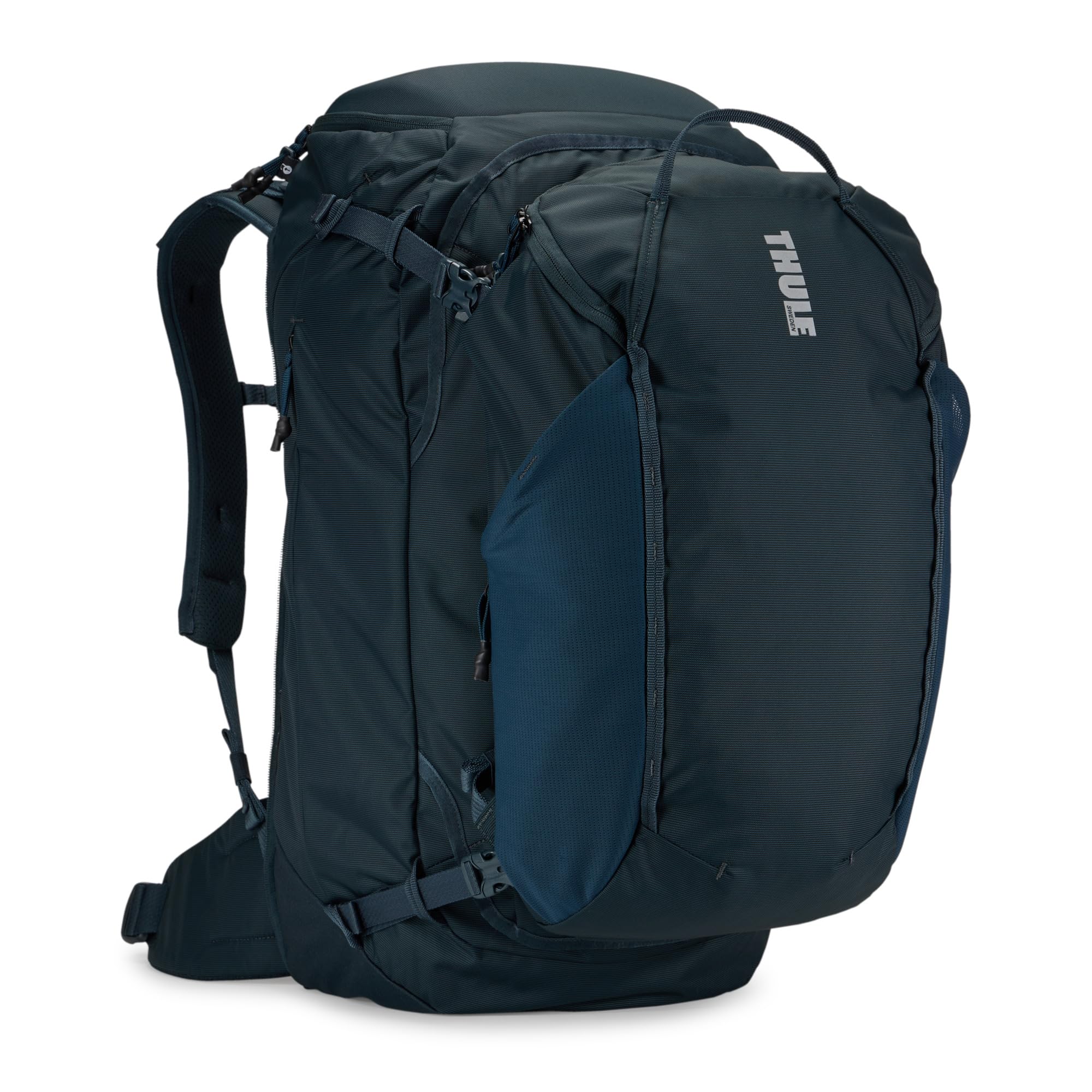
The Thule Landmark is built for the traveler who needs one bag to check on a flight and then use as a base camp pack. The core feature is the covert CashStash compartment hidden under the SafeZone, designed to keep a passport and money secure from pickpockets. The pack splits into a main 50-liter body and a removable 20-liter daypack with a padded 15-inch laptop sleeve, making it a modular travel-and-hike system.
Innovative LoopLocks secure all zipper pulls to the bag, deterring casual theft in crowded hostels or train stations. The main compartment opens like a suitcase for easy packing and unpacking, which is a clear advantage over top-loading designs. The daypack attaches via a simple clip system and is comfortable enough for day hikes around base camp.
The torso length is fixed and slightly long at 19.5 inches, so shorter hikers may find the hip belt sits too low. Water resistance is moderate — a rain cover is not included, so you may want to pack one separately. The side bottle holders are less durable than the main fabric, but overall the build quality is typical Thule: tough and well-stitched.
Why it’s great
- Hidden CashStash pocket for secure valuables
- Removable 20L daypack with laptop sleeve
- LoopLock zipper security deters theft
Good to know
- Fixed torso length may not fit short hikers
- Rain cover not included
4. Deuter Aircontact Lite 40 + 10 L
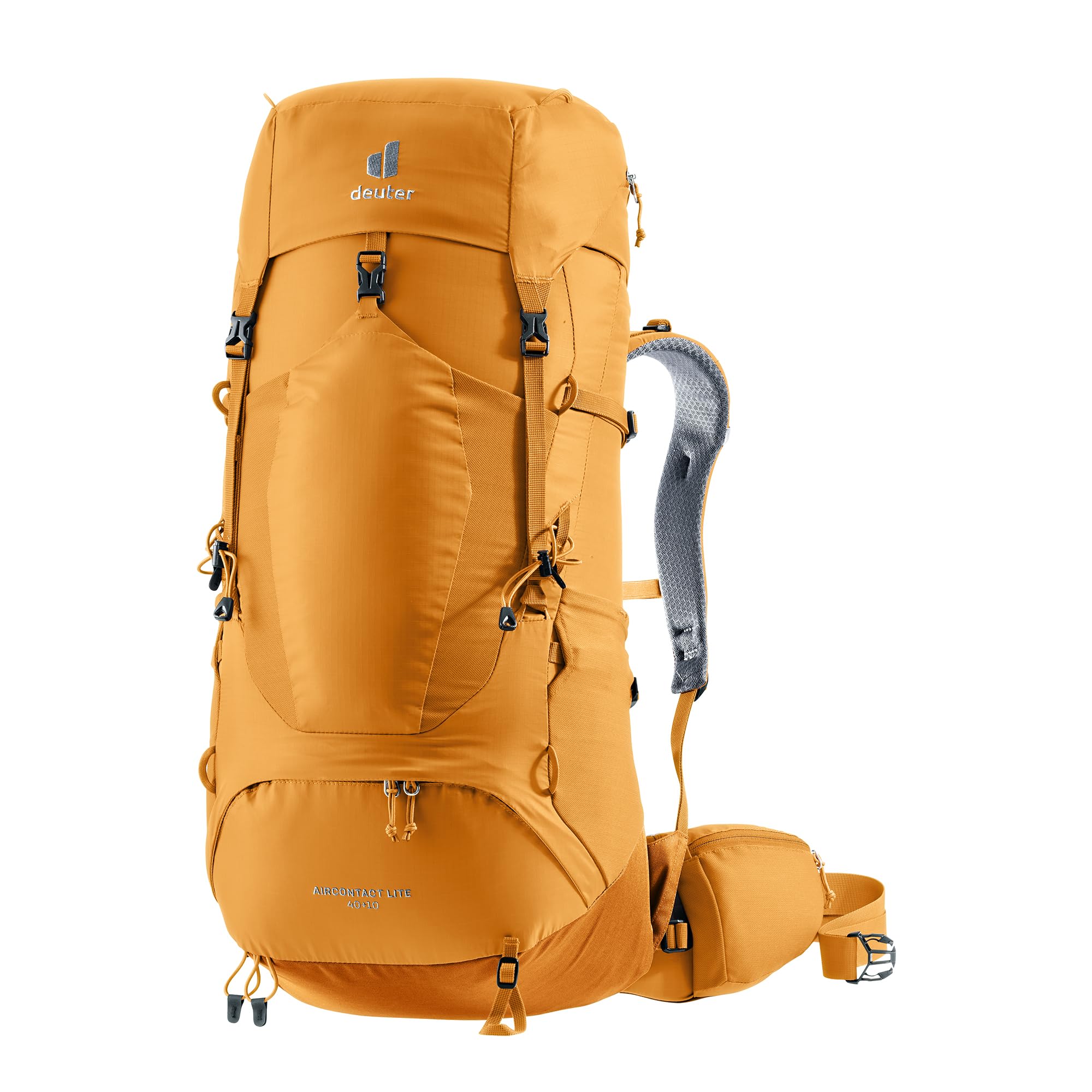
The Aircontact Lite 40+10L is a trim, efficient pack designed for ambitious long-distance hikers who want to move fast without sacrificing load transfer. The VariQuick adjustable back system lets you change torso length on the fly, accommodating multiple users or gear shifts. The hollow chamber foam in the Aircontact back panel provides excellent ventilation while maintaining firm contact for stable load transfer.
The expandable 10-liter volume via the height-adjustable lid allows you to squeeze in an extra day’s food when needed. Side stretch mesh pockets are deep enough for 1-liter Nalgene bottles and stay secure during scrambles. The hip fins use a pull-forward system that lets you tighten them without the usual reaching and twisting motion.
Some users note that the chest strap is not height-adjustable, which can be an issue for women or those with a shorter sternum. The 40+10 configuration is ideal for one- to three-night trips with ultralight gear, but it may feel tight for bulkier camp setups. The fabric uses over 50% recycled content without compromising abrasion resistance.
Why it’s great
- VariQuick torso adjustment suited for multiple users
- Lightweight X-frame for efficient load transfer
- Deep side pockets fit large water bottles securely
Good to know
- Chest strap lacks height adjustability
- 40L volume is tight for bulky gear setups
5. Kelty Asher 65L

The Asher 65L is Kelty’s answer to the entry-level backpacking category, delivering feature specs like an aluminum stay perimeter frame, load lifter straps, and a sleeping bag compartment at a price that undercuts most premium brands by a wide margin. The Fit Pro torso adjustment system provides on-the-fly customization, allowing you to shift the load between shoulders and hips as you change layers or terrain.
The Amp Flow ventilated back panel uses channeled foam to promote airflow, and while it does not match the full mesh gap of Osprey’s AirSpeed, it keeps most users dry during moderate exertion. At just 3.3 pounds, it is light for a 65-liter pack, and the polyester shell with PFC-free DWR sheds light rain effectively. The optimal carry weight range is 30 to 50 pounds, which covers most multi-day trips.
Some users report that the hip belt padding feels mediocre compared to more expensive packs, especially when carrying near the 50-pound limit. The materials are not as robust as those on packs costing twice as much, but for the price, the Asher offers genuinely competitive specifications. The Kelty limited lifetime warranty adds peace of mind.
Why it’s great
- Lightweight 3.3 lb frame for a 65L pack
- Fit Pro torso adjustment is fast and effective
- Sleeping bag compartment and load lifters included
Good to know
- Hip belt padding is less supportive at max loads
- Materials feel less durable than premium rivals
6. The North Face Terra 55 (Unisex)
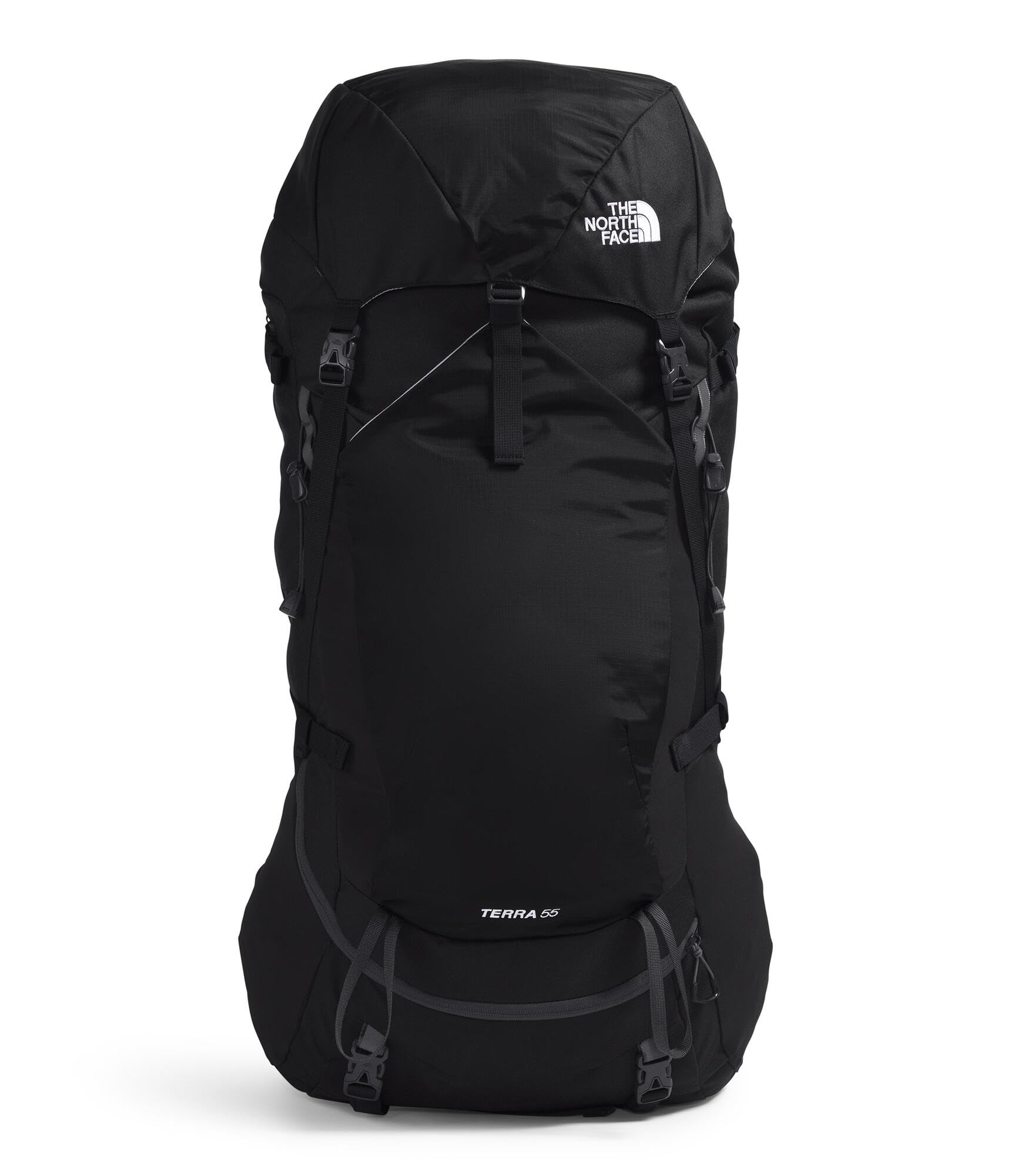
The Terra 55 is a no-fuss multi-day pack built around a full-length two-way U-zip that provides easy access to every corner of the main compartment without digging from the top. The cinch-top closure with a removable lid offers traditional load control, and the external stuff-it pocket compresses down with an S/R buckle for bulky items like a wet jacket. The removable frame sheet allows you to strip weight when carrying lighter loads.
Hiking pole and ice axe attachments, along with side and bottom compression straps, give this pack genuine trail-readiness for technical terrain. The hip belt pockets are zippered and large enough for a phone or energy bars. The internal hydration sleeve fits most 3-liter bladders, and the two stretch bottle pockets allow for quick side access.
Some users note that the torso adjustment is more limited than competitors with dedicated fit systems — it relies on the removable frame sheet and shoulder strap positioning rather than a sliding back panel. The 4-pound weight is average for the category, and the polyester fabric resists abrasion well. This pack is best for hikers who prioritize organization and access over ultralight weight.
Why it’s great
- Full-length U-zip for easy access to entire pack
- Cinch-top with removable lid and stuff-it pocket
- Hiking pole and ice axe attachments included
Good to know
- Limited torso adjustment compared to sliding systems
- Frame sheet removal reduces load max capacity
7. The North Face Terra 55 (Women’s)
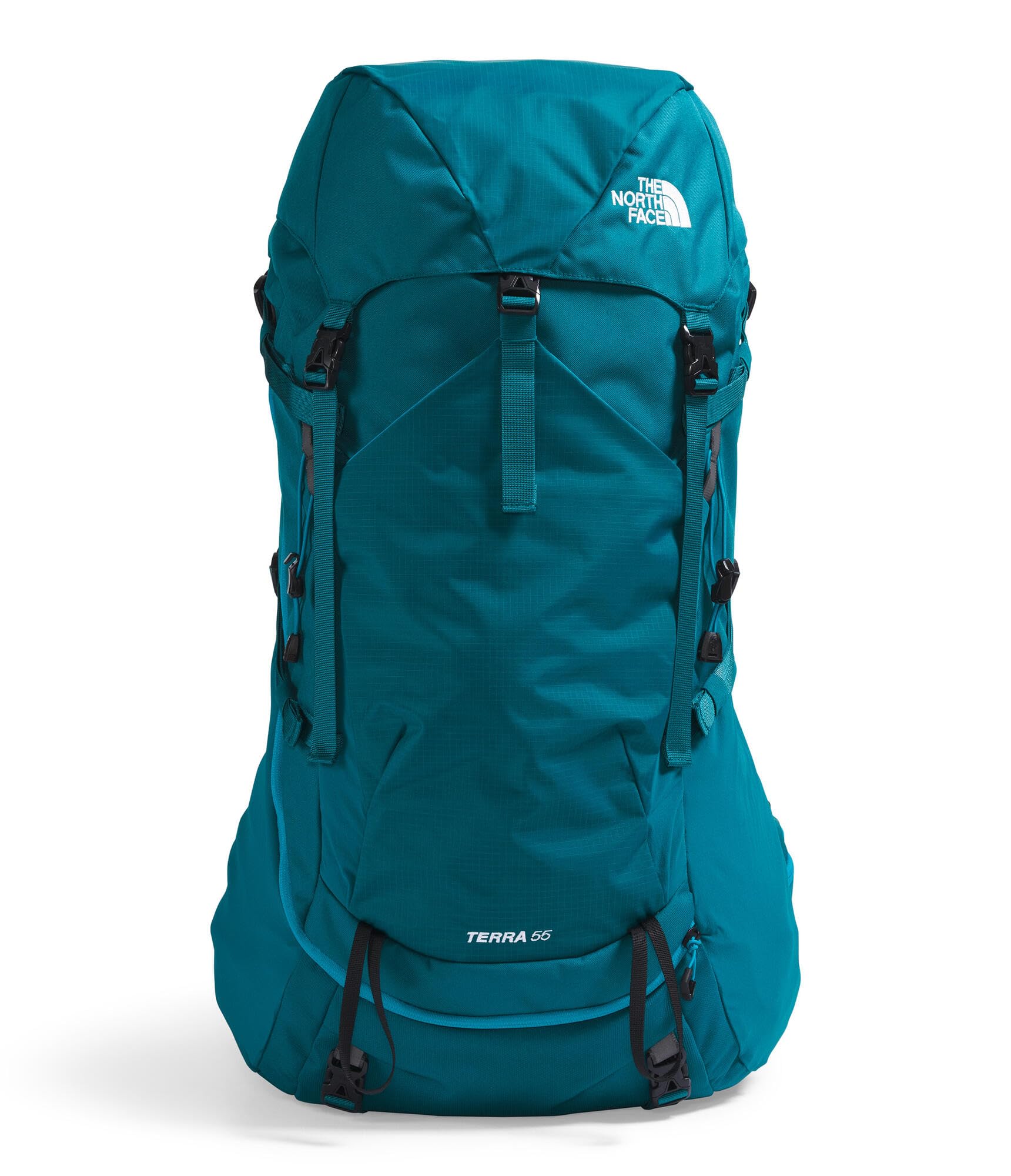
The women’s version of the Terra 55 is specifically contoured for a female anatomy, with a narrower shoulder strap spacing, a shorter torso range, and a hip belt that curves to sit on the iliac crest rather than above it. The padded back panel and shoulder straps use a breathable mesh overlay that reduces sweat during long climbs. The removable frame sheet allows for fine-tuned support based on load weight.
The full-length two-way U-zip provides the same easy-access convenience as the unisex version, and the removable lid includes an internal zip pocket and key hook for small essentials. The sternum strap is designed to avoid pressure on the chest, and the hip belt pockets are positioned for easy reach without twisting. The external stuff-it pocket is ideal for a rain shell or map.
Some taller women with longer torsos may find the XS/S fit too short, as the adjustment range is more limited than packs with a dedicated sliding torso system. The average weight of 3.9 pounds is respectable for the feature set. This pack is an excellent choice for female hikers looking for a multi-day pack that fits properly out of the box without extensive modification.
Why it’s great
- Women-specific shoulder and hip contours for fit
- Full-length U-zip for no-dig gear access
- Breathable back panel and shoulder padding
Good to know
- Limited torso adjustment range
- No rain cover included
8. Night Cat 100L
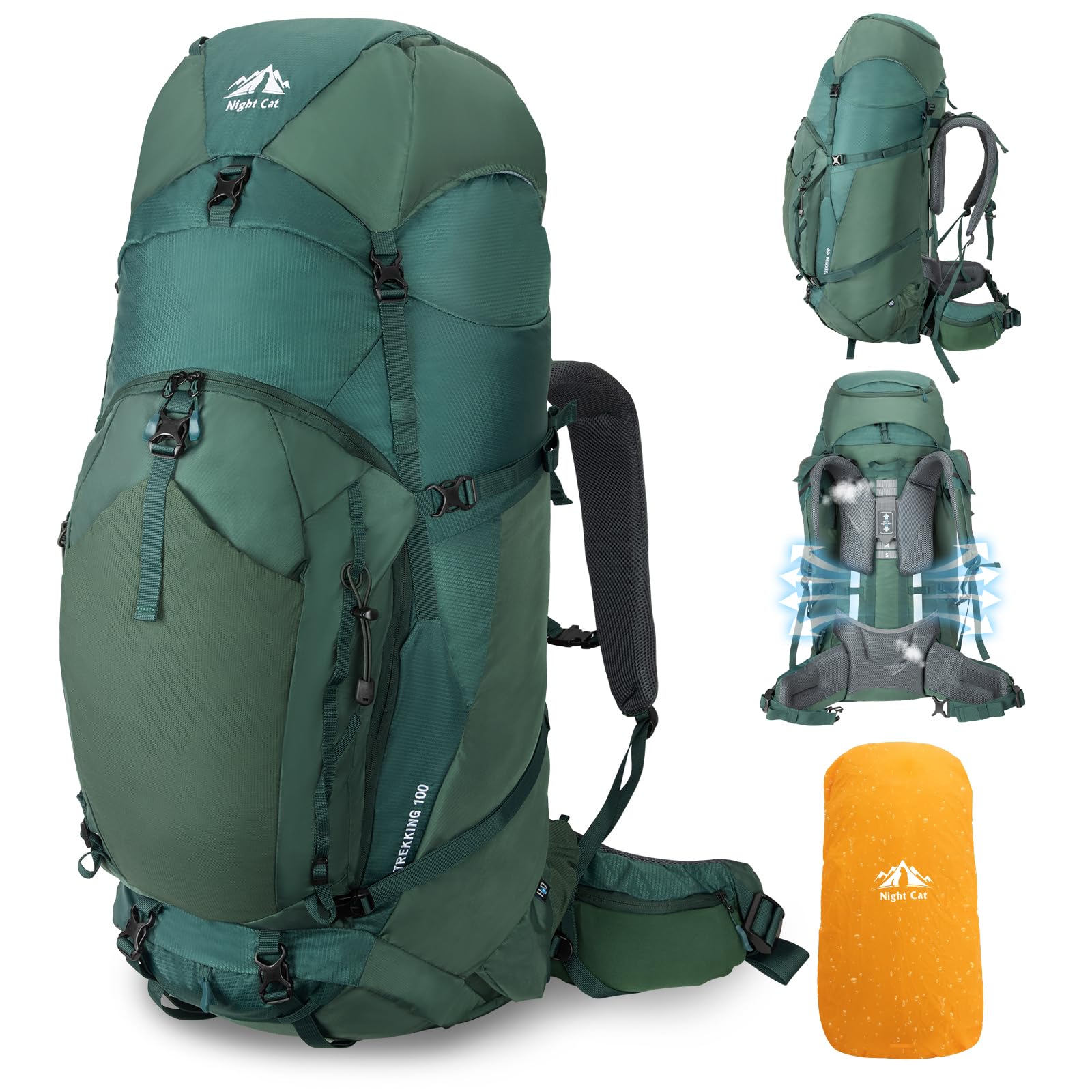
The Night Cat 100L is a budget-friendly option for extended expeditions where volume is the primary concern. The internal frame system includes a back panel with ventilated foam and an adjustable torso that accommodates both short and long backs. The main compartment is divided into lid, main, and base sections, with front access that simplifies loading bulky items like a tent or sleeping pad.
An included rain cover protects your gear during wet weather, and the hydration bladder port allows for hands-free water access on long stretches. The hip belt is padded and includes stabilizer straps to reduce load sway on uneven terrain. At just 4.4 pounds for a 100-liter pack, it is relatively lightweight for the massive volume.
Durability is the primary concern at this price point — one user reported a seam tear after four days of heavy use. The fabric is nylon but does not carry the same denier rating as premium packs, so careful packing and avoiding sharp rocks is advisable. This pack is best suited for budget-conscious hikers who need maximum volume for extended trips and are willing to accept some trade-offs in long-term durability.
Why it’s great
- Massive 100L capacity for long expeditions
- Adjustable torso fits various body sizes
- Includes rain cover and hydration port
Good to know
- Durability concerns reported with heavy loads
- Fabric is less abrasion-resistant than premium packs
9. XMILPAX Tactical 70L

The XMILPAX Tactical 70L is built for rough conditions with 1000D polyester fabric and full MOLLE webbing across the pack body and hip belt, allowing you to attach pouches, carabiners, and gear externally. The internal frame uses a semi-rigid spine that prevents sag even with heavy loads, and the narrow design allows good range of motion for bushcraft or hunting scenarios. The main compartment is both top-loading and front-loading via a zippered panel underneath the front pocket.
Bungee cord lashing on the front pocket provides quick lash points for a jacket or mat, while reinforced grab handles on top and sides make it easy to maneuver in tight spaces. The padded hip belt and shoulder harness include stabilizer straps and load lifters for fine-tuned weight distribution. The pack is compatible with up to 3-liter hydration bladders with tube ports on both sides.
The hip belt pockets are positioned for quick access, but the curved side zippers can be slightly awkward to reach while walking. The pack is heavier than dedicated ultralight gear, but the rugged construction is meant to survive snags, scrapes, and drops that would damage lighter packs. An included rain cover adds weather protection. This pack is ideal for hunters, bushcrafters, or anyone who needs a bombproof carry system.
Why it’s great
- 1000D polyester shell is extremely abrasion-resistant
- Full MOLLE webbing for modular storage expansion
- Dual top and front loading access to main compartment
Good to know
- Heavier than most backpacking-specific packs
- Side curved zippers require practice to reach
FAQ
What is the ideal torso length adjustment range for a backpacking pack?
How does a ventilated back panel affect load stability on technical terrain?
Can a 40-liter pack be used for a five-day backpacking trip?
What does the denier rating of pack fabric indicate?
Should I buy a women-specific backpacking pack if I am a woman?
Final Thoughts: The Verdict
For most users, the backpacks for backpacking winner is the Osprey Rook 65L because it delivers premium ventilated suspension and a rock-solid build at a mid-range price, perfect for three- to five-day trips. If you need hauling capacity for expeditions or camera gear, grab the Osprey Aether Plus 70L for its removable DayLid and robust frame. And for budget-conscious volume seekers, nothing beats the XMILPAX Tactical 70L for raw ruggedness and external storage options.