
Our readers keep the lights on and the weekend projects moving. As an Amazon Associate, I earn from qualifying purchases.
A hiking backpack that digs into your shoulders or shifts under a 40-pound load can ruin a weekend on the trail. The frame, the hip belt, and the way weight transfers from your back to your legs are the difference between a day you finish strong and one you cut short. Getting the fit right matters more than brand loyalty.
I’m Rikta — the co-founder and writer behind FitlyFast. I’ve spent hundreds of hours analyzing suspension systems, frame materials, and load-transfer geometry across the budget-to-premium range to find the packs that actually keep their promise on multi-day trips.
Whether you are heading out for an overnight trek or a week-long camp, selecting from the right backpacks for hiking and camping comes down to matching capacity, frame type, and torso adjustability to your specific build and load.
How To Choose The Best Backpacks For Hiking And Camping
Choosing a backpack for hiking and camping involves more than just picking the largest bag you see. The wrong choice leads to chafing, poor weight distribution, and gear that is hard to access on the trail. Focus on frame type, torso fit, suspension adjustability, and capacity measured in liters.
Frame Type Determines Load Capacity
Internal frame packs with aluminum or fiberglass stays transfer weight from your shoulders to your hips. This setup handles loads from 30 to 60 pounds without the bag sagging away from your back. Frameless packs save weight but punish your shoulders above 20 pounds. For multi-day camping with a tent and food, an internal frame with dual aluminum rods is the baseline.
Torso Length and Hip Belt Fit
Hip belts should sit on your iliac crest (the bony ridge of your pelvis), not your stomach. An adjustable torso system lets you move the shoulder straps up or down by several inches to match your spine length. Packs with fixed torso lengths force a compromise that often results in sore spots after mile ten. Look for packs with at least 4 inches of torso adjustability if you are between standard sizes.
Capacity in Liters and Trip Duration
A 40-to-50-liter pack works for weekend trips with a lightweight tent and sleeping bag. For trips lasting four to seven days, 60 to 70 liters provides room for food, water, and extra clothing. Packs above 80 liters are intended for expedition loads or hauling gear for multiple people. Overflowing a pack that is too small shifts weight backward and strains your lower back.
Quick Comparison
On smaller screens, swipe sideways to see the full table.
| Model | Category | Best For | Key Spec | Amazon |
|---|---|---|---|---|
| Naturehike 65L Rock Upgraded | Lightweight Internal Frame | Ultralight multi-day backpacking | 2.89 lbs, 65L, polymer fabric | Amazon |
| Osprey Renn 50L Women’s | Premium Internal Frame | Women-specific fit with ventilation | 3.5 lbs, 50L, AirSpeed suspension | Amazon |
| TIDEWE Hunting 5500cu | Heavy-Duty Frame | Hauling heavy gear and game | 5.4 kg, 90L, external freighter shelf | Amazon |
| Mardingtop 60L Military | Value Internal Frame | Budget-friendly modular carry | 4.49 lbs, 60L, MOLLE compatible | Amazon |
| Tripole Walker Pro 60L | Entry-Level Internal Frame | First-time backpack buyers | Dual aluminum rods, torso adjustment | Amazon |
| Thule Landmark 40L | Travel/Adventure Hybrid | Carry-on travel with security features | 3.2 lbs, 40L, hidden CashStash pocket | Amazon |
In‑Depth Reviews
1. Naturehike 65L Rock Upgraded Internal Frame Hiking Backpack

The Naturehike Rock Upgraded uses a polymer fabric that includes high-molecular-weight polyethylene fibers, giving it abrasion resistance that rivals fabrics twice its weight. At 2.89 pounds for a 65-liter pack, it competes with ultralight options that cost three times as much. The roll-top closure and removable top extension bump the capacity without adding a heavy frame sheet.
The ergonomic back panel uses a mesh-padded channel that keeps airflow moving during summer climbs. Testers at six-foot-two carrying 30-pound loads reported no shoulder bite or lower back fatigue after 20-mile days. The single failure point reported was the pull loop on the top cinch strap, which can be re-knotted in thirty seconds.
The hip belt sits on the waist properly for most torsos, though users with a larger midsection may find the belt digs in slightly. The included rain cover and hydration sleeve add functionality without pushing the weight above three pounds. This pack is for backpackers who want to shave base weight without sacrificing capacity or durability.
Why it’s great
- Ultralight construction at 2.89 lbs for 65L capacity
- Polymer fabric resists abrasion and moisture better than standard nylon
- Mesh back panel provides excellent ventilation on warm hikes
Good to know
- Top cinch pull loop may fail under heavy tension
- Hip belt lacks load-lifter adjusters found on premium packs
2. Osprey Renn 50L Women’s Backpacking Backpack

Osprey’s Renn 50L brings the brand’s proven AirSpeed suspension to a women-specific chassis. The tensioned mesh back panel sits away from your spine, creating an air channel that reduces sweat buildup on long ascents. A LightWire frame transfers load to the hip belt effectively, taking pressure off the shoulders even when the pack is fully loaded with three days of gear.
The torso adjustment spans 15 to 18 inches, making this a strong option for shorter hikers who struggle with unisex packs. Multiple reviewers between 5’1″ and 5’3″ reported a comfortable fit with the hip belt sitting correctly on the iliac crest rather than riding up. The zippered sleeping bag compartment with a floating divider allows you to separate wet gear from dry items without losing capacity.
An integrated rain cover stows in its own pocket, so you never have to dig for it when the sky opens. Side pockets are deep enough for collapsible trekking poles, and the front panel provides lash points for extra gear. The trade-off is a slightly higher weight at 3.5 pounds compared to ultralight alternatives, but the ventilation and load control make up for it on hot, heavy days.
Why it’s great
- AirSpeed mesh back panel keeps your back dry in warm weather
- Adjustable torso fits shorter hikers from 15 to 18 inches
- Integrated rain cover is always ready without extra packing
Good to know
- 3.5 lbs is heavier than ultralight competitors
- Top compartment access can feel tight when fully packed
3. TIDEWE Hunting Backpack 5500cu with Frame

The TIDEWE 5500-cubic-inch pack is a full-size expedition hauler designed for hunters who need to carry a bow, rifle, and meat quarters on the same trip. The external frame with a folding freighter shelf allows you to strap heavy, odd-shaped loads above the main compartment, keeping the center of gravity stable. The noise-free Next Camo G2 fabric and reinforced Hypalon at frame connection points reduce creaking and collision sounds.
Testers reported carrying 60 to 80 pounds over four-day hunts without frame failure or stitching tears. The adjustable shoulder straps and frame let you dial in fit, though larger users at 6’3″ and 270 pounds may need a waist belt extender for proper hip placement. The main compartment uses a two-in-one carrier that accommodates either a bow or rifle, and the quick-access side zipper lets you grab gear without unclipping the top.
The pack is heavy at 5.4 kilograms, but that weight is necessary for the frame structure that supports extreme loads. The included rain cover handles wet conditions, and the hydration sleeve fits up to three liters. This pack is for those who need a single bag to transition from hiking to camp to hauling heavy, irregular gear.
Why it’s great
- External freighter shelf handles heavy, irregular loads like game or gear
- Noise-free fabric and reinforced frame connections suit stealth approaches
- Massive 90L capacity with integrated weapon carry system
Good to know
- 5.4 kg base weight is significant for non-hunting trips
- Waist belt may not fit larger torsos without an extender
4. Mardingtop 60L Military Internal Frame Backpack
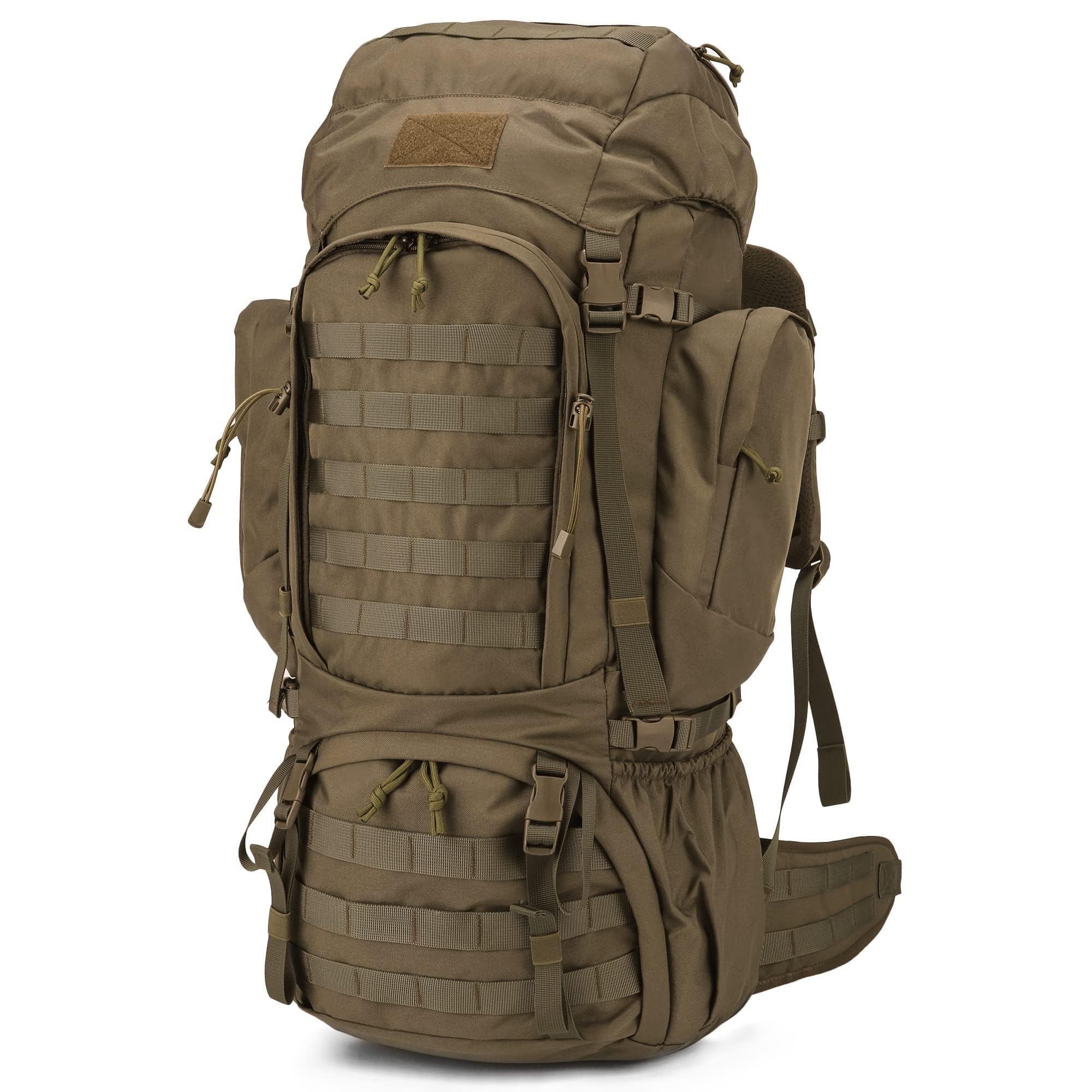
The Mardingtop 60L uses YKK zippers and a military-style MOLLE webbing system that lets you attach extra pouches for organization. The internal frame with adjustable torso height provides decent load transfer for a pack in this price tier. The main compartment expands to approximately 75 liters when fully loaded, giving you room to squeeze in a tent and sleeping bag for a five-day trip.
Reviewers have loaded this pack with up to 90 pounds for short ruck runs and found the stitching held without failure. The hip belt padding is thinner than premium options, which can cause chafing on long days or when carrying more than 50 pounds. The included rain cover uses cheap elastic that tends to lose tension, but the four external tie-downs let you secure trekking poles and a sleeping pad externally.
Shoulder straps are functional but narrow, and some users report discomfort after 10 miles with a full load. The pack is best suited for moderate loads under 50 pounds on trips of two to three days. For the price, it delivers durable construction and modular compatibility that makes it easy to customize as your gear evolves.
Why it’s great
- YKK zippers and durable stitching hold up under heavy loads
- MOLLE webbing allows attachment of extra pouches for organization
- Expandable from 60L to 75L for extra gear capacity
Good to know
- Hip belt padding is thin and may chafe on long days
- Shoulder straps are narrow and can dig in over 50 pounds
5. Tripole Walker Pro Internal Frame Rucksack 60L
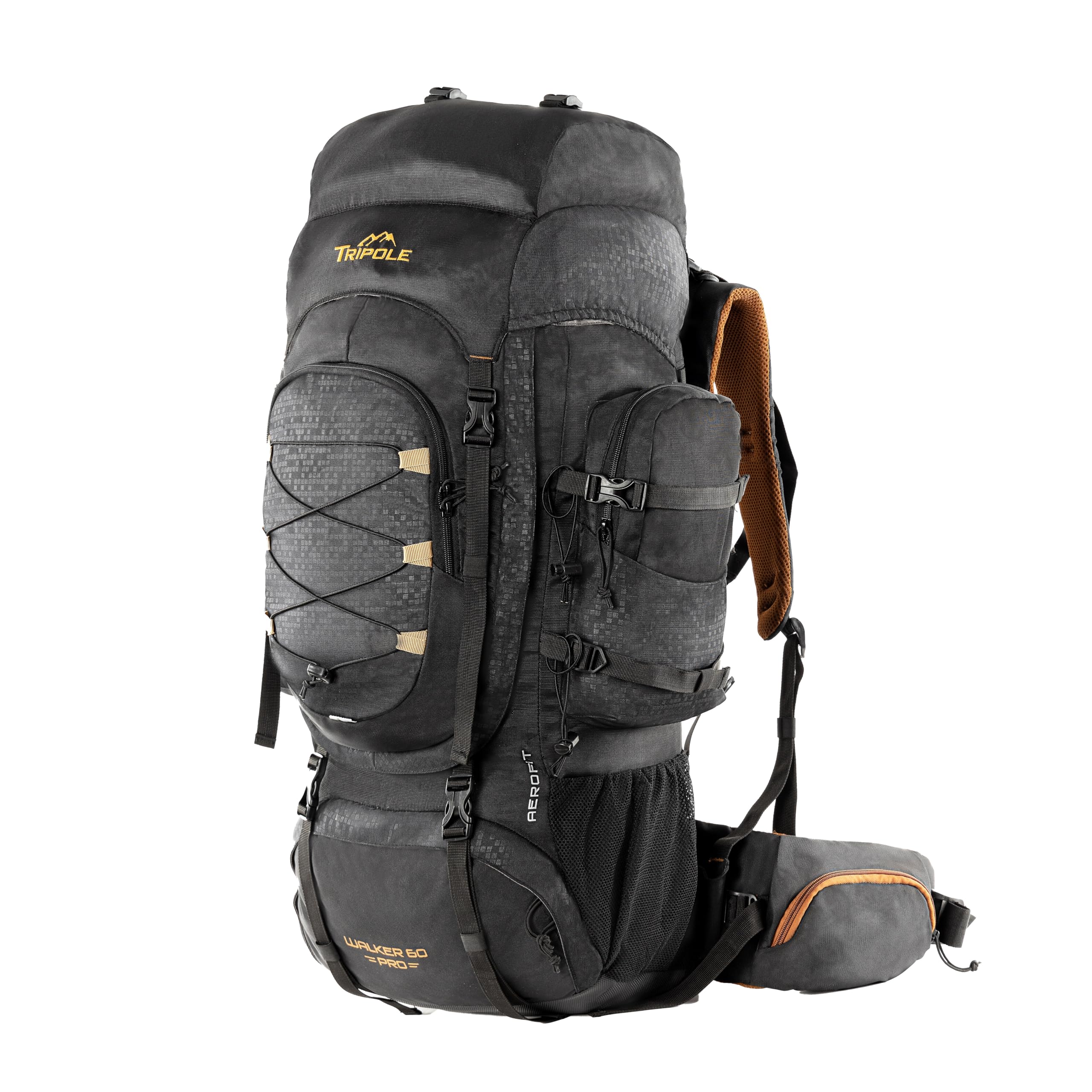
The Tripole Walker Pro uses dual aluminum rods coupled with a solid fiber frame to create a stable load-bearing platform. The torso adjustment mechanism on the back panel allows you to dial in fit across most adult heights, a feature rarely found at this price level. The pack opens from the top with a drawstring closure that doubles as an expansion system, plus a front panel and a segregated bottom compartment that can be unzipped into one open cavity.
Testers have loaded this pack with 95 pounds for four-day trips and found the weight distribution even and centered. The padded 17-inch laptop sleeve is a bonus for those who need a pack that transitions from trail to travel. The included rain cover stores in a velcro pocket at the base, and the water-repellent polyester fabric handles light to moderate rain without soaking through.
Some users report that the chest strap popped off early, and the elastic components may lose tension after a year of regular use. The side pockets are shorter than ideal for large water bottles. For beginners or those on a tight budget who need a real internal frame pack with torso adjustment, this is a functional starting point.
Why it’s great
- Dual aluminum rods with fiber frame provide real load-bearing support
- Adjustable torso height accommodates different body lengths
- Front, top, and bottom access points make packing versatile
Good to know
- Chest strap and elastic components may wear out within a year
- Side pockets are shallow and may not hold tall water bottles securely
6. Thule Landmark Backpack 40L
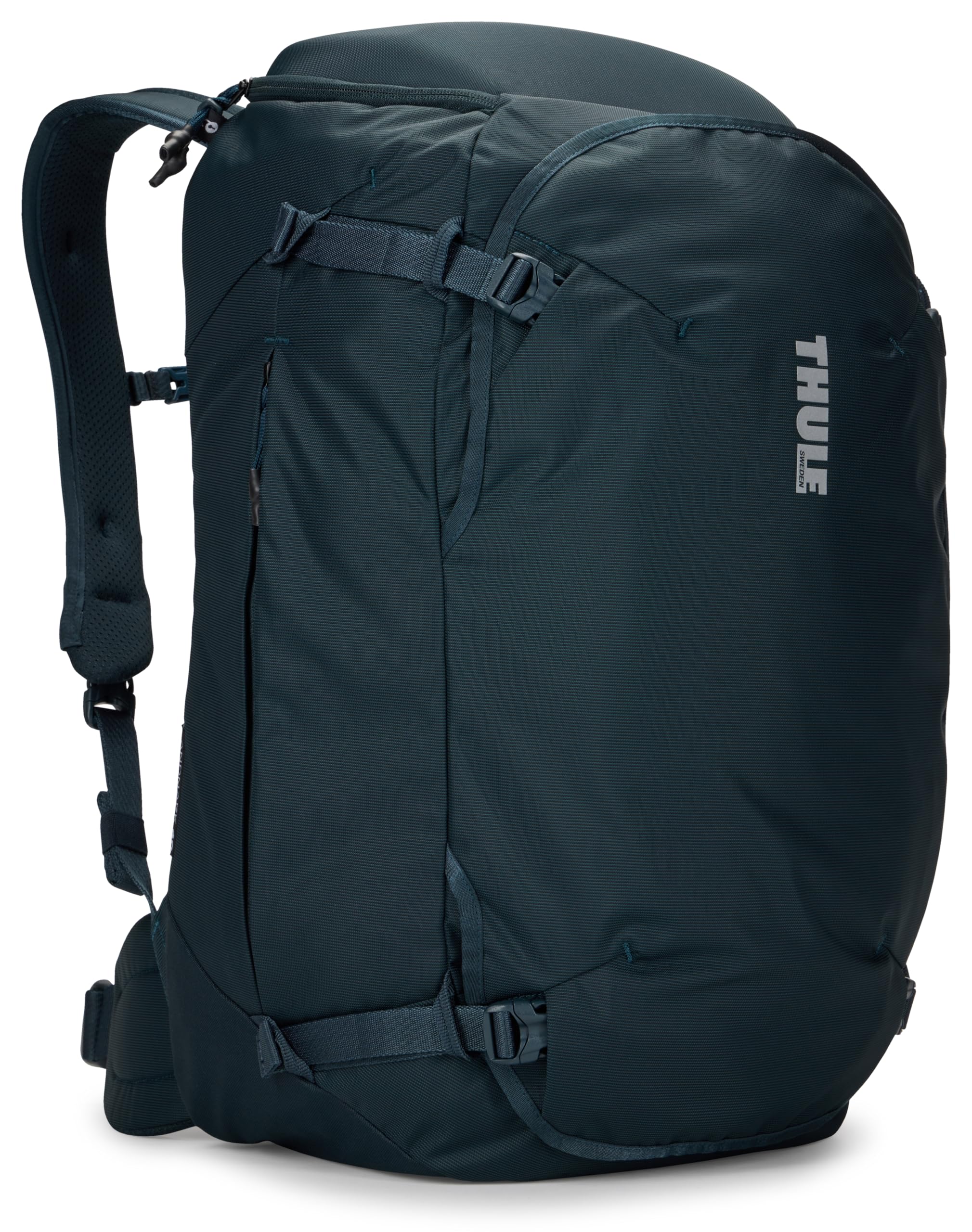
The Thule Landmark 40L is built for the hiker who also travels by plane. The pack meets carry-on size restrictions for most airlines while offering adventure-ready features like a detachable daypack and hidden CashStash pocket for passports and money. The LoopLocks allow you to secure zipper pulls to the bag, deterring pickpockets in crowded transit hubs.
The main compartment fits a 15-inch laptop and a 12.9-inch tablet in separate sleeves, and the large compartment has enough room for two weeks of clothing when packed efficiently. The hip belt is removable, making the bag easier to slide into overhead bins. Reviewers who have used this pack across 27 countries report the material holds up well, though the outer water bottle holders and top pocket show wear faster than the main body.
The 40-liter capacity is best suited for lightweight travel and short hiking trips rather than multi-day backcountry camping. The bag lacks a load-transferring frame and a ventilation back panel, so it is not ideal for heavy trail loads. For hikers who want one bag that works for hostels and day hikes alike, the Landmark is a polished, security-oriented solution.
Why it’s great
- Carry-on size with hidden security pocket for valuables
- Detachable daypack adds flexibility for daily use
- LoopLock system secures zippers against theft
Good to know
- 40L capacity is too small for multi-day backcountry trips
- Lacks a load-transferring frame and ventilated back panel
FAQ
What size backpack do I need for a 3-day hiking trip?
How does an internal frame differ from an external frame for backpacking?
Final Thoughts: The Verdict
For most users, the backpacks for hiking and camping winner is the Naturehike 65L Rock Upgraded because it delivers ultralight weight, durable polymer fabric, and enough capacity for multi-day trips at a mid-range price. If you want a women-specific fit with superior ventilation, grab the Osprey Renn 50L. And for hauling heavy, irregular loads like hunting gear or expedition supplies, nothing beats the TIDEWE Hunting Backpack.