
Our readers keep the lights on and the weekend projects moving. As an Amazon Associate, I earn from qualifying purchases.
A ski backpack isn’t just a sack for your stuff; it’s a piece of safety and mobility equipment that either works with your body on the lift and the slope or fights you all day. Straps that slide off your shoulders, a hydration tube that freezes solid before noon, and a shovel pocket that forces a slow, fumbling dig can ruin a day in the backcountry just as fast as a whiteout. Finding a pack that balances a stable carry with avalanche-ready organization and winter-specific features is the difference between a focused ride and a miserable one.
I’m Rikta — the co-founder and writer behind FitlyFast. I’ve spent countless hours parsing the construction materials, the carry system ergonomics, and the real-world trade-offs between liter capacities in this specific category so you don’t have to guess which features actually matter when the snow is deep and the chairlift is moving.
This buying guide breaks down seven of the strongest options on the market to help you find the right backpacks for skiing that fits your day on the mountain.
How To Choose The Best Backpacks For Skiing
Choosing the right ski pack comes down to matching volume to your mission and ensuring the carry system stays planted through aggressive skiing. Start with your day: a resort-only rider needs 12-20L for layers and water, while a backcountry tourer requires 20-30L with a dedicated avalanche safety compartment.
Ski Carry Compatibility
Diagonal carry is the most common for skis and offers a fast, balanced load that stays close to the pack body. A-frame carry keeps skis parallel and vertical, which is more stable on the bootpack but can interfere with a helmet. If you also snowboard, look for a vertical or horizontal board carry system with compression straps.
Avalanche Safety Kit Access
A proper backcountry pack should have a dedicated compartment with a reinforced shovel sleeve and a probe pocket that allow you to access the tools without unloading the whole bag. The sleeve should keep the shovel handle upright and secure, not floating around in a jumble with your lunch and first-aid kit.
Hydration System Winter-Proofing
Cold temperatures kill a standard hydration tube. Look for an insulated reservoir compartment and an insulated hose sleeve with a thermal barrier that routes the tube through the shoulder strap. An integrated bite-valve cover or a button that allows you to blow water back into the hose after drinking helps prevent the valve from freezing shut.
Stability and Fit
A pack that shifts during a turn or bounces on a cat track is a distraction. A padded hipbelt with stabilizer straps transfers the load to your hips, keeping the pack locked to your torso. A sternum strap with a rescue whistle is a bonus but the primary job is to keep the shoulder straps from sliding off during aggressive layover turns.
Quick Comparison
On smaller screens, swipe sideways to see the full table.
| Model | Category | Best For | Key Spec | Amazon |
|---|---|---|---|---|
| Osprey Glade 20 | Hydration Pack | Day-tourers who want insulated hydration | 2.5L reservoir + insulated harness | Amazon |
| Osprey Kamber 20 | Backcountry Pack | Sidecountry and short tours | Shovel/probe sleeves, 20L | Amazon |
| Deuter Freescape Lite 26 | Ski Tour Pack | Day touring with heavy loads | 26L, avalanche compartment, 2.6 lbs | Amazon |
| Dakine Heli Pro 24L | Resort/All-Mountain | All-around resort and short backcountry | 24L, deployable helmet carry | Amazon |
| Dakine Heli Pro 20L | Compact Daypack | Lighter days and travel | 20L, hydration sleeve, 1.8 lbs | Amazon |
| CamelBak Powderhound 12 | Hydration Vest | Lap days and short resort sessions | Insulated tube, 12L cargo | Amazon |
| Wildhorn Brimhall 65L | Travel Boot Bag | Air travel to the mountains | Boot compartment, 65L | Amazon |
In‑Depth Reviews
1. Osprey Glade 20
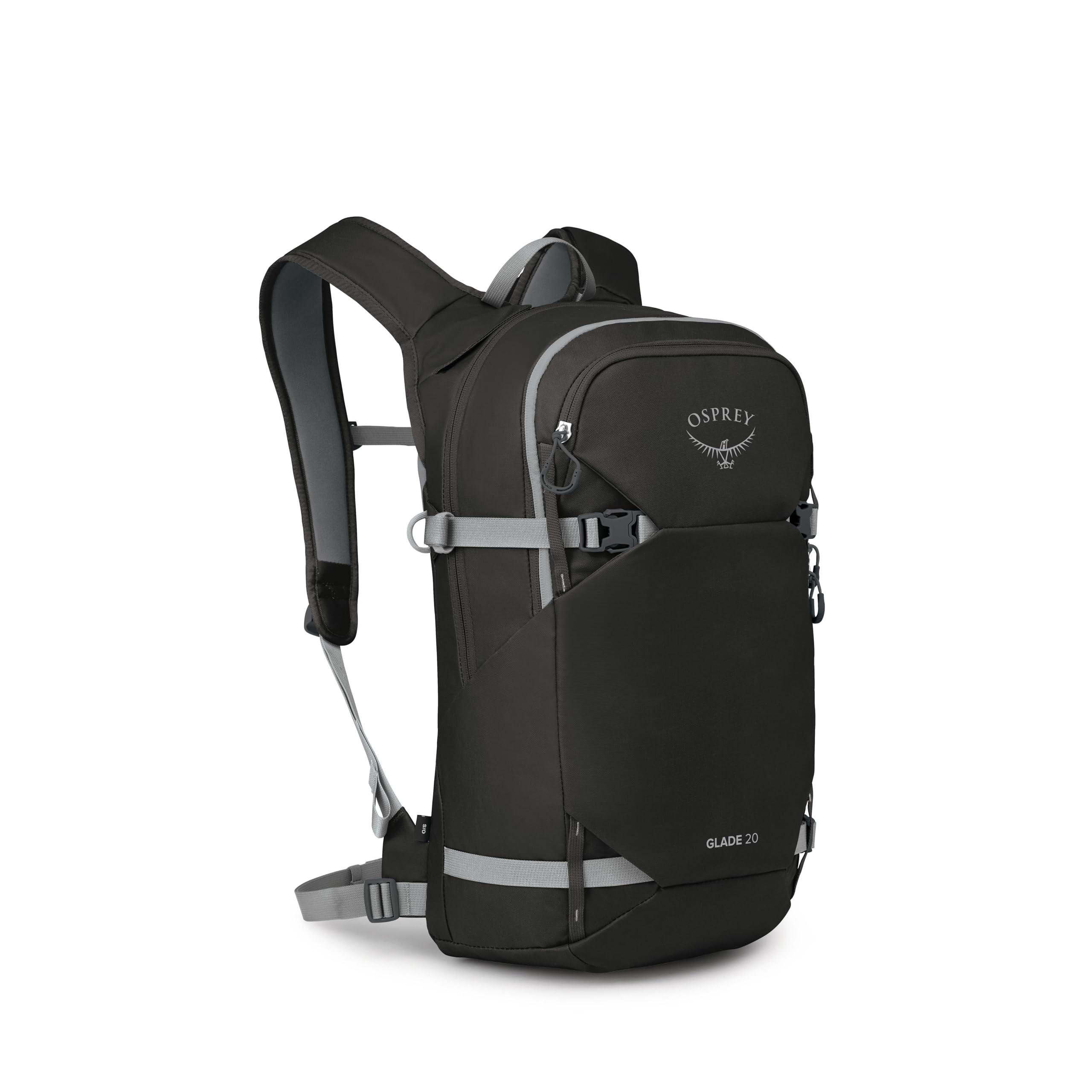
The Osprey Glade 20 is the rare ski pack that solves the freezing hydration problem without adding bulky aftermarket solutions. Its insulated harness uses THERMOLITE lining to route the hose through the shoulder strap, which keeps the water at a drinkable temperature even during frigid chairlift rides in the backcountry. The integrated 2.5L Hydraulics reservoir sits in a dedicated compartment, and the bite valve stays functional because the insulation extends all the way to the tube exit point.
Beyond hydration, the Glade offers multiple carry options: A-frame, diagonal, and vertical snowboard/snowshoe carry, so it adapts whether you’re on skis or a splitboard. The dedicated avalanche safety gear compartment holds a shovel and probe in sleeves for organized, fast access — not a jumbled pile of gear. The NanoTough outer fabric resists abrasion from ski edges and branch snags, which matters when you’re bushwhacking to find the hidden stash.
The stable fit comes from a dynamic harness system that moves with your torso rather than fighting it, and the lightweight construction at 2.31 lbs means you barely notice it on your back until you need to access a layer or take a drink. For skiers who prioritize staying hydrated in cold conditions without carrying a separate bottle, this is the most purpose-built option on the market.
Why it’s great
- Insulated hydration hose with THERMOLITE lining prevents freezing
- Dedicated avalanche compartment with organized shovel/probe sleeves
- Multi-position ski/snowboard carry system
Good to know
- 20L is tight for a full day of backcountry layers and a puffy
- Reservoir included, but some may want a larger capacity
2. Osprey Kamber 20

The Osprey Kamber 20 is purpose-built for sidecountry and short backcountry tours where fast transitions and clean organization matter. The dedicated avalanche safety kit storage includes a shovel handle sleeve and a probe pocket that sit in their own compartment, so you can rip open the main zipper and grab the shovel without unpacking your spare gloves and sandwich. The main compartment also features a large front J-zip access that lets you reach small gear or food without digging through the entire bag.
Ski carry is handled by a diagonal system that works quickly — just one strap to tighten — and a vertical front panel snowboard carry for those days you’re on a splitboard or bringing a plank for the afternoon. The scratch-free goggle pocket is fleece-lined and sits at the top of the main compartment, keeping your lenses safe from helmet shells or ice tools. A dual-position stow-away helmet carry clips to either the front face or the top panel, depending on whether you’re hiking with the helmet on or carrying it for the bootpack.
The Kamber includes dual zippered hipbelt pockets that are large enough for an iPhone SE or a bar, plus a single ice tool carry loop with an attachment point. The internal hydration reservoir pocket has a zippered insulated hose sleeve, but note that it lacks the full THERMOLITE harness of the Glade, so the hose is more vulnerable to freezing in deep cold days. The lightweight nylon fabric and clean design reduce snag points on chairlifts.
Why it’s great
- Fast avalanche tool access with dedicated shovel/probe sleeves
- Dual helmet carry positions for hiking or riding
- Lightweight and clean profile avoids chairlift snags
Good to know
- Hydration hose insulation is basic; hose can freeze in extreme cold
- 20L feels small for a full day of backcountry layers
3. Deuter Freescape Lite 26
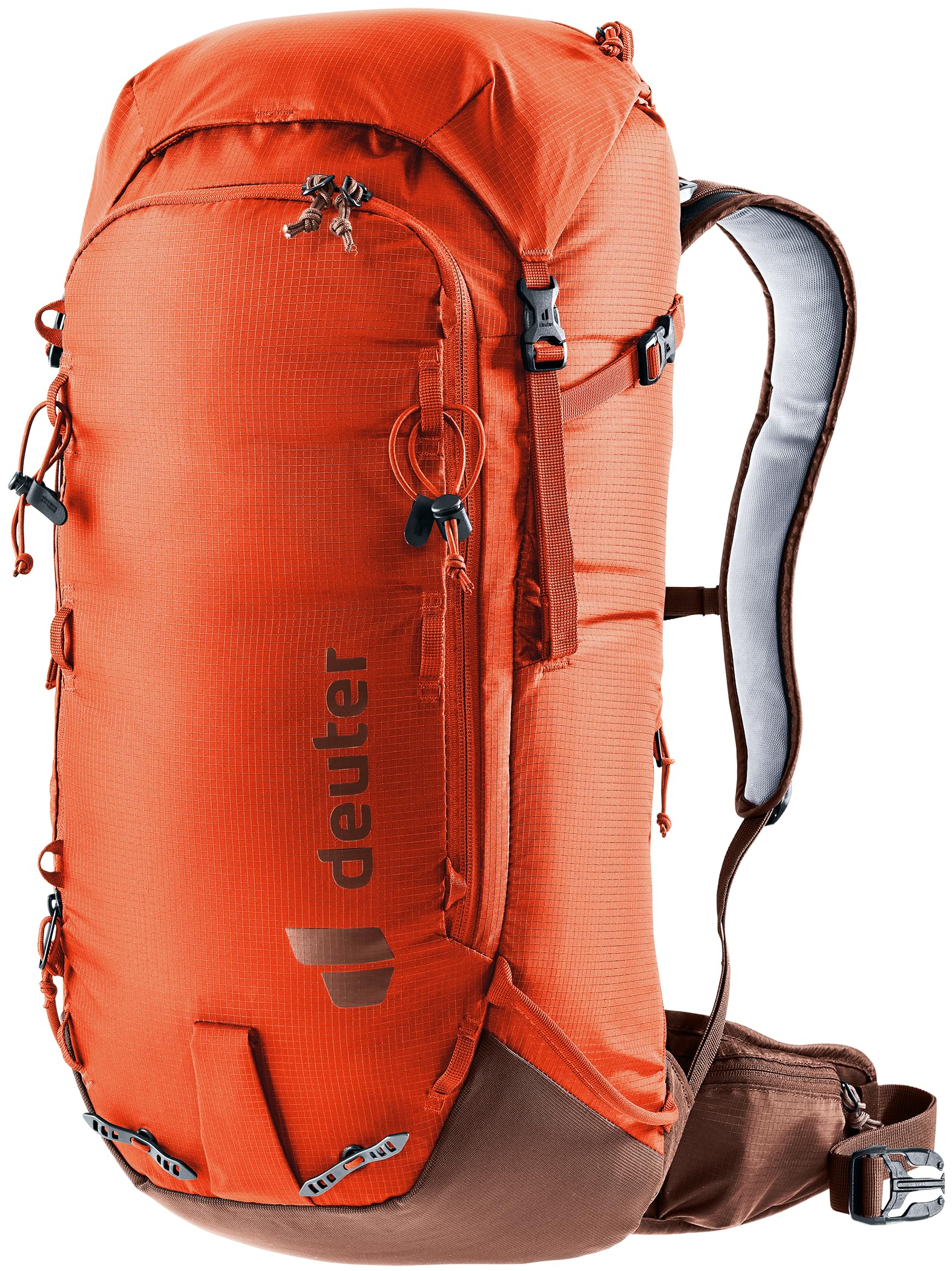
The Deuter Freescape Lite 26 brings the volume serious backcountry tourers need for a full day of skinning, including layers, food, and a first-aid kit, plus a dedicated avalanche rescue compartment with a reinforced shovel sleeve and organizer pockets that keep the probe and shovel from turning into a tangled mess. The main compartment also has a fleece-lined goggle pocket to protect your lenses from ice and abrasion during deep pow days.
One of the standout features here is the gear management for technical terrain. The pack has two ice axe attachments with upper straps that are detachable, and two separate, stowable gear straps for diagonal ski carry, a snowboard, or crampons. A side compartment holds maps and includes a built-in detachable helmet holder, so you don’t have to choose between carrying your helmet on your head or inside the pack. The snow-resistant fabric on the back system sheds snow on wet days, keeping the pack from becoming a heavy, soaked mess.
The Freescape Lite is hydration-compatible with the Deuter 3.0-liter Streamer reservoir system, but the bag itself weighs only 2.6 lbs — light enough for a long skin track. The mesh hip fins with one zipper pocket provide a place for a phone or snacks, and the sternum strap with whistle adds a quick rescue signal. The smartphone side pocket is positioned on the hipbelt but is tricky to reach without contorting your arm, so it’s best for items you don’t need mid-stride.
Why it’s great
- Reinforced shovel sleeve for fast avalanche tool access
- Detachable helmet holder and multiple gear attachment points
- Snow-resistant back fabric prevents wet-out on shralpy days
Good to know
- Smartphone side pocket is hard to access while wearing the pack
- Hipbelt pocket is too small for a modern phone
4. Dakine Heli Pro 24L

The Dakine Heli Pro 24L has been a staple in the resort and backcountry scene for years because it strikes a nearly perfect balance between size and functionality. At 24 liters, it’s roomy enough for a spare layer, lunch, and a water bladder, but compact enough that it doesn’t feel like you’re carrying a climbing pack on the lift. The vertical snowboard carry and diagonal/A-frame ski carry options are integrated into the compression straps, so you can lash your gear in seconds without fussing with separate straps.
The large fleece-lined goggle pocket sits at the top of the main compartment and keeps your lenses scratch-free and ready to swap when the light changes. A deployable helmet carry clips onto the front panel, expanding capacity when you’re hiking the ridge to drop into the next bowl. The hydration sleeve doubles as a laptop sleeve for apres work, but the tradeoff is that the tube routing isn’t insulated, so it’s vulnerable to freezing in single-digit temps.
Build quality is typical Dakine — thick Cordura-style fabric and heavy-duty zippers that can withstand years of abuse. The interior pocket layout includes a small organizer panel for keys, lip balm, and a multitool. Some users note the fit is slightly boxy, but the sternum strap and waist belt keep the load snug against your back for dynamic riding. It’s a proven, solid all-rounder for riders who spend time both on-piste and off.
Why it’s great
- Proven durability with Cordura-like fabric and metal zippers
- Fleece-lined goggle pocket protects expensive lenses
- Multiple ski/snowboard carry integrations
Good to know
- No insulated hydration tube routing for extreme cold
- Fit can feel boxy for some torso lengths
5. Dakine Heli Pro 20L

The Dakine Heli Pro 20L is the slightly smaller sibling of the 24L version, offering the same robust build at a lower weight and a slightly more compact profile that fits better on shorter torsos. At 1.8 lbs, it’s noticeably lighter on your back, and the 20-liter capacity is ideal for resort days where you only need to carry a spare layer, goggles, and a water bottle rather than a full ski touring kit.
The diagonal ski carry and vertical snowboard carry are carried over from the larger model, making it just as capable for lashing your gear when you need to hike a bootpack or carry your board through the parking lot. The hydration sleeve doubles as a laptop sleeve, which is useful for travel days where the pack shifts from mountain to airport. A fleece-lined goggle pocket keeps your lenses safe, and the main compartment has enough room for a 2L water bladder and a midlayer.
The trade-off for the smaller volume is that the interior pocket layout is simpler — fewer organizer slots than the 24L version. The waist strap is removable but less padded than backcountry-specific packs, so if you’re carrying heavy loads on long skin tracks, you’ll notice the weight more. It’s best for skiers who want a reliable, no-fuss pack for chairlift days and the occasional short hike to a sidecountry shot.
Why it’s great
- Lightweight at 1.8 lbs and compact for shorter torsos
- Diagonal ski carry and hydration sleeve for versatile use
- Fleece-lined goggle pocket protects valuable eyewear
Good to know
- Simplified pocket layout with fewer internal organizers
- Waist strap is less padded for heavy loads
6. CamelBak Powderhound 12
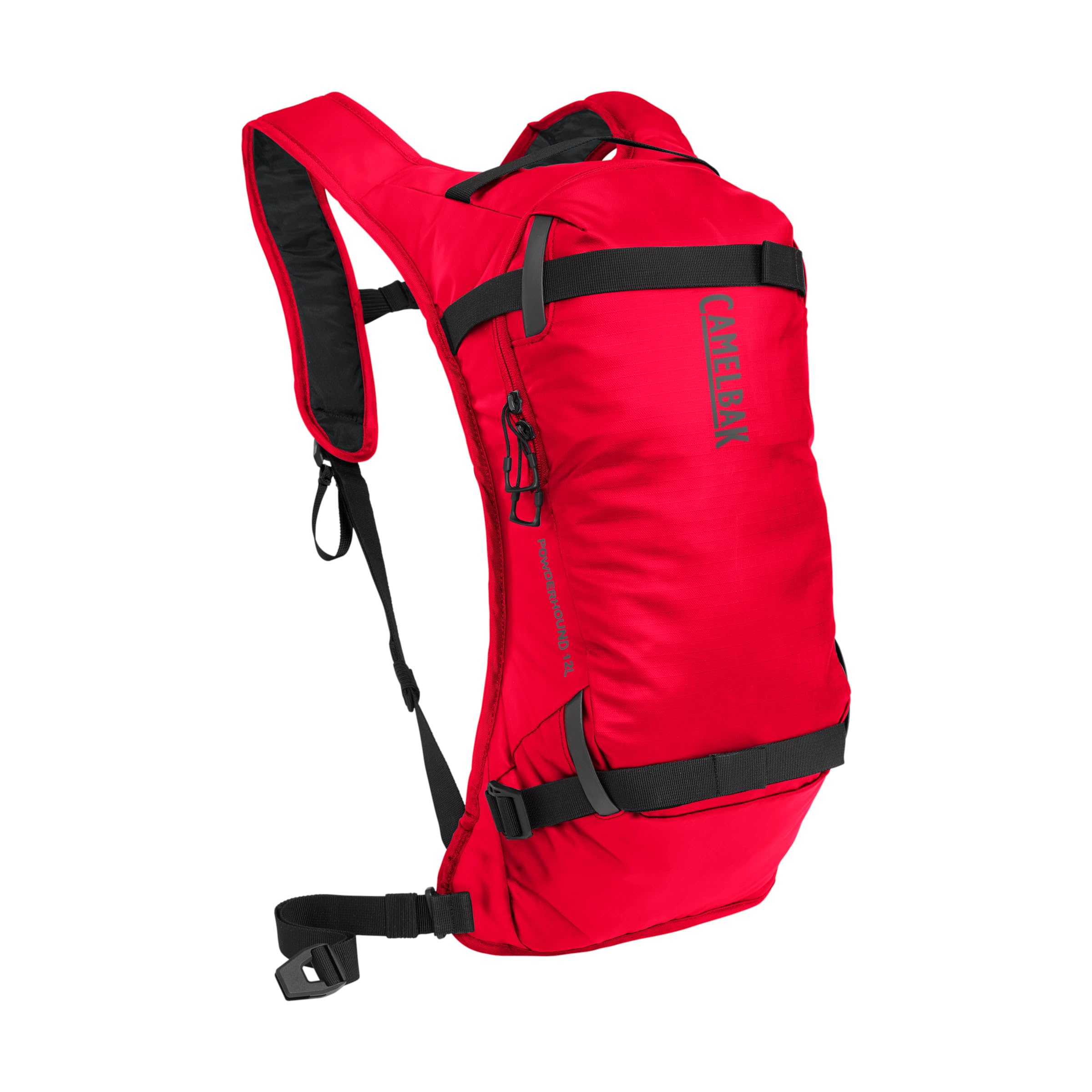
The CamelBak Powderhound 12 is a hydration-focused pack designed for skiers who prioritize water access over bulk cargo capacity. With a 12-liter cargo space and a 2-liter reservoir, this pack is built for high-lap days where you’re only carrying water, a snack, and a phone. The insulated drinking tube harness uses snow-repelling materials and a thermal barrier to help keep the water from freezing, and it includes a lift-access feature that lets you swing the pack forward on the chairlift without fully removing it.
Ski and snowboard carry is handled by an external system that supports A-frame or diagonal carry, plus a secure snowboard attachment for bootpacks and traverses. The removable waist belt and adjustable sternum strap keep the pack stable during dynamic movement. The main compartment is large enough for a lightweight jacket and a pair of gloves, but don’t expect to fit a helmet or a shovel inside — this is for the minimalists who hate carrying extra weight.
The 31.4-ounce weight is light enough that you forget you’re wearing it, and the snow-repelling fabric sheds light snow and sleet. One downside is that the cargo space is truly compact; if you’re planning a backcountry tour that requires a puffy, food, and safety gear, you’ll outgrow this pack fast. It’s best for skiers who want to stay hydrated on quick resort laps without the bulk of a full daypack.
Why it’s great
- Insulated hydration tube prevents freezing in cold conditions
- Lift-access harness allows quick access without removing pack
- Lightweight at 31.4 oz for minimalists
Good to know
- 12L cargo is too small for backcountry safety gear and layers
- No dedicated avalanche tool compartment
7. Wildhorn Brimhall 65L

The Wildhorn Brimhall 65L is a different beast from the daypacks above — it’s a travel boot bag designed to carry your ski boots, helmet, goggles, and outerwear to the mountain in one duffel. The isolated boot compartment has vented ports that drain water and provide airflow to prevent the after-ski smell from building up, and it fits boots up to size 32. A removable boot separator keeps your boots snug and prevents them from banging against each other during transit.
The main compartment is massive at 56 liters and includes five internal storage pockets plus one external pocket for easy access. A plush-lined goggle pocket protects your lenses, and there’s dedicated space for a helmet, socks, gloves, and any other snow gear or ski apparel. The clamshell design opens flat for easy packing, and the 420D nylon water-resistant outer shell sheds snow and rain during loading in the parking lot.
The Brimhall offers three carry options: stow-away fully adjustable backpack straps with a sternum strap, a removable shoulder strap for a duffel-style carry, and two heavy-duty luggage-style handles. The backpack straps tuck away into their own compartment when not in use, keeping the profile clean for overhead bin storage on planes. It’s the best option for skiers flying to their destination and needing one bag to hold everything but their jacket shell and pants.
Why it’s great
- Dedicated vented boot compartment for up to size 32 boots
- Clamshell design and 56L main compartment for all gear
- Three carry options: backpack, duffel, or handles
Good to know
- Too bulky for daily use or skiing; travel-only bag
- No dedicated avalanche safety compartment
FAQ
How many liters do I need for a full day of resort skiing?
Can the CamelBak Powderhound hold avalanche safety gear?
Is the Wildhorn Brimhall good for actually skiing or just travel?
What does diagonal ski carry mean and why does it matter?
Final Thoughts: The Verdict
For most users, the backpacks for skiing winner is the Osprey Glade 20 because it combines a purpose-built insulated hydration system with a stable carry and avalanche-ready organization in a single, well-rounded package. If you want a proven resort all-rounder with slightly more cargo space, grab the Dakine Heli Pro 24L. And for serious backcountry tourers who need 26L of capacity and technical gear attachment points, nothing beats the Deuter Freescape Lite 26.