
Our readers keep the lights on and the weekend projects moving. As an Amazon Associate, I earn from qualifying purchases.
Landing a steep, decisive smash is the single most satisfying feeling on a badminton court. It is also the most technically demanding shot in the game. A racket built for the smash must combine a stiff shaft for energy transfer with a head-heavy balance to generate the centrifugal force that sends the shuttle crashing downward. Choosing the wrong frame — one built for defense or all-round control — robs your swing of power and leaves you frustrated at the net.
I’m Rikta — the founder and writer behind FitlyFast. I have spent years analyzing racket construction, balance points, shaft stiffness, and string tensions across hundreds of models to understand what separates a true attacking weapon from a generic frame.
This guide focuses exclusively on frames engineered for offensive power. Whether you play club-level competition or weekend tournaments, finding the right badminton racket for smash determines whether your clears convert into winners or float harmlessly for your opponent to return.
How To Choose The Best Badminton Racket For Smash
A smash-oriented racket is fundamentally different from an all-court or defensive racket. Every design choice — from the balance point to the shaft flex and the weight distribution — is optimized for one thing: transferring maximum energy from your swing into the shuttlecock. Here is what to look for when filtering frames for attacking power.
Balance Point: Head-Heavy Is Non-Negotiable
The balance point determines where the racket’s weight is centered. A head-heavy frame shifts more mass toward the top of the racket, increasing the momentum of the racket head during a swing. This extra rotational force translates directly into a heavier smash. Most smash-focused rackets have a balance point above 295 mm from the handle base. Frames advertised as “even balance” or “head-light” are designed for defense and quick net play, not for rear-court power.
Shaft Stiffness: Medium-Stiff to Stiff for Energy Transfer
A flexible shaft bends during a swing and unloads energy like a slingshot, which helps beginners generate power with slower swings. But for a smash, a stiffer shaft wastes less energy in flex and transfers more of your arm and wrist snap directly into the shuttle. Players with solid technique should target a medium-stiff or stiff shaft. The trade-off is that a stiff shaft demands cleaner timing; mistimed smashes will lack depth.
Weight Class: 4U vs 5U vs 6U
Badminton rackets are classified by weight in grams (U-system). 4U (80–84 g) is the most common weight for attacking players, offering a good balance of power weight and maneuverability. 5U (75–79 g) is lighter and allows for faster swing speed, which can generate more smash power if your technique is rapid and whippy. 6U (70–74 g) is extremely light and demands near-perfect timing to produce heavy smashes; it is better suited for advanced players with exceptional wrist snap. Beginners should start with 4U for a more forgiving power window.
Frame Material: High-Modulus Carbon Fiber
Basic rackets use steel or aluminum, which flex too much under tension and absorb energy that should go into the shuttle. Well-constructed carbon fiber frames — especially high-modulus or high-rigidity graphite blends — create a stiffer, more responsive platform. Materials like 40T, 46T, and 50T graphite denote the carbon fiber’s tensile modulus; higher T-numbers mean stiffer, lighter frames that produce a crisper impact feel and better energy return.
String Tension: 26–30 lbs for Smash Power
Pre-strung rackets typically come at lower tensions (22–24 lbs) that feel springy but reduce control on hard hits. For smashing, a tension of 26–30 lbs provides a firmer bed that gives less and launches the shuttle off the strings with more velocity. Higher tension also gives you better directional control on steep angles. Be aware that higher tension increases the risk of string breakage and puts more strain on the frame — the racket must be rated for the tension you plan to use.
Quick Comparison
On smaller screens, swipe sideways to see the full table.
| Model | Category | Best For | Key Spec | Amazon |
|---|---|---|---|---|
| Li-Ning Axforce Blast | Premium | Power smashes | Max tension 32 lbs | Amazon |
| Yonex Astrox 99 Play | Premium | Intermediate smashing | Isometric head shape | Amazon |
| YODIMAN 50T Professional | Mid-Range | Club tournaments | 50T graphite shaft | Amazon |
| TENGAOSI 2-Pack Graphite | Mid-Range | Offensive & all-round play | 46T medium flex shaft | Amazon |
| Yonex ArcSaber 11 Play | Mid-Range | Control and accuracy | 4UG5, graphite frame | Amazon |
| Senston N80 Carbon Fiber | Budget | Recreational upgrade | 85 g carbon fiber | Amazon |
| Head Nano Ti 110 | Premium | Squash / Not applicable | 110 g titanium | Amazon |
In‑Depth Reviews
1. Li-Ning Axforce Blast
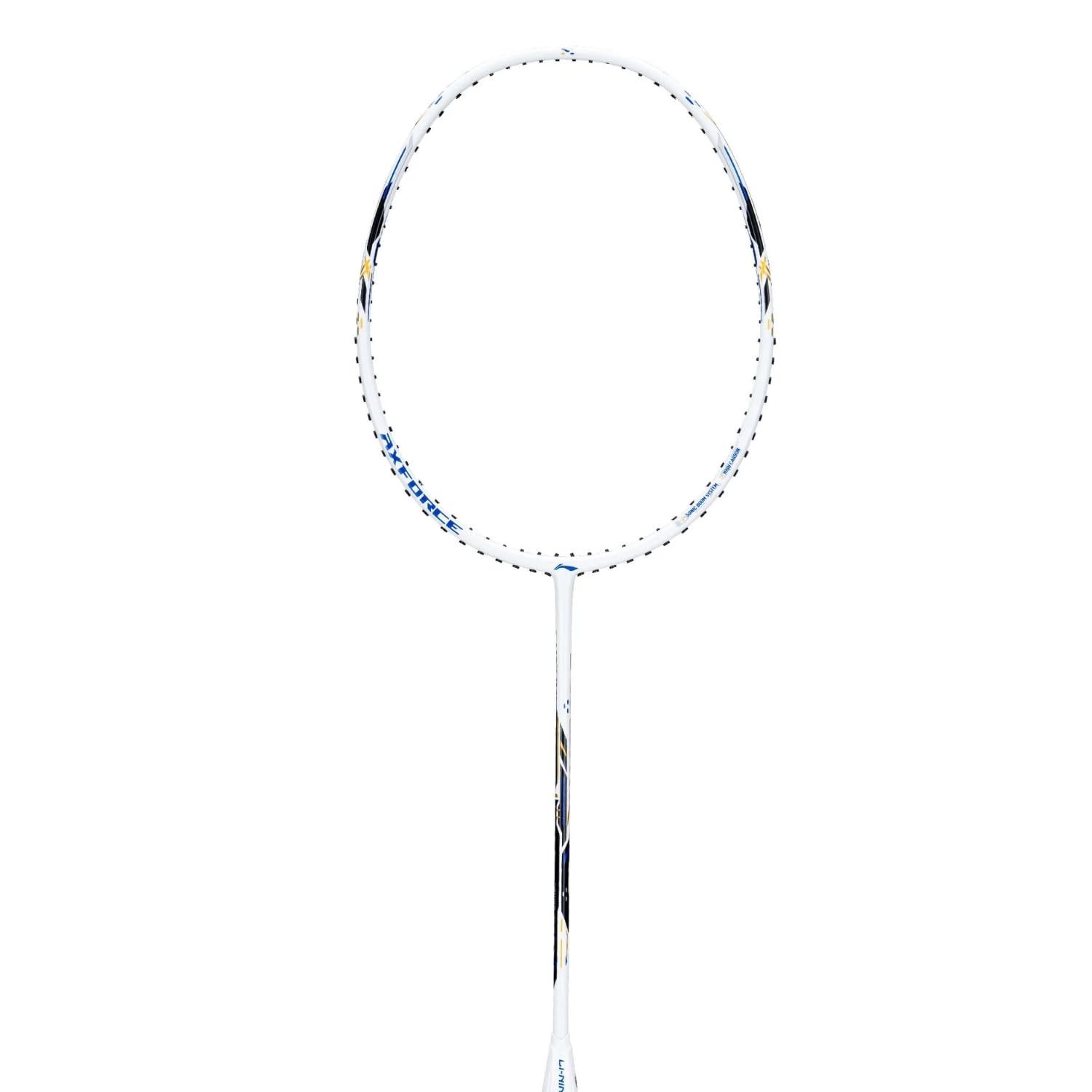
The Li-Ning Axforce Blast is purpose-built for the smash. Its Dynamic Optimum frame shape reduces air resistance while maintaining a head-heavy balance that drives the shuttle downward with conviction. The maximum string tension rating of 32 lbs (for the 4U version) places it in professional territory, giving you the option to string tight for maximum explosiveness without risking frame damage.
The slim flexible shaft is an interesting choice — it provides a subtle whip that helps generate power without demanding perfect timing on every swing. This makes the Axforce Blast more forgiving than ultra-stiff tournament rackets while still delivering the steep shot angles that define a powerful smash. The Sonic Boom System produces an audible crack on impact, which is both satisfying and indicative of clean energy transfer.
Weight options span 4U (80–84 g), 5U (75–79 g), and 6U (70–74 g), letting you fine-tune swing speed versus mass. The 5U version, with a max tension of 31 lbs, hits a sweet spot for players who want fast racket head speed without sacrificing too much mass behind the shuttle. Pre-strung at a moderate tension, it plays well out of the box but truly shines once you dial in your preferred string type and tension.
Why it’s great
- Designed specifically for powerful smashes with a head-heavy balance
- High maximum string tension (32 lbs) allows for aggressive string setups
- Three weight options (4U, 5U, 6U) suit different swing styles
- Slim flexible shaft adds whip for extra power on slower swings
Good to know
- Color may vary from product images
- Stock strings may not suit all players — budgeting for a re-string is wise
2. Yonex Astrox 99 Play

The Yonex Astrox 99 Play is the entry-level sibling of the legendary Astrox 99 line — the same series used by top-ranked professionals. It inherits the head-heavy balance and isometric head shape that made the original famous, giving intermediate players access to the same aggressive attacking geometry without the four-figure price tag of the Pro model. The isometric head expands the sweet spot noticeably, making mis-hit smashes less punishing.
The medium flex shaft provides a balanced feel that sits between full stiffness and a whippy flex. This is intentional: intermediate players still developing consistent timing benefit from the medium flex, which stores and releases energy on slower swings. The Rotational Generator System counterbalances the frame weight, improving maneuverability when transitioning from smash to net recovery — a critical function for singles players who need to reset after attacking.
At 83 grams (4U), it is light enough for rapid swings but carries enough mass for rear-court power. Reviews highlight that the smash power is “extremely fun” and noticeably better than the Arcsaber 10/11 Play, confirming the head-heavy balance is doing its job. The stock strings are on the looser side and lasted about four intermediate sessions, so consider a re-string at 26–28 lbs once you are comfortable with the frame.
Why it’s great
- Proven Astrox geometry with head-heavy balance for powerful smashes
- Isometric head enlarges the sweet spot for consistency
- Medium flex shaft is forgiving for intermediate players
- Rotational Generator System aids recovery after smashes
Good to know
- Stock strings are loose — plan a re-string for maximum power
- Premium price tier reflects Yonex brand and technology
3. YODIMAN 50T Professional Badminton Racket
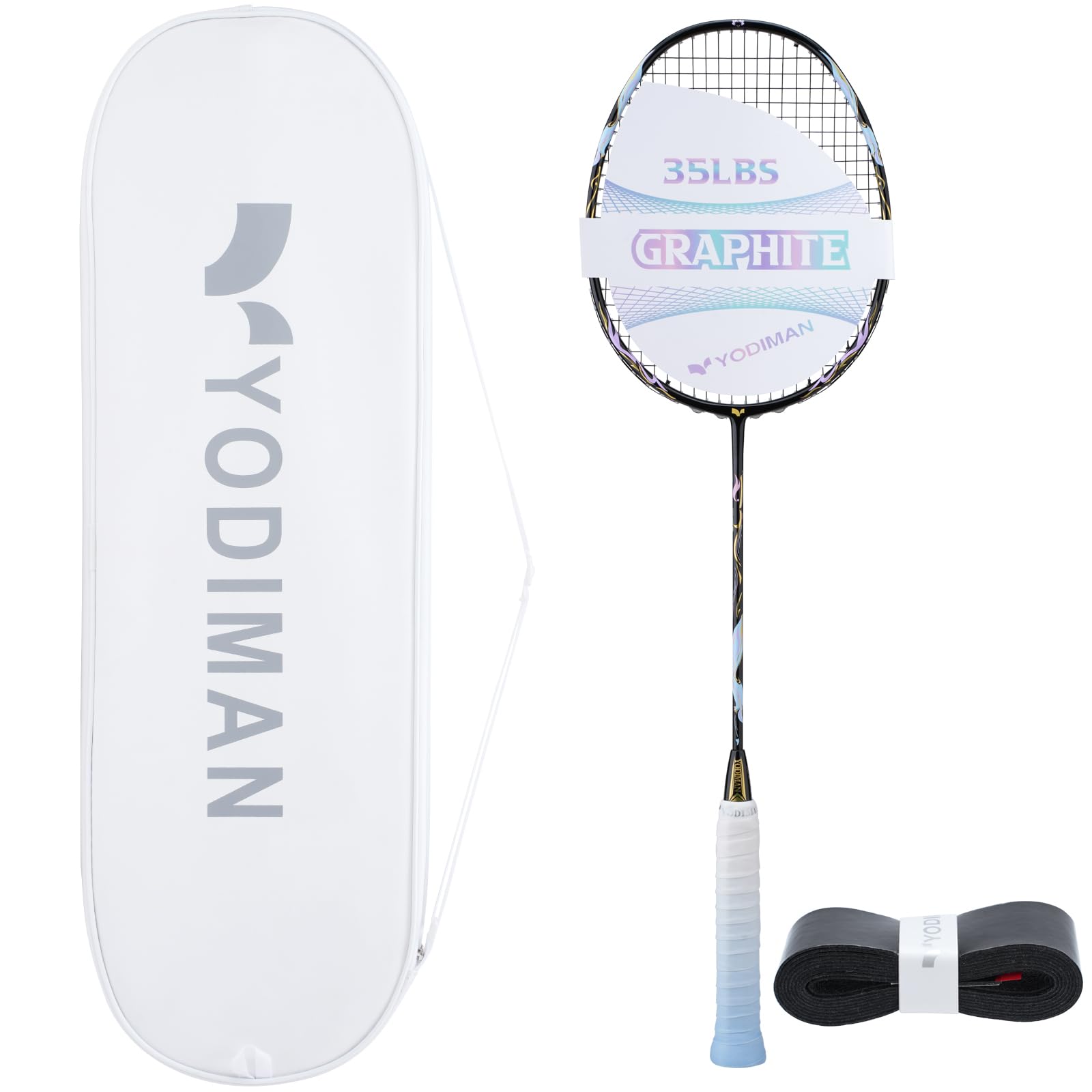
The YODIMAN 50T Professional delivers club-level specs at a mid-range price. The 50T graphite carbon fiber shaft is the standout feature — 50T refers to the carbon fiber’s tensile modulus, indicating a very stiff, high-end material that minimizes energy loss during a smash. This shaft, combined with a head-heavy balance (common in their 5U version), creates a frame that wants to attack every shuttle.
Pre-strung at 26 lbs by a professional stringer, this racket is ready for competitive play out of the box. The frame is rated up to 35 lbs, giving you room to increase tension as your technique improves. Weighing only 75–79 grams (5U), it is ultra-light, which translates to fast swing speed — ideal for generating power through racket head acceleration rather than mass. The aerodynamic frame shape further reduces drag, helping you get the racket head into position quickly for steep smashes.
Reviews consistently praise its lightweight feel and swing speed, with some comparing its playability favorably to Yonex frames. The beryl and coral gradient finish is visually striking, and the included carry case adds practical value. This is an excellent choice for advanced club or tournament players who want professional performance without paying for a legacy brand name. Note that some users reported that color may vary, so confirm before purchase if color matching is important.
Why it’s great
- 50T graphite shaft provides exceptional stiffness for energy transfer
- Ultra-light 5U frame enables very fast swing speeds
- Frame rated to 35 lbs for high-tension string setups
- Professional pre-string at 26 lbs saves time and money
Good to know
- Some users reported color variations from product images
- 5U weight requires clean timing for maximum smash power
4. TENGAOSI 2-Pack Graphite High-Grade Badminton Racquets
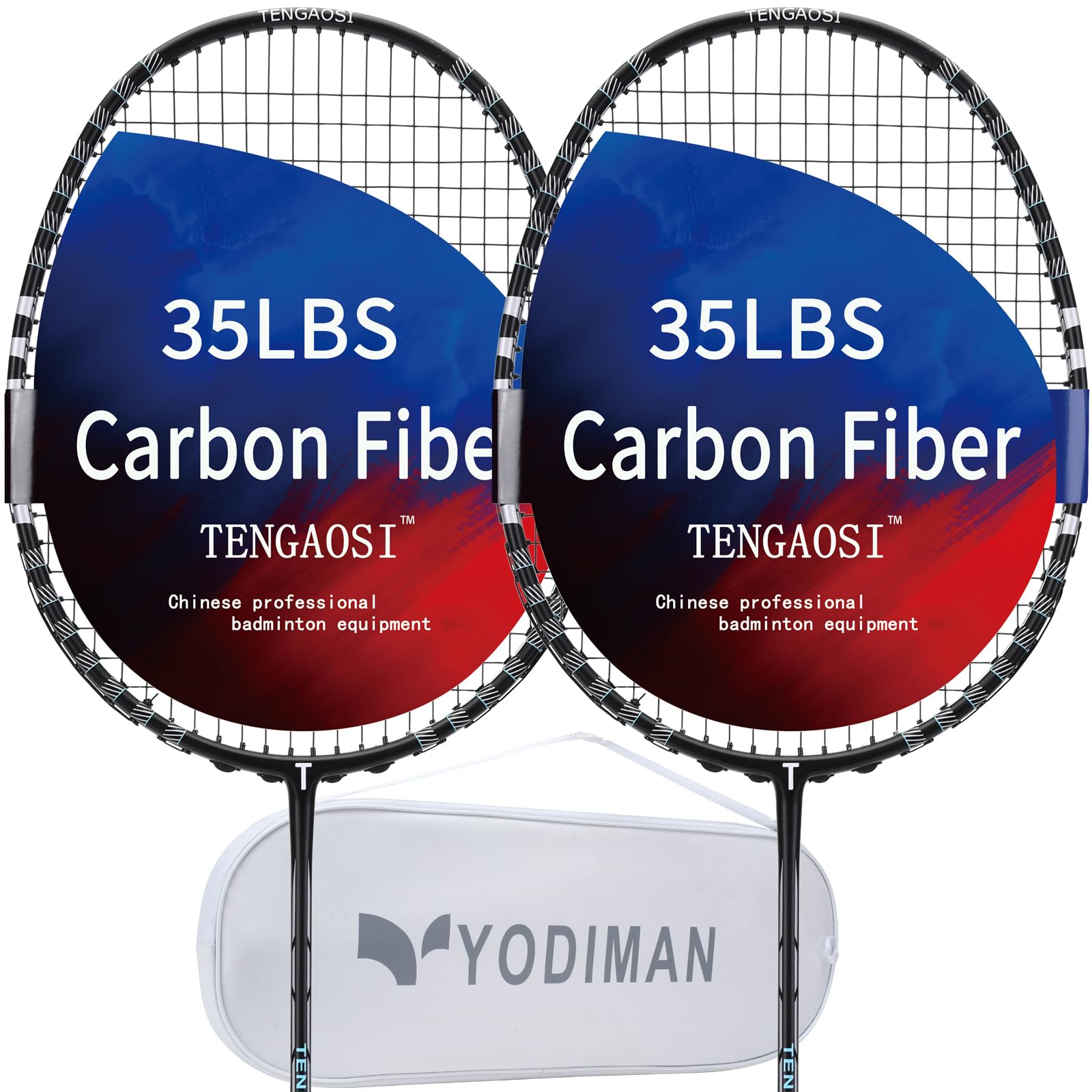
The TENGAOSI 2-Pack stands out because it gives you two distinct playing styles in one purchase. One racket is tuned for offensive play (head-heavy, designed for smashes) and the other for all-round play (even balance for versatility). This is a smart solution for players who want to experiment with different balances or for pairs who share rackets but play different roles.
Both frames use a 46T medium-flex shaft, which sits in the sweet spot between flex and stiffness. The 46T modulus is a step above standard carbon fiber but below the ultra-stiff 50T found in top-tier frames — it provides a responsive, power-friendly feel without requiring tournament-level timing. The pre-string at 26 lbs with 0.69 mm gauge string is punchy and consistent, and the frames are rated to handle up to 35 lbs if you prefer a tighter bed.
Weighing in the 4U range (80–84 g), these rackets are lightweight without being feathery. The aerodynamic frame shape reduces drag for faster swings. One user noted that the strings broke after two sessions in their initial unit, but the seller replaced it promptly. Overall, this is a strong mid-range option for players or pairs who want a step up from basic sets and appreciate having a dedicated offensive frame.
Why it’s great
- Two rackets with different balances (offensive + all-round) in one pack
- 46T medium-flex shaft offers a good balance of power and forgiveness
- Professional hand-stringing at 26 lbs provides consistent performance
- Frame rated to 35 lbs for high-tension setups
Good to know
- Initial quality control issues reported on some units
- Not suitable for players seeking ultra-stiff shaft feel
5. Yonex ArcSaber 11 Play

The Yonex ArcSaber 11 Play is not a pure smash racket — and that is exactly why it earns a spot on this list for certain players. Its even balance and slightly flexible shaft prioritize control and shot placement over raw power. For intermediate players who are still developing their technique, this frame helps you learn to place smashes with precision before moving to a head-heavy, stiff-shafted racket.
The graphite frame delivers a smooth, dampened feel that absorbs vibration well. This makes long practice sessions more comfortable and reduces arm fatigue. The isometric head shape (Yonex’s signature) expands the sweet spot so that slightly off-center smashes still produce clean contact. Weighing 4UG5, it is a standard weight and grip size that will feel familiar to most players.
Reviews highlight that it holds the shuttle slightly on impact — a characteristic of the Arcsaber series that improves drop shot control and net play. One reviewer noted it felt even better than their primary pro-level racket, suggesting the Play model is not just a budget compromise. If your game relies on placement rather than brute force, this is an excellent choice. Pre-string tension is moderate, so upgrading the strings can add more power when you are ready.
Why it’s great
- Even balance provides excellent control for precise smash placement
- Graphite frame dampens vibration for comfortable long sessions
- Isometric head expands the sweet spot for consistent contact
- Great for players focusing on shot placement over raw power
Good to know
- Not head-heavy — will not generate the same raw power as dedicated smash frames
- Stock strings may be too loose for advanced smashing
6. Senston N80 Carbon Fiber Badminton Racket
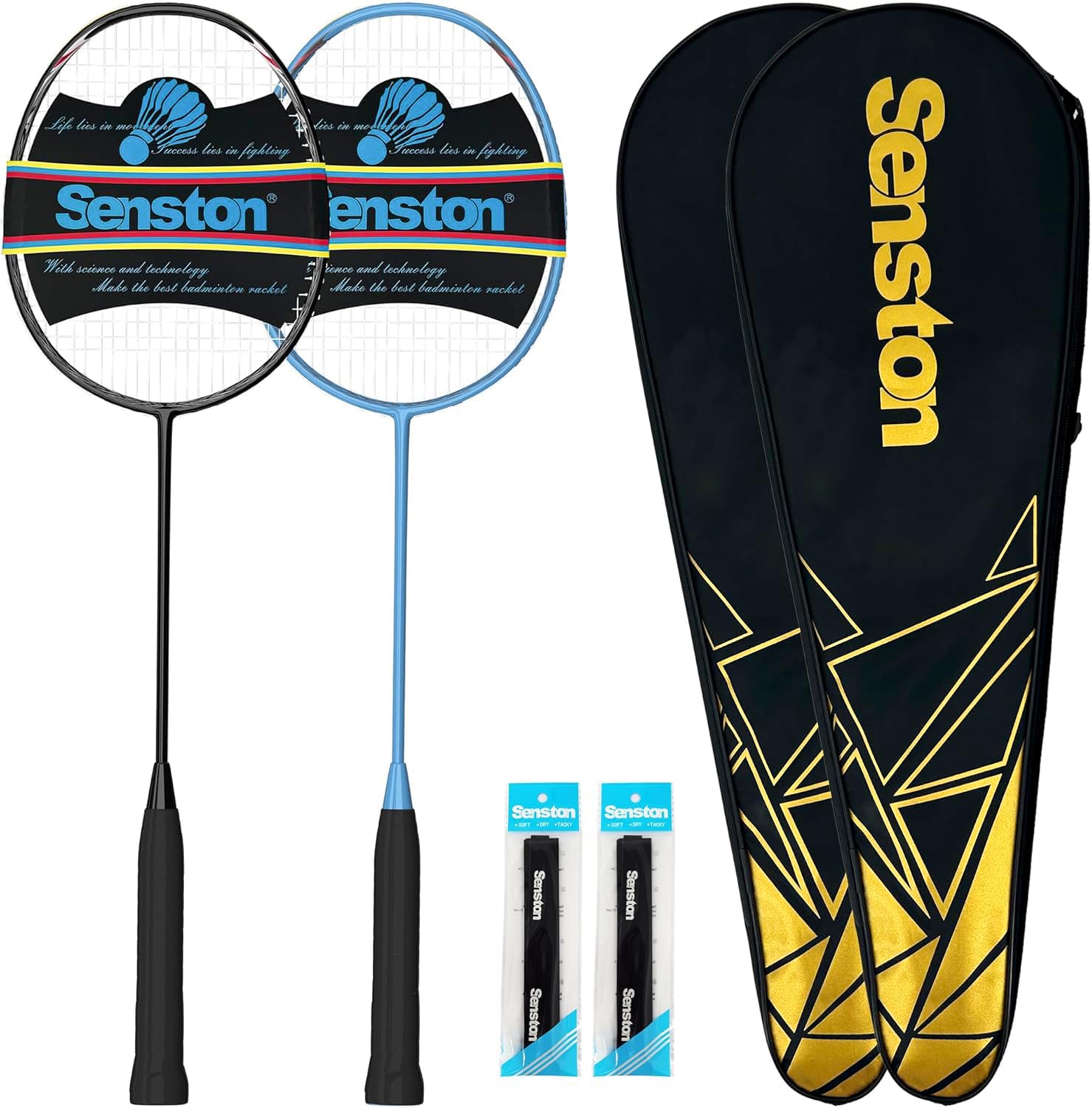
The Senston N80 is a genuine carbon fiber racket at a price point where most options use aluminum or steel frames. The high-modulus carbon fiber construction makes it significantly lighter than entry-level metal rackets — just 85 grams — which reduces arm fatigue during extended play. The slightly head-light balance will not produce the heaviest smashes, but it allows for faster racket handling and easier defense.
Pre-strung with moderate tension, the N80 arrives ready for casual and recreational play. The string bed delivers a clean, snappy rebound that supports both drives and drops, though the tension is too low for aggressive smashing. It is best suited for players who have outgrown basic backyard sets and want a lightweight, controllable frame that feels authentic on court. The included replacement grip adds longevity to the handle.
Reviews praise its build quality, lightweight feel, and competitive performance relative to more expensive rackets. One reviewer noted it was suitable for pre-teens transitioning from youth-sized rackets. For its price tier, the Senston N80 is an excellent introduction to carbon fiber frames. If you plan to focus on smashing, factor in the cost of a re-string at higher tension to unlock the frame’s full potential.
Why it’s great
- Affordable entry point into carbon fiber construction
- Lightweight 85 g design reduces arm fatigue
- Includes an extra replacement grip for customization
- Solid build quality that rivals more expensive models
Good to know
- Head-light balance limits raw smash power
- Stock string tension is low for aggressive smashing
7. Head Nano Ti 110 Squash Racquet

The Head Nano Ti 110 is a squash racket, not a badminton racket. It is included here because it occasionally appears in badminton searches due to its name and head-heavy balance that appeals to power players. However, it is designed for a different sport — the frame is heavier (110 g unstrung, ~170 g strung), the grip is thicker, and the string pattern is optimized for the larger, heavier squash ball.
If you play squash, this racket offers good value. Its titanium-carbon fiber construction provides a stiff, responsive platform, and the head-heavy balance generates powerful squash drives. Reviews from squash players rate it highly for its balance and quality. But if your primary sport is badminton, this racket’s weight alone (nearly double that of a standard badminton frame) will cause arm fatigue and slow your swing speed dramatically.
It is also sold unstrung, requiring a separate purchase and installation. This is worth noting because some buyers mistakenly assume it is ready to play. For badminton players shopping specifically for smashing, the Li-Ning Axforce Blast or Yonex Astrox 99 Play are far more appropriate choices. The Head Nano Ti 110 is a solid squash racket but the wrong tool for a badminton smash.
Why it’s great
- High-quality titanium-carbon fiber construction for squash
- Head-heavy balance suits aggressive squash drives
- Strong reputation among intermediate and advanced squash players
Good to know
- This is a squash racket, not suitable for badminton smashing
- Heavy weight (~170 g strung) will slow badminton swing speed
FAQ
Is a head-heavy or head-light racket better for smashing?
What weight class should a beginner choose for learning smashes?
Can a flexible shaft generate more smash power?
What string tension is ideal for a powerful smash?
How do I know if a racket is designed for smashing?
Final Thoughts: The Verdict
For most players, the badminton racket for smash winner is the Li-Ning Axforce Blast because it combines a high maximum string tension, head-heavy balance, and slim flexible shaft that makes powerful smashes accessible to intermediate and advanced players alike. If you want a proven Yonex design specifically for aggressive attacking, grab the Yonex Astrox 99 Play. And for club-level performance without the legacy brand premium, nothing beats the YODIMAN 50T Professional with its ultra-stiff 50T graphite shaft and aerodynamic frame.