
Our readers keep the lights on and the weekend projects moving. As an Amazon Associate, I earn from qualifying purchases.
Pulling a limp, yellow tomato off the vine after months of watering is a gut-punch that points straight to the soil you chose. The wrong bagged mix compacts into concrete, drowns delicate root hairs, or arrives already crawling with fungus gnats, turning your raised bed into a science experiment you never signed up for.
I’m Rikta — the founder and writer behind FitlyFast. I’ve spent years breaking down the filler-to-nutrient ratios, the Mycorrhizae inoculation claims, and the real-world drainage performance of dozens of commercial soil blends so you don’t have to gamble with your growing season.
This guide cuts through the marketing mulch to find the best bagged soil for vegetable garden results, comparing organic certifications, moisture retention specs, and amendment quality so you can plant with confidence.
How To Choose The Best Bagged Soil For Vegetable Garden
Choosing a bagged soil for your vegetable garden is about matching the blend to your specific growing method — in-ground, raised bed, or container. The wrong choice can lead to root rot, nutrient lockout, or stunted growth. Here are the key factors to evaluate.
Organic Certification and Ingredient Sourcing
An OMRI (Organic Materials Review Institute) listing on the bag is your guarantee that no synthetic pesticides, herbicides, or chemical fertilizers were used. Look for specific ingredients like composted manure, worm castings, kelp meal, and alfalfa meal — these provide a slow-release nutrient profile that feeds your vegetables without the risk of burning tender roots. Bags that list only “compost” or “peat moss” without source details are often filler-heavy and nutritionally weak.
Drainage and Aeration Structure
Vegetable roots need oxygen as much as they need water. A premium mix will contain perlite, pumice, or coarse sand to create air pockets. If the soil feels heavy and clumps into a dense ball when squeezed, it will likely compact in your raised bed or pot, suffocating roots. Coco coir is an excellent alternative to peat moss for improving aeration while maintaining moisture without becoming waterlogged.
Nutrient Density and Microbial Life
Active microbial life is the engine of healthy soil. Products enriched with Mycorrhizae fungi (endomycorrhizae for vegetables) form a symbiotic network with roots, dramatically improving water and nutrient uptake. Worm castings are a powerhouse of beneficial bacteria and trace minerals. For a complete mix, the bag should list both a primary nutrient source (composted manure) and a microbial inoculant, not just peat moss and perlite.
Quick Comparison
On smaller screens, swipe sideways to see the full table.
| Model | Category | Best For | Key Spec | Amazon |
|---|---|---|---|---|
| Back to the Roots Worm Castings | Amendment | Slow-release nutrient boost | 5 lbs pure vermicompost | Amazon |
| Coast of Maine Veg & Tomato | Complete Mix | Tomatoes & heavy feeders | 20 Qt, composted manure | Amazon |
| Espoma Organic Potting Mix (2-pack) | Complete Mix | Container gardens | 8 Qt bags, Myco-Tone | Amazon |
| MODELLOR Coco Coir Brick | Base Medium | DIY custom mixes | Expands to 18-20 gallons | Amazon |
| Espoma Veg & Flower Garden Soil | In-Ground Mix | Amending native soil | 1 Cu Ft, Myco-Tone | Amazon |
| Brut Cow Compost | Amendment | Soil enrichment | 10 Qt, OMRI compost | Amazon |
| Michigan Peat All Purpose | Budget Blend | Large raised beds | 50 lbs, with fertilizer | Amazon |
In‑Depth Reviews
1. Coast of Maine Organic & Natural Planting Soil for Vegetables & Tomatoes

This blend from Coast of Maine hits the sweet spot between a complete potting mix and an amendment. It’s formulated specifically for tomatoes and vegetables, using composted manure and sphagnum peat moss to create a lightweight structure that retains moisture without turning into mud. The inclusion of cedar helps deter soil-borne insects naturally.
Users consistently report visible growth acceleration within the first two weeks, especially with heirloom tomatoes that demand excellent drainage. The texture is rich and dark with minimal wood debris, making it ready to use straight from the bag for both in-ground beds and large containers. Several reviewers noted a fungus gnat issue upon opening, which can be managed with a neem oil drench before planting.
For the volume and organic ingredient quality, this is the most balanced ready-to-use option for a mixed vegetable garden. It’s OMRI listed and comes at a competitive mid-range price point that undercuts many premium brands while outperforming budget alternatives in nutrient density.
Why it’s great
- Excellent moisture-drainage balance for heavy feeders like tomatoes
- Lightweight, rich texture with very little filler
Good to know
- Some bags arrive with fungus gnats — treat with neem oil before planting
2. Espoma Organic Potting Soil Mix (2-Pack)

Espoma is a trusted name in organic gardening, and this 2-pack of 8-quart bags is ideal for container growing. The formula blends sphagnum peat moss, humus, and perlite with earthworm castings, alfalfa meal, kelp meal, and feather meal — offering a diverse slow-release nutrient profile. The proprietary Myco-Tone inoculant adds both endo and ecto mycorrhizae for robust root colonization.
Customers praise the clean, weed-free consistency and how quickly plants take to it after transplant. It is noticeably drier than some competitors on arrival, which requires pre-moistening before use to avoid water repellency. This dryness also makes it easier to store and less prone to gnats compared to pre-moistened soils.
This is a premium product at a moderate price, and the 2-pack provides flexibility for starting seeds in smaller pots or refreshing a few containers. It contains no synthetic chemicals, making it fully compatible with organic vegetable gardening practices.
Why it’s great
- Rich Myco-Tone blend for strong root development
- Natural, slow-release ingredients with no synthetics
Good to know
- Very dry on arrival — pre-wet the mix before potting to ensure it absorbs water
3. MODELLOR Premium Super Washed Coco Coir Brick
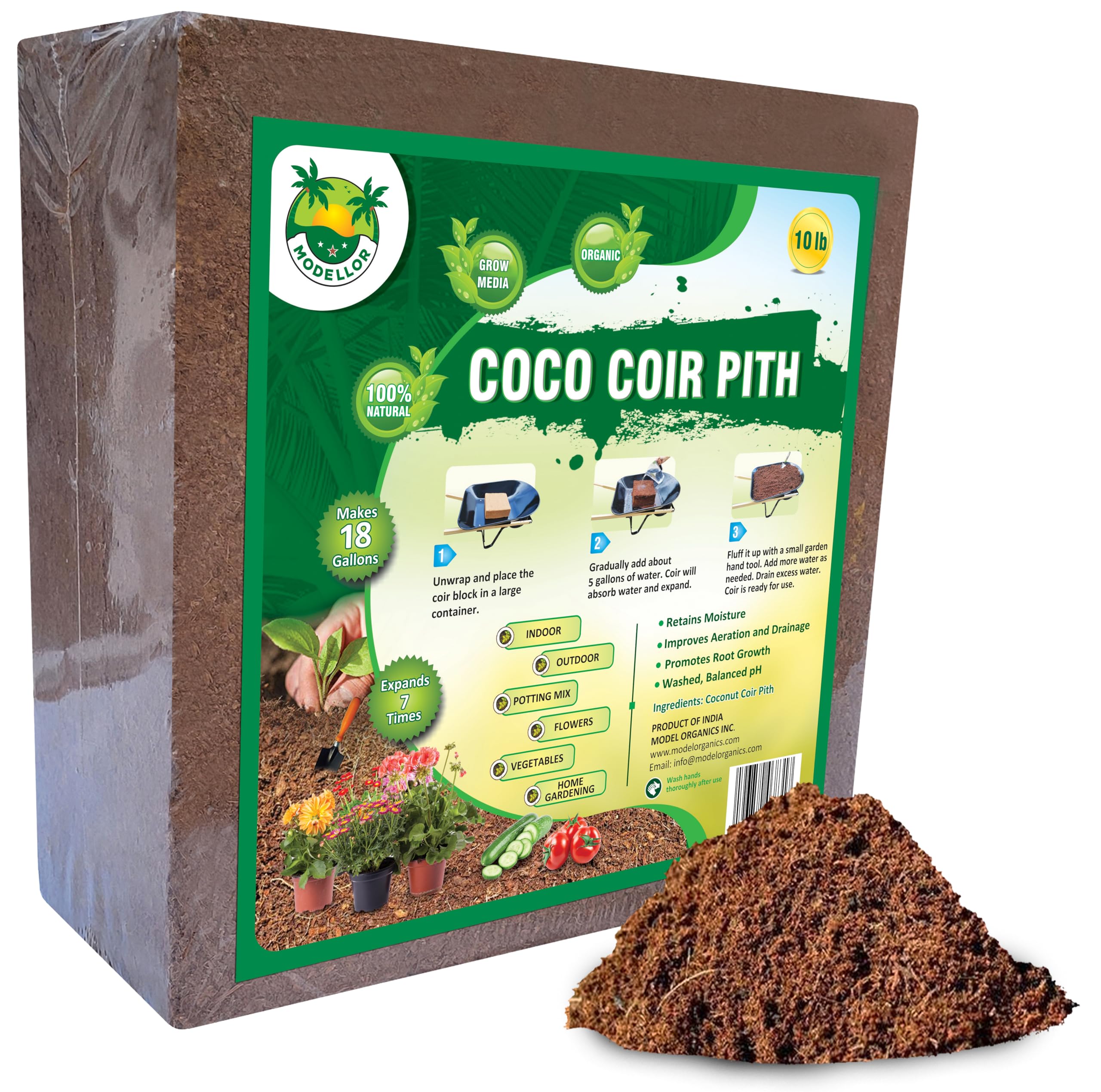
This 10-pound coco coir brick from MODELLOR expands into 18 to 20 gallons of growing medium when hydrated, making it the highest-volume value on this list. It’s triple-washed and pH balanced to eliminate the high salt content that plagues cheaper coir brands, meaning no pre-rinsing is required before mixing with your own compost, perlite, or worm castings.
The fluffy, airy structure is superior to peat moss for aeration and re-wetting, and it holds moisture evenly without compacting over a season. Customers consistently describe it as clean, consistent, and free of debris. It works perfectly as a base for custom vegetable garden mixes, allowing you to control the nutrient load by adding your own amendments.
This is not a complete soil — you must add nutrients. But for gardeners who want to build their own tailored mix without paying for bagged filler, this brick is the most economical and eco-friendly foundation available.
Why it’s great
- Triple-washed, low-salt, pH balanced — ready to use immediately after hydrating
- One brick yields enormous volume for custom mixing
Good to know
- Contains no nutrients — you must add your own compost, castings, or fertilizer
4. Back to the Roots Organic Worm Castings

Pure worm castings are a gold-standard soil amendment, and Back to the Roots delivers a consistent, odor-controlled product. The granulated texture blends easily into any existing mix — whether you’re amending a coco coir base, a bagged potting soil, or your native ground. It adds beneficial microbes that suppress soil pathogens and slowly release nutrients without the risk of burning even delicate seedlings.
Customer reviews highlight its effectiveness for milkweed and other sensitive plants, as it is completely safe for monarch butterfly habitats. The resealable bag keeps the castings fresh and usable over multiple plantings. While the 5-pound size is compact, a little goes a long way when used as a top dressing or mixed into the root zone.
This is strictly an amendment, not a standalone soil. For gardeners who already have a good base mix and want a powerful microbial and nutrient boost, this is the single best additive on the market.
Why it’s great
- Safe for all plants, including sensitive species — no odor or burn risk
- Rich in beneficial microbes for disease suppression
Good to know
- Must be mixed with a base soil — not a complete growing medium
5. Espoma Organic Vegetable & Flower Garden Soil

This Espoma formulation is specifically engineered for in-ground use, designed to be mixed thoroughly with native garden soil before planting. It contains the same Myco-Tone blend of endo and ecto mycorrhizae as the potting mix, but the texture and structure are optimized for ground application rather than container use. Enriched with earthworm castings, it provides a robust nutrient foundation for heavy-feeding vegetables like tomatoes, peppers, and squash.
Users report that plants grown in this mix outperformed those in a generic organic alternative side by side, with faster growth and deeper green foliage. The 1-cubic-foot bag is a substantial volume for a single raised bed or multiple in-ground rows. Some customers noted the soil arrived bug-free, but a small number experienced soil gnats on indoor plants when using the bag for houseplant repotting.
This is a premium option for gardeners who plant directly into the earth and want to significantly improve native soil without buying multiple amendment products. The OMRI listing confirms it is free of synthetic ingredients.
Why it’s great
- Optimized for in-ground mixing with Myco-Tone for root partnership
- Proven to outperform generic organic soils in side-by-side tests
Good to know
- Best used outdoors — not ideal as a standalone indoor potting mix
6. Brut Cow Compost

Brut Cow Compost is an OMRI-listed, 100% pure composted cow manure that comes finely sifted and odor-free. It’s packed with nitrogen, calcium, and iron to support strong vegetative growth. The texture is ideal for top-dressing existing beds or mixing into potting soil at a 3:2 ratio (compost to base mix) for an immediate fertility boost.
Customers, including first-time growers, report impressive results with tomatoes seeded directly into a blend of this compost and standard potting soil, seeing rapid early growth and strong stem development. The composting process is thorough, eliminating the risk of burning plants that comes with fresh manure, and the fine sifting means no large clumps or woody debris.
This is a pure organic amendment, not a complete soil. It provides a concentrated nutrient punch that works best when blended with a neutral base like coco coir or a budget potting mix, elevating the total fertility without the premium price tag of a high-end all-in-one bag.
Why it’s great
- ODor-free, finely sifted, and safe for direct root contact with no burn risk
- OMRI certified pure compost with high nitrogen content for leafy growth
Good to know
- Must be mixed with a base medium — not a standalone potting soil
7. Michigan Peat General All Purpose Premium Potting Soil

Michigan Peat’s all-purpose mix is the bulk-value champion for large projects. At 50 pounds, it’s ready to use straight from the bag with a blend of reed sedge peat, perlite, and sand. It includes both starter and slow-release fertilizers, so it supports plant growth for several weeks without immediate additional feeding. The texture is consistent and moist upon arrival, which is convenient for instant use.
Customers find it suitable for filling large raised beds and container gardens where volume is the primary concern. However, multiple reviews warn of fungus gnats hatching from the soil, which suggests the sterilization process is not as rigorous as premium competitors. The nutrient content is adequate for general-purpose gardening but may need supplementation for heavy-feeding vegetables like tomatoes.
This is a budget-conscious choice for gardeners who need to fill a lot of space quickly. It works best when amended with worm castings or cow compost to boost fertility, and should be used with a gnat prevention strategy such as bottom watering and diatomaceous earth application.
Why it’s great
- Excellent value per pound for large-scale filling of beds and containers
- Comes pre-moistened and includes starter fertilizers for immediate planting
Good to know
- Fungus gnats are a common issue — plan preventative measures before planting
FAQ
Can I use bagged potting soil directly in my raised vegetable bed?
Why do some bagged soils cause fungus gnats?
What is the difference between potting mix and garden soil?
How often should I add fresh bagged soil to my vegetable garden?
Final Thoughts: The Verdict
For most users, the bagged soil for vegetable garden winner is the Coast of Maine Organic & Natural Planting Soil for Vegetables & Tomatoes because it balances organic quality, moisture retention, and price better than any other ready-to-use bag. If you want the ultimate customizable foundation, grab the MODELLOR Coco Coir Brick and mix your own amendments. And for a pure nutrient boost that works with any base soil, nothing beats the Back to the Roots Organic Worm Castings for safely supercharging plant growth all season long.