
Our readers keep the lights on and the weekend projects moving. As an Amazon Associate, I earn from qualifying purchases.
A bag that shifts, chafes, or slaps against your lower back with every stride ruins your rhythm. For runners, the difference between a great training session and a miserable one often comes down to whether your carry system stays locked in place or fights you the entire way. The problem isn’t how much you need to bring — it’s engineering a pouch that disappears against your body so you forget it’s there.
I’m Rikta — the co-founder and writer behind FitlyFast. I analyze the construction details, material science, and ergonomic designs of running-specific carry gear to help active people pick the setup that won’t sabotage their pace.
Whether you’re grabbing a key and phone for a quick 5K or hauling a hydration bladder through a half-marathon course, finding the right bags for running comes down to how well the system manages weight distribution and eliminates movement.
How To Choose The Best Bags For Running
Not every bag sold as “sport” or “active” can actually handle a running gait. The wrong design will bounce, dig into your hip bone, or trap heat against your lower back. Focus on these three factors to find a bag that works with your stride, not against it.
Stability: Bounce-Free Engineering is Non-Negotiable
The biggest irritation runners report is a bag that shifts with each foot strike. Look for systems with multiple adjustment points — a waist belt plus sternum strap or a sling that tightens across both shoulders. Patented designs that contour to the hips or use a harness system to distribute weight vertically are far more stable than basic unbelted pouches. For hydration vests, the shoulder and chest strap combination is what locks the load in place.
Hydration Access: Bladder vs. Bottle Placement
A 2-liter bladder in a back compartment shifts your center of gravity rearward, which can help posture on long runs but requires a secure harness to prevent sway. Front-mounted soft flasks or side-carried bottles keep water weight close to your core, reducing momentum drag. The choice depends on run duration — a single 12-ounce bottle works for 10K distances, while a 2-liter bladder suits trail half-marathons where refill stations are scarce.
Phone Fit and Pocket Architecture
Check your phone’s physical dimensions against the stated pocket size. Many running belts advertise “fits all phones” but struggle with modern phablets in protective cases. Look for stretch-mesh outer sleeves or expandable zippered compartments that can accommodate a large device without compression. Also evaluate how many small pockets exist for gels, keys, and ID — a single large compartment forces everything into a messy pile that bulges unevenly.
Quick Comparison
On smaller screens, swipe sideways to see the full table.
| Model | Category | Best For | Key Spec | Amazon |
|---|---|---|---|---|
| Salomon Pulse Belt | Running Belt | Marathons & High-Volume Carry | 0.79 L capacity with rear zip pocket | Amazon |
| Nathan Hydration Vest | Hydration Vest | Trail Runs & Long Distance Hydration | 2 L bladder with 3-way harness | Amazon |
| Fitletic Hydra 16 | Hydration Belt | Dual-Bottle Hydration, Balanced Weight | Two 8 oz bottles in quick-draw holsters | Amazon |
| SPIbelt Dual Pocket Pro | Running Belt | Minimalist Daily Carry & Short Runs | Expandable pockets, fits 25″-47″ waist | Amazon |
| Zelvot Running Vest | Hydration Vest | Budget-Friendly Bladder Carry | 2 L food-grade bladder, 900D Oxford fabric | Amazon |
| Gymreapers Crossbody Bag | Sling Pack | Casual Runs & Gym-to-Street Versatility | 1 L capacity, 900D TPU coated polyester | Amazon |
In‑Depth Reviews
1. Salomon Pulse Belt

The Salomon Pulse Belt is a top-tier choice for runners who demand serious capacity without switching to a full vest. It holds a 17-ounce soft flask in the main front sleeve plus five or six gels, while the rear zip pocket accommodates a large phone. At 62 grams, the weight is negligible, but the real achievement is the stability — the belt uses a contouring design that keeps the load locked against the hips, even during pace pickups.
Long-time users report this belt lasts five to six years of regular use, with the elastic holding its tension and the zippers functioning smoothly. The single narrow opening on the front requires some technique to load everything efficiently, but once packed, nothing shifts. It is designed for runners who prioritize low-profile bulk and race-day readiness over the convenience of multiple bottle holsters.
The fit works well for most mid-section sizes, though a few runners with very narrow waists found it rode up slightly. Chafing complaints are rare due to the soft edge finish. For anyone running marathons or long training runs who wants to carry a flask and nutrition without a vest, this is the benchmark.
Why it’s great
- Exceptional stability with zero bounce during high-speed efforts
- Huge front pocket fits a 17 oz soft flask and multiple gels without bulging
Good to know
- Single front opening requires careful packing to avoid a tight squeeze
- May ride up slightly on very slender waistlines
2. Nathan Hydration Vest with 2 Liter Bladder
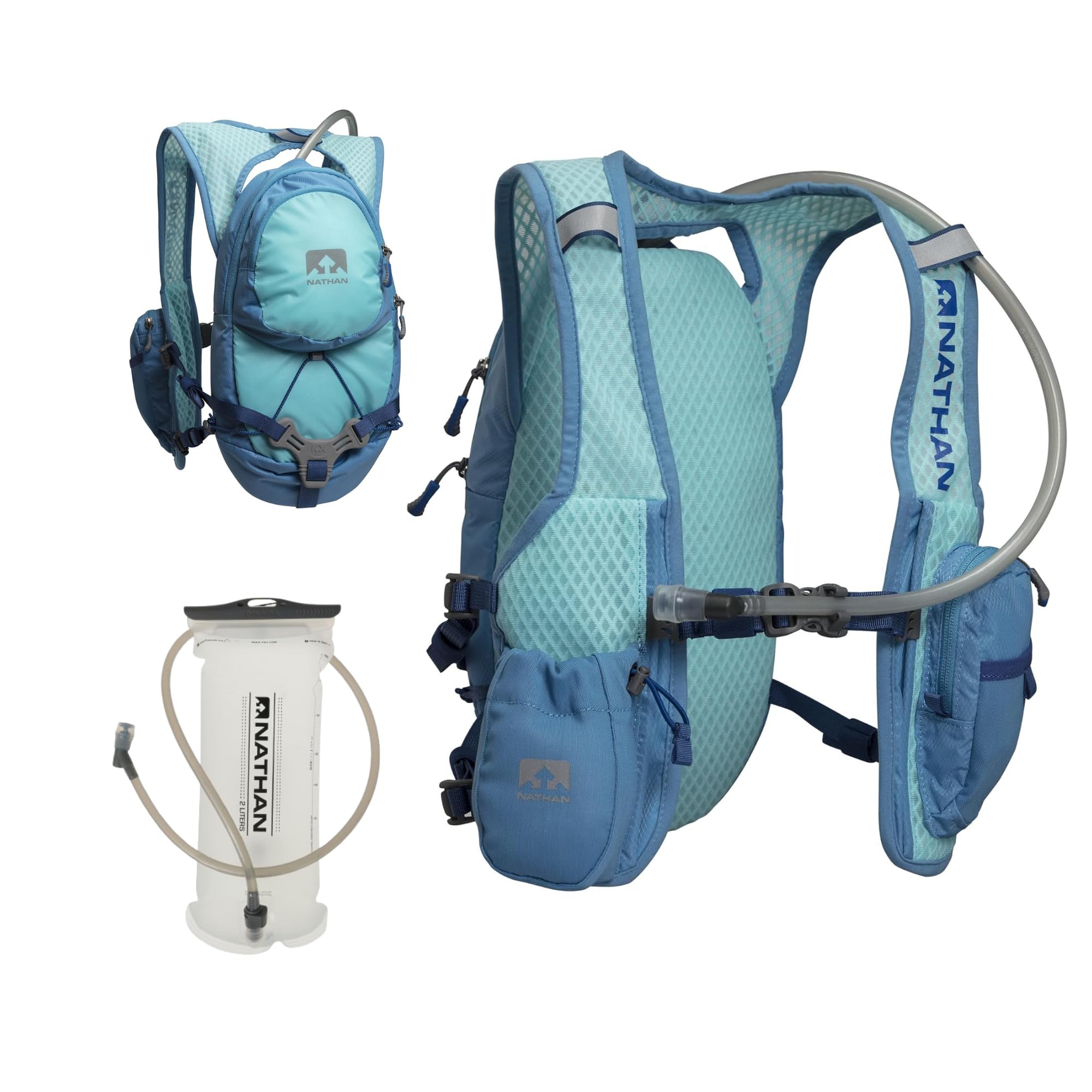
The Nathan Hydration Vest is one of the most proven designs in the trail-running space, with a 3-way adjustable harness that distributes the weight of a full 2-liter bladder evenly across the torso. The breathable mesh straps minimize chafing even on long, sweaty efforts, and the one-size-fits-most approach works across a wide range of body types when you follow the proper tightening sequence — loosen everything, cinch the chest straps first, then adjust the side straps.
Front pocket layout includes a zip pouch for gels, a mesh pouch, and a bungee pocket that fits a phone with a pop socket, though large recent-model phones may need to go in the main back compartment. The bladder uses a high-quality bite valve that delivers a steady flow without leaking. Runners who have logged over 1,600 miles on a single vest report the material holds up with minimal wear.
The back compartment is tight when the bladder is full, making mid-run access difficult for anything other than the top zip pouch. This vest excels for runs under 8 miles where the bladder capacity is sufficient and you don’t need to dig into the main storage area. It is a lightweight, low-bounce option for trail runners who prioritize hydration and breathability over massive cargo capacity.
Why it’s great
- Three adjustment points create a highly customizable, bounce-free fit
- Breathable mesh straps reduce sweat buildup and prevent chafing
Good to know
- Front pocket doesn’t fit large phones with thick cases
- Back storage is inaccessible while wearing the vest on the move
3. Fitletic Hydra 16 Running Belt

The Fitletic Hydra 16 solves the weight-balance problem of single-bottle belts by placing two 8-ounce bottles in symmetrical quick-draw holsters on each hip. This side-loaded configuration keeps the center of gravity centered, reducing the twisting torque that can occur with a single bottle on one side. The bottles use squeeze-to-drink quick-flow caps, and the contoured holsters grip the bottles securely so there is no rattling or bouncing.
The main pocket, sized at 8 by 4 inches, features an inner organizer that keeps cards and ID separate from your phone. Runners report fitting bulky Samsung models in OtterBox cases without issue. The belt also includes two external gel holders and race bib toggles, though the gel loops are too small for larger SiS or Maurten gel packets — standard Gu gels fit folded. The neoprene construction is lightweight and sweat-wicking.
Some users noted an initial chemical smell from the bottles that dissipates after a thorough hand wash. When worn with the pouch in front, the belt remains stable through distances up to 10 miles. It is an excellent mid-range hydration belt for runners who want balanced water weight and don’t want the bulk of a vest.
Why it’s great
- Dual-bottle design evenly distributes water weight across the hips
- Main pocket fits large phones with heavy-duty cases comfortably
Good to know
- Gel holders are too small for larger gel packets
- New bottles may have a plastic smell that needs initial washing
4. SPIbelt Dual Pocket Pro Running Belt

The SPIbelt Dual Pocket Pro is a minimalist’s dream for short runs where you need just the essentials. The larger pocket expands to 8 by 4 by 2 inches, enough to swallow a phone, a small wallet, and keys, while the smaller 3-inch square pocket holds headphones or a gel. The belt uses a 1.5-inch wide soft elastic band that lies flat and prevents chafing, with a sturdy buckle that stays locked even during high-intensity movement.
One of the strongest differentiators is the adjustability — the band fits waist sizes from 25 to 47 inches, making it one of the most inclusive running belts on the market. The two-pouch design keeps items sorted rather than forcing them into a single jumbled compartment. Runners report the belt is barely noticeable once on, and it has earned a loyal following among users who have bought it multiple times as their go-to daily carry.
For runners with very small natural waists (under 28 inches), the smallest setting may still allow the belt to ride upward slightly. It is not designed for hydration — there are no bottle holders or bladder compatibility — so it works best as a companion for shorter road runs or gym sessions where water fountains are available. The construction quality and zipper durability are excellent for the price tier.
Why it’s great
- Very wide adjustment range fits most body types comfortably
- Two expansion pockets keep phone and small items organized
Good to know
- Not intended for carrying water bottles or hydration
- Smallest setting may be loose on waistlines under 28 inches
5. Zelvot Running Vest with 2L Water Bladder
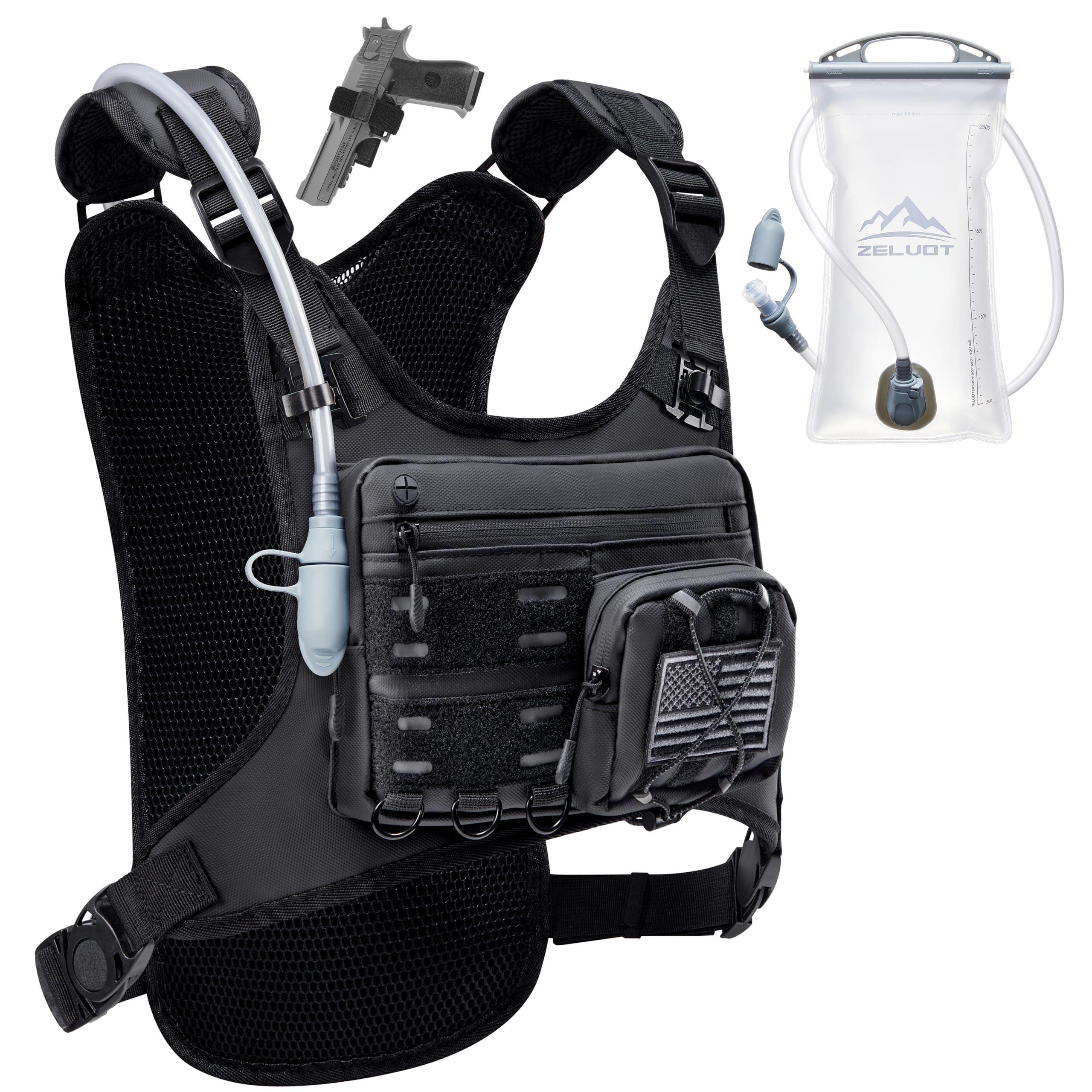
The Zelvot Running Vest brings a 2-liter food-grade water bladder into an accessible price point without cutting corners on the core essentials. The 900D Oxford fabric is waterproof and scratch-resistant, providing solid protection against trail debris and sudden rain. The bladder uses a high-flow bite valve and is 100 percent BPA and PVC-free, with a detachable straw that makes cleaning manageable.
Storage is comprehensive for the price — three front waterproof zippered pockets handle phone, keys, and gels, while two large back pockets accommodate the bladder plus a towel or extra layer. The design also includes a detachable holster and a tactical pen slot. The wideness of the adjustable shoulder straps and waist belt provides decent weight distribution for runs up to a half-marathon distance. Runners report the vest fits well on larger chests up to 250 pounds without restricting breathing.
The sizing runs generous, and some runners recommend sizing down from your normal shirt size to prevent the shoulder straps from being too loose, which can cause bounce when carrying a concealed item or extra weight. The reflective logos and strips improve visibility in low-light conditions. For runners who want a bladder-based hydration solution without paying premium vest prices, this is a strong contender.
Why it’s great
- Includes a 2-liter BPA-free bladder with easy-to-clean bite valve
- Waterproof front pockets protect phone and electronics from rain
Good to know
- Shoulder straps may be too loose if you don’t size down
- Heavier loads can cause bounce without proper strap tightening
6. Gymreapers Gravestone Crossbody Bag
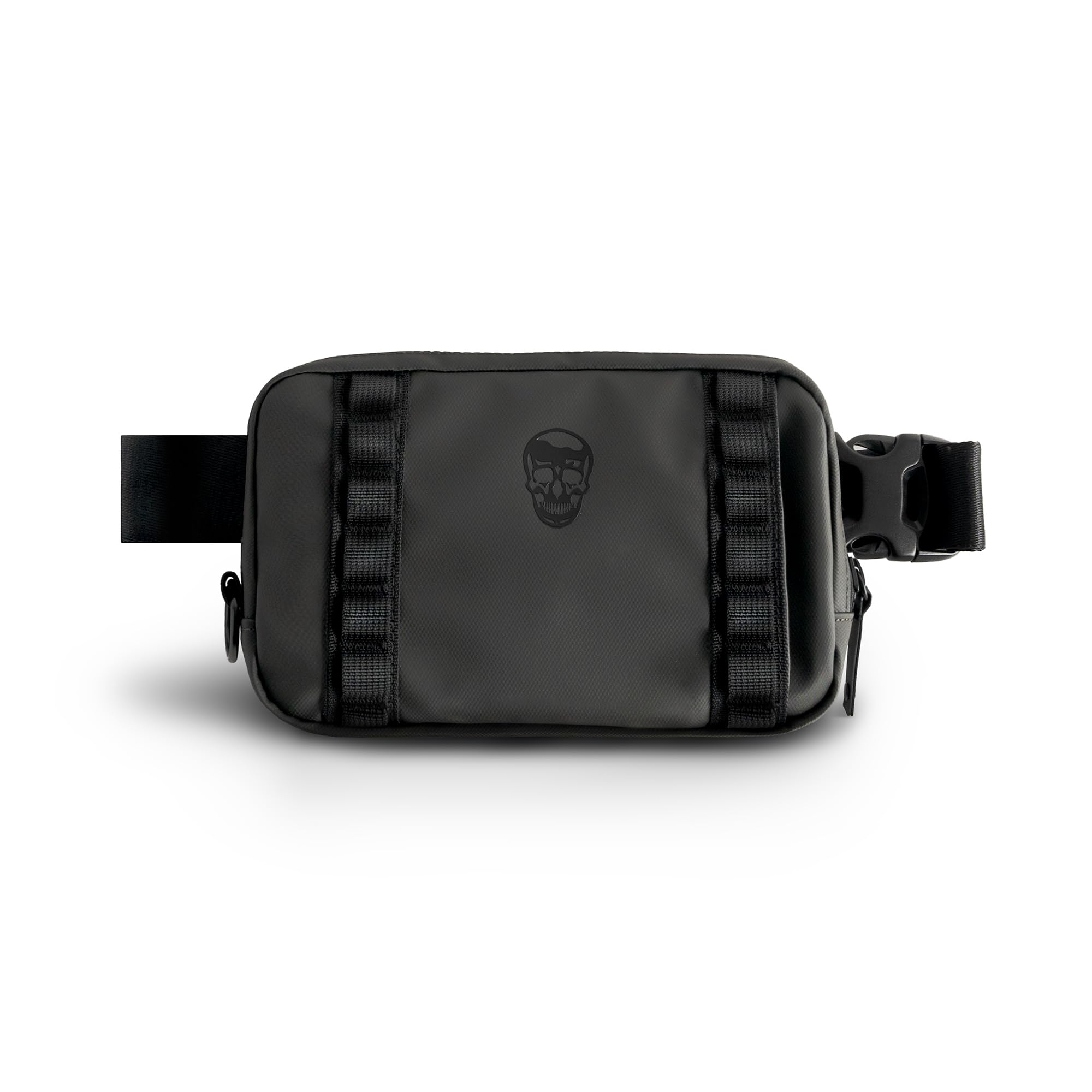
The Gymreapers Gravestone Crossbody Bag is a versatile sling option that works for casual runners who prefer a cross-carry over a traditional belt. Its 1-liter capacity is modest, but the smart organization — a hidden external quick-access pocket for a phone, interior mesh separators, and a D-ring for keys — makes efficient use of the space. The 900D TPU coated polyester exterior provides genuine weather resistance.
The 41-inch adjustable strap allows for multiple carry modes: crossbody, over-the-shoulder, or around the waist. Runners with medium to large builds will find the strap length sufficient for a snug fit across the torso, though larger individuals may need the strap at maximum extension. The heavy-duty hardware and double-stitched seams give the bag a durable feel that most lightweight crossbody bags lack.
This is not a dedicated running belt — the crossbody orientation can shift if the bag is packed heavily and you are sprinting. It works best for gym-to-street runners, casual jogs, or as a festival and travel bag. The front phone sleeve is bulky and some users prefer to leave it empty. For someone who wants one bag for the gym, errands, and light running, it offers great utility.
Why it’s great
- Weather-resistant TPU coating protects contents in rain
- Multiple carry configurations for gym, travel, and casual runs
Good to know
- Strap may be too short for crossbody carry on larger frames
- Not stable enough for sprinting or high-intensity running sessions
7. Fitletic Hydration Running Belt With 12oz Bottle

The Fitletic single-bottle running belt is the entry point for runners who want dedicated hydration without the expense of a dual-bottle setup or a full vest. The 12-ounce quick-flow bottle fits into a contoured hip holster that grips it tightly to eliminate bouncing. The belt uses the same hip-hugging contour technology as the Hydra 16, creating a bounce-free fit that stays put on runs up to 17 miles according to user reports.
The main pocket, measuring 8 by 4 inches, has an inner organizer that keeps cards, cash, and keys separate from your phone. It fits larger iPhones and similar-sized devices without issue. The belt also features four gel holders, race bib toggles, and reflective accents for low-light safety. The neoprene material is lightweight and wicks sweat away from the skin.
The single-bottle design works best for runs with access to water fountains or aid stations — 12 ounces may not be enough for solo long-distance efforts in hot weather. The storage capacity is adequate for a phone, keys, and some nutrition, but the pocket does not expand. For the price, it delivers the same patented stability as the dual-bottle version with a lower water capacity, making it a smart choice for shorter races and training runs.
Why it’s great
- Patented design delivers consistent no-bounce performance mile after mile
- Integrated gel holders and bib toggles suit race-day needs
Good to know
- Single 12-ounce bottle is insufficient for long solo runs without refills
- Main pocket lacks expansion for bulky items beyond a phone and cards
FAQ
How do I prevent a running belt from riding up?
Are hydration vests better than belts for long distances?
Will a running bag fit my phone with a thick case?
Final Thoughts: The Verdict
For most users, the bags for running winner is the Salomon Pulse Belt because it combines race-ready capacity with zero-bounce stability in a package that weighs next to nothing and lasts for years. If you want dedicated trail hydration with a full 2-liter load, grab the Nathan Hydration Vest for its proven 3-way harness and breathable mesh construction. And for minimalists who need a no-frills carry for short runs, nothing beats the SPIbelt Dual Pocket Pro with its expandable pockets and wide adjustment range.