
Our readers keep the lights on and the weekend projects moving. As an Amazon Associate, I earn from qualifying purchases.
Watching your prized arborvitae, juniper, or cedar trees turn brown from within as tiny, cone-shaped bags slowly consume the foliage is a uniquely frustrating gardening experience. The common reaction is to spray harsh, broad-spectrum chemicals that nuke everything in the yard, including beneficial insects. But effective bagworm control is far more precise.
I’m Rikta — the co-founder and writer behind FitlyFast. I have analyzed hundreds of insecticide labels and cross-referenced field use data to build this guide around the specific active ingredients that actually stop bagworm larvae during their vulnerable window.
The life cycle of the bagworm dictates your spray timing. This guide breaks down the specific active ingredients and application methods that define a truly effective bagworm insecticide, so you can purchase with confidence.
How To Choose The Best Bagworm Insecticide
Bagworms are masters of disguise, living inside a silk bag covered in plant debris. The first rule of bagworm control is timing: you must target the tiny, newly-hatched larvae in late spring or early summer, before they have a chance to close off their bag and become resistant to sprays. The second rule is choosing the right active ingredient for your specific landscape.
Biological Options: Bacillus thuringiensis (B.t.) and Spinosad
These are the safest choices for beneficial insects, pets, and edible gardens. B.t. (Bacillus thuringiensis) is a bacteria that, when ingested by caterpillars, paralyzes their gut. It is fast-acting but degrades in sunlight within a few days, requiring multiple applications every 5–7 days. Spinosad, derived from a soil bacterium, is more rainfast and provides a slightly longer residual, making it a great mid-range choice for organic growers.
Synthetic Pyrethroids: Bifenthrin and Permethrin
When you have a severe infestation or a large number of trees, longer-lasting synthetic pyrethroids like Bifenthrin and Permethrin are the heavy hitters. These contact and residual killers provide protection for weeks, killing new larvae as they emerge. They are highly effective, but are broad-spectrum and can be toxic to bees and aquatic life, so they must be applied with extreme care.
Systemic Insecticides: Acephate
For hard-to-reach tall trees, a systemic insecticide like Acephate (found in Bonide Systemic Insect Control) is absorbed by the roots or foliage and moves through the plant. When a bagworm feeds on the treated tissue, it dies. This option provides extended control, but it is powerful and has a strong odor. It is typically not used on edible crops.
Quick Comparison
On smaller screens, swipe sideways to see the full table.
| Model | Category | Best For | Key Spec | Amazon |
|---|---|---|---|---|
| Valent USA Dipel Pro DF | Biological (B.t.) | Large-scale / acreage spray | B.t. Kurstaki 54% Powder | Amazon |
| Fertilome Spinosad | Biological (Spinosad) | Eco-friendly / organic yards | Spinosad 0.5% Concentrate | Amazon |
| Wisdom Pro L&H Bifenthrin | Synthetic Pyrethroid | Residual / long-term control | Bifenthrin 7.9% Concentrate | Amazon |
| Bonide Systemic Insect Control | Systemic (Acephate) | Tall trees / heavy infestation | Acephate 9.4% Concentrate | Amazon |
| Martin’s Permethrin 13.3% | Synthetic Pyrethroid | Multipurpose / tick control | Permethrin 13.3% Concentrate | Amazon |
| Monterey B.t. Bundled | Biological (B.t.) | Small gardens / starter kit | B.t. Kurstaki 8 oz Liquid | Amazon |
| Summit Caterpillar & Webworm | Biological (B.t.) | Hose-end / quick application | B.t. Kurstaki 1 Qt Concentrate | Amazon |
In‑Depth Reviews
1. Valent USA Dipel Pro DF Biological Insecticide BT 54%, 1lb Bag

This bag contains a professional-grade, high-concentration B.t. (Bacillus thuringiensis kurstaki) powder that technicians use for large-scale applications. At 54% active ingredient, a 1-pound bag mixes into dozens of gallons of spray, making it the most economical option per gallon for homeowners with multiple trees or an acre of land. Users report that it is a “bag worm’s worst nightmare,” specifically citing years of success on cedar trees.
Unlike liquid B.t. concentrates that can be diluted, the dry formulation of Dipel Pro DF stores indefinitely without losing potency. The single must-know fact about this product is its rapid UV breakdown: you must spray in the evening or on a cloudy day, and reapply after any heavy rain or within 5-7 days to maintain coverage against new larvae. Users note that it is “organic-safe” but requires “respraying every few days.”
For anyone managing a large property with hundreds of trees, the cost-per-application here is unbeatable. It is the starting point for any serious bagworm defense plan that values volume and flexibility over convenience. The trade-off is the need for a dedicated sprayer and careful mixing.
Why it’s great
- Highest B.t. concentration for massive coverage per pound
- OMRI listed and safe for edible gardens up to harvest day
Good to know
- Powder requires pre-mixing and a proper sprayer
- Breakdown in sunlight (3-4 days) demands strict spray timing
2. Fertilome (16063) Spinosad Insecticide, 32 oz Concentrate

Spinosad occupies the sweet spot between ultra-soft B.t. and harsh synthetics. This Fertilome concentrate is labeled specifically for bagworms, tent caterpillars, and a huge range of chewing insects. Users confirm it works on “bag worms on evergreen trees” and is “eco-friendly,” making it a top choice for homeowners who want effective control without the chemical stigma of bifenthrin or acephate.
The key advantage of Spinosad over B.t. is its residual activity. While B.t. degrades within a day in full sun, Spinosad can remain effective for a week or more, reducing the number of spray passes needed during the critical early-summer hatch. Users report using it in a battery-operated sprayer to cover their entire property, noting it “works great” against webworms and other pests.
One spray of this concentrate mixed at 4 tablespoons per gallon will cover a significant area. For the organic gardener who understands that bagworm larvae must be caught early, this is the premium biological weapon in your arsenal. It is less sensitive to sun than B.t., but still requires thorough coverage on both sides of the foliage.
Why it’s great
- More rainfast and sun-stable than standard B.t.
- OMRI listed and safe for use on vegetables and fruit trees
Good to know
- User reports show it can affect some beneficial insects if sprayed directly
- Requires dilution and a garden sprayer; no hose-end option
3. Wisdom Pro L&H 7.9% Bifenthrin Insecticide Concentrate (Quart)

This is the professional-grade synthetic option for the homeowner who wants one spray to last. Bifenthrin is a potent sodium channel modulator that paralyzes insects on contact and leaves a long-lasting barrier on foliage. The label explicitly lists bagworms and gypsy moth caterpillars, making this a direct and powerful tool for severe infestations.
Users who apply this to their lawns and ornamentals report that it provides extended control, with one user noting that a single quart lasted a very long time when mixing 1-2 ounces per gallon. The formulation eliminates pests like fire ants, spiders, and ticks, which is a bonus if you have a multi-pest landscape. The key downside is its broad-spectrum nature—it will kill honeybees if sprayed on blooming flowers.
If you have a history of bagworm damage that biologicals just cannot keep up with, this Bifenthrin concentrate is your next step. It is ideal for mid-season rescue treatments and preventive trunk sprays. Use it at dawn or dusk to minimize contact with pollinators.
Why it’s great
- Protects foliage for several weeks after a single application
- Extremely cost-effective; a quart makes many gallons of spray
Good to know
- Not for use on edible crops or blooming plants where bees forage
- Requires a good pump sprayer for even coverage on tall trees
4. Bonide Systemic Insect Control, 16 oz Concentrate

This concentrate contains Acephate, a systemic insecticide that moves through the plant tissue. For bagworms already inside their bag and feeding on a specific arborvitae, a systemic treatment ensures the poison reaches them even if you miss a spot during spraying. One user specifically mentioned using this on their arborvitae trees for bagworms, saying it “stopped the damage” and that they will spray every spring going forward.
The universal feedback on this product is its incredibly strong odor, described as “actual poop” or “a dumpster baking in the sun.” This is the smell of the active ingredient at work. While the smell fades after drying, it is a significant consideration for residential areas near patios or windows. Users confirm it is “effective, but smells insane” and that it can cause leaf burn if applied in direct sunlight.
This is the go-to choice for a homeowner who has a single, heavily infested ornamental tree that requires aggressive intervention. It is fast-acting and provides extended control, but should be your last resort in an organic program due to its strong scent and chemical potency.
Why it’s great
- Systemic action kills bagworms feeding inside the plant tissue
- Offers long-lasting residual control without daily resprays
Good to know
- Extremely strong chemical odor that lingers after application
- Not approved for use on vegetable or fruit plants
5. Martin’s 32 oz Permethrin 13.3% Concentrate
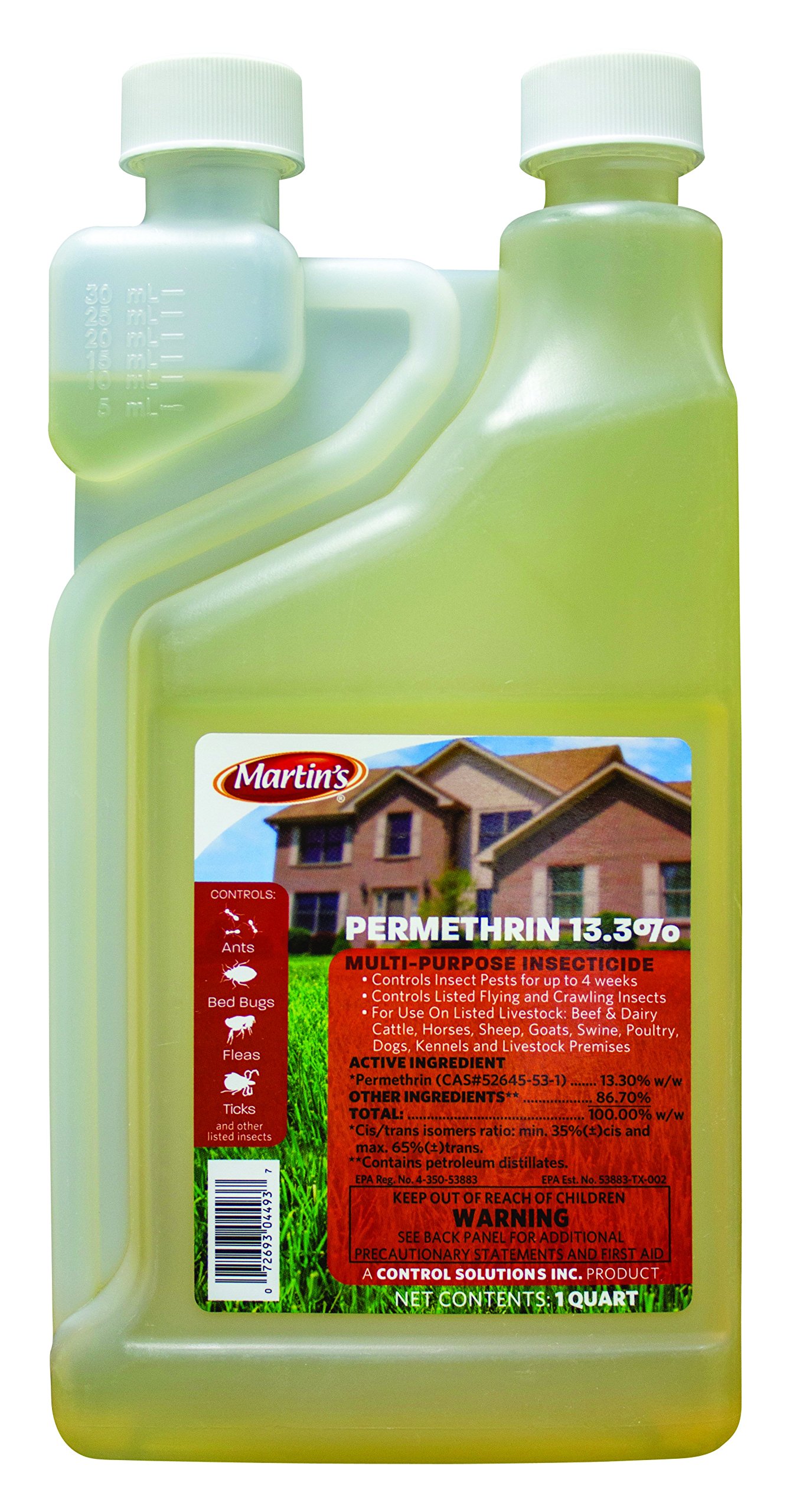
Permethrin is a classic synthetic pyrethroid that many people already know from tick and mosquito sprays. This high-concentration (13.3%) version from Martin’s is a workhorse for perimeter pest control. While not specifically designed only for bagworms, its broad label and long residual (up to 4 weeks) make it a viable option for large-scale barrier sprays on ornamentals and lawns.
Where this concentrate truly shines is its utility. Users mix it to treat tick-infested brush, spray their chicken coops, and use it as a clothing treatment for hiking. One user specifically noted that it “kills ticks DEAD” and that a 4-ounce mix treats 800-1000 square feet. For the bagworm fight, you would use it as a standard foliar spray on non-edible ornamentals during the larva hatch.
The trade-off is its strong chemical smell, described as “paint thinner.” It is effective, but the odor is a drawback for use close to living spaces. It is an excellent general-purpose option if you already need a powerful perimeter spray and want something that will double as a bagworm barrier.
Why it’s great
- Exceptional value for the volume; 32 oz of concentrate goes far
- Versatile use as a tick, mosquito, and general insect barrier
Good to know
- Strong chemical odor that may require outdoor-only application
- Not for use on edible plants or during bloom period
6. Monterey B.t. Bundled with Measuring Spoon – 8 oz
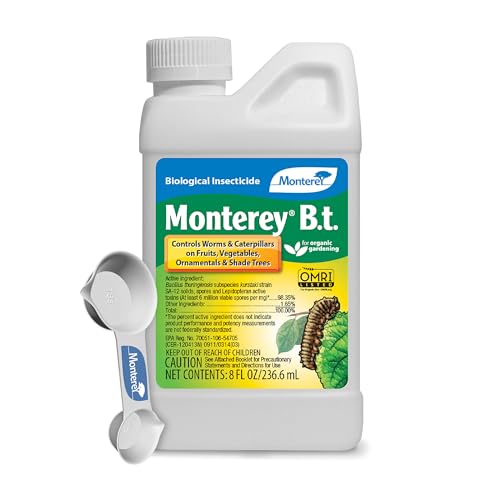
The Monterey B.t. concentrate is the perfect starter kit for the home gardener who is new to bagworm control. It is an OMRI-listed liquid B.t. concentrate that instantly mixes with water. The included measuring spoon eliminates the guesswork of dosing, making it the most user-friendly biological option on this list. The label explicitly lists bagworms along with cabbage looper, gypsy moth, and tent caterpillars.
Users are overwhelmingly positive, calling it “easy to use” and noting that it effectively stopped loopers and caterpillars on their Texas Mountain Laurel. The small 8-ounce bottle is ideal for someone with a few ornamental trees or a small vegetable garden who wants to try biological control without committing to a large volume of powder or concentrate.
The major consideration is its size. At 8 ounces, you will mix it at a rate of 1-2 tablespoons per gallon, so it will only make a handful of full sprayer loads. For a single treatment of a few trees, it is perfect. For a large property, the Dipel Pro powder or the Summit quart will be more practical.
Why it’s great
- Comes with a measuring spoon for exact, no-mess mixing
- Safe for bees, earthworms, and edible crops when used as directed
Good to know
- Small 8 oz bottle runs out quickly for larger spray jobs
- Requires frequent reapplication every 5-7 days
7. Summit Caterpillar and Webworm Control – Hose End, 1 Qt Concentrate

This is the largest-volume B.t. option at a full quart, using a hose-end sprayer system. For the homeowner who does not own a pump sprayer or does not want to mix batch after batch, this is the simplest way to cover a lot of ground quickly. One user described using it for 2 years against gypsy moths with “dedication and patience,” noting that trees recovered after consistent applications during the critical instar period.
The quart size means you will have plenty of concentrate for multiple trips around your property. The downside of the hose-end system is that it is less precise than a dedicated sprayer—you can have a harder time targeting the underside of leaves where small bagworms hide. Also, the B.t. concentration is lower than the Dipel Pro powder, so coverage consistency is even more important.
This product is the best entry-level purchase for someone with many trees who wants to avoid manual mixing. It is a classic, effective B.t. product that works on army worms, tomato hornworms, and any leaf-eating caterpillar. Just be prepared to spray again after rain.
Why it’s great
- Hose-end attachment for hands-free, fast application over large areas
- Large 32 oz volume provides multiple treatments for a full season
Good to know
- Hose-end delivery may not provide strong leaf underside coverage
- B.t. requires repeated application in dry weather; rain washes it off
FAQ
How do I know if B.t. has killed the bagworms after spraying?
Can I prevent bagworms with a single spring spray?
Final Thoughts: The Verdict
For most users, the bagworm insecticide winner is the Valent USA Dipel Pro DF because it offers the most raw B.t. power for the money and can cover a vast number of trees with a single purchase. If you want a more rainfast biological option that requires less frequent resprays, grab the Fertilome Spinosad. And for a severe infestation on a single prized tree that demands immediate, long-term protection, the systemic strength of the Bonide Systemic Insect Control is a decisive choice.