
Our readers keep the lights on and the weekend projects moving. As an Amazon Associate, I earn from qualifying purchases.
Choosing a baker’s flour means more than grabbing the cheapest bag off the shelf. The protein content, milling technique, wheat variety, and growing conditions all determine whether your bread rises tall with a crisp crust or falls flat into a dense brick. A mistake at the flour selection stage can ruin an entire day of mixing, folding, and proofing.
I’m Rikta — the co-founder and writer behind FitlyFast. I’ve spent hundreds of hours analyzing technical specifications, comparing protein percentages, and cross-referencing organic certifications to build a buying guide that separates real baking flour from generic pantry staples.
Whether you need a high-gluten workhorse for artisan loaves, an ancient grain for easier digestion, or an organic all-purpose option, this guide to the best baker’s flour breaks down the specs that actually affect your baking outcomes.
How To Choose The Best Baker’s Flour
Flour is not a one-size-fits-all ingredient. The bag you choose must match your baking style, your dietary needs, and the texture you are trying to achieve. Focusing on a few key specs will simplify the decision.
Match Protein Content to Your Bake
Protein percentage is the single most important spec on a flour label. Bread flour generally sits between 12% and 14% protein, which creates enough gluten to trap gas and produce a lofty crumb. All-purpose flour (around 10–12%) works for cookies and cakes but will not give sandwich bread the same chew. High-gluten flour at 14%+ is ideal for bagels and pizza dough that demand serious elasticity and strength.
Choose Between Bleached and Unbleached
Bleached flour uses chemical agents to accelerate aging and whiten the flour, which can flatten flavor and alter protein structure. Unbleached flour ages naturally and preserves the wheat’s character. For breads where the grain flavor matters — sourdough, artisan loaves, rustic rolls — unbleached flour is always the better choice.
Consider Wheat Variety and Digestibility
Modern hybridized wheat is bred for high yields but can be harder on the digestive system. Heritage and ancient wheats like einkorn, Turkey Red, and White Sonora have simpler gluten structures that some people tolerate better. If bloating or discomfort is a concern after eating bread, these alternatives are worth testing.
Quick Comparison
On smaller screens, swipe sideways to see the full table.
| Model | Category | Best For | Key Spec | Amazon |
|---|---|---|---|---|
| King Arthur Sir Lancelot | High-Gluten | Artisan bread & bagels | 14.2% protein | Amazon |
| King Arthur Special Patent | All-Purpose | All-around baking | Unbleached, unbromated | Amazon |
| Sunrise Heritage Bread Blend | Heritage | Digestive-sensitive bakers | Turkey Red & White Sonora | Amazon |
| Bob’s Red Mill Unbleached White AP | All-Purpose | High-volume baking | 25-pound bulk bag | Amazon |
| Polselli Organic Tipo 00 | Italian 00 | Neapolitan pizza & pasta | Extra-fine grind, organic | Amazon |
| Jovial Einkorn Whole Wheat | Ancient Grain | Nutritious, digestible loaves | 96 oz, organic, non-GMO | Amazon |
| Bob’s Red Mill Organic Whole Wheat | Whole Wheat | Healthy whole-grain baking | Stone-ground, 13-15% protein | Amazon |
In‑Depth Reviews
1. King Arthur Flour Sir Lancelot Hi-Gluten Flour

Sir Lancelot sits at the top of the protein chart with 14.2%, making it the strongest gluten flour in the King Arthur lineup. This spec is critical for bakers who want extra-chewy artisan breads, bagels with a tight crumb, or pizza dough that can handle a high-hydration stretch without tearing. The flour is milled from hard red spring wheat and is never bleached or bromated, preserving the full depth of wheat flavor.
In side-by-side testing, sourdough loaves made with Sir Lancelot show noticeably higher oven spring and a more open crumb structure compared to lower-protein alternatives. The 50-pound bag is a serious commitment in storage space, but it keeps well in a cool, dry pantry for several months. Bakers who run a high-volume home kitchen will appreciate the cost-per-pound advantage without sacrificing quality.
Reviews consistently highlight this flour’s ability to produce restaurant-grade sourdough with a “beautiful rise and rich flavor.” Some users note the paper bag packaging can arrive damp if left exposed during delivery, but the seller typically replaces damaged shipments. If you bake multiple loaves per week, this bag pays for itself in performance alone.
Why it’s great
- Highest gluten strength for artisan breads, bagels, and pizza
- Unbleached and unbromated for pure wheat flavor
- Excellent value per pound for high-volume bakers
Good to know
- 50-pound bag requires a lot of storage space
- Paper packaging can be damaged if exposed to moisture during transit
2. King Arthur Flour Special Patent Flour

The Special Patent flour is King Arthur’s all-purpose workhorse, designed for bakers who need one flour that handles everything from sandwich bread to pie crusts. It’s unbleached and unbromated, so nothing interferes with the natural fermentation process in sourdough. The protein level falls in the all-purpose range, which provides enough gluten for hearty loaves without creating the toughness that high-gluten flour can produce in cookies or cakes.
Customer reviews frequently describe the flavor as “superior” and the texture as “flaky, decadent” in pastries. One long-time user bakes bread three times per week and reports the 50-pound bag stays fresh for up to five months in a pantry, even stored in the original paper bag. The price fluctuates based on wheat markets, but it consistently lands as one of the more accessible premium options.
For bakers who want King Arthur quality without committing to a specialty high-gluten bag, the Special Patent flour is the balanced choice. It delivers consistent absorption rates and predictable results across recipes. If you only buy one flour for everything, this is it.
Why it’s great
- Versatile enough for bread, pastries, and pie crusts
- Unbleached and unbromated for natural flavor
- Stays fresh for months in storage
Good to know
- Lower protein than bread-specific flours
- Paper bag packaging without inner liner
3. Sunrise Flour Mill Heritage Organic Bread Flour Blend
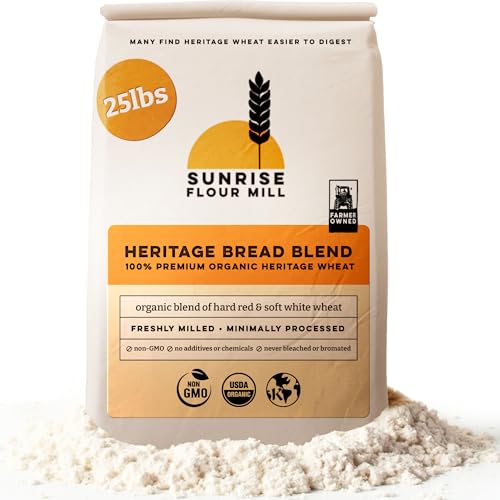
Sunrise Flour Mill takes a different approach by blending pre-hybridized heritage wheats — Turkey Red and White Sonora — that have never been genetically modified. The result is a flour with a higher nutrient density and a simpler gluten structure that many users report as easier to digest. The protein level is sufficient for bread baking, and the nutty, slightly sweet flavor adds a dimension that modern commodity flour cannot replicate.
The milling process uses a unifine mill from the 1930s that produces an exceptionally fine, fluffy texture. In sourdough applications, this flour performs well at around 66% hydration and produces loaves with a golden crust and soft crumb. Reviews from bakers with sensitive digestion consistently mention relief from bloating and discomfort that standard flours cause.
This 25-pound bag is more expensive per pound than commodity flour, but it is competitive with other organic heritage brands. Each bag yields approximately six 1.5-pound loaves, which brings the per-loaf cost in line with premium bakery bread. For anyone who avoids modern wheat due to digestive issues, this blend is a practical solution.
Why it’s great
- Heritage wheat blend is easier on digestion
- Nutty, rich flavor superior to conventional flour
- Fine, fluffy texture from traditional milling
Good to know
- Higher cost per pound than commodity brands
- Limited availability compared to mainstream options
4. Bob’s Red Mill Unbleached White All-Purpose Baking Flour
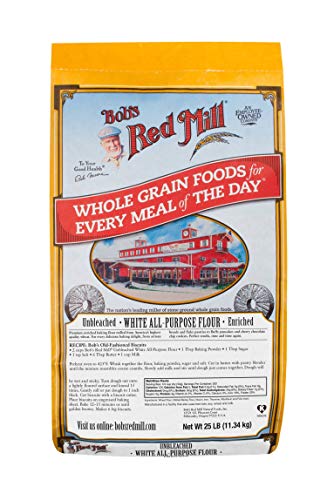
Bob’s Red Mill unbleached white all-purpose flour is a staple for home bakers who want a reliable, affordable option without bleached chemicals. The 25-pound bag offers a solid cost-per-pound ratio, making it a popular choice for families, frequent bakers, and small-scale commercial kitchens. The protein content is higher than standard grocery-store all-purpose flour, which helps with gluten development in yeast doughs, though it is not as strong as a dedicated bread flour.
Reviewers consistently report that this flour produces “fluffy bread” and “lovely cookies” with a texture that outperforms cheaper store brands. The dough is described as easy to handle, rising higher and faster than with lower-quality flour. Some users note that the flour can feel a bit heavy straight from the bag, so sifting is recommended for delicate pastries.
The packaging is a straightforward paper bag without a plastic liner, so proper storage in an airtight container is important for long-term freshness. This is a workhorse flour that handles everyday baking tasks without breaking the budget. It’s not the fanciest option, but it delivers consistent results.
Why it’s great
- Excellent value for the 25-pound bulk size
- Unbleached with higher protein than basic all-purpose
- Versatile for breads, cookies, and cakes
Good to know
- May feel heavy; sifting is recommended
- Paper bag requires airtight transfer for storage
5. Polselli Organic Flour Type 00

Polselli brings an authentic Italian milling tradition to the table, producing Tipo 00 flour from 100% Italian organic grain. The “00” designation indicates the finest grind size, which creates an incredibly smooth, silky texture ideal for Neapolitan pizza dough, fresh pasta, and delicate pastries. The flour is USDA Organic certified, meaning it is free from synthetic pesticides, herbicides, and GMOs.
Home bakers using this flour for sourdough report a light, airy crumb and a pleasant aroma filling the kitchen during baking. The gluten structure in 00 flour is different from American bread flour — it offers extensibility (stretch) rather than elasticity (spring), which is exactly what you want for a pizza crust that stretches thin without snapping back. Pasta made with this flour holds together beautifully and has a silky mouthfeel.
The 11-pound bag is a manageable size for most kitchens. Some users note a desire for a slightly larger bulk option, but the quality justifies the per-pound cost. If your baking leans toward Italian cuisine, Polselli is the flour that matches the style and performance of authentic Italian recipes.
Why it’s great
- Extra-fine grind perfect for pizza and pasta
- USDA Organic Italian grain with no additives
- Authentic Tipo 00 texture and performance
Good to know
- Not ideal for high-gluten bread applications
- Bag size is smaller than many bulk options
6. Jovial Organic Einkorn Whole Wheat Flour
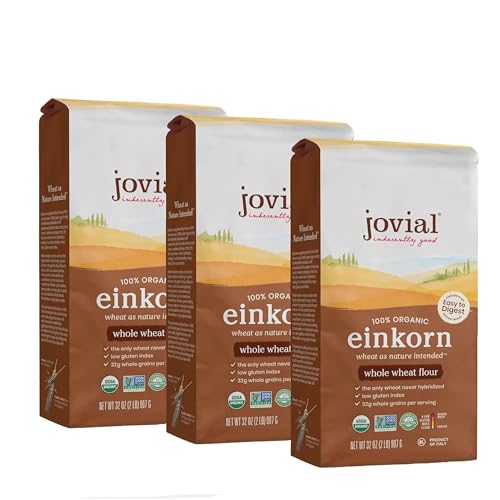
Einkorn is the oldest known wheat variety, and Jovial sources it from dedicated farms in Italy that use long rotation cycles to preserve soil health. Unlike modern wheat, einkorn has never been hybridized, which means its gluten is weaker and its nutrient profile — including lutein, tocotrienols, and B vitamins — is closer to what ancient humans consumed. This makes it a popular choice for people who react poorly to modern wheat but are not celiac.
Baking with einkorn requires a slightly different approach than modern whole wheat flour. It absorbs liquid differently and produces a more tender crumb due to its weaker gluten. Reviewers describe the flavor as nutty and “buttery,” with a golden-yellow color that makes bread visually distinct. It browns faster than standard flours, so bake times may need adjustment.
The 3-pack of 32-ounce bags gives flexibility to use one bag at a time without worrying about a huge bag going stale. It is USDA Organic, Non-GMO Project Verified, and free of bleaching or bromating agents. For bakers seeking maximum nutrition and digestibility, this is the strongest option in the list.
Why it’s great
- Ancient, non-hybridized wheat for better digestibility
- Rich in lutein, vitamin E, and B vitamins
- Nutty, buttery flavor with golden color
Good to know
- Weaker gluten requires recipe adjustments
- Bakes faster than standard flours
7. Bob’s Red Mill Organic Whole Wheat Flour

Bob’s Red Mill organic whole wheat flour is a stone-ground option made from hard red spring wheat, which gives it a protein content of 13–15%. That is technically bread-flour territory, making this bag a solid choice for whole grain sandwich bread, rustic rolls, and even whole wheat pretzels and bagels. The stone-grinding process keeps the millstones cool, which preserves the natural oils and nutrients that high-speed milling can degrade.
This flour works well in bread machines and by hand, producing loaves with a hearty texture and pronounced wheat flavor. Reviewers note that once you understand the hydration needs of whole wheat flour — usually higher than white flour — it becomes a reliable pantry staple. Some bags arrive with damaged packaging due to shipping, so check the bag on arrival.
At just over 5 pounds, this bag is an accessible entry point for bakers switching from white to whole wheat. It costs less per pound than heritage or specialty flours while still offering USDA Organic certification. If your goal is a nutritious, fiber-rich loaf without a premium budget, this is a straightforward choice.
Why it’s great
- Stone-ground from hard red spring wheat, high protein
- USDA Organic and non-GMO
- Works well in bread machines and hand kneading
Good to know
- Requires higher hydration than white flour
- Shipping damage to paper bag is common
FAQ
What protein percentage should I look for in a baker’s flour for sandwich bread?
Is unbleached flour always better than bleached flour for baking bread?
Can I substitute Tipo 00 flour for all-purpose flour in any recipe?
Final Thoughts: The Verdict
For most users, the best baker’s flour winner is the King Arthur Sir Lancelot Hi-Gluten Flour because it delivers the highest protein content (14.2%) for artisan bread, bagels, and pizza, with unbleached quality at a competitive bulk price. If you want an all-purpose option that handles everything without premium investment, grab the Bob’s Red Mill Unbleached White All-Purpose Flour. And for a heritage flour that is easier on digestion with exceptional flavor, nothing beats the Sunrise Flour Mill Heritage Organic Bread Flour Blend.