
Our readers keep the lights on and the weekend projects moving. As an Amazon Associate, I earn from qualifying purchases.
When wind chill drops below zero, a standard scarf or knit hat won’t cut it. The gap between your collar and your goggles is where frostbite finds a foothold. A real balaclava seals that gap, but not all of them handle the deep freeze — some freeze into a wet rag after ten minutes, others let the wind shear right through the weave.
I’m Rikta — the founder and writer behind FitlyFast. I’ve spent hours analyzing thermal retention tests, fabric GSM data, and moisture management across dozens of cold-weather face covers to separate the ones that actually hold up at sub-zero temps from the ones that fail on the first gust.
This guide breaks down the seven strongest candidates in the category, from heavyweight merino builds to engineered heat-exchanger systems. If you need a reliable balaclava for extreme cold, you won’t find a more thorough comparison of real-world freezing-point performance anywhere online.
How To Choose The Best Balaclava For Extreme Cold
An extreme-cold balaclava must do three things simultaneously: trap heat, expel moisture, and block wind. When one of those three fails, the whole piece becomes uncomfortable or dangerous. Here are the specific specs and design features that separate a true arctic-grade balaclava from a mid-weight layer.
Fabric Weight and Weave Density
The most reliable indicator of cold-weather capability is fabric GSM (grams per square meter). Lightweight balaclavas (under 200 GSM) breathe well but cannot hold enough dead air to insulate at temperatures below 20°F. Look for heavyweight fabrics at 280 GSM or higher, especially in merino wool or dense polyester knits. The weave itself matters — a tight ribbed or jersey knit outperforms a loose grid fleece when the wind picks up.
Moisture Management and Breathability
Every balaclava traps moisture from exhalation and sweat. In extreme cold, that moisture can freeze against your face or turn the fabric into an ice sheet. You want a fabric that wicks moisture away from the skin (merino wool excels here) and dries fast. Synthetic blends with moisture-wicking treatments work well, but avoid 100% cotton in any layer — it holds water and promotes freezing.
Goggle and Helmet Compatibility
Fogging is the number one complaint among skiers, snowmobilers, and winter workers. The balaclava must sit low enough on the nose bridge that your breath vent doesn’t stream directly into the goggle lens. Some models include a wire nose bridge or an adjustable clip to create a seal. If you wear a helmet, the balaclava’s crown thickness should be minimal so the helmet fits without pressure points.
Quick Comparison
On smaller screens, swipe sideways to see the full table.
| Model | Category | Best For | Key Spec | Amazon |
|---|---|---|---|---|
| Ergodyne N-Ferno 6970 | Mid-Range | Extreme cold with breath exchanger | Detachable heat exchanger mask | Amazon |
| Minus33 Expedition | Mid-Range | Heavyweight merino insulation | 280+ GSM merino wool | Amazon |
| BLACKSTRAP Expedition Hood | Premium | Active snow sports under helmet | Dual-layer face hinge | Amazon |
| KLIM Arctic (Next Gen) | Premium | Snowmobiling at speed | Directed breath vent channel | Amazon |
| Under Armour ColdGear Infrared | Mid-Range | Running and active training | ColdGear infrared interior lining | Amazon |
| First Lite Tundra | Premium | Stationary hunting in sub-zero | 100% merino wool heavyweight | Amazon |
| Carhartt Flame Resistant Force | Budget | Work site with FR requirement | Flame-resistant treated fabric | Amazon |
In‑Depth Reviews
1. Ergodyne N-Ferno 6970 Balaclava with Detachable Heat Exchanger

The Ergodyne N-Ferno 6970 solves the single biggest problem in extreme-cold face wear: inhaling freezing air. The detachable heat exchanger mask uses a fabric grid to warm and humidify incoming air before it reaches your lungs, which makes a night-and-day difference at temperatures below -10°F. Multiple verified users report comfortable use at -15°F to -30°F wind chill, which puts it in a league above standard balaclavas that only insulate against conductive cold.
The fit system includes an adjustable nose clip that creates a seal over the bridge, funneling breath away from eyewear. This design consistently prevents goggle fogging even in wet snow conditions. The balaclava is a medium-weight blend with good stretch, and the long lower panel tucks securely into a jacket collar without riding up. Reflective accents add visibility on roads or trails.
The main tradeoff: moisture condensation builds up inside the heat exchanger sponge, and after extended wear it can drip. The detachable mask is also difficult to reattach while wearing a helmet. But for pure extreme-cold capability where breathable warmth matters most, this design outperforms everything else in the list.
Why it’s great
- Heat exchanger warms inhaled air at sub-zero temps
- Nose clip prevents goggle fogging effectively
- Versatile detachable mask for moderate cold
Good to know
- Moisture drips from heat exchanger after extended wear
- Detachable mask is tricky to reattach with helmet on
2. Minus33 Merino Wool Expedition Balaclava

Minus33 builds this balaclava from heavyweight merino wool (approximately 280+ GSM, though exact spec varies by batch) that delivers dense thermal insulation with natural moisture-wicking. Verified users report it functions effectively at -35°C with wind chill, and the fabric handles condensation far better than synthetics — merino can absorb up to 30% of its weight in moisture without feeling wet against the skin. That property alone makes it superior for low-activity use like ice fishing or hunting where you aren’t generating enough heat to dry out a synthetic layer.
The cut is roomy enough to accommodate a ponytail without stretching the fabric thin over the crown. The neck area is smooth, logo-free, and wide enough to prevent the friction irritation that many thick balaclavas cause after hours of wear. It layers comfortably under a helmet or hood without creating a pressure ridge on the forehead. The fabric compresses small enough to roll into a jacket pocket.
The only real drawback with this model is that the breathability is moderate — in high-output activities like running or climbing, the heavyweight merino traps more heat than you’ll want. It’s also not windproof by itself; a shell layer over top helps in gusty conditions. But for pure static warmth in extreme cold, this is the strongest non-synthetic option.
Why it’s great
- Heavyweight merino provides dense insulation without bulk
- Room for ponytail and smooth neck for irritation-free wear
- Works at negative 35°C with wind chill
Good to know
- Not windproof; needs shell layer in windy conditions
- Heavyweight feels too warm for high-output winter sports
3. BLACKSTRAP Expedition Hood Balaclava
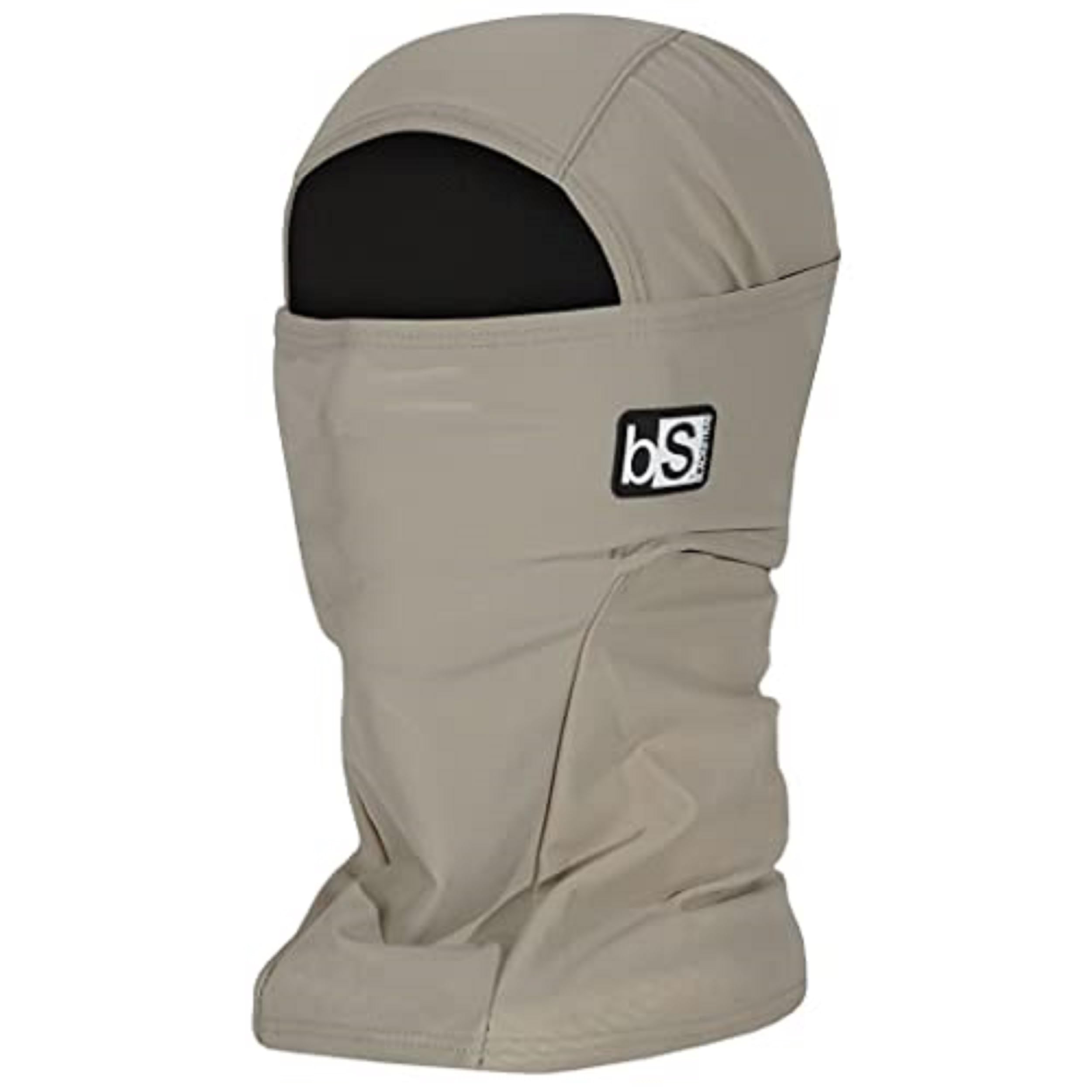
The BLACKSTRAP Expedition uses a dual-layer face hinge — a separate flap of fabric over the mouth and nose that can be lifted for ventilation or lowered for warmth without pulling the whole balaclava down. This is a genuine design advantage for skiers and snowboarders who transition from cold chairlifts to active runs. The primary fabric is a thin polyester tri-blend that breathes aggressively, wicking sweat fast and drying quickly in cold air. It’s surprisingly warm for its weight because the four-way stretch traps a thin layer of dead air against the skin.
Helmet compatibility is excellent: the crown is thin enough that a ski or snowboard helmet fits without any gap or pressure point. Goggle fogging is virtually eliminated because the face hinge sits slightly away from the nose bridge, allowing breath to escape downward rather than upward into the goggle. Multiple users report it holds up over two seasons of weekly use with no pilling or stretching out.
The tradeoff is clear: at temperatures below -20°F, the single-layer polyester fabric can’t hold enough heat, and moisture from the mouth area can freeze into an uncomfortable crust. It’s a phenomenal three-season balaclava and works for most cold days, but it’s not built for the deepest freeze that the Ergodyne or Minus33 handle.
Why it’s great
- Dual-layer face hinge allows breath control without removing mask
- Thin, stretchy fabric fits seamlessly under ski helmets
- Excellent breathability and moisture-wicking for active use
Good to know
- Single-layer polyester freezes moisture below -20°F
- Not as warm as merino or heavy synthetics for static use
4. KLIM Arctic Balaclava (Next Gen)
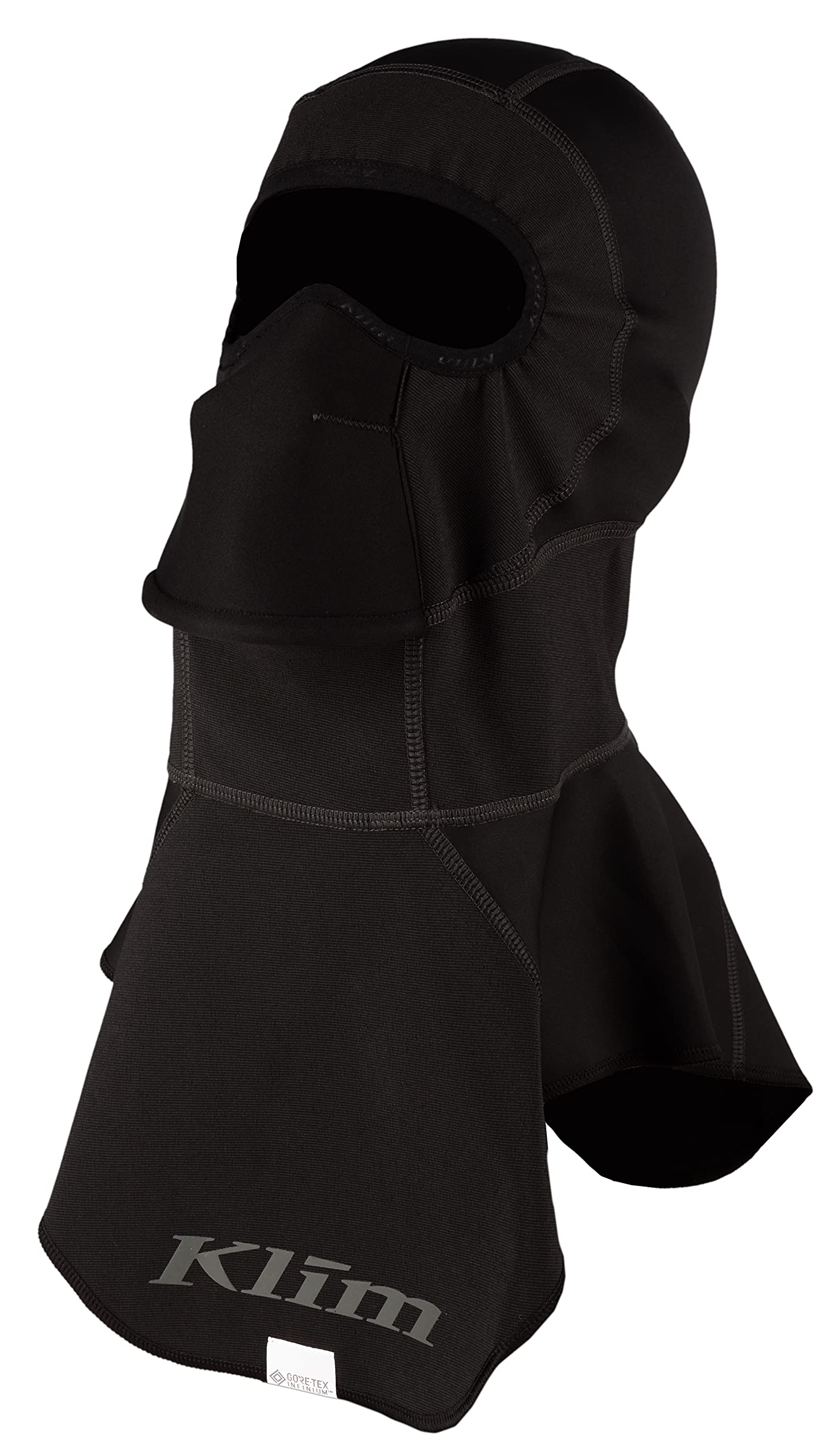
The KLIM Arctic Next Gen is engineered for the specific demands of snowmobiling and high-speed winter riding — conditions where the wind chill can be fifty degrees below the ambient temperature. The key innovation is a structured breath vent with a wire frame that funnels exhalation downward, away from the goggle lens. Verified users report zero fogging when riding at 50 mph in temperatures below 20°F. The neck panel is noticeably longer than any other balaclava in this lineup, reaching far down the chest so it stays tucked when you lean forward on a machine.
The fabric is a dense, wind-resistant polyester blend that cuts the wind far better than a knit merino. It’s not as soft against the skin as wool, but it doesn’t soak through from sweat the way wool can. The fit is snug without being restrictive, and the crown is thin enough for motorcycle helmet wear. The back of the neck extends low enough to eliminate drafts even when you’re turned sideways into the wind.
The one notable drawback is that the vent channel can direct cold air upward toward the eyes if you’re not wearing goggles, which is uncomfortable. And the fabric has minimal stretch, so if your head shape doesn’t match the cut, you’ll feel pressure points. But for snowmobiling, ice fishing on a sled, or any scenario where wind speed is the primary enemy, this balaclava leads the category.
Why it’s great
- Directed breath vent prevents goggle fog at high speed
- Extremely long neck panel stays tucked in riding positions
- Wind-resistant fabric outperforms knit wool in shear conditions
Good to know
- Vent channel directs cold air toward eyes without goggles
- Minimal stretch; fit may be tight for some head shapes
5. Under Armour Men’s ColdGear Infrared Balaclava

Under Armour’s ColdGear Infrared balaclava uses a ceramic-infused interior lining that absorbs and retains body heat more efficiently than standard fleece. For runners and outdoor trainers who generate their own heat but need protection from cold wind, this is a strong mid-range option. The fabric is thin and non-bulky — one user specifically noted it layers well with a neck warmer for extra coverage without restriction. The mouth panel has small perforation holes that let air flow freely, so it doesn’t trap moisture during hard breathing.
The fit is snug and athletic-cut, designed to stay in place during motion. It washes well without shrinking, and the flatlock seams reduce chafing along the jawline. It works as a standalone face cover or as a base layer under a heavier hood. The low-profile design is useful for hunters in a ground blind who need to raise and lower the face cover quietly.
The limitation here is that it provides no meaningful wind protection on its own — the knit fabric allows wind to pass through easily. In gusty conditions below 20°F, you’ll feel the cold on exposed areas. It’s also not built for extended static wear in extreme cold; its primary strength is for active use where your core temperature offsets the lack of heavy insulation.
Why it’s great
- Ceramic infrared lining retains heat efficiently during activity
- Thin, non-bulky design layers well under hoods and helmets
- Breathable mouth perforations prevent moisture buildup during running
Good to know
- No wind resistance; cold gusts cut through the knit
- Not warm enough for static wear in deep cold
6. First Lite Tundra Balaclava
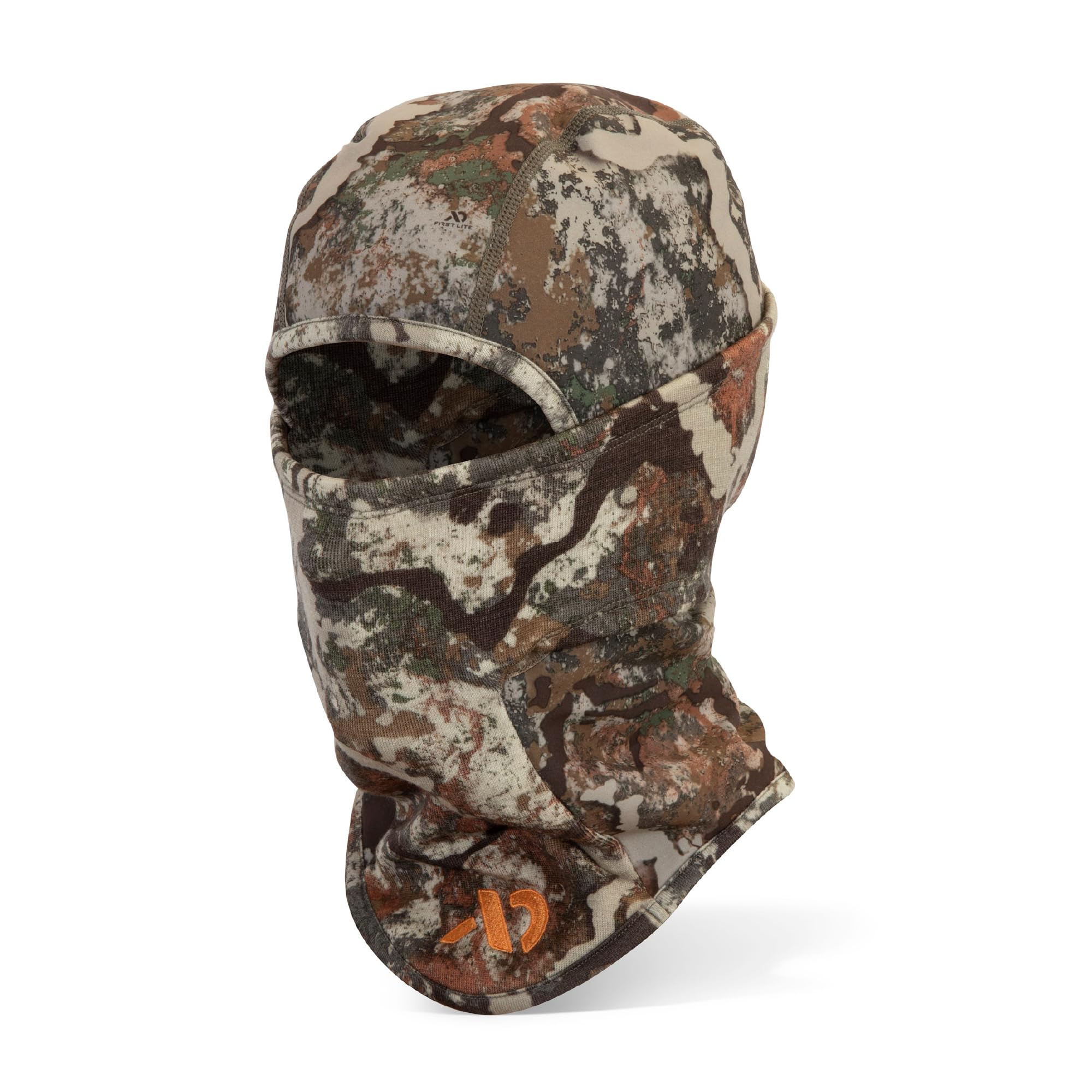
The First Lite Tundra is a 100% merino wool balaclava built for cold-weather hunting, where you sit still for hours and need silent, natural insulation. The wool is thick enough to block light wind — not completely windproof, but enough to prevent the creeping cold that a normal knit cap lets through. Verified users report it works well in single-digit temperatures, and the snug fit seals around the face without leaving gaps. The fabric is soft against the skin; there’s no scratchy wool texture, which is a common problem with budget merino pieces.
The design includes thin fabric over the ears, preserving situational hearing for the woods. This is a deliberate choice — many hunting balaclavas pile on thick ear coverage that muffles sounds. The First Lite balances warmth with the ability to hear approaching game. It layers under a hood or helmet without adding excessive bulk, and the cut accommodates a beard without riding up.
Getting it on can be a little tight around the crown for larger heads — the fabric stretches but takes some effort initially. Once on, it stays put. The biggest weakness is the same as the Minus33: no dedicated windproof membrane, so on exposed ridgelines with high wind, heat loss is noticeable. But for still-hunting or tree-stand use where wind isn’t howling, this is a premium choice.
Why it’s great
- Thick merino wool provides quiet, natural insulation for hunting
- Thin ear coverage preserves hearing in the woods
- Snug fit seals around face without sagging
Good to know
- Tight fit initially; difficult for some head shapes to get on
- No windproof layer; heat loss in exposed, windy conditions
7. Carhartt Men’s Flame Resistant Force Balaclava

The Carhartt Flame Resistant Force Balaclava serves a specific niche: outdoor workers who need arc-rated or flame-resistant head protection. The fabric has been treated for FR compliance, and the construction uses flat seams to prevent irritation under a hard hat. The face panel incorporates a breathable mesh section that helps reduce condensation, a thoughtful touch for anyone wearing this for eight-hour shifts in cold weather. It fits snugly and stays in place under a helmet.
For general extreme-cold use, the FR Force is thinner than the dedicated cold-weather options in this list. Verified users note that in windy conditions the warmth is insufficient on its own — it works better as a base layer under a thicker FR hood. The Carhartt brand reliability means the stitching and fabric hold up to regular washing and hard use.
The primary limitation is that it’s not designed primarily as a cold-weather balaclava — it’s an FR accessory that also works for cold. The thermal insulation is minimal compared to the mer wool or heat-exchanger options. If you don’t need flame resistance, a warmer balaclava at a similar price point will serve you better. But for jobsites with FR requirements, this is the only appropriate choice in the lineup.
Why it’s great
- Flame-resistant rated for job site compliance
- Breathable mesh face panel reduces moisture buildup
- Durable construction, holds up to repeated washing
Good to know
- Thin fabric lacks warmth in windy, extreme cold
- Best used as a base layer under heavier FR hood
FAQ
Can I wear a balaclava under a full-face helmet?
Does merino wool itch against the skin?
How do I stop my breath from fogging my goggles?
How often should I wash a balaclava used in extreme cold?
Final Thoughts: The Verdict
For most users, the balaclava for extreme cold winner is the Ergodyne N-Ferno 6970 because its heat exchanger system genuinely changes the breathability and comfort equation when temperatures drop below -10°F. If you want natural merino insulation without the condensation management hassle, grab the Minus33 Expedition Balaclava. And for high-speed snowmobiling or riding where wind chill is the primary enemy, nothing beats the KLIM Arctic Next Gen with its directed breath vent and long neck coverage.