
Our readers keep the lights on and the weekend projects moving. As an Amazon Associate, I earn from qualifying purchases.
Cracked skin, fogged goggles, and a frozen neck on the first downhill run ruin a winter day fast. A balaclava mask that breathes, fits snugly under a helmet, and blocks wind without suffocating you is the unsung hero of cold-weather gear. Get the layering wrong and you’ll either overheat mid-morning or shiver through the afternoon.
I’m Rikta — the co-founder and writer behind FitlyFast. After cross-referencing hundreds of customer wear tests across ski slopes, motorcycle commutes, and outdoor worksites, I’ve drilled into the one spec that separates a passable face cover from a true multi-season performer: effective breathability paired with wind-resistant fabric density.
Whether you need tactical flame resistance, stretch fleece for daily walks, or a thermal shield for sub-zero commutes, this guide cuts through the noise to find your match. We sorted every model by real-world feedback to surface the best balaclava mask for your specific activity and climate.
How To Choose The Best Balaclava Mask
Not all balaclava masks are built for the same cold. A thin, moisture-wicking layer works for high-output activities like running, while a thick fleece or dual-layer build is non-negotiable for stationary work or extreme wind. Start by matching fabric weight to your activity level — and always check whether the mouth area lets you breathe freely without letting the cold blast in.
Fabric Density and Breathability Balance
A mask that’s too thick forces you to pull it down mid-activity, defeating its purpose. Look for materials like polyester-spandex blends or thermal fleece that offer mechanical stretch without excessive bulk. The best designs layer a breathable inner mesh against the mouth with a wind-resistant outer shell — you stay warm without soaking the fabric with condensation.
Fit Features That Prevent Fogging
Fogged glasses or goggles are the number one frustration with balaclava masks. Dedicated eyeglass ports that redirect warm exhaled air away from the lenses are a critical design feature. Also consider adjustable nose wires or a contoured bridge that lets you seal the mask above the nose without forcing breath upward. A snug chin cup that doesn’t ride up also helps keep your view clear.
Under-Helmet Compatibility
Whether you’re under a ski helmet, a motorcycle lid, or a hard hat, the balaclava should be thin enough at the crown and temples to avoid pressure points. A flat-lock seam construction reduces bulk, and a hair port or ponytail slot prevents bunching at the back. If you regularly wear a helmet, prioritize a low-profile fit over thermal thickness.
Quick Comparison
On smaller screens, swipe sideways to see the full table.
| Model | Category | Best For | Key Spec | Amazon |
|---|---|---|---|---|
| GXCROR Ski Mask | Mid-Range | Winter Bike Commutes | Dual-layer mouth with glasses ports | Amazon |
| Under Armour HeatGear Tactical | Mid-Range | High-Sweat Activities | Moisture-wicking compression fabric | Amazon |
| adidas Alphaskin | Premium | Under Football Helmets | Compression fit with wind resistance | Amazon |
| Nike Balaclava | Premium | Everyday Cool-Weather Wear | Lightweight stretch knit, non-itchy | Amazon |
| Carhartt Force Stretch Fleece Gaiter | Mid-Range | Daily Warmth Under Hats | Stretch fleece, 1.5 oz weight | Amazon |
| ROCKBROS Thermal Fleece Balaclava | Premium | Stationary Outdoor Work | Built-in hood, integral filter pocket | Amazon |
| Fullsheild FR Flame Resistant Mask | Budget | Welding & Emergency Kits | FR-rated, 2.12 oz fabric | Amazon |
In‑Depth Reviews
1. GXCROR Ski Mask
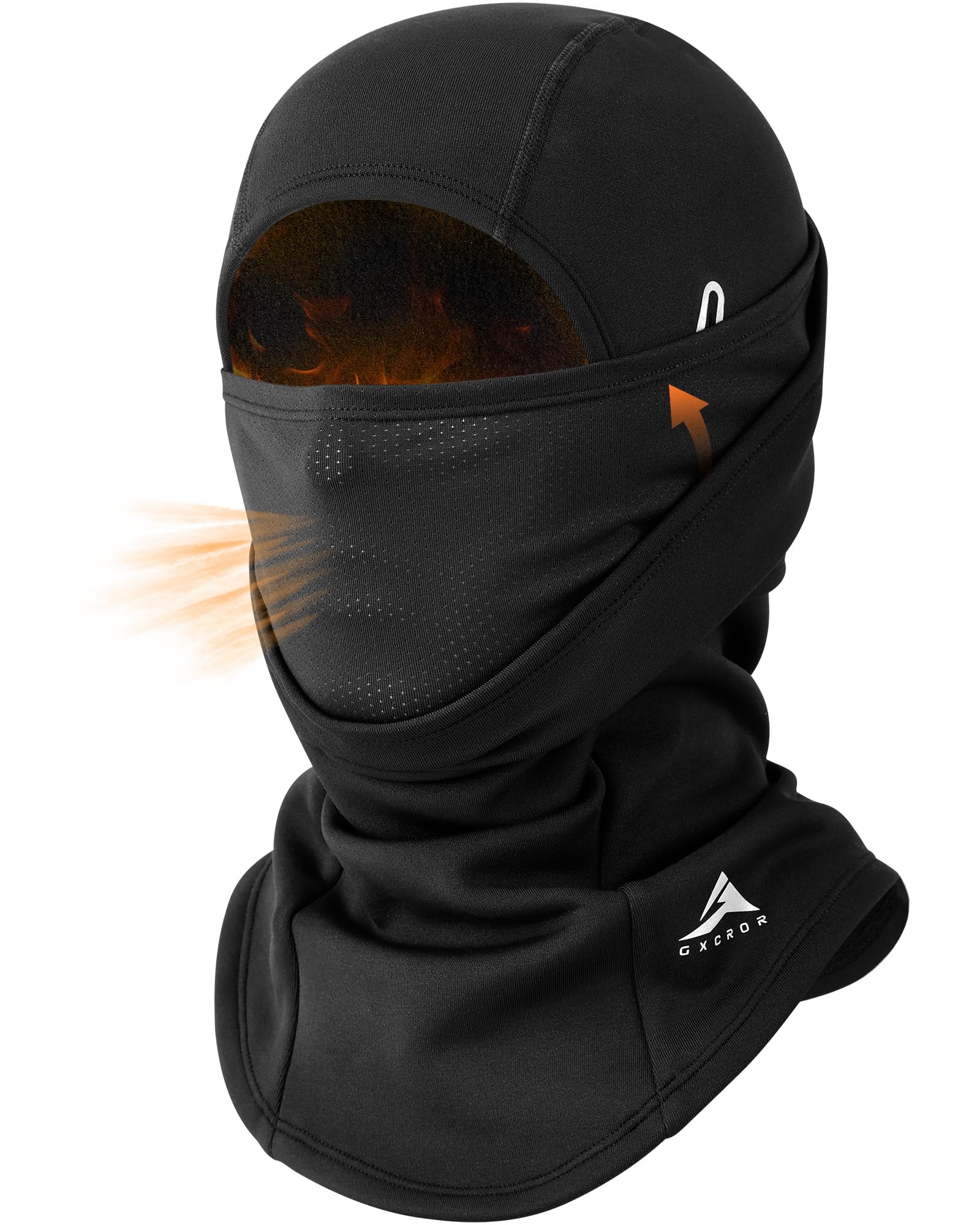
The GXCROR strikes the hardest balance between warmth and breathability we’ve seen in this price tier. Its dual-layer mouth design lets you pull the outer layer down when you heat up mid-commute, while the inner mesh keeps cold air off your lips. The integrated eyeglass ports actually work — reviewers consistently report zero fogging during winter bike rides and snowmobiling sessions.
At roughly 2.5 mm thick, it’s substantial enough for negative-degree weather but still stretchy enough for a secure fit under a ski helmet. The fabric is a polyester-spandex blend that washes without pilling, and the hair port at the crown prevents the bunching that ruins other balaclava masks for long-haired riders.
A few users noted it runs slightly large for smaller face shapes, so it’s best suited for average to large head circumferences. The trade-off is a non-restrictive feel that stays comfortable for eight-hour outdoor shifts without needing adjustment.
Why it’s great
- Effective dual-layer mouth for temperature regulation
- Eyeglass ports that genuinely prevent fog
- Stretchy, non-pilling fabric after repeated washes
Good to know
- Fit runs loose for small or narrow faces
- Dual-layer traps heat during high-exertion activities
2. Under Armour HeatGear Tactical Balaclava
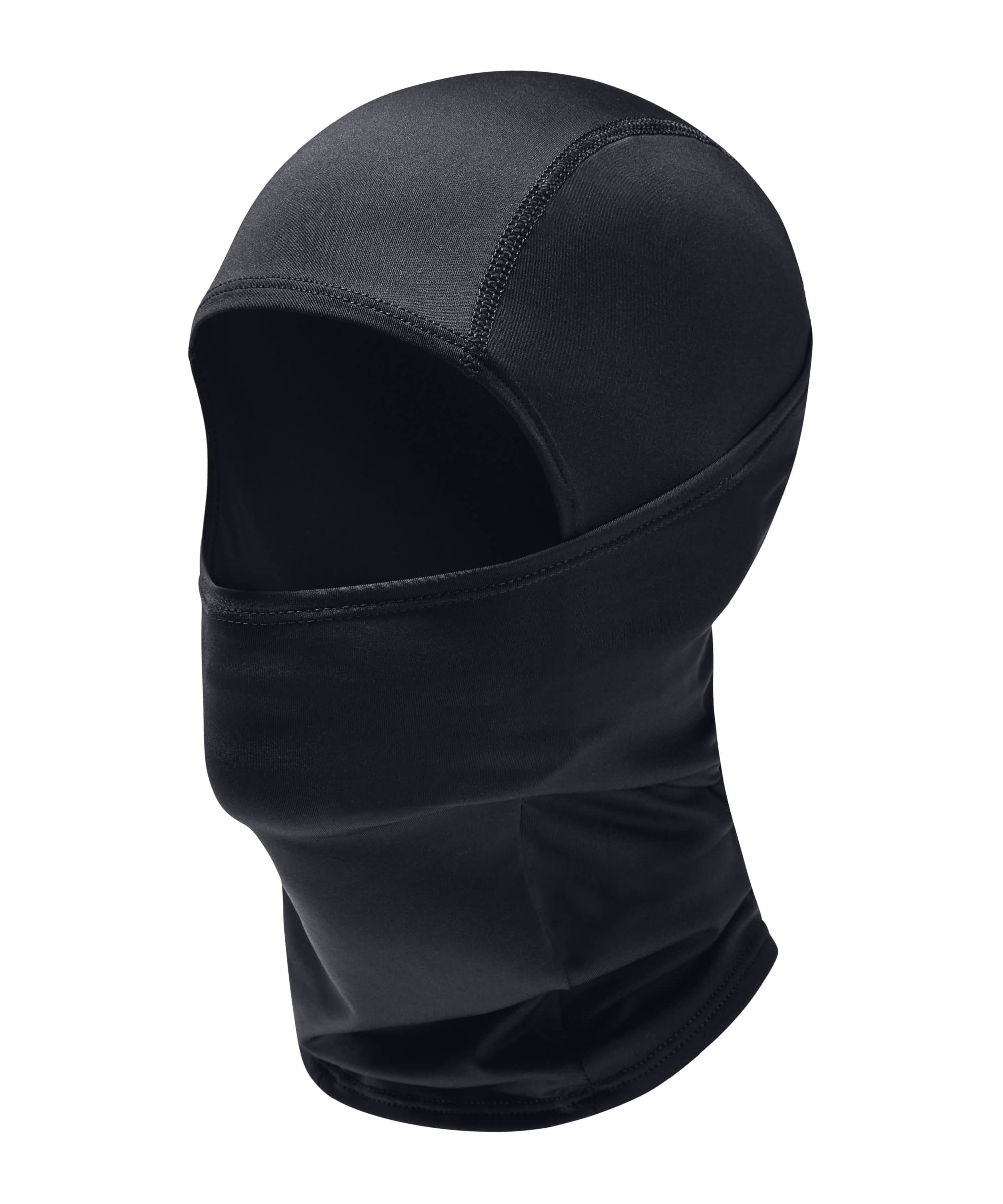
Under Armour’s HeatGear fabric is engineered for one thing: keeping you dry when you’re pouring sweat. This tactical balaclava uses a compression weave that sits flush against the skin without loose fabric flapping, making it ideal for high-output activities like running in cold weather or working in a hot industrial kitchen. The four-way stretch conforms to any face shape without shifting.
It’s the thinnest option in this lineup at roughly 1 mm, which means it’s not a standalone winter mask for stationary use. But under a helmet or in moderate cold (30–50°F), the wind-blocking performance is solid. Reviewers in New England winters swear by it as a base layer under a heavier shell balaclava or beanie.
The main limitation is fogging — the snug nose fit doesn’t include a dedicated vent, so glasses wearers will experience some condensation when the mask is pulled over the nose. It’s best worn low on the bridge or paired with anti-fog wipes for eyeglass users.
Why it’s great
- Outstanding moisture wicking for sweaty activities
- Compression fit stays put under helmets and hard hats
- Durable fabric holds shape after dozens of washes
Good to know
- Too thin for sub-freezing temps as a standalone layer
- No dedicated glasses vent — fog risk when worn over the nose
3. adidas Alphaskin Balaclava Ski Mask

The adidas Alphaskin is built around a compression knit that feels second-skin under helmets. Reviewers consistently praise its low-profile fit under football helmets and motorcycle lids, with zero bunching at the crown or temples. The fabric is a polyester-elastane blend that provides moderate wind resistance without the bulk of fleece.
It’s noticeably lighter than the GXCROR or ROCKBROS — think a thick base layer rather than an insulating shell. This makes it a strong choice for transitional weather (25–45°F) or for users who run warm and want wind protection without overheating. The flat-lock seams prevent chafing along the jawline during extended wear.
Some users note the stretch is less forgiving than the Nike or Under Armour options, so it fits best on medium head sizes. The material feels high-quality out of the package and holds up well in the wash, but the lack of a dual-layer mouth means cold air can seep through during high-speed exposure below 20°F.
Why it’s great
- Ultra-low profile fits seamlessly under any helmet
- Flat-lock seams eliminate jawline chafing
- Compression knit resists wind without added bulk
Good to know
- Stretch is less accommodating for larger head sizes
- Single-layer mouth feels thin in extreme cold
4. Nike Balaclava

Nike’s balaclava proves that sometimes the simplest design wins. The fabric is a soft, stretchy knit that reviewers consistently describe as non-itchy — a rare quality in this category. It’s not the warmest option here, but it hits a sweet spot for cool-weather runs, morning dog walks, or as a sun-shielding layer during warm-spring rides.
The material is lightweight (around 1.2 mm) and extremely breathable, making it one of the few balaclava masks you can wear comfortably during aerobic activity without feeling like you’re suffocating. The snug fit doesn’t shift during movement, and the subtle Nike logo adds a clean aesthetic that works as a standalone accessory.
Where it falls short is in extreme cold — below 20°F, the single-layer construction won’t cut it for extended exposure. It also lacks glasses ports, so fogging is a concern for eyeglass wearers. For moderate climates or high-exertion use, the comfort-to-performance ratio is outstanding.
Why it’s great
- Exceptionally soft, non-itchy fabric for sensitive skin
- Breathable enough for running and high-output activities
- Stretchy fit that doesn’t shift during movement
Good to know
- Too thin for sustained use below 20°F
- No specific glasses or fog-control features
5. Carhartt Force Stretch Fleece Neck Gaiter

Carhartt’s Force fleece gaiter is technically a neck gaiter rather than a full balaclava, but its stretch fleece construction makes it a versatile face-and-neck cover that many users prefer for daily wear. The material is surprisingly warm for its thinness — reviewers consistently note that it feels much warmer than it looks, thanks to the dense fleece weave that traps body heat effectively.
The stretch recovery is solid; it maintains its shape better than most knit gaiters after repeated washing. It can be pulled up to cover the ears and back of the head when worn under a beanie, functioning essentially as an open-crown balaclava. The lack of a mouth opening means you’ll need to pull it down to breathe freely during exertion, but for casual cold-weather use, the simplicity is a plus.
Some users wish the length was about two inches longer for better neck coverage on tall frames. The fleece interior also absorbs moisture rather than wicking it, so it’s not ideal for high-sweat activities or extended wear in wet conditions. For dry, cold days and casual commutes, it’s hard to beat at this price point.
Why it’s great
- Punchy warmth-to-weight ratio — thin but effective
- Stretch fleece holds shape wash after wash
- Soft interior feels comfortable against bare skin
Good to know
- Shorter length than ideal for taller users
- Fleece absorbs moisture rather than wicking it away
6. ROCKBROS Thermal Fleece Balaclava

The ROCKBROS Thermal Fleece Balaclava is the warmest option in this lineup, featuring a built-in hood that adds an extra layer of insulation over the crown and ears. The thermal fleece is densely piled, creating a barrier against wind that reviewers working outdoor construction and snowmobile shifts trust in sub-zero conditions. An integral filter pocket at the mouth lets you insert a replaceable filter to buffer cold air before it hits your lungs.
The fit accommodates larger heads well — several review mentions confirm it doesn’t squeeze or create pressure points even on broad faces. The hood is generously sized to fit over a thin beanie, and the fleece lining stays comfortable against the skin without the itchiness of wool blends. The flat-seam construction reduces bulk, but this is still a visibly thicker mask than the rest.
On the downside, the built-in hood lacks a drawstring locking mechanism, so it can shift in strong wind. The thickness also makes it less compatible with close-fitting ski helmets — it’s better suited for standalone wear or under larger snowmobile helmets. For stationary outdoor work or extreme cold, the warmth is unbeatable.
Why it’s great
- Warmest option with dense thermal fleece and built-in hood
- Filter pocket for protecting lungs from frigid air
- Generous fit for large head sizes
Good to know
- Hood has no drawstring to lock the fit in high wind
- Too bulky for tight ski helmets
7. Fullsheild FR Flame Resistant Face Mask

The Fullsheild FR mask fills a very specific niche: flame-resistant protection for welding, hunting, and military use. The fabric meets FR standards, meaning it won’t melt or drip when exposed to sparks or open flame — a critical safety feature that no other mask in this list offers. At 2.12 ounces, it’s lightweight enough to pack in an emergency bag without adding bulk.
Beyond its FR rating, this mask functions as a decent cold-weather face cover for moderate use. Reviewers use it for motorcycle riding in cooler weather and as a sun-protection layer during tactical training. The fit is described as loose around the face, which helps with breathability but reduces warmth retention in extreme cold — it’s better as a multi-purpose cover than a dedicated winter balaclava.
The beige color picks up dirt and stains quickly, and the loose fit means it’s not ideal for high-wind conditions where you need a sealed face barrier. For anyone working around electrical hazards or open flame, the safety certification alone justifies the purchase. For general cold-weather use, the other options on this list offer better thermal performance.
Why it’s great
- Flame-resistant certified for welding and electrical work
- Lightweight and packable for emergency kits
- Versatile for sun protection, dust, and moderate cold
Good to know
- Loose fit reduces warmth in extremely cold conditions
- Light color stains easily from dirt and sweat
FAQ
Can I wear a balaclava mask under a ski helmet without feeling pressure?
Why do my glasses fog up even with a balaclava mask that has vents?
How often should I wash a balaclava mask and what happens if I don’t?
Is a neck gaiter the same thing as a balaclava mask for extreme cold?
Final Thoughts: The Verdict
For most users, the best balaclava mask winner is the GXCROR Ski Mask because it delivers dual-layer warmth control, working eyeglass ports, and a stretchy fit that works under helmets without pressure points. If you sweat heavily during activity and need a moisture-wicking base layer, grab the Under Armour HeatGear Tactical Balaclava. And for extreme cold where stationary exposure is the main challenge, nothing beats the thermal barrier of the ROCKBROS Thermal Fleece Balaclava with its built-in hood and filter pocket.