
Our readers keep the lights on and the weekend projects moving. As an Amazon Associate, I earn from qualifying purchases.
Many core training tools lock you into a single plane of motion, missing the unstable, multi-directional demands your body faces in real movement. A balance board for core strength changes that by forcing your deep stabilizers to fire with every subtle shift of weight, turning static standing into a constant micro-workout for your entire midsection.
I’m Rikta — the co-founder and writer behind FitlyFast. I’ve spent months analyzing the mechanics, materials, and user feedback across every major balance board design, from rocker boards for rehab to 360-degree wobble trainers for advanced athletes, to help you pick the one that actually matches your goals.
This guide breaks down seven distinct boards by build quality, movement style, and weight capacity so you can confidently choose the best balance board for core strength that fits your home, office, or gym routine.
How To Choose The Best Balance Board For Core Strength
Not all balance boards work your core the same way. The movement pattern — rocker, wobble, or roller — directly determines which muscles activate and how hard they have to work. Matching that pattern to your fitness level and goals prevents frustration and keeps you progressing.
Rocker vs. Wobble vs. Roller: Motion Matters
Rocker boards tilt along a single axis (forward/backward or side-to-side) and offer the most controlled entry point for beginners or rehab users. Wobble boards, with their central hemisphere, allow 360-degree tilt and demand constant multi-planar stabilization from your obliques and transverse abdominis. Roller boards pair a flat deck with a cylindrical roller underneath, creating a free-moving surface that requires full-body coordination and is the most challenging for core engagement.
Weight Capacity and Surface Area
Every board lists a maximum weight recommendation; staying well under that limit ensures the wood or composite does not flex unpredictably during use. A wider deck (16 inches or more) provides a more forgiving stance for beginners, while narrower platforms (around 11 inches) force precise foot placement and greater ankle stability work. Check the dimensions against your shoe size and comfort zone.
Build Materials and Surface Grip
Baltic birch plywood and American maple are the gold standards for durability and stiffness in balance boards. Avoid particleboard or thin laminates that can crack under repeated load. The top surface should have a non-slip texture — either grooved wood, a PEVA foam layer, or grip tape — to keep your feet planted during dynamic movement. For standing desk use, a softer top material like recycled rubber treads reduces foot fatigue over long sessions.
Quick Comparison
On smaller screens, swipe sideways to see the full table.
| Model | Category | Best For | Key Spec | Amazon |
|---|---|---|---|---|
| Indo Board Original | Roller + Deck | Elite athletic training | 350 lb capacity, maple wood | Amazon |
| FluidStance Plane | 360° Wobble | Standing desk movement | 200 lb capacity, recycled rubber | Amazon |
| Fitterfirst Rocker Board | Rocker | Physical therapy & seniors | 350 lb capacity, Baltic birch | Amazon |
| GIBBON SlackBoard | Slackline Board | Low-profile challenge | 400 lb capacity, American maple | Amazon |
| StrongTek Cross Base | 360° Wobble | Controlled 360° training | 350 lb capacity, lauan plywood | Amazon |
| Yes4All Roller Board | Roller + Deck | Board sport conditioning | 300 lb capacity, 15-ply wood | Amazon |
| DMoose Ab Wheel | Ab Roller | Targeted abs & obliques | 330 lb capacity, stainless steel | Amazon |
In‑Depth Reviews
1. Indo Board Original
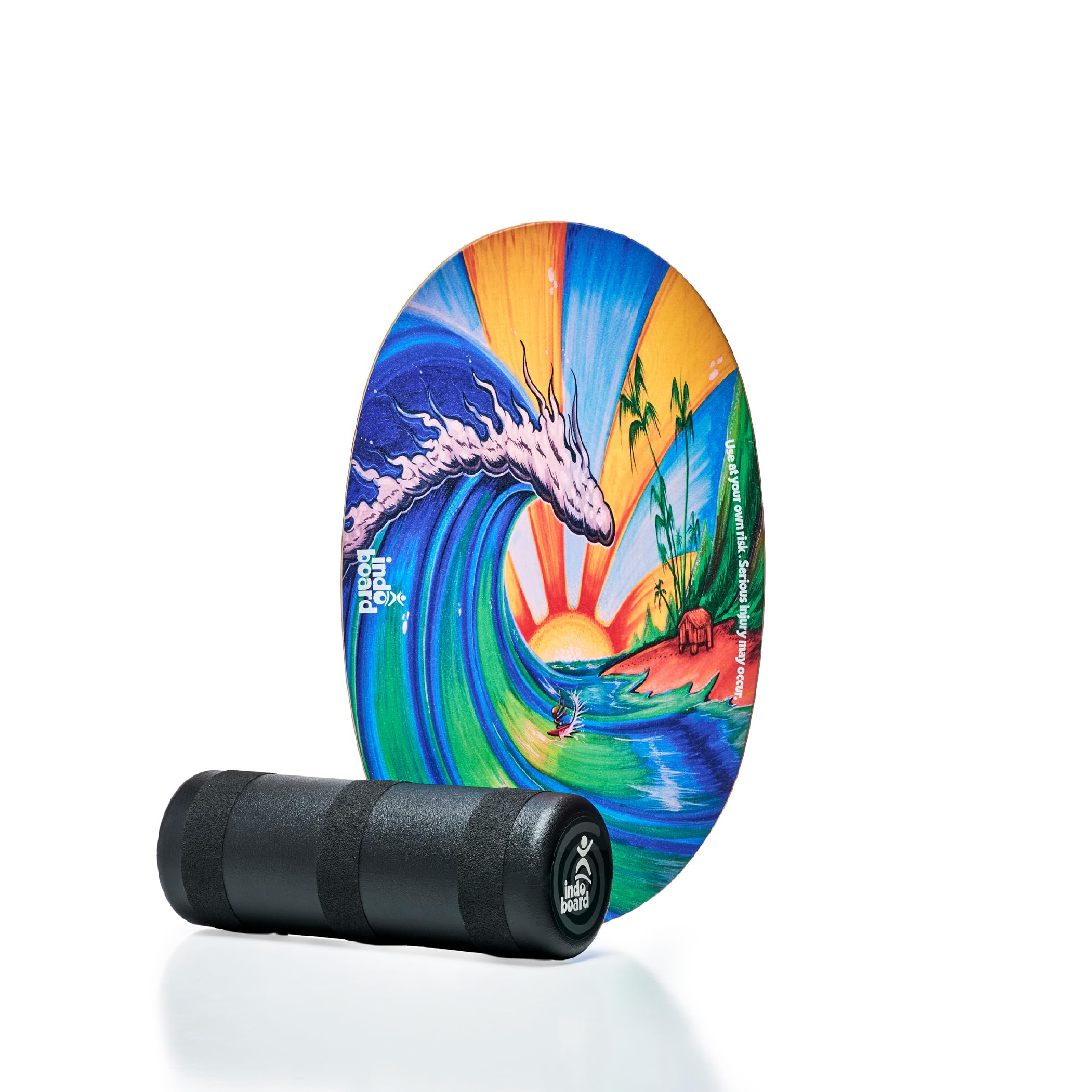
The Indo Board is the benchmark for roller-style balance trainers, used by Olympic and pro board-sport athletes for decades. Its 30-inch long maple deck sits on a cylindrical roller that allows 360-degree freedom, forcing your core, hips, and ankles to constantly micro-adjust. The deck has a gritty, non-slip surface that works well even barefoot, and the roller is trackless so it glides smoothly on carpet without leaving marks.
At 350 pounds capacity, this board is built for heavy daily use. The roller is large and sits high off the ground, which makes it significantly more challenging than wobble boards. Beginners will want a spotter or wall nearby during the first sessions. The classic wood grain and Drew Brophy artwork make it a piece that looks at home in a gym or living room.
Users report noticeable improvements in leg strength and balance within weeks. The main downside is the learning curve — this is not a board for someone with very poor balance or acute ankle injuries without prior rehab. For anyone serious about athletic performance, this is the tool that delivers the most functional core engagement per minute of use.
Why it’s great
- Trusted by elite athletes across surf, snow, and skate sports
- Full 360-degree movement challenges deep core stabilizers
- Durable maple wood construction supports up to 350 lbs
Good to know
- Steep learning curve — requires good baseline balance
- Roller can roll out from under the board and cause falls
- Price reflects premium branding and lifetime durability
2. FluidStance Plane
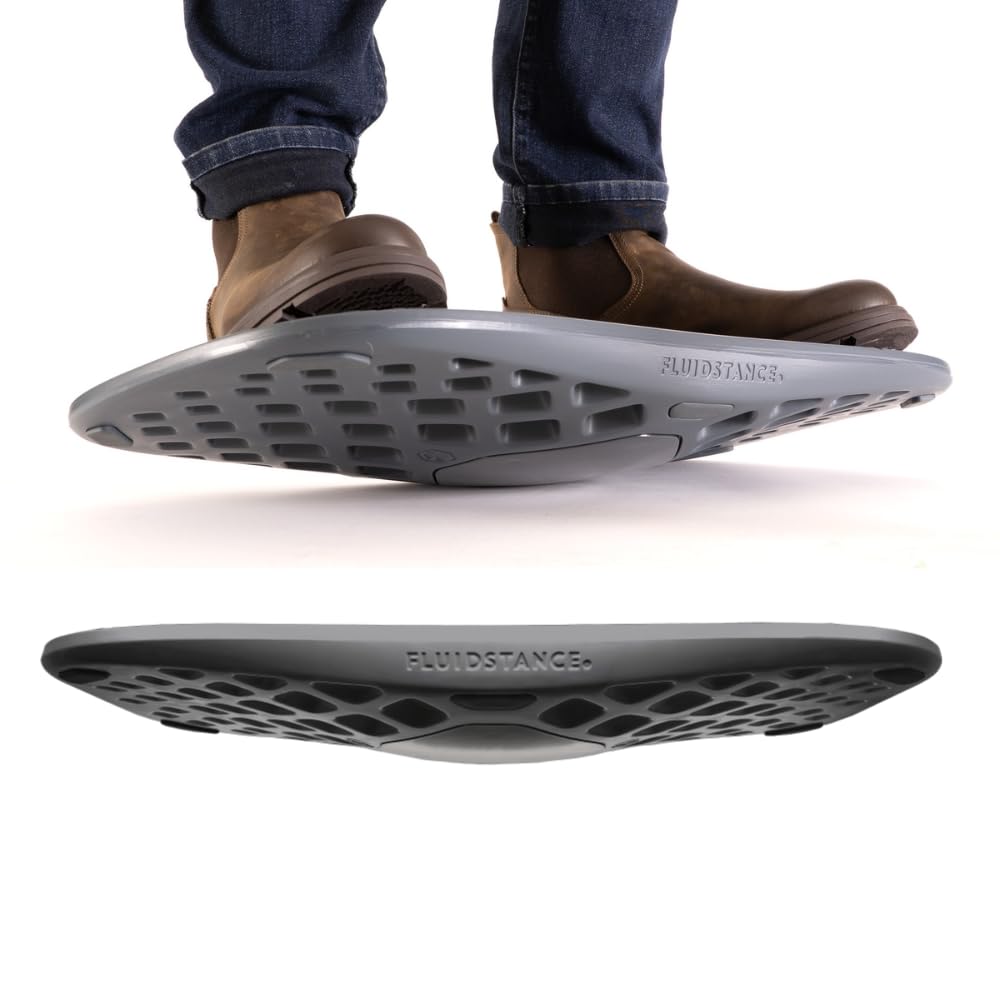
The FluidStance Plane reimagines the balance board for the standing desk environment. Instead of a steep wobble, it offers a subtle, low-amplitude 360-degree rock that lets you shift weight, swivel, and perform toe raises without breaking focus on typing. The top deck is made from 100% recycled tire treads, providing a soft, grippy surface that reduces foot fatigue during multi-hour standing sessions.
Rubber bumpers on the base prevent the board from sliding on hard floors and create natural stopping points, so you never over-rotate. With a compact footprint of 24.25 x 12.25 inches, it fits neatly under a standard desk. The 200-pound weight limit is the lowest among these boards, so heavier users should verify before purchase. Micro-movements throughout the day can increase calorie burn by up to 19% compared to standing still on a mat.
Customer feedback consistently highlights how it alleviates lower back and hip pain caused by prolonged static standing. It is not designed for intense core workouts — think of it as a movement enabler rather than a gym tool. The California-based company assembles each unit by hand and donates 1% of earnings to charity, which adds appeal for eco-conscious buyers.
Why it’s great
- Enables subtle movement during desk work without distraction
- Sustainable construction from recycled materials
- Quiet operation on tile and hard surfaces
Good to know
- 200 lb max weight — not suitable for all body types
- Not challenging enough for dedicated core workouts
- Premium price for a specialized desk accessory
3. Fitterfirst Professional Rocker Board

The Fitterfirst Rocker Board is the most straightforward option for physical therapy and controlled rehab. Its 20-inch wide Baltic birch platform provides a wide, stable stance that feels reassuring for users recovering from knee, ankle, or hip injuries. The single-plane tilt pitches forward and backward — no lateral wobble — which isolates anterior-posterior balance and allows you to focus on rebuilding specific ligament and tendon proprioception.
Two adjustable spheres underneath let you set the tilt angle at 10, 12, or 15 degrees, making it easy to progress difficulty as strength returns. The non-slip top surface keeps feet planted even during extended sessions. At 7.5 pounds, it is heavy enough to stay put without sliding on a yoga mat or carpet. This board is made in Canada from durable Baltic birch plywood, not thin composite.
Users over 80 have reported excellent results with this board for maintaining balance and mobility. Physical therapists often recommend it because of the adjustable angle feature and the predictable, single-axis motion. The main trade-off is that you cannot get 360-degree core engagement from a rocker design — it excels at lower-body stabilization but does less for your obliques and transverse abdominis compared to a wobble or roller board.
Why it’s great
- Adjustable tilt angle (10, 12, 15°) for gradual progression
- Wide 20-inch deck provides a stable, confidence-inspiring stance
- Made from quality Baltic birch plywood in Canada
Good to know
- Single-plane movement only — no multi-directional core challenge
- Price is higher than many rocker boards with fewer adjustability features
- Relatively heavy to move between rooms
4. GIBBON SlackBoard
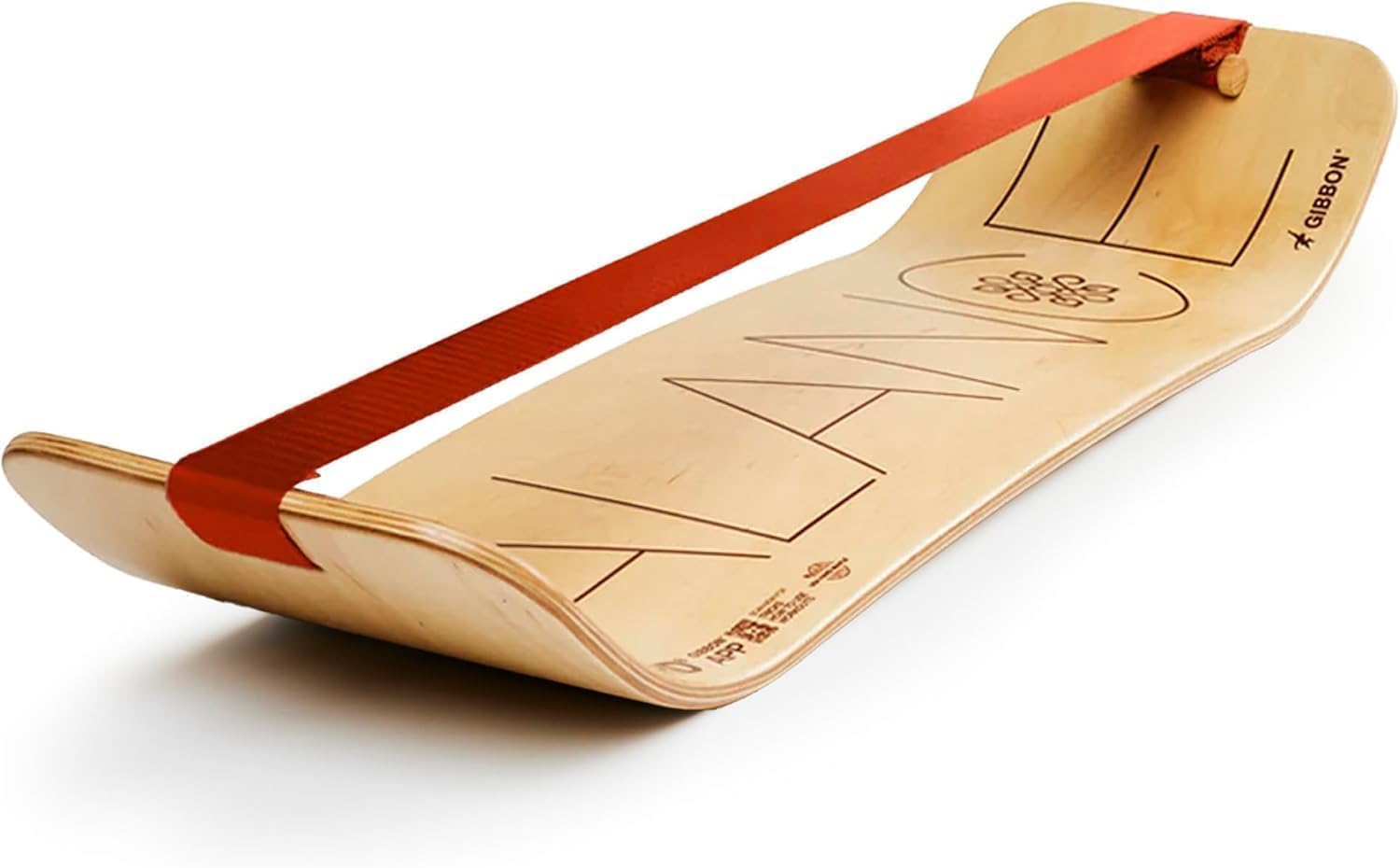
The GIBBON SlackBoard takes a unique approach by replacing the typical hemisphere or roller with a set of slacklines tensioned under a wooden platform. The board rests just inches off the ground, so falls are low-impact and safe, which is ideal for beginners, kids, and anyone nervous about height. The 42-inch long American maple deck offers plenty of room for varied foot positions, and the two-line configuration (convertible to one line for advanced users) controls the wobble axis.
With a 400-pound weight capacity, this is the strongest board in the lineup. The low profile and absence of metal parts make it silent during use, and the board can be stored upright against a wall. GIBBON includes access to an app with workout videos and tracking, which is helpful for structuring progression. The slackline mechanism provides a unique feel — less abrupt than a wobble board dome and more forgiving than a roller.
The learning curve is real; many users report feeling unstable for the first few sessions as the brain adapts to the unfamiliar lateral slack. Once you master it, the core engagement is excellent because you must constantly correct for the board wanting to tilt sideways. This is a great crossover tool for skiers, snowboarders, and surfers who want to mimic edge-to-edge transitions at home.
Why it’s great
- Very low to the ground for safe, confidence-building use
- Highest weight capacity of 400 lbs among tested boards
- Two-line to one-line conversion adjusts difficulty
Good to know
- Unfamiliar slackline sensation takes time to adapt to
- Requires more floor space due to 42-inch length
- Not a traditional wobble feel — movement is lateral-dominant
5. StrongTek Wooden Balance Board

The StrongTek board fills the gap between a basic rocker and a full round-base wobble board by using a cross-shaped base that provides 360-degree tilt but with a larger floor contact area for increased control. This design lets you experience multi-directional balance training without the intimidation of a small-diameter round base that can tip suddenly. The lauan hardwood plywood platform has a textured non-slip surface that keeps your feet secure during dynamic shifts.
At 17.5 x 13.5 inches, the deck is compact but sufficient for most foot sizes. The board supports up to 350 pounds and stores vertically when not in use. Four rubber edge protectors keep the corners from damaging walls or furniture, though some users report the adhesive on these pads is not very strong and they can fall off over time. This is a minor annoyance on an otherwise well-built board.
Users recovering from knee surgery have found this board especially useful for regaining proprioception and ankle stability. The cross base offers a middle ground that makes 360-degree training feel approachable without being too easy. It is noticeably more challenging than a basic rocker but less demanding than a traditional round wobble board, making it a smart transitional tool.
Why it’s great
- Cross base provides controlled 360-degree movement
- Non-slip textured top keeps feet planted
- Strong 350 lb capacity at a budget-friendly price point
Good to know
- Edge protector pads have weak adhesive and may detach
- Compact deck size may feel small for larger feet
- Not as challenging as full round-base wobble boards
6. Yes4All Balance Board Trainer

The Yes4All Balance Board Trainer uses a traditional roller-and-deck system but adds a key differentiator: adjustable rubber stoppers that let you set the travel distance of the board at 11, 16, or 22 inches. This means beginners can constrain the range of motion and gradually remove the stoppers as they gain confidence. The 29.5-inch long deck is made from 15-ply pressed wood and can hold up to 300 pounds.
The top surface uses a PEVA non-slip grip that provides good traction even during vigorous side-to-side motion. The heavy wooden roller has a fabric covering that collects dust and pet hair, requiring regular cleaning. This board is ideal for board sport athletes — surfers, skaters, and snowboarders — who want to replicate the feel of shifting weight on a moving surface. The adjustable stoppers make it much safer for learning than an unrestricted roller board.
Standing desk users report being able to balance for 15 minutes at a time after just a few weeks of practice. The stoppers also allow for a narrower rocker-like motion before graduating to full roller freedom. The main limitation is the 300-pound capacity, which is slightly lower than some competitors, and the fabric roller that requires maintenance to stay clean and smooth.
Why it’s great
- Adjustable stoppers provide 3 difficulty levels for safe progression
- Long 29.5-inch deck accommodates varied foot positions
- Effective for simulating board sport movement patterns
Good to know
- Fabric on the roller collects dust and pet hair easily
- 300 lb capacity is adequate but not the highest
- Roller-and-deck design requires more coordination than wobble boards
7. DMoose Ab Roller Wheel

The DMoose Ab Roller takes a different path to core strength by using an elbow-support wheel design rather than a standing balance board. The wide, rubber-coated wheel rolls smoothly on any floor surface without leaving marks, and the stainless steel frame can support up to 330 pounds. High-density foam elbow rests and ergonomic handles reduce wrist and shoulder strain compared to traditional straight-handle ab wheels, allowing deeper full-extension rolls.
This tool targets the rectus abdominis and obliques through controlled flexion and extension, which is a fundamentally different movement from the stabilization demands of a balance board. It includes two knee pads for comfort during kneeling sets. The wheel comes fully assembled out of the box, and the wide wheel base provides excellent stability during the roll-out motion, reducing the wobble that inexpensive narrow wheels produce.
Users consistently note that the DMoose produces deep muscle soreness in the lower abs after the first few sessions, confirming effective engagement. The main downside is that it only works the core through spinal flexion, not through lateral or rotational stabilization. It also does not involve the legs, hips, or lower back in the same way a balance board does. For someone wanting to supplement balance training with direct ab work, this is a solid addition but not a replacement for standing board work.
Why it’s great
- Elbow support allows deeper rollouts without wrist pain
- Wide rubber wheel is quiet and floor-safe
- Stainless steel frame is built to withstand heavy use
Good to know
- Limited to spinal flexion — no lateral or balance training
- Price is higher than many basic ab wheels
- Does not engage legs or hips like a standing balance board
FAQ
What is the difference between a rocker board and a wobble board for core training?
Can I use a balance board for core strength if I have a knee injury?
How long should I use a balance board each day for core results?
Is a balance board for core strength effective for weight loss?
Final Thoughts: The Verdict
For most users, the best balance board for core strength winner is the Indo Board Original because its roller-and-deck system delivers the most complete full-body stabilization challenge, backed by decades of elite athlete trust. If you want a standing desk companion that keeps you moving without distracting from work, grab the FluidStance Plane. And for targeted rehab with adjustable difficulty, nothing beats the Fitterfirst Rocker Board.