
Our readers keep the lights on and the weekend projects moving. As an Amazon Associate, I earn from qualifying purchases.
The restless energy that comes with ADHD isn’t a flaw — it’s a signal that the body needs movement to help the brain settle. For kids who struggle to sit still or maintain focus during homework, playtime, or quiet activities, the right sensory tool can make a difference. Balance boards designed specifically for children with ADHD provide a controlled outlet for that physical energy, helping to improve concentration, coordination, and emotional regulation without feeling like a chore.
I’m Rikta — the co-founder and writer behind FitlyFast. My approach here focuses on analyzing how specific design features like surface texture, weight limits, and modularity affect sensory integration outcomes, drawing from hundreds of hours of market research and parent-reported results.
This guide cuts through the noise to highlight the most effective options available, each chosen for its ability to deliver real therapeutic value. If you’re looking for the best balance boards for kids with adhd, you need products that turn restless movement into productive sensory input.
How To Choose The Best Balance Board For Kids With ADHD
Not all balance boards deliver the sensory integration a child with ADHD needs. The best options provide controlled instability that engages the vestibular system without overwhelming the child. Look for products with a clear therapeutic purpose — not just colorful shapes but thoughtful engineering that supports focus through motion.
Weight Capacity and Stability
Children with ADHD often lean, jump, or shift weight abruptly. A board or stepping stone with a low weight limit will tip or buckle, causing frustration or injury. Check the maximum weight recommendation and ensure it’s at least 150 pounds for durable use over several years. Premium options often support 265 to 330 pounds, which also allows adult participation during guided play.
Surface Grip and Non-Slip Base
Kids with ADHD have lower impulse control and may step or sit with uneven force. Textured top surfaces and rubber or silicone non-slip bottom rings are critical for preventing slips on hardwood, tile, or even low-pile carpet. Without this, the board becomes a hazard rather than a calming tool. Look for multi-point grip systems rather than a single central pad.
Modularity and Play Longevity
Children with ADHD need novelty to stay engaged. A single wooden balance board is quickly abandoned. Products that include multiple stones, beams, or interlocking pieces allow endless reconfiguration, keeping the vestibular challenge fresh. Sets with 5, 8, or 13 pieces provide enough variety to sustain interest over months, while also offering progressive difficulty as balance improves.
Quick Comparison
On smaller screens, swipe sideways to see the full table.
| Model | Category | Best For | Key Spec | Amazon |
|---|---|---|---|---|
| Pterying Spinning Chair | Spinning Chair | Vestibular regulation & stimming | 150 lb capacity, 21″ diameter | Amazon |
| Acorn Avenue 13-Piece Set | Beam + Stone Combo | Modular obstacle course variety | 110 lb capacity, 5 stones + 8 beams | Amazon |
| B. toys Balance & Groove | Musical Beam Set | Auditory + balance integration | Musical pod, 5 stones + 8 beams | Amazon |
| LoomLark 5-Piece Stones | Stepping Stones | Heavy kids & rough play | 330 lb capacity, 9.85″ height | Amazon |
| Lehoo Castle Stones | Stepping Stones | Young beginners (18 mo+) | 220 lb capacity, storage bag included | Amazon |
| Tiny Land Stones | Stepping Stones | Color-neutral playroom use | 165 lb capacity, rubber base | Amazon |
| JOYIN Turtle Stones | Stepping Stones | Portable outdoor obstacle play | 265 lb capacity, PP material | Amazon |
In‑Depth Reviews
1. Pterying Large Spinning Chair
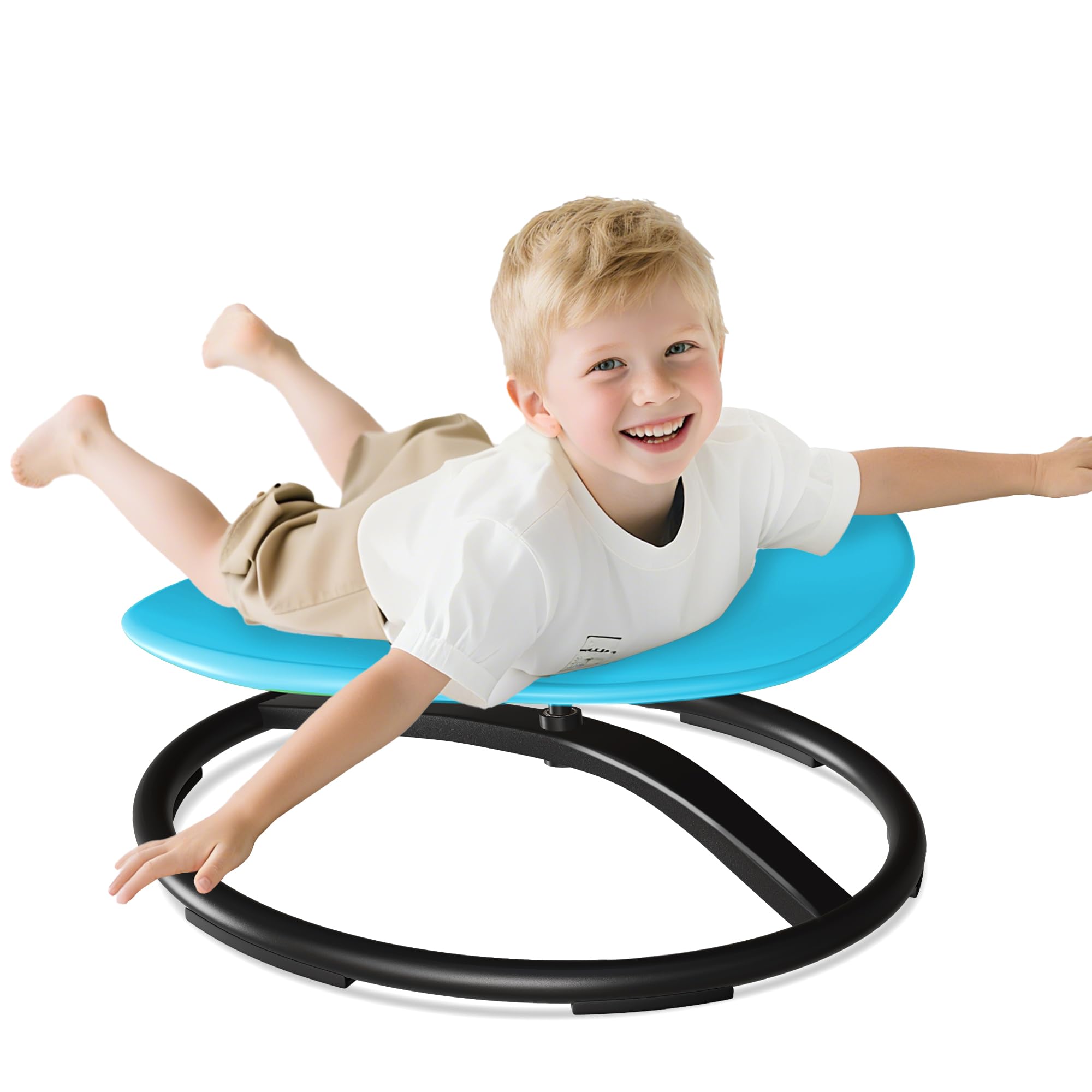
This spinning chair delivers direct vestibular input by allowing the child to rotate while sitting, kneeling, or lying down. Occupational therapists designed the rounded shape with thickened edges, giving kids a secure hold during rapid spins. The metal base keeps the 21-inch seat stable even at high rotational speeds, and the PP plastic frame resists heat and deformation from daily use.
Parents of children with ADHD report that this chair serves as an effective redirection tool for stimming, replacing bouncing or running with a controlled spinning motion. The assembly takes about five minutes with the included screwdriver, and the chair stays quiet — no creaking or wobbling even after hours of use by kids weighing up to 135 pounds in tests.
For families who need a dedicated regulation station rather than a portable play mat, this chair fills a specific gap. It doesn’t require setup or reconfiguration like modular stones, making it ideal for a child who needs immediate sensory input during homework breaks or after school. The azure color and sleek form factor blend well into a living room or therapy corner.
Why it’s great
- Occupational therapist design philosophy from the ground up
- Supports spinning in three positions (sitting, kneeling, lying)
- Thickened edges provide safe handholds during fast rotation
Good to know
- Requires assembly out of the box
- Large footprint may not store easily in small rooms
- Not suitable for outdoor use on grass or gravel
2. Acorn Avenue 13-Piece Balance Set

This 13-piece set combines five textured stepping stones with eight colorful balance beams, giving you more configuration options than standard stone-only sets. The hard plastic frame is reinforced with a silicone non-slip base that grips hardwood and tile securely. Each stone features a sensory pad on top, adding tactile feedback that helps ground a child with ADHD during the balancing activity.
The beams connect with latches that let you create straight paths, curves, or loops. Parents report that kids from 24 months to 10 years old find the variety engaging, and the stackable design means the entire set fits inside a small bin for storage. The 110-pound weight limit does restrict adult use, so this is strictly a child-focused tool rather than a family activity piece.
For ADHD-specific needs, the constant rearrangement of paths provides the novelty that keeps a child returning. One parent noted a measurable improvement in balance over several months, specifically crediting the set’s ability to challenge without frustrating. If you want one system that introduces both stepping and beam walking, this combo delivers the most physical variety in a single box.
Why it’s great
- Multiple beam-to-stone configurations keep play fresh
- Silicone base prevents sliding on smooth floors
- Sensory pads on each stone add tactile input
Good to know
- Weight limit of 110 pounds restricts adult use
- Latches may require careful handling to avoid breakage during separation
- Some kids may need more than 13 pieces for elaborate courses
3. B. toys Balance & Groove Set
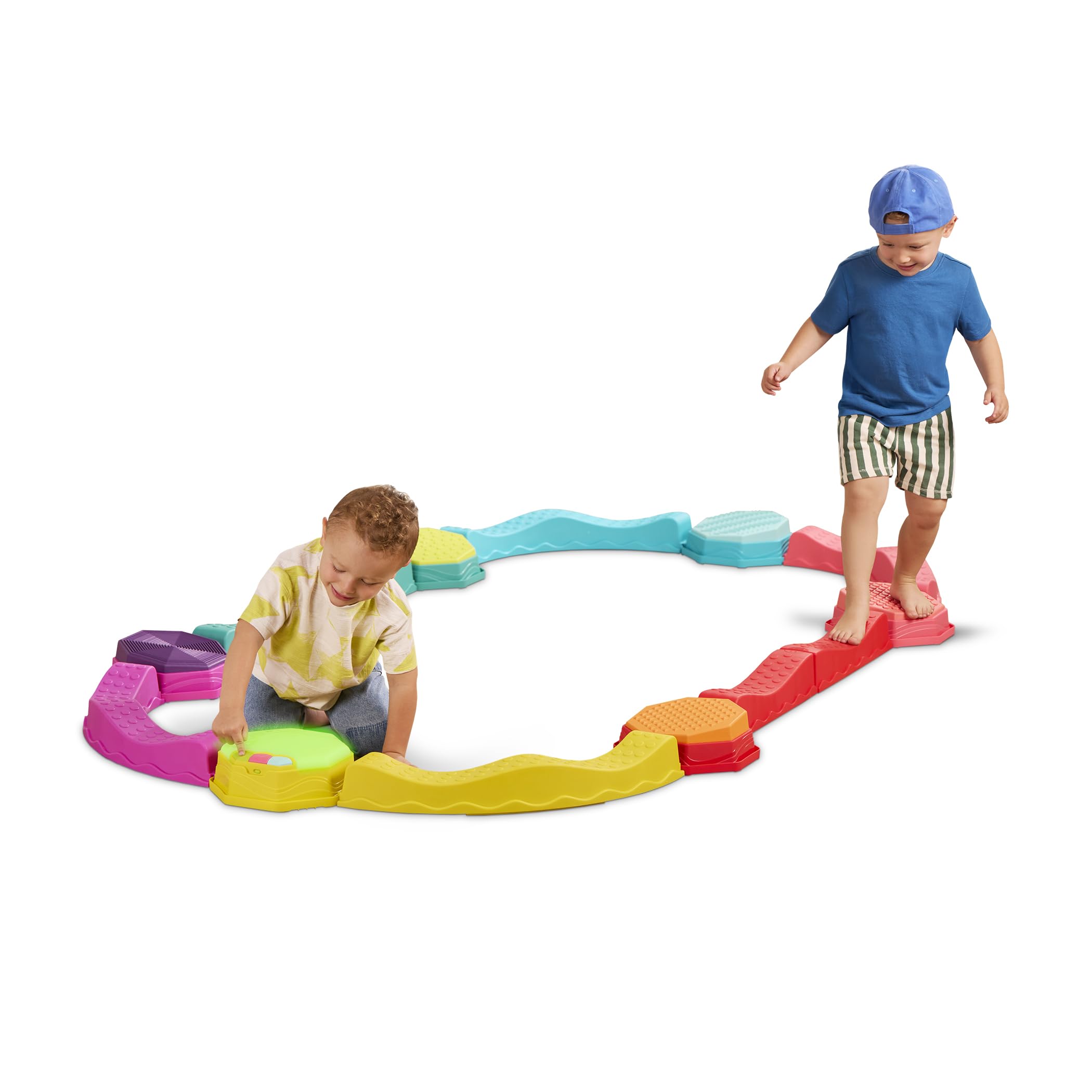
Music adds an auditory layer to balance training, and this set includes a dedicated light-up musical stepping stone that plays three interactive games. The eight wavy beams connect to the five sensory stones in endless combinations, and the musical pod responds to steps with sounds and light cues. Kids with ADHD who crave multi-sensory input benefit from having a clear audio reward tied to a physical action.
The construction quality exceeds expectations at this tier — the plastic withstands adult walking during setup tests, and the non-slip feet keep everything planted on hardwood and tile. The set nests for compact storage, and both a 3-year-old and a 6-year-old can independently rearrange the pieces thanks to the lightweight design. The colors are vibrant and clearly distinct, supporting color identification games as a bonus.
One parent of an autistic child noted that the combination of jumping, rolling, and color-jumping games kept their son engaged for extended periods, replacing aimless running with structured movement. The only weak point is the speaker volume, which can get lost in a noisy household. For families seeking auditory cues paired with vestibular input, this set bridges those sensory channels effectively.
Why it’s great
- Musical stone adds auditory reward for each step
- Wavy beams create a more dynamic balancing challenge
- Compatible with other B. toys expansion sets
Good to know
- Speaker volume may be insufficient in large or noisy rooms
- Requires batteries for the musical pod
- Colorful design may be distracting for some kids rather than calming
4. LoomLark 5-Piece Stepping Stones

With a maximum weight recommendation of 330 pounds, these stones are the most durable in this comparison and can easily support both a child and an adult standing on them simultaneously. Each stone measures 13 inches wide and stands nearly 10 inches tall, creating a significant height challenge that engages the core and lower body more intensely than flatter alternatives. The rubber grips on both the top and bottom surfaces prevent sliding on wood floors and provide traction for jumping.
Parents report that kids use these stones as seats to spin on floors, as step stools, and as hiding game props, which extends their utility beyond pure balance training. The eco-friendly plastic is non-toxic and odorless, important for children who are sensitive to chemical smells. Storage is straightforward since the five stones stack into a compact tower that fits neatly on an IKEA bookshelf.
For ADHD-specific benefits, the taller height introduces a mild risk element that keeps impulsive kids engaged — crossing from stone to stone requires focused attention to avoid a wobble. Therapists have used these stones specifically for balance and gross motor skill development. The one-year warranty adds peace of mind for families who expect rough, daily use from a high-energy child.
Why it’s great
- Highest weight capacity of all reviewed options at 330 pounds
- Tall profile (9.85 inches) intensifies the balancing challenge
- Rubber grips on both top and bottom for slip resistance
Good to know
- Five stones may not be enough for complex obstacle courses
- 10-inch height may feel intimidating for very young or cautious kids
- Plastic material, though durable, lacks the natural aesthetic of wood sets
5. Lehoo Castle Stepping Stones

These stepping stones are built specifically for the 18-month to 5-year-old range, with a textured surface and an anti-slip ring on the bottom that keeps them planted during energetic play. The 220-pound weight capacity allows a parent to join in for guided balance exercises, which is particularly useful for children with ADHD who benefit from one-on-one coaching. Each stone is a different color, making color recognition a natural part of the play loop.
The set includes a handy storage bag that makes transport to the backyard, park, or grandma’s house simple. The plastic construction is lightweight enough for a toddler to carry and stack independently, fostering a sense of autonomy. While one reviewer noted that engagement dropped after two weeks, the variety of games — floor is lava, obstacle course, stepping path — can extend interest with adult creativity.
For ADHD families, the glowing feature adds an extra sensory hook. The stones have a glow-in-the-dark element that makes evening play novel and exciting. At this price point, the set functions as a low-risk entry point for parents unsure whether their child will respond to vestibular play. If your child loses interest in stones alone, this set’s storage bag and portability make it easy to rotate with other sensory tools.
Why it’s great
- Glow-in-the-dark element adds evening play appeal
- Storage bag included for easy transport and cleanup
- Appropriate weight capacity for adult-assisted play
Good to know
- Some kids may lose interest after a few weeks without guided play
- Smaller size may feel less substantial than taller stone alternatives
- Not as suitable for older or heavier children above age 7
6. Tiny Land Stepping Stones

Tiny Land offers stepping stones in a subdued “vintage color” palette that blends into a living room or playroom without screaming “toy.” The textured top surface and full rubber non-slip base provide solid grip on tile and hardwood, and the 165-pound weight limit covers most children up to early adolescence. Each stone is 13 inches square and 10 inches tall, a height that challenges balance without causing anxiety for beginner users.
Parents with kids aged 2 and 3 report that these stones are stable enough for first-time balancing and easy enough to step onto with a hand held. The lightweight plastic allows children to rearrange the course independently, which builds confidence and decision-making skills. The set includes five stones, which is enough for a simple obstacle path but may require a second set for larger play areas or multiple children.
For ADHD use, the neutral colors can actually be an advantage — some children with sensory processing sensitivities find bright, high-contrast colors visually overstimulating. The muted tones let the physical sensation of balancing take center stage. The rubber base also dampens impact noise, making this a good choice for apartment dwellers or families who need quieter play options.
Why it’s great
- Subdued color palette reduces visual overstimulation
- Full rubber base provides excellent grip on smooth surfaces
- Lightweight enough for kids to rearrange independently
Good to know
- Five stones may not be enough for elaborate course designs
- 165-pound limit restricts use with larger kids or adults
- Vintage color may not appeal to children who prefer bright hues
7. JOYIN Turtle Stepping Stones
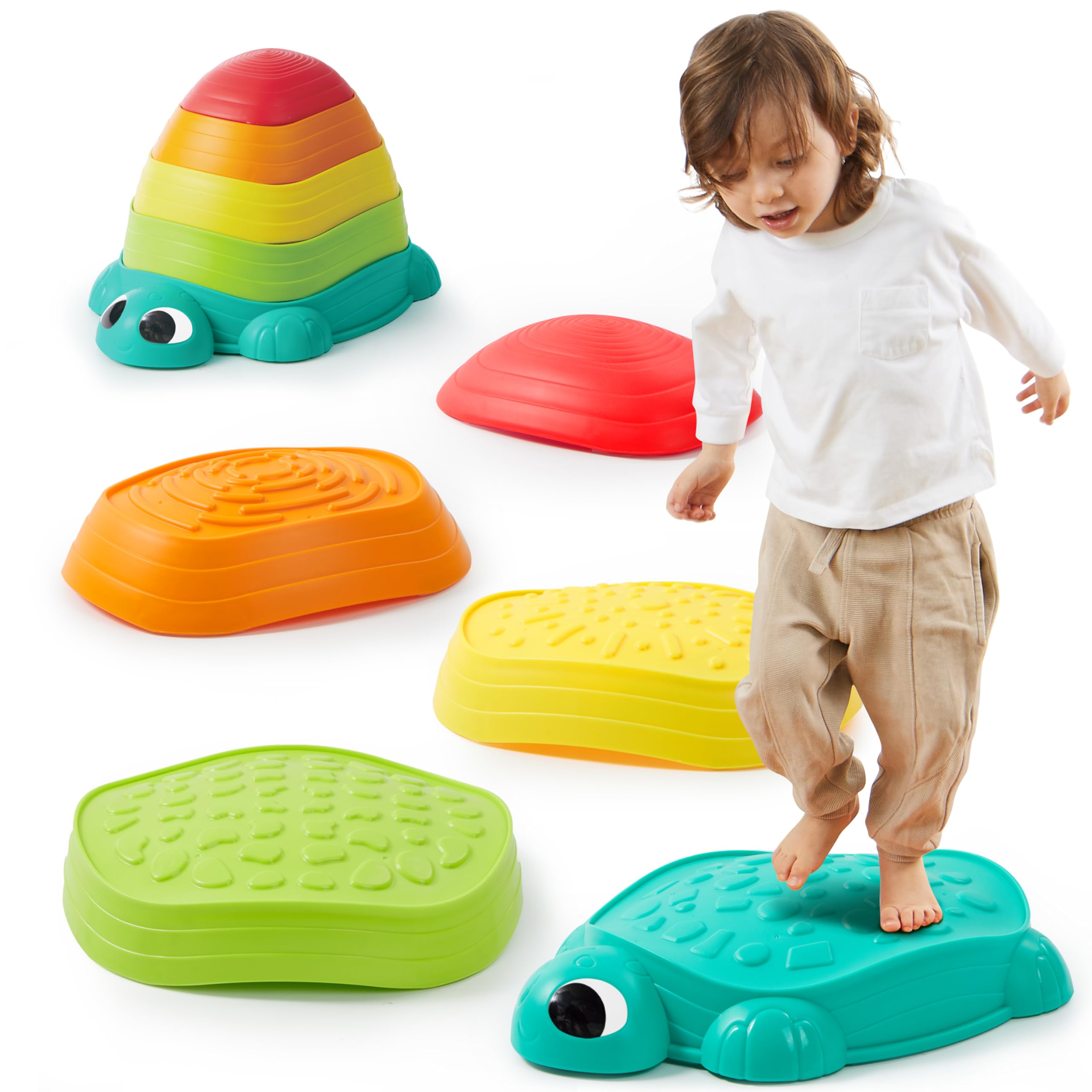
These turtle-shaped stepping stones use polypropylene material that resists cracking and fading under sun exposure, making them the strongest outdoor option in this lineup. The reinforced design supports up to 265 pounds, and the thick rubber bottom keeps the stones anchored on grass, concrete, or wood decking. Each stone has rounded edges for safety and a textured surface that provides grip even when wet.
Kids gravitate to the turtle theme, which turns balance training into an imaginative game of helping turtles cross a river. The stones stack and nest for compact storage, and the lightweight construction means a child can carry the entire set to the backyard. Parents report that the vibrant green color holds kid attention well and that the stones stay in place even when older children jump aggressively between them.
For ADHD families who need an outdoor sensory tool, these stones serve as a durable alternative to indoor-only sets. The 265-pound weight limit means parents and siblings can join the game without worry. The only trade-off is size — each stone measures 6 inches long by 4 inches wide, which is smaller than the LoomLark or Tiny Land options, making the stepping challenge more precise and requiring greater accuracy from the child.
Why it’s great
- PP material resists UV damage and moisture for outdoor durability
- 265-pound capacity supports whole-family play
- Rounded edges and rubber feet maximize safety on any surface
Good to know
- Smaller stepping surface (6″ x 4″) requires more precise foot placement
- Turtle theme may feel too young for kids above age 8
- Only 5 stones included, limiting course complexity
FAQ
What makes a balance board different from a regular stepping stone for ADHD?
Can a spinning chair replace a balance board for sensory needs?
How long does a child with ADHD stay engaged with balance stones?
Final Thoughts: The Verdict
For most users, the balance boards for kids with adhd winner is the Pterying Spinning Chair because it directly targets vestibular regulation through controlled spinning, providing the most therapeutic value per square foot. If you want modular variety that challenges coordination daily, grab the Acorn Avenue 13-Piece Set. And for a multi-sensory experience that pairs music with movement, nothing beats the B. toys Balance & Groove Set.