
Our readers keep the lights on and the weekend projects moving. As an Amazon Associate, I earn from qualifying purchases.
Whether you’re recovering from an ankle sprain, standing for hours at a desk, or trying to carve cleaner lines on your next ski trip, a balance trainer forces your stabilizing muscles to fire in ways flat ground never can. The challenge of an unstable surface translates directly into stronger ankles, a tighter core, and better body awareness — but the wrong board can feel wobbly, slippery, or too easy within weeks.
I’m Rikta — the co-founder and writer behind FitlyFast. This guide is built from weeks of combing through customer feedback, technical specs, and real-world use cases to find the models that actually hold up to daily use.
Whether you need a compact wobble board for PT or a half-ball for high-intensity circuits, finding the right balance trainer starts with knowing which design matches your specific goals and floor space.
How To Choose The Best Balance Trainer
Picking the right balance trainer comes down to understanding the four main design families: wobble boards offer 360-degree instability for advanced core work, rocker boards limit movement to one plane for targeted rehab, half-balls combine a firm platform with a cushioned dome for high-impact circuits, and slackline boards simulate tightrope walking for maximum proprioceptive challenge. The wrong choice wastes your money and stalls your progress.
Board Shape and Movement Pattern
A round wobble board tilts in every direction, forcing your ankles and core to react constantly — ideal for skiers, surfers, and anyone wanting deep stability work. A rocker board rocks only front-to-back or side-to-side, making it more controlled and better for standing-desk micro-movement or early-stage physical therapy. Half-balls give you a squishy dome on one side and a flat ABS base on the other, allowing pushups, lunges, and planks with an instability element. Slackline boards suspend a wooden platform on elastic cords, creating a challenging, low-to-the-ground balance drill that engages every stabilizing muscle in your legs and torso.
Weight Capacity and Build Materials
Never assume a board will hold you — check the maximum weight recommendation. Quality wooden wobble boards typically support 250–480 pounds, while half-balls can handle 660–1,500 pounds if properly constructed. Hardwood plywood (like Lauan or American maple) offers the best stiffness-to-weight ratio for wooden boards, while half-balls need thick PVC with reinforced stitching and a rigid ABS base to avoid blowouts. Non-slip top textures are non-negotiable: textured PVC or honeycomb rubber keeps your feet planted during sweaty sessions or barefoot use.
Portability and Floor Compatibility
If you plan to use your balance trainer at a standing desk, check the board height — some rocker boards add 3–4 inches of elevation, which can push a fixed-height desk too high. Heavy half-balls (up to 15 pounds) stay planted during explosive moves but are annoying to carry between rooms. Wooden wobble boards around 3 pounds slide effortlessly under a couch or into a closet. On hard floors, rubber or felt bottom grips prevent scratches and slipping; on carpet, wider boards with low profiles perform best without sinking into the pile.
Quick Comparison
On smaller screens, swipe sideways to see the full table.
| Model | Category | Best For | Key Spec | Amazon |
|---|---|---|---|---|
| ZELUS 25in. Balance Ball | Half Ball | Intense core circuits | 25″ diameter, 8″ dome height | Amazon |
| Yes4All Half Ball | Half Ball | Bosu-style workouts at lower cost | 880 lbs capacity, 23.5″ base | Amazon |
| Gaiam Evolve Balance Board | Rocker | Standing desk movement | 27″ long, honeycomb grip | Amazon |
| GIBBON SlackBoard | Slackline | Advanced proprioception | 42″ maple wood, 2-line option | Amazon |
| StrongTek Advanced Wobble Board | Wobble Board | Controlled 360° training | Cross-base, 350 lbs capacity | Amazon |
| WOOD CITY Rocker Board | Rocker | Family/kid play & balance | 480 lbs, 35″ long natural wood | Amazon |
| ProsourceFit Wooden Balance Board | Wobble Board | Entry-level stability training | 15.75″ diameter, solid wood | Amazon |
In‑Depth Reviews
1. Yes4All Half Ball Balance Trainer

The Yes4All Half Ball replicates the functionality of a premium Bosu at a fraction of the price, using a thick PVC dome reinforced to support up to 880 pounds. The matte black finish resists scuffing, and the non-skid TPR base keeps the platform locked in place during burpees, step-ups, and plank holds. Customers report no air loss after months of use, and the included foot pump makes inflation straightforward.
The 23.5-inch diameter gives you enough real estate for both feet in a wide stance while the 7.25-inch dome height provides a significant instability challenge. Reviewers consistently note it’s heavier than a typical Bosu, which actually improves stability during dynamic movements like lunges and mountain climbers. The textured top surface offers solid grip in socks or bare feet.
One important detail — the surface is rigid rather than cushioned, which some users prefer for weighted exercises but others find less comfortable for kneeling moves. The ball also requires occasional re-inflation over several months, a common trait for PVC half-balls. Overall, it’s the most versatile choice for anyone wanting to integrate instability into traditional strength moves.
Why it’s great
- Very high weight capacity for heavy loads
- Heavy-duty base stays planted during high-impact moves
- Includes pump and works as a Bosu alternative at lower cost
Good to know
- Delivery time can be longer than expected
- Surface texture is firm, less padded for knees
- May need occasional air top-ups after initial inflation
2. ZELUS 25in. Balance Ball

ZELUS takes the half-ball concept further by pairing the 25-inch inflatable dome with a full-size yoga ball and two resistance bands in the box, making it a near-complete home gym accessory. The PVC ball inflates through a port designed to minimize wear, and the ABS base platform with anti-slip TPR matting provides a very stable foundation even during explosive side-to-side drills.
Reviewers highlight its durability under intense use, including pitching drills and heavy weight training. The 8-inch dome height creates a substantial instability peak, forcing deep core engagement during pushups and planks. The included resistance bands have cushioned grips and add upper-body toning options, though some units arrived missing the metal clamp needed for the handles — a quality-control inconsistency worth checking on arrival.
The unit is heavy, which is excellent for stability but less convenient for moving between rooms. Over time, the ball does deflate slowly and needs re-inflation every few weeks, something multiple users noted. The extra yoga ball adds value for stretching and recovery work, cementing this as a strong all-in-one package for home gym users who want variety without buying separate pieces.
Why it’s great
- Comes with bonus yoga ball and two resistance bands
- Wide 25-inch base with anti-slip bottom
- Very durable build for heavy, daily use
Good to know
- Some units missing metal clamp for band handles
- Ball loses air slowly over weeks, needs occasional re-inflation
- Heavy and not very portable
3. Gaiam Evolve Balance Board
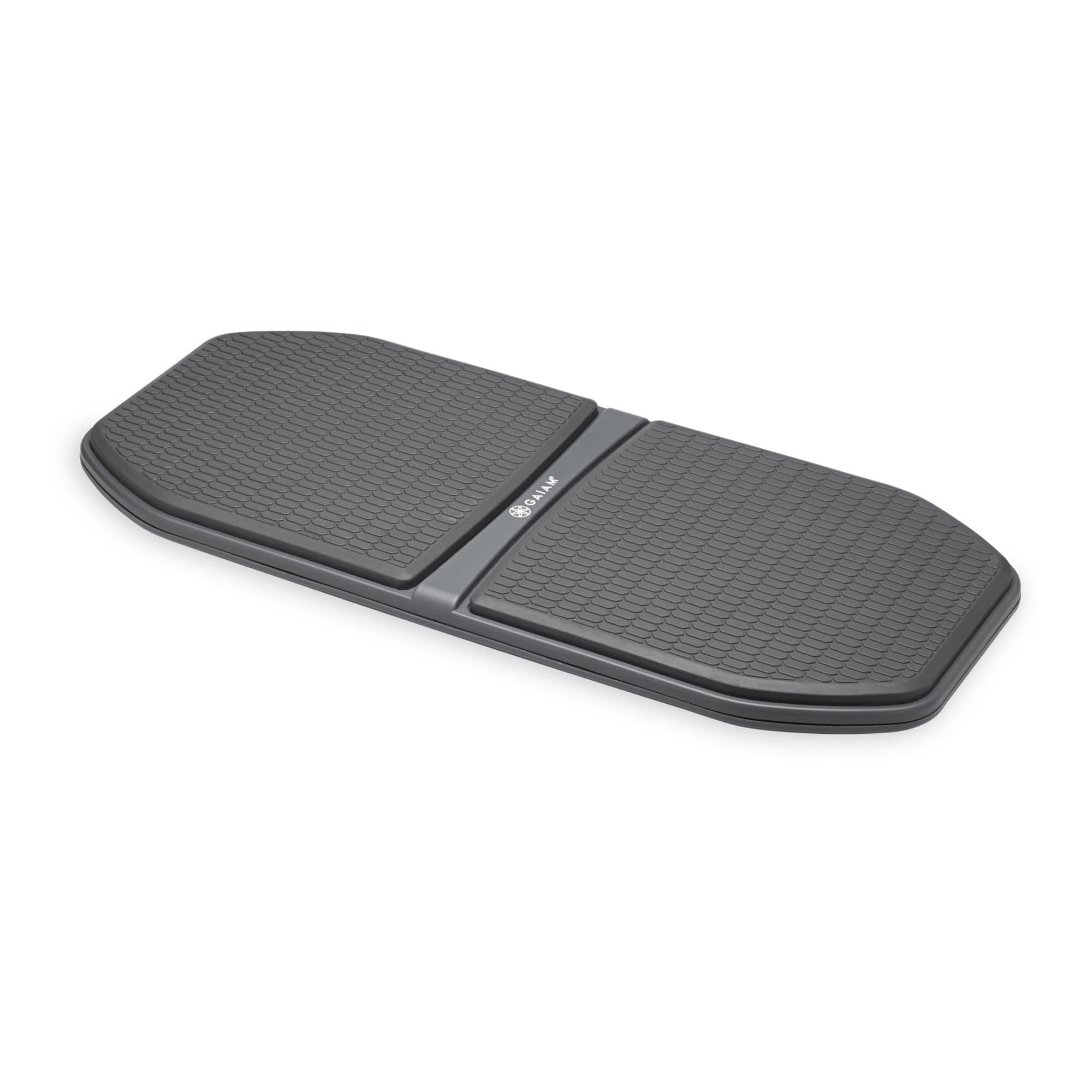
The Gaiam Evolve is purpose-built for standing desks: the 27-inch long platform allows you to shift your feet between forward and wide stances while the curved rocker bottom creates a smooth, controlled side-to-side and front-to-back motion. The honeycomb non-slip texture keeps feet secure on both hardwood and low-pile carpet without needing shoes, and the 6.5-pound weight is light enough to slide under your desk when not in use.
Users with ankle tendinosis and knee locking from prolonged standing report major relief, as the micro-movements prevent joints from stiffening. The board is also low enough (3.65 inches at the rocker peak) to work with most fixed-height standing desks without causing elbow strain. The PU and PVC build feels premium, and the corner grips prevent the board from sliding on smooth floors.
Two recurring issues: the cushion top layer can peel near the center after several months, and some units develop a loud creaking noise during rocking. Neither issue affects structural integrity, but the noise can be distracting in quiet office environments. If your primary need is a stable rocker for all-day standing desk use, the Gaiam Evolve remains the best-executed option in this category.
Why it’s great
- Ergonomic rocker motion perfect for standing desks
- Honeycomb texture provides excellent slip resistance
- Lightweight and easy to store under furniture
Good to know
- Top cushion layer may peel after extended use
- Some boards develop a creaking sound over time
- Weight capacity limited to 250 lbs
4. GIBBON SlackBoard
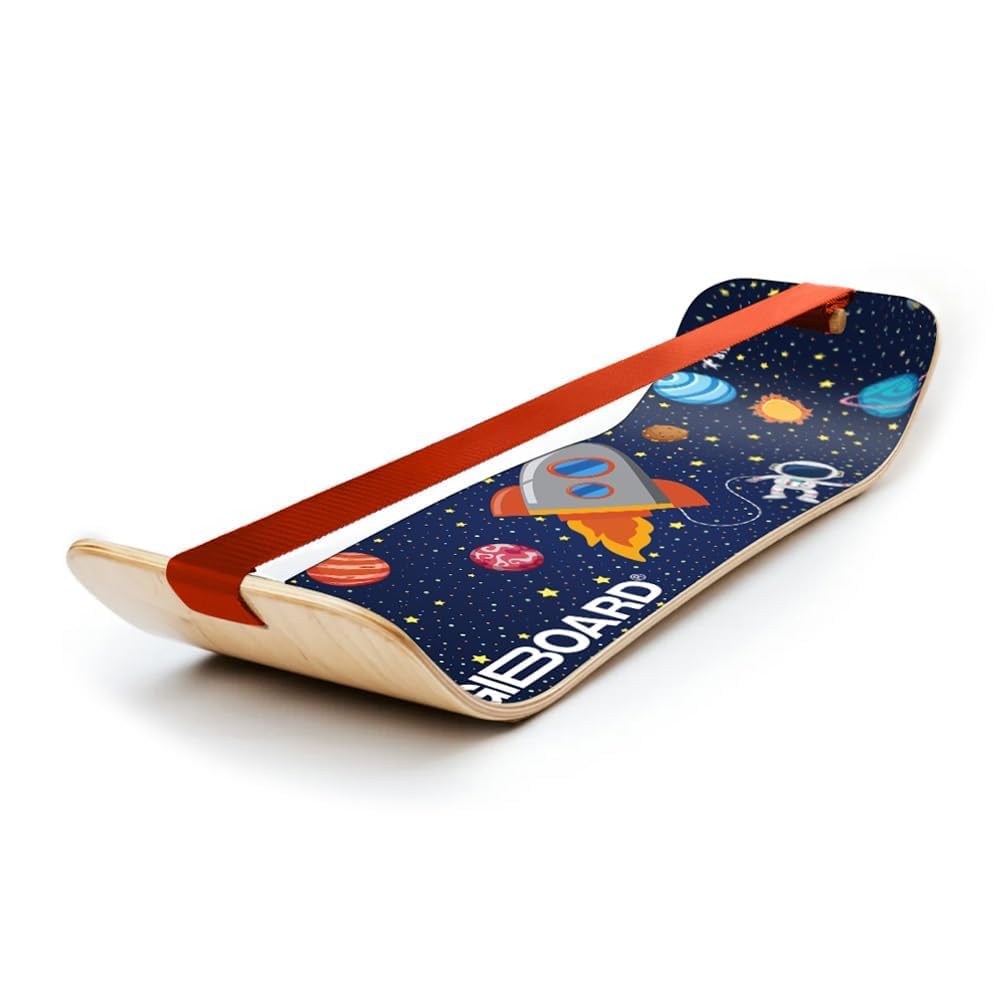
The GIBBON SlackBoard is a radical departure from wobble boards and half-balls — instead of a pivot point, it suspends a 42-inch American maple platform on elastic cords, creating a real slackline feel while keeping you low to the ground for safety. The 2-line configuration (included) provides a slightly more forgiving entry point, while removing one line pushes the difficulty into serious body-control territory.
Crafted in North America from sustainably sourced maple, the board itself is beautiful enough to leave out as decor. Reviewers note a steep initial learning curve — most can’t hold more than 10–20 seconds at first — but the progression is rewarding and rapidly improves ankle stability, spatial awareness, and core engagement. The included free app with video tutorials helps track your progress and offers structured drills.
It takes up about 4 feet of floor space and requires a clear area during use. The wooden surface has a smooth, natural finish that works well with bare feet but can feel slippery if your feet sweat — using grippy socks or adding a thin grip pad helps. This is not a casual purchase; it’s a focused training tool for anyone serious about balance as a skill (skateboarders, snowboarders, climbers) or for those wanting a uniquely engaging alternative to traditional boards.
Why it’s great
- Beautiful, durable American maple construction
- Excellent for building deep ankle and core stability
- Safe, low-to-ground design with progressive difficulty
Good to know
- Steep learning curve, not for impatient beginners
- Smooth wood surface can feel slippery with sweaty feet
- Requires significant floor space to use safely
5. StrongTek Advanced Wobble Board

The StrongTek board fills the gap between basic rocker boards and full 360-degree round wobble boards by using a cross-shaped base that tilts in multiple directions while creating a larger floor contact area for better control. This makes it less intimidating than a round wobble board but significantly more challenging than a single-plane rocker. The 17.5-by-13.5-inch Lauan hardwood platform gives size-14 shoes plenty of room.
This is a favorite among standing desk users who want more movement variety than a simple rocker, as the 360-degree tilt keeps shifting muscle engagement throughout the day. It also works well for post-knee-surgery rehab, with users reporting improved leg strength and confidence during hiking and mountain training. The textured top surface provides reliable grip whether barefoot or in shoes.
The four corner pads on the bottom use adhesive that reviewers consistently report failing within days, causing them to fall off. This doesn’t affect balance performance but may scratch hardwood floors without the pads. A simple rug or felt replacement solves the issue.
Why it’s great
- Cross-base design offers controlled 360-degree wobble
- Large platform accommodates larger feet comfortably
- Solid wood construction with high 350 lb capacity
Good to know
- Corner pads have weak adhesive and tend to fall off
- Needs a rug or felt on hard floors to prevent scuffing
- Not as challenging as a round base wobble board for advanced users
6. WOOD CITY Wobble Board

The WOOD CITY board is a classic curved rocker — a simple arched wooden plank that rocks front-to-back — but its 35-inch length and 480-pound capacity make it equally suited for toddler play, adult yoga, and standing desk use. The natural wood finish with eco-friendly lacquers gives each board a unique grain pattern, and the 6-inch peak height creates enough arc for fun rocking without feeling unstable.
Reviewers rave about its versatility: kids use it as a bridge, slide, tunnel, or lounge chair, while adults use it for calf stretches, balance practice, and as an active sitting aid. The 4.6-pound weight makes it easy for a child to move around, yet the solid wood supports adults of any size. The lack of a textured top surface means bare feet can slide slightly during active balancing — some users add grip tape or non-slip pads for safety.
Because it’s a simple rocker with no pivot mechanism, it only moves in one plane. That limits its use for serious stability training but makes it the safest option for young children and beginners. If you want a single board that the whole family can use for imaginative play, stretching, and gentle balance work, this is the one.
Why it’s great
- Extremely versatile for kids play and adult exercise
- High 480 lb capacity supports the whole family
- Lightweight and easy to move around the house
Good to know
- Rocks only in one plane, not 360 degrees
- Smooth wood surface can be slippery without grip pads
- Not ideal for advanced stability training
7. ProsourceFit Wooden Balance Board

The ProsourceFit board is a classic round wobble trainer with a 15.75-inch diameter solid wood platform and a 360-degree free-moving base. It’s the most budget-friendly entry point into wobble board training, and its simple, proven design has helped thousands of users improve ankle stability, core strength, and balance for skiing and other sports. The textured surface prevents slipping whether wearing shoes or going barefoot.
At just 3 pounds, it’s highly portable and can be tossed into a gym bag or kept under a desk. The 300-pound capacity covers most users, and the low 2.5-inch profile means it doesn’t raise your standing height much — good for use at a standing desk if you just need subtle movement. Reviewers with ACL and ankle surgery recoveries praise its sturdy build and effectiveness for rehab exercises.
This board is genuinely slippery on hardwood floors — users consistently recommend pairing it with a non-slip rug to prevent sliding during use. It’s also not recommended for anyone in high-risk balance rehab, as the 360-degree free movement provides no stabilization. For general fitness, core conditioning, and sport-specific training, it’s a reliable, no-frills tool that gets the job done.
Why it’s great
- Simple, effective 360-degree wobble design
- Very lightweight and portable
- Sturdy construction holds up well to daily use
Good to know
- Slippery on hardwood floors without a rug
- Not recommended for high-risk balance rehab
- Limited instability challenge for very advanced users
FAQ
Should I get a wobble board or a half-ball for general fitness?
Can I use a balance trainer on carpet?
Will a balance trainer help with shin splints or knee pain?
Final Thoughts: The Verdict
For most users, the best all-around balance trainer is the Yes4All Half Ball because it combines the versatility of a Bosu-style platform with a weight capacity and build quality that outpaces its price tier. If you need a dedicated standing desk board that promotes subtle all-day movement, grab the Gaiam Evolve Balance Board. And for challenging proprioceptive training that feels more like a skill than a workout, nothing beats the GIBBON SlackBoard.