
Our readers keep the lights on and the weekend projects moving. As an Amazon Associate, I earn from qualifying purchases.
Ball of foot pain, often tied to metatarsalgia or Morton’s neuroma, turns every step into a wince. The right insole targets the metatarsal heads with precise lift and cushion, offloading pressure from the forefoot’s sensitive nerves and bones.
I’m Rikta — the co-founder and writer behind FitlyFast. I’ve spent years analyzing structural foot support products, focusing on material density, pad placement accuracy, and the durability of adhesive systems in metatarsal-specific insoles.
Whether you need a thin pad for dress shoes or a full-length orthotic for daily trainers, this guide to the ball of foot pain insoles breaks down the differences between wool felt, vegetable-tanned leather, and podiatrist-designed rigid supports so you can match the right build to your specific condition.
How To Choose The Best Ball Of Foot Pain Insoles
Not all forefoot cushions work the same way. A correctly placed metatarsal pad lifts the transverse arch, while a thick foam pad under the entire ball can actually compress the nerve bundle and worsen pain. Focus on the specific design features that address the root biomechanical issue.
Metatarsal Pad Placement and Height
The pad must sit just behind the metatarsal heads, not directly under them. If the pad is too far back it creates irritation under the arch; too far forward it presses on the nerve itself. Look for products with clearly marked positioning guides or an anatomical T-shape that naturally aligns with the metatarsal arc.
Material Durability and Absorption
Wool felt compresses quickly but offers a soft, forgiving feel for low-impact use. Vegetable-tanned leather retains its shape for months and wicks moisture better than synthetics. Rigid orthotic shells made from Q-E.V.A. or polypropylene provide firm structure but require a deeper heel cup to stay in place during high-impact activities.
Length and Shoe Compatibility
Full-length insoles offer total contact support and prevent the pad from shifting, but they may not fit snugly in low-profile loafers or ballet flats. 3/4-length designs leave room for natural toe splay and fit into tighter dress shoes, but they rely on the shoe’s existing heel counter for stability. Self-adhesive pads are the most flexible option, working in sandals, heels, and athletic shoes alike.
Quick Comparison
On smaller screens, swipe sideways to see the full table.
| Model | Category | Best For | Key Spec | Amazon |
|---|---|---|---|---|
| PowerStep Pulse Plus Met | Full Orthotic | Daily runners and high-mileage walkers | Full-length polypropylene shell with met pad | Amazon |
| Pedag Holiday Sheepskin 3/4 | 3/4 Leather Orthotic | Dress shoes and loafers requiring thin profile | Handmade lambskin leather, 3/4 length | Amazon |
| Footlogics Metatarsalgia Insoles | 3/4 Orthotic | Flat feet with metatarsalgia | Built-in metatarsal raise, Q-E.V.A. core | Amazon |
| Kelaide Metatarsalgia Insoles | Full Orthotic | Everyday wear with neutral arch | Full-length foam with built-in met pad | Amazon |
| Pedag T-Form Met Pads | Adhesive Pad | Sandal users needing precise nerve offload | Vegetable-tanned leather T-shape, 3 pairs | Amazon |
| Foot Petals Ball of Foot Cushions | Adhesive Pad | High heels and toe-sliding prevention | Thin gel-like cushion, self-adhesive | Amazon |
| Temiart 18-Pack Felt Pads | Adhesive Pad | Multi-shoe rotation on a budget | 1/4-inch thick wool felt, 18 pads | Amazon |
In-Depth Reviews
1. PowerStep Pulse Plus Met
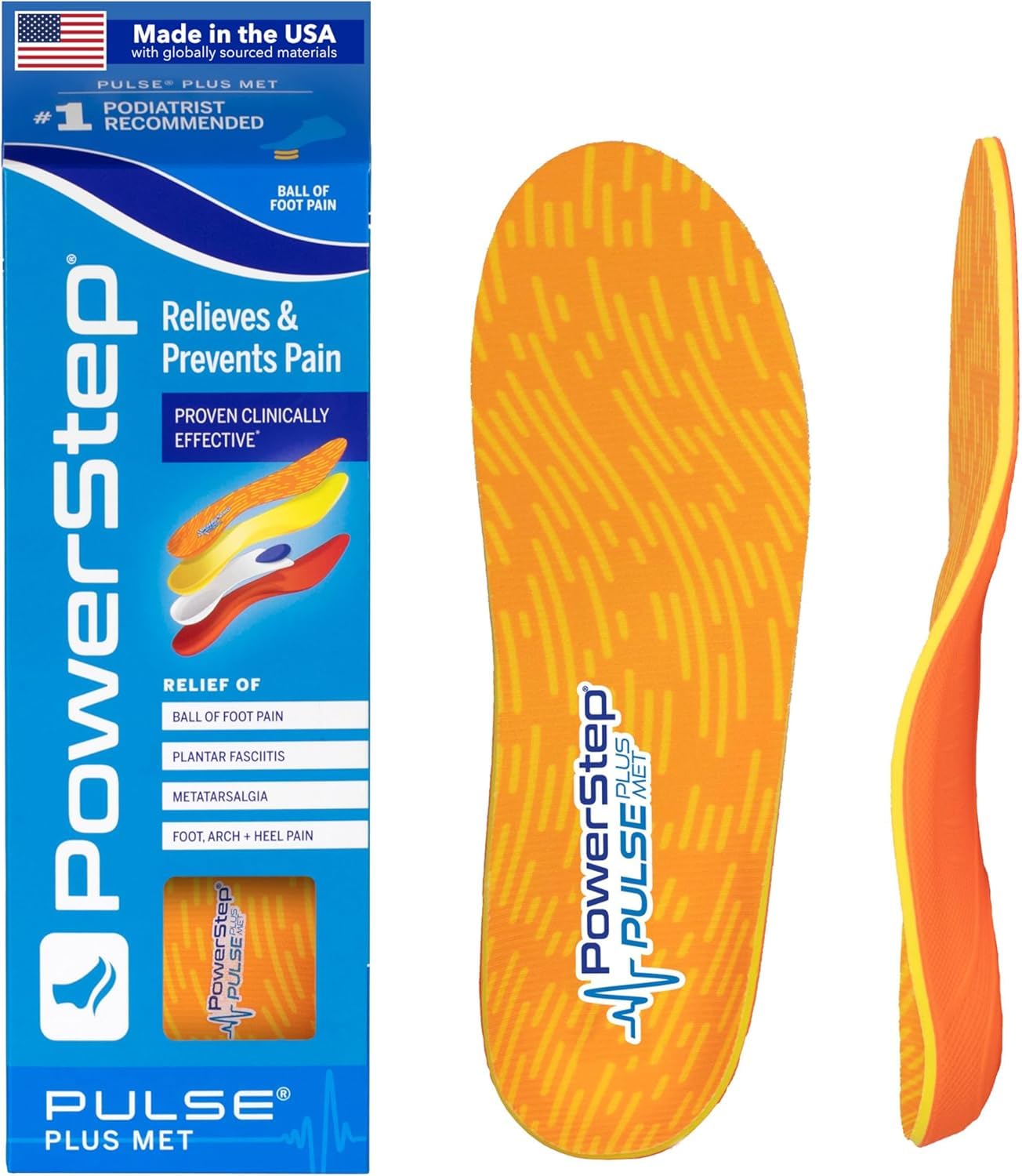
The PowerStep Pulse Plus Met is a podiatrist-recommended full-length orthotic that combines a rigid polypropylene shell with a targeted metatarsal pad. The shell provides firm arch support and a deep heel cup to control overpronation, while the pad sits precisely behind the metatarsal heads to offload pressure without digging into the foot. Users consistently report lasting relief from neuroma shooting pain, with several noting the pad is noticeable as support rather than an invasive bump.
The odor-control top fabric manages heat and friction well during long runs or all-day standing shifts. Reviewers mention the insoles last over a year with daily wear, though the bottom cushion may compress earlier for high-mileage runners. The width runs slightly generous, which can overwhelm narrow running shoes, but the trade-off is stability for those with wider feet or flat arches.
At the premium end of the market, this is the option to trust if you need a structural solution—especially if your podiatrist already recommended the brand. The support is firm, not plush, so expect a short break-in period while your foot adjusts to the rigid shell.
Why it’s great
- Podiatrist-recommended with proven neuroma relief
- Full-length design prevents pad shifting inside the shoe
- Durable polypropylene shell lasts over a year
Good to know
- Width may be too wide for narrow performance shoes
- Firm feel requires a break-in period
- Premium price point compared to stick-on pads
2. Pedag Holiday Sheepskin 3/4 Orthotic

The Pedag Holiday is a 3/4-length orthotic made from genuine lambskin leather with a rigid plastic base—handcrafted in Germany and awarded the APMA Seal of Acceptance. Its metatarsal pad sits inline with the arch and heel cushion to create a unified support plane that treats both pronation and forefoot pressure simultaneously. The 3/4 design leaves ample room for toes to splay naturally, making it ideal for loafers, oxfords, and ballet flats where full-length inserts often crowd the toe box.
Multiple long-term users report the same pair lasting over a decade, which speaks to the quality of the materials and construction. The leather top layer wicks moisture and resists odor far better than synthetic foams. A sticky spot on the bottom helps hold the insert in place, but note that once applied, moving it between shoes is difficult without losing adhesion.
The arch support is moderate—sufficient for most high-arched or flat-footed users but not extreme. If your arch requires maximal correction, you may need to layer this with a denser orthotic. It runs small, so order one full size up from your usual shoe size.
Why it’s great
- APMA-accepted for foot health promotion
- Lambskin leather offers breathability and durability
- Thin profile fits low-volume dress shoes
Good to know
- Size runs small—order one full size up
- Sticky bottom hinders multi-shoe use
- Arch height is moderate, not aggressive
3. Footlogics Metatarsalgia Insoles

Developed by Australian podiatrists, the Footlogics Metatarsalgia insole uses a Q-E.V.A. core with a pronounced metatarsal raise to directly reduce pressure on the ball of the foot. The deep heel cup and firm arch support work together to control overpronation, a common contributor to forefoot pain. Reviewers find that the built-in raise eliminates the shooting pain associated with Lisfranc injuries and flat-foot-related metatarsalgia, often outperforming custom orthotics that cost ten times as much.
The 3/4 length fits comfortably in flat or low-heeled shoes like Vans, Converse, and slip-on Asics, though users note that the metatarsal pad extends slightly further toward the heel than some expect. This can create arch discomfort for those with a shorter foot length—careful sizing based on foot measurement rather than shoe size is recommended. The Podflex heel pad offers decent shock absorption, though heavy runners may want more forefoot cushioning.
For the mid-range price, this insole delivers strong structural support that rivals premium clinical orthotics. It is not a soft cushion—it is a corrective device designed to realign foot mechanics.
Why it’s great
- Prominent metatarsal raise provides direct pressure relief
- Podiatrist-developed design corrects overpronation
- Fits low-profile shoes without crowding
Good to know
- Met pad placement may feel too far back for some feet
- Limited forefoot cushioning for high-impact activities
- Sizing by foot measurement is essential for proper fit
4. Kelaide Metatarsalgia Insoles

The Kelaide Metatarsalgia insole offers a full-length foam design with a built-in metatarsal pad and neutral arch support. It is built for users who need an all-day orthotic without the aggressive correction of rigid shell models. The foam layer and breathable fabric reduce heat and friction, making it suitable for casual athletic shoes, work boots, and even some roomy dress shoes.
Early reviewers report good initial relief for neuroma pain and general ball-of-foot discomfort. The metatarsal support is integrated into the foam structure, so there is no separate pad to shift or detach. However, some users note that after a month of use the pain returns, suggesting the foam compresses faster than denser alternatives. The heel wrap is moderate, accommodating most shoe types without feeling too tight.
First-time metatarsal insole users should ease into wear over several days, as the built-in pad can feel foreign initially. This is a solid entry-level option for those transitioning from stick-on pads to a more structured orthotic.
Why it’s great
- Built-in met pad won’t shift or detach
- Breathable fabric reduces heat buildup
- Neutral arch accommodates most foot types
Good to know
- Foam may compress and lose support within a month
- Requires gradual break-in period
- Not firm enough for severe overpronation
5. Pedag T-Form Met Pads

The Pedag T-Form pads are anatomically shaped metatarsal pads made from vegetable-tanned leather and crafted by hand in Germany. The T-shape is specifically designed to lift and reshape the transverse arch, targeting splayfoot and Morton’s neuroma. The three-pair pack offers good value for users who want to outfit multiple shoes or sandals with precise, removable support.
The adhesive backing is strong enough to withstand water exposure and daily use on sandals, as one reviewer with neuropathy confirmed. The leather material molds to the foot over time and lasts months longer than gel or foam alternatives. Proper placement is critical: position the wide part of the T just behind the metatarsal heads, using tape to test the location before committing to the adhesive.
These pads add minimal bulk to the shoe, making them the best choice for open-back sandals, flip-flops, or minimalist footwear where a full orthotic won’t fit. The leather does not compress as quickly as felt, but it also does not provide the shock-absorbing cushion of gel.
Why it’s great
- Anatomical T-shape aligns with natural metatarsal arc
- Leather lasts months without compression
- Adhesive holds through water exposure in sandals
Good to know
- Placement must be precise for effective relief
- No shock absorption compared to gel pads
- Single-use adhesion once applied
6. Foot Petals Ball of Foot Cushions
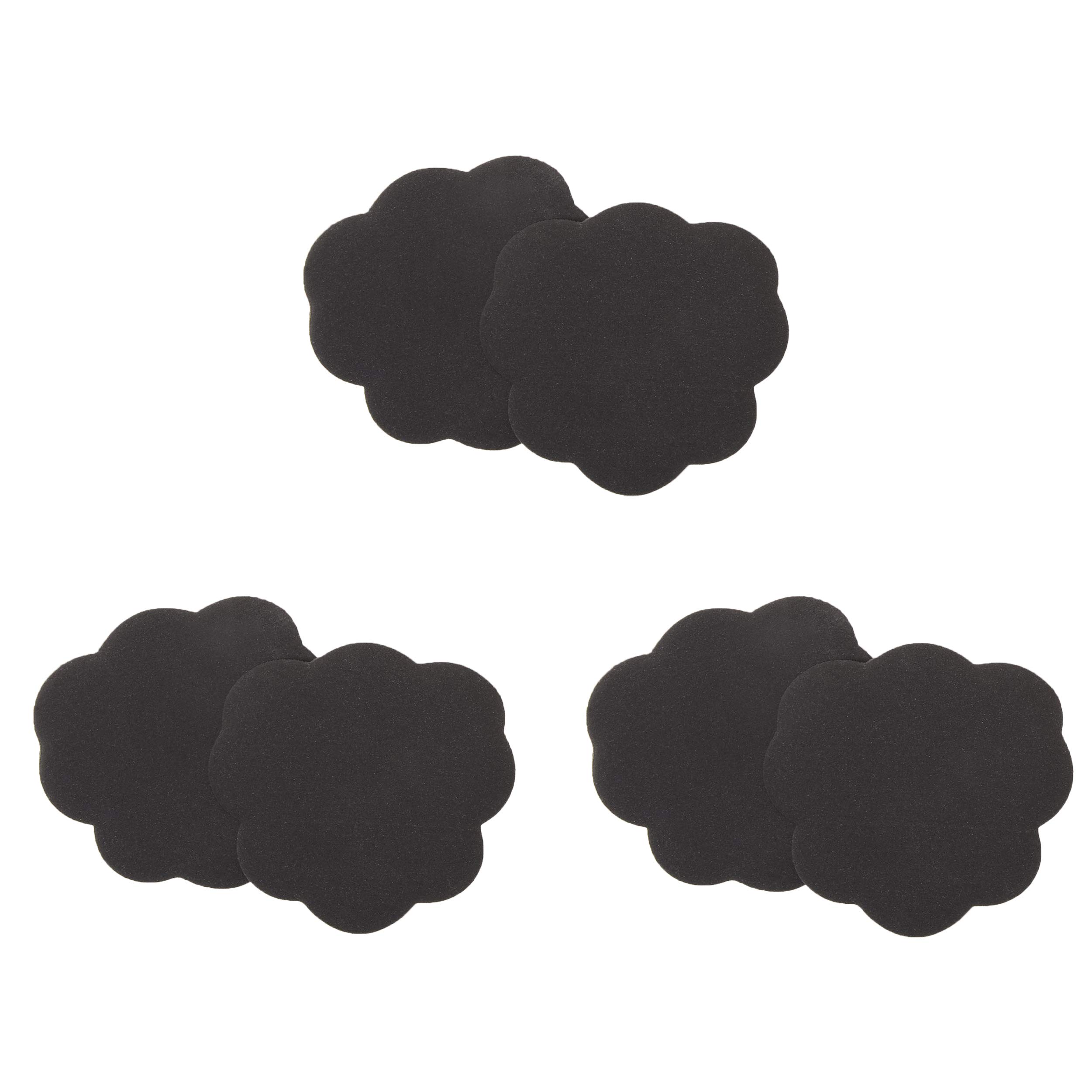
The Foot Petals cushion is essentially a non-slip forefoot pad that stops your foot from sliding forward in heels while providing a thin layer of metatarsal cushion. It is not a structural orthotic—it is a comfort accessory that works exceptionally well for toe creepage in platform sandals and high heels. The adhesive backing is tenacious, staying put in the shoe through hours of standing and walking without peeling at the edges.
Users consistently praise the cushion for eliminating the forward slide that jams toes against the shoe’s toe cap. The material is a proprietary gel-like compound that feels denser than foam but thinner than silicone pads. One frequent complaint is the shape: it is asymmetrical and somewhat tricky to align perfectly inside a cramped toe box, and the scalloped edge version is no longer manufactured.
If your primary issue is sliding forward in heels rather than nerve compression under the ball, this is the most targeted fix available. The cushion alone will not correct metatarsalgia or neuroma, but it will reduce the shearing force that exacerbates those conditions.
Why it’s great
- Effectively stops foot sliding in high heels
- Thin, unnoticeable profile inside shoes
- Strong adhesive stays put long-term
Good to know
- Shape can be difficult to align in narrow shoes
- Not designed for structural metatarsal support
- Odd shape may create blister points in tight toe boxes
7. Temiart 18-Pack Felt Pads

The Temiart 18-pack offers a low-cost entry into ball-of-foot cushioning. Each pad is 1/4-inch thick wool felt with a strong adhesive backing. The felt material is soft and provides gentle pressure relief, making it suitable for users who need a temporary solution or who want to outfit multiple pairs of shoes without committing to a single expensive orthotic. The 18-count allows for frequent replacement, which is necessary because felt compresses noticeably within a few days of wear.
Customer reviews reveal a split experience: some find immediate relief from neuroma pain when the pad is correctly positioned behind the metatarsal heads, while others report the pad shifting or the adhesive leaving sticky residue. Placing the pad on the shoe’s insole rather than directly on the foot avoids the skin-irritation issue some users experienced with the strong glue. The pads work best as a trial tool to confirm whether metatarsal cushioning helps your specific pain pattern before investing in a premium orthotic.
For the price, this is an acceptable risk-free test kit. It does not offer the durability or structural lift of leather or rigid shell designs, but it confirms whether your pain location responds to pressure offloading at the forefoot.
Why it’s great
- Large 18-count pack covers multiple shoes
- Soft felt provides gentle initial relief
- Low cost to test met pad effectiveness
Good to know
- Felt compresses quickly and flattens within days
- Adhesive can irritate skin when applied directly
- Not a long-term solution for structural foot issues
FAQ
How do I know if my ball of foot pain is from metatarsalgia or Morton’s neuroma?
Can I wear metatarsal pads in sandals or open-back shoes?
Why do my metatarsal pads shift out of place during the day?
Final Thoughts: The Verdict
For most users, the ball of foot pain insoles winner is the PowerStep Pulse Plus Met because its rigid polypropylene shell and precisely positioned met pad provide lasting structural relief for both neuroma and metatarsalgia across high-mileage activities. If you need a thin profile for dress shoes, the Pedag Holiday 3/4 Orthotic offers decade-long durability in a natural leather construction. And for targeted sandal-friendly support without bulk, the Pedag T-Form leather pads deliver anatomically shaped, long-lasting offloading that stays put through daily wear.