
Our readers keep the lights on and the weekend projects moving. As an Amazon Associate, I earn from qualifying purchases.
Most bottles labeled “balsamic” are thin, sharp, and cut with sugar syrup. Real balsamic vinegar from Italy is a different ingredient entirely — dense, sweet-tart, and complex from years in oak. The difference between a mass-market condiment and a century-old craft staple comes down to the region, the aging, and the certification printed on the label.
I’m Rikta — the co-founder and writer behind FitlyFast. I’ve spent years analyzing artisan food imports, drilling into the production methods, grape varietals, and certification standards that separate authentic Modena balsamico from imitations.
Here is a curated guide to the balsamic vinegar from italy that actually delivers the thick body, layered fruit, and balanced acidity the category is famous for.
How To Choose The Best Balsamic Vinegar From Italy
The balsamic aisle is crowded with bottles that look alike but taste nothing alike. The key to picking a real Italian balsamic is learning to read past the label art and into the production method and certification mark.
PGI vs. DOP Certification
PGI (Protected Geographical Indication, or IGP in Italian) guarantees the vinegar was produced in Modena or Reggio Emilia using cooked grape must and aged at least 12 months. DOP (Protected Designation of Origin) is a stricter tier requiring minimum 12 years of barrel aging. For everyday cooking and dressing, a quality PGI balsamic is the sweet spot. DOP bottles are reserved for finishing drizzles.
Ingredient List: Grape Must Comes First
Authentic balsamic vinegar lists “cooked grape must” as the first or only ingredient alongside wine vinegar. If you see caramel color, thickeners (corn starch, guar gum), or sugar syrup early in the list, you are buying a flavored imitation, not a traditional product. The density and natural sweetness should come from the concentrated juice of Trebbiano or Lambrusco grapes, not additives.
Viscosity and Aging Clues
Real aged balsamic coats the inside of the bottle slowly and leaves a visible trail. A watery consistency usually indicates young vinegar with minimal barrel time. Look for language like “barrel aged,” “invecchiato,” or a specific year statement (12-year, 18-year) to gauge depth. The aroma should carry cooked fruit, wood, and a balanced sour-sweet bouquet — not a single note of sharp acidity.
Quick Comparison
On smaller screens, swipe sideways to see the full table.
| Model | Category | Best For | Key Spec | Amazon |
|---|---|---|---|---|
| Due Vittorie Oro Gold 500ml | PGI Modena | Everyday drizzle & gift giving | 6% acidity, durmast oak aged | Amazon |
| Villa Manodori | Premium Artisan | Finishing touch & gifting | Thick, elegant body | Amazon |
| Chef Jean Pierre’s 18-Yr | Long Aged | Complex flavor for dressings | 18-year barrel aged, fig notes | Amazon |
| Giusti Il Classico | PGI Modena | Versatile gourmet cooking | 2 Gold Medal recipe, mixed wood barrels | Amazon |
| Calivirgin Original | Barrel Aged | Thick syrup for drizzling | Up to 18-year barrel aging | Amazon |
| Due Vittorie Oro Gold 250ml | PGI Modena | Entry-level premium starter | Built-in pourer, smooth 6% acid | Amazon |
| Alessi White Reduction | Balsamic Glaze | Syrupy topping for fruits & dessert | Reduction with cane sugar, no thickeners | Amazon |
In‑Depth Reviews
1. Due Vittorie Oro Gold Balsamic Vinegar of Modena (500ml)

The larger 500 ml bottle of Due Vittorie Oro Gold delivers the same PGI-certified Modena balsamic that consistently earns top marks from the Consortium of Modena. It spends significant time in durmast oak barrels, which imparts a deep amber color and a velvety body that clings to the side of the bottle. The acidity is balanced at 6%, noticeably smoother than supermarket standards, and the aftertaste carries a distinct black-cherry note that signals quality aging.
Customers consistently describe this as their go-to balsamic for daily use — salads, marinades, and drizzling over grilled vegetables. The bottle design includes a precision spout that reduces sticky residue on the neck, a small but meaningful detail for regular use. The thickness is often compared to a reduction without the additives, meaning you get natural density from the concentrated grape must alone.
At this volume, the per-ounce value is strong for a premium PGI bottle. It is versatile enough for cooking yet refined enough for finishing. If you want one bottle that covers both weekday salads and weekend dinner parties, this is the most balanced pick on the list.
Why it’s great
- Highest PGI score from the Consortium of Modena
- Thick, syrupy consistency without added thickeners
- Generous 500 ml size at a competitive per-ounce value
- Non-drip pourer keeps the bottle clean
Good to know
- Smaller 250 ml version is available for those who want to try first
- Not DOP certified — it is a PGI entry into the premium tier
2. Villa Manodori Balsamic Vinegar

Villa Manodori is the bottle that many seasoned home cooks describe as “the best I’ve found.” It has a notably thick consistency out of the bottle — closer to a syrup than a standard vinegar — and a flavor profile that balances tart and sweet without any cloying sugar rush. The viscosity is dense enough that a little goes a long way, making the smaller bottle last longer than the volume suggests.
Reviewers frequently note that this vinegar eliminates the need for olive oil on salads because the flavor alone is complex enough to carry the dish. The aroma is rich and fruity, and the acidity never overwhelms. It is produced in Modena and has become a cult favorite among specialty food enthusiasts for its consistent quality.
This is a finishing vinegar, not a cooking vinegar. Use it for drizzling over Parmigiano-Reggiano, fresh strawberries, or aged meats. The packaging is understated and elegant, making it a natural gift for food-lovers. If you want a single bottle that can stand alone without any other dressing ingredients, this is the standout choice.
Why it’s great
- Extremely thick, syrupy body — almost a glaze
- Balanced sweet-tart flavor that works solo on salads
- Small batch artisan production with consistent quality
Good to know
- Premium-priced; not a budget cooking vinegar
- Smaller 8.5 oz bottle goes fast if used generously
3. Chef Jean Pierre’s 18-Year Barrel Aged Balsamic Vinegar
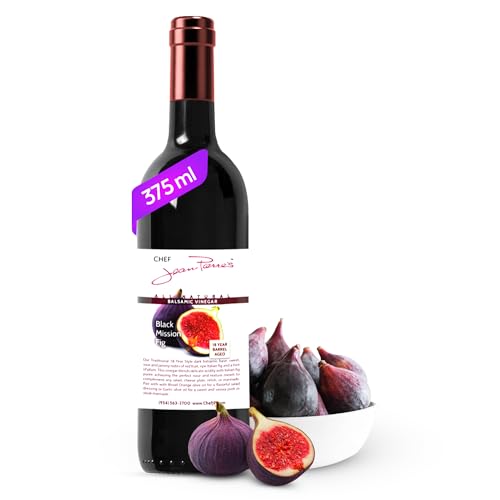
Chef Jean Pierre’s balsamic is aged for 18 years and infused with Black Mission fig, giving it a distinct sweet-and-savory profile that standard balsamics lack. The aging process softens the acidity dramatically, resulting in a very smooth, almost dessert-like vinegar that works beautifully on fresh greens, grilled peaches, or vanilla ice cream. The fig notes are prominent but not artificial — they blend naturally with the cooked grape must.
Customers describe the consistency as surprisingly liquid for an 18-year aged product — it is not as syrupy as some DOP vinegars, which makes it easier to use as a vinaigrette base. The 12.5 oz bottle is larger than most artisan bottles, and the taste is sweet enough to replace honey or balsamic glaze in recipes. It is 100% natural with no additives, relying purely on the long barrel time for complexity.
This is an excellent choice for home cooks who want a truly aged balsamic at a mid-premium price point without jumping into DOP territory. The fig infusion offers a twist that sets it apart from traditional Modena bottles. If you want a unique flavor profile that works equally well on savory and sweet dishes, this is the bottle to grab.
Why it’s great
- 18-year barrel aging delivers deep, mellow flavor
- Natural fig infusion adds sweet complexity
- Versatile across salads, marinades, and desserts
- No artificial additives or thickeners
Good to know
- Not PGI or DOP certified — artisan production
- Liquid consistency may surprise those used to thick glazes
4. Giusti Balsamic Vinegar of Modena IGP – Il Classico

Giusti has been making balsamic in Modena since 1605 — 17 generations of the same family recipe. The Il Classico is their IGP-certified entry point, refined in a mix of family barrels made from different woods (oak, chestnut, cherry, juniper) that layer complex aromas of ripe fruit, licorice, and black pepper. The texture is glossy and coats the tongue well, with a sweet-sour balance that customers describe as “perfectly non-acidic.”
Reviewers often mention that this balsamic tastes good enough to drink like an aperitif, which speaks to the smoothness of the profile. It is equally at home on Parmesan chunks, mixed into a vinaigrette, or drizzled over roasted white meats. The bottle is elegant and the labeling clearly states the IGP certification, so there is no guessing about origin.
Giusti is a reliable daily-driver bottle that brings centuries of craft without the DOP price tag. If you want a balsamic with history, balance, and a cult following among Italian food purists, this is the one. It outperforms many bottles at twice the price in blind taste tests.
Why it’s great
- 17 generations of family balsamic tradition
- Aged in mixed wood barrels for layered complexity
- Gold Medal recipe — smooth, non-acidic profile
- Versatile across cooking and finishing uses
Good to know
- Some may prefer a thicker reduction body
- 8.45 oz bottle is standard single-user size
5. Calivirgin Original Balsamic Vinegar – Traditional

Calivirgin’s original balsamic is barrel-aged for up to 18 years using traditional Modenese methods, yet it sits at a mid-range price point that undercuts many competitors. The result is a balsamic with a thick, velvety body and a sweet-tart balance that customers consistently compare to high-end bottles they’ve bought directly in Italy. The texture is noticeably denser than supermarket balsamics, giving it a luxurious mouthfeel.
Customers who use Calivirgin long-term describe it as their “refill size” staple — they come back to it bottle after bottle. The flavor works across applications: drizzle over caprese, stir into marinades, or finish a roasted vegetable platter. The 8.5 oz bottle is compact but the thickness means you use less per serving compared to watery commercial vinegars.
For the budget-conscious cook who refuses to compromise on texture, Calivirgin offers the best thickness-to-price ratio on this list. It is not PGI-certified, which keeps costs down, but the production method and grape sourcing are transparently Modenese. If you want a thick, aged body without paying for the PGI label, this is your bottle.
Why it’s great
- Up to 18-year traditional barrel aging
- Thick, syrupy texture rivals high-end Modena bottles
- Excellent value for the level of viscosity
Good to know
- Not PGI or DOP certified
- Smaller 8.5 oz bottle may need frequent reordering
6. Due Vittorie Oro Gold Balsamic Vinegar of Modena (250ml)
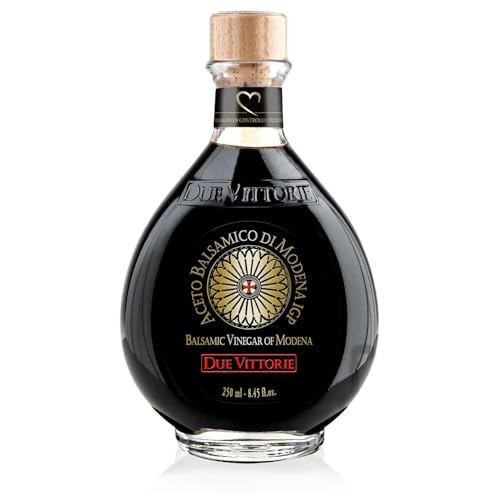
The smaller 250 ml version of Due Vittorie Oro Gold is the same high-scoring PGI balsamic that became the best-selling balsamic in Italy. It offers the same smooth 6% acidity, the same durmast oak aging, and the same black-cherry finish — just in a more compact bottle. The built-in pourer is a standout feature that prevents the sticky ring of dried balsamic around the neck, a minor annoyance that many heavy users will appreciate.
Customers praise the full-bodied sweetness that lacks the harsh vinegar bite of cheaper alternatives. It works well on rustic salads, drizzled over grilled steak, or as a simple dip for crusty bread. The IGP certification is clearly printed, so you know it is produced and bottled in the Modena region. The price for the 250 ml version is lower, making it an approachable entry into premium PGI balsamic.
This is the best option for first-time premium buyers or those with limited kitchen space. It is also a popular gift item when paired with good olive oil. If the 500 ml bottle feels like a commitment you are not ready for, start here and taste the difference yourself.
Why it’s great
- Best-selling balsamic in Italy with proven quality
- PGI certified with full traceability to Modena
- Convenient built-in pourer prevents sticky neck drips
- Smooth 6% acidity is approachable for all palates
Good to know
- 250 ml is a starter size; heavy users will want the 500 ml
- Thickness is moderate — not as syrupy as DOP
7. Alessi Balsamic Vinegar Reduction – White Balsamic (Pack of 6)
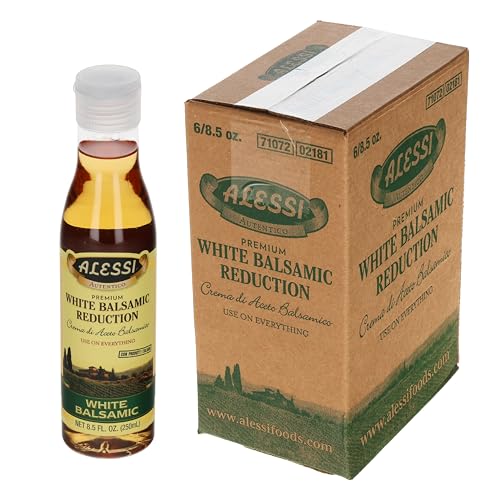
Alessi’s white balsamic reduction is a different beast from traditional dark balsamics. It is made by naturally reducing balsamic vinegar with pure cane sugar until it reaches a syrupy consistency, with no added thickeners, starches, or gums. The flavor is tart yet sweet — ideal for applications where the dark color of standard balsamic would clash with the presentation, such as over vanilla ice cream, grilled peaches, feta cheese, or cheesecake.
The pack of six 8.5 oz bottles is intended for high-volume kitchens or anyone who wants a reliable white balsamic glaze always on hand. Customers love it on caprese salads and roasted vegetables, and the sweet-tart profile works well as a marinade base for chicken or fish. The viscosity is consistent without being gummy, and the pourer allows precise drizzling.
This is not a traditional Modena balsamic — it is a reduction concentrate designed for glazes and dessert work. If you want a pantry-stable sweet balsamic syrup for fruit, cheese plates, and white dishes, the multi-pack value makes this an economical buy. Keep a bottle on hand for last-minute entertaining.
Why it’s great
- True reduction — no gums or starches
- White color works on light-colored dishes and desserts
- 6-bottle pack offers pantry-stable value
- Versatile across sweet and savory uses
Good to know
- Not a traditional PGI balsamic — it is a sweet reduction
- Added cane sugar means higher sweetness than aged balsamic
FAQ
What does PGI certification mean for balsamic vinegar?
Why is Italian balsamic vinegar thicker than grocery store vinegar?
Final Thoughts: The Verdict
For most users, the balsamic vinegar from italy winner is the Due Vittorie Oro Gold 500 ml because it delivers PGI-certified Modena quality, a thick natural body, and a smooth cherry finish at a per-ounce rate that outperforms smaller bottles. If you want a thick finishing vinegar that can stand alone on a salad, grab the Villa Manodori. And for an aged bottle with a unique fig twist that works across sweet and savory dishes, nothing beats the Chef Jean Pierre 18-Year.