
Our readers keep the lights on and the weekend projects moving. As an Amazon Associate, I earn from qualifying purchases.
Cutting aluminum on a band saw with the wrong blade gives you ragged edges, wasted time, and snapped blades. You need a blade that handles aluminum’s soft, gummy nature without clogging or grabbing, while still leaving a clean finish. This guide compares six proven band saw blades built for aluminum, using published specs and real customer feedback, so you can choose the right one for your saw and your work.
I’m Rikta — the co-founder and writer behind FitlyFast. This guide is built by comparing the manufacturers’ published specifications and the patterns across verified customer reviews, so you get each pick’s real strengths and trade-offs instead of marketing spin.
Every blade reviewed here is a bi-metal or cobalt blade designed specifically for non-ferrous metals (metals that do not contain iron). You can trust the recommendations to handle aluminum sheet, tube, or solid bar. This is our guide to the best band saw blade for aluminum.
How To Choose The Best Band Saw Blade For Aluminum
Picking the right blade for aluminum comes down to three things: the number of teeth per inch (TPI, the number of cutting edges in each inch of blade), the blade material, and making sure it physically fits your saw. Here is what each one means for your cuts.
Tooth Count (TPI) Matters More Than Anything Else
For aluminum, you want a higher TPI than you might expect — generally 10 to 18 teeth per inch. Aluminum is a softer metal, so a higher tooth count means each tooth takes a smaller bite. That prevents the blade from grabbing and tearing the material. A coarser blade (like 6 TPI) can work for thicker solid blocks. But for sheet metal or thin-walled tubing, 10/14 or 14/18 variable pitch blades (blades where the spacing between teeth changes slightly to reduce vibration) give you a smoother, chatter-free finish.
Bi-Metal vs. Cobalt Steel
Almost all good aluminum blades are bi-metal. That means a high-speed steel tooth edge is welded to a flexible spring-steel back. This construction resists breaking when you push the blade through a cut. Stepping up to M42 cobalt steel adds 8% cobalt to the tooth edge. That makes it harder and more heat-resistant — a real advantage if you are cutting a lot of aluminum or running at higher speeds without coolant (a liquid used to cool the blade and workpiece).
Blade Width, Thickness, and Length
Your saw determines the maximum width and length you can use. Wider blades (3/4 inch) provide straighter cuts and are best for larger vertical band saws. Narrower blades (1/2 inch) are better for portable band saws and cutting curves. Thicker blades (0.035 inch) are stiffer and resist bending. But they also require more tension. Always match the exact length (inches exactly, like 93.5″ or 44.875″) to your saw’s specifications. One wrong inch and the blade will not fit.
Quick Comparison
On smaller screens, swipe sideways to see the full table.
| Model | Category | Best For | Key Spec | Amazon |
|---|---|---|---|---|
| Morse Master Cobalt | Premium | Portable saws, rebar | 44 7/8″ x 0.020″ thick | Amazon |
| Imachinist M42 56.5″ | Value | Thick square tubing | 6/10 TPI, 0.025″ thick | Amazon |
| Imachinist M42 93.5″ | Mid-Range | Vertical saws, thick aluminum | 10/14 TPI, M42 grade | Amazon |
| POWERTEC 93″ Bi-Metal | Premium | Non-ferrous, 3/4″ wide | 0.035″ thick, M42 steel | Amazon |
| Bosch CBS1418 | Value | Portable saws, trades | 28-7/8″ x 14-18 TPI | Amazon |
| Lenox Classic Tuff Tooth | Premium | Production, hard metals | 93″ x 0.75″ x 0.035″ | Amazon |
In‑Depth Reviews
1. Morse Master Cobalt Bi-Metal Portable Band Saw Blade (44 7/8″ x 14/18 TPI)
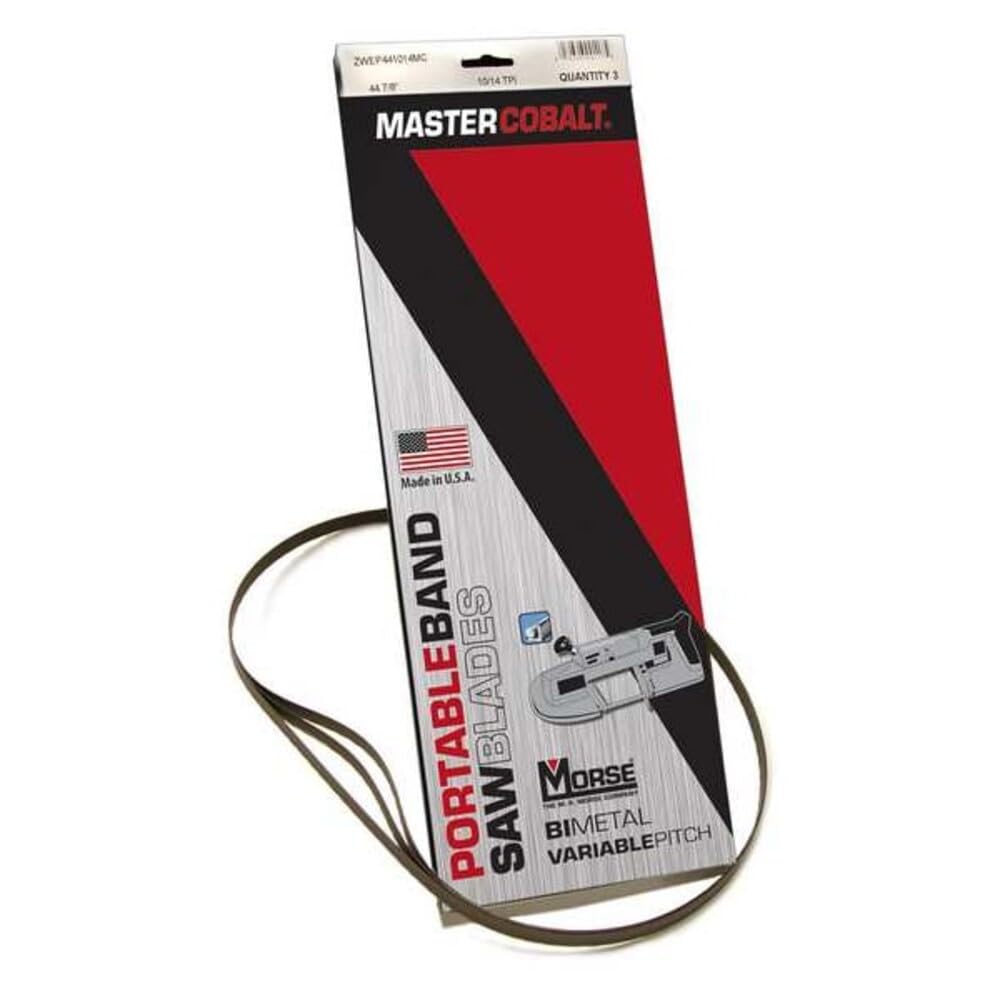
44 7/8″ x 14/18 TPI: the cobalt bi-metal blade that fits nearly every standard portable band saw and is built for anyone who cuts aluminum conduit, angle iron, or rebar on the go. The cobalt edge (a harder, more heat-resistant alloy) stays sharp much longer than standard bi-metal on aluminum, and its 14/18 variable TPI reduces vibration, giving you a smooth finish even on thin aluminum sheet — the kind of steady cut that stops your hand from tiring during long trimming jobs.
Buyers report that this blade “cuts 3/4 inch rebar like butter,” and the clean cut left the metal cool to the touch — a sign the 0.020-inch thin blade (75% thinner than the Lenox 0.035-inch blade) is slicing rather than rubbing the aluminum away. Three blades come in the box, so you have backups ready for the next job without reordering.
The catch is that the thin 0.020-inch blade is more prone to snapping under heavy twisting force than thicker options like the POWERTEC 93’s 0.035-inch blade. This is unavoidable for a portable saw. If you cut aluminum conduit, angle iron, or rebar with a portable band saw, this is the balanced, proven choice.
Why it’s great
- Cobalt edge stays sharp much longer than standard bi-metal blades on aluminum
- Variable tooth pitch (14/18 TPI) reduces vibration and gives a clean finish
- Made in the USA with a trusted brand history
Good to know
- Thin 0.020-inch profile can snap if you bind the saw in the cut
- Fits only portable band saws with a 44 7/8-inch blade length
2. Imachinist M42 56-1/2″ Bi-Metal Band Saw Blade (6/10 TPI)

Compared to the top-pick Morse Master (14/18 TPI), the Imachinist M42 uses a 6/10 variable TPI — a 2.3x coarser cut — which creates larger gullets to eject swarf from thick aluminum bars and tubing. One reviewer noted it “completed 60 cuts on 2 x 2 x 0.250 inch square tubing” before the blade broke at the weld, which owners mention is a solid return for the price.
With a 0.025-inch thickness and 8% cobalt content in the M42 steel (the same cobalt grade used in premium blades), this blade resists heat buildup when cutting aluminum at moderate speeds. The variable tooth pattern helps it handle both solid bar and thin-walled tube without grabbing, so customers note you get a decent surface finish across mixed workpieces. Reviewers also mention the seller replaced a broken blade promptly — the kind of service that softens the sting of any early break.
The downside is reliability: multiple reviewers point out the blade can break at the weld joint after 10 hours of use, even with careful handling. For the price, buyers see it as a fair trade. Choose this over the top pick only if you accept replacing it four or five times a year; if you want a blade that lasts longer on a vertical saw, the Imachinist M42 93.5″ (review #3) is just 2 inches longer and more reliable on thicker stock.
Where it shines
- Very affordable per-blade cost for a M42 cobalt steel blade
- 6/10 TPI clears chips fast in thick aluminum and tube
- Good surface finish for the price, according to users
Worth noting
- Weld joint can break earlier than premium blades
- Not ideal for thin sheet aluminum because of the coarser tooth spacing
3. Imachinist M42 93-1/2″ Bi-Metal Band Saw Blade (10/14 TPI)

If you own a 14-inch vertical band saw and work through 1-inch thick aluminum solid bars, this 93.5-inch blade is the right length — it is 65% longer than the 56.5-inch Imachinist blade and fits the most common full-size vertical saws. The 10/14 variable TPI (teeth per inch alternating between 10 and 14) is a middle ground that handles both thick aluminum blocks and curved cuts on tubing without vibrating your workpiece loose.
Shoppers say that this blade “cuts 1″ thick aluminum very easily” and stays cool after 40 inches of cutting, which confirms the M42 cobalt edge is doing its job of shedding heat. One reviewer put it through over 2,000 parts in 6061 extruded aluminum (a common alloy) without dulling — a sign of real durability for repeated production cuts. The manufacturer recommends 300–800 surface feet per minute (SFPM) for non-ferrous metals, so you have a clear speed target to aim for.
The 0.025-inch thickness and 1/2-inch width mean it is less stiff than wider blades like the 0.75-inch POWERTEC, so you may notice slight drift on very long cuts. If you primarily cut thick plates and demand dead-straight lines, the POWERTEC’s 50% wider blade is a better option. But for a 93.5-inch blade that survives over 2,000 aluminum parts without dulling, the M42 cobalt edge is the standout spec that keeps production running.
What stands out
- 10/14 TPI is versatile for both thick bars and tubing
- Stays sharp for thousands of cuts in 6061 aluminum, per users
- Runs cool at recommended SFPM speeds
The trade-offs
- Only 1/2-inch wide, so cuts can wander on heavy stock
- Dulled quickly on sand-cast aluminum, according to one reviewer
4. POWERTEC 93″ Bi-Metal Band Saw Blade (3/4″ x 10/14 TPI)

0.75 inches is the width that matters most here, and this POWERTEC blade scores a full 50% wider than the 0.5-inch Imachinist blades, resisting bending in thick aluminum plate and delivering dead-straight lines without constant fence adjustments. Its 0.035-inch thickness adds further stiffness — especially useful when you are feeding a 1/4-inch thick aluminum plate by hand.
The trade-off is that this blade only fits saws accepting 93-inch by 3/4-inch blades. It also demands you know your saw’s exact blade length before ordering — one wrong measurement and the return is a hassle. Buyers report this blade “cut a 1/4-in thick aluminum plate” cleanly and did not load up with cold weld (aluminum stuck to the teeth) — the main problem with cheap blades on soft metals. The M42 cobalt edge and high-performance weld joint mean it stays sharp through multiple projects.
At the mid-to-premium price point, you are paying for stiffness and longevity rather than exotic materials — a price-to-value read that favors anyone with a Delta, Jet, or similar 14-inch saw who cuts moderate volumes of aluminum sheet or plate, giving you the steadiest cut in this price range, sharper on thick plate than the Imachinist 93.5″ because it is 50% wider and resists deflection better.
The upsides
- 3/4-inch width provides very straight, drift-free cuts on plate
- M42 cobalt edge resists heat and stays sharp on non-ferrous metals
- Users report clean cuts on aluminum without clogging
Keep in mind
- Only fits saws that take 93″ x 3/4″ blades — measure twice
- Not ideal for portable band saws or cutting tight curves
5. Bosch CBS1418 3-Piece Portable Band Saw Blade (28-7/8″ x 14-18 TPI)

For the price of a single premium blade, you get three Bosch blades in this pack — each one a 28-7/8-inch length designed for compact portable band saws. The 14-18 variable TPI (teeth per inch alternating between 14 and 18) is the finest tooth spacing here, meaning it leaves the smoothest edge on thin aluminum tube and conduit without snagging or tearing the material.
What you give up is raw durability in heavy-duty cuts: the 0.2-ounce blades are light and meant for general-purpose portable saw work, not production runs on thick aluminum bar. A professional electrician reports these “outperform Hilti” and that they last through “hundreds of conduit cuts after months” before needing replacement. Bosch claims their advanced bonding technology delivers 3x the life of standard blades, and user reviews generally back that claim for moderate use.
This is the blade for electricians, plumbers, and anyone doing frequent, smaller cuts on aluminum conduit or thin stock with a portable band saw. The three-blade pack means you always have a fresh blade ready when the current one dulls. If you need to cut thick solid bars, the Morse Master’s cobalt edge or the Imachinist 93.5″ will handle the larger loads better.
Why we’d pick it
- Three blades in one pack gives great per-blade value
- 14-18 TPI produces a very smooth finish on thin aluminum
- Users in the trades report long life on conduit and pipe
A few caveats
- Short 28-7/8″ length only fits compact portable band saws
- Some users note blades can snap under high twisting stress
6. Lenox Classic Tuff Tooth Band Saw Blade (93″ x 3/4″ x 18 TPI)
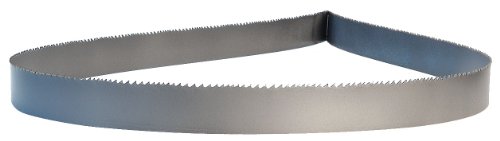
This Lenox blade is perfect for a professional metalworker or high-volume fabrication shop that cuts aluminum daily and demands maximum blade life from every single blade. The Tuff Tooth design (a tooth geometry designed by Lenox) reduces tooth breakage on abrasive materials. The M42 high-speed steel edge resists heat better than standard bi-metal. At 18 TPI (teeth per inch), it is the finest tooth count here, ideal for thin aluminum sheet and tube where you want a razor-smooth edge with no burrs (rough metal edges left after cutting).
What that money gets you: a 0.75-inch wide blade that is 50% wider than the 0.5-inch Imachinist blades, providing straighter cuts on plate without wander. It also has a 0.035-inch thickness (75% thicker than the Morse Master) that resists deflection under heavy tension. Users report it “stays sharp for a really long time” even cutting train track and high-carbon billets for knife making, so aluminum is easy work for it. The wavy tooth set prevents stripping on thin workpieces, meaning you can cut thin-walled aluminum tube without worrying about snapping teeth.
The one reason to choose this over everything else is longevity in a production or heavy-use shop. If you cut aluminum every day and need a blade that stays sharp through hundreds of cuts without constant blade changes, this Lenox will outlast the cheaper options by a wide margin and save you money in the long run. Just be aware that it is overkill if you only cut aluminum occasionally.
Strong points
- Tuff Tooth design resists tooth breakage on thin stock
- 18 TPI delivers a very smooth finish on thin aluminum
- 3/4-inch width and 0.035-inch thickness give excellent cut straightness
Before you buy
- Higher upfront cost than most other blades in this guide
- 18 TPI is too fine for thick solid aluminum bars
Understanding the Specs
Teeth Per Inch (TPI)
TPI is the most important number for cutting aluminum. A higher TPI (10 to 18) means more teeth contact the metal at once, producing a smoother cut with less vibration. Use 14-18 TPI for thin sheet or tube (like aluminum conduit) and 6-10 TPI for solid bar where you need to clear chips quickly. Variable pitch blades (like 10/14 TPI) alternate between two spacing patterns to reduce chatter across mixed stock.
Blade Material: M42 Cobalt vs Bi-Metal
Most aluminum blades are bi-metal: a high-speed steel cutting edge welded to a flexible steel back. M42 cobalt is a grade of bi-metal with 8% cobalt added, making the cutting edge harder and more heat-resistant. For moderate aluminum cutting, standard bi-metal works fine. For heavy production cuts or dry cutting (no coolant, or liquid used to cool the blade and workpiece), the M42 cobalt edge stays sharp significantly longer and resists the heat that wears down standard edges.
FAQ
Can I use a regular wood-cutting band saw blade on aluminum?
What TPI should I use for cutting 1/4-inch aluminum plate?
Do I need cutting fluid or lubricant when cutting aluminum with a band saw?
Final Thoughts: The Verdict
When it comes down to it, the band saw blade for aluminum winner is the Morse Master Cobalt because it delivers the best balance of cut quality, durability, and value in a portable saw-friendly package. If you want the straightest cuts on a vertical saw, grab the POWERTEC 93. And for budget-friendly versatility on a full-size saw, the Imachinist M42 93.5 inch blade gives you the best value for mixed cutting.