
Our readers keep the lights on and the weekend projects moving. As an Amazon Associate, I earn from qualifying purchases.
A blister on the bottom of your foot can turn a morning walk into an ordeal. Standard adhesive bandages fail here — they peel off within minutes, offer no meaningful cushion, and do nothing to speed healing. You need a bandage engineered for the high-friction, high-moisture environment of the sole.
I’m Rikta — the founder and writer behind FitlyFast. I’ve spent years analyzing wound-care materials, comparing hydrocolloid absorption rates, and testing how well different adhesive backings stay put on the plantar surface.
After reviewing dozens of options, I’ve narrowed the field to seven that actually work. Read on for my complete analysis of the current market for a bandage for bottom of foot that can survive a full day in sneakers.
How To Choose The Best Bandage For Bottom Of Foot
The bottom of your foot is a uniquely demanding surface. It bears your full weight, bends with every step, rubs against socks and shoes, and sweats more than almost any other area. A bandage that works on your finger or elbow will fail here unless it meets three specific requirements.
Hydrocolloid Construction Is Non-Negotiable
Traditional woven bandages offer zero cushion and their adhesive strips loosen as soon as moisture hits them. Hydrocolloid gel bandages form a thick, flexible pad that absorbs wound fluid, creates a moist healing environment, and stays sealed against water. For the sole, only hydrocolloid has the durability and cushioning needed.
Adhesion Strength That Survives Shear Forces
Every step creates shear — the sideways drag between your skin and your sock. A bandage for the bottom of the foot needs an aggressive adhesive that grips calloused and smooth skin alike. Look for products specifically described as waterproof, water-resistant, or designed for high-activity use. Edges curling is a common complaint; the best options use a full-surface gel adhesive rather than perimeter tape.
Cushion Thickness and Shape Variety
Blisters and cuts on the ball of the foot, the heel, and the arch experience different pressure points. A good kit includes multiple shapes — ellipse, strip, heel-specific — so you can match the pad shape to the wounded area. Thicker padding (around 2-3mm when dry) provides the shock absorption needed to walk without pain.
Quick Comparison
On smaller screens, swipe sideways to see the full table.
| Model | Category | Best For | Key Spec | Amazon |
|---|---|---|---|---|
| Medtecs Hydrocolloid Gel | Hydrocolloid | Long-lasting adhesion on blisters | Ellipse x20 + Strip x10 sizes | Amazon |
| BAND-AID Pro Heal 5 Day | Hydrocolloid | 5-day continuous protection | Ultra-thin clear hydrocolloid | Amazon |
| Welnove Gel Blister | Hydrocolloid | Extra cushion on high-friction areas | 25% more cushioning per pad | Amazon |
| Spenco 2nd Skin Blister Kit | Hydrogel Pad | Immediate cooling pain relief | Wet hydrogel + adhesive knit | Amazon |
| Dr. Scholl’s Corn Removers | Medicated | Corns and hard callus removal | Salicylic acid + Duragel cushion | Amazon |
| Promifun Hydrocolloid | Hydrocolloid | Heavy activity and travel use | 32-count variety pack | Amazon |
| Dr. Frederick’s SoftStick | Hydrocolloid | Theme parks and all-day wear | Doctor-developed gentle adhesive | Amazon |
In‑Depth Reviews
1. Medtecs Hydrocolloid Gel Bandage
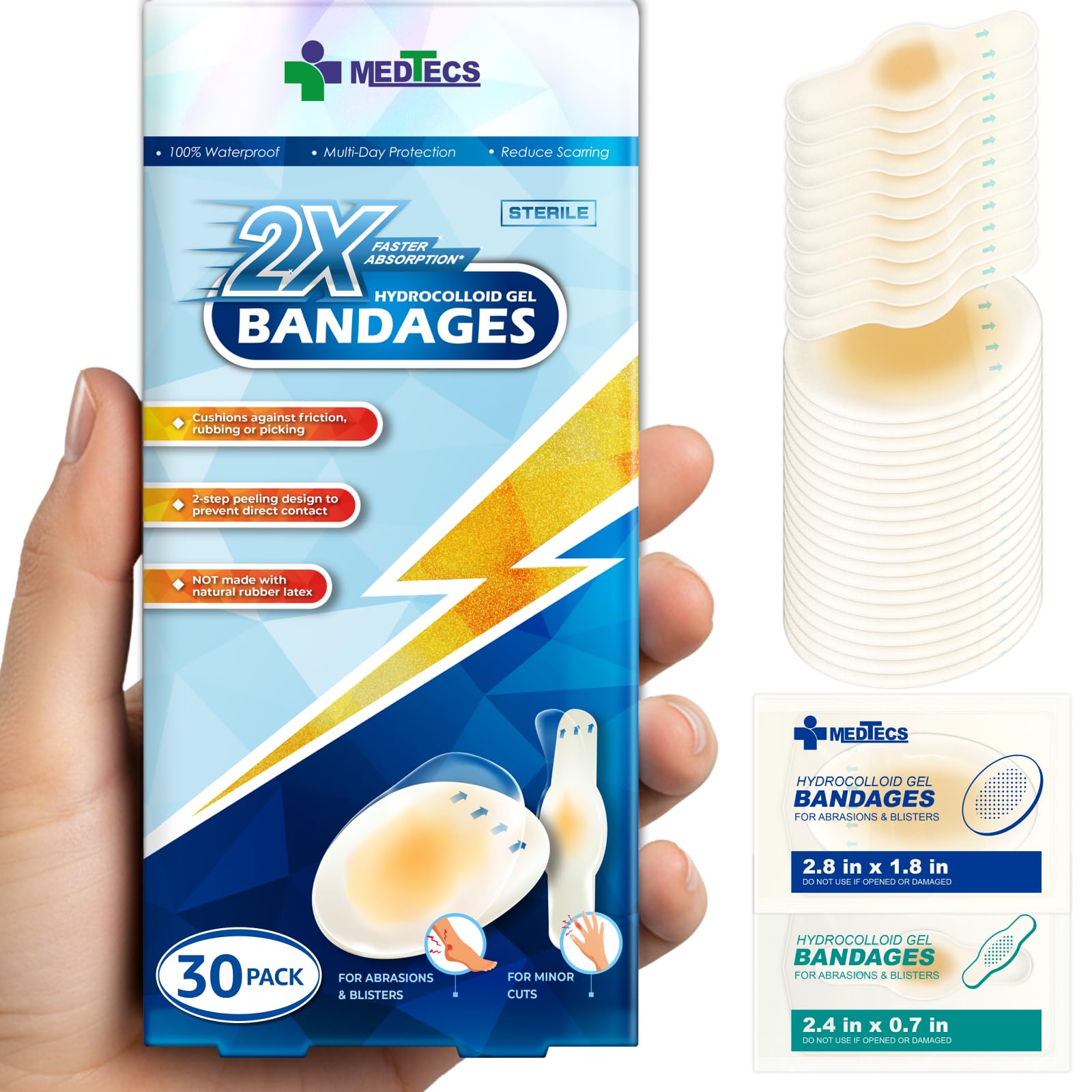
The Medtecs Hydrocolloid Gel Bandage is the strongest overall option for the bottom of the foot. The hydrocolloid pad absorbs wound fluid at roughly double the rate of standard gel bandages, creating a thick, white cushion as it works. Users consistently report that these stay put for multiple days, even through showers and sweaty walks, which is precisely what a plantar blister requires.
The kit includes twenty ellipse-shaped bandages for small hot spots and ten strips for larger heel or arch injuries. The ellipse shape is excellent for the ball of the foot — it conforms without bunching. Adhesion is aggressive; reviewers note that edges can curl on very calloused skin, but a quick press-down after putting on socks solves that issue.
One area to watch: the hydrocolloid pad is noticeably thicker than ultra-thin competitors like the BAND-AID Pro Heal. This extra thickness provides superior shock absorption, but it also creates a slight ridge inside a tight shoe. If you plan to wear snug-fit sneakers, size up the ellipse version rather than the strip.
Why it’s great
- Twice the absorption power of standard hydrocolloid bandages
- Multiple-day adhesion even during showers and intensive activity
- Versatile two-size kit covers both small spots and larger heel blisters
Good to know
- Thicker pad may create a visible ridge under thin socks or tight shoes
- Adhesive can curl on very dry or calloused plantar skin
2. BAND-AID Pro Heal 5 Day Protect
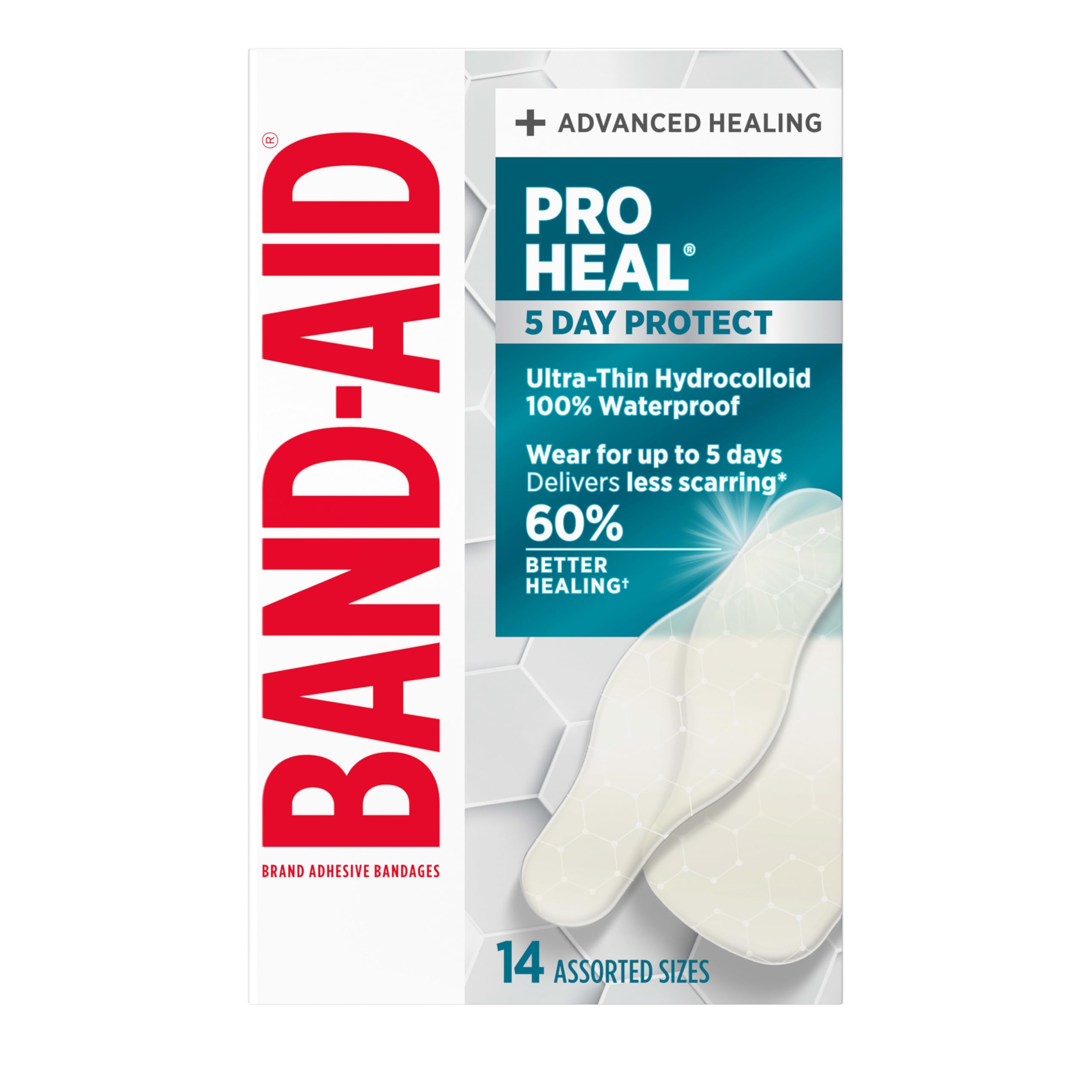
BAND-AID’s Pro Heal line represents a meaningful upgrade from their standard fabric bandages. The ultra-thin hydrocolloid layer is barely visible under sheer socks, yet it provides the same moist-healing environment as thicker pads. Clinical testing referenced by the manufacturer indicates 60% better healing and less scarring versus leaving a wound uncovered.
The stand-out feature is the five-day wear claim. Real-world use backs this up: multiple reviewers describe the bandage staying intact through hand-washing, showering, and multiple walking days. The clear, flexible material moves with the foot rather than resisting, which reduces the shear that causes edge peeling on the arch and heel.
Removal can be uncomfortable. The adhesive is extremely strong — a positive for staying power — but for those with sensitive skin, pulling it off after five days can irritate. The pack includes assorted sizes, but lacks a dedicated extra-large option for covering a large heel blister in one piece.
Why it’s great
- Ultra-thin profile fits discreetly under dress socks and tight shoes
- Clinically shown to heal faster and reduce scarring
- Stays fully sealed for up to five days on active feet
Good to know
- Strong adhesive can cause pain or irritation during removal on sensitive skin
- No extra-large heel-specific size in the assorted pack
3. Welnove Gel Blister Bandages

Welnove’s blister pads deliver 25% more cushioning than comparable products on the market. That extra thickness translates directly to comfort on the bottom of the foot, where every step compresses the bandage against the shoe sole. The hydrocolloid gel is soft and flexes naturally with the arch and ball of the foot.
The variety pack includes four distinct shapes — a smart approach for covering different injury locations. The stickers are highly adhesive without leaving a sticky residue, a pain point that many other hydrocolloid brands struggle with. Reviewers specifically highlight their success on kids with orthotics who develop constant plantar blisters; the bandages stayed on through basketball practice.
Despite the strong adhesion, some users report that the edges start peeling within a few hours if the bandage is applied to smooth, uncalloused skin. Pressing firmly for a full sixty seconds before putting on a sock resolves this. The pads are also water-resistant rather than fully waterproof, so prolonged submersion may weaken the seal.
Why it’s great
- Thicker cushion absorbs more impact than standard hydrocolloid pads
- Latex-free and residue-free removal
- Four shapes allow precise fit for heel, toe, arch, and ball
Good to know
- Water-resistant but not fully waterproof for swimming or long showers
- Edges may require extra pressing to adhere to smooth non-calloused skin
4. Spenco 2nd Skin Blister Kit Sports

The Spenco 2nd Skin is not a traditional hydrocolloid bandage — it uses a wet hydrogel pad combined with an adhesive knit tape overlay. The gel pad is saturated and provides an immediate cooling sensation on hot, painful blisters. This makes it the best choice for immediate pain relief right when a blister forms on a long walk or hike.
The two-part system is clever: the hydrogel pad sits directly on the wound, staying moist, while the separate adhesive knit tape holds everything in place. This allows you to replace just the knit tape if it loses adhesion without disturbing the healing blister. Long-distance walkers and hikers rely on this product specifically because the wet cushion prevents the blister from tearing open.
The downside is that the separate tape does not re-adhere well once wet. If you sweat heavily or step in a puddle, the knit tape may slide off. The kit works best on dry skin with minimal moisture underneath. Keep the white plastic backing on the gel pad to reduce moisture absorption if you expect wet conditions.
Why it’s great
- Cooling hydrogel provides almost instant pain relief on new blisters
- Two-piece system lets you replace tape without removing the gel pad
- Proven favorite for long-distance hikers and ultramarathon runners
Good to know
- Adhesive knit tape loses grip when wet; not suitable for sweaty conditions
- Requires occasional re-taping; not a single-application overnight solution
5. Dr. Scholl’s Corn Removers Seal & Heal

This is a medicated bandage specifically designed for corns and hard calluses on the foot, not for standard blisters. The active ingredient is salicylic acid, which gradually dissolves the hardened corn tissue. The surrounding hydrocolloid-like Duragel pad provides cushioning to reduce shoe pressure on the area.
The Seal & Heal bandage is thin and flexible enough to fit between toes or on the ball of the foot without creating bulk. Users with stubborn plantar corns report visible reduction in corn size after just two to three applications, typically over the course of a week. The water-resistant outer layer keeps the medication sealed against the corn for multiple days.
Be aware that the medicated nature of this product means it should only be used on actual corns or calluses — applying it to a raw blister or open cut will cause stinging. Some users noted that the adhesive has become weaker in recent production batches, requiring athletic tape to keep the pad in place for a full 24 hours. If you need a medicated corn remover, this is the strongest option, but check the batch date.
Why it’s great
- Salicylic acid effectively dissolves hard corns within several applications
- Thin, flexible pad fits easily in tight shoe spaces
- Duragel cushion provides all-day pressure relief on tender spots
Good to know
- Not for open wounds or raw blisters; medicated acid can sting
- Recent batches show weaker adhesion; may need tape reinforcement
6. Promifun Hydrocolloid Gel Blister Bandages

Promifun’s blister bandages pack thirty-two individually wrapped hydrocolloid pads into one box, making it the strongest overall value for travelers who want to be prepared. The pads come in four shapes — heel, toe, foot, and finger — with the foot pad being large enough to cover most plantar arch or ball of foot injuries in a single application.
The hydrocolloid technology here is advertised to heal blisters 20% faster than standard bandages, and the cushioning is noticeably plush. The adhesive backing is described as “50% longer lasting” than normal bandages, and user reports confirm that these survived European walking tours — cobblestone streets, long museum lines, and sweaty summer heat — without peeling off.
One limitation: the adhesion, while strong, degrades after about five to six hours of intense friction, such as running on pavement. For casual walking and daily wear, these are excellent. For marathon training, you may need to swap mid-run. The individual wrappers are a practical bonus for tossing into a daypack or purse.
Why it’s great
- Large 32-count pack with four shapes covers all common foot injury types
- Individually wrapped units are convenient for travel and on-the-go use
- Strong adhesion survived multiple days of heavy walking and sweaty conditions
Good to know
- Adhesion limit of around 5-6 hours under extreme running friction
- Not the best option for marathon-level training without mid-run replacement
7. Dr. Frederick’s Original SoftStick Blister Bandages
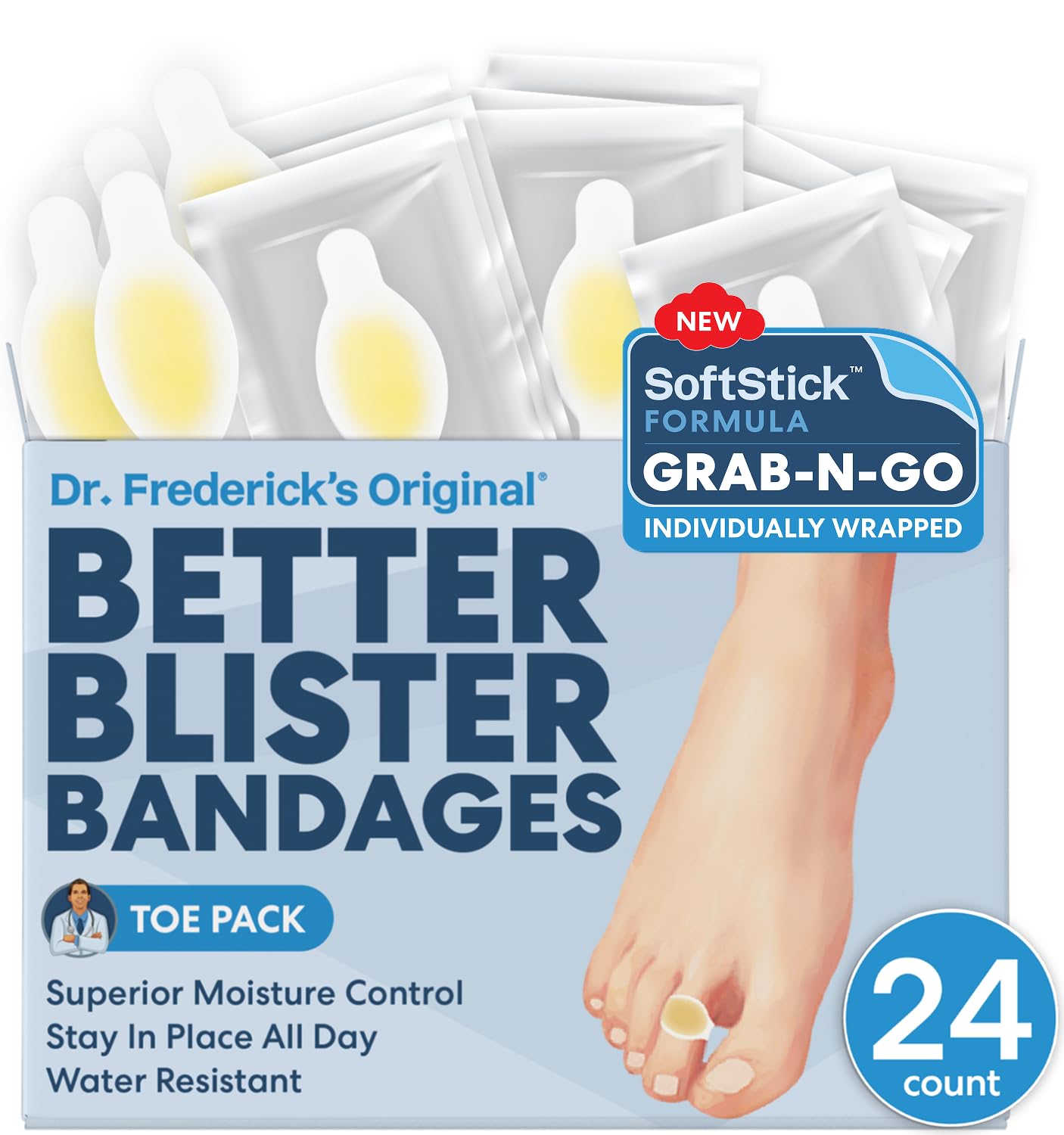
Dr. Frederick’s SoftStick bandages are a doctor-developed alternative to mainstream drugstore brands, designed specifically for people who spend all day on their feet. The hydrocolloid pad is extra soft, and the adhesive formula is engineered to grip strongly but release without tearing sensitive skin — a common complaint with other blister bandages.
The kit comes in a heel, toe, or spot-size configuration, with a variety pack available that includes all three. Users who tested these at Disney theme parks — a notorious blister factory — report that the bandages saved their trip, staying on through 12-hour walking days. The water-resistant barrier also holds up well in sweaty dance classes and long hikes.
The trade-off is that the softer adhesive, while gentler on removal, can allow edges to curl in extreme heat or heavy sweat. Several reviewers mention that applying a thin strip of medical tape over the edges fixes this issue entirely. The individually wrapped packs are convenient, but the bandages are small for the price; you get 24 pads versus the 32-count Promifun pack at a similar price point.
Why it’s great
- Gentle adhesive formula reduces pain during removal for sensitive skin
- Proven performance during all-day walking at amusement parks and hikes
- Doctor-developed with a satisfaction guarantee and pledge policy
Good to know
- Edges may lift in extreme heat or heavy sweat; tape overlay recommended
- Higher cost per pad compared to larger-count variety packs
FAQ
How often should I change a hydrocolloid bandage on the bottom of my foot?
Can I use a regular fabric bandage on a plantar blister?
Why do my bandages keep curling at the edges on the heel of my foot?
Can I use medicated corn removers on a blister on the bottom of my foot?
Final Thoughts: The Verdict
For most users, the bandage for bottom of foot winner is the Medtecs Hydrocolloid Gel Bandage because it combines the strongest multiday adhesion with a two-size kit that fits both small blisters and larger heel wounds. If you want ultra-thin discretion and proven faster healing stats, grab the BAND-AID Pro Heal 5 Day. And for heavy travelers who want a 32-count variety pack to prepare for anything, nothing beats the Promifun Hydrocolloid Pack.