
Our readers keep the lights on and the weekend projects moving. As an Amazon Associate, I earn from qualifying purchases.
Ripping a dry bandage off an open wound is a specific kind of agony you only experience once before you start demanding non-stick performance. Whether you are managing a post-surgical incision, a heavy-draining pressure ulcer, or a skin tear on fragile elderly skin, the wrong dressing can undo healing progress and introduce unnecessary pain. The market is flooded with gauze pads that look interchangeable, but the real difference lies in the core construction — sealed edges, absorbent wicking, and a true non-adherent interface that keeps granulating tissue intact.
I’m Rikta — the co-founder and writer behind FitlyFast. I have analyzed hundreds of wound care product listings, parsing technical specifications and patient reviews to identify which dressings actually perform under real-world conditions, not just marketing copy.
This guide breaks down the seven most reliable dressings for open wound management, comparing absorbency, size options, and sterility protocols so you can confidently select the best bandage for open wound care without the guesswork.
How To Choose The Best Bandage For Open Wound
Selecting a dressing for an open wound is fundamentally different from picking a simple adhesive bandage for a paper cut. Open wounds have exposed tissue that needs a moist, protected environment to heal, and the wrong material can cause reinjury during changes. Focus on three core factors: the dressing’s interface with the wound, its absorption capacity relative to drainage, and the sterility of the packaging.
Non-Adherent Layer: The First Priority
The single most important feature is a non-stick surface that contacts the wound bed. Look for materials like petrolatum-impregnated gauze (Xeroform), non-woven cellulose pads with a sealed facing, or silicone-coated interfaces. A dressing that fuses to granulation tissue will tear new cells away with every change, stalling recovery. Products labeled “non-adherent,” “non-stick,” or “Telfa-type” are your starting point.
Absorbency and Size Match
Match the pad’s absorbency to your wound’s exudate level. Lightly draining wounds need a thin non-adherent pad like Dynarex 3×4. Moderate to heavy drainage calls for a thick ABD pad with a super-absorbent core (5×9 or 8×10 inches). Using an undersized pad leads to strike-through and contamination; an oversized pad wastes material and creates bulky, uncomfortable dressing changes. Measure the wound and add at least one inch of overlap on all sides.
Quick Comparison
On smaller screens, swipe sideways to see the full table.
| Model | Category | Best For | Key Spec | Amazon |
|---|---|---|---|---|
| McKesson Sterile ABD 8×10 | Premium ABD | Large heavy-drainage post-op wounds | Sealed edge, lint-free, 48 pack | Amazon |
| HEALQU Bordered Gauze 4×10 | Bordered Dressing | Self-adhering coverage without tape | Water-resistant border, 2×7.5 pad | Amazon |
| Carbou Xeroform Petrolatum 4×4 | Petrolatum Gauze | Burns, skin grafts, fragile skin | 3% Bismuth Tribromophenate, 25 pack | Amazon |
| CareStock ABD 8×10 [48-Pack] | Mid-Range ABD | Pressure ulcers, value ABD coverage | Super-absorbent core, sealed edges | Amazon |
| Dynarex Non-Adherent 3×4 | Non-Stick Pad | Low-drainage wounds, sensitive skin | 100 count, individually wrapped | Amazon |
| CareStock ABD 5×9 [40-Pack] | Budget ABD | Post-surgery, medium drainage | Lint-free, 40 individually wrapped | Amazon |
| Medline Non-Stick ABD 5×9 | Value ABD | Basic wound management, caregiver use | Non-woven cellulose, 25 count | Amazon |
In‑Depth Reviews
1. McKesson Sterile ABD Pads 8 x 10 in [48 Count]
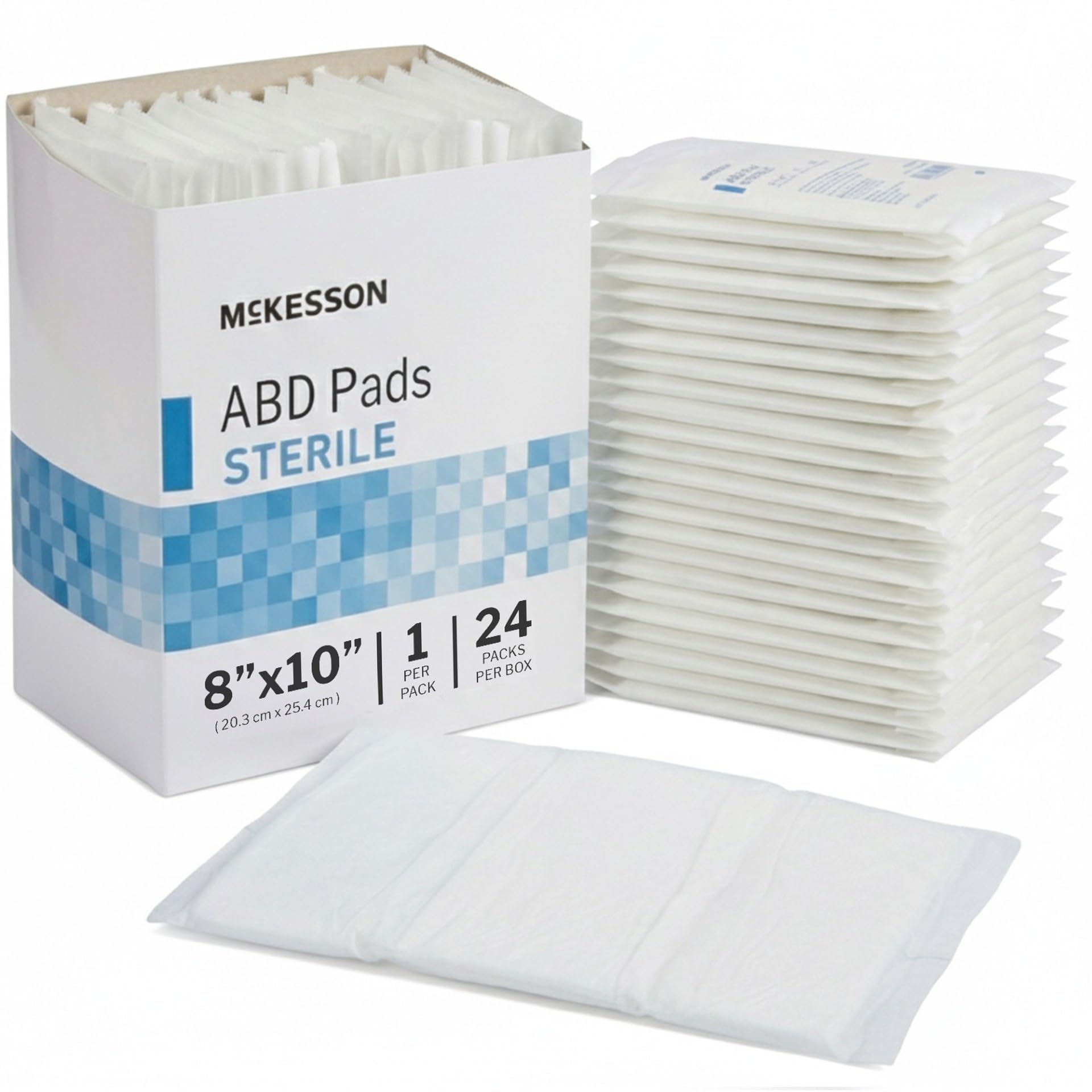
McKesson delivers a hospital-grade ABD pad that excels in the most demanding scenarios — large surgical incisions, trauma sites, and wounds producing heavy exudate. The 8×10 inch footprint provides generous overlap for incisions up to 12 inches, and the sealed edge design prevents the lateral leakage that ruins bed linens and secondary dressings. The inner cellulose core wicks fluid away from the wound bed rapidly while the soft non-woven exterior stays lint-free, reducing the risk of fiber adhesion to granulating tissue.
Users managing abdominal surgery recovery consistently praise these pads for their cushioning under binders and their ability to stay in place without bunching. The sterile, individually wrapped packaging ensures each pad maintains its integrity until the moment of application, which is critical for infection prevention in open wound care. At 48 count, this pack covers frequent changes without running out mid-week.
Clinical reviewers note that while these pads are thick and protective, they lack a built-in adhesive border, so you will need medical tape or a wrap to secure them. For caregivers seeking a reliable, large-format ABD that handles high drainage without shedding, McKesson stands as the premium standard.
Why it’s great
- Extra-large 8×10 size covers big incisions
- Sealed edges stop fluid migration
- Lint-free exterior protects healing tissue
Good to know
- Requires separate tape or wrap to secure
- Premium tier pricing per pad
2. HEALQU Bordered Gauze Island Dressing 4×10 [30 Pack]
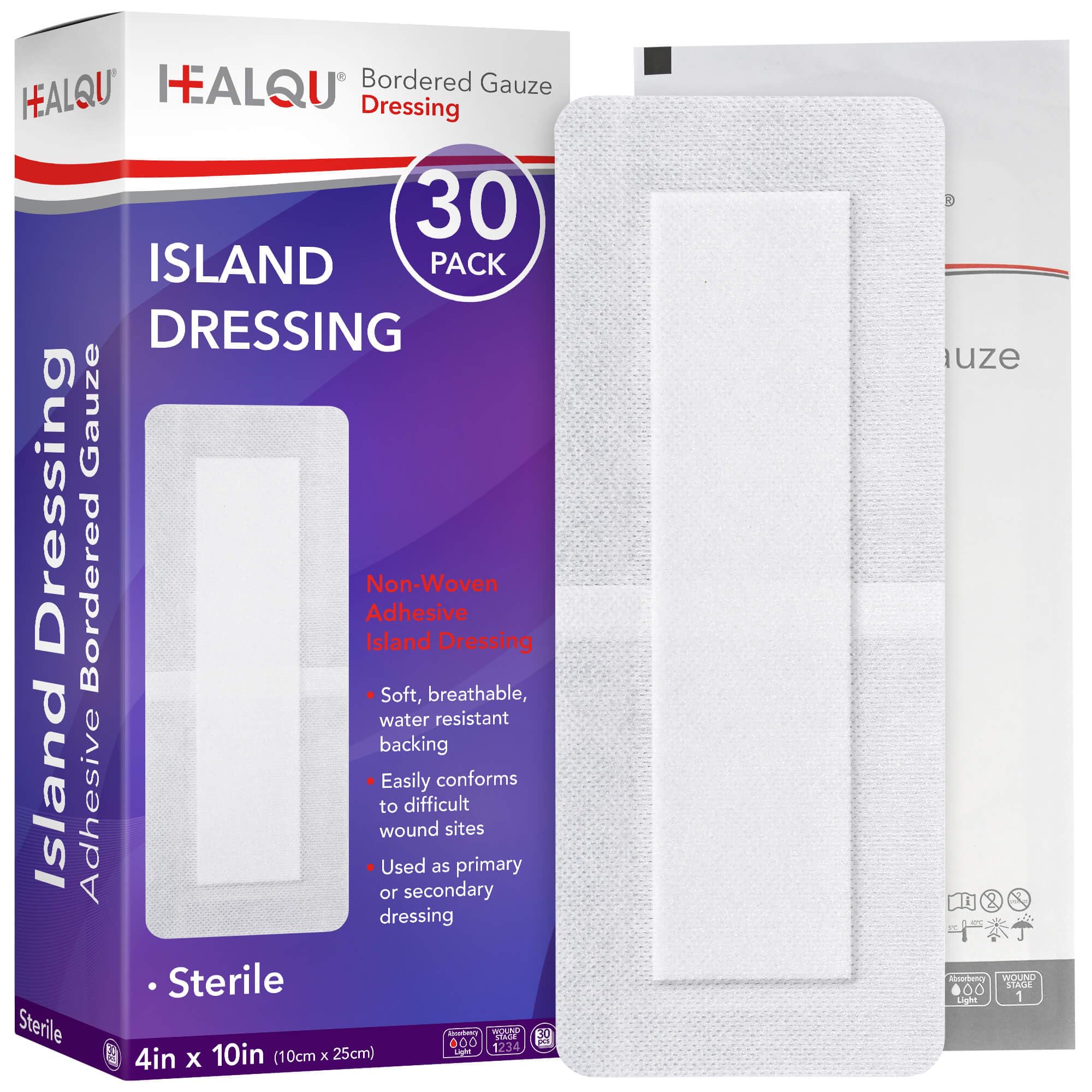
HEALQU’s bordered island dressing solves the common frustration of applying ABD pads that require precise taping. The 4×10 inch outer layer features a water-resistant, non-woven backing with a perimeter adhesive that sticks to intact skin without pulling on the wound bed. The central absorption pad (2×7.5 inches) sits off the wound, making this an ideal choice for long surgical incisions, chest tube sites, and abdominal closures where you want protection without the hassle of separate tape.
The adhesive holds firmly for at least 24 hours according to verified users, yet removes cleanly without tearing fragile skin — a critical factor for elderly patients or those on long-term steroid therapy. The island design also prevents the dressing from curling at the edges, a problem common with standard gauze and tape combos. Users recovering from major surgery report that these dressings simplify daily changes and reduce caregiver time.
One trade-off: the built-in border means the pad size is fixed, so you cannot trim it smaller without losing the adhesive seal. For wounds that need a custom shape, a traditional ABD with separate tape remains more flexible. But for convenience and security, this is the top self-contained dressing on the list.
Why it’s great
- Adhesive border eliminates need for tape
- Water-resistant backing protects from external moisture
- Removes cleanly from delicate skin
Good to know
- Border adhesive may loosen after day two
- Not suitable for custom-cut applications
3. Carbou Xeroform Petrolatum Dressing 4×4 [25 Pack]
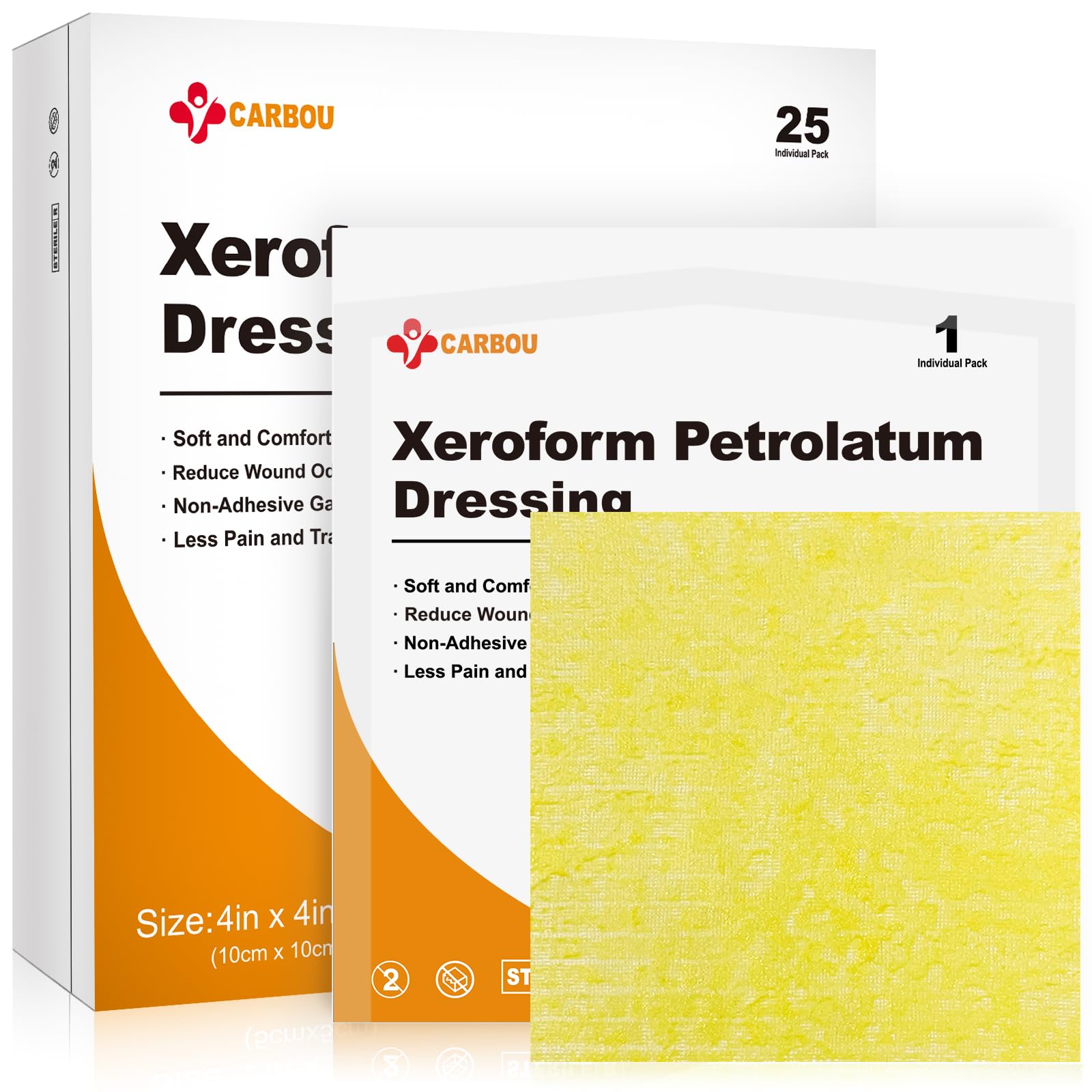
For wounds where even the softest non-woven pad feels abrasive — skin grafts, donor sites, second-degree burns, and fragile elderly skin — Carbou’s Xeroform dressing is the gold standard. The fine mesh gauze is impregnated with petrolatum and 3% Bismuth Tribromophenate, creating a greasy, non-adherent barrier that slides against the wound bed without sticking. Petrolatum also maintains a moist healing environment that reduces scab formation and pain during changes.
Users treating burns and skin tears consistently highlight that these pads prevent the dressing from fusing to the wound, dramatically lowering the trauma of removal. The 4×4 inch size is versatile enough for most moderate-size wounds, and the mesh can be cut with sterile scissors to match irregular shapes. The bismuth component also helps mask wound odor, a useful feature for chronic ulcers.
The compromise: petrolatum dressings require a secondary absorbent layer on top because the mesh itself has minimal fluid capacity. For heavy drainage, you will need to pair this with an ABD pad. Additionally, users report that the dressing may dry out within 24 hours in high-airflow conditions, necessitating more frequent changes than hydrocolloid alternatives.
Why it’s great
- Genuinely non-stick even on granulating tissue
- Petrolatum maintains moist wound environment
- Reduces odor from chronic wounds
Good to know
- Requires secondary absorbent dressing on top
- Can dry out within 24 hours
4. CareStock Abdominal Pads 8×10 in [48-Pack]
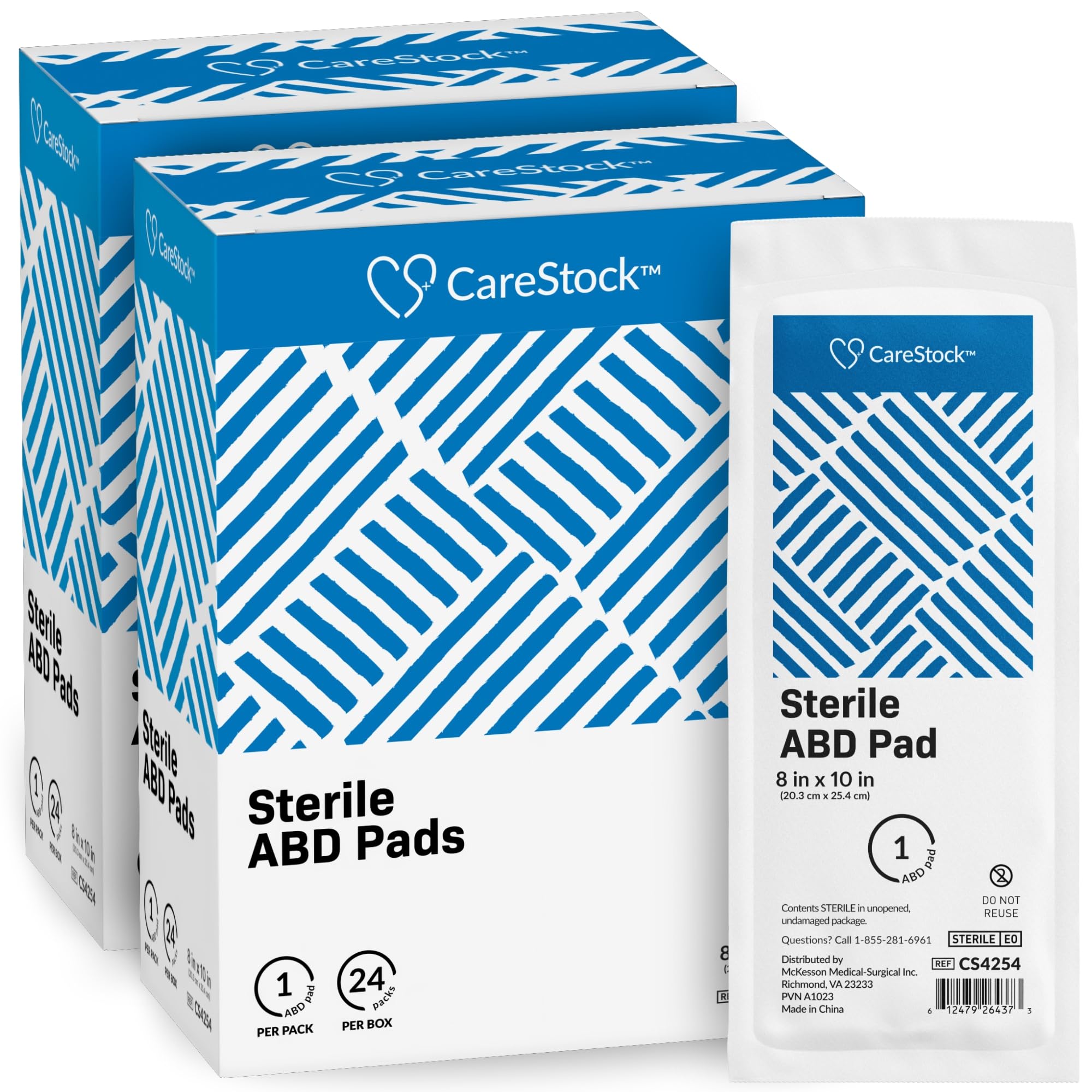
CareStock’s 8×10 ABD pads offer a mid-range price point with performance that rivals premium competitors. The super-absorbent core effectively wicks heavy drainage away from the wound, while the sealed edges prevent the side leakage that compromises secondary dressings. Users managing pressure ulcers and high-output surgical sites report that these pads maintain a dry wound interface for hours longer than generic bulk gauze.
The pads arrive individually wrapped and sterile, which is a non-negotiable feature for open wound care. Reviewers consistently note that the material remains soft and flexible despite its thickness, conforming well to body contours without creating pressure points. The lint-free construction means no loose fibers contaminate the wound bed during changes.
Where CareStock falls slightly short of the McKesson equivalent is in the overall density of the absorbent core — it is slightly less robust under heavy saturation. For wounds with extremely high output, the premium tier pad will outperform. However, for the majority of medium-to-heavy drainage scenarios, this pack delivers exceptional value per pad.
Why it’s great
- Absorbent core handles moderate to heavy drainage
- Sealed edges prevent fluid strike-through
- Excellent cost per pad in 48-count pack
Good to know
- Less dense core than premium ABD brands
- No adhesive border for self-securing
5. Dynarex Non-Adherent Pads 3×4 [100 Pack]

Dynarex’s non-adherent pads are the essential lightweight dressing for wounds with minimal drainage — superficial abrasions, suture lines after stitch removal, and sensitive areas like the face or joint creases. The 3×4 inch pad has a special facing on both sides that resists sticking to exudate, making it ideal for patients with hidradenitis suppurativa or fragile skin who need frequent dressing changes without pain.
Each pad is individually wrapped and sterile, a convenience that allows you to carry a few in a travel bag without compromising hygiene. Users with chronic skin conditions praise the latex-free construction, which eliminates allergic reactions that can complicate wound healing. The pad is also cuttable with scissors, allowing custom shapes for awkward wound locations.
The limitation is absorbency — these pads are designed for light exudate only. If your wound produces moderate fluid, the pad will saturate quickly and require a secondary layer. Some users also note that the pad is less soft than the branded Telfa version, though still effective for its intended low-drainage use case.
Why it’s great
- True non-stick interface on both sides
- Latex-free safe for allergies
- Large 100-count box for frequent changes
Good to know
- Low absorbency — not for heavy drainage
- Less flexible than branded Telfa alternatives
6. CareStock Abdominal Pads 5×9 [40-Pack]
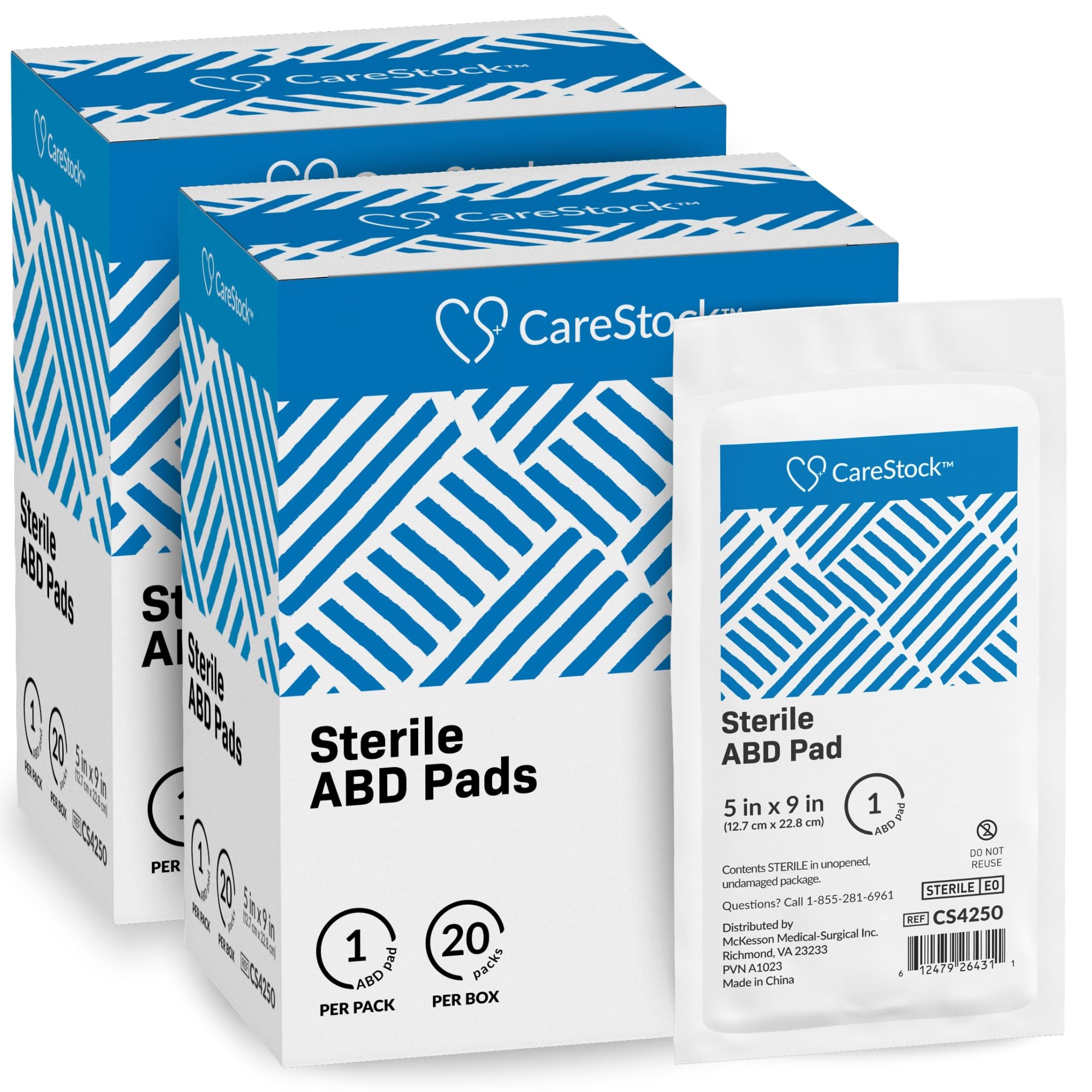
CareStock’s smaller 5×9 pad is the most budget-conscious entry in this lineup without sacrificing the core requirements for open wound coverage — sterility, sealed edges, and a lint-free exterior. Users managing post-surgical incisions or moderate-drainage wounds report that these pads stop leakage effectively and remain comfortable under compression bandages or abdominal binders.
The 40-count pack provides a solid supply for two to three weeks of daily dressing changes, making it a practical choice for recovery periods. The individually wrapped packaging means you can open only what you need, preserving sterility for the rest. Reviewers also like that the pad can be cut to size without cotton fallout, which is common with cheaper unbranded gauze.
The core absorbency is adequate for medium output, but heavy drainage may push through faster than larger ABD options. The 5×9 size also means less overlap on larger wounds, so measure carefully before purchasing. For straightforward wound care on a tight supply budget, this is a reliable workhorse.
Why it’s great
- Very affordable per-pad cost
- Can be cut without fraying or lint
- Sterile and individually wrapped
Good to know
- 5×9 size may not cover very large wounds
- Absorbency adequate but not top-tier
7. Medline NON21450H Sterile Abdominal Pads 5×9 [25 Count]

Medline’s 5×9 sterile abdominal pad is a straightforward, no-frills option for basic wound management. The non-woven cellulose construction provides reliable absorbency for post-operative drainage and general wound care, and the rectangular shape sits flat against the body without rolling at the edges. Verified users recovering from surgery report that these pads perform exactly as expected — absorbent, non-stick to the wound, and hygienic.
The 25-count pack is a smaller volume compared to other entries, which makes it suitable for short recovery periods or as a trial size before committing to a larger supply. The pads are individually wrapped, ensuring sterility is maintained until use. Caregivers appreciate the cost efficiency compared to pharmacy pricing, noting that buying online saves significantly over local retail.
The main drawback is the lack of published details on edge sealing or specialized wicking technology. While the pads do not stick to wounds according to user reports, they lack the advanced fluid retention features that prevent lateral leakage in high-drainage situations. For light to moderate wound care where cost and simplicity are priorities, Medline covers the basics effectively.
Why it’s great
- Simple, reliable design for basic wound management
- Good cost savings vs. pharmacy pricing
- Does not stick to healing tissue
Good to know
- Smaller 25-count pack for shorter recoveries
- Less advanced fluid sealing than premium ABDs
FAQ
Can I use regular gauze directly on an open wound?
How often should I change a bandage on an open wound?
What size dressing should I use for a 4-inch surgical incision?
Final Thoughts: The Verdict
For most users, the bandage for open wound winner is the McKesson Sterile ABD 8×10 because its sealed edges, large footprint, and lint-free construction handle high-drainage post-op wounds reliably. If you want a self-contained dressing that eliminates tape, grab the HEALQU Bordered Gauze 4×10. And for burns, grafts, and fragile skin that cannot tolerate any adhesion at all, nothing beats the Carbou Xeroform Petrolatum Dressing.