
Our readers keep the lights on and the weekend projects moving. As an Amazon Associate, I earn from qualifying purchases.
Finding a bandage that stays on tender, inflamed skin without causing more pain or irritation is the central struggle for anyone managing hidradenitis suppurativa. Standard adhesive strips often tear the fragile epidermis upon removal, while gauze pads simply cannot absorb the fluid from a draining lesion without sticking to the wound bed. The right dressing must balance gentle adhesion, high absorbency, and a non-stick contact layer to support healing without adding trauma.
I’m Rikta — the founder and writer behind FitlyFast. My research focuses on analyzing medical-grade wound care materials and matching them to the unique physical demands of chronic skin conditions.
After evaluating absorbency rates, adhesive types, and material composition across the top contenders, this guide breaks down the specific dressings that work best for HS lesions. This is the definitive look at the bandages for hidradenitis suppurativa that actually perform where standard bandages fail.
How To Choose The Best Bandages For Hidradenitis Suppurativa
HS lesions vary from non-draining nodules to open, draining tunnels, so the dressing that works for one stage can be useless at another. You need to match the bandage material to the lesion’s current state. The three main categories are hydrocolloid dressings for low-exudate or early-stage spots, silicone foam dressings for moderate-to-heavy drainage, and silicone adhesive fabric bandages for covering healed or fragile skin between flares. Prioritize dressings with a non-stick central pad and a gentle adhesive border that seals around the wound without pulling on the surrounding skin during removal.
Adhesive Type and Skin Safety
Standard acrylic adhesives can cause contact dermatitis or peel away the top layer of skin on removal, especially over repeated applications. Look for silicone-based or hydrocolloid adhesives. These bond securely to the skin but lift off cleanly with minimal tugging when soaked off with warm water or oil. Avoid latex-based adhesives if you have a known allergy or sensitivity, as HS skin is already compromised. A gentle adhesive that allows repositioning is a strong signal of a skin-safe dressing.
Absorbency and Fluid Handling
The core material inside the dressing determines whether it will handle the exudate from a draining lesion or saturate through and leak. Hydrocolloid dressings form a gel when they absorb moisture, creating a seal that protects the wound but works best for light-to-moderate drainage. For heavier output, a silicone foam dressing with a super-absorbent polymer (SAP) core locks fluid away from the skin, preventing maceration and allowing longer wear times. If the central pad does not have a moisture barrier on the outer layer, the dressing will leak once saturated, which defeats the purpose of protecting your clothing and bedding.
Size and Customizability
HS lesions often appear in flexural areas like the armpit, groin, or under the breasts, where standard bandage shapes lift or roll. Consider cuttable dressings such as hydrocolloid sheets or rolls, which allow you to shape the dressing to the exact contours of the lesion. A 4×4 inch pad is a versatile size for most areas, but you may need larger bordered dressings for a cluster of adjacent lesions. Pre-cut options save time, but a roll or sheet gives you the freedom to size each dressing individually, reducing waste and ensuring full coverage.
Quick Comparison
On smaller screens, swipe sideways to see the full table.
| Model | Category | Best For | Key Spec | Amazon |
|---|---|---|---|---|
| Niceful Silicone Super Absorbent | Foam Dressing | Heavy drainage lesions | SAP core absorbs 20x its weight | Amazon |
| Dimora Hydrocolloid 4×4 | Hydrocolloid Patch | Low-drainage spots & scars | 0.5 mm thin, cuttable, lasts 7 days | Amazon |
| YOJO Silicone Foam 4×4 | Foam Dressing | Pressure areas & bedsores | Gentle silicone border, super absorbent pad | Amazon |
| Ceeport Island Dressing 4×10 | Island Dressing | Long, linear incisions | Non-stick center pad 2×8 inch | Amazon |
| CareUs Silicone Fabric Large | Fabric Bandage | Everyday fragile skin protection | Silicone adhesive, 24-hour hold | Amazon |
| Hysimedy Silicone Bandages 40ct | Fabric Bandage | High-value, sensitive skin kit | Non-stick pad, painless removal | Amazon |
| LukToMao Hydrocolloid Roll | Hydrocolloid Roll | Custom-sized dressings on a budget | 19.7 ft roll, 0.5 mm thin | Amazon |
In‑Depth Reviews
1. Niceful Silicone Super Absorbent Wound Dressing 4×4
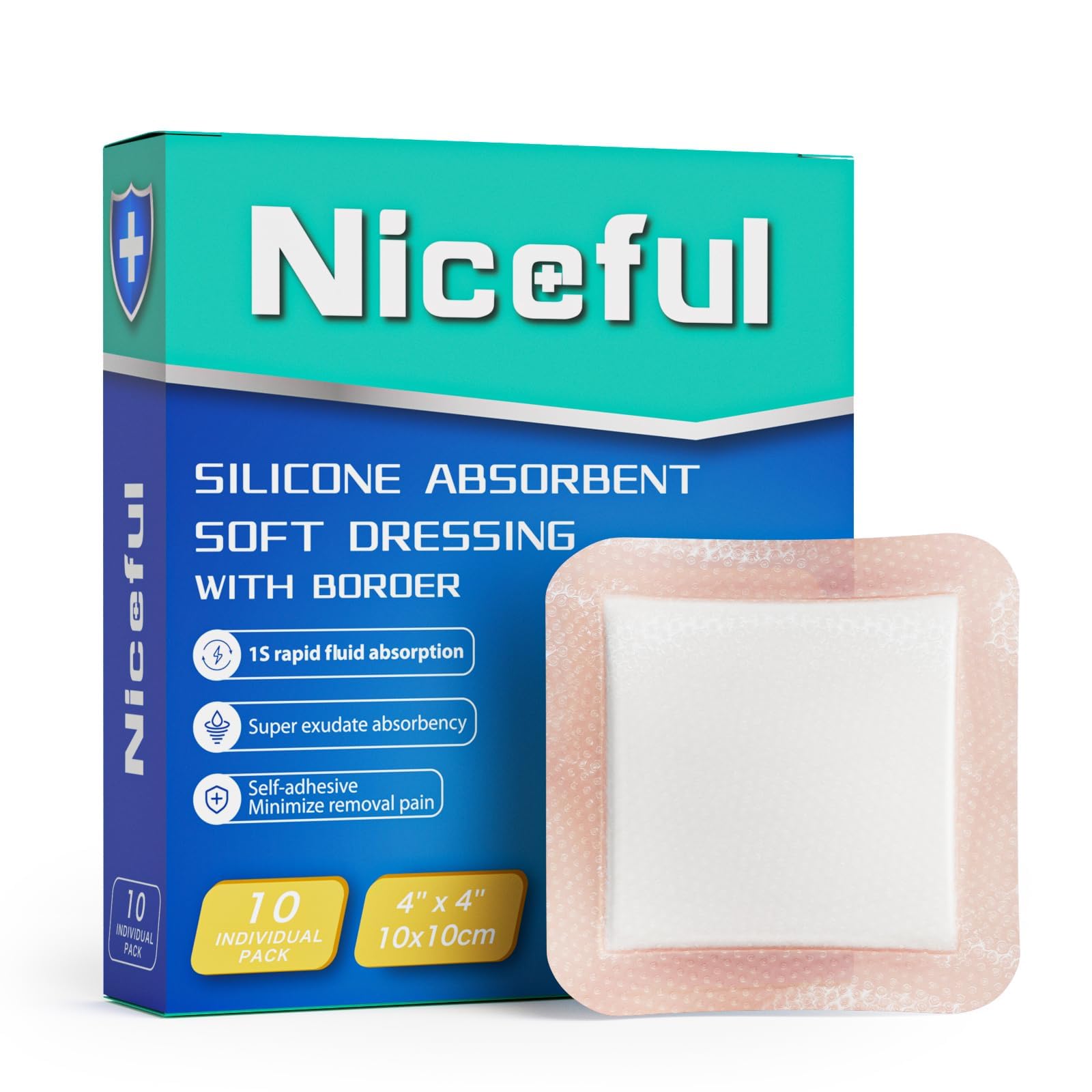
This is the premium workhorse dressing for HS lesions that produce moderate-to-heavy exudate. The silicone adhesive border holds firmly without tugging on surrounding fragile skin, while the super-absorbent polymer (SAP) core locks fluid away from the wound bed, preventing the maceration that leads to skin breakdown. Users consistently report that the dressing stays in place through a full day of movement and removes cleanly with a bit of warm water, which is exactly what you need for armpit or groin areas that flex constantly.
The 4×4 inch size covers most single lesions with room to spare, and the outer layer is waterproof, so you can shower without compromising the seal. Customer reviews from post-surgical and pressure-wound users highlight that the pad stays soft and does not stick to the wound — the silicone layer on the contact side prevents the painful adherence that ruins regular gauze. For HS, this means you can leave the dressing on for up to several days without ripping open a healing lesion during changes.
The biggest trade-off is cost per dressing. This is a premium product, and you will pay more per individual pad than a hydrocolloid option. However, for a draining lesion that requires reliable fluid-handling and skin-safe adhesion, the performance justifies the investment. It is best used selectively for active drainage spots rather than as an everyday cover for non-draining scars.
Why it’s great
- SAP core absorbs 20 times its own weight, ideal for heavy exudate
- Silicone contact layer prevents adherence to the wound bed
- Waterproof outer layer allows showering and daily hygiene
Good to know
- Higher per-dressing cost compared to hydrocolloid alternatives
- Not designed for low-drainage or dry lesions — overkill for those stages
2. Dimora Hydrocolloid Adhesive Bandage 4×4 (10 Count)
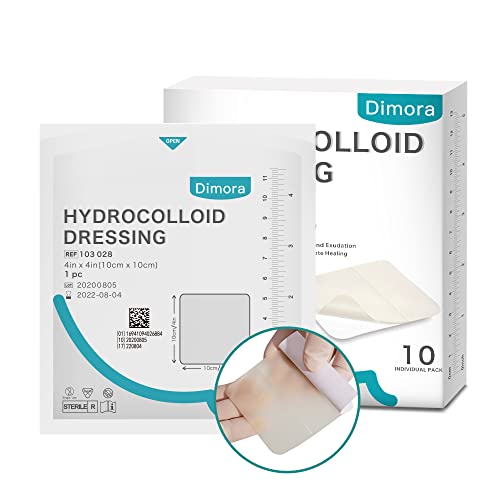
This 4×4 hydrocolloid patch is a solid mid-range option for early-stage HS lesions that are not yet draining heavily or for covering a spot that has closed but needs protection from friction. The 0.5 mm thickness is thin enough to conform to body contours without creating a bulky lump under clothing, yet it forms a protective gel cushion when it absorbs fluid. The entire sheet is cuttable, so you can trim it to fit odd-shaped areas like the underarm crease or the inner thigh without wasting adhesive real estate.
The translucent backing lets you monitor the wound for color changes — the patch swells and turns white as it absorbs, giving a visual cue for when to change it, which removes the guesswork. Customers with HS and other chronic wounds report that the dressing stays on for up to a week, even through sweaty 12-hour shifts, as long as you warm the adhesive before applying and avoid using ointments underneath. The seal is waterproof and breathable, so sweat and shower water do not lift the edges.
The downside is that it is not designed for heavy exudate — once the hydrocolloid gel saturates, the dressing can break down and leak. If you have a lesion that is openly draining a significant amount of fluid, you will need to change this daily or step up to a foam dressing. For low-output spots and scar protection, this is an excellent, gentle option.
Why it’s great
- Cuttable 4×4 sheet trims to any lesion shape with zero waste
- Forms a protective gel cushion that prevents friction and scabbing
- Translucent backing shows wound fluid level without removing dressing
Good to know
- Not suitable for heavy or moderate-to-high exudate lesions
- Requires warming the adhesive and a clean, dry skin surface for best adhesion
3. YOJO Silicone Foam Dressing 4×4 Gentle Border (20 Count)

This silicone foam dressing hits a sweet spot between the premium Niceful pad and the budget-friendly options. The silicone border is gentle enough for fragile skin — multiple reviewers with diabetic and pressure wounds confirm that the adhesive holds securely yet lifts off without pain. The foam core provides cushioning, which is critical for HS lesions in areas that press against clothing or bedding, such as the buttock fold or under the breast line.
The absorbent pad measures 2.4 x 2.4 inches, which is smaller than the overall 4×4 sheet, but the padded border seal helps prevent leakage around the edges. The dressing is waterproof and breathable, and the outer backing allows you to lightly wash the area without compromising the seal. Users consistently praise the lack of irritation, even after repeated applications on the same spot, which is a strong signal for HS skin that needs to tolerate frequent dressing changes.
The main limitation is the smaller central pad — if you have a large open lesion that extends beyond the absorbent area, the border may sit directly on the wound, which could cause irritation. For standard sized HS lesions, the pad size is adequate. Also, some users noted the lack of printed instructions in the box, though the application process is straightforward by feel.
Why it’s great
- Gentle silicone adhesive that does not irritate even with repeated use
- Foam core provides cushioning for pressure-prone HS areas
- Waterproof backing holds up during light washing and showers
Good to know
- Central absorbent pad is smaller than the overall dressing sheet
- May require a separate larger dressing for multiple adjacent lesions
4. Ceeport Island Dressing Bordered Gauze 4×10 (25 Count)

Island dressings are a unique format for HS because they combine a non-stick central pad with an adhesive border that only sticks to the skin, not the wound. This 4×10 inch dressing is over twice as long as a standard square, which makes it ideal for covering linear lesions or a cluster of tunnels along the same fold. The center pad measures 2 x 8 inches, providing a large non-stick surface that does not adhere to fragile granulation tissue.
The adhesive border uses a hypoallergenic acrylic that holds securely through movement, but some users with very sensitive skin reported irritation after extended wear. For HS, this means you should test the adhesive on a small area before committing to a full day. The breathable outer layer exchanges oxygen and moisture vapor, which helps keep the wound environment balanced for healing. Reviewers with burns and surgical incisions praised how the pad stayed soft and never stuck to the wound bed, even after several days of wear.
The trade-off is the adhesive type — acrylic is not as gentle as pure silicone for fragile HS skin. If you have a history of adhesive allergy or your skin tears easily, you may prefer the silicone-based alternatives. Also, the 4×10 size can feel bulky in small areas like the underarm. It is best suited for larger body surfaces like the thighs, lower abdomen, or upper back.
Why it’s great
- Long 2×8 inch non-stick pad covers linear lesions and clusters
- Breathable outer layer allows oxygen exchange for wound healing
- Adhesive border seals around the wound without sticking to the wound
Good to know
- Acrylic adhesive may irritate very sensitive or allergy-prone skin
- Larger size can feel bulky in tight flexural areas
5. CareUs Silicone Adhesive Bandages Large (32 Count)

These are fabric bandages engineered specifically for fragile and elderly skin, and they translate perfectly to covering healed HS lesions or protecting areas between flares. The silicone adhesive provides a strong hold that lasts up to 24 hours, yet removes cleanly with no pulling or residue. At 1.63 x 4 inches, the XL size covers more surface than a standard bandage, which is useful for protecting a healed tunnel or covering a small non-draining nodule from clothing friction.
The pad is non-stick and absorbent, so it can handle light to moderate drainage, but it is a fabric bandage, not a foam dressing. This means it is best used for wound protection rather than heavy exudate management. Customers with fragile skin consistently report zero skin tearing upon removal, and many use these for post-dermatology surgery recovery. The sterile, individually wrapped packs make them convenient for tossing into a bag for on-the-go changes.
The limitation is that the absorbent pad is small relative to the adhesive border. If you have a large draining lesion, the pad may saturate quickly. Also, the fabric construction is not as waterproof as a hydrocolloid or foam dressing, so the bandage may need changing after a shower or heavy sweating. For everyday protection of healed HS spots, this is an excellent step up from classic adhesive bandages.
Why it’s great
- Silicone adhesive holds strong for 24 hours without damaging skin
- XL fabric size provides good coverage for sensitive areas
- Non-stick central pad prevents adherence to the wound
Good to know
- Not suitable for heavy drainage — pad saturates quickly
- Fabric material is less waterproof than foam or hydrocolloid
6. Hysimedy Silicone Bandages for Sensitive Fragile Skin (40 Count)

This is the high-value bulk option for anyone with HS who needs a steady supply of skin-safe bandages for daily use. The 40-count pack offers the lowest per-bandage cost among the silicone options here while still delivering a non-stick central pad and painless removal. The bandages measure 1.63 x 4 inches, matching the CareUs size, and the silicone adhesive holds securely even after repositioning.
Customer feedback heavily emphasizes the gentle removal — users with fragile skin, including elderly individuals and those with adhesive allergies, report zero irritation and no residue. The pad is large enough to cover a small to medium lesion, and the PU film outer layer provides a breathable barrier against dirt and water. The bandage can be lifted and resealed for inspection, which is a practical feature for monitoring a healing lesion without replacing the whole dressing.
The drawback is the same as any fabric-style bandage — the absorbency is limited. For a draining HS lesion with significant exudate, you will need to change these more frequently than a foam dressing. Also, the individually wrapped plastic packaging generates more waste per use, which is a consideration for eco-conscious buyers. For sealing healed spots or protecting low-activity lesions, the value here is unmatched.
Why it’s great
- Lowest per-bandage cost in the silicone adhesive category
- Non-stick pad allows painless removal and repositioning
- Breathable PU film outer layer with waterproof protection
Good to know
- Limited absorbency — not ideal for high-drainage lesions
- Individual plastic wrap may increase waste
7. LukToMao Hydrocolloid Bandages Roll 2×19.7 ft
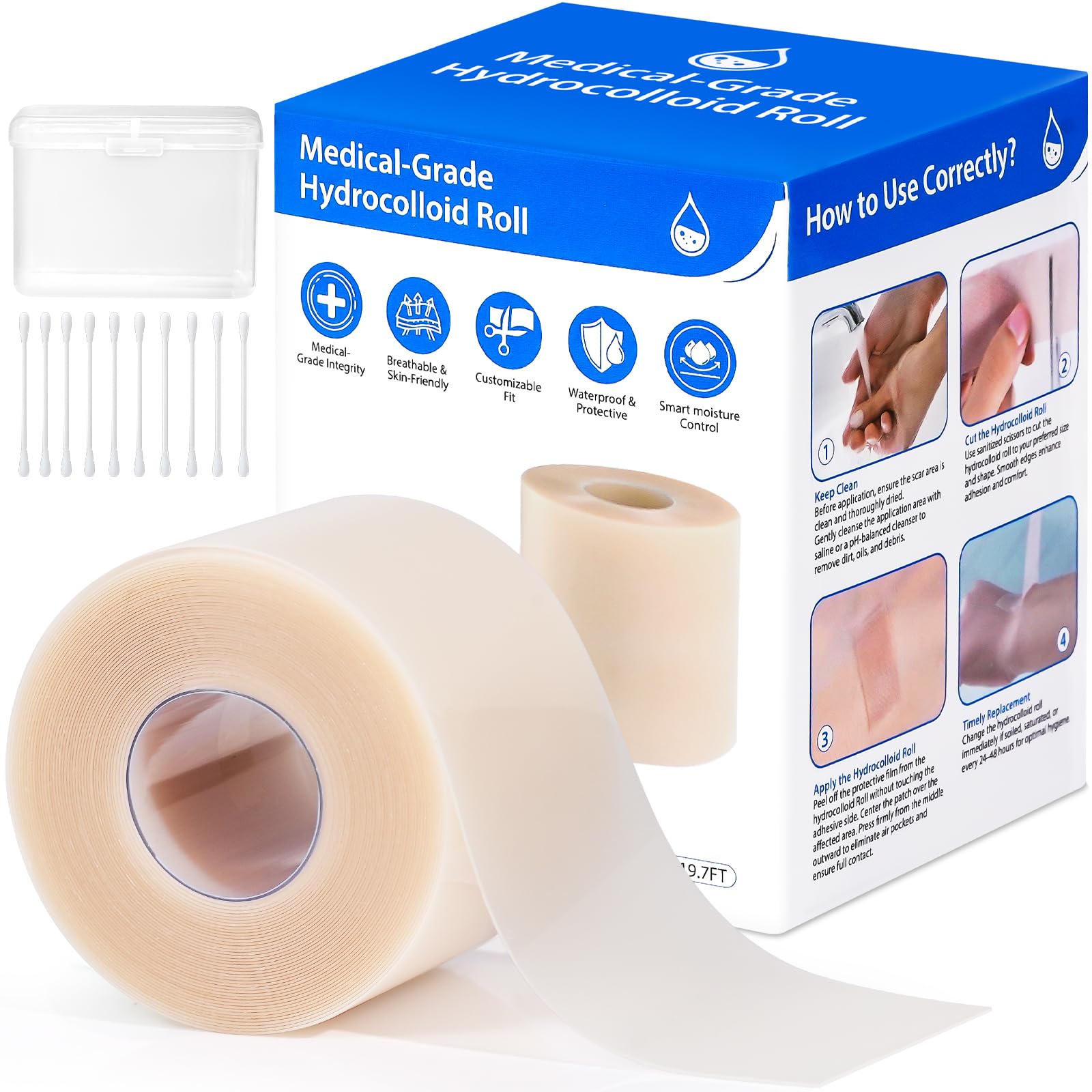
This hydrocolloid roll is a two-inch-wide continuous sheet that you cut to any length, making it the most versatile option for covering oddly shaped HS lesions or connecting multiple spots in a single dressing. A two-inch width works well for linear tunneling lesions or for wrapping around fingers and toes, and the 19.7-foot roll provides enough material for dozens of custom dressings. It is the most budget-friendly way to get hydrocolloid therapy if you are willing to spend a few seconds cutting each piece.
The material is 0.5 mm thick, matching the Dimora patch, and it forms the same protective gel seal when absorbing exudate. Users praise the adhesion, which stays put through showers and workouts, and the skin-tone beige color disappears under makeup or socks. The semi-transparent film allows you to monitor the fluid level, so you know exactly when to change it. Reviewers also note that the roll comes on a storage core that keeps it clean and easy to cut in a home first-aid kit.
The biggest learning curve is that the backing film is slightly harder to peel than pre-cut patches, and the edges can curl if not applied to completely dry skin. Some users find it thinner than branded alternatives like DuoDERM, which means it may not offer as much pressure relief for deep lesions. As a value-driven, cut-to-size alternative, it is effective, but the application requires a bit more patience than a pre-sized dressing.
Why it’s great
- Custom cut to any length, eliminating wasted material from oversized patches
- 19.7-foot roll yields dozens of dressings at a low cost per use
- Skin-tone color and thin profile make it discreet under clothing
Good to know
- Backing film is more difficult to peel than pre-cut hydrocolloid patches
- Thinner than premium brands — less padding for deep or under-pressure lesions
FAQ
Can I use hydrocolloid dressings on an actively draining HS abscess?
How often should I change a bandage on an HS lesion?
Will silicone bandages stick to the wound and cause pain?
Final Thoughts: The Verdict
For most users, the bandages for hidradenitis suppurativa winner is the Niceful Silicone Super Absorbent Wound Dressing because it handles heavy drainage while the silicone adhesive protects fragile skin. If you want a budget-friendly option for low-drainage spots and scar prevention, grab the Dimora Hydrocolloid 4×4. And for a versatile, cut-to-size solution that maximizes value, nothing beats the LukToMao Hydrocolloid Roll.