
Our readers keep the lights on and the weekend projects moving. As an Amazon Associate, I earn from qualifying purchases.
The wrong pair of boots doesn’t just make your feet ache — it deadens the conversation between your soles and the ground, weakening the natural architecture of your foot with every stride. You’re after a construction that restores your foot’s intrinsic strength, not one that numbs it inside a wall of foam and arch support.
I’m Rikta — the co-founder and writer behind FitlyFast. I’ve spent months analyzing the materials, sole geometry, and real-world durability data of the current barefoot boot market to separate the designs that genuinely deliver a wide toe box and zero drop from those that just borrow the label.
Whether you’re an all-day walker, a tactical operator, or a hiker wanting to feel the trail, this guide examines the available options to help you find the best barefoot boots for men.
How To Choose The Best Barefoot Boots For Men
Barefoot boots look similar to traditional boots, but their design philosophy is entirely different. The wrong choice can leave you with a stiff sole that defeats the purpose, or a toe box that still squeezes your toes. Focus on the three specs that actually matter.
Verify the Zero-Drop and Minimal Stack Height
Zero-drop means the heel and forefoot sit at the exact same height off the ground — no elevated heel. Combined with a stack height typically between 6mm and 15mm, this forces your foot to work naturally. A boot listed as “minimal” may still have a hidden 4mm heel rise. Checking the stack height number is the only reliable way to confirm.
Measure the Toe Box Width Accurately
A barefoot boot’s toe box must match the natural splay of your foot at rest. Many brands claim a wide toe box but actually taper at the big toe. Look for boots with a straight last shape and anatomical footbed. If a review mentions “duck-like” appearance, it means the toe box is genuinely wide — and that is a positive signal for function.
Evaluate Sole Flexibility and Tread Depth
The ideal barefoot sole bends easily at the ball of the foot while still protecting against sharp stones. Thin tread (usually 2mm-4mm lug depth) provides good ground feel on packed trails, while deeper lugs are needed for loose terrain. A sole that is too stiff, like many winter boot designs, negates the barefoot experience regardless of the zero-drop label.
Quick Comparison
On smaller screens, swipe sideways to see the full table.
| Model | Category | Best For | Key Spec | Amazon |
|---|---|---|---|---|
| Belleville Mini-Mil TR102 | Tactical | All-day duty & rough terrain | 8-inch shaft, 3 lb pair | Amazon |
| JIM GREEN African Ranger | Leather Work | Wide feet & bunion relief | Full-grain leather, stitchdown | Amazon |
| Vivobarefoot Tracker Textile AT | Hiking | All-weather technical hiking | Waterproof synthetic upper | Amazon |
| Vivobarefoot Tracker Leather | Hiking | Premium leather & ground feel | Leather upper, excellent grip | Amazon |
| GROUNDIES Milano | Urban | Stylish everyday barefoot | Lambskin inner leather | Amazon |
| Xero Alpine Pull-On | Snow | Easy on/off winter snow | Pull-on, waterproof winter | Amazon |
| Xero Mesa Trail II | Trail Run | Lightweight trail running | 20mm totaal stack height | Amazon |
| Merrell Speed Strike 2 Thermo | Winter Hiking | Insulated winter warmth | Waterproof, insulated | Amazon |
| Vivobarefoot Primus Lite 3.5 | Training | Cross-training & daily wear | Ultra-light, vegan mesh | Amazon |
In‑Depth Reviews
1. Belleville Mini-Mil TR102 Minimalist Tactical Boot

The Belleville Mini-Mil TR102 is a rare beast: a genuine zero-drop, 8-inch tactical boot built to withstand heavy packs and long foot patrols. At just 3 pounds per pair, it is remarkably light for its height, and the thin, flexible sole provides exceptional ground feel on uneven terrain. Users with a 40-pound load and a 12.5-hour hunt reported zero foot fatigue — a testament to the design’s biomechanical efficiency.
The slip-resistant outsole performed well on wet surfaces, a critical spec for EMS and tactical roles, and the soft-toe construction keeps the boot flexible enough for ankle mobility. Several reviewers noted that the heel counter can dig in during the first few wears, requiring a brief break-in period. The leather coating is also prone to scuffing on abrasive surfaces, so those expecting a polished dress-boot finish should manage expectations.
Durability over a full year of abuse held up impressively, with the tread still offering strong bite. Sizing runs differently than standard boots — many users recommend ordering a half-size to a full-size down, and wide widths may be necessary for those with broader feet. For anyone needing a mission-ready barefoot boot that doesn’t sacrifice protection, the TR102 is the clear front-runner.
Why it’s great
- Exceptional stability under heavy loads without foot fatigue
- Lightweight for an 8-inch boot, with high ankle support
Good to know
- Heel counter may dig in during initial break-in
- Leather coating scuffs more easily than premium hiking boots
2. JIM GREEN Men’s Barefoot African Ranger Boot

The JIM GREEN African Ranger is built with a thick, full-grain leather upper and stitchdown construction, characteristics usually reserved for premium heritage work boots — but here adapted to a barefoot last. The toe box is genuinely wide and round, described by one user as “curing a bunion,” and the high volume accommodates thick socks in winter. The sole is soft and flexible, offering good ground feel on packed trails.
However, this is not a boot for instant comfort. Many reviewers reported a significant break-in period, with blisters forming during the first week. The lacing system takes time to dial in because the wide last creates loose fabric around the midfoot. Additionally, the boot is not fully zero-drop; careful measurement shows a very slight heel rise, which purists will notice during long walks.
The leather is robust, and the boot is resoleable, which extends its lifespan well beyond disposable footwear. For the entry-level-to-mid-range price point, the African Ranger delivers a construction quality that competes with boots costing significantly more. It is the best option for men with wide feet who want a durable, natural-shaped boot that looks like a traditional work boot.
Why it’s great
- Extremely wide toe box that relieves bunions and toe crowding
- Resoleable stitchdown construction for long-term durability
Good to know
- Long break-in required; blisters are common initially
- Not perfectly zero-drop; has a minimal heel rise
3. Vivobarefoot Tracker Textile AT
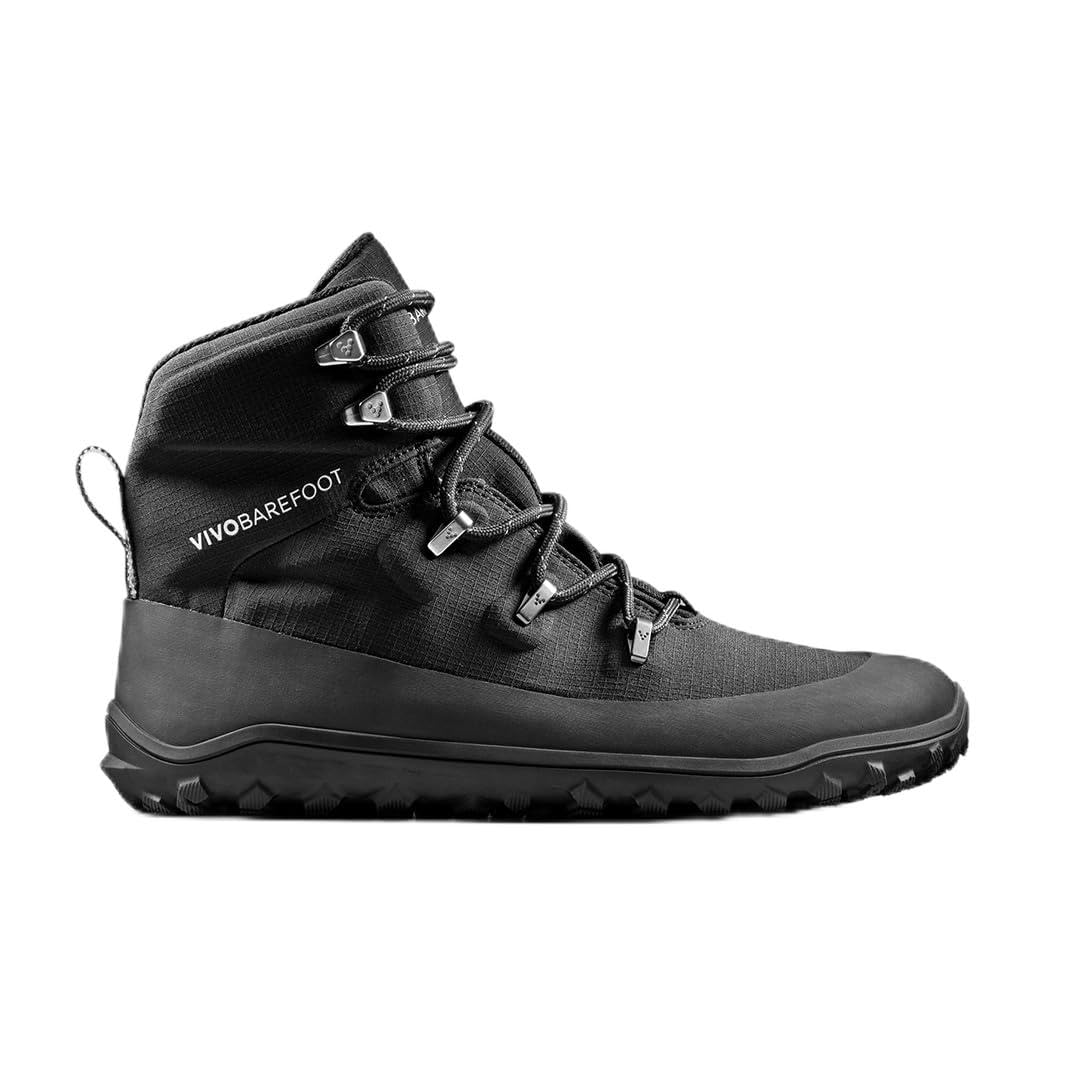
The Vivobarefoot Tracker Textile AT is a fully waterproof hiking boot engineered for all-terrain performance. The synthetic textile upper is lightweight and highly breathable yet seals completely against snow and slush. Users reported staying dry and warm all day in knee-deep snow without socks — a testament to the boot’s effective membrane and insulation. The puncture-resistant sole provides a safety layer against sharp rocks.
The ground feel is excellent for a waterproof boot, though the thick sole mutes finer textures compared to the leather Tracker variant. Sizing is finicky: several buyers found that following the standard advice to size up resulted in a sloppy fit, while the exact Brannock size fit perfectly. Traction on wet stone and ice is weaker than on packed dirt or rock, so microspikes may be necessary for icy conditions.
Durability concerns surfaced in a few reviews, with the upper showing delamination around the 3-month mark. This appears to be a batch variation, but it is worth noting given the premium price tier. When the boots hold up, they are among the lightest and most comfortable waterproof barefoot hikers available. They are an excellent choice for backpackers who need reliable wet-weather performance without the weight of a leather boot.
Why it’s great
- Fully waterproof with excellent breathability for a membrane boot
- Lightweight construction with good ground feel for the category
Good to know
- Upper durability can be inconsistent between batches
- Traction on wet/icy stone is below average
4. Vivobarefoot Men’s Tracker Leather All Terrain Hiking Shoe
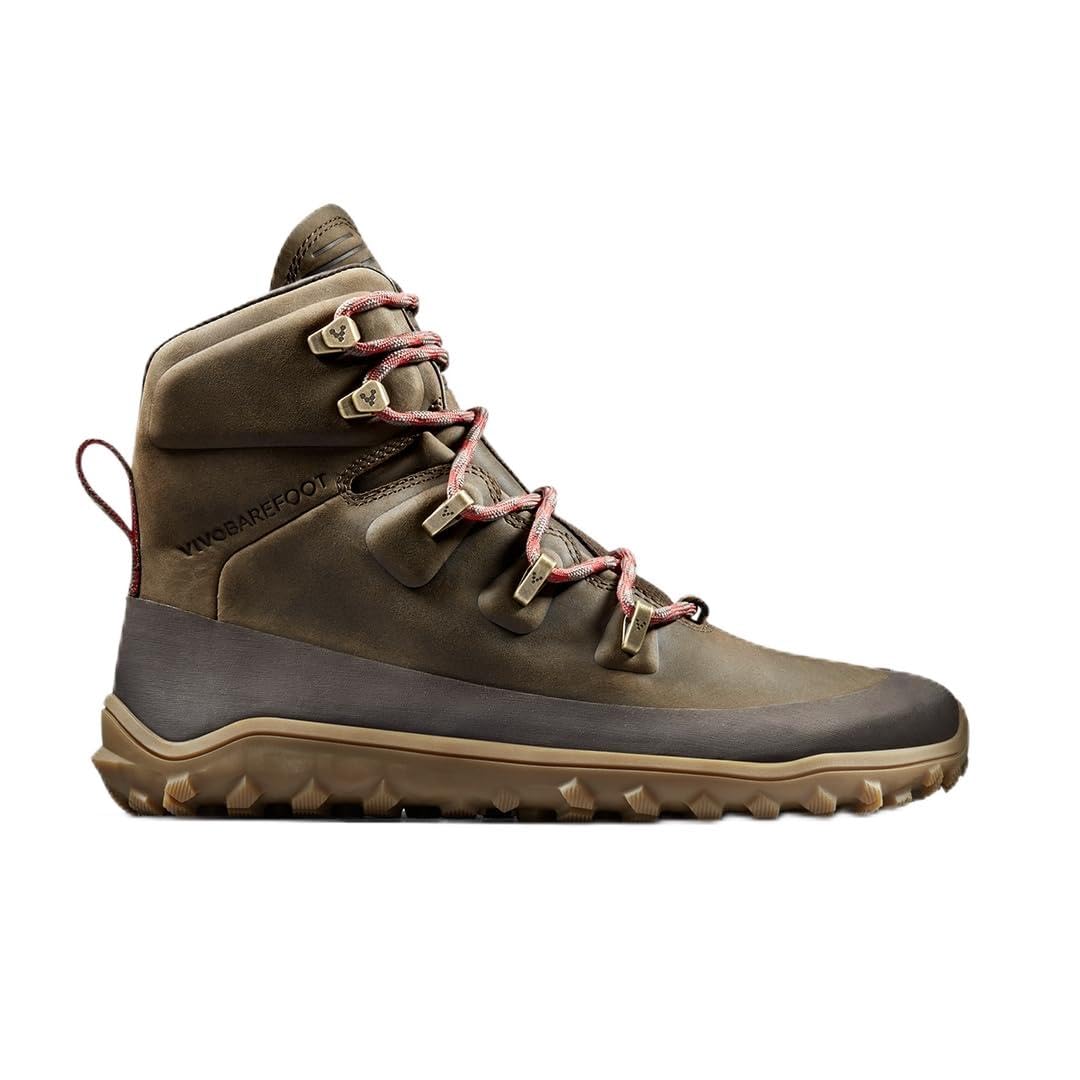
The Vivobarefoot Tracker Leather is the gold standard for barefoot hiking boots that prioritize ground feel without sacrificing protection. The soft, full-grain leather upper conforms to the foot quickly, requiring almost no break-in, and the wide toe box allows natural toe splay even during steep descents. The outsole grips remarkably well on wet rock and loose dirt, outperforming many standard hiking boots in agility tests.
Users uniformly praise the balance of sensory feedback and underfoot protection. You can feel the contour of every root and stone, but the sole’s material prevents sharp objects from causing discomfort. This design strengthens the foot over time, though those transitioning from cushioned boots will experience arch and calf soreness for the first few weeks. The boot runs true to size and is waterproof in all conditions tested.
The primary concern is durability of the hardware. A small percentage of users reported the top eyelit ripping out within the first week of use, and Vivobarefoot’s customer service response was inconsistent. For those who receive a well-constructed pair, the Tracker Leather offers a combination of comfort, performance, and natural movement that is difficult to match. It is the top-tier choice for serious hikers who want the most authentic barefoot experience in a boot.
Why it’s great
- Exceptional ground feel with sufficient stone protection
- Superior grip on wet rock and varied terrain
Good to know
- Hardware durability (eyelits) has been inconsistent
- Higher price tier, with varying customer service support
5. GROUNDIES Men’s Milano Barefoot Boots
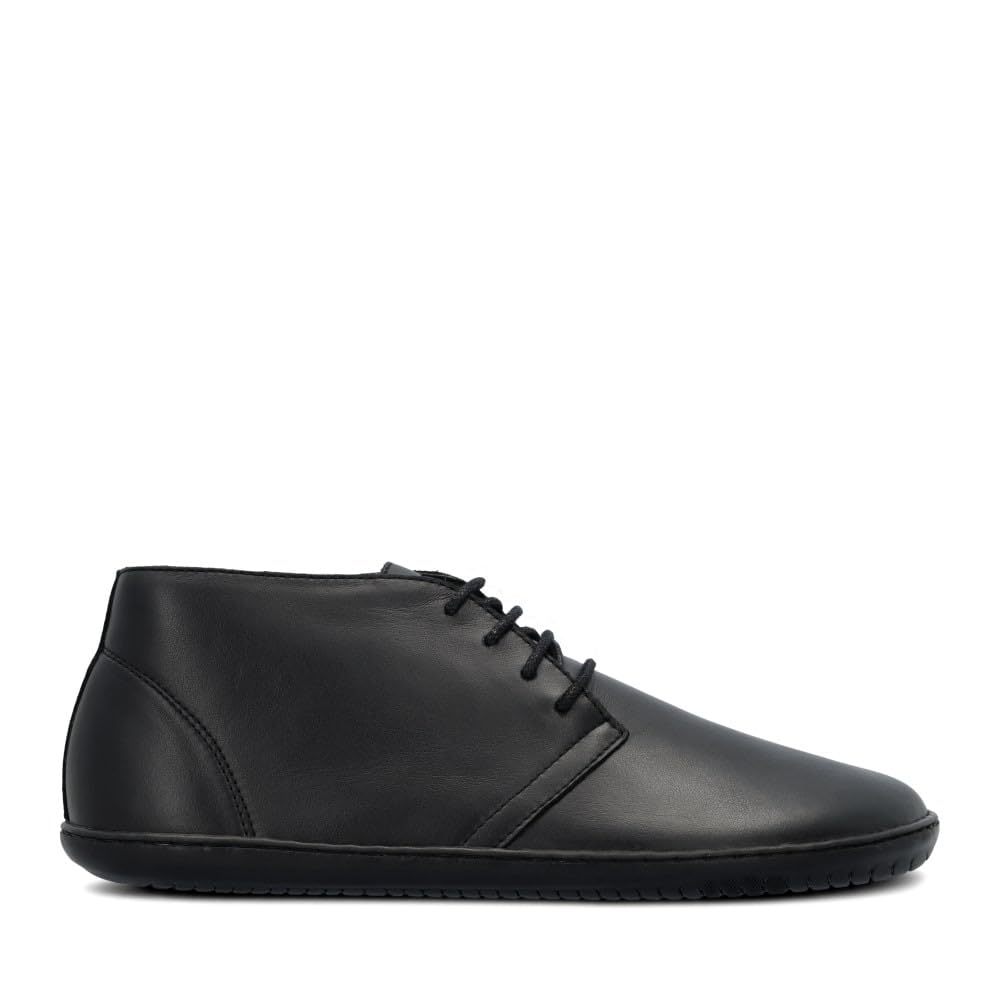
The GROUNDIES Milano offers a sleek urban silhouette that disguises its barefoot construction. The leather is high-quality, and the lambskin inner walls accelerate the break-in process significantly compared to raw leather interiors. The toe box is genuinely wide, though the angular shape does create a “duck foot” appearance that some buyers find less elegant than traditional dress boots.
Fit is true to size for most users, and the zero-drop footbed feels comfortable for all-day wear in office or walking environments. However, a recurring issue is that the insoles are not glued in place. Multiple buyers reported that the insoles bunch up under the foot during walking, requiring them to glue the insoles themselves. This flaw undermines what would otherwise be a well-constructed shoe.
Durability seems adequate for daily casual use, though several reviewers noted uncertainty about how the sole will hold up over a full year of heavy wear. The laces are also a minor complaint — they feel thin and cheap compared to the quality of the leather upper. At the mid-range price point, the Milano is a solid entry into barefoot boots for those who prioritize aesthetics and immediate comfort, provided you are willing to address the insole issue.
Why it’s great
- High-quality leather with lambskin inner for a fast break-in
- Stylish urban design that doesn’t scream barefoot
Good to know
- Insoles are unglued and bunch up — requires DIY gluing
- Toe box shape appears bulbous from certain angles
6. Xero Shoes Men’s Alpine Pull-On Barefoot Snow Boots
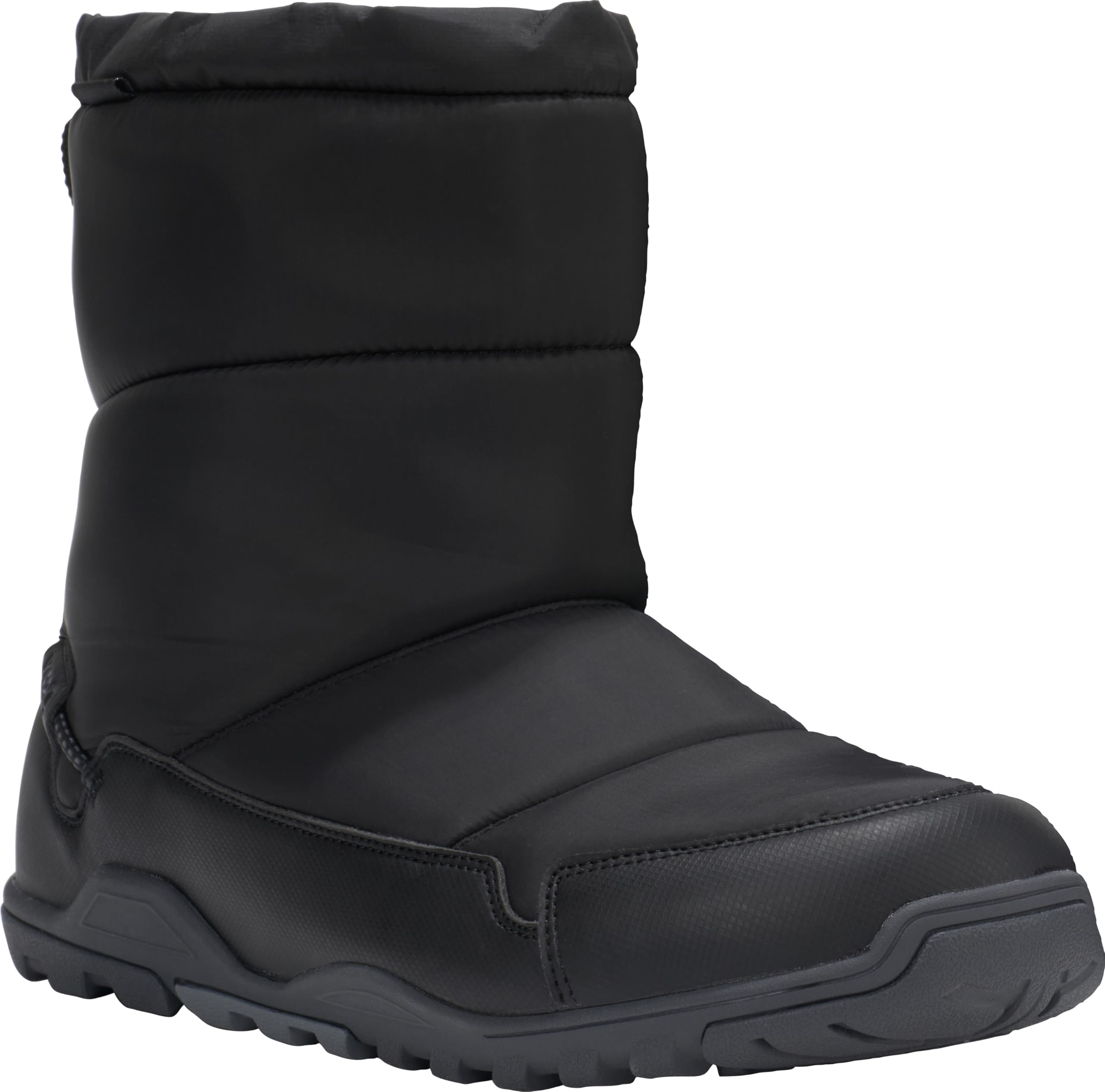
The Xero Alpine Pull-On is designed for a very specific pain point: getting out of the house quickly in winter without lacing up. The slip-on entry is genuinely easy, and the boot stays securely on the foot even during active walking. It is warm and waterproof, handling snow and rain without leaking, and the zero-drop platform retains Xero’s signature thin sole feel.
One key limitation is that this boot is not fully barefoot — several reviewers noted that the sole is stiffer and offers less ground feel than other Xero models. The “barefoot feel” is diluted by the insulation and the slightly thicker sole needed for winter protection. The boot runs roomy, which is good for thick socks, but the insole provided is thin, leading some to add aftermarket insoles for comfort.
Grip on snow and ice is adequate for light winter conditions, but deep snow or icy pavements may still require cleats. The boot lacks the agility of a lace-up design, so it is not ideal for technical winter hiking. For casual winter wear, shoveling, and quick errands, the Alpine Pull-On is a functional and practical solution that cuts down on prep time significantly.
Why it’s great
- Hassle-free pull-on entry with secure fit
- Warm and waterproof for casual winter use
Good to know
- Reduced ground feel compared to other barefoot boots
- Not ideal for deep snow or technical winter hikes
7. Xero Shoes Men’s Mesa Trail II Barefoot Trail Run Shoes
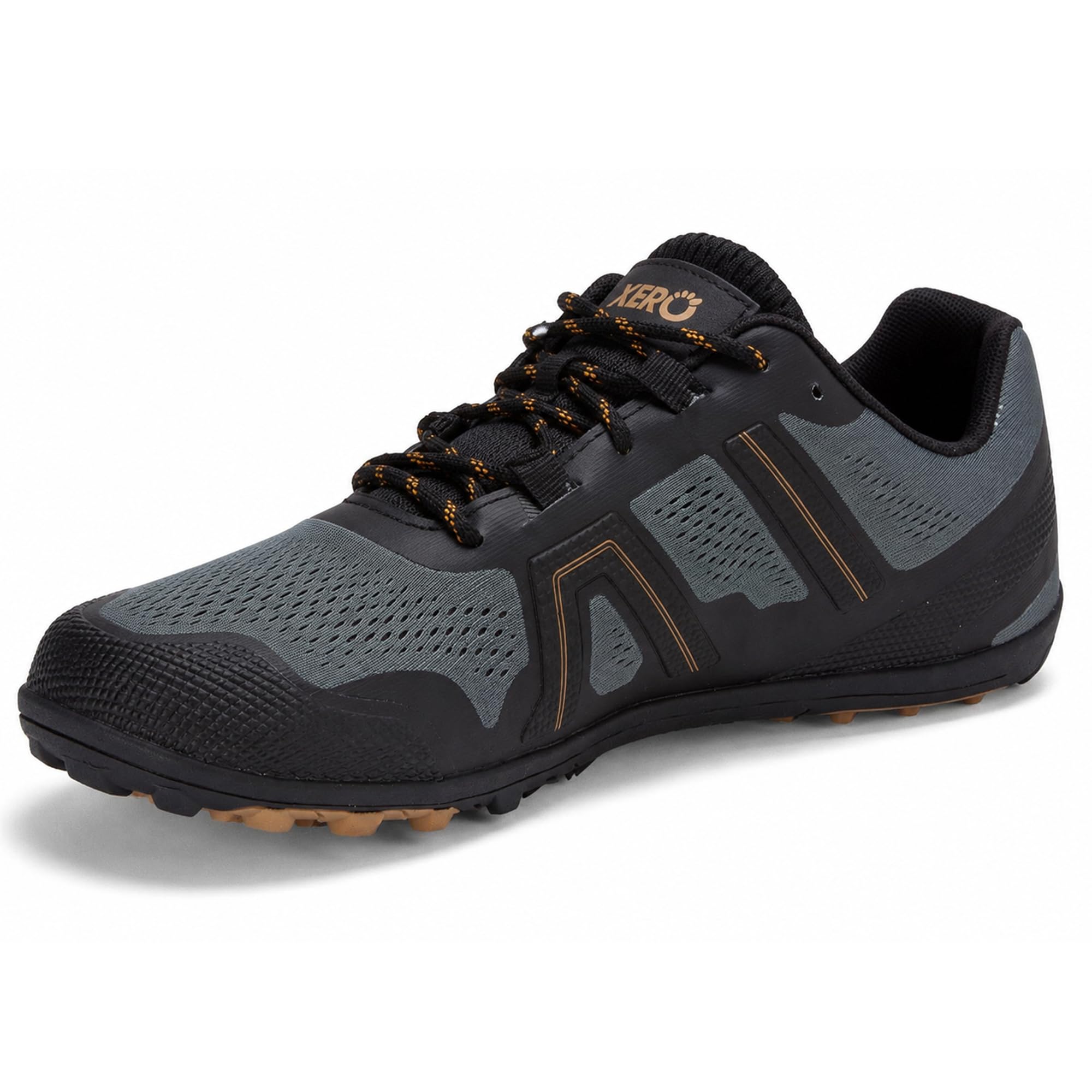
The Xero Mesa Trail II is a lightweight trail shoe that walks the line between a boot and a shoe. With a 20mm total stack height, it offers slightly more underfoot protection than a true sandal, while maintaining excellent ground feel. The outsole provides strong traction on dry and damp trails, and the wide toe box allows full toe splay on technical terrain.
Sizing across the Xero lineup is notoriously inconsistent. Some users found the Mesa Trail II runs a full size long compared to other Xero models, and the toe box is narrower in the “Sunset” colorway than the original “Mesa 2.” The insole also tends to slip out during runs, so many users simply remove it for a more secure fit. The synthetic upper dries slowly if fully submerged — taking two days to dry after a creek crossing.
Durability is a mixed bag. Some users logged 178 miles with minimal wear, while others reported the tread wearing through to the sole within 1,000 miles. That said, the extremely light weight and low-profile design make the Mesa Trail II a favorite for runners and fast-packers who prioritize speed and sensory feedback over longevity. It is a high-performance tool for a specific mission, not an all-day work boot.
Why it’s great
- Very lightweight with excellent ground feel for trail running
- Wide toe box and true zero-drop platform
Good to know
- Sizing is inconsistent across Xero models
- Upper dries slowly after full submersion
8. Merrell Men’s Speed Strike 2 Thermo Mid Waterproof

The Merrell Speed Strike 2 Thermo is a winter hiking boot that prioritizes warmth and traction over minimalist principles. It is heavily insulated, keeping feet warm during shoveling and cold-weather hikes in sub-20°F temperatures. The waterproof membrane keeps moisture out effectively, and the outsole provides secure grip on snow and ice without requiring microspikes.
This is not a true barefoot boot by strict definition. It has a traditional heel-to-toe drop, a thick cushioned midsole, and a heavy overall weight that mutes ground feel. However, for men who need a winter boot and want to transition gradually into more minimal footwear, it offers a step in the right direction with a relatively wide toe box compared to standard winter boots.
Comfort is high — one reviewer noted it felt great after two hours of snow shoveling — but the insulation is so effective that the boot becomes uncomfortably hot during any activity above freezing. The ankle support is good enough for icy trails, but the boot lacks the flexibility and ground connection that barefoot enthusiasts demand. It is a warm, capable winter boot for casual use, not a candidate for serious barefoot hiking.
Why it’s great
- Excellent insulation for extreme cold temperatures
- Good traction on snow and ice without cleats
Good to know
- Heavy and cushioned — not a minimal barefoot design
- Runs very hot in temperatures above freezing
9. Vivobarefoot Primus Lite 3.5

The Vivobarefoot Primus Lite 3.5 is a training shoe that doubles as a daily driver, built for walking, lifting, and HIIT workouts. The vegan mesh upper is breathable and surprisingly durable for its weight, handling 10,000+ steps per day without noticeable wear. The zero-drop platform with a 4mm sole provides maximum ground feel, making it a favorite for CrossFit and functional fitness.
Sizing is a unique challenge: the Primus Lite 3.5 runs longer than other Vivobarefoot models. Many users found that ordering a half-size down from their standard size produced the best fit, especially for low-volume feet. The toe box is very wide, but the mesh stretches slightly over time, providing a better fit after the first week. The white colorway is notoriously difficult to clean, with stains setting into the fabric permanently.
Durability is adequate for a training shoe, but it is not built for rugged off-road use. The thin sole means sharp rocks can make their presence felt during outdoor runs. For gym sessions, daily errands, and paved walking, the Primus Lite 3.5 is one of the lightest and most comfortable barefoot shoes available. It is a strong entry-level option for those new to barefoot footwear who want a versatile shoe for multiple contexts.
Why it’s great
- Extremely lightweight with excellent ground feel for training
- Breathable mesh upper with durable construction
Good to know
- Sizing runs long — order a half-size down
- White fabric is prone to permanent staining
FAQ
Can barefoot boots be used for heavy work or tactical duty?
How long does it take to transition to barefoot boots?
Will barefoot boots make my feet wider?
Final Thoughts: The Verdict
For most users, the barefoot boots for men winner is the Belleville Mini-Mil TR102 because it combines genuine zero-drop geometry with tactical-grade durability and lightweight construction for all-day use. If you want a premium leather boot with exceptional ground feel, grab the Vivobarefoot Tracker Leather. And for an affordable wide-toe work boot with resoleable construction, nothing beats the JIM GREEN African Ranger.