
Our readers keep the lights on and the weekend projects moving. As an Amazon Associate, I earn from qualifying purchases.
Choosing a winter boot that lets your foot splay naturally while keeping you warm and dry feels like an impossible trade-off. Most insulated boots pack your toes into a tapered coffin, numb your ground feel with thick slabs of foam, and leave you sliding on ice. A true barefoot boot solves that paradox by pairing a zero-drop, flexible sole with a wide toe box and waterproof construction, so you walk with natural stride and stable footing on slick terrain.
I’m Rikta — the co-founder and writer behind FitlyFast. I’ve spent hundreds of hours analyzing sole flexibility, waterproof membranes, insulation types, and toe-box geometries across a wide price range to separate genuine barefoot winter performers from shoes that just look the part.
This guide reviews nine models that deliver on that promise, from budget-friendly snow-ready options to premium leather builds that handle deep backcountry miles. Whether you need a daily cold-weather walker or a rugged hiker for technical trails, this roundup of the best barefoot boots will point you to the right pair for your winter kit.
How To Choose The Best Barefoot Boots
A barefoot boot must satisfy three conflicting demands: a flexible, zero-drop sole for natural gait, enough insulation to keep feet warm in freezing conditions, and a waterproof or water-resistant upper that doesn’t turn the boot into a sweaty sauna. Prioritize the specs that match your primary use case — a daily commuter needs different insulation and tread depth than a winter hiker.
Zero-Drop Height and Sole Flexibility
A true barefoot boot sits flat from heel to toe with zero elevation. The sole stack should be thin enough — typically between 8mm and 15mm — that you feel the ground texture through the rubber. Flexible soles that bend with your foot’s natural roll reduce fatigue and improve balance on uneven, slick surfaces.
Toe-Box Shape and Volume
Look for a toe box that mirrors the natural fan shape of your foot, not a generic pointed or rounded capsule. Adequate vertical volume matters too, because wearing a thick wool sock without compressing your toes is essential for circulation and warmth in cold weather. Brands that publish actual footbed width measurements give you a reliable comparison tool.
Waterproofing and Breathability
Winter boots face snow, slush, and puddles. A sealed waterproof membrane like a bootie construction keeps moisture out, but must also allow vapor to escape or your feet will get clammy after sustained activity. Water-resistant leather treated with wax or oil offers a more breathable alternative for drier snow conditions, but won’t hold up against standing water.
Quick Comparison
On smaller screens, swipe sideways to see the full table.
| Model | Category | Best For | Key Spec | Amazon |
|---|---|---|---|---|
| Xero Denver II | Mid-Range | Everyday cold-weather wear | Zero-drop, 11mm sole stack | Amazon |
| Vivobarefoot Tracker Forest Esc | Premium | Deep snow and technical hiking | Wide fit, puncture-resistant sole | Amazon |
| JIM GREEN African Ranger | Premium | Rugged work and rough terrain | Full-grain leather, stitch-down | Amazon |
| Belleville Mini-Mil TR102 | Mid-Range | Tactical and EMS shifts | Slip-resistant, zero-drop sole | Amazon |
| Vivobarefoot Magna Forest ESG | Premium | Agile hiking with ground feel | Michelin off-road outsole | Amazon |
| Belleville Mini-Mil | Mid-Range | Hiking and rucking | Breathable mesh, slip-resistant | Amazon |
| Vivobarefoot Tracker Textile AT | Premium | All-weather hiking and snow | Waterproof, puncture resistant | Amazon |
| Xero Alpine | Entry-Level | Light snow and cold commutes | Waterproof, 5mm FeelTrue sole | Amazon |
| Hike Footwear Vindra Flex | Budget | Budget-friendly snowy walks | Non-slip rubber, wide toe box | Amazon |
In‑Depth Reviews
1. Xero Shoes Men’s Denver II Lace-Up Barefoot Hiking Boots
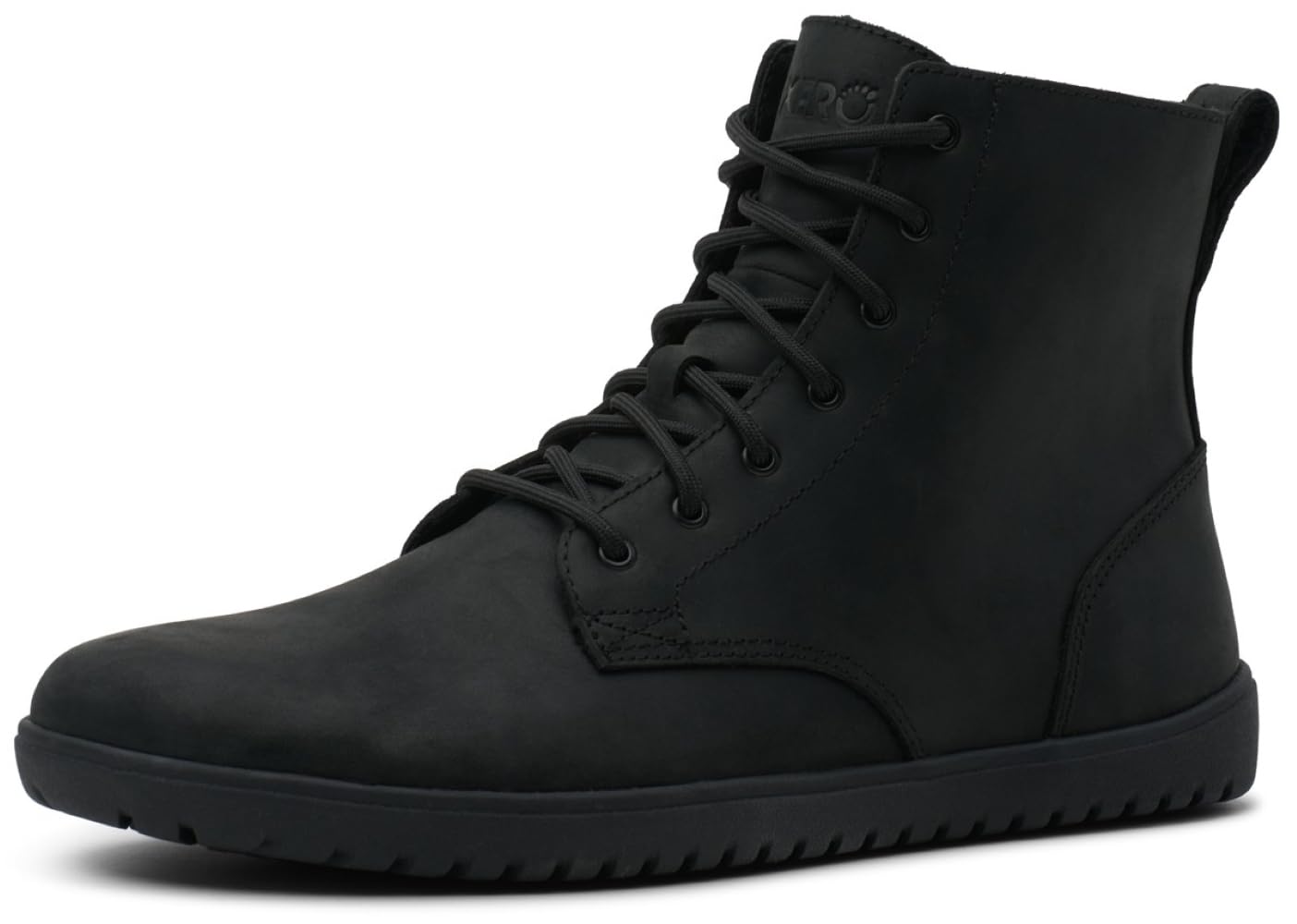
The Xero Denver II nails the enthusiast barefoot formula: a pliable zero-drop sole with an 11mm stack that offers genuine ground feel without sacrificing underfoot protection. The soft leather upper breaks in quickly, molding to the shape of your foot without hot spots or blisters, making it an ideal everyday boot for cooler seasons. Owners report all-day comfort straight out of the box, with no fatigue even after hours of walking on pavement and packed trails.
The simple single-material upper simplifies cleaning and conditioning, though the leather does crease with regular use and requires weekly maintenance with a quality conditioner to prevent drying. The grippy outsole performs well on dry surfaces but loses traction on wet, smooth terrain like polished stone or wet metal grates — a common trade-off for barefoot rubber compounds that prioritize flexibility over aggressive lugs.
Some users note the laces are slick and prone to untying, which is an easy fix with a locking lace system or a simple double knot. For anyone seeking a versatile barefoot boot that transitions from the office to the trail without looking out of place, the Denver II is the most balanced option available in the mid-range tier.
Why it’s great
- Quick break-in with zero blister points
- Excellent ground feel on a thin, flexible sole
- Premium leather construction at a fair price point
Good to know
- Leather creases easily and needs regular conditioning
- Wet-smooth traction is weak
- Slick laces may come undone without a locking knot
2. Vivobarefoot Tracker Forest Esc, Mens Off-Road Hiking Boot

The Vivobarefoot Tracker Forest Esc is the benchmark for premium barefoot winter boots, with a beefy puncture-resistant sole that still bends naturally with the foot. The upper uses a waxed leather and textile combo that beads water effectively, while the wide fit accommodates even F-width feet without squeezing the toes from above. Reviewers who tested it in deep snow and on icy trails report excellent traction and no foot fatigue after full-day outings.
The boot runs slightly long for some users, so the 6-to-14mm headspace rule from the end of the toes to the front of the boot is a reliable sizing guide. The warmth is substantial for a barefoot boot, thanks to the wool lining and sealed construction, yet breathability remains good enough to prevent clammy feet during active hiking. A few owners mention the rear cutout design looks odd at first, but it does not affect performance or durability.
The slick laces are a recurring complaint, easily solved by swapping in elastic cord laces that turn the boot into a near-slip-on experience. For anyone who wants a premium barefoot boot that handles real winter conditions without the bulk of a conventional mountaineering boot, the Tracker Forest Esc is the clear leader.
Why it’s great
- Truly wide fit with enough volume for thick socks
- Sturdy puncture-resistant sole that stays flexible
- Warm, breathable construction for active winter use
Good to know
- Laces are slick and untie easily; replace them
- Rear cutout aesthetic isn’t for everyone
- Premium price reflects quality but demands careful sizing
3. JIM GREEN Men’s Barefoot African Ranger Boots

The JIM GREEN African Ranger boot brings a traditional stitch-down construction to the barefoot world, giving you a durable, resoleable leather boot that can handle rough terrain and work environments. The full-grain leather upper is thick and protective, with a wide, round toe box that offers plenty of room for toe splay — though it is not anatomically shaped, so the big toe doesn’t have a dedicated pocket. The soft, grippy outsole provides excellent traction on loose dirt, gravel, and packed snow.
These boots are designed to be worn without an insole; adding one alters the fit and can cause ankle pain because the interior volume is calibrated to the barefoot principle. The break-in period is longer than average, with several owners reporting blisters during the first week, but once the leather molds to the foot, the comfort is outstanding. The partial leather sock liner also helps prevent foot odor, even after long, sweaty days.
The JIM GREEN boot is not cushioned at all, so it is not ideal for running or high-impact activities, but for walking, light hiking, and standing all day on hard surfaces, it provides unmatched durability and ground connection. The lace system is somewhat stiff and hard to adjust precisely, but the construction quality justifies the investment for those who want a boot that will last years.
Why it’s great
- Resoleable stitch-down construction for long-term use
- Very wide toe box that relieves bunions and pressure points
- Leather lining prevents foot odor buildup
Good to know
- Long break-in period with potential blisters
- Do not add an insole — it changes the fit negatively
- Laces are stiff and hard to fine-tune
4. Belleville Mini-Mil TR102 Minimalist Tactical Boot

The Belleville Mini-Mil TR102 is purpose-built for tactical and EMS professionals who need a zero-drop platform that provides exceptional stability during long, physically demanding shifts. The sole is less flexible than a true barefoot shoe, but it offers far more ground feel than standard military boots, allowing you to feel uneven terrain and adjust your footing instantly. Owners report zero foot fatigue even after 12-hour shifts on hard floors or technical terrain carrying heavy loads.
The toe box is wide enough for most foot shapes, though some users with very wide feet find it snug and recommend ordering the wide option. The boot is extremely lightweight for its class, and the slip-resistant outsole grips well on wet floors, loose gravel, and mud. A year of hard use shows exceptional tread life, but the leather coating on the upper can scuff and flake sooner than expected, requiring regular oiling to maintain appearance.
The TR102 runs long and narrow, so careful sizing is essential — many buyers need a half to full size down and a width up from their usual measurement. The ankle area has some loose fabric that can feel sloppy, and the heel counter may dig in during the break-in period. For anyone who needs a barefoot-adjacent boot for professional or tactical use, the TR102 delivers durability and stability that few competitors match.
Why it’s great
- Zero foot fatigue during 12+ hour shifts
- Excellent tread life after a year of hard use
- Lightweight and stable for technical terrain
Good to know
- Upper leather scuffs and flakes without regular oiling
- Ankle fabric feels loose and heel counter may dig in
- Sizing is tricky; order down in length, up in width
5. Vivobarefoot Magna Forest ESG, Womens Leather And Wool Hiking Trainers
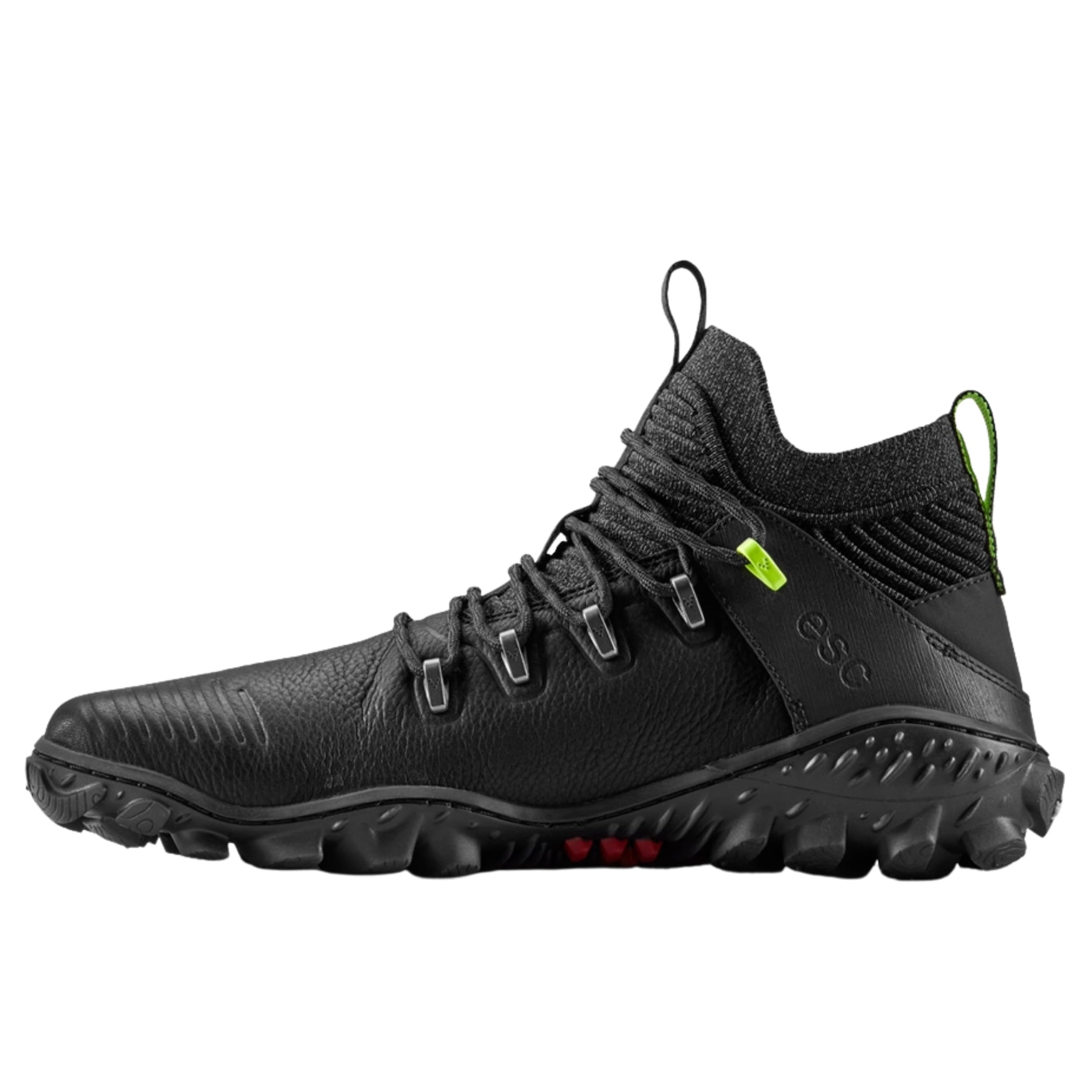
The Vivobarefoot Magna Forest ESG combines a supple leather-and-wool upper with a Michelin off-road outsole that delivers exceptional grip on soft, damp, and loose terrain. It feels like a trail runner in terms of weight and flexibility, yet provides the coverage and protection of a hiking boot. The boot builds foot strength naturally because the thin sole forces your feet to engage stabilizing muscles with every step, making it a great choice for both hiking and gym-to-trail crossover use.
Sizing is the trickiest part of this boot — Vivobarefoot runs small, and most users need to go up at least one full size from their standard measurement to get adequate toe room. Even then, some reviewers with naturally wide feet find the toe box not wide enough, with the top of the boot pressing down on the toes. The hook at the top of the cuff can rub the ankle on some gaits; wearing high socks solves the irritation.
The deep sole grooves handle mud and soft ground well, and the upper stays odor-free even after long hikes without socks. This boot is best suited for users who prioritize agility and ground feel over maximum warmth and waterproofing, as the wool-leather combo handles light moisture but is not fully waterproof in standing water.
Why it’s great
- Michelin outsole provides excellent grip on soft ground
- Light and flexible, feels like a trail runner
- Leather-wool upper stays odor-free after heavy use
Good to know
- Runs small; size up significantly
- Not wide enough for truly broad feet
- Ankle hook may rub; wear high socks
6. Belleville Mini-Mil Barefoot Shoes for Men
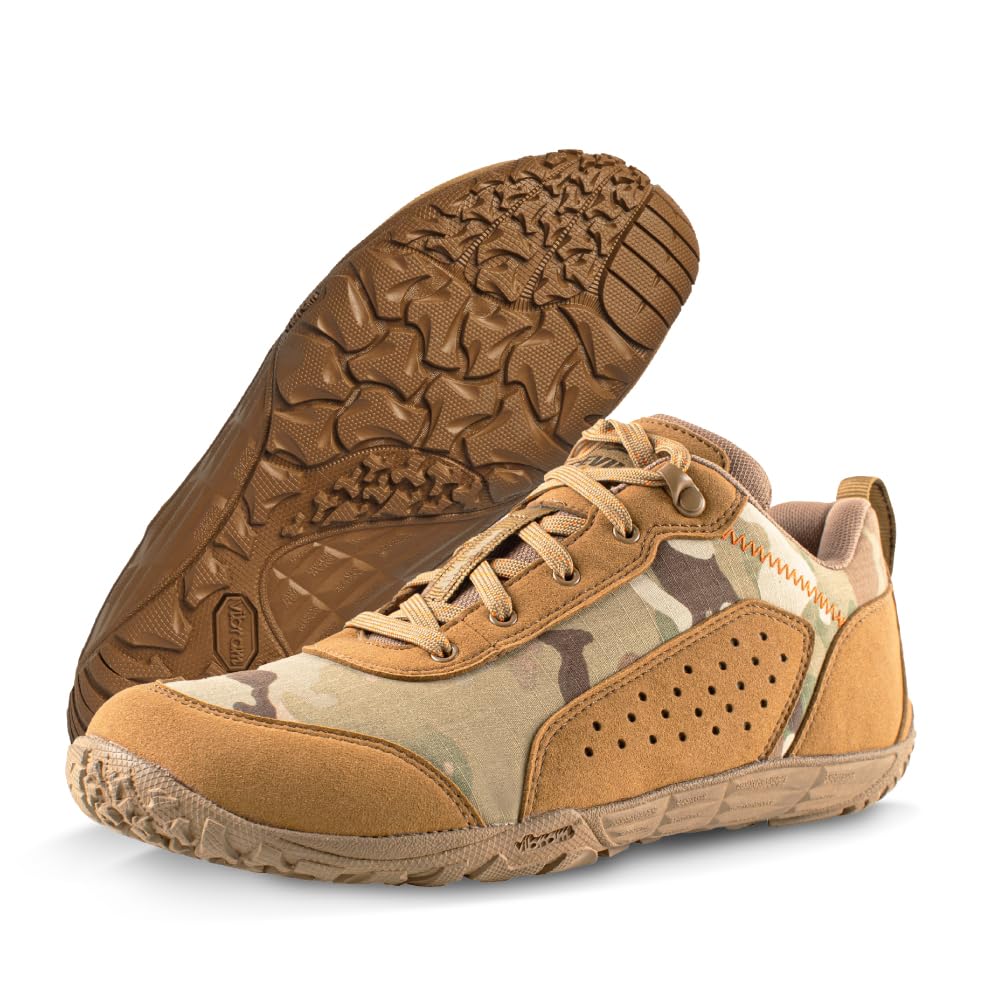
The Belleville Mini-Mil is a no-fuss barefoot boot that delivers a flexible zero-drop platform with a slip-resistant outsole, making it a strong value pick for hiking, rucking, and casual wear. The breathable mesh upper keeps the boot lightweight and easy to slip on, while the shock-dispersing midsole provides just enough protection for rocky trails without killing ground feel. Owners who put over 30 trail miles on these boots report they still look new, with no visible wear on the outsole or upper.
The toe box is wide enough to accommodate fan-shaped feet, but some reviewers with very broad feet wish it were wider. The boot runs narrow overall, so ordering a wide width is recommended for those who need extra space. The interior insole is rigid and supportive, which offers a different feel from soft, sock-like barefoot shoes; some users love the structure, while purists find it less minimalist than expected.
The sizing is inconsistent — a few buyers found that even a half-size up was still too small, and returns incurred a fee in some cases. The Mini-Mil is not the most minimalist option on this list, but for the price, it offers a durable and comfortable entry point for those transitioning to barefoot footwear or wanting a tough boot for mixed terrain.
Why it’s great
- Excellent durability after 30+ trail miles
- Good ground feel with enough protection for rocky trails
- Lightweight construction with a secure slip-on fit
Good to know
- Runs narrow; wide width recommended for most
- Toe box could be wider for true barefoot feel
- Sizing inconsistencies and return fees can be an issue
7. Vivobarefoot Tracker Textile AT Mens Barefoot Hiking Boots
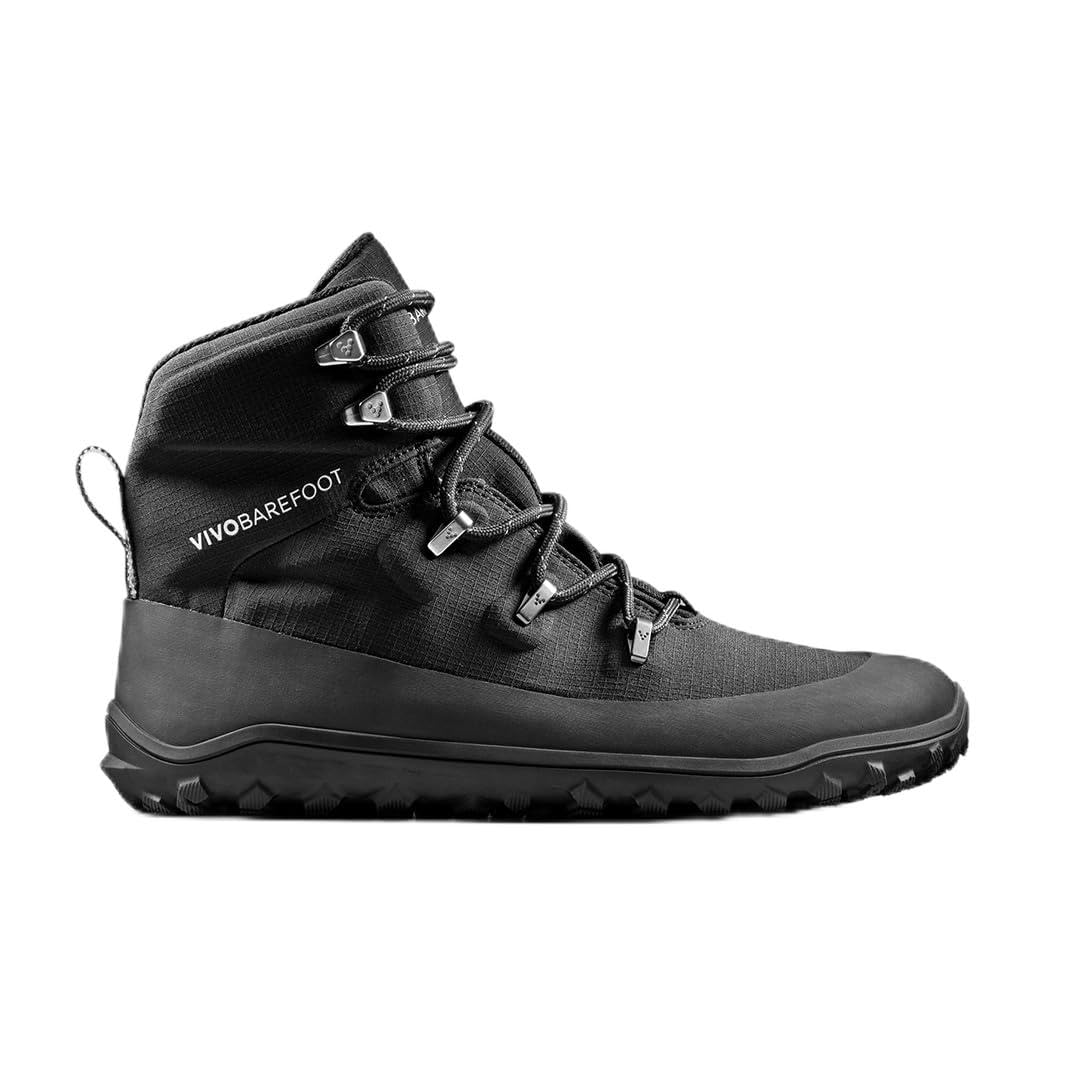
The Vivobarefoot Tracker Textile AT is engineered for all-weather conditions, with a waterproof membrane and puncture-resistant sole that lets you tackle snow, slush, mud, and rocky trails without hesitation. The textile upper is lightweight and breathable, while the high-tech sole offers a surprising amount of ground feel for a boot with this level of protection. One reviewer tested them in knee-deep snow without socks and reported dry, warm feet, which speaks to the effectiveness of the waterproofing.
Sizing is consistent with Vivobarefoot’s standard fit — some users need to size up, others find their normal size works perfectly, so careful measurement against the brand’s size chart is essential. The boot is remarkably light for a winter hiker, which reduces fatigue on long approaches.
The durability concern is real: a few owners reported the boot starting to come apart after a few months of daily use, which is disappointing given the premium price. Vivobarefoot’s warranty does not always cover purchases made through third-party sellers, so verifying the return policy before buying is wise. For those who need a high-performance barefoot hiker for extreme conditions, the Tracker AT is superb — just be aware of the potential longevity issue.
Why it’s great
- Excellent waterproofing tested in deep snow and slush
- Lightweight construction for a fully featured winter hiker
- Puncture-resistant sole offers protection without stiffness
Good to know
- Some units show durability issues within months
- Wet-ice traction is subpar
- Warranty may not cover third-party purchases
8. Xero Shoes Men’s Alpine Barefoot Snow Boots
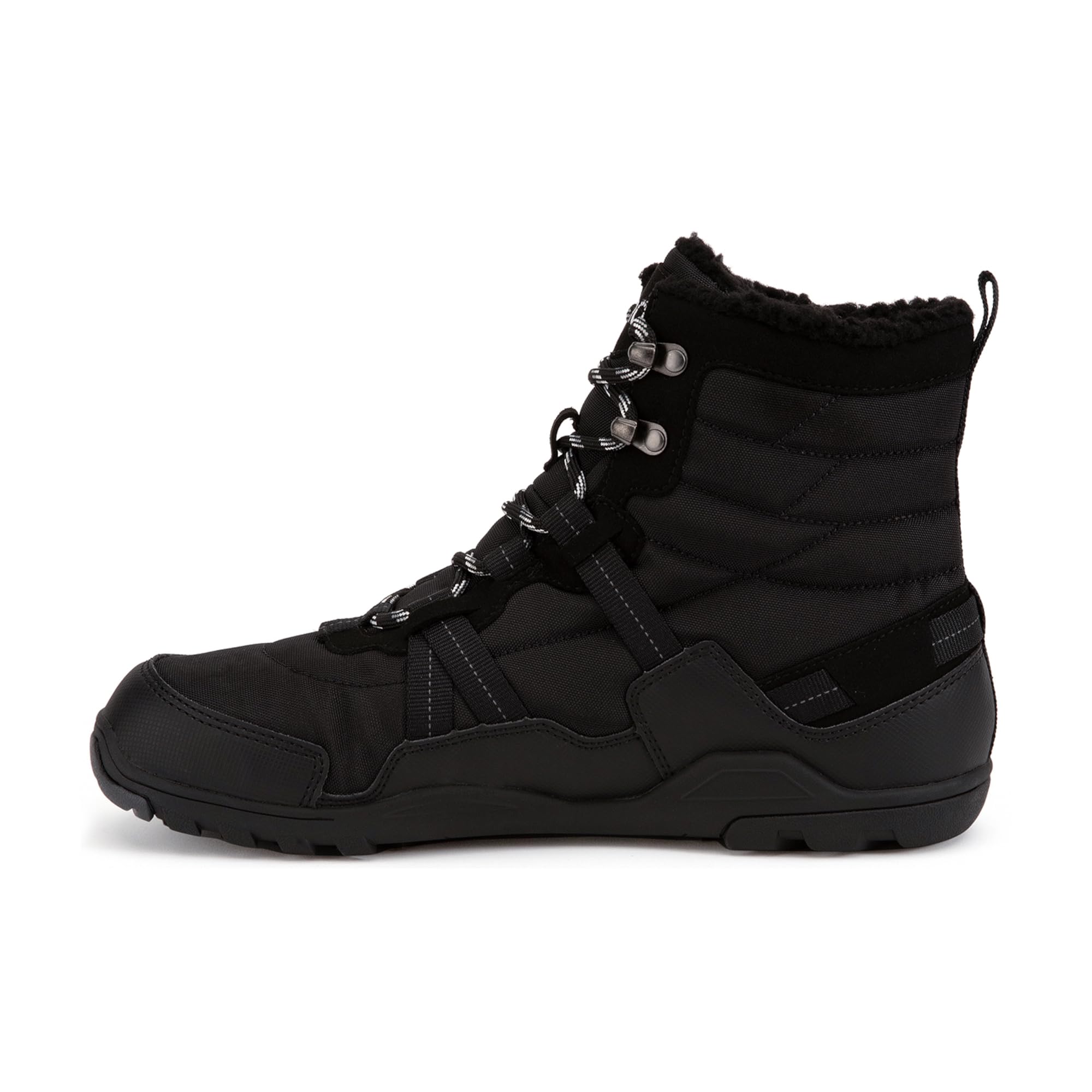
The Xero Alpine is a lightweight, waterproof barefoot snow boot that offers entry-level access to minimalist winter footwear at a budget-friendly price. The 5mm FeelTrue sole provides direct ground contact and excellent balance on snow and ice, while the hook lacing system makes for quick, secure fastening. Owners who used it through a full winter report stable footing on packed snow and decent insulation for moderate cold when paired with wool socks.
The biggest complaint is that the toe box is not wide enough for many barefoot enthusiasts — while it is wider than mainstream boots, it does not offer the anatomical splay that hardcore minimalists expect. The sole also lacks the flexibility of pricier options, which reduces the barefoot feel somewhat. The boot is water-resistant rather than fully waterproof in standing water, so deep puddles or slush can seep in through the tongue area.
Warmth is adequate for temperatures down to about 20°F with good socks, but in extreme cold the thin insulation requires heavy wool layering to stay comfortable. For those new to barefoot boots or looking for an affordable winter option that avoids the tapered toe box of standard boots, the Xero Alpine is a solid starting point that punches above its price class.
Why it’s great
- Excellent ground feel with a super-thin 5mm sole
- Good snow traction for a barefoot boot at this price
- Easy hook lacing system for quick on/off
Good to know
- Toe box is not wide enough for true barefoot splay
- Water-resistant, not fully waterproof in deep slush
- Insulation is thin; needs heavy wool socks in extreme cold
9. Hike Footwear Vindra Flex Barefoot Winter Boots
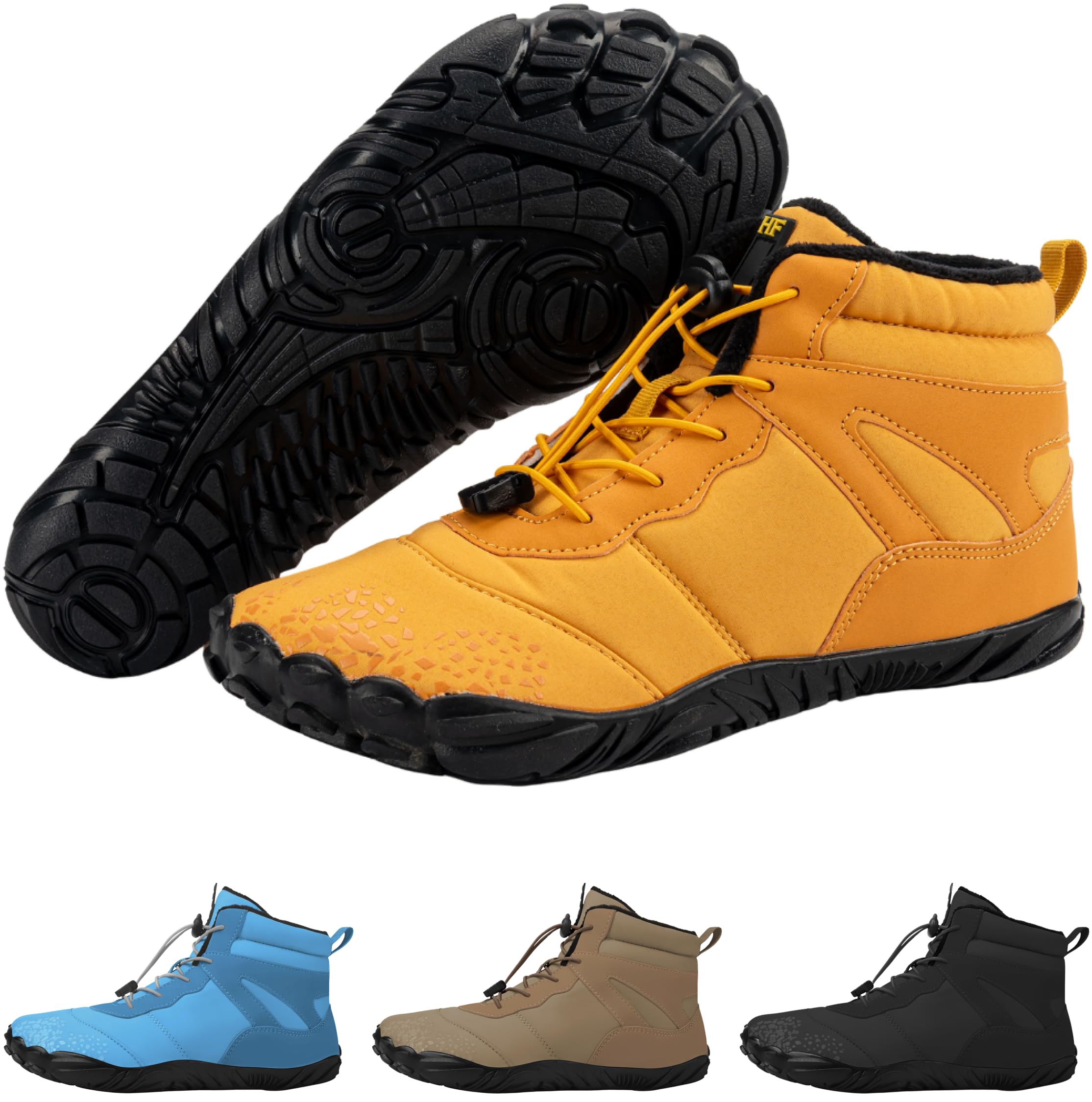
The Hike Footwear Vindra Flex is a budget-tier barefoot winter boot that delivers a surprisingly good fit for the price, with a wide toe box and a flat, flexible sole that promotes natural posture. The fuzzy interior is warm and soft, making it comfortable for casual snow walks, errands, and light winter hikes. Many users report improved back and foot pain relief after switching to these boots, which supports the claim that the zero-drop platform helps strengthen foot muscles.
The build quality does not match the price point’s promise for everyone. The lace system features a slider that hits the ground when fully tightened, requiring users to tuck it into the tongue loop to avoid wear. The thin liner can bunch under the foot during extended wear, creating a discomfort that some owners found impossible to resolve without gluing in a sturdier insole. A few reviewers described the materials as feeling cheap and disposable, more in line with fast-fashion footwear than a durable winter boot.
Water resistance is adequate for light snow but not for deep slush or puddles, and the rubber outsole provides reliable grip on packed snow and ice. For the price, the Vindra Flex offers a functional entry point into barefoot winter boots, but the compromises in material quality and construction refinement mean it is best suited for light, occasional use rather than daily or heavy-duty wear.
Why it’s great
- Warm, fuzzy interior for cold-weather comfort
- Wide toe box and flat sole promote natural foot posture
- Non-slip rubber outsole handles snow and ice well
Good to know
- Lace slider hits the ground when tightened
- Thin liner bunches underfoot, causing discomfort
- Build quality feels cheap for the price point
FAQ
Are barefoot boots warm enough for sub-freezing temperatures?
How do I size barefoot boots for wearing thick winter socks?
Can I use barefoot boots for shoveling snow or standing on cold concrete?
Final Thoughts: The Verdict
For most users, the best barefoot boots winner is the Xero Denver II because it delivers the ideal balance of ground feel, quick break-in, and everyday styling with no major durability red flags. If you want a rugged leather boot that will last for years and handle serious terrain, grab the JIM GREEN African Ranger. And for deep snow and technical winter hiking where waterproofing and wide fit are non-negotiable, nothing beats the Vivobarefoot Tracker Forest Esc.