
Our readers keep the lights on and the weekend projects moving. As an Amazon Associate, I earn from qualifying purchases.
Switching to barefoot running shoes is less about changing your shoe and more about relearning how your foot connects with the ground. The right pair strips away excess cushioning and arch support, forcing your foot’s natural musculature to activate with every stride. But with stack heights ranging from 4mm to 25mm and toe boxes that vary wildly between brands, picking the wrong model can lead to plantar strain instead of the stronger feet you’re after.
I’m Rikta — the co-founder and writer behind FitlyFast. I analyze hundreds of consumer reviews and manufacturer spec sheets to isolate the real performance metrics that separate effective barefoot designs from ones that merely look the part.
Whether you are transitioning to minimalist running or want a zero-drop trainer for the gym floor, this guide cuts through the marketing to find the best barefoot running shoes that actually deliver on ground feel, toe splay, and durable construction.
How To Choose The Best Barefoot Running Shoes
Barefoot running shoes are defined by three core specs: zero drop (heel and toe at the same height), a wide toe box (allowing toes to spread naturally), and minimal cushioning (preserving ground feel). Evaluating these dimensions against your intended surface — road, trail, or gym — is the only reliable way to avoid discomfort or injury during the transition period.
Stack Height and Ground Feel
Stack height is the total thickness of the sole between your foot and the ground. Genuine barefoot shoes sit between 4mm and 10mm. At 4mm, you feel every pebble and texture change, which strengthens proprioception but demands careful foot placement on sharp terrain. At 10mm, you retain some protection while still sensing the ground. Avoid anything above 15mm if you want a true barefoot experience — those belong to the minimalist hiking category, not pure barefoot running.
Toe Box Shape and Volume
A genuinely wide toe box allows your big toe to align straight ahead and your small toes to fan outward when bearing weight. Many shoes labeled “wide” only add volume across the midfoot without addressing toe splay. Look for anatomical designs like Altra’s FootShape or Vivobarefoot’s wide platforms. The wrong toe box can cause bunions, neuromas, or a constant feeling of your toes being compressed.
Outsole Traction and Durability
Barefoot outsoles trade thick rubber lugs for flexibility and ground contact. For road running, a smooth or lightly siped rubber compound provides adequate grip without adding weight. For trails, a 2mm to 3mm lug pattern with sticky rubber (like Vibram’s Megagrip or MaxTrac) gives you confidence on loose dirt and wet rock without making the sole too stiff to fold. Avoid deep lugs — they defeat the flexibility that defines barefoot movement.
Quick Comparison
On smaller screens, swipe sideways to see the full table.
| Model | Category | Best For | Key Spec | Amazon |
|---|---|---|---|---|
| Xero Prio Suede | Road / Gym | Everyday wear & gym | 5mm FeelTrue® sole | Amazon |
| Vibram V-Run Retro | Road | Natural road running | 4mm XS Trek outsole | Amazon |
| Merrell Vapor Glove 6 | Trail / Casual | Trail runs & office | 6mm stack height | Amazon |
| FLUX Adapt Runner | Road / Gym | Long daily walks | Zero-drop, wide box | Amazon |
| ALTRA Lone Peak 9 | Trail | Technical trail running | 25mm EGO midsole | Amazon |
| Xero Mesa Trail II | Trail | Lightweight trail running | 5mm FeelTrue® sole | Amazon |
| Vivobarefoot Motus Strength | Gym | Weightlifting & HIIT | 4mm wide base | Amazon |
In‑Depth Reviews
1. Xero Shoes Men’s Prio Suede Barefoot Athletic Sneaker
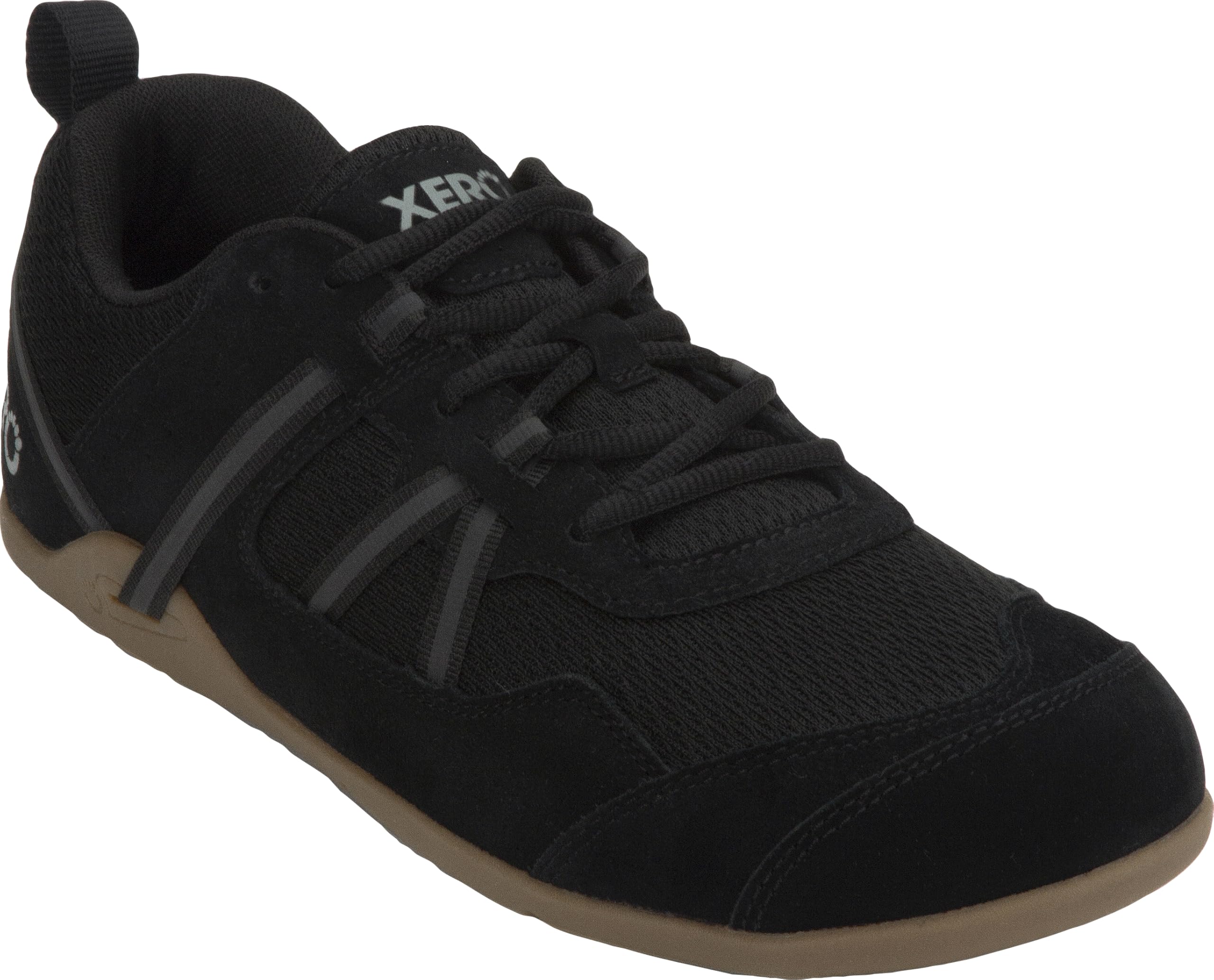
The Xero Prio Suede hits the hardest intersection of value and genuine barefoot construction. Its 5mm FeelTrue outsole gives you excellent ground feel while the suede upper adds durability that the mesh versions lack. Users report improved foot strength after months on concrete warehouse floors, and the wide toe box accommodates natural splay without looking like a duck shoe.
One limitation is the huarache-inspired lacing system — it lacks the climbing-grade security of dedicated trail models, but for road running, gym work, and daily wear, it’s more than adequate. The organic lacing and padded collar provide a comfortable lockdown that works for narrow to medium feet.
Multiple reviewers logged over 100 miles with minimal sole wear, confirming the outsole compound holds up on pavement and dry trails. It is not meant for wet, slick surfaces — the flat rubber lacks aggressive siping, so save these for dry conditions.
Why it’s great
- Excellent ground feel from thin 5mm outsole
- Durable suede upper outlasts mesh competitors
- Comfortable for all-day standing and walking
Good to know
- Lacks traction on slick or oily floors
- Toe box less splay-friendly than Vivobarefoot models
2. Vibram Men’s FiveFingers V-Run Retro
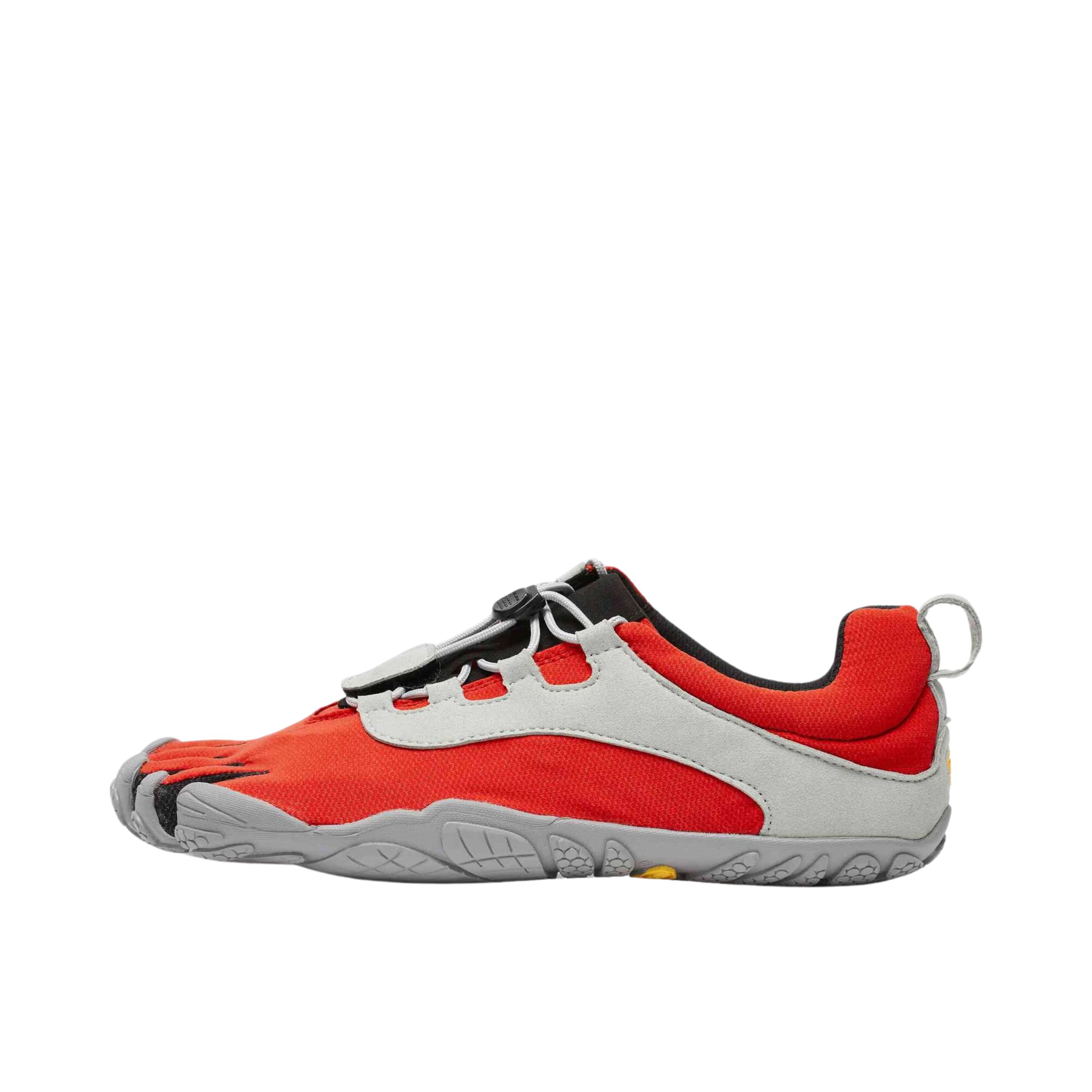
Vibram’s FiveFingers design is the most literal barefoot shoe on the market — each toe gets its own pocket, forcing individual toe articulation and splay. The V-Run Retro combines a 4mm XS Trek rubber outsole with a 2mm foam insole and EVA arch pad, offering slight comfort without muting ground feedback. The breathable nylon mesh upper keeps the shoe lightweight, and the quick-lace system delivers a secure fit across the instep.
On the road, the independent toe pockets improve balance and agility, especially on uneven surfaces. Users noted excellent grip on wet rocks and during water activities, though the sole provides virtually no puncture protection — glass and sharp gravel will transmit straight through. The shoe runs short in the toes compared to other Vibram models, so ordering 0.5 to 1 size up is common advice.
The nylon upper is not quick-drying, so expect dampness after wet runs unless you pair them with toe socks. Over a year of use, the outsole remains intact, confirming Vibram’s reputation for durable rubber compound performance.
Why it’s great
- Individual toe pockets promote natural foot mechanics
- Excellent slip resistance on wet surfaces
- Very durable outsole with high mileage longevity
Good to know
- Requires wearing toe socks to prevent blisters
- No protection from sharp debris like glass or gravel
3. Merrell Men’s Vapor Glove 6 Leather Trail Running Shoe
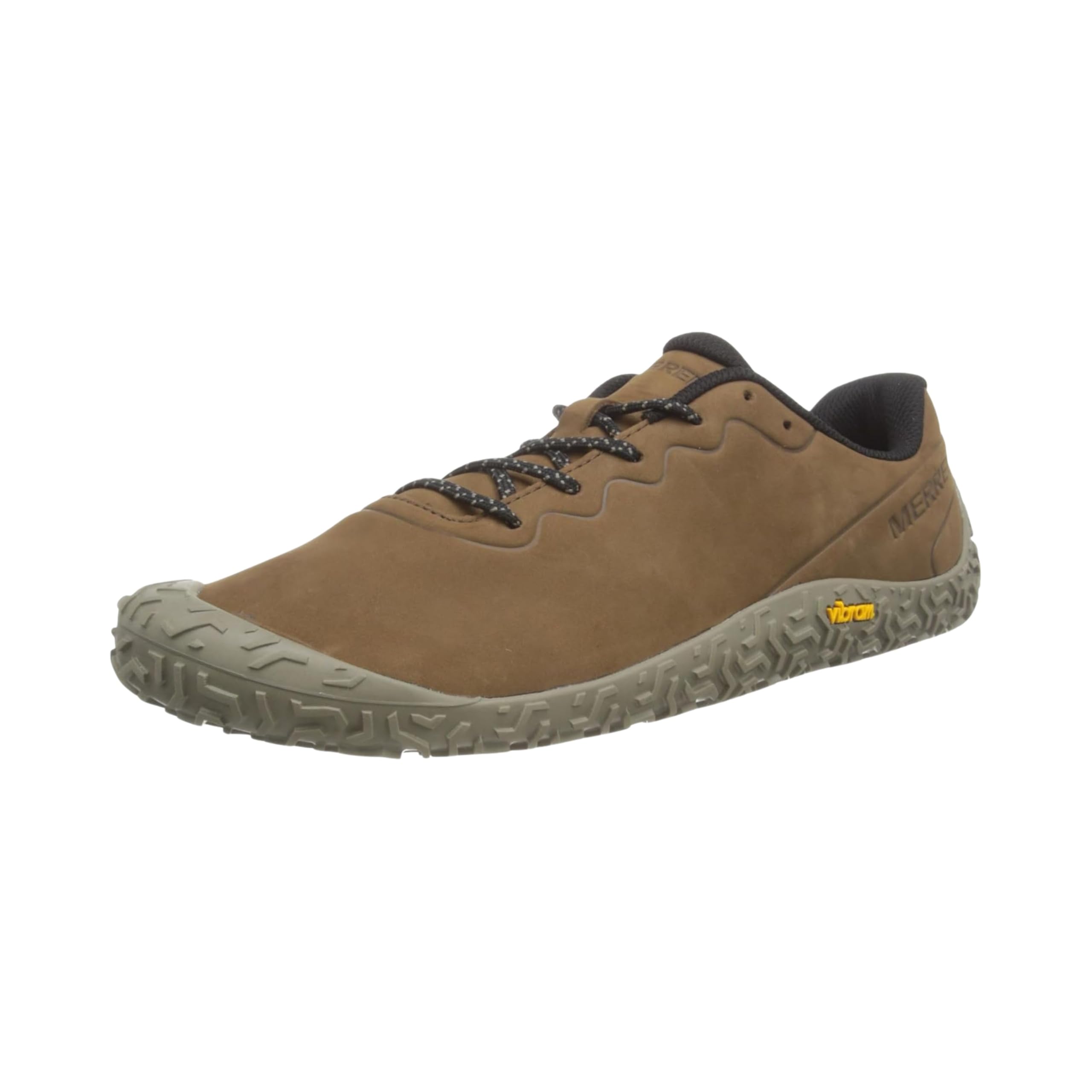
Merrell’s Vapor Glove series has long been a reference point for barefoot trail runners, and the 6 Leather version refines the formula with a 100% leather upper and a wraparound Vibram EcoStep outsole. The 6mm total stack height keeps your foot close to the trail while the 2.5mm lug depth provides confident bite on loose dirt and packed gravel. The Cleansport NXT treatment controls odor, a practical addition for daily wear.
The leather upper gives the Vapor Glove 6 a more refined look that transitions from trail to office without screaming “running shoe.” Users with narrow to medium feet report a secure fit, though those with wide forefeet may find the toe box more tapered than true barefoot models like ALTRA’s FootShape. The zero-drop platform is strict, and the thin EVA insole does not mute rock sensation on sharp terrain.
Durability is a standout — the leather resists abrasion from brush and rocks better than mesh alternatives. The 30% recycled rubber outsole shows minimal wear after trail miles, and the 100% recycled laces and lining make this an environmentally grounded choice without compromising performance.
Why it’s great
- Leather upper offers superior abrasion resistance
- Low 6mm stack for excellent ground feel
- Versatile style works for casual and trail use
Good to know
- Toe box may feel snug for wide-foot runners
- Not ideal for technical terrain with sharp rocks
4. FLUX FOOTWEAR Adapt Runner
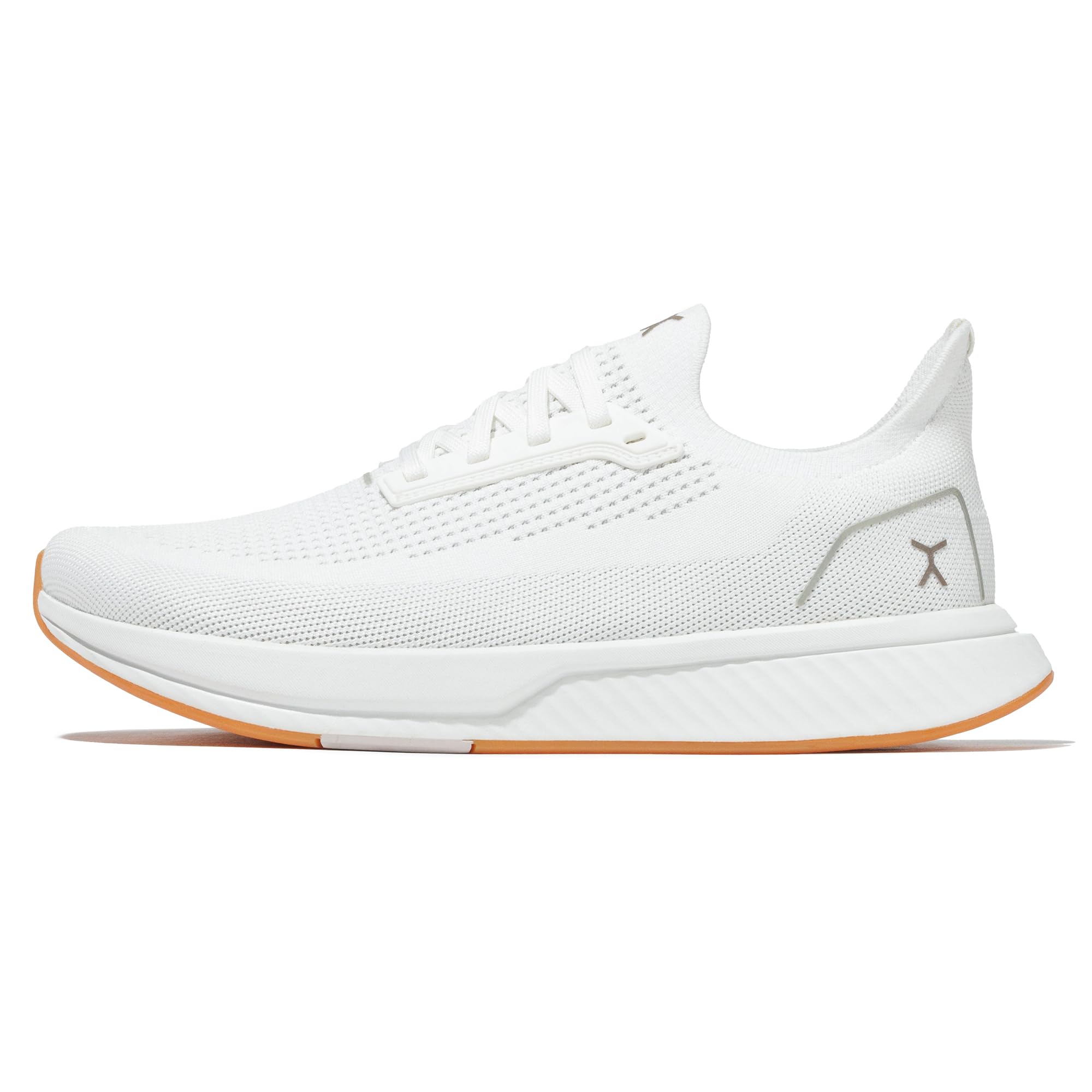
The FLUX Adapt Runner is built for the runner who prioritizes foot health during high-volume daily miles. Its zero-drop platform and genuinely wide toe box allow the toes to align naturally, and users with previous knee surgeries and flat feet report noticeable relief after switching. The shoe runs small — sizing up half a size is necessary for most foot shapes to avoid toe compression on longer runs.
Durability is a strong suit: reviewers have worn these for five-mile walks daily over several years without sole separation or upper failure. The initial stiffness lasts about two weeks of consistent wear, after which the sole relaxes into a flexible, glove-like feel. The shoe is machine washable on a gentle cycle, making maintenance simple for frequent runners.
The Adapt Runner is not a pure trail shoe — its outsole lacks aggressive lugs, so grip is limited on loose or muddy terrain. But for road running, treadmill intervals, and gym sessions, the combination of wide toe splay, zero drop, and replaceable insoles makes it a versatile everyday choice for transitioning runners.
Why it’s great
- Very wide toe box with generous toe splay
- Machine washable construction
- Long-lasting durability for daily high-mileage use
Good to know
- Runs small; order half to full size up
- Outsole insufficient for technical trail running
5. ALTRA Men’s Lone Peak 9 Trail Running Shoe

The ALTRA Lone Peak 9 sits at the cushioned edge of the barefoot spectrum — a 25mm stack height with zero drop and the roomiest toe box in the industry. It is the right choice for trail runners who need protection from rocks and roots without sacrificing the natural foot position that zero-drop provides. The revised EGO midsole foam is lighter than previous versions, and the MaxTrac outsole delivers sticky grip on mud, gravel, and wet rock.
The FootShape toe box is genuinely anatomical — your big toe aligns straight, and the smaller toes spread naturally without restriction. The Stoneguard insert shields the forefoot from sharp debris, making this shoe viable for technical terrain that would punish a 5mm barefoot shoe. It runs slightly large; many users size down half a step for a secure fit.
At approximately 11 ounces per shoe, the Lone Peak 9 is heavier than true minimalist models, but the cushioning protects the plantar fascia during long descents. This is a transitional shoe for runners wanting barefoot alignment without the impact of ultra-thin soles. The breathable ripstop mesh upper holds up to high-mileage abuse while remaining comfortable in warm conditions.
Why it’s great
- Best-in-class toe box for natural splay
- Protective midsole for rocky trail running
- Excellent outsole traction on varied terrain
Good to know
- Cushioned stack reduces pure ground feel
- Heavier than sub-8oz barefoot models
6. Xero Shoes Men’s Mesa Trail II

The Xero Mesa Trail II is designed for trail runners who want a true barefoot experience on dirt — a 5mm FeelTrue outsole with a chevron lug pattern that grips loose gravel and packed earth without muting ground contact. The wide toe box accommodates natural splay, and the zero-drop platform keeps your foot in a neutral position. At under 8 ounces per shoe, it is one of the lightest trail-capable barefoot models available.
Reviewers consistently note that sizing is inconsistent across Xero models — size 13 may feel small while size 14 runs long — so measuring your foot against the manufacturer’s sizing chart is essential before purchase. The removable insole allows customization for arch support or complete ground feel. On wet or greasy tiles, the outsole can be slippery, but on dirt and rock, traction is excellent.
After nearly 180 trail miles, wear is minimal — one reviewer reported only a single lug edge showing 1/8 inch of wear. The thin mesh upper allows debris to enter, and the shoe takes about two days to fully dry after a wet hike. For runners committed to barefoot form and willing to adapt to inconsistent sizing, the Mesa Trail II delivers an unmatched ground connection on trails.
Why it’s great
- Ultra-light construction with excellent trail grip
- True barefoot ground feel from 5mm sole
- Very durable outsole with high mileage retention
Good to know
- Sizing inconsistent across different Xero models
- Not for wet or polished indoor surfaces
7. Vivobarefoot Men’s Motus Strength Zero-Drop Training Shoe

The Vivobarefoot Motus Strength is purpose-built for weightlifting and functional training, offering a wide 4mm base that creates an incredibly stable platform for squats, deadlifts, and power cleans. The zero-drop design keeps the foot flat, and the thin, flexible sole allows the toes to grip the floor naturally. It is the most expensive model on this list, but the build quality and material selection justify the premium for serious lifters.
The toe box is exceptionally wide — some users with 4E width feet find it comfortable, while narrow-footed runners report the toe box feels almost too roomy, causing tripping during fast runs. This shoe excels in the gym, not on gravel or technical trails. The upper is warm and lacks significant breathability, making it better suited for indoor environments than hot-weather road running.
For lifters, the Motus Strength delivers an unmatched combination of ground feel and lateral stability. The flat outsole does not compress under heavy loads, and the heel is snug enough to prevent lift during squat depth. If your primary use is gym work with occasional treadmill jogging, this is the most effective barefoot training tool available.
Why it’s great
- Extremely stable base for heavy compound lifts
- Widest toe box of any gym-focused barefoot shoe
- High-quality materials with premium construction
Good to know
- Not suitable for trail running or gravel paths
- Runs slightly large; consider sizing down
FAQ
How long does it take to transition to barefoot running shoes?
Can I wear barefoot shoes if I have flat feet?
What is the difference between zero drop and minimal drop?
Final Thoughts: The Verdict
For most users, the best barefoot running shoes winner is the Xero Shoes Prio Suede because it delivers genuine 5mm ground feel, durable suede construction, and a comfortable wide toe box at a price that undercuts premium competitors. If you want a true toe-splay experience for road running, grab the Vibram FiveFingers V-Run Retro. And for technical trail running with reliable cushioning, the ALTRA Lone Peak 9 offers unmatched protection without breaking the zero-drop rule.