
Our readers keep the lights on and the weekend projects moving. As an Amazon Associate, I earn from qualifying purchases.
The cold months present a unique challenge for anyone who has experienced the freedom of a wide toe box and zero-drop sole. Standard winter boots typically cramp toes with narrow, elevated lasts that counter the natural biomechanics your feet have adapted to. The market for footwear that provides genuine barefoot function—flexible soles, a foot-shaped toe box, and no heel elevation—while also keeping your feet warm, dry, and stable on slick surfaces has expanded significantly, but separating real performance from mere marketing requires a close look at insulation methods, waterproofing materials, and outsole rubber compounds.
I’m Rikta — the co-founder and writer behind FitlyFast. This guide is the result of many hours spent analyzing user experiences, technical specs, and material science behind cold-weather minimalist boots to identify which models actually deliver on their promise of combining foot health with winter protection.
Whether you need to walk the dog on icy sidewalks or tackle snow-covered trails, finding the right pair means balancing ground feel with sufficient warmth and reliable traction. That is the core problem solved by the best barefoot shoes for winter.
How To Choose The Best Barefoot Shoes For Winter
The winter barefoot shoe market has moved far beyond simply adding a liner to a minimalist sneaker. The right pair must handle three distinct tasks: keeping feet warm without bulk, repelling external moisture while allowing internal vapor to escape, and gripping mixed surfaces of snow, ice, and pavement. Prioritizing these factors ensures your footwear supports natural movement through the entire cold season.
Insulation and Temperature Regulation
True barefoot shoes rely on thin, flexible soles that transmit ground feedback, so traditional thick foam insulation is counterproductive. The best winter models use fleece, wool-blend linings, or sealed thermal layers inside a waterproof outer. Pay attention to the active-temperature rating mentioned by other users rather than a single number, because insulation effectiveness also depends on the thickness of your wool sock. A boot that feels comfortable at 30°F with a thin sock may be perfect for deep winter with a thicker pair layered in.
Waterproofing vs. Water Resistance
A clear distinction matters here. True waterproof construction typically involves a sealed membrane—like an internal bootie or a bonded layer between the outer material and the lining. Water-resistant boots rely on treated leather or synthetic uppers that shed light snow and splashes but will saturate if you step through a deep puddle. For regular winter conditions with dry snow, a water-resistant boot with a quick-dry lining can be sufficient and more breathable. For slush, rain, or wet snow, a fully waterproof membrane is the safer choice.
Outsole Traction for Winter Surfaces
Outsole rubber softness and lug pattern directly affect safety. Softer rubber compounds (around 60-65 Shore A) provide better grip on cold, smooth surfaces like ice and packed snow, but they wear faster on bare pavement. Lug depth and spacing matter too—deep, wide-spaced lugs shed snow and mud better than shallow, tightly packed ones. Some models add a snow-specific tread pattern with chevron lugs at the heel and forefoot for uphill and downhill bite. If you regularly encounter ice, look for models with an aggressive tread that has small siping cuts for extra edge grip.
Toe Box Shape and Volume
A genuine barefoot toe box is foot-shaped—wider at the ends of the toes than at the ball of the foot—not simply round or slightly tapered. Winter boots often add a thick lining that can reduce internal width, so a model that is wide enough with a thin sock may become restrictive when you add a thermal layer. Check user feedback specifically about toe splay room with thick socks. A few brands offer wide sizing options that preserve the anatomical shape even with a fleece liner.
Quick Comparison
On smaller screens, swipe sideways to see the full table.
| Model | Category | Best For | Key Spec | Amazon |
|---|---|---|---|---|
| Vivobarefoot Tracker FG Leather (Men) | Premium | All-day winter hiking in wet terrain | Wide toe box, waterproof membrane | Amazon |
| Vivobarefoot Magna Forest ESG (Women) | Premium | Mild winter hikes and daily wear | Michelin outsole, wool-blend lining | Amazon |
| JIM GREEN African Ranger Barefoot (Men) | Premium | Durable work and dry-cold terrain | Full-grain leather, resoleable | Amazon |
| Vivobarefoot Tracker FG L (Women) | Premium | Cold-weather hiking with thick socks | Leather upper, waterproof membrane | Amazon |
| Belleville Mini-Mil TR102 (Men) | Mid-Range | Tactical and long-shift stability | Zero-drop, slip-resistant outsole | Amazon |
| Xero Shoes Mika Boots (Women) | Mid-Range | Stylish daily winter wear | Faux-leather, wool-blend liner | Amazon |
| Vibram FiveFingers V-Trek Insulated (Men) | Mid-Range | Proprioception and light snow trips | Individual toe pockets, fleece lining | Amazon |
| Xero Shoes Alpine Boots (Men) | Mid-Range | Light snow walks and daily commute | Water-resistant, zero-drop sole | Amazon |
| Hike Footwear Kasdava Pro (Unisex) | Budget-Friendly | Entry-level winter barefoot experience | Zero drop, wide toe box | Amazon |
In‑Depth Reviews
1. Vivobarefoot Men’s Tracker Leather All Terrain Hiking Shoe
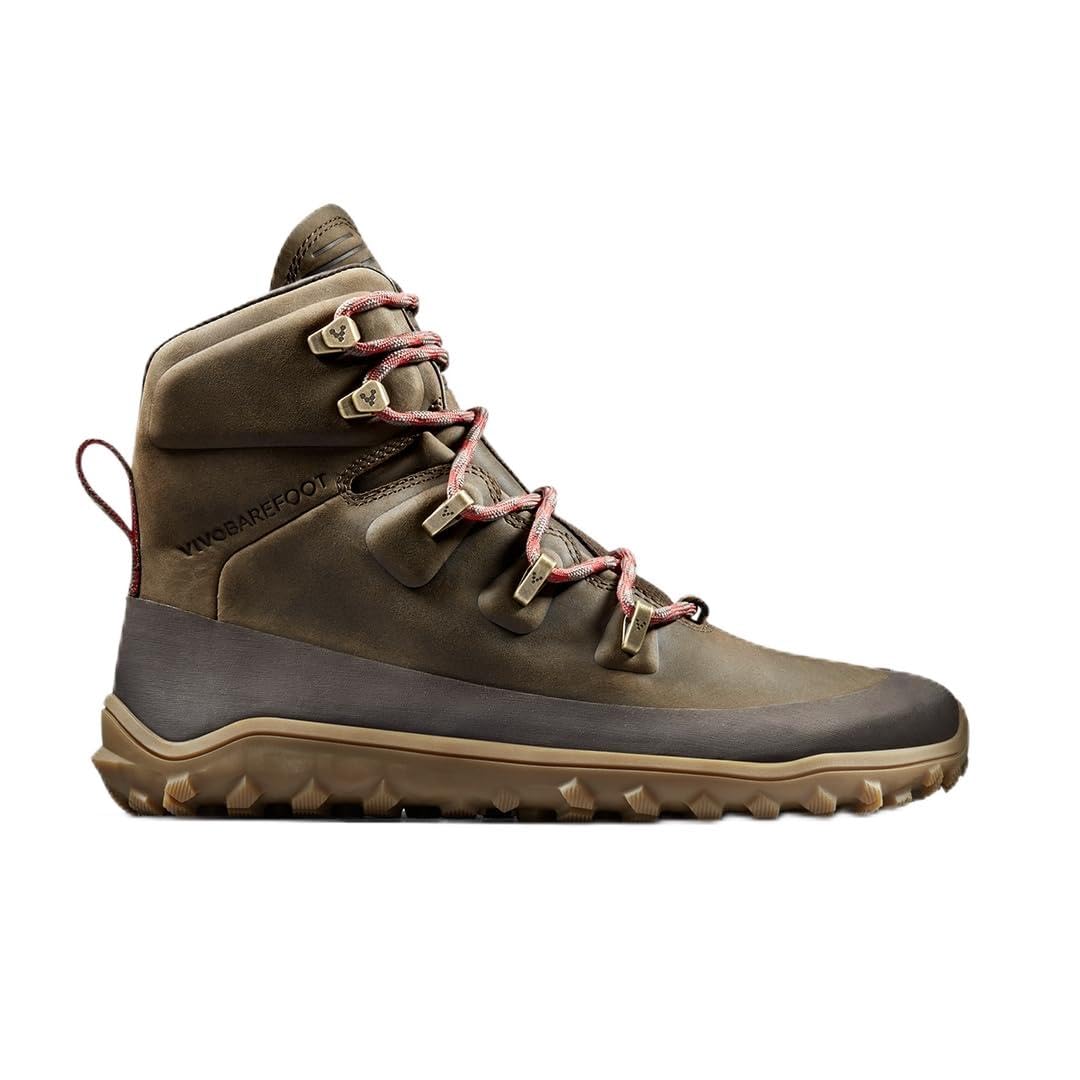
This boot represents one of the most complete barefoot winter options currently available. The Tracker combines a genuinely wide, foot-shaped toe box with a supple yet durable leather upper and a sealed waterproof membrane that keeps feet dry through slush and wet snow. The outsole uses a deep-lug pattern that provides reliable purchase on loose dirt, wet rock, and packed snow, while the zero-drop, flexible sole delivers excellent ground feel for navigating uneven winter terrain. Multiple long-term users report that the boot requires virtually no break-in period, which is notable for a leather barefoot boot.
The internal volume is generous enough to accommodate a medium-weight wool sock without compressing the toes, and the ankle collar fits securely without restricting movement. At roughly 15 ounces per boot, the weight is comparable to a trail runner, making it far less fatiguing for all-day wear than conventional insulated winter boots. The leather is thick enough to resist abrasion from brush and rock, yet it remains supple enough to allow natural foot splay.
The primary trade-off is the premium investment required. A few users have reported quality-control issues with eyelit failure, though this appears to be an outlier experience. If you need one boot that handles everything from icy sidewalks to muddy winter trails while preserving full barefoot function, this is the current benchmark.
Why it’s great
- Genuinely wide toe box with zero-drop sole maintains full barefoot feel.
- Waterproof membrane and deep-lug outsole handle wet and mixed winter surfaces.
- Outstanding balance of ground feel and protection from sharp terrain.
Good to know
- Premium pricing places it at the top of the market.
- Occasional reports of hardware failure suggest checking the build on arrival.
2. Vivobarefoot Magna Forest ESG, Women’s Leather And Wool Hiking Trainers
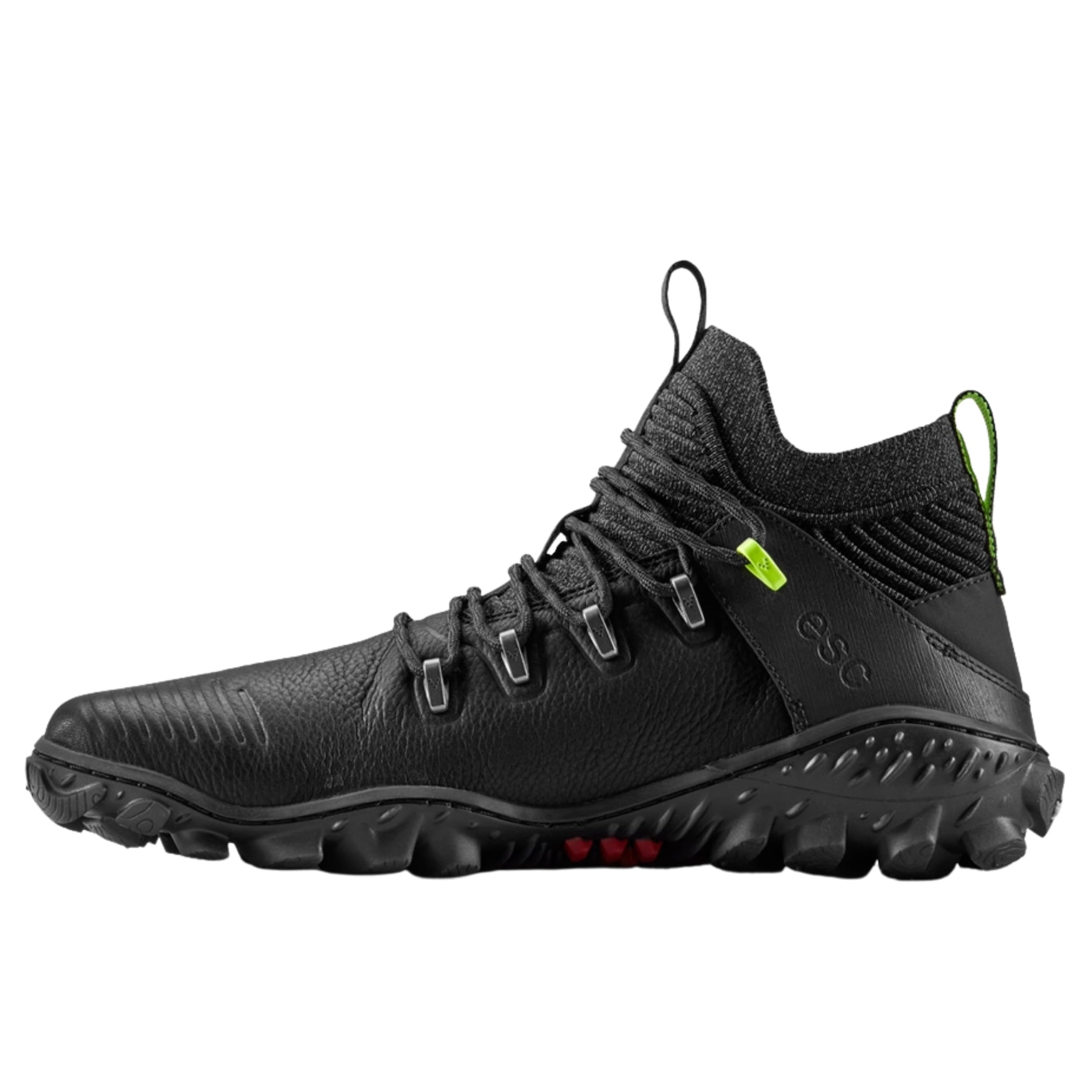
The Magna Forest ESG from Vivobarefoot is designed as a lighter, more breathable winter footwear option for women who need a nimble boot for mixed terrain rather than deep snow. The upper combines leather panels with a wool-blend lining that provides effective insulation without the bulk of a thick synthetic liner. The Michelin outsole, with its deep, spaced lug pattern, delivers excellent grip on soft ground, muddy trails, and damp forest floors—exactly the kind of conditions encountered during a Pacific Northwest winter hike.
Users consistently describe this boot as feeling like a trail runner in terms of flexibility and weight, while still offering the ankle coverage and protection of a traditional hiker. The toe box is wide and foot-shaped, allowing natural splay, though some with very wide feet have reported that the fit runs narrower than other Vivo models. The large thumb loop at the heel makes it easy to pull the boot on, and the lacing system secures the heel without pressure points.
The one recurring criticism is that the boot fits short for its labeled size, so ordering up at least half a size is recommended by most reviewers. This boot is ideal for women who want a true barefoot hiking boot for winter conditions that are more wet than deeply cold, and who prioritize flexibility and ground connection over maximum insulation.
Why it’s great
- Michelin outsole with deep lugs grips soft and wet terrain exceptionally well.
- Wool-blend lining provides warmth without bulk for active winter use.
- Very lightweight and flexible, similar to a trail runner.
Good to know
- Runs small; most users need to size up at least half a size.
- Not the best choice for very wide feet or deep snow conditions.
3. JIM GREEN Men’s Barefoot African Ranger Boots

Jim Green’s Barefoot African Ranger boot is a unique entry because it is built on a traditional stitchdown construction platform adapted to a zero-drop, wide-toe-box last. The result is a remarkably durable boot that can be resoled—a rarity in the barefoot category. The full-grain leather upper is thick and rugged, designed to withstand heavy use on rocky terrain and through brush, and the soft rubber outsole provides excellent grip on dry and moderately wet surfaces. The toe box is exceptionally wide, making it one of the best options for people with bunions or very broad forefeet.
The interior is lined with a leather sock liner that helps regulate temperature and reduce odor, but there is no insulation layer, so performance in freezing temperatures depends heavily on the thickness of your socks. The boot also lacks a waterproof membrane, meaning it is best suited for dry, cold conditions rather than wet snow or slush. The break-in period is longer than most barefoot boots due to the stiff leather, but once broken in, the boot conforms to the foot and becomes extremely comfortable.
Users who wear these for hiking and light work report that the ground feel is excellent and that the boots hold up well to daily abuse. The lack of cushion and insulation means this is not a boot for standing still in the cold, but for active movement in dry winter environments, it is a durable and supportive option.
Why it’s great
- Resoleable stitchdown construction offers exceptional long-term durability.
- Very wide toe box accommodates bunions and broad forefeet comfortably.
- Full-grain leather upper is tough and ages well.
Good to know
- No insulation or waterproof membrane; requires thick wool socks for cold weather.
- Break-in period is longer due to stiff leather and no cushioning.
4. Vivobarefoot Women’s Tracker FG L Leather Walking Shoe

The Tracker FG L is a classic in the Vivobarefoot winter lineup, built with a full-grain leather upper and a waterproof membrane that makes it one of the more weather-resistant barefoot boots available for women. The outsole features a moderately aggressive tread with lugs that are effective on packed trails, wet grass, and loose gravel, though it is not specifically optimized for ice. The toe box is wide in shape, but because the leather reduces internal volume, sizing up by a full size is the typical recommendation from users who need to wear thick winter socks.
Owners consistently praise the boot for its ability to keep feet dry during wet hikes and for the outstanding ground feel that still provides adequate protection from sharp rocks and roots. The zero-drop platform and flexible sole encourage a natural gait, and many users report that the boot helped resolve knee and hip discomfort caused by conventional footwear. The boot is relatively lightweight at around 15 ounces per shoe, making it suitable for long distances.
The most common complaint is that the toe box runs shallow, compressing the toes if you have a high-volume forefoot. Women with narrow or average-width feet will find the fit comfortable, but those with wide feet may prefer the men’s version of the same boot for more room. This boot is best for winter hiking in wet conditions where you need reliable waterproofing and a true barefoot feel.
Why it’s great
- Genuine waterproof membrane keeps feet dry in wet winter conditions.
- Excellent ground feel with adequate protection from underfoot debris.
- Lightweight and flexible for all-day hiking comfort.
Good to know
- Toe box runs shallow and narrow; sizing up is strongly advised for thick socks.
- Outsole is not optimized for icy conditions.
5. Belleville Mini-Mil TR102 Minimalist Tactical Boot

The Belleville Mini-Mil TR102 occupies a specific niche: a zero-drop, minimal-cushion boot built for tactical professionals who need to move quietly and maintain stability during long shifts. The boot features a wide toe box that allows natural splay, a slip-resistant outsole that performs well on wet and greasy floors, and a lightweight construction that reduces fatigue during extended wear. Many users who work in EMS, security, or law enforcement report that these boots provide excellent proprioception and ground feedback, which helps with balance during dynamic movements.
The upper is made from a combination of leather and nylon, and the boot is highly breathable, which is a double-edged sword in winter. It offers no insulation and is not waterproof, so its cold-weather performance depends entirely on wearing thick, moisture-wicking socks and treating the leather. For dry, cold conditions where breathability matters, it works well, but it will not hold up to wet snow or standing water. The outsole has good grip on pavement and packed dirt but lacks the aggressive lugs needed for deep snow or icy trails.
Several users note that the sizing is inconsistent and that the boot can feel loose around the ankle. The lack of a rubber toe cap also leaves the leather vulnerable to scuffing. This boot is a solid option for someone who needs a minimalist tactical boot for indoor winter work, but it is not a dedicated winter outdoor boot.
Why it’s great
- Zero-drop design with excellent ground feel for stability during long shifts.
- Slip-resistant outsole performs well on wet indoor surfaces.
- Lightweight and breathable for extended wear.
Good to know
- Not insulated or waterproof; requires thick socks for cold use.
- Sizing can be inconsistent, and ankle fit may feel loose for some.
6. Xero Shoes Women’s Mika Boots
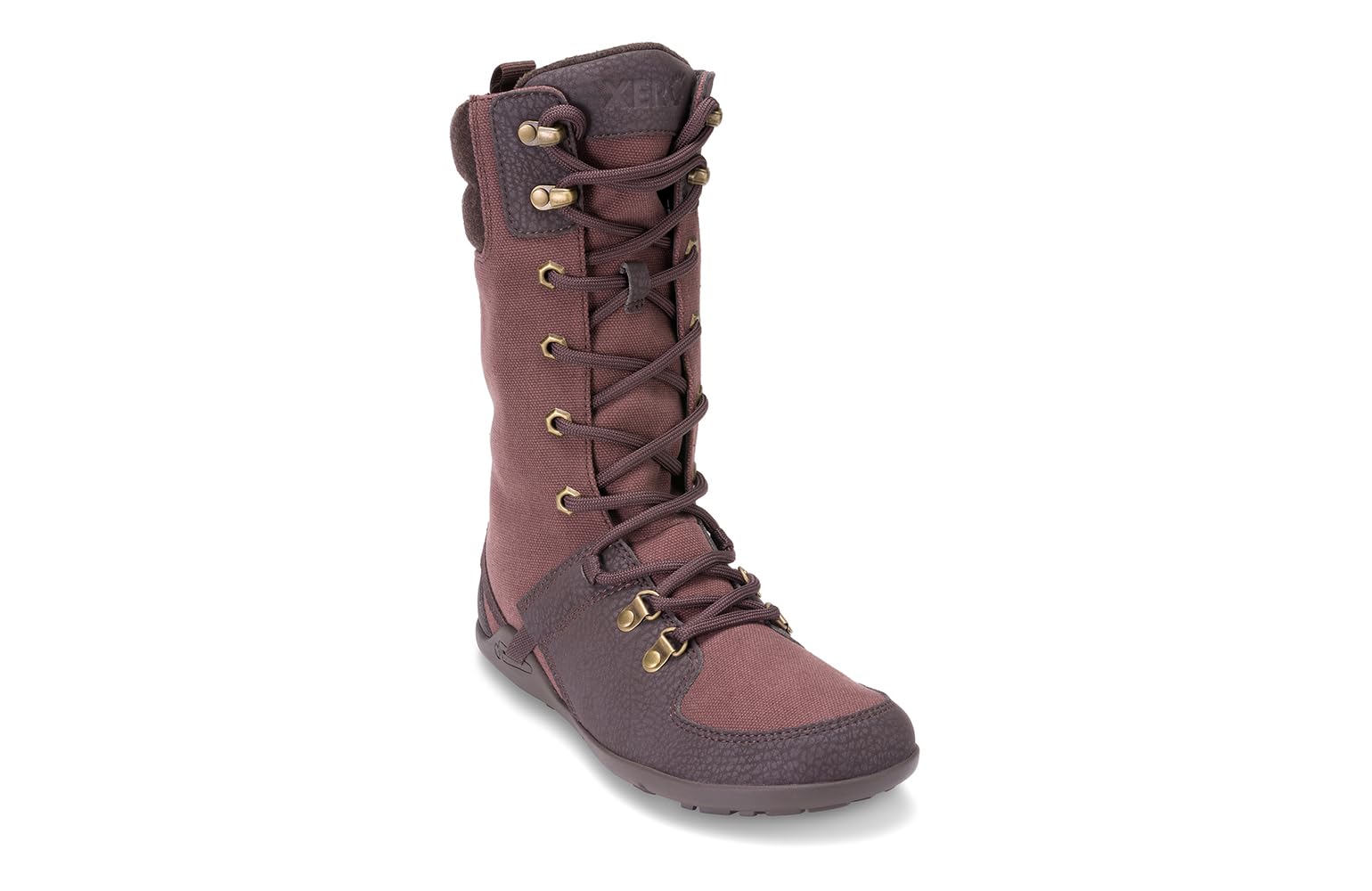
The Xero Mika is a winter boot designed more for daily urban wear than for technical trail use, and it excels at filling that role. The upper is made from soft faux leather with a wool-blend lining and a cozy faux-fur cuff, giving it a polished look that pairs well with jeans and casual winter outfits. The zero-drop sole is flexible and provides good ground feel, though the tread is relatively shallow and best suited for light snow and paved surfaces rather than mud or deep powder.
Users who have worn these for extended periods report that they are exceptionally comfortable for standing and walking, with enough warmth for temperatures down to around 20°F. The toe box is wide enough for natural splay, but some with wider feet note that the boot runs narrow, especially in the midfoot. There is no waterproof membrane, so the boot is best for dry snow days; wet snow and slush can seep through the canvas sections after extended exposure.
The main durability concern after a year of use is minor fraying along the elastic bands at the bottom, but the overall construction holds up well for casual wear. If you want a barefoot winter boot that looks like a stylish cold-weather shoe and works for errands, commuting, and light walks, the Mika is a strong choice.
Why it’s great
- Faux-leather construction with wool lining looks great for everyday winter wear.
- Flexible, zero-drop sole provides comfortable ground feel.
- Good warmth for moderate winter temperatures.
Good to know
- Not waterproof; best for dry snow conditions only.
- Runs narrow, especially for those with wider midfeet.
7. Vibram FiveFingers V-Trek Insulated (Men)
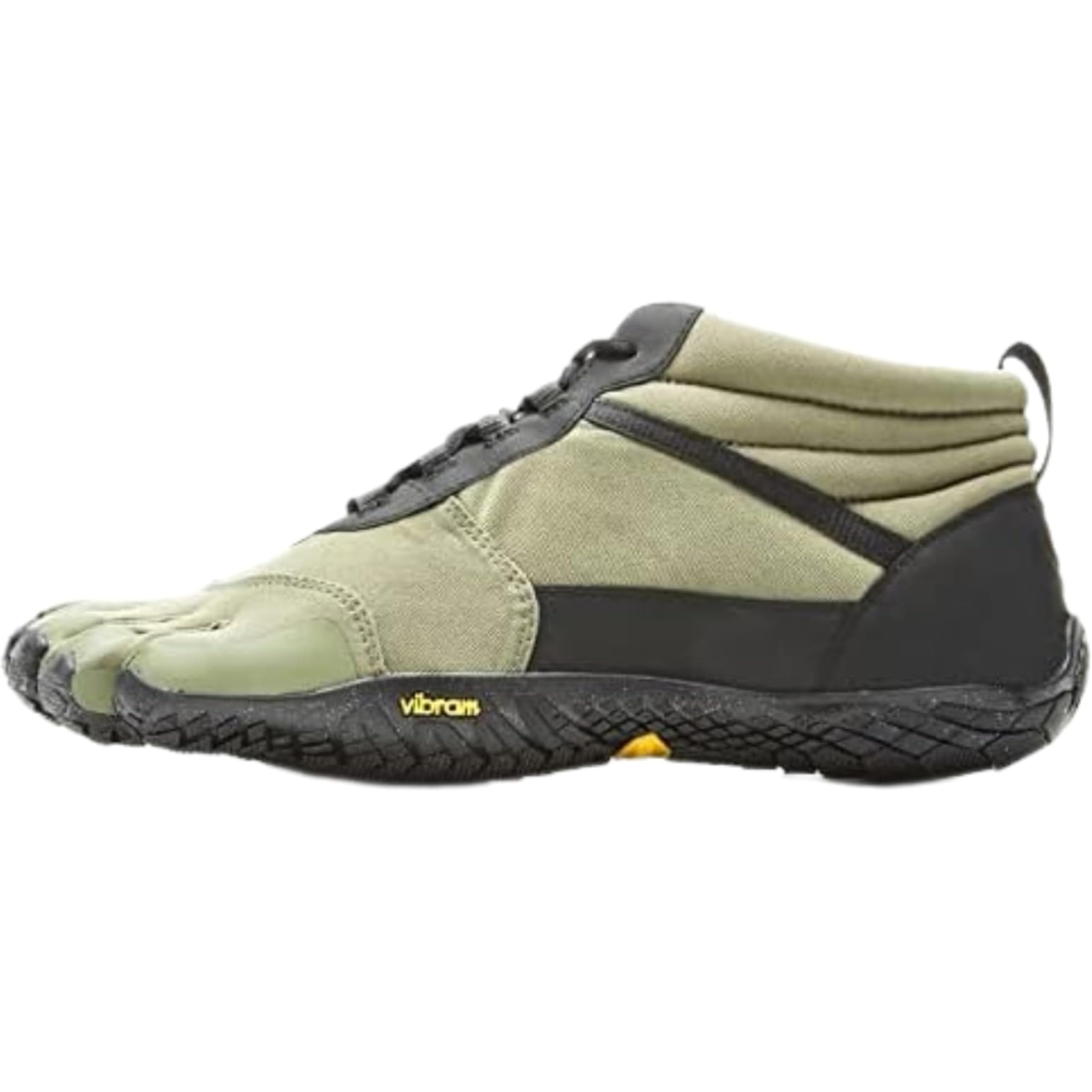
The V-Trek Insulated is as close as a barefoot shoe gets to a tactile winter experience, with individual toe pockets that allow each digit to move independently and a fleece lining that provides noticeable warmth. The outsole has a moderately deep tread that grips well on dirt, leaves, and light snow, though it is not designed for serious ice. This boot is best suited for light hiking, camp chores, and short winter walks where you want maximum proprioception.
Users who have worn these in cold conditions say that the fleece liner keeps feet comfortable at temperatures around 30°F with no socks, and that the boot dries quickly if it gets wet, since the lining is synthetic. The sole thickness is enough to prevent sharp rocks from poking through, but the ground feel remains exceptional. The biggest adjustment is the learning curve of putting on a five-finger shoe and the initial discomfort some toes feel until the individual pockets stretch to fit your specific toe spread.
The main drawback is the lack of waterproofing; the upper is a textile that will soak through in wet snow or puddles. Additionally, the boot has a stiff arch-shaped piece inside that some users find uncomfortable and uncharacteristic of Vibram’s typical approach. For someone who values individual toe movement and wants a warm, fast-drying shoe for light winter activity, this is a unique and capable option.
Why it’s great
- Individual toe pockets provide unmatched toe mobility and proprioception.
- Fleece lining offers good warmth for moderate winter temperatures.
- Dries quickly and is machine-washable.
Good to know
- Not waterproof; soaks through in wet snow or puddles.
- Toe pocket fit requires patience and may feel tight initially.
8. Xero Shoes Men’s Alpine Barefoot Snow Boots
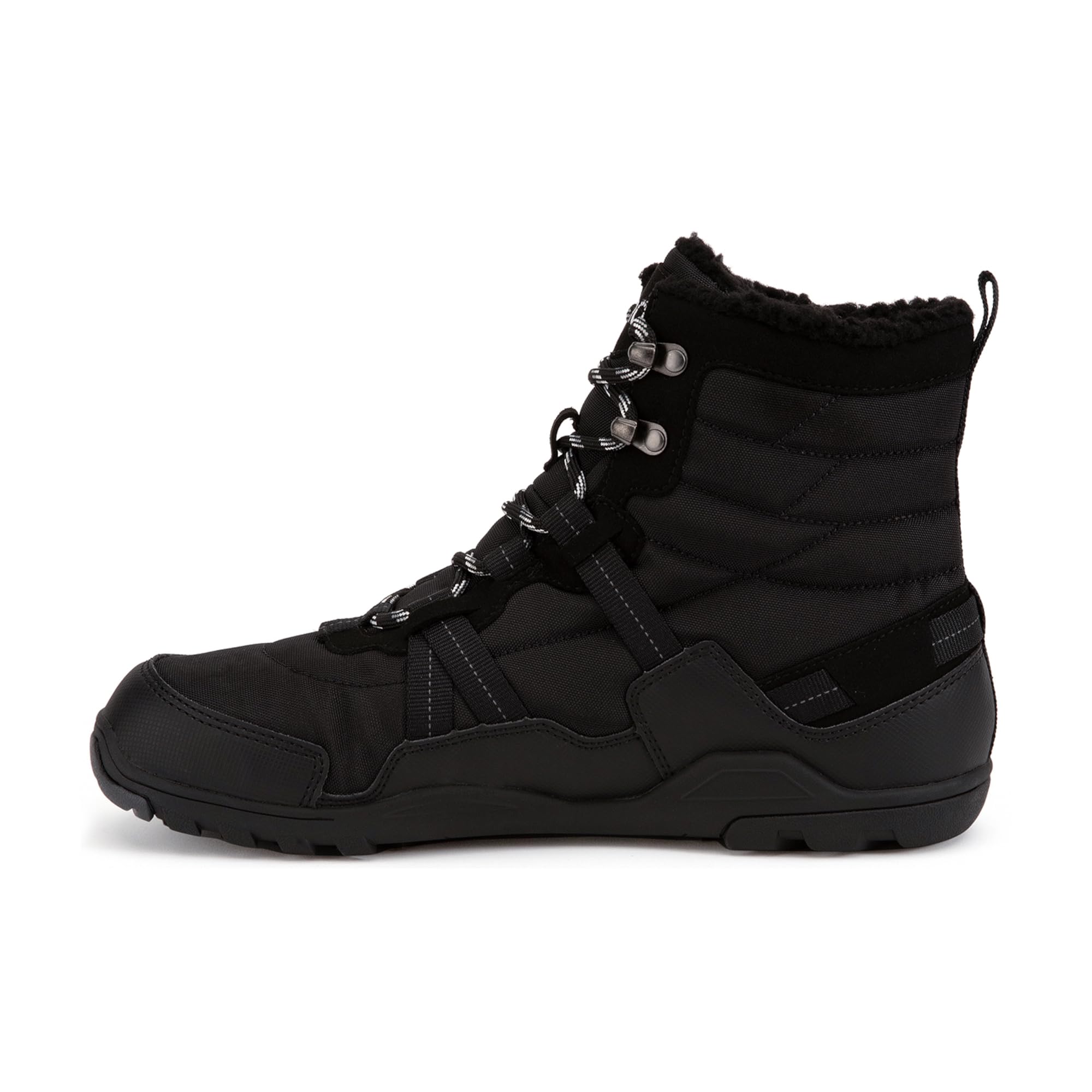
The Xero Alpine is one of the most accessibly-priced true barefoot snow boots on the market, offering a wide toe box, flexible zero-drop sole, and water-resistant construction at a much lower investment than premium competitors. The boot has a moderate level of insulation that keeps feet warm down to around 20°F with a mid-weight wool sock, and the outsole uses a snow-optimized tread pattern with good bite on packed snow and icy patches. Multiple users report that the boot provides excellent traction on slick winter surfaces, which is a common weak point for minimalist footwear.
The build quality is solid for the price point, with a synthetic upper that resists moisture absorption and a quick-lace system that stays secure. The toe box is wide enough for splay, though some with very wide feet have reported that it is not as roomy as true barefoot models from other brands. The boot also lacks a fully waterproof membrane, so staying dry depends on avoiding deep slush or standing water.
The most common feedback is that the boot works well as a lightweight winter commuter option and for short hikes in dry snow, but that it may require upgraded insoles or thicker socks for extended use below freezing. For the price, it delivers reliable barefoot function with winter-specific features that make it a sensible entry point into cold-weather minimalist footwear.
Why it’s great
- Excellent traction on snow and ice for a barefoot boot.
- Lightweight, flexible construction with a wide toe box.
- Good value for a dedicated winter barefoot snow boot.
Good to know
- Not fully waterproof; best for dry snow conditions.
- Insulation is moderate; requires thick socks for extreme cold.
9. Hike Footwear Kasdava Pro Winter Cold Comfort Barefoot Boots
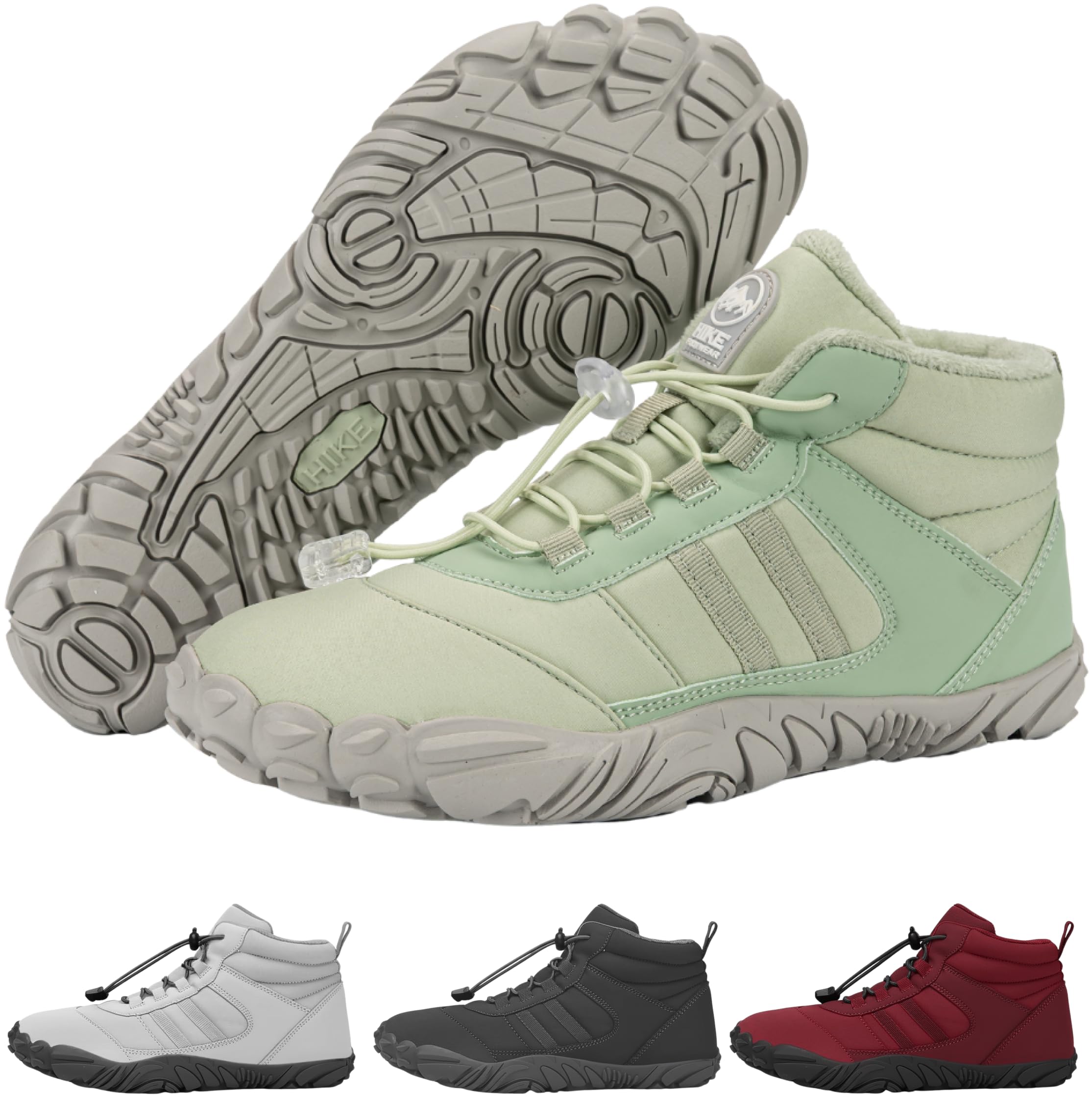
The Kasdava Pro from Hike Footwear is a budget-friendly entry into the winter barefoot category that prioritizes a wide toe box and zero-drop feel over premium materials and advanced weatherproofing. The boot is lined with a thick fleece-like material that provides noticeable warmth, and the outsole features a basic tread pattern that offers reasonable grip on dry pavement and light snow but struggles on wet surfaces and ice. Users with wide feet consistently praise the generous toe box, which allows full splay and eliminates the pinching that standard winter boots cause.
The build leans towards affordability, with synthetic materials that are water-resistant rather than waterproof. Owners report that the boot stays dry during light snow but will wet through in slush or rain. The midsole has some flexibility, though not as much as premium barefoot models, and the ground feel is somewhat muted by the thick lining. Sizing is generally true to the measured foot length, but the boot runs warm, so sizing up only if you plan to wear very thick socks.
For someone who is new to barefoot footwear and wants to test the concept in winter without a large upfront investment, the Kasdava Pro offers a functional starting point. It is not built for extended backcountry use or severe cold, but for casual winter errands and school runs, it provides a comfortable barefoot experience at a low cost.
Why it’s great
- Very wide toe box that accommodates broad forefeet and toe splay.
- Thick lining provides immediate warmth straight out of the box.
- Budget-friendly entry point for winter barefoot beginners.
Good to know
- Not waterproof; best for dry snow and cold pavement.
- Outsole traction is limited on wet and icy surfaces.
FAQ
Do barefoot winter boots need a break-in period?
Can I add insoles for extra warmth without ruining the barefoot feel?
How do I size barefoot winter boots for thick socks?
Are removable studs or microspikes compatible with barefoot winter boots?
Final Thoughts: The Verdict
For most users, the best barefoot shoes for winter winner is the Vivobarefoot Men’s Tracker Leather because it combines a genuinely wide foot-shaped toe box, a reliable waterproof membrane, and a deep-lug outsole that provides traction on mixed winter terrain while maintaining excellent ground feel. If you want a stylish, durable option for daily winter wear that works well in dry cold, grab the JIM GREEN African Ranger Barefoot. And for a budget-friendly way to test barefoot winter footwear without a large upfront commitment, nothing beats the Hike Footwear Kasdava Pro.